Filter
Exclude
Time range
-
Near
Just2Trade
🧬 Building a Digital Twin of Life Itself Scientists are working toward creating a complete virtual model of yeast — a "digital twin" of a living organism. This isn't just a biology experiment; it's a blueprint for the future of science. By simulating every cellular process of *Saccharomyces cerevisiae*, researchers could predict how cells respond to drugs, environmental changes, or genetic mutations — without a single lab test. Yeast shares ~70% of its genes with humans, making this model a powerful proxy for human disease research. A virtual yeast could accelerate drug discovery, metabolic engineering, and synthetic biology — dramatically cutting costs and timelines for biotech breakthroughs. #SyntheticBiology #DigitalTwin #Biotechnology #ComputationalBiology #LifeSciences --- Companies in this space: Ginkgo Bioworks ($DNA, NYSE), Recursion Pharmaceuticals ($RXRX, NASDAQ), Twist Bioscience ($TWST, NASDAQ)
2
Just2Trade
🔬 Scientists have developed a groundbreaking approach to enzyme discovery — metal-coordination mining — a targeted computational method that identifies enzymes by mapping how they bind metal ions at their active sites. Instead of random screening, researchers can now *mine* protein databases with surgical precision, uncovering hidden catalytic machinery that evolution built millions of years ago. This could dramatically accelerate the development of new biocatalysts for medicine, green chemistry, and industrial biotech. Think of it as giving scientists a metal detector — but for the molecular world. The implications for drug synthesis, biodegradable materials, and sustainable manufacturing are enormous. \#EnzymeDiscovery #Biocatalysis #ComputationalBiology #Biotechnology #GreenChemistry --- Companies in this space: Novozymes ($NZYM, Copenhagen Stock Exchange), Codexis ($CDXS, NASDAQ), Ginkgo Bioworks ($DNA, NYSE)
15
Just2Trade
🧬 Building a Digital Twin of Life Itself Scientists are pushing toward creating a complete *virtual yeast cell* — a fully computational model that simulates every biological process of a living organism. This isn't just academic curiosity: a working "virtual yeast" would revolutionize drug discovery, metabolic engineering, and synthetic biology. By digitally testing how cells respond to drugs, nutrients, or genetic changes, researchers could slash lab costs and accelerate breakthroughs. Yeast has long been biology's favorite model organism — simple enough to simulate, yet complex enough to mirror fundamental human cell processes. A virtual cell is essentially biology's answer to the digital twin revolution sweeping engineering and manufacturing. #SyntheticBiology #DigitalTwin #Biotechnology #ComputationalBiology #DrugDiscovery --- Companies in this space: Ginkgo Bioworks ($DNA, NYSE), Twist Bioscience ($TWST, NASDAQ), Recursion Pharmaceuticals ($RXRX, NASDAQ)
16
BiologyAIDaily
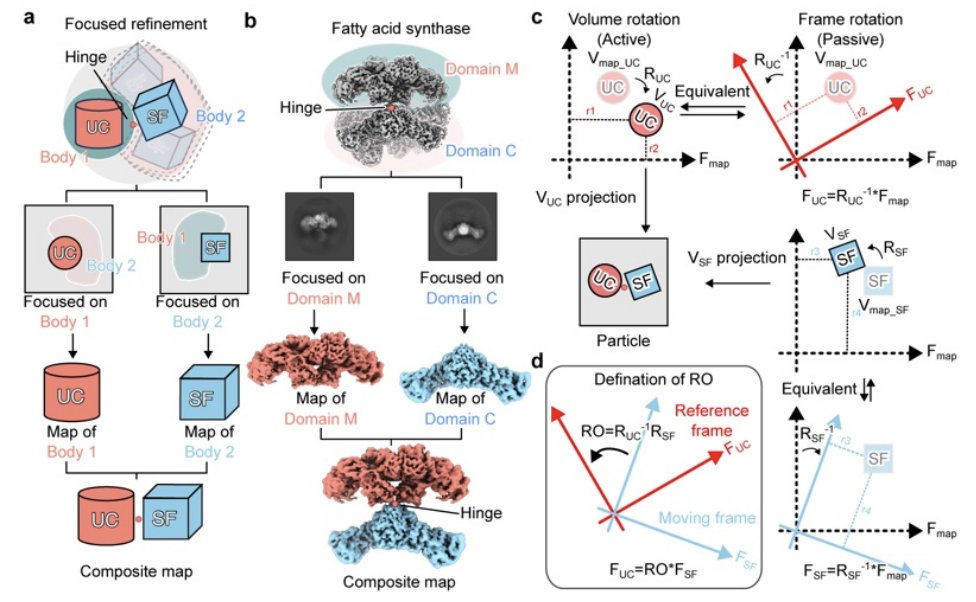
CryoROLE: Describing large inter-domain rotation in single particle cryo-EM 1. CryoROLE is a lightweight, math-based tool to recover continuous inter-domain motions that are otherwise “lost” when cryo-EM workflows produce high-resolution composite maps via focused refinement of separate rigid bodies. 2. Key idea: each particle already has multiple pose assignments (one per focused-refined domain). CryoROLE computes per-particle relative orientation (RO) between domains directly from these orientations, making the motion observable without deep learning or PCA. 3. The output is an RO “landscape”: a point cloud where each point is a particle and its coordinates encode the relative rotation between domains. Local point density reports how populated particular poses are, enabling an intuitive view of motion range preferred orientations. 4. The method is designed for large rigid-body-like motions where consensus-map-based continuous-heterogeneity methods (e.g., latent-space or perturbation models) struggle, and where classic classification discretizes a continuum into a few bins. 5. Implementation details that matter in practice: CryoROLE does statistics in rotation-vector space (avoids Euler-angle singularities), visualizes in fixed-axis Euler space for interpretability, and can “canonicalize” axes so α/β/γ align with primary/secondary/tertiary motion directions. 6. Validation on human fatty acid synthase (hFASN): with ~2.2M particles, the RO landscape accurately predicts reconstructions from particles sampled at chosen landscape coordinates, confirming that landscape coordinates correspond to real inter-wing orientations. 7. INO80–hexasome application: merging particles from 3 previously classified states reveals a continuous ~110° trajectory of INO80 rotating around the hexasome, with multiple preferred orientations. CryoROLE recovers a low-occupancy state placing the ATPase near SHL −1 that was missed by discrete classification. 8. Ribosome application (thermo-annealing): by computing RO landscapes for LSU vs SSU-body (ratchet), SSU-head vs SSU-body (swivel), and SSU-head vs LSU, CryoROLE shows annealing contracts the motion distributions and shifts population toward a preferred, low-motion basin. 9. Functional anchoring: published translocation-related 70S structures map onto the RO landscape along a plausible trajectory; particle density differences across mapped states suggest the landscape approximates thermodynamic preference. Additionally, E-site tRNA-bound particles occupy a narrower RO region, indicating tRNA restricts global ribosome motions. 💻Code: github.com/yifancheng-ucsf/c… 📜Paper: biorxiv.org/content/10.64898… #cryoEM #structuralbiology #computationalbiology #proteinDynamics #singleParticleAnalysis #openSource #bioinformatics
3
9
1,550
BiologyAIDaily
TCR-FramePose: A local-frame representation for decomposing global docking and CDR3 loop geometry in TCR-pMHC recognition 1. The paper introduces TCR-FramePose, a geometry descriptor that decomposes TCR–pMHC pose into three pMHC-referenced rigid bodies: the whole TCR variable domain, CDR3α, and CDR3β—so global docking and CDR3-local pose can be compared in the same coordinate system. 2. For each body, pose is split into reach (distance), offset direction (unit vector on S²), and orientation (rotation on SO(3), represented via quaternions). This preserves the natural separation between translation and rotation, which conventional descriptors often mix. 3. For statistics and ML, FramePose maps the manifold variables to Euclidean tangent coordinates at Fréchet means: 1 reach 2 offset 3 orientation coordinates per body (6 total), yielding 18 coordinates per complex. Orientation axes are interpretable as groove-axis roll, cross-groove pitch, and groove-normal twist. 4. On 378 curated αβ TCR–pMHC crystal structures (282 class I, 96 class II), FramePose recovers known class-associated placement differences (similar to centroid-based TCR-CoM) and additionally resolves class-associated orientation shifts (whole TCR and especially CDR3β) that crossing angle fails to capture. 5. The same orientation coordinates identify noncanonical docking modes: a tight “reverse-polarity” cluster dominated by ~170° groove-normal twist (spanning both class I and class II examples), plus distinct off-axis ~180° flip modes that look similar in magnitude but differ in axis composition. 6. In cross-validated association modeling, FramePose predicts buried surface area (BSA) well when using all three bodies (best configuration), and shows that beyond global placement, CDR3-local orientation contributes additional BSA-associated signal. 7. For binding affinity (Kd-based strong vs weak; n=244), rigid-body pose alone is only modestly informative overall, but FramePose improves over conventional docking descriptors. The best-performing configuration uses CDR3α CDR3β (not whole-TCR), indicating the affinity-associated signal is concentrated in CDR3-local geometry. 8. Feature attribution and augmentation analyses localize the most nonredundant signal to CDR3β orientation (and secondarily CDR3α orientation and CDR3β offset). These are also the least “recoverable” from conventional descriptors, explaining why they add new information. 9. Biological determinant analysis (conditioned PERMANOVA on native manifold distances) suggests docking geometry is organized primarily by germline V-region framework. After controlling for antigen context and germline framework, CDR3 sequence does not detectably reposition rigid-body pose, while MHC allele and peptide length contribute smaller, localized adjustments—especially in CDR3β and groove-normal orientation axes. 10. Interface interpretation: across the affinity-annotated cohort, affinity correlates most strongly with interface burial (BSA). CDR3β reach provides a geometric readout of burial (greater reach → reduced BSA), and the reach–affinity association attenuates after adjusting for BSA/shape complementarity, supporting a burial-linked (not independent) pose relationship. Within engineered peptide panels, mutation-level pose/contact effects are panel-specific, with CDR3β remodeling recurring in a similar interface region but varying in direction by receptor. 📜Paper: biorxiv.org/content/10.64898… #TCR #immunology #structuralbiology #computationalbiology #pMHC #proteinstructure #geometricdeeplearning #bioinformatics #Tcell #cancerimmunotherapy
7
29
2,497
BiologyAIDaily
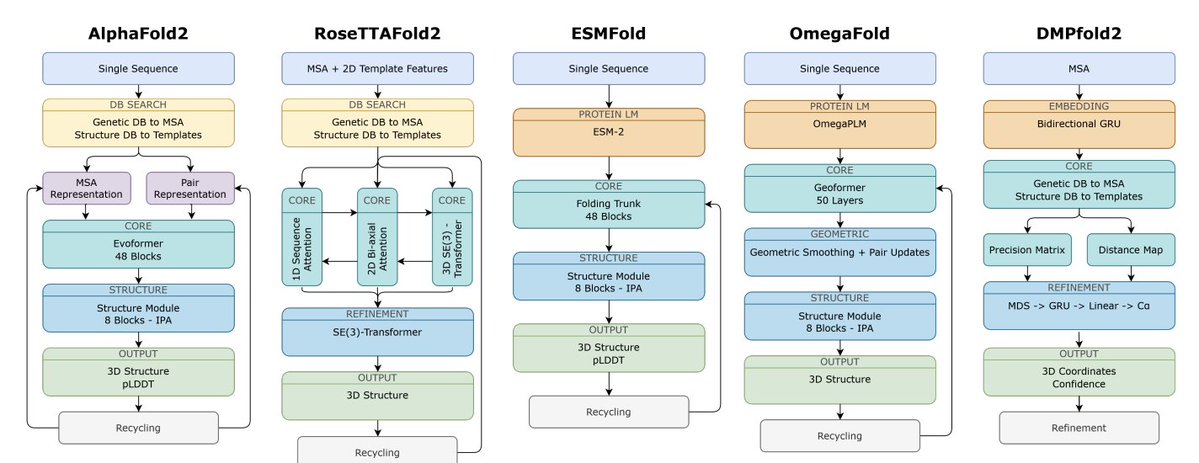
A Comprehensive Evaluation of Protein Structure Prediction Models for Short Peptides 1. Short peptides (10–49 aa) are a hard regime for structure prediction: weak cooperativity, shallow free-energy landscapes, limited long-range contacts, and often an ensemble rather than a single “native” state. This work benchmarks how modern DL predictors behave under those physical constraints. 2. The authors curate a large peptide benchmark from PDB: 2315 experimentally determined structures (1964 unique sequences), filtered to single-chain, standard amino acids, and stratified by length (10–19/20–29/30–39/40–49) and DSSP-based secondary-structure class (α-helix-rich, β-sheet-rich, mixed, disordered). 3. Five state-of-the-art predictors are compared under a standardized pipeline: AlphaFold2 (ColabFold), RoseTTAFold2, ESMFold, OmegaFold, and DMPfold2. Evaluation uses multiple complementary metrics: Cα RMSD (on structured regions), TM-score, GDT-TS, LDDT vs model confidence (pLDDT-like), and native contact fraction Q. 4. A consistent global trend emerges across models: accuracy improves with peptide length. Example: AlphaFold2 mean RMSD drops from ~0.30 Å (10–19 aa) to ~0.12 Å (30–49 aa), and mean TM-score rises from ~0.31 to ~0.59 as length increases. 5. Secondary structure strongly modulates difficulty. Across models, α-helix-rich and mixed peptides are predicted best (tight RMSD distributions, high contact recovery), while β-sheet-rich and especially disordered peptides show larger errors and heavier tails, reflecting challenges in strand registry/long-range H-bonding and the mismatch between ensembles and single-structure outputs. 6. Overall consistency leaders: AlphaFold2 and the single-sequence language-model approaches ESMFold and OmegaFold are reported as the most consistent/accurate overall, while DMPfold2 shows the weakest performance with frequent large deviations (broad RMSD tails and lower TM/Q), particularly for longer peptides and difficult classes. 7. Contact-level evaluation (native contact fraction Q) supports the same story: AlphaFold2 is high and stable (mean Q ~0.86→0.92 from shortest to longest bins), ESMFold is similar (~0.87→0.91), RoseTTAFold2 improves with length, and DMPfold2 is lowest and less reliable (mean Q down to ~0.79 with larger variance). 8. Confidence calibration is imperfect for peptides. Correlations between predicted confidence (pLDDT-like) and measured LDDT are only moderate (often ~0.5–0.7 depending on length/class) and never near-perfect, implying that “high confidence” can still be misleading for short, flexible sequences and should be interpreted cautiously. 9. MSA ablation shows evolutionary signal matters more as peptides get longer/structurally complex. For AlphaFold2, removing MSA has little impact for 10–19 aa, but for 40–49 aa it substantially reduces global/topological metrics (e.g., TM-score ~0.59→0.45; GDT-TS ~69→~53; Q ~0.92→0.80). RoseTTAFold2 is more MSA-dependent, and DMPfold2 is the most sensitive to MSA removal. 10. Practical extension: on dbAMP3 antimicrobial peptides lacking experimental structures, the paper argues for multi-model consensus as a rational way to identify robust structural hypotheses when single-model outputs and confidence scores are uncertain in this ensemble-like regime. 📜Paper: biorxiv.org/content/10.64898… #ProteinStructure #Peptides #AlphaFold2 #ESMFold #OmegaFold #RoseTTAFold #Benchmarking #ComputationalBiology #Bioinformatics #AntimicrobialPeptides
4
14
1,786
BiologyAIDaily
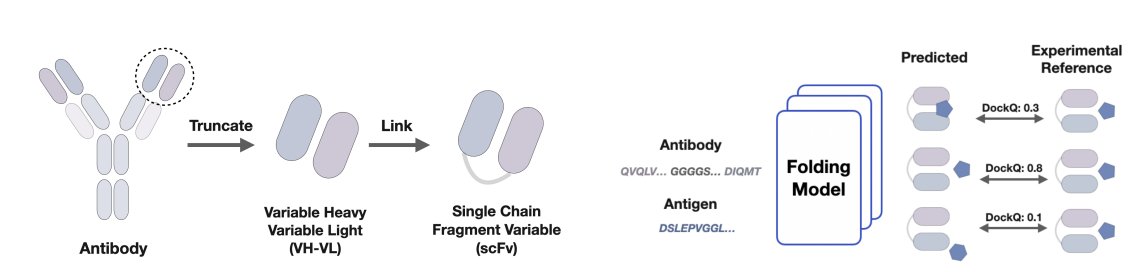
Folding scFv–Antigen Complexes at Scale 1. The paper introduces SCALE (scFv–Ag CompLex Ensembles): a large benchmarking resource to stress-test modern cofolding models specifically on scFv–antigen docking, where correct epitope engagement and binding geometry are often the true failure mode. 2. SCALE is built from a curated subset of 3,800 experimentally solved Ab–Ag complexes from SAbDab, standardized by converting each heavy/light antibody into an scFv sequence (VH (GGGGS)3 linker VL) paired with a single antigen chain, then deduplicated by scFv–antigen sequence identity. 3. Using multiple state-of-the-art folding backbones (AlphaFold 2.3 Multimer, AlphaFold 3, Boltz-2, Chai-1, Pairmixer) and diverse inference-time settings (random seeds, recycling depth, optional antibody MSA, optional templates), the authors generate ~197,900 predicted scFv–Ag complexes—an ensemble-centric view rather than single-shot evaluation. 4. Interface accuracy is evaluated with DockQ against experimental references, separately for VH–Ag and VL–Ag interfaces (and often summarized as their mean). Across ~200k predictions, most DockQ scores are very low; near-native interfaces (DockQ > 0.8) exist but are rare for every model, indicating that correct docking is not consistently recovered even when tertiary folds look confident. 5. Best-of-ensemble behavior is notably better than the typical sample: with enough trials, many targets yield at least one “acceptable” interface (DockQ > 0.23). Still, 879/3,800 complexes never exceed DockQ 0.23 under any tested setting, while only 256 exceed 0.23 across all conditions—highlighting a large “hard target” regime. 6. The study finds strong coupling between VH–Ag and VL–Ag interface quality (Pearson r = 0.958), with VL–Ag slightly harder on average. This suggests that when docking fails, it often fails globally (wrong pose/epitope) rather than in only one variable domain. 7. A central result: confidence metrics commonly used in binder pipelines (ipTM, ipSAE, pDockQ, pDockQ2, AbEpiScore) correlate well with DockQ when pooling all predictions globally, but perform poorly at selecting the best structure within each target’s ensemble (low per-complex correlations and low Top-1 accuracy). In other words, they separate “easy vs hard targets” better than “best vs second-best pose for the same target.” 8. The paper documents a key practical pitfall: high single-chain confidence does not imply correct complex formation. Many predictions have high pLDDT yet extremely low DockQ, underscoring a decoupling between confident tertiary structure and correct quaternary docking. 9. Inference-time choices matter but mainly for best-case outcomes: more recycling can occasionally refine already-good predictions toward near-native interfaces without shifting the median much; additional seed sampling often shows diminishing returns, but a subset of targets benefits substantially. Including an antibody MSA improves the frequency of higher-quality interfaces even though antibody sequences may have limited evolutionary signal, while templates provide only modest gains in this setting. 10. Physics-based interface descriptors computed with PyRosetta (e.g., shape complementarity, estimated binding energy, clash/repulsion terms) correlate with DockQ roughly as well as learned confidence scores for ranking, suggesting that reranking/scoring—possibly combining model confidences with physical interaction features—is a major bottleneck for scalable scFv–Ag docking. 💻Code: huggingface.co/datasets/ravi… 📜Paper: biorxiv.org/content/10.64898… #ComputationalBiology #ProteinFolding #Antibodies #StructuralBiology #Benchmark #AlphaFold #Docking #MachineLearning #Bioinformatics
6
28
2,192
BiologyAIDaily
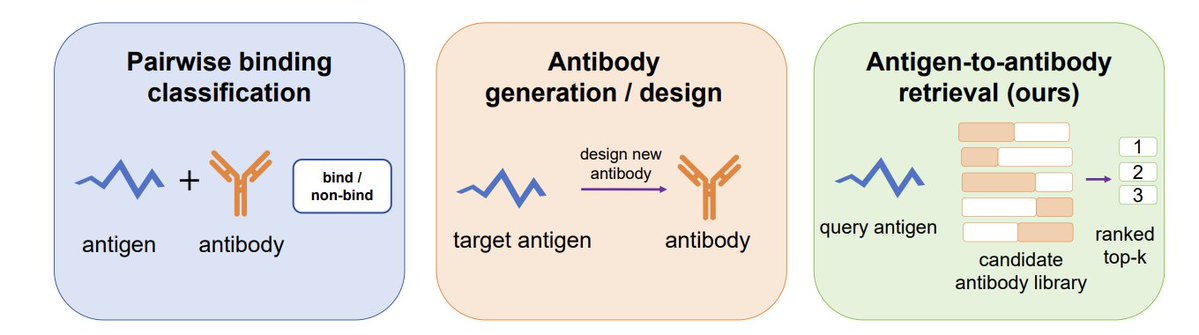
Strict OOD Antigen-to-Antibody Retrieval with CDR-Aware Slot Late Interaction 1. The paper reframes antibody discovery as antigen-to-antibody retrieval: given an antigen sequence, rank a fixed candidate antibody library to enrich known binders in the top-K, matching early virtual screening better than pairwise bind/non-bind classification. 2. A key contribution is a strict antigen-cluster out-of-distribution (OOD) benchmark to reduce antigen homology leakage: antigens are clustered by MMseqs2 at min_seq_id = 0.8, and entire clusters are held out from training and checkpoint selection. 3. Benchmark scale and protocol: test has 849 antigen queries, a controlled corpus of 869 candidate antibodies, and 872 observed positive pairs. Unpaired antigen–antibody combinations are treated as unlabeled (not negatives), so evaluation focuses on Hits@K and enrichment vs an exact random baseline. 4. The proposed model Ab-CASLR is an asymmetric dual-tower retriever: antigens encoded by ESM-2 (150M), antibodies encoded by IgBert, both projected into a shared 128-d retrieval space and fine-tuned with small learning rates. 5. Core modeling idea: preserve antibody locality with CDR-aware slots. Instead of a single pooled antibody embedding, Ab-CASLR builds M=8 antibody “document slots” using slot attention constrained by CDR masks (Chothia H1–H3, L1–L3), injecting an inductive bias that specificity concentrates in CDR loops. 6. Scoring uses late interaction rather than global similarity: the antigen tower produces L=8 latent query summaries; a low-rank bilinear matcher computes compatibility between query summaries and antibody CDR slots; final score aggregates by taking, for each query summary, the max-compatible antibody slot (then averages across summaries). 7. Training uses a multi-positive InfoNCE retrieval objective (all in-batch observed binders are positives), plus auxiliary regularizers: contact-derived epitope/paratope supervision when available and a document-side slot diversity penalty to reduce redundant CDR slots. 8. Strict OOD results show early enrichment: Hits@10 = 7.42% with EF@10 = 6.28x over exact random screening (Random Hits@10 = 1.182% for a 869-antibody corpus). Hits@1 = 1.767% with EF@1 = 14.97x, indicating strongest gains at very small K. 9. Comparisons and diagnostics clarify what helps: Ab-CASLR beats k-mer homology transfer (Hits@10 5.53%) and global ESM2-ESM2 embedding similarity (Hits@10 3.29%). Ablations show global pooled dual-tower collapses (Hits@10 1.413%), removing the CDR mask hurts (6.360%), and replacing late interaction with pooled CDR similarity drops strongly (2.120%). Slot diagnostics show antigen-side summaries collapse to near-identical representations, while antibody CDR slots remain diverse—suggesting antibody-side CDR-local representation is the main effective mechanism, and antigen epitope grounding remains an open bottleneck. 📜Paper: biorxiv.org/content/10.64898… #Antibodies #ProteinLanguageModels #Retrieval #OutOfDistribution #ComputationalBiology #Bioinformatics #MachineLearning #VirtualScreening #ESM #Immunology
4
11
1,659
BiologyAIDaily
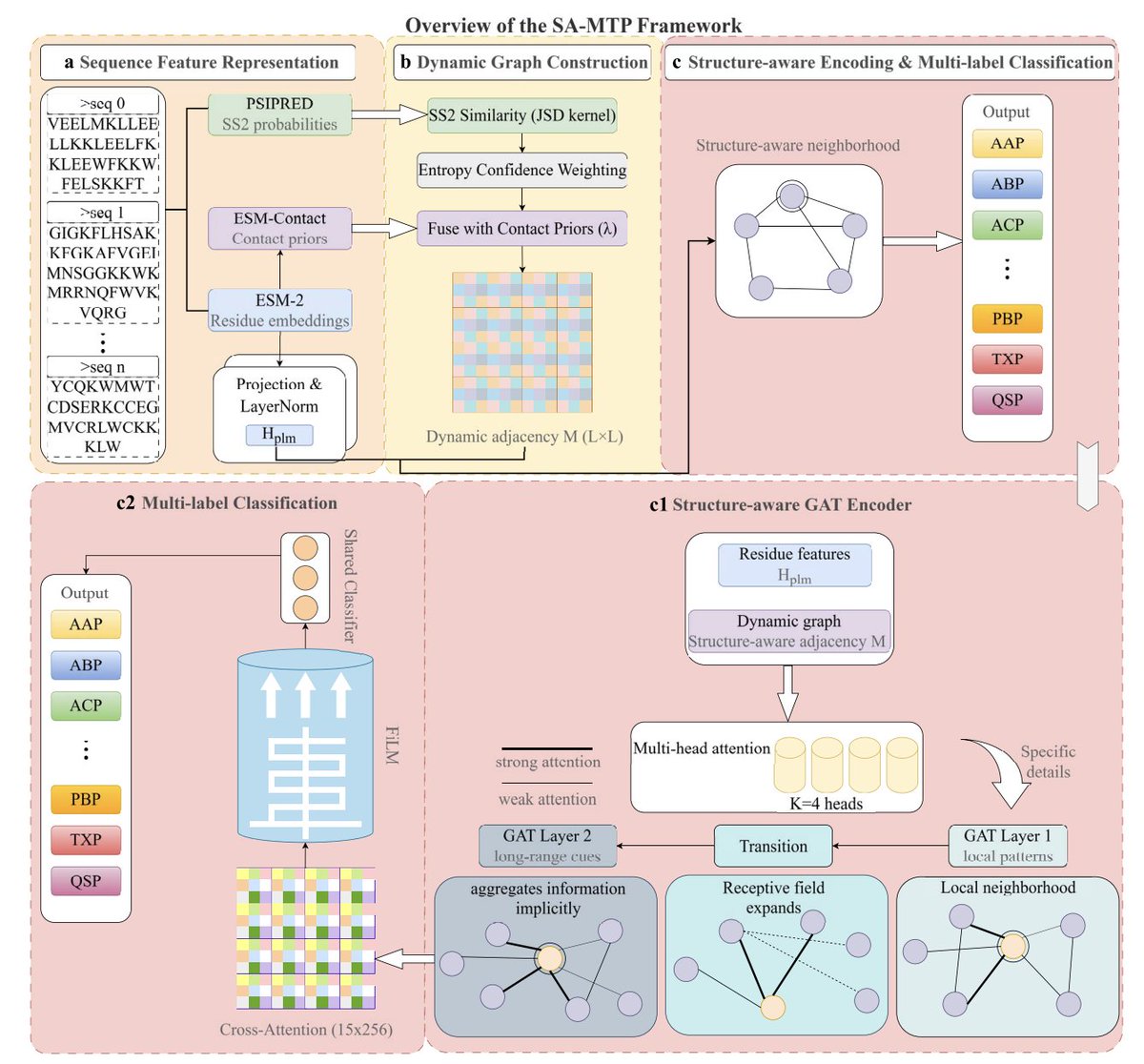
SA-MTP: A structure-aware framework for multifunctional therapeutic peptide annotation 1. SA-MTP targets a practical pain point in peptide discovery: short therapeutic peptides often have multiple bioactivities and strong conformational heterogeneity, making sequence-only multi-label predictors miss functions—especially in long-tail categories. 2. The core idea is to model peptide “structure as uncertainty” rather than a single fixed fold: SA-MTP uses probabilistic secondary-structure profiles (PSIPRED SS2, per-residue H/E/C probabilities) to represent flexible conformational tendencies. 3. It then builds an input-dependent, structure-aware residue graph by fusing (i) confidence-weighted secondary-structure similarity (local, uncertainty-aware) with (ii) PLM-derived residue–residue contact priors from ESM-2 (global, long-range). A fusion coefficient alpha balances the two signals (default alpha=0.5) and remains robust across ranges. 4. On top of this dynamic graph, SA-MTP applies a multi-head Graph Attention Network (GAT) to integrate sequence semantics (ESM-2 residue embeddings) with structure-guided neighborhood aggregation, capturing both local motifs and long-range dependencies in a peptide-specific way. 5. For multi-label output (15 therapeutic function categories), SA-MTP adds explicit label embeddings and label-to-sequence cross-attention so each function can attend to different residue regions, enabling label-conditioned evidence extraction rather than a one-size-fits-all pooling. 6. A lightweight FiLM-based classification head performs label-specific feature modulation (channel-wise scaling) to better separate heterogeneous functions while sharing a common backbone—improving discrimination without a heavy per-label model. 7. SA-MTP also addresses class imbalance at decision time via adaptive, per-label threshold optimization on the validation set (F1-optimized or MCC-optimized), improving recall and balanced metrics for sparse labels compared with a fixed 0.5 threshold. 8. Benchmarks (TPpred-LE dataset protocol; 90% identity reduction; 8:1:1 split; plus a stricter low-homology setting at 40% identity) show SA-MTP outperforming prior methods across label-level AUC/MCC/F1 and sample-level precision/recall; the gains are most visible for imbalanced or structurally complex categories. 9. Ablations quantify where improvements come from: adding structure-aware graph encoding improves macro MCC/F1/precision over a PLM-only baseline (e.g., macro F1 0.428 -> 0.434), and adding FiLM further improves the graph model (macro F1 0.434 -> 0.441), supporting complementary benefits from dynamic structure modeling label-aware modulation. 10. Interpretability: visualizations of SS2 similarity, ESM contact priors, and fused adjacency show graphs adapt to peptide types (coherent for helical peptides, modular for mixed motifs, sparse/local for high-entropy sequences). Integrated Gradients attention rollout highlight residue clusters consistent with known AMP characteristics (e.g., N-terminal hydrophobic anchoring and amphipathic helix-related regions), providing mechanistic clues beyond global similarity. 💻Code: github.com/LZW-TECH/SA-MTP 📜Paper: doi.org/10.1093/bib/bbag361 #ComputationalBiology #Bioinformatics #Peptides #TherapeuticPeptides #ProteinLanguageModels #GraphNeuralNetworks #MultiLabelLearning #Interpretability #DrugDiscovery #MachineLearning

3
11
1,346
BiologyAIDaily
A Generalizable Interface-Seeded Framework for De Novo Design of Functional Oligomers 1. The paper introduces an “interface-seeded” generative design strategy: instead of docking existing protein building blocks into a target symmetry, it uses a previously validated protein–protein interface (PPI) as the seed and generates new symmetry-compatible protomers around it. 2. Key implementation detail: a new symmetric motif-scaffolding module in RFdiffusion that preserves the interface motifs while sampling seed orientations and radial placements, then “drags” the motif radially during denoising to bias toward compact, well-packed cyclic oligomers. 3. This directly addresses a practical bottleneck in symmetric assembly design: dock-and-design success is often limited by geometric incompatibility between chosen protomers and target symmetries (C3/C4/C5), producing strong biases and low hit rates. 4. Benchmarking with LHD heterodimer seeds (LHD101, LHD29), the framework produced many expressible designs (63/64 expressed), with a substantial fraction matching the intended oligomeric states by SEC (33/63) and SEC-MALS (18/63). 5. Structural accuracy was validated by crystallography for multiple designs: C3 trimers (PI25, PI31) and a C4 tetramer (PI57) closely matched design models (Cα RMSD < 1.6 Å), including accurate interface side-chain placement; the resulting folds were also “new-to-nature” by Foldseek comparisons. 6. The approach generalizes to chemical triggers by reusing ligand/metal-dependent PPIs as seeds (often fragmented into many discontinuous segments), enabling conditional C3 assembly for Cu2 (MC11), cholic acid (CHD04), and venetoclax (LBM10). Measured effective assembly affinities were in the ~100 nM range (e.g., MC11 Kd,eff 137 nM; LBM10 Kd,eff 130 nM). 7. Crystal structures of CHD04 and LBM10 matched their design models and showed ligand occupancy in the engineered pockets, demonstrating that the seeded responsive interface can be transplanted into entirely new oligomer topologies while retaining chemical control. 8. A major functional advance is reversible phosphorylation-controlled oligomerization using a dynamic “phosphoswitch” interface seed: phosphorylation by PKA shifts monomer→oligomer, and λ-phosphatase reverses it back. Single interface-weakening mutations reduced unwanted basal oligomerization while preserving phospho-dependent assembly (PO5s, PO18s). 9. The work also demonstrates multi-input control: introducing a disulfide lock created a system that requires both reducing conditions and phosphorylation to oligomerize, enabling dual-gated assembly behavior in a de novo designed oligomer. 10. Applications go beyond in vitro biophysics: (i) ligand-triggered membrane binding via MinD membrane-targeting sequence fusions (Cu2 or CHD induces oligomerization-driven avidity on supported lipid bilayers), and (ii) phosphorylation-inducible transcription in HEK293T cells by coupling PO18s trimerization to an HSF1-based reporter, yielding ~6-fold induction (and >14-fold with combined endogenous engineered PKA activation). 💻Code: github.com/Khmelinskaia-Lab/… ; github.com/Khmelinskaia-Lab/… 📜Paper: biorxiv.org/content/10.64898… #ProteinDesign #RFdiffusion #AlphaFold3 #SyntheticBiology #ComputationalBiology #ProteinEngineering #DeNovoDesign #SignalTransduction #Phosphorylation #Nanobiotechnology
10
52
3,495
BiologyAIDaily
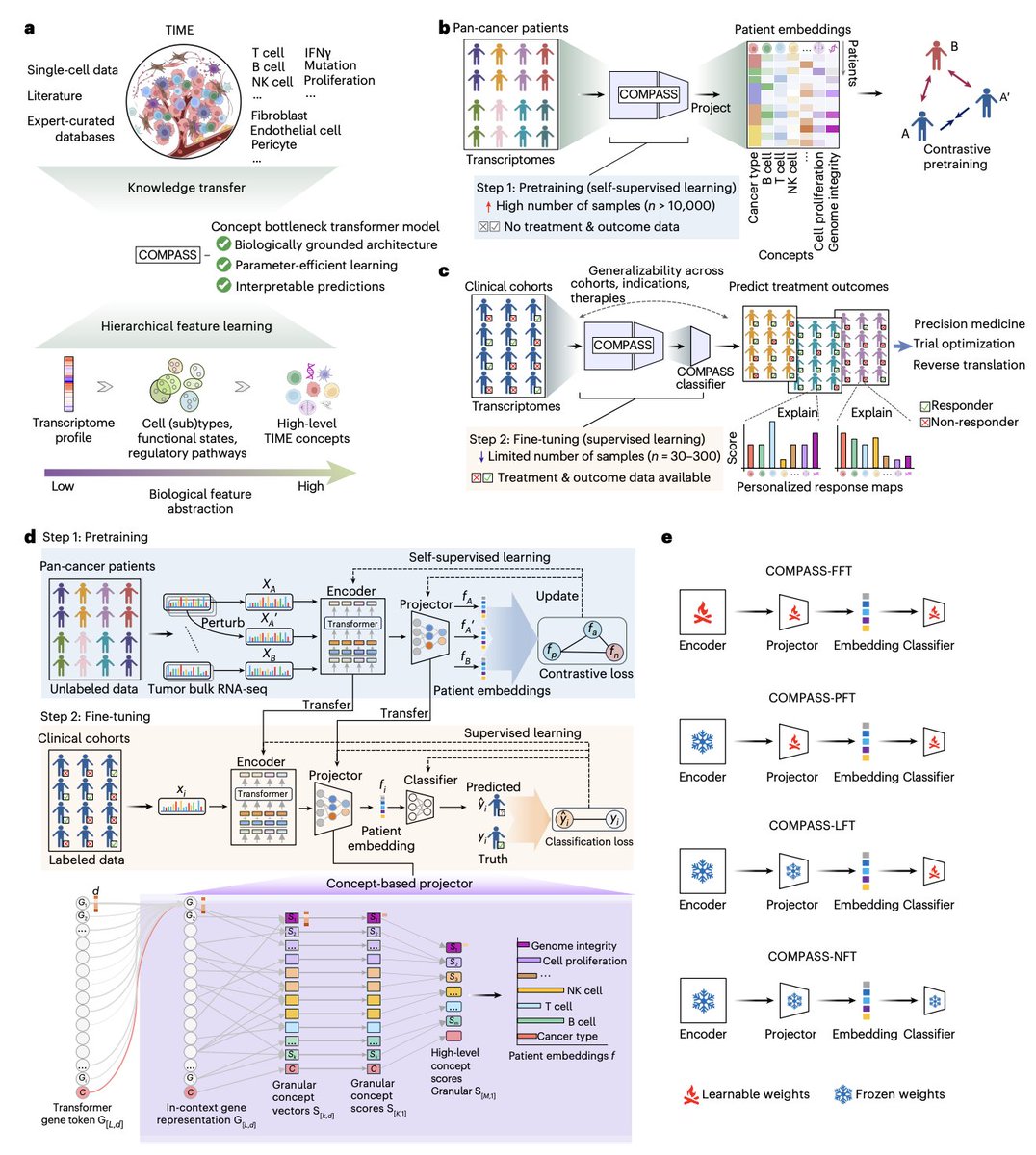
Generalizable AI Predicts Immunotherapy Outcomes Across Cancers and Treatments @NatureMedicine 1 COMPASS is a pan-cancer foundation model that predicts immune checkpoint inhibitor (ICI) response from pretreatment bulk tumor RNA-seq, aiming to overcome the well-known poor cross-cohort generalization of biomarkers like TMB and PD-L1 IHC. 2 The key design choice is a concept bottleneck transformer: instead of predicting response directly from thousands of genes, COMPASS routes gene expression through 44 biologically grounded immune concepts (immune cell states, tumor–microenvironment interactions, and signaling pathways), enabling both generalization and interpretation. 3 The 44 concepts are built from 132 curated gene signatures that are hierarchically aggregated into high-level TIME (tumor immune microenvironment) concepts, plus a cancer-type token; each patient is embedded into a 44-dimensional concept space intended to represent functional immune states rather than coarse phenotypes. 4 Pretraining uses self-supervised contrastive learning on 10,184 TCGA tumors across 33 cancer types (no treatment/outcome labels): augmented views of the same tumor are pulled together while different tumors are pushed apart in the concept space, producing transferable TIME representations. 5 On 16 independent ICI clinical cohorts (1,133 patients; 7 cancers; 6 ICI regimens including anti-PD-(L)1, anti-CTLA-4, and combinations), COMPASS outperformed 22 baseline methods in leave-one-cohort-out evaluation, improving average accuracy by 8.5% and AUPRC by 15.7% across cohorts. 6 Parameter-efficient transfer is central: partial fine-tuning (projector classifier) and linear probing (classifier only) were the most robust overall, while full fine-tuning tended to overfit when generalization was stressed; for very small cohorts, a no-fine-tuning retrieval mode can be preferable. 7 Generalization was explicitly tested beyond “new cohort”: COMPASS maintained stronger performance in cross-indication, cross-therapy, and cross-target splits (for example, training without CTLA-4 cohorts and testing on anti-CTLA-4; and predicting combination therapy responses using monotherapy-trained models). 8 In a held-out phase 2 trial (IMvigor210, atezolizumab-treated metastatic urothelial carcinoma), COMPASS-predicted responders showed substantially longer overall survival (hazard ratio ~4.7; log-rank P extremely significant), outperforming stratification by TMB, PD-L1 immune-cell score, and IHC-defined immune phenotype. 9 Mechanistic interpretability is delivered via “personalized response maps” that trace contributions from genes to granular concepts to high-level concepts to final response probability; these maps highlight resistance programs even in immune-inflamed non-responders, including TGFβ signaling, endothelial/vascular exclusion, CD4 T cell dysfunction (TH17-like programs), and B cell deficiency (implicating loss of TLS-associated benefit). 10 The paper emphasizes realistic limitations: reliance on bulk RNA-seq (no spatial resolution), incomplete clinical covariates preventing harmonized multivariable adjustment, and lack of non-ICI comparator arms (predictive vs prognostic signals may mix). The authors frame COMPASS as hypothesis-generating and requiring prospective validation, not as a stand-alone decision tool. 📜Paper: doi.org/10.1038/s41591-026-0… #ComputationalBiology #Bioinformatics #ImmunoOncology #CancerImmunotherapy #MachineLearning #FoundationModels #Transformers #Transcriptomics #Biomarkers #PrecisionMedicine
3
11
1,639
BiologyAIDaily
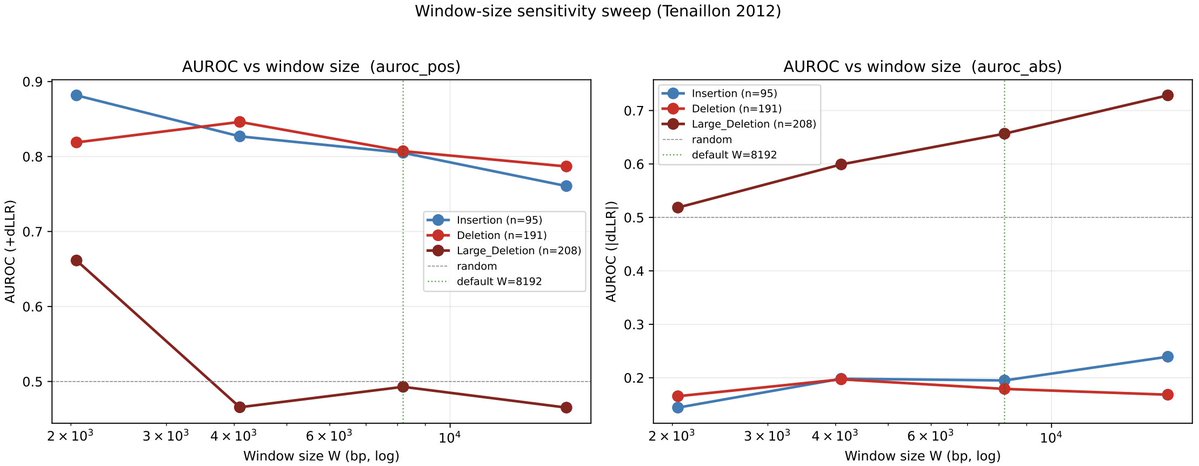
Context-dependent calibration of Evo2 likelihood with bacterial fitness: a quantitative characterization across five E. coli datasets 1. The paper argues Evo2 (a DNA foundation model) should be treated as a likelihood predictor, not a universal fitness predictor, because likelihood–fitness calibration changes sharply with variant context (coding vs regulatory), selection regime, and distance from wild type. 2. Using Evo2 7B zero-shot scoring (ΔLLR: change in pseudo-log-likelihood between mutant and reference windows), the authors map when ΔLLR aligns with measured phenotypes across five E. coli datasets spanning DMS, promoter MPRA, and experimental evolution. 3. Strong calibration appears in a plasmid-borne coding gene under stringent antibiotic selection: Firnberg 2014 TEM-1 β-lactamase (13,027 nucleotide variants) shows Spearman ρ = 0.545 overall (SNVs ρ = 0.606; indels ρ = 0.521), with a monotonic reliability curve across ΔLLR deciles. 4. Another strong setting is thermal experimental evolution where adaptive structural variants are enriched: Tenaillon 2012 reaches Insertion AUROC 0.882 (best window W = 2 kb) and Deletion AUROC 0.846 (W = 4 kb). A key methodological point is that window size is type-dependent; a single default window can cost ~5–7% AUROC. 5. The same organism can show decisive lack of calibration in regulatory context: Ireland 2020 RegSeq promoter MPRA (64,665 variant×condition pairs) yields ρ = 0.011, staying flat even after stratifying by conditions, promoters, or canonical −10/−35 motif positions—Evo2 recognizes motifs but does not predict expression changes from SNVs within them. 6. Chromosomal essential-gene DMS also shows near-zero calibration despite being coding: Dewachter 2023 (fabZ/lpxC/murA; 13,128 variants) gives ρ = 0.041 (each gene < 0.06), highlighting a major plasmid-vs-chromosome and/or selection-regime difference not captured by “coding vs regulatory” alone. 7. A clean mechanistic axis emerges from a combinatorial landscape: Papkou 2023 folA (30,000 variants) is intermediate overall (ρ = 0.237), but calibration decays monotonically with sequence divergence from wild type—ρ = 0.575 at 2 mutations down to ρ = 0.065 at 9 mutations—showing an explicit out-of-distribution effect. 8. The authors fit an explicit calibration function across per-dataset/per-divergence strata: ρ = f(divergence, context). Weighted Fisher-z regression gives a negative divergence coefficient (−0.028 per additional mutation) and a negative regulatory-context coefficient (−0.33), with R² = 0.49, presented as an illustrative quantitative “lookup surface” rather than a universal law. 9. They test and refute a simple “training over-representation” explanation for why TEM-1 calibrates better than essentials: chromosomal essentials have far more raw NCBI deposition counts than TEM-1 yet calibrate much worse (calibration does not increase with deposition count; may even decrease). Deposited variant diversity (not copy count) is proposed as a plausible but untested factor. 10. A practical contribution is methodological guardrails for DNA-LM variant scoring: avoid anchor-based indel scoring artifacts (which can silently force ΔLLR = 0), tune window sizes per variant type, and report sign conventions carefully because different variant classes can flip the “adaptive” ΔLLR direction. 💻Code: github.com/sunsungkim04-sys/… 📜Paper: biorxiv.org/content/10.64898… #ComputationalBiology #Bioinformatics #Genomics #DeepLearning #FoundationModels #LanguageModels #VariantEffectPrediction #Ecoli #DMS #MPRA #ExperimentalEvolution
2
7
1,214
BiologyAIDaily
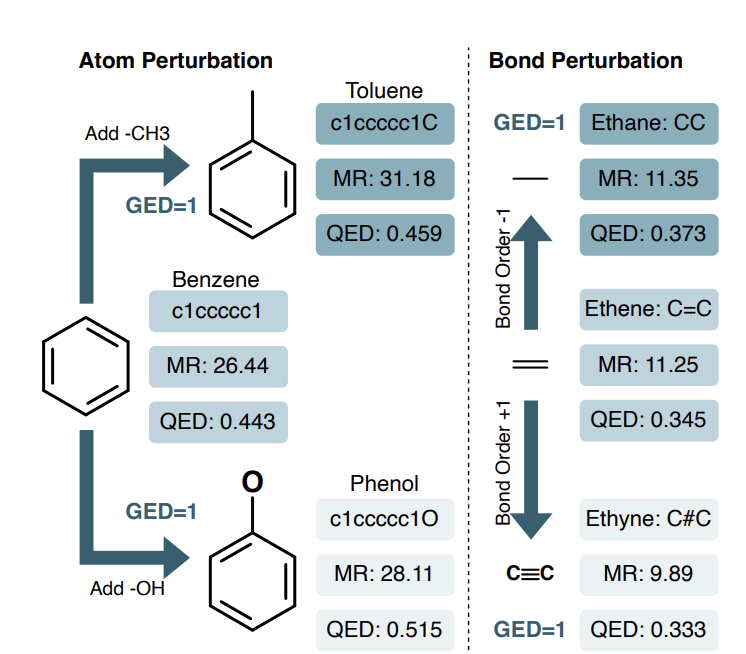
Do LLMs Truly Generalize in the Molecular Domain? A Perturbation-Based Analysis 1 Molecular LLMs can look strong on standard random-split benchmarks, yet this paper shows a fragile “local trust region”: even a single chemistry-valid structural edit (Graph Edit Distance, GED=1) can trigger large performance drops across common molecular tasks. 2 The core contribution is a Molecular Perturbation framework that generates syntax-valid structural variants of training molecules under controlled GED, enabling a manifold-regularity test rather than a static in-distribution evaluation. 3 Perturbations are designed to mimic realistic medicinal chemistry moves and are split into two granular types: atom perturbations (heteroatom substitutions with valence-preserving constraints) and bond perturbations (bond order changes with sanitization checks and implicit valence constraints). 4 Validity is enforced during generation (not just post-hoc): RDKit sanitization plus an incremental rejection mechanism, and an additional filter that keeps only molecules with valid IUPAC names (chosen as a standardized, unambiguous textual representation). 5 GED is used as a controlled axis of “distance from the training manifold” (levels 1–5). Increasing GED monotonically decreases chemical similarity (Morgan fingerprint Tanimoto) and increases token-space distance (SMILES Levenshtein), but the paper highlights a key mismatch: sequence closeness is not a reliable proxy for chemical/topological closeness. 6 Across three representative tasks—QED regression (RMSE), IUPAC→molecule generation (Morgan fingerprint similarity), and molecule→IUPAC generation (BLEU-4)—models show steep early degradation (often GED 1–3) followed by a slower decline/plateau, indicating limited local smoothness around training molecules. 7 Robustness depends on model family: domain-pretrained encoder–decoder molecular LLMs (MolT5, BioT5/SELFIES) degrade less at high GED than general LLMs (Qwen3) on understanding-style tasks, while decoder-only models can have stronger clean generative performance yet suffer sharper relative drops under perturbation. 8 Perturbation type matters by task: for understanding tasks (QED, Mol2IUPAC), bond edits often hurt less than atom substitutions at matched GED, consistent with these targets being more sensitive to atomic composition/functional groups than to certain bond-order changes; for IUPAC2Mol generation, atom vs bond perturbations cause similar degradation because exact connectivity and identities must be recovered. 9 The paper then tests In-Context Tuning (ICT) as a robustness lever grounded in the molecular similarity principle. It provides an idealized analysis viewing ICT as kernel smoothing over retrieved neighbors, yielding an error bound governed by retrieval radius R (nearest-neighbor distance), suggesting robustness should track retrieval quality. 10 Empirically (shown on Galactica-125M), nearest-neighbor ICT improves robustness in most perturbed settings (15/18 task–GED cells), while Random ICT largely removes benefits and can be catastrophic for IUPAC2Mol—supporting the claim that structural similarity in retrieval, not just “having context,” drives gains. However, ICT benefits shrink as GED grows because nearest neighbors become less relevant off-manifold, so anchoring remains inherently local. 📜Paper: arxiv.org/abs/2607.01800 #ComputationalBiology #Cheminformatics #MolecularAI #LLM #Robustness #DrugDiscovery #MachineLearning #GraphEditDistance #InContextLearning #RetrievalAugmentedGeneration
3
21
1,525
MehebubShabab
Honored to lead a session on protein-protein interactions using AlphaFold for students at @txwomans College of Arts & Sciences! Huge thanks to Dr. Micah & Project Access at TWU organizers for making it happen! #Bioinformatics #AlphaFold #TWU #ComputationalBiology #Mentorship
1
1
10
1,186
sorhanHQ
Will AI find a Cure to Alzheimer’s by 2030? #founder #startups #computationalbiology #machinelearning #ai
28
pharbiois
🚨 LAS PROTEÍNAS DE MEMBRANA NO SON ESTÁTICAS… SON DINÁMICAS. 🧬⚡ Más del 50% de los blancos terapéuticos se localizan en proteínas de membrana. Si solo analizas una estructura estática, podrías estar perdiendo información clave sobre su funcionamiento. Aprende a simular su comportamiento en un entorno lipídico real mediante Dinámica Molecular. 🎓 Curso: Dinámica Molecular de Proteínas de Membrana 📅 Inicio: 13 de julio de 2026 💻 Modalidad 100% online y asincrónica (aprende a tu ritmo) 👨‍🏫 Profesor: Dr. Jorge Luis Rosas Trigueros, Investigador SNII 🔬 Aprenderás a: ✅ Preparar sistemas proteína-membrana. ✅ Ejecutar simulaciones de dinámica molecular. ✅ Analizar RMSD, RMSF, radio de giro e interacciones proteína-lípido. ✅ Interpretar cambios conformacionales con aplicaciones en investigación biomédica y diseño de fármacos. 🚀 Además: 💥 Si quieres llevar tus simulaciones hasta microsegundos (μs), tendrás acceso a precios exclusivos con nuestro socio tecnológico NF Innovations, utilizando infraestructura de supercómputo de alto rendimiento. 📘 Más información del curso: pharbiois.com/dinamica-membr… 🎁 Promociones e inscripción: pharbiois.com/inscribirme-di… 🎥 Clase gratuita: youtu.be/m6dd8Tg5WLA?si=htgQ… 🆓 Regístrate a nuestras masterclass gratuitas: pharbiois.com/contacto ▶️ Revive nuestras masterclass anteriores: youtube.com/@pharbiois #DinámicaMolecular #ProteínasDeMembrana #Bioinformática #ModeladoMolecular #DrugDiscovery #DiseñoDeFármacos #Biotecnología #BiologíaEstructural #Supercomputación #HPC #NFInnovations #Pharbiois #Investigación #NAMD #VMD #GROMACS #ComputationalBiology
12
NImmunology
Here we code!👩🏽‍💻 Kickstarting a 8-week long, hands-on workshop to make #ComputationalBiology accessible for young researchers of @NImmunology with @rintukutum @AshokaUniv With live coding sessions & lectures, researchers delve into large #genomic dataset analysis📈 @DBTIndia @BricDbt
18
1,161
Just2Trade
🧬 Scientists are moving closer to building a complete virtual model of yeast — a digital twin of a living cell. This isn't just a biology experiment: a fully simulated organism would let researchers test drugs, optimize fermentation, and unlock the deepest secrets of cellular life *without ever touching a test tube*. Yeast has been humanity's quiet lab partner for millennia — now it might become the first life form to exist entirely in silico. The implications for biotech, medicine, and synthetic biology are enormous. If we can simulate a cell, we're one step closer to simulating life itself. #SyntheticBiology #Biotech #ComputationalBiology #VirtualCell #LifeSciences Companies in this space: Ginkgo Bioworks ($DNA, NYSE), Zymergen/Ginkgo ($DNA, NYSE), Twist Bioscience ($TWST, NASDAQ)
32
febos41
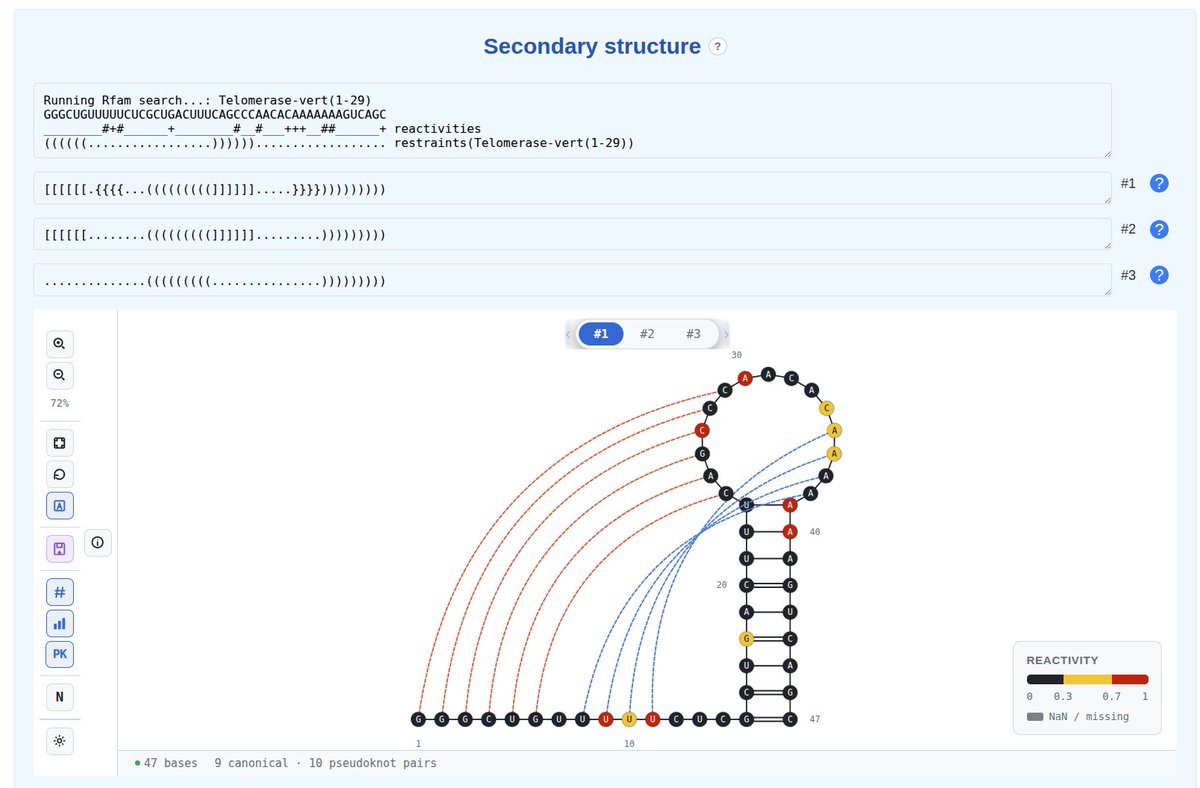
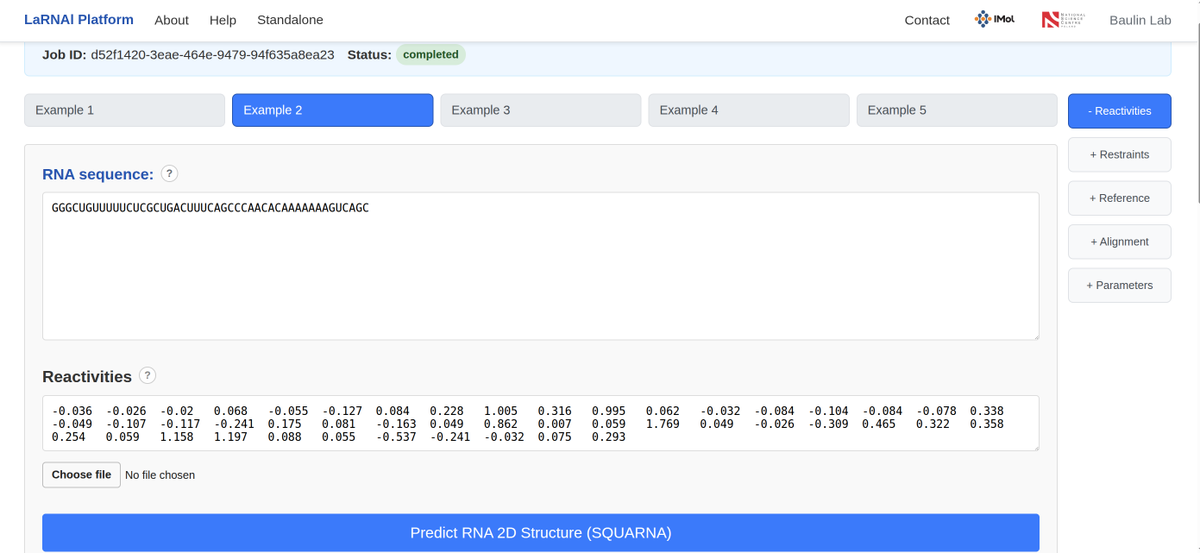
We’ve just released a new SQUARNA preprint: doi.org/10.64898/2026.06.30.… Alongside it, we are launching the LaRNAl Platform: larnal.imol.institute/ #RNA #SQUARNA #LaRNAl #LaRNAlP #2D #Structure #Prediction #Bioinformatics #StructuralBiology #ComputationalBiology #Algorithms
1
2
11
1,439