
外傷性脳障害で過剰な炎症反応が起こるのを、脳内の細胞外小胞 (EV) が抑制するという知見。特にその機能を担う分子に、アストロサイト由来EVに含まれる長鎖非コードRNA (lncRNA) である4933431K23Rik (49rik) があるらしい。- He et al., Mol. Ther., 31: 1313-1331 (2023) doi.org/10.1016/j.ymthe.2023…
Jerry Smalling retweeted

"When DNA and RNA Trip - Quantum overlays, electromagnetic architecture and the hidden risks of redesigning mRNA"
A review of a brand new published in Quantum Reports about DNA and RNA.
Writing this one made me feel like I am about to burst out of the matrix. :)
@Kevin_McKernan @DrJackKruse @brownstoneinst @Honest_Medicine @weldeiry @BrianRoemmele @movementandreas @QuantumTumbler @QuanticASI
substacktools.com/sharex/QoF…

3
19
57
4,272

Rode haring :) Vraag maar aan @grok. Die kan je vertellen dat er nog een hele grote afstand zit tussen een positieve associatie van viraal RNA in fijne aerosols in een geselecteerde groep en vaccinatie enerzijds en een generiek causaal verband tussen vaccinatie en virale shedding anderzijds.
1
1
14

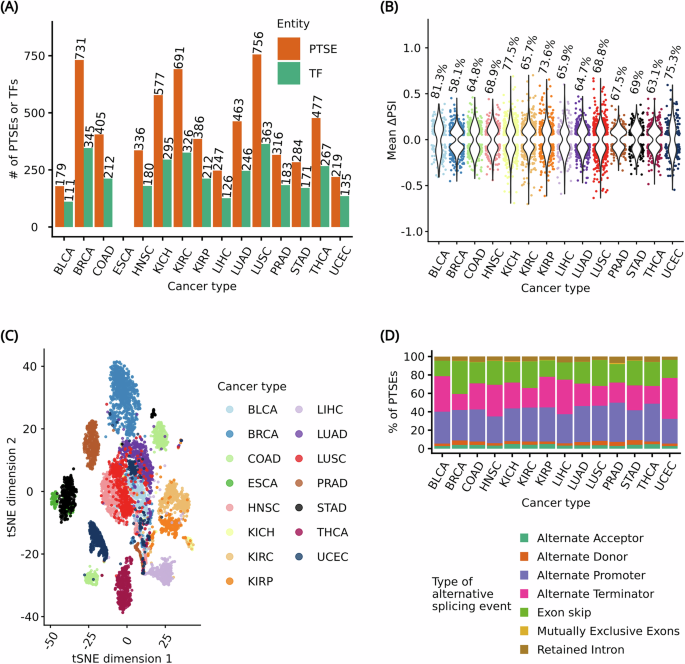
A new study analyzing 15 cancer types found over 2,000 abnormal RNA splicing events that disrupt 727 key transcription factors. In 205 of these proteins, the errors hit critical functional domains, potentially driving cancer growth.

🧬🫀 4-Day Online Workshop: Multi-Omics Data Integration: Connecting WES and RNA-Seq for Rare Disease Diagnosis
Learn GATK variant calling, ACMG classification & RNA-seq validation using Hypertrophic Cardiomyopathy as a case study.
📅 Aug 3-6, 2026 🔗 forms.gle/ab1Sv1Vdz88EM8N4A

21

諫早之助 retweeted

24m
健康な子供や若者が、彼女たちが推進してきたコロナワクチンで亡くなってるのに、コスパとか言っちゃうんだね。
そいや、ドトールにm RNA入ってた発言も、神奈川県の中学生が接種当日に亡くなった事件の後に投稿されたものでしたね。ふざけるなと今も思ってます。
1
1
8
94

🤖 AI NEWS ROUNDUP — July 06, 2026
1️⃣ ANTHROPIC ENTERS DRUG DESIGN — AI LABS BUILD THEIR OWN PHARMA PIPELINES
Anthropic announced it will develop its own drugs, targeting diseases that traditional big pharma overlooks. The move comes alongside the launch of Claude Science, an AI workbench integrating 60 scientific databases and tools for genomics, proteomics, and chemistry. While skeptics argue the company lacks biotech expertise, researchers like Patrick Kidger counter that building internal drug programs could accelerate AI-for-science capabilities and attract top talent to the field.
🔹 @PatrickKidger
2️⃣ ANTHROPIC'S CLAUDE SCIENCE LAUNCHES WITH AUTONOMOUS RESEARCH CAPABILITIES
Claude Science connects to over 60 scientific databases and can autonomously run single-cell RNA sequencing, CRISPR design, and computational chemistry workflows on HPC clusters. The platform runs on existing Claude models including Opus 4.8. Industry data from BCG shows AI-discovered molecules now achieve 80-90% Phase 1 safety rates versus the historical average of 50%, though Phase 2 efficacy remains at around 40%.
🔹 @m_goes_distance
3️⃣ ANTHROPIC CLAUDE DESIGN TARGETS FIGMA — THE PREDATORY PLAYBOOK RETURNS
Anthropic's Chief Product Officer Mike Krieger resigned from Figma's board on April 14, 2026. Just three days later, Anthropic launched Claude Design, directly competing with Figma's core product. The pattern mirrors similar moves by Big Tech companies entering markets where their executives held board positions, raising questions about competitive dynamics in the design tool space.
🔹 @MilkRoadAI
4️⃣ CEREBRAS CEO: DATA CENTERS, NOT CHIPS, ARE THE AI GROWTH BOTTLENECK
On their first earnings call as a public company, Cerebras CEO Andrew Feldman identified data center availability as the primary constraint on AI infrastructure expansion, surpassing chip supply and customer demand. The insight highlights a shifting bottleneck in the AI buildout — compute hardware is scaling rapidly, but finding facilities with sufficient power and cooling capacity is becoming the limiting factor.
🔹 @BlackPantherCap
5️⃣ TENCENT RELEASES HY3 — 295B MoE MODEL WITH ONLY 21B ACTIVE PARAMETERS
Tencent dropped Hy3, a 295-billion parameter Mixture-of-Experts model where only 21 billion parameters activate during inference, plus a 3.8B MTP layer. In blind tests with 270 domain experts, Hy3 scored 2.67/4 on benchmarks, outperforming GLM-5.1 at 2.51/4. The model is fully open-weight and can run on 4× RTX Pro 6000 workstations, making frontier-class performance accessible to smaller teams.
🔹 @testingcatalog
6️⃣ HY3 BENCHMARKS REVEAL COMPETITIVENESS WITH FRONTIER MODELS
Detailed benchmark analysis shows Hy3 nearly matches GPT-5.5 and Claude Opus 4.8 on BrowseComp, and beats GPT-5.5 on Frontierscience-Olympiad. Tencent trained the model using feedback from over 50 internal product teams, optimizing for execution, interaction, and real workflow performance rather than synthetic benchmarks alone.
🔹 @yuhasbeentaken
7️⃣ AI WEEKLY RECAP — JUNE 29 TO JULY 5 SEES MAJOR MODEL ROLLOUTS
The week from June 29 to July 5 brought a wave of releases: limited rollout of GPT-5.6 with safety-focused updates, Anthropic's Claude Science platform launch, Tencent's Hy3 open-weight model, and continued export control developments affecting Anthropic's most advanced models. The pace of releases across both Chinese and US labs underscores an accelerating competitive cycle in AI development.
🔹 @shushant_l
💭 The AI industry is entering a phase where toolmakers are becoming domain players — Anthropic building drugs, Claude Design challenging Figma, Chinese labs releasing models that rival the frontier. The separation between "AI infrastructure" and "AI applications" is blurring fast, and the companies that can bridge both are likely to define the next cycle.
Which of these developments do you think will have the biggest long-term impact — AI in drug discovery, open-source models catching up to frontier, or data center bottlenecks shaping AI growth? 👇
#AI #Anthropic #Tencent #Hy3 #ClaudeScience #AIDrugDesign #Cerebras #OpenSourceAI
2
101

Jane Webster retweeted

Feb 17
Thanks @CIDRAP for highlighting our study. We found viral RNA in the air even at low C02 levels (which did not go >800ppm). This means in hospitals, there is risk of infection even with good ventilation. #masks #HEPA #vaccines all work to mitigate risk.

Study: SARS-CoV-2 RNA found in 39% of hospital air samples during outbreaks, despite good ventilation
Positive samples were significantly more common in the emergency department than in intensive care.
cidrap.umn.edu/covid-19/stud…

30
448
914
22,559

Manuscript Title: Aging disrupts hepatocyte zonation homeostasis in mice
and humans
#HEP_highlights: Single nucleus RNA sequencing in mice and humans
also point to rewired niche signaling, a potential clue to age related liver risk.
journals.lww.com/hep/citatio…

103


4/
Example: R is perfect for differential expression in RNA-seq. (check pyDESseq2 and Edgepython too)
But if you want to automate thousands of file manipulations, bash will save you hours.
Right tool, right task.
1
1
24

【論文掲載&プレスリリース】
三重大学(臧黎清 特任准教授・島田康人ら)と江南化工㈱の共同研究成果が、食品機能性分野の国際誌 Journal of Functional Foods に掲載されました🌿
三重県特産の海藻ヒトエグサ由来の多糖類「ラムナン硫酸(RS)」が、高脂肪食で誘導した糖尿病性肥満モデルマウス(NSY/Hos)において、
▶体重増加の抑制
▶血中中性脂肪・総コレステロールの低下
▶空腹時血糖・インスリン抵抗性(HOMA-IR)の改善
といった代謝指標の悪化を抑えることを確認しました。
さらに、褐色脂肪・肝臓・骨格筋を対象としたRNA-seq解析では、TNF-α・IL-6・IL-1βなどの炎症性シグナルが広範に抑制方向へ変化。培養マクロファージ実験でも炎症性サイトカインの発現抑制がみられ、RSが「全身の代謝改善」と「組織特異的な抗炎症作用」の両面から糖尿病性肥満に働きかける可能性が示唆されました。
論文はオープンアクセスで全文お読みいただけます👇
📄 doi.org/10.1016/j.jff.2026.1…
🏫 三重大プレスリリース
mie-u.ac.jp/news/topics/2026…ラムナン硫酸 #ヒトエグサ #機能性食品 #腸内細菌 #diabesity

1
5
378
Plant Science retweeted

NEW ONLINE: PCIS1 is an essential factor in mitochondrial RNA splicing and complex I biogenesis, with distinct effects in null and downregulated mutants link.springer.com/article/10…

1
1
64

He really must visit lab-grown meat, GMO food, RNA food, 3D print food, and Apeel science.
9

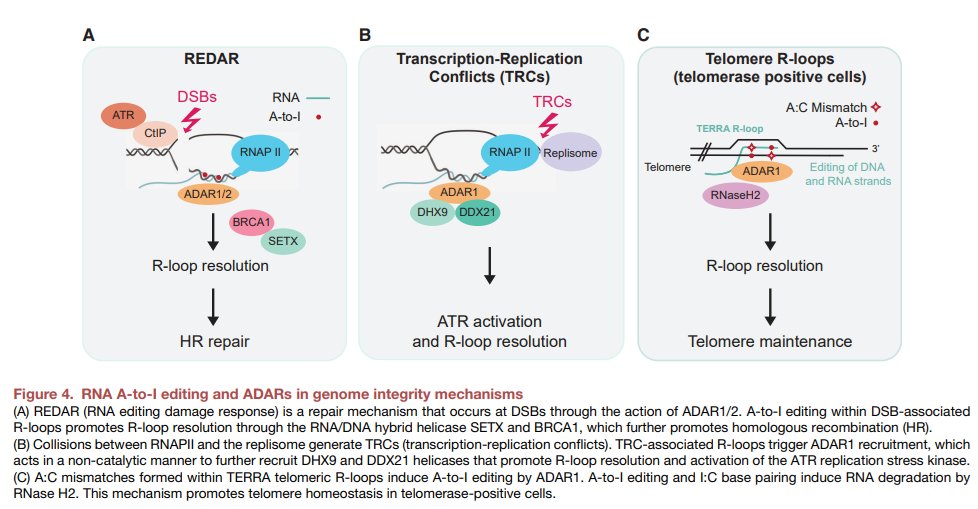
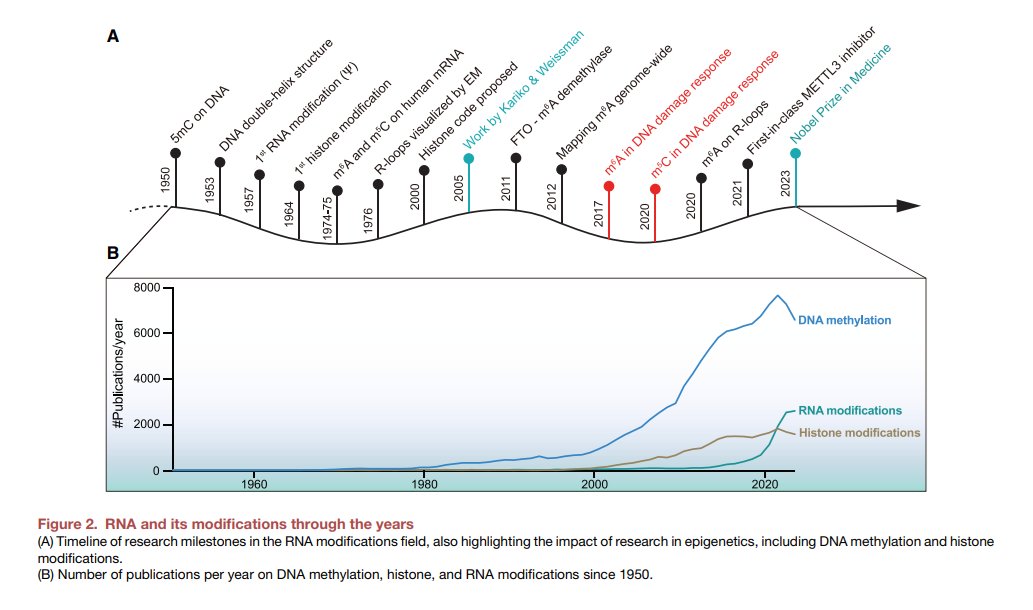
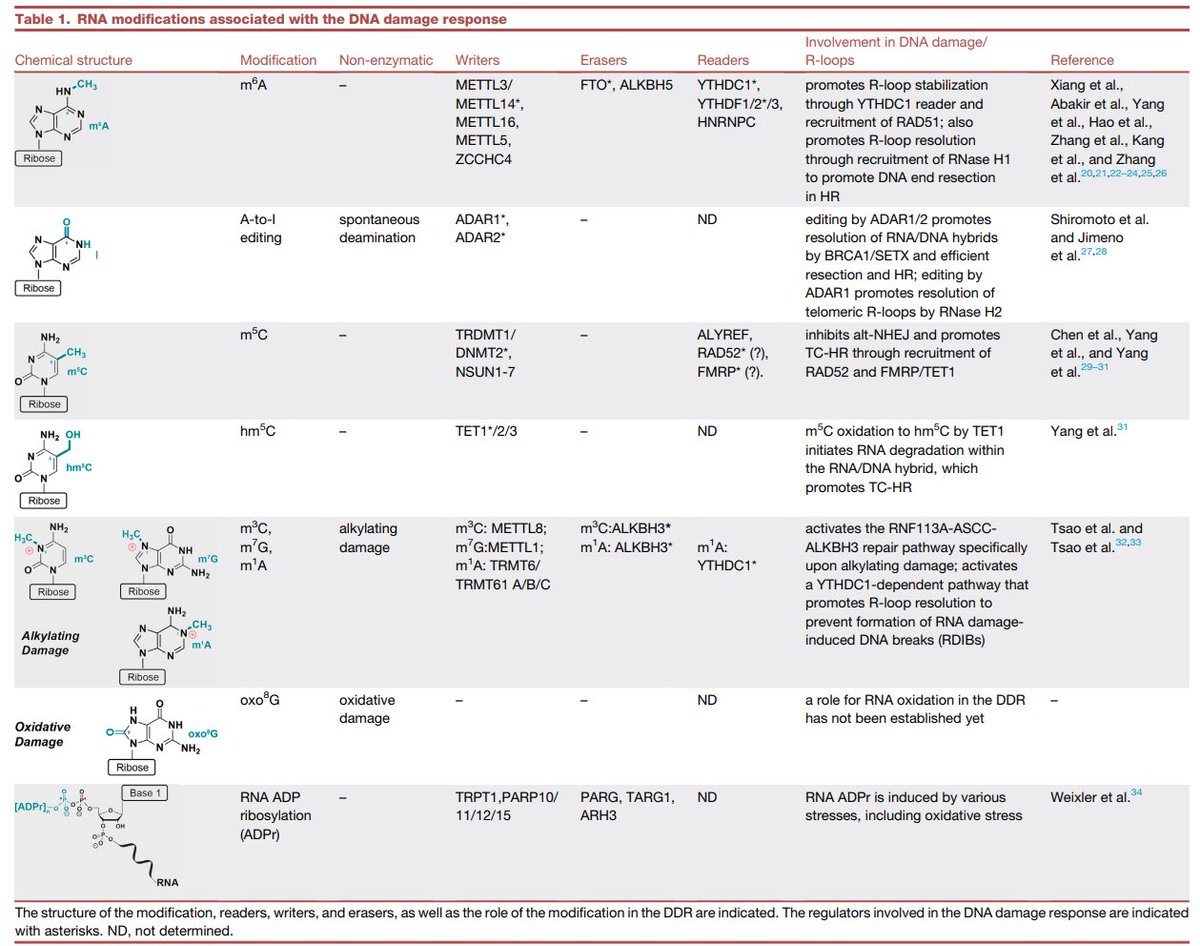
RNA isn't repair's bystander: m6A, m5C & ADAR editing control R-loop fate and HR/NHEJ choice at DNA breaks (Mol Cell 2024). Epitranscriptome = new DDR drug target.
doi.org/10.1016/j.molcel.202… #DNARepair #RNA #Cancer #Epigenetics

6