Filter
Exclude
Time range
-
Near
SCSETBennett
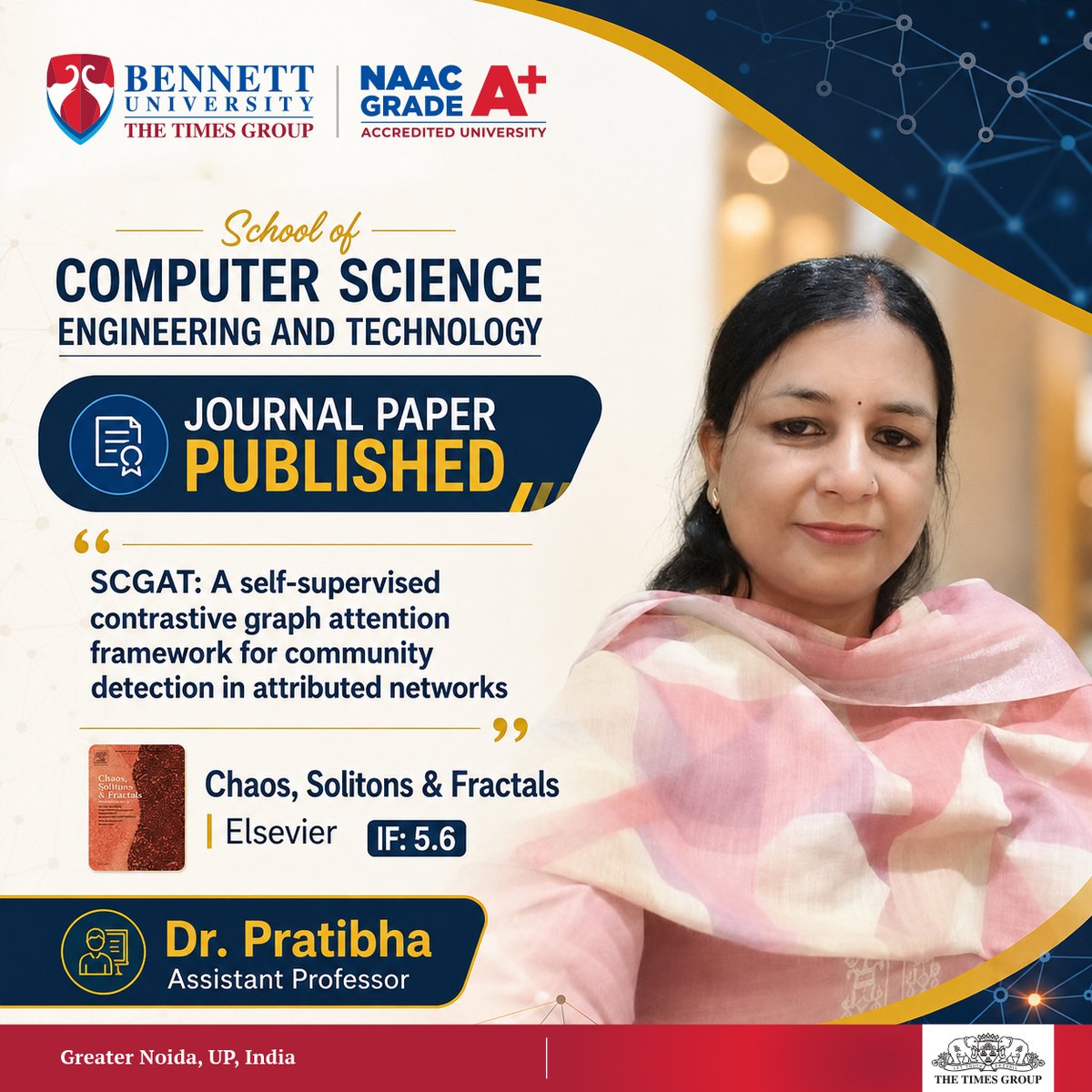
Congratulations to Dr. Pratibha (Assistant Professor, #scsetbennett) for the publication of the #research paper in Chaos, Solitons & Fractals, Elsevier. #GraphNeuralNetworks #CommunityDetection #SelfSupervisedLearning #ContrastiveLearning #GraphAttention #NetworkAnalysis
35
_ManojBharadwaj
After months of research, countless experiments, and more failed ideas than I can count… I’m excited to share that our paper has been published at the 𝗜𝗖𝗠𝗟 𝟮𝟬𝟮𝟲 𝗙𝗼𝘂𝗻𝗱𝗮𝘁𝗶𝗼𝗻 𝗠𝗼𝗱𝗲𝗹𝘀 𝗳𝗼𝗿 𝗦𝘁𝗿𝘂𝗰𝘁𝘂𝗿𝗲𝗱 𝗗𝗮𝘁𝗮 (𝗙𝗠𝗦𝗗) 𝗪𝗼𝗿𝗸𝘀𝗵𝗼𝗽! 📄 𝗟𝗟𝗠-𝗚𝘂𝗶𝗱𝗲𝗱 𝗛𝗮𝗿𝗱 𝗡𝗲𝗴𝗮𝘁𝗶𝘃𝗲 𝗠𝗶𝗻𝗶𝗻𝗴 𝗳𝗼𝗿 𝗦𝘁𝗿𝘂𝗰𝘁𝘂𝗿𝗲𝗱 𝗣𝗿𝗼𝗱𝘂𝗰𝘁 𝗗𝗮𝘁𝗮 𝗠𝗮𝘁𝗰𝗵𝗶𝗻𝗴 One observation kept bothering us. No matter how much more data we added… No matter how many more epochs we trained… Top-1 retrieval accuracy simply refused to improve. It had hit an invisible ceiling. Instead of asking “How do we build a bigger model?”, we asked a different question: “What if the model is learning from the wrong negatives?” Most contrastive learning pipelines rely on in-batch negatives. The problem? Many of them are too easy. Real-world product matching isn’t about telling an iPhone apart from a refrigerator. It’s about distinguishing products that look almost identical. - iPhone 14 Pro 256 GB - iPhone 14 Pro Max 256 GB Those are the examples that actually challenge a model. So we built LLM-HN - a framework that uses GPT-4o mini as a structured hard-negative generator. Instead of random negatives, it creates realistic product variations through: - Component swaps - Phonetic variations - Abbreviations - Semantic distractors The result? Our approach significantly improved retrieval quality while using only 10% of the labeled data and keeping API costs under $1.50. This work reinforced something I’ve started believing more and more: Sometimes the biggest bottleneck isn’t the model. It’s the data you choose to teach it with. A huge thank you to my co-authors for making this possible. Research is never a solo journey. I’m looking forward to hearing your thoughts and discussing ideas around retrieval, contrastive learning, hard-negative mining, and LLM-assisted data generation. Paper Link: openreview.net/pdf?id=oTxjy6… #ICML2026 #research #contrastivelearning #informationretrieval
40
TeleAI_AIFlow
💡PiNDA invites us to rethink the role of noise in AI. It turns augmentation from a handcrafted bottleneck into a learnable, data-driven process. It’s a step toward truly general contrastive learning — no more domain-specific tricks needed. 🔭Perhaps the future of contrastive learning is not about eliminating noise, but learning which noise is worth embracing. #ICML2026 #MachineLearning #ContrastiveLearning
1
22
TeleAI_AIFlow
📊Contrastive learning relies heavily on handcrafted data augmentation. 💡Our @icmlconf 2026 paper reveals a surprising insight: Many seemingly different augmentations approximate the same underlying principle: Positive-incentive Noise (Pi-Noise or π-Noise)-noise that benefits the task rather than harming it. 🤔So if all roads lead to π-Noise, why not learn it directly? Meet PiNDA (Pi-Noise Driven Data Augmentation), a framework that learns task-beneficial noise and turns it into trainable augmentation. 📄Paper: arxiv.org/abs/2408.09929 ⌨️Code: github.com/hyzhang98/PiNDA #ICML2026 #ContrastiveLearning #SelfSupervisedLearning #MachineLearning
5
6
196
Automation_MDPI
#CallForReading Reliable Detection of Unsafe Scenarios in Industrial Lines Using Deep #ContrastiveLearning with Bayesian Modeling 🎓By Jesús Fernández Iglesias, et al. 🏢Universidad de Valladolid @UVa_es 🔗 Full paper: mdpi.com/2673-4052/6/4/84 #SmartManufacturing #ProcessControl
13
BiologyAIDaily
Contextualizing Biological Language Models across Modalities via Logit-Space Contrastive Alignment 1. The paper introduces LOGICA, a multimodal training framework that aligns biological foundation models directly in output-logit space, so the model’s native per-token probability interface is preserved while becoming context-conditioned (e.g., protein conditioned on ligand; TCR conditioned on peptide; mutations conditioned on drug). 2. Core idea: instead of CLIP-style alignment of pooled embeddings or adding task-specific heads, LOGICA defines compatibility as site-averaged conditional token log-likelihood. Matching and ranking are optimized with contrastive objectives (InfoNCE / Bradley–Terry) where the “score” is literally the contextualized token likelihood produced by each backbone’s original token head. 3. Key technical mechanism: native-head-preserving cross-modal adapters. Two pretrained encoders are coupled with bidirectional cross-attention adapters, and the adapter update is added back through a gated residual (near-zero init) so early training stays close to the pretrained model, while still allowing context to reshape token distributions. 4. LOGICA is designed to work even when modalities have distinct vocabularies and tokenizers (e.g., amino acids vs SELFIES tokens). Because alignment happens in each model’s own logit space, it does not require a shared embedding space, shared decoder, or shared tokenizer across modalities. 5. A main biological motivation is mutation-local variant ranking. LOGICA uses a context-conditioned likelihood-ratio score over only mutated sites (mutant token likelihood vs wild-type token likelihood under the same context). For comparing variants that share the same mutated positions, the wild-type terms cancel exactly, reducing pairwise ranking to comparing contextualized mutant-token likelihoods at perturbed sites. 6. Bidirectional scoring is supported when both modalities have token heads: score x|y and y|x can be combined with a learned convex mixture to handle calibration differences (length, entropy scale, vocabulary size) across modalities, while still remaining interpretable as token-level likelihood contributions. 7. Protein–ligand experiments: ESM-2 (protein) is paired with SELFormer (SELFIES ligand LM). LOGICA is pretrained on ~20M BindingDB measurements with anchored negatives (partner swaps and perturbations), then evaluated on DTI benchmarks (DAVIS, BindingDB-test, BioSNAP). Under controlled ablations, LOGICA outperforms (i) latent contrastive alignment using pooled vectors and (ii) conditional MLM-style adaptation without explicit mismatched negatives. 8. Drug-conditioned resistance prediction (protein DMS under drugs): LOGICA fine-tunes to rank single mutations using only mutated-site logits. On held-out-gene single-mutation resistance panels, latent-space baselines stay near random (~0.55 AUC), while LOGICA reaches ~0.65 AUC; in multi-oncogene panels it is consistently strongest among contextualized sequence-model variants and improves Spearman/AUC versus matched latent fusion approaches. 9. TCR–peptide experiments: TCRLang (paired CDR3α/β LM) is coupled with ESM-2 (peptide). LOGICA is trained with synthetic negatives from point mutations (reflecting that most local perturbations disrupt binding) and evaluated zero-shot on TCR–peptide deep mutational scanning. It shows strong directionality: TCR-anchored scoring is best for peptide-variant ranking; peptide-anchored scoring is best for TCR-variant ranking; a dual-anchor mixture balances both. 10. Because logits are preserved, LOGICA enables token-level interpretation without extra attribution heads: cross-modality dependency maps are computed by perturbing a token in one modality and measuring how the predicted distribution changes at positions in the other modality. On crystallized TCR–pMHC structures, these dependency scores are enriched for true contacts (notably stronger for peptide–CDR3β), connecting the learned contextual likelihoods to structural interaction signals; the same interface can also support context-conditioned generation via Gibbs sampling. 💻Code: anonymous.4open.science/r/lo… 📜Paper: arxiv.org/abs/2606.18703 #ComputationalBiology #Bioinformatics #ProteinLanguageModels #ContrastiveLearning #MultimodalAI #DrugDiscovery #Immunology #TCR #ProteinEngineering #VariantEffectPrediction
13
1,804
BiologyAIDaily
End-to-end multimodal structure elucidation from raw spectra combining contrastive learning and evolutionary algorithms @NatureComms 1. SECS is presented as an end-to-end CASE framework that takes raw, multimodal spectra (NMR, IR, MS/HSQC) and outputs a ranked list of candidate structures, aiming to remove manual preprocessing steps like peak picking that often block full lab automation. 2. The core idea is cross-modal contrastive learning: SECS trains encoders so that spectra and the corresponding molecule (SMILES) map to the same latent embedding. This enables “search molecules with spectra”, leveraging huge molecular databases rather than much smaller spectral databases. 3. The multimodal design is flexible: users can query with any subset of available modalities (e.g., only NMR; or NMR IR; or NMR IR HSQC). Retrieval accuracy increases as more modalities are combined, addressing the degeneracy that occurs when any single technique is used alone. 4. SECS uses a “retrieve, then refine” pipeline: first retrieve composition-matched candidates from a molecular database using embedding similarity; then refine beyond the database via a graph-based genetic algorithm (GraphGA) that edits atoms/bonds/substructures to optimize agreement with the spectral embeddings. 5. The evolutionary step is guided by a reward that combines (i) average cosine similarity between molecular and spectral embeddings across provided modalities and (ii) a molecular-formula penalty, enabling exploration while still steering candidates toward plausible compositions. 6. On a challenging benchmark (sampled from a large multimodal dataset), the full SECS pipeline reports strong top-1 structure elucidation performance and outperforms a prior multimodal baseline that relied on peak lists rather than raw spectra, highlighting the benefit of avoiding manual preprocessing. 7. SECS also provides calibrated confidence: similarity scores in the aligned latent space correlate with empirical correctness, allowing the score to function as a practical reliability estimate (useful for autonomous decision-making and for human review). 8. A notable application is error detection in the literature/records: in case studies of known misassignments, SECS assigns low scores to the originally reported (incorrect) structures and can propose higher-scoring alternatives, including the corrected structures. 9. The paper emphasizes domain adaptation without retraining: updating the reference molecular database changes the candidate prior and the contextual “nearest known examples”, supporting deployment to in-house ELNs or new chemistry domains without rebuilding the encoders. 10. Real-world evaluation includes experimental spectra: performance on an in-house set improves substantially with spectrum augmentations and further improves with finetuning on experimental data; adding complementary experimental 13C NMR from community resources further boosts identification rates, underscoring the importance of bridging simulation-to-experiment gaps. 11. Human comparison (pilot study): in a controlled challenge using difficult NMR-only tasks, SECS performs comparably to experienced chemists in aggregate, while also returning ranked candidates plus context rather than a single opaque answer. 💻Code: github.com/lamalab-org/secs ; github.com/lamalab-org/secs-… 📜Paper: doi.org/10.1038/s41467-026-7… #ComputationalChemistry #Cheminformatics #MachineLearning #ContrastiveLearning #MultimodalAI #NMR #MassSpectrometry #InfraredSpectroscopy #StructureElucidation #LabAutomation
3
24
2,070
BiologyAIDaily
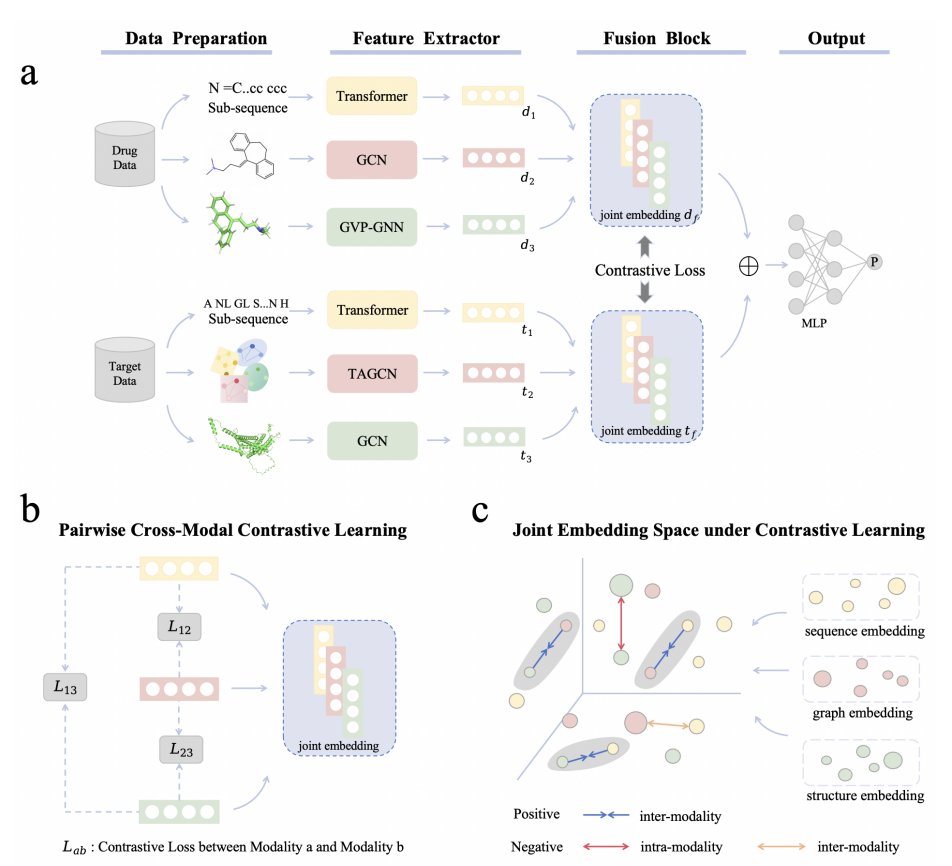
A Triple-Modal Contrastive Learning Framework with Sequence, Graph, and 3D Features for Drug–Target Interaction Prediction 1 TriMod-DTI is presented as a triple-modal DTI framework that jointly models 1D sequences, 2D graphs, and 3D structures for both drugs and proteins, aiming to learn universal yet complementary representations rather than relying on single- or bi-modal fusion. 2 The paper motivates tri-modality with an embedding cosine-similarity analysis (on GPCR) showing low similarity across 1D/2D/3D embeddings (mostly within [-0.25, 0.25]), suggesting strong complementarity and that explicit cross-modal modeling is needed. 3 For drugs, TriMod-DTI encodes: (i) SMILES sequences segmented by FCS and processed by a Transformer; (ii) 2D molecular graphs from RDKit with atom features (75-d) encoded by a GCN; (iii) 3D molecular graphs built from SDF coordinates with edges by distance (<4.5 Å) encoded by a GVP-GNN to integrate scalar/vector geometric features. 4 For proteins, TriMod-DTI encodes: (i) amino-acid sequences (FCS Transformer); (ii) binding-site pocket graphs extracted from OmegaFold-predicted structures, pocket detection via prior method, then TAGCN attention pooling to get pocket-aware embeddings; (iii) a residue-level 3D structural graph (Cα nodes; edges via 8 Å neighbor search) encoded with a GCN. 5 A core methodological piece is triple-modal cross-modal contrastive learning (inspired by CLIP-style alignment): embeddings of the same entity (drug or protein) across modalities form positive pairs (1D–2D, 2D–3D, 1D–3D), while other entities in-batch form negatives, aligning modalities to reduce distribution mismatch before fusion. 6 After alignment, the model concatenates all six embeddings (d1⊕d2⊕d3⊕t1⊕t2⊕t3) and uses an MLP classifier for binary DTI prediction; the total objective combines cross-entropy with separate contrastive losses for drugs and targets weighted by hyperparameters. 7 On three benchmarks (Human, GPCR, DrugBank), TriMod-DTI reports consistent improvements in AUC and often AUPR/Precision versus baselines spanning sequence-only and sequence graph methods; notably on GPCR it improves AUPR and Precision over a strong multi-attention baseline, while on DrugBank it yields best AUC/Precision but lower AUPR, attributed to class imbalance. 8 Ablations indicate the full tri-modal contrastive objective matters: removing contrastive learning or any cross-modal component degrades performance; the full contrastive setup is reported to improve over a non-contrastive variant (e.g., 1.1% AUC and 2.0% AUPR in their summary). 9 Modality-only analysis suggests sequence contributes most, graph next, and 3D alone is weakest in their setup; the authors argue 3D still adds complementary local spatial context when combined, and note a limitation that their 3D drug encoder may omit key chemical attributes (e.g., atom types/charges), leaving room for improved geometric/chemical featurization. 10 A case study ranks candidate targets for Verapamil and reports literature support for 5 of the top-10 predictions; docking for a top-ranked predicted target (Glucose-6-phosphate isomerase 2) suggests plausible hydrogen-bonding interactions in the pocket, illustrating potential utility for hypothesis generation. 💻Code: github.com/klez1/TriMod-DTI 📜Paper: arxiv.org/abs/2605.29926 #DrugDiscovery #DTI #MachineLearning #DeepLearning #MultimodalLearning #ContrastiveLearning #GeometricDeepLearning #Cheminformatics #Bioinformatics #ComputationalBiology
9
1,048
tuncadogan
🧬 New paper: "MoCL-GAT: Molecular Contrastive Learning with Graph Attention Network for Enhanced Molecular Representation" is out! One of the core bottlenecks in computational drug discovery is the scarcity of labelled experimental data. You can have millions of compounds, but validated bioactivity labels are expensive and rare. This limits how far supervised models can generalise across chemical space. Self-supervised learning (SSL) offers a compelling way out: learn rich molecular representations from unlabeled data first, then fine-tune on small labelled sets. 🔍 Most existing SSL methods capture either local structural patterns or global molecular properties, but rarely both at once. MoCL-GAT closes this gap with a dual-objective framework powered by a Graph Attention Network (GAT): 🟣 A local contrastive objective, contrasting augmented K-hop subgraph views to capture fine-grained atomic environments, functional groups, and pharmacophoric patterns 🟠 A global descriptor prediction objective, regressing over 78 curated RDKit physicochemical descriptors (solubility, lipophilicity, SA score…) to encode holistic molecular behaviour The attention mechanism in GAT proves key here, dynamically weighting atomic neighbours to efficiently serve both learning signals simultaneously. ⚡ Pre-trained on 1.9 million ChEMBL compounds and fine-tuned across diverse MoleculeNet benchmarks, MoCL-GAT achieves strong and competitive results on blood-brain barrier penetration, side effect prediction, solubility, and hydration free energy tasks. Ablation studies confirm that neither objective alone matches the performance of the combined dual approach. The code is implemented in PyTorch PyTorch Geometric RDKit, and pre-training runs on a single NVIDIA RTX 3090 in ~16 hours. 💚 A huge congratulations to our first author, Alperen Dalkiran @alprndalkiran, who took ownership of the implementation, experiments, and the heavy lifting of bringing this work to publication, executing with great care and technical depth throughout. Well done, Alperen! 🙌 The full team behind MoCL-GAT: Alperen Dalkiran · Ahmet Süreyya Rifaioğlu · Rengül Çetin-Atalay · Aybar C. Acar · Tunca Doğan · M. Volkan Atalay 📄 Open access @BMC_series BMC Bioinformatics: 👉 link.springer.com/article/10… 🔓 Fully open-source code, pre-trained weights, and datasets are all publicly available on Zenodo: 👉 zenodo.org/records/16927286 #DrugDiscovery #GraphNeuralNetworks #Cheminformatics #MolecularRepresentationLearning #ContrastiveLearning #SelfSupervisedLearning #ComputationalBiology #Bioinformatics
12
709
BiologyAIDaily
Hierarchical Contrastive Learning for Multi-Domain Protein-Ligand Binding 1. HCLBind reframes protein–ligand affinity prediction for multi-domain targets as a hierarchical geometry problem: instead of treating proteins as monolithic rigid graphs, it explicitly learns both local pocket rules and global inter-domain conformational validity, which is critical when domain motions control access and recognition. 2. The key idea is to decouple representation learning from affinity regression via self-supervised pre-training on Q-BioLiP, then fine-tune on PDBbind. This reduces reliance on scarce labeled affinity data and makes the learned features more robust to flexible regions and misleading geometries. 3. A novel hierarchical decoy strategy provides structure-aware supervision at two levels: for single-domain proteins it perturbs coordinates with Gaussian noise (σ=1.5 Å) to teach local physicochemical/geometric constraints; for multi-domain complexes it rotates one domain (15°/30°) to create interface-invalid conformations that test global quaternary geometry. 4. Pre-training combines two complementary objectives: Interface Decoy Discrimination (IDD) as a binary task to separate native vs perturbed interfaces (learning “is this interface physically valid?”), and Ligand–Protein Matching (LPM) with an InfoNCE batch contrastive loss to learn physicochemical compatibility between proteins and ligands. 5. Architecturally, HCLBind uses a dual-branch multimodal encoder: ESMC for protein sequence embeddings and MolFormer for ligand SMILES embeddings, then a domain-gated graph attention network for protein structure where a learnable interface bias prioritizes inter-domain edges while masking non-neighbors. 6. Cross-modal fusion is performed with multi-head cross-attention where ligand tokens query protein structural tokens, approximating ligand “surface scanning” and encouraging the model to focus on discriminative interface features rather than diffuse global signals. 7. Parameter-efficient adaptation is done with LoRA on the protein and ligand foundation model backbones to preserve evolutionary/chemical knowledge while still adapting to binding tasks under limited supervision; ablations show removing LoRA substantially degrades accuracy. 8. For fine-tuning, HCLBind uses Evidential Deep Learning (EDL) with a Normal-Inverse-Gamma output to model both epistemic and aleatoric uncertainty, targeting the known issue that flexible linker regions inject noise and can cause overconfident predictions in deterministic regressors. 9. On a strict time-based PDBbind split (test complexes released ≥2019), HCLBind reports RMSE 1.309, PCC 0.698, C-index 0.744, outperforming multiple baselines including a strong contrastive baseline (CL-GNN). Ablations indicate IDD and LPM are both necessary, and EDL improves both performance and reliability. 10. Reliability analyses show uncertainty is actionable: rejecting high-uncertainty predictions monotonically reduces RMSE, and the model assigns significantly higher epistemic uncertainty to structurally disrupted interface decoys than to native complexes, suggesting it internalizes geometric validity signals from IDD. 💻Code: github.com/jiankliu/HCLBind 📜Paper: arxiv.org/abs/2605.19902 #ComputationalBiology #GeometricDeepLearning #DrugDiscovery #ProteinLigand #GNN #ContrastiveLearning #UncertaintyEstimation #ProteinDesign #MultimodalAI #MachineLearning
7
23
1,739
BiologyAIDaily
A tri-modal contrastive learning framework for protein representation learning 1. Zhang et al. introduce ProteinAligner, a tri-modal protein foundation model that learns unified representations by aligning amino-acid sequence, continuous 3D structure, and functional literature text using contrastive learning. 2. The key design choice is anchor-based alignment: sequence is treated as the “anchor” modality, and the model applies contrastive losses to align sequence–structure pairs and sequence–text pairs, enabling implicit coupling between structure and text without requiring all three modalities for every protein. 3. ProteinAligner avoids structure tokenization/quantization: instead of discretizing 3D structures into tokens (which can lose fine geometry), it encodes continuous coordinates with a geometry-aware encoder (GVP-GNN layers transformer) to preserve detailed structural signals. 4. Architecture summary: three encoders projections into a shared latent space—ESM-2 (650M) as the sequence encoder, ESM-IF1 as the structure encoder, and an 8-layer transformer text encoder; total size is reported as 867M parameters. 5. Pretraining data: curated from Swiss-Prot and RCSB PDB, yielding 290,480 sequence–text pairs and 133,726 sequence–structure pairs (structures are experimentally determined). They also report BLASTp-based checks indicating no detectable overlap between downstream test sequences and the pretraining corpus. 6. Downstream evaluation freezes the pretrained encoders and trains only task-specific heads (no parameter-efficient tuning), to isolate representation quality and keep comparisons consistent across baselines. 7. Pathogenic missense variant prediction (VariPred, 200 examples): ProteinAligner reports higher precision/recall/F1 than ESM-2, ProtST, ESM-S, ESM-3, and ProTrek, with statistical tests across repeated runs indicating significance versus several strong baselines. 8. Structure-centric task (thermostability; HP-S2C5, 5 classes): using only the structure encoder MLP head, ProteinAligner outperforms ESM-IF1 on accuracy and F1, suggesting that tri-modal alignment improves even when only one modality is used at inference. 9. Additional gains are reported across diverse biological tasks: type I anti-CRISPR activity detection (Acr–Cas pair classification), multi-task bioactive peptide identification across seven activities, and antimicrobial peptide MIC regression—often surpassing large tri-modal baselines (e.g., ESM-3) despite smaller pretraining scale. 10. The paper positions the main methodological advantage as: (i) a single, unified contrastive objective (reducing multi-task interference seen in MLM contrastive setups) and (ii) continuous geometric encoding for faithful structure representation, together improving transfer across function/property prediction tasks. 💻Code: doi.org/10.5281/zenodo.18806… 📜Paper: doi.org/10.1016/j.crmeth.202… #ProteinRepresentationLearning #MultimodalLearning #ContrastiveLearning #ProteinLM #StructuralBiology #ComputationalBiology #Bioinformatics #MachineLearning #DrugDiscovery #Biotech
5
28
1,783
BiologyAIDaily
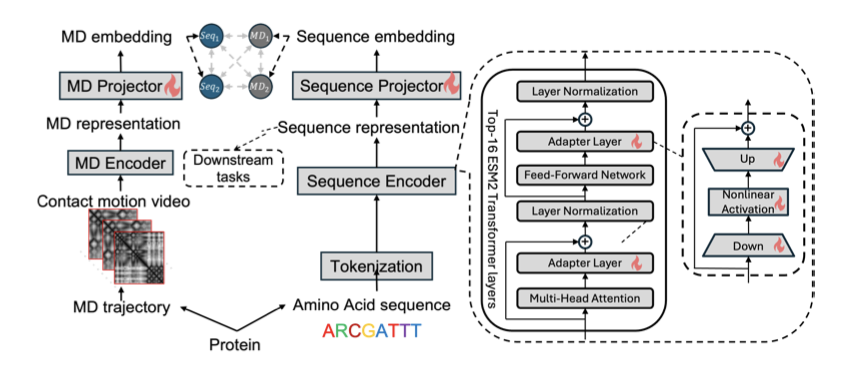
DPLM: Dynamics-aware Protein Language Model via Contrastive Learning Between Sequence and Molecular Dynamics Simulation Trajectory 1. Introducing DPLM, a novel protein language model that captures protein dynamics by aligning sequence embeddings with molecular dynamics (MD) trajectory embeddings through contrastive learning, addressing a critical gap in static PLMs. 2. The key innovation lies in using a pretrained Video Vision Transformer (ViViT) to encode MD trajectories as "contact map motion videos," enabling direct learning of spatiotemporal dynamic features without relying on hand-engineered labels or generated conformations. 3. DPLM achieves state-of-the-art performance in zero-shot mutation effect prediction, outperforming ESM2 on 8 out of 9 deep mutational scanning datasets, with particularly strong gains for proteins whose functions depend on conformational flexibility. 4. When adapted with lightweight task-specific heads, DPLM reaches top-tier performance on protein stability prediction (S669 benchmark) and intrinsic disordered region identification (CAID2/CAID3), demonstrating broad transferability. 5. The model employs adapter tuning on ESM2, keeping the base model frozen while adding MD-aware modules in the top 16 layers, ensuring parameter efficiency and preventing catastrophic forgetting of sequence information. 6. Residue-level analysis reveals DPLM embeddings strongly correlate with root-mean-square fluctuation (RMSF), while protein-level clustering outperforms both sequence-only and structure-aware baselines on CATH, deaminase, and kinase benchmarks. 7. A single DPLM-based IDR predictor achieves the best accuracy-efficiency trade-off among CAID competitors, being approximately 10-10,000x faster than structure-dependent methods like SPOT-Disorder2 and AlphaFold-rsa. 8. The work establishes that MD-derived dynamic information, learned through unsupervised cross-modal alignment, yields more biologically meaningful representations than static sequence or structure alone. 💻Code: github.com/UKDPLM/DPLM 📜Paper: biorxiv.org/content/10.64898… #ProteinLanguageModel #MolecularDynamics #ContrastiveLearning #ProteinDynamics #DeepLearning #Bioinformatics #ESM2 #ViViT #ProteinStability #IntrinsicallyDisorderedProteins #ZeroShotLearning #ComputationalBiology
9
36
3,317
BiologyAIDaily
mTM-align2: A Server for Real-time Protein Structure Database Search and Alignment 1. mTM-align2 is presented as a real-time web server that searches structurally similar proteins across ~3 million structures (experimental predicted) in seconds, while supporting both monomeric proteins and multimeric complexes. 2. The key idea is to replace expensive all-vs-all structural alignments with fast cosine-similarity search over precomputed structural fingerprints (embeddings), then optionally run detailed pairwise/multiple alignments with mTM-align for interpretability and validation. 3. For monomers, the server encodes a query using residue-level embeddings from the pretrained inverse-folding protein language model ESM-IF, aggregates them into a protein-level vector (sum pooling), and uses contrastive learning so cosine similarity correlates with structural similarity. 4. For multimers, it combines (a) chain-wise monomer embeddings and (b) a rotation-invariant global shape descriptor based on 3D Zernike moments; the final similarity (Q-score) is a weighted sum of chain similarity (IF-score) and shape similarity (ZP-score), with weights α=1 and β=0.3. 5. mTM-align2 integrates multiple major databases in one interface: PDB (including large monomer and multimer sets), SCOPe and CATH domain databases, BFVD viral structures, plus several AlphaFold DB subsets (Swiss-Prot, organism set, global health set), enabling cross-database retrieval rather than siloed searches. 6. The server offers two search modes: a high-accuracy mode that adds a fast TM-align-based filtering step to improve precision, and a high-speed mode that skips filtering for near-instant results; results are returned as ranked hits (top 1000) and can be emailed as CSV for batch workflows. 7. Beyond retrieval, the output workflow is designed for downstream analysis: users can launch pairwise superposition with TM-align metrics (TM-score, RMSD) and residue-level correspondence, or run multiple structure alignment (up to 10 selected hits via the UI) to identify conserved cores and generate a structure-based phylogenetic tree. 8. A practical annotation feature is included for PDB hits: after superposition, the server transfers ligand context from Q-BioLiP and marks query residues within 5 Å of the aligned ligand as putative binding residues, providing fast template-based binding-site hints (with the paper noting it is not meant to replace specialized binding-site predictors). 9. Benchmarks against Foldseek variants suggest complementary strengths for monomer search (mTM-align2 wins on more test cases by summed true-positive TM-scores in top-100, while Foldseek leads on others), and stronger multimer retrieval performance versus foldseek-multimer (top-50 recall ~82.4% vs 77.7%; precision ~35.08% vs 27.66%). 10. A case study on the MscL mechanosensitive channel highlights sensitivity to remote homologs and conformational diversity: against AFDB-SwissProt, mTM-align2 retrieves many more true positives than Foldseek, and multiple alignment of top hits reveals strictly conserved transmembrane helices linked to gating architecture. 💻Code: ngdc.cncb.ac.cn/biocode/tool… 📜Paper: doi.org/10.1093/gpbjnl/qzag0… #ProteinStructure #StructuralBioinformatics #AlphaFold #ProteinComplexes #StructureSearch #BioinformaticsTools #ESM #ContrastiveLearning #ZernikeMoments #TMAlign
5
39
2,671
BiologyAIDaily
DMAPLM: A multimodal pretrained framework for computational drug repositioning. 1 DMAPLM reframes drug–disease association prediction as cross-modal representation alignment: a lightweight dual-encoder maps drug SMILES (ChemBERTa-2) and disease multi-field text (BioBERT) into a shared space, improving generalization when curated associations are sparse. 2 The most distinctive design choice is explicit contrastive learning (InfoNCE) between drug and disease embeddings, encouraging true drug–disease pairs to be close while pushing unrelated pairs apart; this yields markedly better separability (e.g., higher positive-pair cosine similarity and lower negative-pair similarity) and supports similarity-based interpretability. 3 For drugs, DMAPLM avoids graph construction and instead uses attention-weighted pooling over ChemBERTa-2 token embeddings, letting the model emphasize informative SMILES tokens/substructures; attention visualization highlights pharmacologically relevant motifs (e.g., rapamycin’s macrolide core/epoxide consistent with FKBP12–mTOR binding chemistry). 4 For diseases, it encodes three complementary text fields (name, synonyms, definition) separately with BioBERT and fuses them via weighted aggregation, then projects to a compact embedding; clustering analyses show these PLM disease embeddings align better with MeSH taxonomy than TF-IDF or random baselines. 5 The final prediction step is intentionally simple and robust: a Random Forest classifier operates on concatenated multimodal features (raw projected embeddings interaction features), and a Youden-index threshold converts probabilities to binary calls for practical screening. 6 The authors also contribute an updated benchmark curated from DrugMAP 2.0 (Approved associations only): 2,622 drugs, 1,455 diseases, 5,993 associations, with very low density (0.16%), reflecting realistic incompleteness and making generalization a central challenge. 7 On 5-fold CV, DMAPLM reports AUROC 0.8919 and AUPR 0.9116, outperforming six baselines (including graph-based and heterogeneous transformer methods) by up to ~9% on AUROC/AUPR, suggesting the PLM alignment strategy can compete with heavier graph pipelines. 8 Cold-start evaluation follows standard C1/C2/C3 protocols: new drugs (C1) AUROC/AUPR 0.8150/0.8338, new diseases (C2) 0.7805/0.8098, and double cold-start (C3) 0.7456/0.7355—highlighting the benefit of pretrained encoders when entities lack training-time links. 9 Biological plausibility is supported via case studies and docking: top cold-start predictions (e.g., rapamycin–prostate cancer) are backed by PubMed evidence, and docking against the FKBP12-rapamycin-FRB mTOR complex (PDB 4FAP) yields a best Vina affinity of -9.921 kcal/mol with consistent poses, reinforcing mechanistic consistency rather than purely statistical ranking. 💻Code: github.com/LiNiuNiuYa/DMAPLM 📜Paper: doi.org/10.1371/journal.pcbi… #DrugRepositioning #DrugRepurposing #ComputationalBiology #BiomedicalNLP #Chemoinformatics #ContrastiveLearning #BioBERT #ChemBERTa #MultimodalAI #ColdStart
5
1,214
BiologyAIDaily
DMAPLM: A multimodal pretrained framework for computational drug repositioning. 1 DMAPLM reframes drug–disease association prediction as cross-modal representation alignment: a lightweight dual-encoder maps drug SMILES (ChemBERTa-2) and disease multi-field text (BioBERT) into a shared space, improving generalization when curated associations are sparse. 2 The most distinctive design choice is explicit contrastive learning (InfoNCE) between drug and disease embeddings, encouraging true drug–disease pairs to be close while pushing unrelated pairs apart; this yields markedly better separability (e.g., higher positive-pair cosine similarity and lower negative-pair similarity) and supports similarity-based interpretability. 3 For drugs, DMAPLM avoids graph construction and instead uses attention-weighted pooling over ChemBERTa-2 token embeddings, letting the model emphasize informative SMILES tokens/substructures; attention visualization highlights pharmacologically relevant motifs (e.g., rapamycin’s macrolide core/epoxide consistent with FKBP12–mTOR binding chemistry). 4 For diseases, it encodes three complementary text fields (name, synonyms, definition) separately with BioBERT and fuses them via weighted aggregation, then projects to a compact embedding; clustering analyses show these PLM disease embeddings align better with MeSH taxonomy than TF-IDF or random baselines. 5 The final prediction step is intentionally simple and robust: a Random Forest classifier operates on concatenated multimodal features (raw projected embeddings interaction features), and a Youden-index threshold converts probabilities to binary calls for practical screening. 6 The authors also contribute an updated benchmark curated from DrugMAP 2.0 (Approved associations only): 2,622 drugs, 1,455 diseases, 5,993 associations, with very low density (0.16%), reflecting realistic incompleteness and making generalization a central challenge. 7 On 5-fold CV, DMAPLM reports AUROC 0.8919 and AUPR 0.9116, outperforming six baselines (including graph-based and heterogeneous transformer methods) by up to ~9% on AUROC/AUPR, suggesting the PLM alignment strategy can compete with heavier graph pipelines. 8 Cold-start evaluation follows standard C1/C2/C3 protocols: new drugs (C1) AUROC/AUPR 0.8150/0.8338, new diseases (C2) 0.7805/0.8098, and double cold-start (C3) 0.7456/0.7355—highlighting the benefit of pretrained encoders when entities lack training-time links. 9 Biological plausibility is supported via case studies and docking: top cold-start predictions (e.g., rapamycin–prostate cancer) are backed by PubMed evidence, and docking against the FKBP12-rapamycin-FRB mTOR complex (PDB 4FAP) yields a best Vina affinity of -9.921 kcal/mol with consistent poses, reinforcing mechanistic consistency rather than purely statistical ranking. 💻Code: github.com/LiNiuNiuYa/DMAPLM 📜Paper: doi.org/10.1371/journal.pcbi… #DrugRepositioning #DrugRepurposing #ComputationalBiology #BiomedicalNLP #Chemoinformatics #ContrastiveLearning #BioBERT #ChemBERTa #MultimodalAI #ColdStart
2
10
887
BiologyAIDaily
Structure-guided molecular design with contrastive 3D protein–ligand learning 1 The paper proposes a unified pipeline that connects two usually separate steps in structure-based drug discovery: (i) fast 3D protein–ligand compatibility retrieval via contrastive learning, and (ii) de novo molecule generation via an autoregressive chemical language model, while explicitly steering outputs toward purchasable/synthetically accessible commercial spaces. 2 At the core is CLIPP-SET: an SE(3)-equivariant Transformer encoder that maps 3D pockets and 3D ligands into a shared embedding space, enabling cosine-similarity screening without docking ultra-large libraries and without target-specific fine-tuning (zero-shot). 3 A key technical detail is how they handle “false negatives” in contrastive learning caused by pocket collisions (many ligands bind the same pocket): they use Collision-Free InfoNCE (CF-InfoNCE), selecting (for pocket→ligand) the strongest-affinity ligand among those sharing the same pocket as the positive, rather than treating all off-diagonal pairs as negatives. 4 On LIT-PCBA zero-shot virtual screening (15 targets), CLIPP-SET pocket-based screening shows particularly strong early enrichment: best BEDROC, EF(0.5%), and EF(1%) among compared baselines, indicating it prioritizes actives near the top of the ranked list even if broader AUROC/EF(5%) can favor some docking-based methods. 5 The work then tests “realistic scale” retrieval on Enamine REAL (5.9B compounds): pocket-only queries (no reference ligand) retrieve top-100 candidates per target with higher predicted pIC50 on 13/15 targets and much higher internal diversity than 2D Morgan fingerprint search, suggesting the embedding captures binding-relevant geometry rather than just 2D similarity. 6 Because ligands and pockets share the same embedding space, the same system supports ligand-based search for scaffold hopping: given a known active, it retrieves molecules with high 3D shape/pharmacophore similarity but low 2D similarity (lower Tanimoto than Morgan FP), aligning with the goal of finding chemically novel scaffolds that preserve 3D binding features. 7 For generation, they introduce an MCLM (multimodal chemical language model): a Llama2-style autoregressive SMILES decoder conditioned by prepending a learned structural embedding token (from the frozen contrastive encoder) plus a learned dataset token [ds] that controls which chemical space distribution to emulate. 8 The dataset token is the mechanism for “commercial space steering”: trained on a 287M conformer–SMILES corpus labeled by source (PubChem, Enamine Diversity, Mcule, ChEMBL, GEOM-drugs), the model can be prompted with an “Enamine” token at inference to bias outputs toward Enamine-like chemistry; an ablation shows the token increases nearest-neighbor similarity to Enamine REAL and raises the fraction of exact catalog matches. 9 In structure-conditioned de novo design on LIT-PCBA (100 molecules/target), ligand-conditioned generation achieves the highest predicted affinity metrics (affinity probability and predicted pIC50) among evaluated methods, while pocket-conditioned generation (despite the decoder being trained only with ligand embeddings) remains competitive without reference ligands and yields the highest diversity, highlighting practical utility when only target structure is available. 📜Paper: arxiv.org/abs/2604.19562 #ComputationalBiology #Cheminformatics #DrugDiscovery #StructureBasedDrugDesign #GenerativeAI #MachineLearning #ProteinLigand #EquivariantNetworks #ContrastiveLearning #VirtualScreening
1
6
25
7,316
BiologyAIDaily
Structure-guided molecular design with contrastive 3D protein–ligand learning 1 The paper proposes a unified pipeline that connects two usually separate steps in structure-based drug discovery: (i) fast 3D protein–ligand compatibility retrieval via contrastive learning, and (ii) de novo molecule generation via an autoregressive chemical language model, while explicitly steering outputs toward purchasable/synthetically accessible commercial spaces. 2 At the core is CLIPP-SET: an SE(3)-equivariant Transformer encoder that maps 3D pockets and 3D ligands into a shared embedding space, enabling cosine-similarity screening without docking ultra-large libraries and without target-specific fine-tuning (zero-shot). 3 A key technical detail is how they handle “false negatives” in contrastive learning caused by pocket collisions (many ligands bind the same pocket): they use Collision-Free InfoNCE (CF-InfoNCE), selecting (for pocket→ligand) the strongest-affinity ligand among those sharing the same pocket as the positive, rather than treating all off-diagonal pairs as negatives. 4 On LIT-PCBA zero-shot virtual screening (15 targets), CLIPP-SET pocket-based screening shows particularly strong early enrichment: best BEDROC, EF(0.5%), and EF(1%) among compared baselines, indicating it prioritizes actives near the top of the ranked list even if broader AUROC/EF(5%) can favor some docking-based methods. 5 The work then tests “realistic scale” retrieval on Enamine REAL (5.9B compounds): pocket-only queries (no reference ligand) retrieve top-100 candidates per target with higher predicted pIC50 on 13/15 targets and much higher internal diversity than 2D Morgan fingerprint search, suggesting the embedding captures binding-relevant geometry rather than just 2D similarity. 6 Because ligands and pockets share the same embedding space, the same system supports ligand-based search for scaffold hopping: given a known active, it retrieves molecules with high 3D shape/pharmacophore similarity but low 2D similarity (lower Tanimoto than Morgan FP), aligning with the goal of finding chemically novel scaffolds that preserve 3D binding features. 7 For generation, they introduce an MCLM (multimodal chemical language model): a Llama2-style autoregressive SMILES decoder conditioned by prepending a learned structural embedding token (from the frozen contrastive encoder) plus a learned dataset token [ds] that controls which chemical space distribution to emulate. 8 The dataset token is the mechanism for “commercial space steering”: trained on a 287M conformer–SMILES corpus labeled by source (PubChem, Enamine Diversity, Mcule, ChEMBL, GEOM-drugs), the model can be prompted with an “Enamine” token at inference to bias outputs toward Enamine-like chemistry; an ablation shows the token increases nearest-neighbor similarity to Enamine REAL and raises the fraction of exact catalog matches. 9 In structure-conditioned de novo design on LIT-PCBA (100 molecules/target), ligand-conditioned generation achieves the highest predicted affinity metrics (affinity probability and predicted pIC50) among evaluated methods, while pocket-conditioned generation (despite the decoder being trained only with ligand embeddings) remains competitive without reference ligands and yields the highest diversity, highlighting practical utility when only target structure is available. 📜Paper: arxiv.org/abs/2604.19562 #ComputationalBiology #Cheminformatics #DrugDiscovery #StructureBasedDrugDesign #GenerativeAI #MachineLearning #ProteinLigand #EquivariantNetworks #ContrastiveLearning #VirtualScreening
3
9
905
BiologyAIDaily
A tri-modal contrastive learning framework for protein representation learning @CellRepMethods 1. Zhang et al. present ProteinAligner, a tri-modal protein foundation model that aligns amino-acid sequence, continuous 3D structure, and literature-derived functional text in a shared embedding space via contrastive learning. 2. The key design choice is anchor-based alignment: sequence is treated as the anchor modality (nearly always available), and the model learns sequence-structure and sequence-text alignment with contrastive losses, enabling pretraining even when structure or text is missing for many proteins. 3. ProteinAligner avoids discretizing structures into tokens (a source of quantization noise in some tri-modal models). Instead, it preserves continuous geometry using a structure encoder with GVP-GNN layers followed by transformer layers to capture long-range interactions over coordinates. 4. Architecture: sequence encoder = ESM-2 (650M); structure encoder = ESM-IF1; text encoder = an 8-layer transformer; modality-specific projections map all three representations into a shared latent space. Total size is reported as 867M parameters. 5. Pretraining data are curated from UniProtKB/Swiss-Prot and RCSB PDB: 290,480 sequence-text pairs (reviewed functional descriptions) and 133,726 sequence-structure pairs (experimentally determined structures). The authors report BLASTp-based checks to prevent detectable test-set overlap with the pretraining corpus. 6. Downstream evaluation freezes all pretrained encoders and trains only task-specific heads (no parameter-efficient tuning), applying the same protocol to baselines for fair comparison. ProteinAligner is benchmarked against ESM-2, ProtST, ESM-S, ESM-3, and ProTrek across diverse tasks. 7. Reported wins include: pathogenic missense variant prediction (VariPred; ProteinAligner F1=0.72 vs ESM-3 F1=0.47), protein thermostability classification from structure (HP-S2C; F1=0.608 vs ESM-IF1 F1=0.559), and improved performance on multiple peptide-focused tasks (bioactivity classification and AMP MIC regression). 8. The paper’s central argument is that a unified contrastive objective yields more coherent cross-modal alignment than masked-token-only training, and that keeping structural inputs continuous retains fine biophysical detail (e.g., subtle backbone/side-chain geometry) important for function/property prediction. 9. Limitations noted by the authors include dependence on high-quality structure/text availability, potential mismatch between modalities (sequence/structure/text not perfectly aligned), and computational cost; they suggest future extensions to additional modalities (e.g., PPI networks, PTMs) and better handling of noisy/incomplete data. 💻Code: doi.org/10.5281/zenodo.18806… 📜Paper: doi.org/10.1016/j.crmeth.202… #ComputationalBiology #ProteinRepresentationLearning #ContrastiveLearning #MultimodalAI #ProteinLanguageModels #StructuralBiology #Bioinformatics #FoundationModels #DrugDiscovery #MachineLearning
1
4
33
2,199
BiologyAIDaily
Tokenizing Loops of Antibodies 1. The paper introduces Igloo (ImmunoGlobulin LOOp Tokenizer), a multimodal tokenizer that represents antibody CDR loops at the loop/substructure level (not residue level), encoding both sequence and backbone dihedral angles (phi/psi/omega) into a loop token. 2. Core idea: train a self-supervised transformer with a contrastive objective so that loops with similar backbone dihedral-angle patterns map close in latent space. Similarity is defined using a dihedral distance metric (preferred over RMSD because RMSD can miss 180° dihedral flips that invert side-chain orientations). 3. Igloo addresses a long-standing limitation of canonical CDR clustering: incomplete coverage (e.g., many H3 loops do not map to canonical clusters). Igloo assigns tokens to all loops while still recovering canonical conformations for 90.6% of SAbDab loops that have canonical labels. 4. Training scale and data mix: 807,815 loop regions total, combining 108,167 experimentally resolved loops (SAbDab STCRDab) and 699,648 predicted loops from paired OAS sequences via Ibex structure prediction, with careful sequence-identity splits to reduce leakage. 5. Architecture and objectives: dihedral angles are embedded via unit-circle features (cos/sin), added to amino-acid embeddings, then processed with a BERT-style transformer using a learnable <cls> token as the loop representation. Training uses (a) multimodal masking and reconstruction, (b) dihedral-distance contrastive learning with positive/negative pairs, and (c) a vector-quantized codebook to produce discrete tokens for fast lookup. 6. Structure retrieval benchmark (paratope retrieval): given a query loop, retrieve the closest loops from a structural database. Igloo achieves state-of-the-art Precision@20 across CDRs, and for the hardest loop (H3) improves retrieval of similar dihedral backbones by 6.1% over the prior best baseline (0.402 vs 0.379 for D < 0.47). 7. Discrete-token clustering: without being given loop-type annotations, the learned codebook clusters are highly homogeneous by loop type and length (type purity 0.983; length purity 0.965), and show strong agreement with established canonical cluster partitions. 8. Igloo tokens as special tokens in antibody language models: IglooLM inserts a loop token at each CDR boundary and fine-tunes from IgBert (420M). On AbBiBench binding-affinity prediction for heavy-chain variant sets, IglooLM beats the base IgBert model on 8/10 antibody-antigen targets and performs comparably to much larger models (including ones with ~7x more parameters). 9. Generative design with structural control: IglooALM combines loop tokens plus residue-level multimodal tokens to sample loop sequences that are diverse yet structurally consistent. Compared to antibody inverse-folding baselines (AbMPNN, AntiFold), IglooALM generates loops with better self-consistency RMSD across many sequence-identity bins; a SARS-CoV-2 H3 redesign example reports ~0.27 sequence identity while staying <1 Å RMSD to the original loop. 10. Library prioritization at scale (zero-shot): on a HER2 CDR H3 mutagenesis library (38,860 variants), selecting sequences that share the same discrete Igloo token as a seed yields 55.3% binders, a ~1.9x enrichment over the library baseline (29.1%), and runs quickly (minutes) using sequence-based tokenization. 💻Code: github.com/prescient-design/… 📜Paper: tandfonline.com/doi/full/10.… #AntibodyEngineering #ProteinLanguageModels #CDR #StructuralBioinformatics #ContrastiveLearning #GenerativeAI #ComputationalBiology #Therapeutics
2
23
1,562
BiologyAIDaily
Tokenizing Loops of Antibodies 1. The paper introduces Igloo (ImmunoGlobulin LOOp Tokenizer), a multimodal tokenizer that represents antibody CDR loops at the loop/substructure level (not residue level), encoding both sequence and backbone dihedral angles (phi/psi/omega) into a loop token. 2. Core idea: train a self-supervised transformer with a contrastive objective so that loops with similar backbone dihedral-angle patterns map close in latent space. Similarity is defined using a dihedral distance metric (preferred over RMSD because RMSD can miss 180° dihedral flips that invert side-chain orientations). 3. Igloo addresses a long-standing limitation of canonical CDR clustering: incomplete coverage (e.g., many H3 loops do not map to canonical clusters). Igloo assigns tokens to all loops while still recovering canonical conformations for 90.6% of SAbDab loops that have canonical labels. 4. Training scale and data mix: 807,815 loop regions total, combining 108,167 experimentally resolved loops (SAbDab STCRDab) and 699,648 predicted loops from paired OAS sequences via Ibex structure prediction, with careful sequence-identity splits to reduce leakage. 5. Architecture and objectives: dihedral angles are embedded via unit-circle features (cos/sin), added to amino-acid embeddings, then processed with a BERT-style transformer using a learnable <cls> token as the loop representation. Training uses (a) multimodal masking and reconstruction, (b) dihedral-distance contrastive learning with positive/negative pairs, and (c) a vector-quantized codebook to produce discrete tokens for fast lookup. 6. Structure retrieval benchmark (paratope retrieval): given a query loop, retrieve the closest loops from a structural database. Igloo achieves state-of-the-art Precision@20 across CDRs, and for the hardest loop (H3) improves retrieval of similar dihedral backbones by 6.1% over the prior best baseline (0.402 vs 0.379 for D < 0.47). 7. Discrete-token clustering: without being given loop-type annotations, the learned codebook clusters are highly homogeneous by loop type and length (type purity 0.983; length purity 0.965), and show strong agreement with established canonical cluster partitions. 8. Igloo tokens as special tokens in antibody language models: IglooLM inserts a loop token at each CDR boundary and fine-tunes from IgBert (420M). On AbBiBench binding-affinity prediction for heavy-chain variant sets, IglooLM beats the base IgBert model on 8/10 antibody-antigen targets and performs comparably to much larger models (including ones with ~7x more parameters). 9. Generative design with structural control: IglooALM combines loop tokens plus residue-level multimodal tokens to sample loop sequences that are diverse yet structurally consistent. Compared to antibody inverse-folding baselines (AbMPNN, AntiFold), IglooALM generates loops with better self-consistency RMSD across many sequence-identity bins; a SARS-CoV-2 H3 redesign example reports ~0.27 sequence identity while staying <1 Å RMSD to the original loop. 10. Library prioritization at scale (zero-shot): on a HER2 CDR H3 mutagenesis library (38,860 variants), selecting sequences that share the same discrete Igloo token as a seed yields 55.3% binders, a ~1.9x enrichment over the library baseline (29.1%), and runs quickly (minutes) using sequence-based tokenization. 💻Code: github.com/prescient-design/… 📜Paper: tandfonline.com/doi/full/10.… #AntibodyEngineering #ProteinLanguageModels #CDR #StructuralBioinformatics #ContrastiveLearning #GenerativeAI #ComputationalBiology #Therapeutics
3
9
962