Filter
Exclude
Time range
-
Near
ElecNotes
Op-Amp Design: The Gain & Bandwidth Balance If you’ve ever had a situation where your high-gain amplifier response is "rolling off" sooner than expected, it’s likely you are encountering the Gain-Bandwidth Product (GBP) limits. In voltage feedback operational amplifier design, there is a fundamental trade-off: The more gain you want, the less bandwidth you get. Based on the insights from my Electronics-Notes website, here are three essential takeaways for your next analogue design: 1️⃣ The Open-Loop Reality: Most voltage-feedback op-amps (like the classic 741) have a surprisingly low open-loop breakpoint—sometimes as low as 6Hz! Beyond this point, the gain drops at a steady rate of -20dB/decade. 2️⃣ The GBP Constant: For standard voltage-feedback amplifiers, the Gain x Bandwidth remains constant. If you decrease your gain by a factor of 10, you gain a factor of 10 in bandwidth. It’s a literal balancing act. 3️⃣ Why Compensation Matters: Why is the bandwidth so limited? Internal frequency compensation is built into most ICs to ensure stability. Without it, your amplifier might turn into an oscillator! Pro-Tip: If your application requires high gain and high bandwidth simultaneously, you might need to move away from voltage-feedback op-amps and look into Current Feedback architectures, which don't follow the same linear GBP relationship. Are you hitting bandwidth bottlenecks in your current projects? Let’s discuss in the comments! Also for more details check out my website - link in the comments. #ElectronicsEngineering #CircuitDesign #AnalogDesign #OpAmps #HardwareDesign #EngineeringEducation #electronicsnotes
1
3
34
965
Screen2H
Experienced in Cadence Allegro and multilayer PCB design? We're hiring ECAD / PCB Design Engineers (4–7 yrs) for an exciting engineering opportunity. 📍 Bangalore | Pune Explore the complete role & apply: screen2hireconsulting.com/jo… #Jobs #PCBDesign #ECAD #CadenceAllegro #ElectronicsEngineering #BangaloreJobs #PuneJobs
22
vik1682
Behind every reliable electronic product is a well-designed PCB. Demand remains strong for engineers with expertise in Cadence Allegro, multilayer PCB design, and DFM/DFA. Sharing an interesting opportunity for professionals with 4–7 years of experience. 🔗 screen2hireconsulting.com/jo… #PCBDesign #ECAD #EngineeringJobs #ElectronicsEngineering #CadenceAllegro #HardwareDesign
31
ForumEIectrical
Logic Gates forumelectrical.com/basic-el… Logic gates are the fundamental building blocks of digital electronics that process one or more binary inputs to produce a single binary output based on predefined logical rules. They form the basis of digital circuits used in computers, microcontrollers, automation systems, communication devices, and other electronic equipment, enabling reliable decision-making and data processing. Follow Us On: Website: forumelectrical.com Facebook: facebook.com/profile.php?id=… LinkedIn: linkedin.com/showcase/911302… Twitter: x.com/ForumEIectrical Pinterest: ru.pinterest.com/ForumElectr… WhatsApp Channel: whatsapp.com/channel/0029VbB… Telegram: t.me/F0rumElectrical #LogicGates #DigitalElectronics #Electronics #DigitalLogic #ANDGate #ORGate #NOTGate #XORGate #XNORGate #NANDGate #NORGate #ElectricalEngineering #ElectronicsEngineering #Automation #EmbeddedSystems forumelectrical.com/basic-el…
5
39
773
ElecNotes
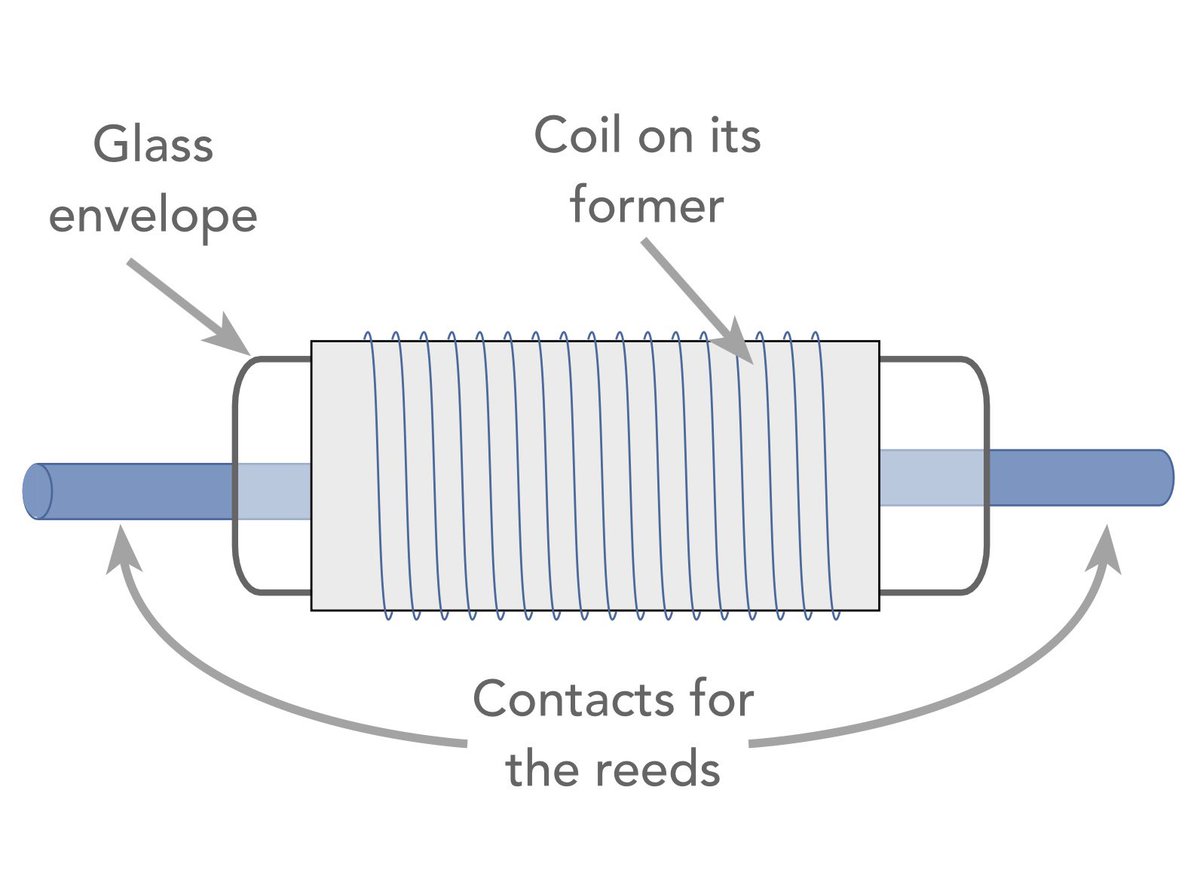
The Amazing Solution for Electronic Switching: The Reed Relay Ever wonder how electronic circuits achieve fast, reliable, and isolated switching without the bulk of traditional electromechanical relays? Meet the reed relay - a compact component that bridges the gap between traditional mechanical relays and solid-state alternatives. What is a Reed Relay? At its core, a reed relay consists of a reed switch - two overlapping nickel-iron blades hermetically sealed inside a glass envelope filled with inert gas (like nitrogen)—wrapped inside an electromagnetic actuating coil. When current passes through the coil, it creates a magnetic field that magnetizes the blades. They attract each other, snap shut, and close the circuit. Remove the current, the field drops, and the spring-loaded contacts snap back apart. Why Engineers Choose Reed Relays: * Speed: Because the gap between contacts is tiny (0.05 to 1 mm), they boast incredibly fast switching speeds—often between 0.5 to a few milliseconds. * Reliability & Longevity: Sealed inside glass, the contacts are entirely protected from moisture, oxidation, and contaminants. * Complete Isolation: They offer absolute physical isolation between the control circuit (coil) and the switched circuit. * Compact Size: They are small enough to fit into standard SIL or DIL integrated circuit packages, saving precious PCB real estate. Design precautions: While they are highly reliable, reed relays aren't always a "set-and-forget" component. When designing them into your circuits, remember: 1. Contact Bounce: The contacts collide with high energy, causing minor "bounces." If switching capacitive or inductive loads, this can cause arcing and reduce contact life. 2. Magnetic Interaction: Unscreened reed relays can experience magnetic coupling. If placed too close together on a PCB, their fields can oppose one another, requiring a higher coil voltage to close. Pro tip: Always look for reed relays with built-in ferrous metal screens to optimize efficiency and enable tight stacking! 3. Current Constraints: They are typically built for low-to-medium signal switching, not heavy-duty power applications. From test and measurement matrix switches to automated telecommunication exchanges, the reed relay remains an elegant, trusted solution for modern hardware engineering. More information- check the link in the comment. #ElectronicsEngineering #HardwareDesign #CircuitDesign #ElectronicComponents #ElectricalEngineering #electronicsnotes
2
4
49
2,130
RaymingTech
🔍 Microcontroller vs. Microprocessor: Not the same thing. These terms are often used interchangeably, but they serve very different roles in electronics and embedded systems. 🧠 Microcontroller (MCU) An all-in-one chip designed for dedicated control tasks. Includes: ✔ CPU ✔ Memory ✔ I/O peripherals ✔ Timers & communication interfaces ✅ Best for: → Embedded systems → IoT devices → Home appliances → Industrial controllers 💻 Microprocessor (MPU) A CPU-only chip that relies on external memory and peripherals to function. ✅ Best for: → Computers & laptops → Complex operating systems → High-performance applications → Advanced processing tasks 📌 Why it matters Engineers, designers, and sourcing pros: choosing between an MCU and MPU impacts cost, power efficiency, and performance. The right decision early on saves major time and money later. Which component comparison should I cover next? #EmbeddedSystems #ElectronicsEngineering #Microcontroller #Microprocessor #ProductDesign #HardwareDesign
10
56
1,510
raisoniworld
⚡ Where ideas become circuits and curiosity drives innovation. Explore the future of Electronics Engineering with hands-on learning at Raisoni Education. 🚀 #ElectronicsEngineering #RaisoniEducation
20
ElecNotes
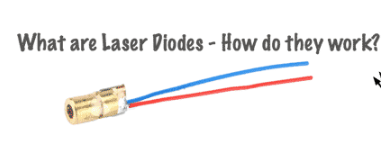
Technology Spotlight: Understanding Laser Diodes From the high-speed data streams in telecommunications to the precision tools in our workshops and medical facilities, Laser Diodes are the silent heroes of modern technology. But how do they differ from standard LEDs? At their core, laser diodes are semiconductor devices that take light generation to a new level. While an LED produces incoherent light, a laser diode utilises stimulated emission to generate a coherent, monochromatic beam. How they work: * Energy Injection: Current is passed into a PN junction, pushing electrons into a higher energy state. * Spontaneous Emission: As electrons recombine with holes, they release energy as photons. * Stimulated Emission (The "Lasing" Effect): By fabricating partially reflecting surfaces at the ends of the structure, trapped photons stimulate other excited electrons to recombine faster. This cascades into the creation of more photons—all with the exact same frequency and phase—resulting in that powerful, focused laser beam. Why they are indispensable: * Solid-State Reliability: No fragile glass tubes or complex setups; they are compact, rugged, and built for modern electronics. * Performance: Capable of being focused to a diffraction-limited spot, which is essential for high-density optical storage and precision scanning. * Versatility: By changing the compound semiconductor materials, engineers can tune the output wavelength from visible blue to far infrared. Whether you're working on optical communications, industrial sensing, or consumer electronics, understanding the characteristics—like the L/I (Light/Current) curve and the critical importance of temperature control—is key to successful circuit design. Check out the full technical breakdown on Electronics Notes: electronics-notes.com/articl… #ElectronicsEngineering #Photonics #LaserTechnology #Semiconductors #CircuitDesign #EngineeringFundamentals #Innovation #TechTrends #ElectronicComponents
7
37
1,492
RaymingTech
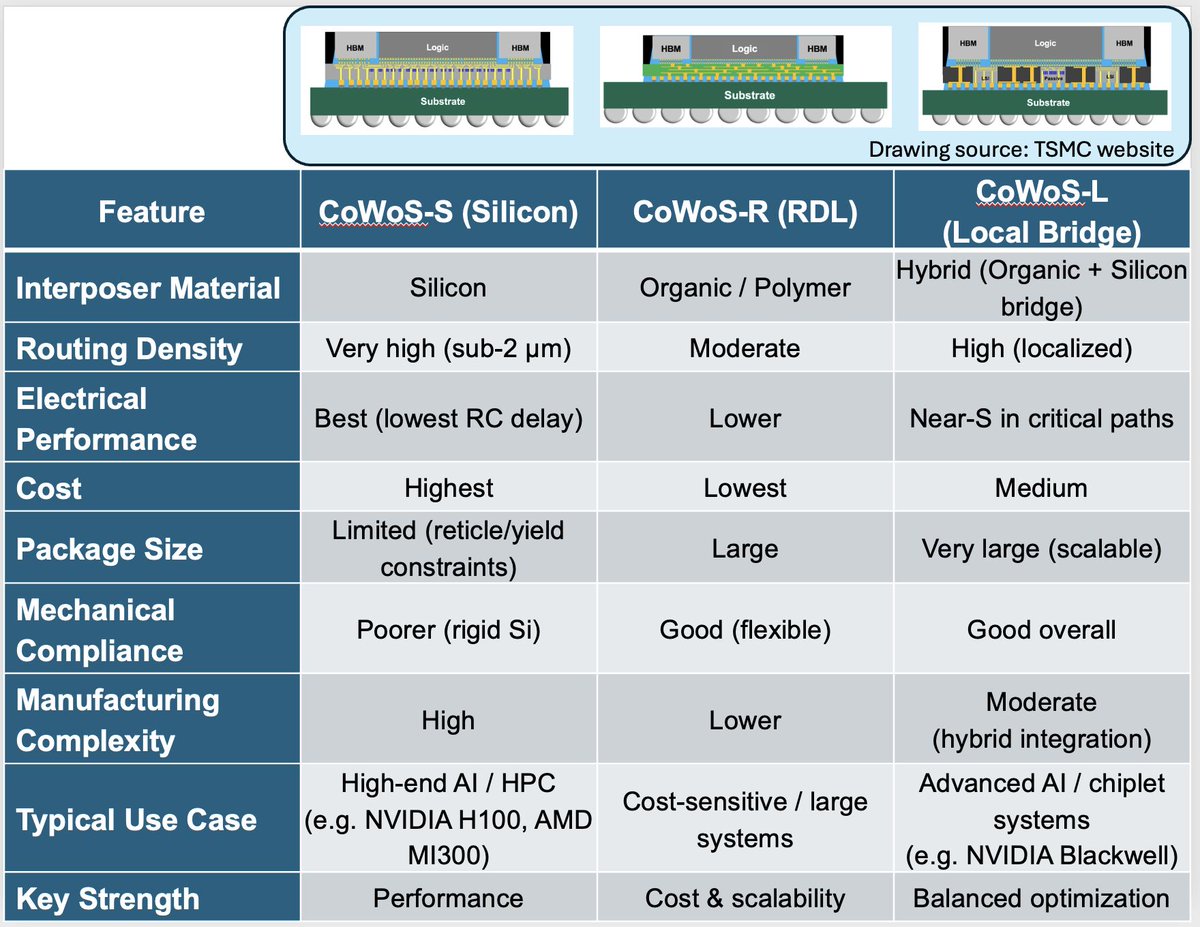
GPUs used to sit on PCBs next to GDDR memory, talking to each other through long board traces. That worked — until it didn't. Long interconnects meant high RC delay, limited I/O density, lower bandwidth, and more energy burned per bit. As AI workloads scaled, the architecture hit a wall. The industry's answer: heterogeneous integration — pulling logic and memory into a single package. TSMC's Chip-on-Wafer-on-Substrate (CoWoS) is one of the most important enablers of this shift. The idea is straightforward: place the GPU and HBM side-by-side, connect them through a fine-pitch interposer, and eliminate the long PCB traces that were killing performance. The interposer is the key piece here. It's a high-density wiring layer that enables short die-to-die connections, fine-pitch routing, and bridges chip I/O to the package. Two main flavors exist — silicon (precise, expensive) and organic RDL (cheaper, larger area). CoWoS comes in three variants, each making a different tradeoff: CoWoS-S uses a silicon interposer with ~0.5–2 µm routing. Maximum density and performance, but limited by reticle size and cost. CoWoS-R uses an organic RDL substrate. Lower cost, larger footprint, more flexibility — with some density tradeoff. CoWoS-L combines an organic base with localized silicon bridges only where high density matters most (think: GPU-to-HBM interface). It's the architecture showing up in large-scale AI systems because it balances performance, cost, and scalability. The bottom line: CoWoS replaces long PCB interconnects with fine-pitch packaging — and that shift is a big part of why modern AI accelerators can deliver the bandwidth they do. (Comparison table in the comments.) #Semiconductors #AdvancedPackaging #CoWoS #HeterogeneousIntegration #Chiplets #AIHardware #HPC #TSMC #HBM #ElectronicsEngineering
5
357
tech_talkclub
Achieving precise mechanical alignment in multi-board PCB stacks requires careful selection of fine-pitch board-to-board connectors. Mating force and stack height are crucial variables in rugged designs. #PCBDesign #Hardware #ElectronicsEngineering
8
ElecNotes
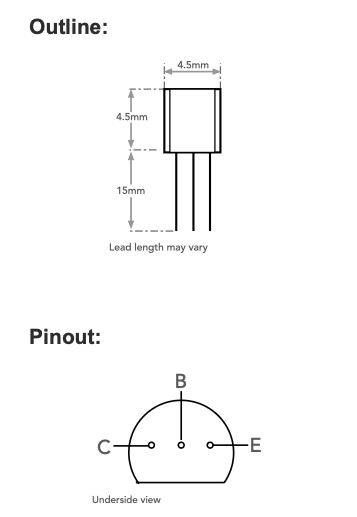
Product Highlight: The 2N3904 General Purpose NPN Bipolar Junction Transistor Still one of the most reliable workhorses in the engineer's toolkit, the 2N3904 remains the go-to solution for everyday low-power switching and amplification. Quick Specs * Type: NPN Silicon Epitaxial Planar Transistor * Max Collector Current (IC​): 200 mA * Max Collector-Emitter Voltage (VCEO​): 40 V * Package: TO-92 (also available as MMBT3904 in SOT-23) * Switching Speed: High-speed performance with fast turn-off times Key Advantages * Complementary Pairing: Pairs perfectly with the 2N3906 (PNP) for balanced circuit designs like push-pull stages and H-bridges. * Cost-Efficiency: Exceptionally affordable, making it ideal for high-volume production and hobbyist prototyping. * High Versatility: Excellent gain characteristics combined with low saturation voltage for efficient performance in various signal ranges. * Proven Reliability: Decades of field-proven performance in millions of devices worldwide. Typical Applications * Signal Amplification: Used extensively in pre-amp stages and small-signal processing. * Electronic Switching: Driving relays, LEDs, buzzers, and interfacing microcontrollers with higher-voltage loads. * Logic Level Shifting: Essential for bridging voltage domains in mixed-signal circuit designs. * General Purpose Control: Widely used in industrial, consumer, and educational electronic systems. View more data:- electronics-notes.com/articl… #ElectronicsEngineering #Semiconductors #2N3904 #CircuitDesign #Engineering #electroniccomponents
1
2
13
1,155
bellajohnson8
ECE4081 Medical Instrumentation Assignment Help Don't let one difficult assignment affect your grades! WhatsApp: 91-977-207-8620 and get expert Assignment Help today! #ECE4081 #MedicalInstrumentation #BiomedicalEngineering #EngineeringAssignmentHelp #ElectronicsEngineering
12
ElecNotes
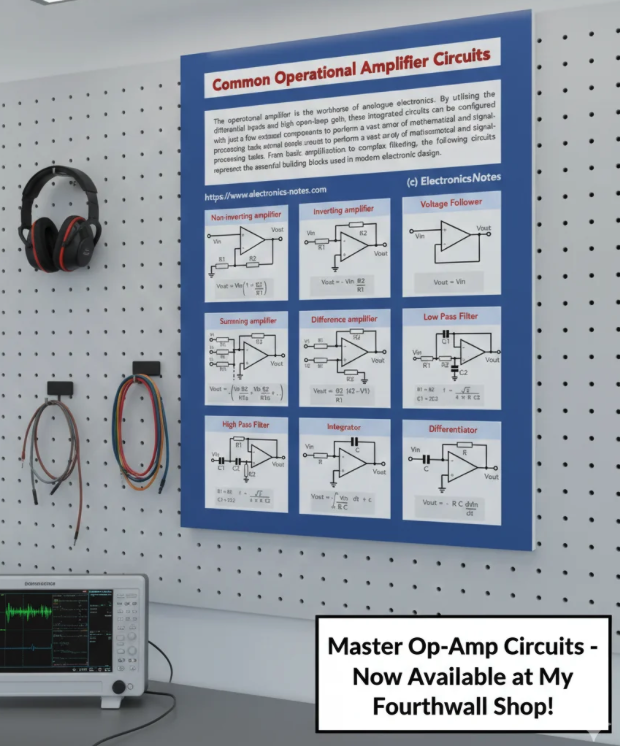
Master your circuit design: Essential Op-Amp circuits at your fingertips! Whether you're a student building your first lab project or an experienced engineer needing a quick refresher, keeping the fundamentals handy is a game-changer. Operational amplifiers are the building blocks of modern analog electronics—but remembering every configuration and formula can be a challenge. That’s why I’ve created a Common Op-Amp Circuits Crib Sheet. This downloadable infographic is designed to be your go-to reference for the circuits you use every day, including: * Inverting & Non-Inverting Amplifiers * Voltage Followers * Summing Amplifiers * Active Filters & Integrators * Essential Gain and Formula references Why this crib sheet? * Clear & Concise: Designed to give you the information you need at a glance. * Perfect for the Bench: Keep it digitally on your tablet or print it out to keep right next to your breadboard. * Time-Saver: Stop searching through bulky textbooks when you need to calculate gain or identify a pinout. Cut down your design time and keep your focus on the innovation, not the lookup. 👉 Get your copy here: electronics-notes-shop.fourt… #ElectronicsEngineering #OpAmps #CircuitDesign #AnalogElectronics #EngineeringStudent #PCBDesign #ElectronicsNotes #Prototyping #EngineeringResources
4
36
1,383
HephzibaBehulah
Types of Semiconductors – A Fundamental Concept in Electronics Semiconductors are materials whose electrical conductivity lies between that of conductors and insulators. They are the foundation of modern electronic devices, from smartphones to computers and industrial control systems. There are two main types of semiconductors: 1. Intrinsic Semiconductor - A pure semiconductor with no impurities added. - Examples: Pure Silicon (Si) and Germanium (Ge). - Conducts electricity through naturally generated electrons and holes. - Used mainly for understanding semiconductor fundamentals. 2. Extrinsic Semiconductor An intrinsic semiconductor that has been intentionally doped with impurities to improve its electrical conductivity. It is divided into two categories: • N-type Semiconductor - Doped with pentavalent atoms such as Phosphorus, Arsenic, or Antimony. - Electrons are the majority charge carriers. - Holes are the minority charge carriers. • P-type Semiconductor - Doped with trivalent atoms such as Boron, Gallium, or Indium. - Holes are the majority charge carriers. - Electrons are the minority charge carriers. Understanding these semiconductor types is essential for learning how diodes, transistors, integrated circuits, and other electronic components work. Which semiconductor concept was the hardest for you to understand when you first started learning electronics? #Electronics #Semiconductor #Engineering #ElectricalEngineering #ElectronicsEngineering #STEM #Learning #Technology
65
VaishabhJ
🚁 Build Your Own Wi-Fi Controlled Drone with ESP32! 🤯 What if you could create a fully functional drone from scratch and control it directly from your smartphone? 📱✨ Using an ESP32, MPU6050 sensor, coreless motors, and a LiPo battery, this DIY drone project gives you flight stabilization, height hold, and advanced programmable features—all without an expensive RC transmitter. 🔥 Perfect for makers, students, robotics enthusiasts, Arduino developers, and anyone passionate about electronics projects. ⚡ 💡 Learn embedded systems, drone technology, wireless communication, IoT, flight control, and PCB design in one amazing project. 👇 COMMENT **”DRONE”** and I’ll send you the project link, source code, files, and build guide! 📌 SAVE this reel for your next DIY project 📌 SHARE with a friend who loves electronics 📌 FOLLOW for more ESP32, Arduino, Robotics & Tech Projects #ESP32 #Drone #DIYDrone #DroneDIY #ESP32Projects Arduino ArduinoProjects Electronics ElectronicsEngineering Robotics DIYProjects TechProjects IoT EmbeddedSystems Engineering STEM Maker MakersGonnaMake Programming FlightController Quadcopter Innovation Technology PCBDesign WirelessTechnology StudentProjects EngineeringStudent TechReels GeekLife FutureTech
4
5
27
835
ElecNotes
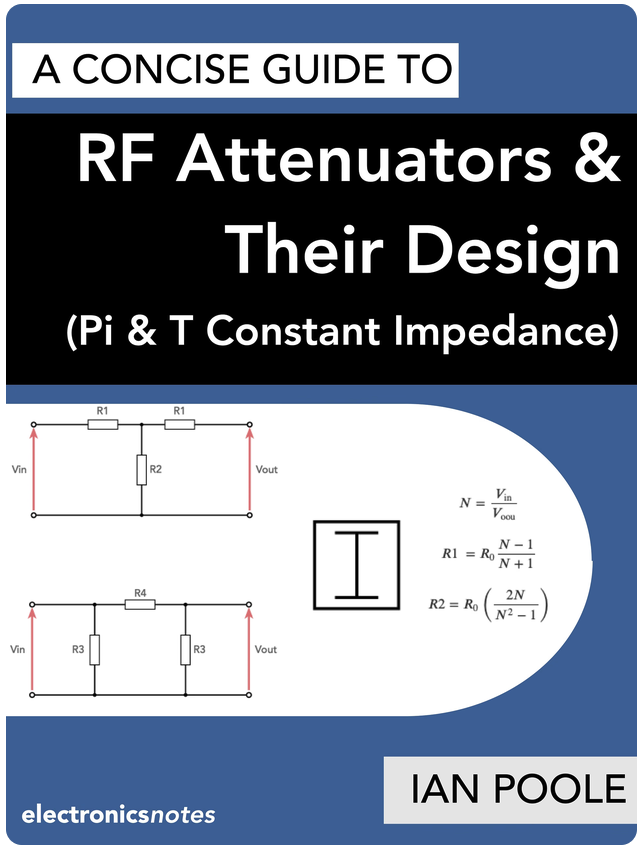
RF Engineering: Struggling with signal levels? Get the clarity you need. In RF circuit design, managing signal levels is everything. Whether you are matching stages, preventing amplifier saturation, or simply calibrating power levels, the RF Attenuator is one of the most fundamental tools in your arsenal. But how do you move from the theory of Pi and T-networks to a practical, production-ready design? I’ve put together a resource designed to cut through the noise: "A Concise Guide to RF Attenuators & Their Design." Why this guide is a must-have: * The Theory, Simplified: Understand the core concepts behind resistive attenuator networks without getting lost in overly academic jargon. * Practical Design Steps: Step-by-step guidance on calculating component values for common configurations, including Pi, T, and Bridged-T networks. * Performance Considerations: Learn about the impacts of frequency, impedance matching, and physical layout—critical factors that can make or break an RF design. * Compact & Focused: This isn't a 500-page textbook. It’s a concise, actionable guide built for engineers and students who need results, fast. Whether you are designing for test equipment, radio systems, or broad-band applications, this guide serves as a perfect reference for your engineering library. Stop guessing your values and start designing with confidence. 👉 Download your copy today: electronics-notes-shop.fourt… #RFEngineering #RadioFrequency #CircuitDesign #ElectronicsEngineering #WirelessTechnology #EngineeringResources #ElectronicsNotes #RFDesign
24
97
3,390
oz1lqo
Has anyone done a ripple/noise test on this box? #electronicsengineering #chinesenoisebox
353