Filter
Exclude
Time range
-
Near
OwenGregorian
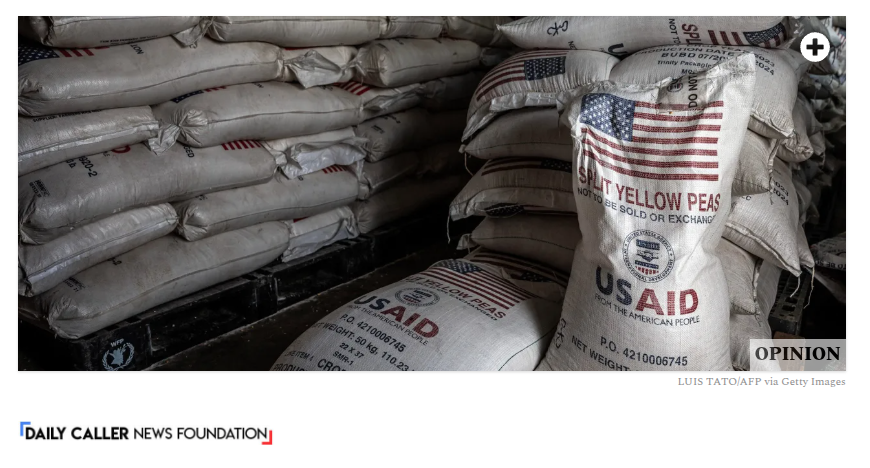
How Western aid keeps Africans poor | Frank Lasee, Daily Caller News Foundation A young Senegalese man had the drive, savings, and plan to open a small store. He never did. The moment he opened, cousins, uncles, and neighbors would demand goods for free because they were in need. Family obligation would force him to say yes until the shelves were empty and the business dead. So he never started. Or he moved far away from his family to start his business with all the hardships that brings. That story repeats itself across the continent in a thousand variations. It is not a story about African potential, which is enormous. It is a story about the environment surrounding that potential and how it systematically crushes it. Traditional obligation networks crush initiative from below. Kleptocratic governments extract what survives from above. For seventy years, Western aid has subsidized both. The math is simple and damning. When the World Bank, U.S. Agency for International Development (USAID), or the International Monetary Fund routes billions to governments that cannot enforce contracts or protect private property, they are not building prosperity; they are subsidizing the very institutions that prevent it. Governments that would otherwise face fiscal pressure to reform instead receive a reliable stream of outside money that removes that pressure entirely. The aid buys them time. It buys them survival. It does not buy their people freedom. Dambisa Moyo, the Zambian economist, documented this dynamic with surgical precision in “Dead Aid.” African governments that depend on foreign transfers have no incentive to build the tax base that requires a productive citizenry. A government that taxes its people must answer to them. Aid removes the very pressure that forces reform. A government that taxes its citizens must deliver results. One funded by Washington or Brussels answers to donors — or to no one. The free-market case is simple: secure property rights, enforceable contracts, impartial courts, and honest prices. These are not Western imports. They are universal. South Korea, Taiwan, Estonia, Botswana, and Mauritius proved it. Africa’s exceptions prove it, too. These are not Western impositions. They are universal prerequisites. Every society that has achieved mass prosperity built it first. Every society that skipped them is still waiting. What keeps African entrepreneurs from building businesses is not primarily a lack of technology, roads, or electricity. It is the absence of the institutional bedrock that makes investment rational. Why fund a thirty-year project in a country where a new president can rewrite the rules on day one? Why build a factory where your title to the land is a political favor that can be revoked? Why open a store where theft carries no consequences and courts serve the connected? I saw this firsthand years ago in Uganda, when a regional governor approached me about building a hydroelectric dam. The river and terrain were perfect. The need was desperate; his people had electricity maybe two days a week. But when I asked whether an investor could count on getting paid, he got sheepish. Most locals had no cash, and electricity theft was rampant. People climbed the poles, hooked on illegally, and faced zero consequences. No investor would touch it. The physical infrastructure was viable; the institutional infrastructure was absent. Climate finance adds a third insult: The West industrialized on cheap, reliable energy. Now it pressures Africa toward expensive, intermittent renewables that cannot power factories, hospitals, or cold storage chains. The unspoken message: “We got rich on affordable energy. You stay poor on expensive green virtue.” Africans deserve better. The message, stripped of diplomatic language: We industrialized on cheap energy and got rich, and now we would like you to develop on expensive energy and stay poor a little longer for the climate’s sake. Africans deserve better than that bargain. The countries that broke through did so by making institutional choices, not by receiving the right kind of aid. Botswana managed its diamond revenues under the rule of law. Rwanda drove an aggressive anti-corruption campaign. Mauritius opened its economy. Their leaders decided that property rights mattered, that courts sometimes had to rule against the powerful, and that foreign investors needed to count on being paid. Those decisions came from within. No UN resolution produced them. Trade, not aid, is the mechanism that built every wealthy nation. Open markets, technology transfer, and trade agreements that do not exclude African producers would do more for the continent than another generation of development consultants writing reports. The young Senegalese man was not lacking potential. He was a rational actor in an irrational system; one that aid has prolonged for decades. The path forward is unglamorous but proven: build independent courts, secure property rights, enforceable contracts, and reliable energy people can actually afford. Do that, and investment and entrepreneurship will follow. They always do. dailycaller.com/2026/06/30/o…
🇿🇦PREMIER LEAGUE CHAMPIONS🇿🇦 retweeted
ISephara
This lady is a foreigner. We have so many Doctorate holders in Technology why not for once give our local women a chance to shine? why must we always elevate foreigners??
SA appoints Lady Mariéme Jamme as Special Envoy for Technology and Artificial Intelligence ewn.co.za/2026/07/05/sa-appo…
3
49
131
3,844
HariSud2
Spies, Sanctions, Cyberattacks: China and the U.S. Clash Behind the Scenes nytimes.com/2026/05/14/us/po… Chinese Spying in America China’s technological rise is not driven by innovation alone. It has been accelerated by one of the world’s largest and most persistent campaigns of intellectual property theft, cyber espionage, and illegal technology acquisition. Artificial intelligence is only the latest battleground. China rapidly produced DeepSeek after the arrival of ChatGPT and is racing to replicate other cutting-edge American AI systems including American Claude Mythos. While China has many talented scientists and engineers, it also benefits from an extraordinary ability to acquire foreign technology at a fraction of the time and cost required to develop it independently, which may or may not succeed. The pattern extends far beyond AI. The striking similarities between America’s F-35 stealth fighter and China’s J-35 have long fueled allegations that sensitive technology was stolen. Similar accusations have surrounded advanced missiles, semiconductors, telecommunications, aerospace, and defence systems. Western intelligence agencies have repeatedly warned that China employs cyberattacks, industrial espionage, insider recruitment, and academic partnerships to obtain technologies that would otherwise take years to develop. The targets are extensive: communications networks, power grids, water systems, universities, medical research, defence contractors, military laboratories, and high-tech companies. Virtually every sector that drives America’s economic and military strength is viewed as a potential source of valuable intelligence. The FBI and U.S. cybersecurity agencies have exposed numerous Chinese espionage networks and prosecuted offenders. Yet these successes barely scratch the surface. The theft continues because the rewards far outweigh the risks. Once stolen, the information is analysed, refined, and rapidly integrated into Chinese research, industry, and military programs. Years of costly American research can be compressed into months, allowing China to narrow the technological gap without paying the full price of innovation. The United States and its allies are finally pushing back, but they have reacted far too slowly. Every breakthrough that escapes through espionage weakens Western competitiveness and strengthens China’s strategic position. The real contest between America and China is no longer just about who invents first. It is about who can better protect whatever new is invented.
al retweeted
gol3naotc
I can’t believe all these clips are from fancams thank god for technology development
6
1,037
6,212
38,004
KGeNazeemali12
quipnetwork a meaningful way to explore quantum blockchain technology
ObibiBiafra retweeted
RapidResponse47
.@SecretaryBurgum: “With the industrial liner that’s gone in, the Reflecting Pool is not leaking. New technology that hasn’t existed before—nanobubblers taking care of the algae… The Reflecting Pool has been a big success, and of the 340 million people in this country that are celebrating 250, we did have a few vandals, but all of that’s going to be repairable, and that will all be fixed in the coming weeks.”
204
920
7,323
185,709
Vlahwd
Bad Lorex in GooglePlay👎👎👎: {What did AI say? Is Lorex Technology really a sucks company? Yes.[Google-Play Comment](H I May 28, 2026 The worst company ever)}🤦‍(In Sum=>Vicious-Chinese-LorexCorporate)204.5.735
1
MOGMOG619
💙Technology is most powerful when it helps people care for people. Today, I reached out to a mental health and wellness professional—not to ask for an opportunity, but to share an idea. As I reflected on the incredible work they do, one thought stayed with me:
1
El tito Kasti retweeted
fromarsetoelbow
The Luddites were not technophobes. They were arguing that the way the technology was deployed was depressing wages. This was due to social norms, not the tech: women & children who could operate power looms but not manual looms were paid less because men got a "family wage".
Why stop there? Lets ban COMPUTERS in the NHS and go full luddite
2
17
177
4,713
AfricaisBlack
This is exactly the colonial technology Mcebisi Jonas just exposed. Retreating into tribal fractions only weakens the collective fight against systemic state failure, corruption, and inequality.
You will get farther fighting for your tribe than for a race. If amaZulu focused on Zulu representation in sports, business, educational institutions & govt... ...they would make more of an impact than fighting for Blacks in general. Culture beats Race. Ask Afrikaners & Jews.
10
stocktradernet
$AVGO $AAPL Broadcom and Apple have agreed to expand their long-standing technology collaboration through 2031 sec.gov/ix?doc=/Archives/edg…
2
CRANamibia
🎙️ Have you watched it yet? CRANCAST: Beyond The Boardroom is officially live, and Episode 1 is now streaming on CRAN TV. In this first episode, we unpack how Namibia is working to bring meaningful internet and information and communications technology services to every community, including those in the most remote parts of our country. This is a conversation every Namibian should hear! ▶️ Watch now: youtu.be/RRXqepHTlYs #CRANamibia #CRANCAST
1
Naruvt0
Recently, the three characters "Xuanfang" have appeared more and more frequently. There is something unusual about Jinzhou, and rumors about that city are slowly increasing. Xiangli Yao: Lately, Xuanfang City has once again become part of the Academy's research scope. Xuanfang City is the pinnacle of modern mechanism arts, and the city's automatons never fail to fascinate me. Unfortunately, every time I submit a request to study the principles behind their technology, it gets rejected... On the Academy's side, however, everything is business as usual. Everyone is quietly tackling the difficult problems at hand. Recently, I've also been tinkering with a small invention. Hopefully, one day it'll prove useful Baizhi: I once came across the name Xuanling Pheasant in some historical records. It is said to be a Tacet Discord that once appeared in the Xuanfang region, though no traces of it remain today. The records are scarce and its habits are largely unknown. If the opportunity arises, it would be worth conducting a field investigation to see if more clues can be uncovered. The Tacet ecology there is likely quite different from what we see in Huanglong today. That said, the amount of data waiting to be organized is already overwhelming. I'll finish sorting through these case files first before making any long-term plans. Zhezhi: Xuanfang City... Was it really built by Lady Xinyuan herself? I only know that the city's ingenious mechanisms can ward off disasters. But as the stories often say, the strongest fortresses usually conceal the deepest secrets... Lately, I've accepted several painting commissions, all depicting rather unusual subjects. Sometimes, when I put brush to paper, I can't help but wonder: "If I were to paint a city, where should I begin? Its walls or the people who live within them?" #WutheringWaves
1
1
799
Emma David retweeted
SavchenkoReview
🦅🇺🇦 The queue is already lined up for Ukrainian drone technology: Kyiv has concluded agreements with six countries and is preparing new agreements with NATO, — The Guardian 📍Latvia, Lithuania, Azerbaijan, Saudi Arabia, the UAE and Qatar have already joined the Ukrainian “drone agreement”. 📍By the end of the year, Ukraine plans to conclude similar agreements with at least seven NATO countries. Some of the agreements may be signed already during the summit in Ankara. 📍Partners are interested not only in Ukrainian drones, but also in the entire system of combating them: radars, sensors, interception means, operator training and combat tactics. 📍Latvia is already preparing joint production of drones with Ukraine, and the Ukrainian military will train Latvian operators.
2
3
150
Billalfida
A new journey of knowledge and technology for the youth of Punjab. The CM Punjab Laptop Program has made studying easier for students. Now research, assignments, and digital skills are all just a click away. Every student in Punjab will get the opportunity to move forward.
1
Izhar Haidar retweeted
Amockx2022
Space Technology Infrastructure 🔥 Triple Engine Sarkar 🔥 Amritkaal 🔥 Vishwaguru 🔥 Credits : 56"
Sahil Joshi
21
185
841
10,113
Chinu Patel retweeted
VBierschwale
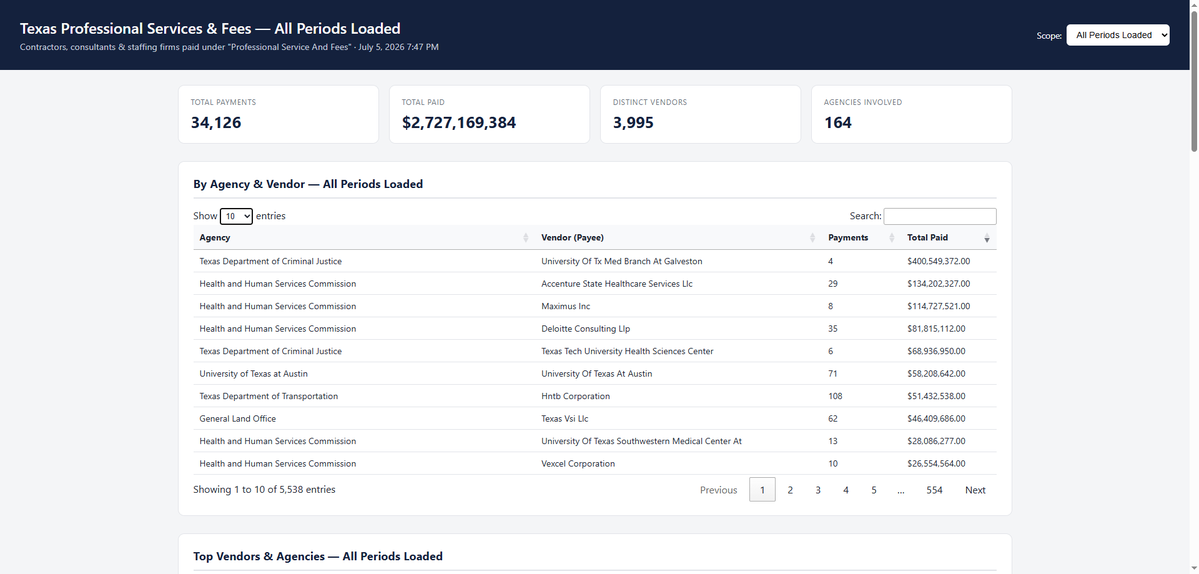
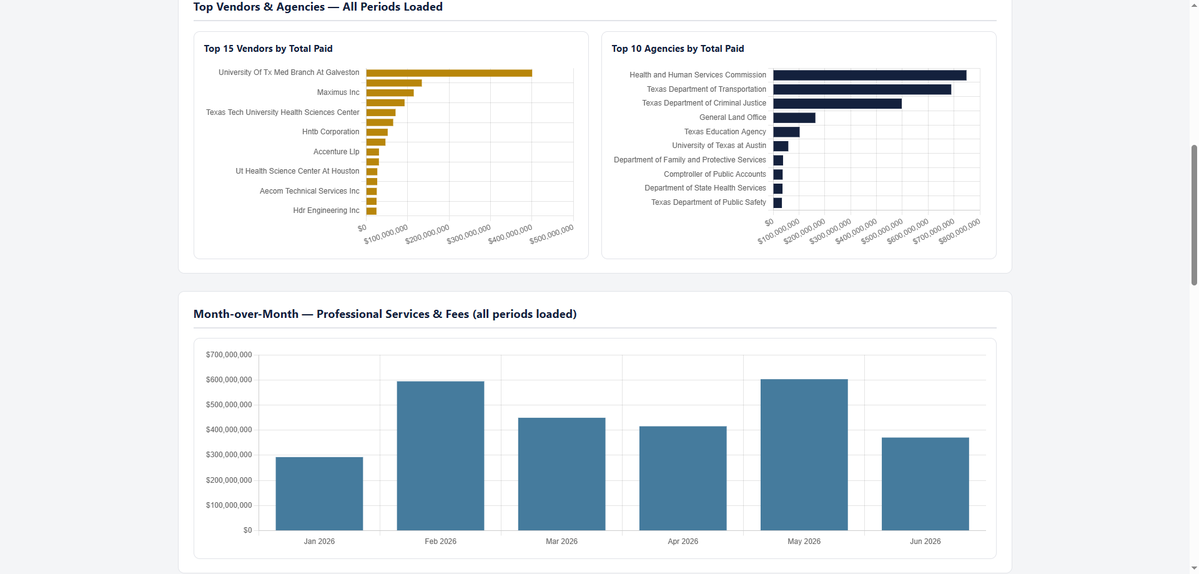
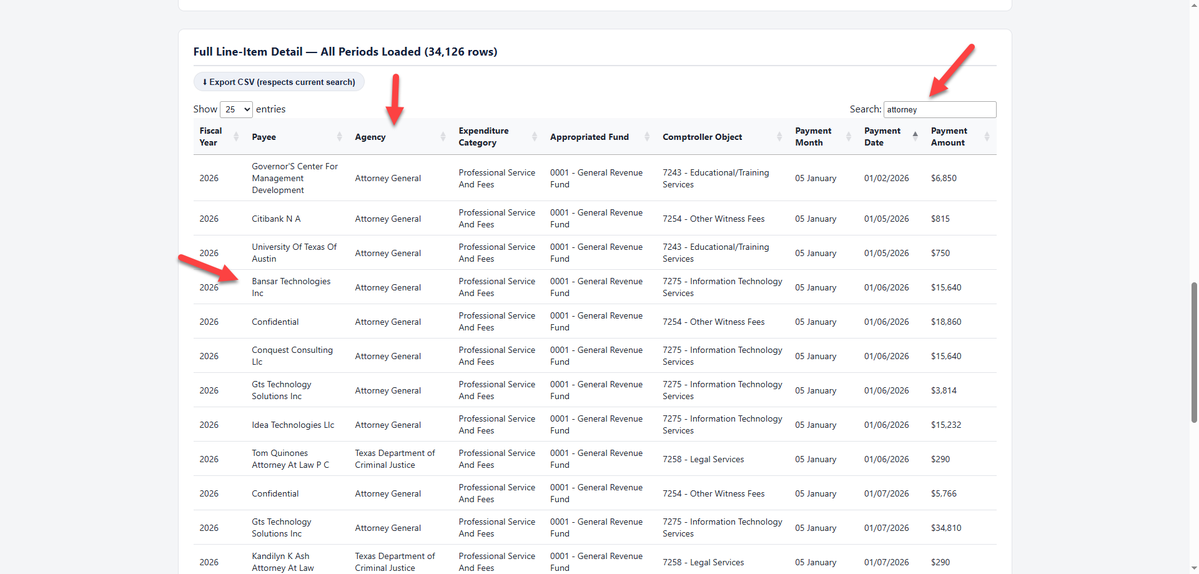
So your family member in Texas has spent their life acquiring technology skills or has just graduated with honors and can't find a job? Let me show you why using Texas State Government Agencies as an example. And lets specifically use the Attorney General @KenPaxtonTX as an example since he has publicly stated that he will end H-1B fraud in Texas. I find that hilarious since I ran against him, and I've proven time and time again that his office uses H-1B contractors who refuse to hire Americans in America. Notice Bansar Technologies? Yep, I've used them several times as an example yet we never hear the attorney general or even bansar mentioned by those with the ear of the public like @SaraGonzalesTX We can also use @GregAbbott_TX office as an example if that will help. guestworkervisas.com/tx_prof…
5
138
261
1,833
Solomonbologne⚡️ retweeted
mirexmoses
Technology never stops amazing me. This is literally the future of fans 🤯🔥
130
895
7,601
1,296,143