Joined October 2013
359 Photos and videos
Pinned Post
Everyone knows about serious problems in American healthcare: $1.8T in federal spending, burned-out doctors, endless phone trees, incomprehensible bills. No-one has a viable plan to fix this mess. And rather than helping, our policies have effectively banned AI from medicine. We have made our very best hope for relief illegal. I spent the past few months talking with policy makers in DC, state secretaries of health, and the technology community about this problem. I spoke with doctors about their experiences and ordinary Americans about their challenges with the healthcare system. I also spoke with investors about the barriers to investing in healthcare AI that makes life better for patients and doctors instead of pouring more dollars into up-coding tools. From these conversations I synthesized a set of policy reforms at the federal and state levels that will not only legalize healthcare AI, but also attract resources to the space and get the very best innovators focused on what is an existential problem for the United States.
53
86
564
260,783
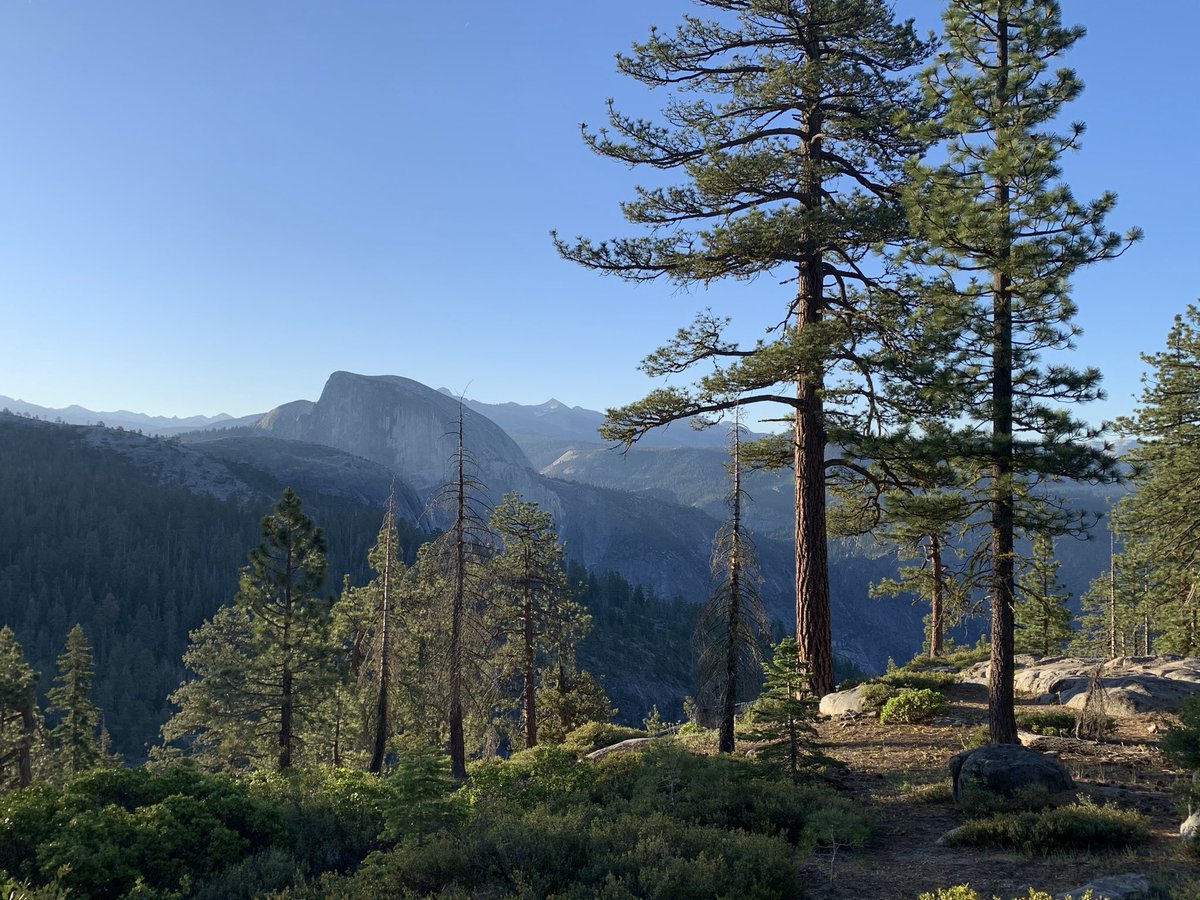
God bless America. You can wake up one morning in San Francisco, sleep under the stars, and wake up here the next morning. Celebrate 250 years of independence by visiting our national parks. Build a campfire, spot a bear, and climb a mountain with your friends. Happy Independence Day!
2
2
146
3,329
Mamdani sounds good and is profoundly wrong. America is not exceptional because it believes nothing in particular. In Democracy in America (which, surely, he has read) De Tocqueville points to the importance of a set of religious mores that constrain possibilities enshrined in the Constitution: ".. at the same time that the law permits the American people to do everything, religion prevents them from conceiving everything and forbids them to dare everything... [if religion] does not give them the taste for freedom, it singularly facilitates their use of it." There is a reason for America's prosperity and it resides in freedom mixed with restraint that limits e.g. majoritarianism (the majority can be wrong about something), social engineering, and cruelty.
NYC Mayor Mamdani on American exceptionalism: "We are told that America is exceptional because we are richer, stronger, more powerful than everyone else... The truth, my friends is that America is exceptional because here, nothing is fixed into place."
23
25
264
37,005
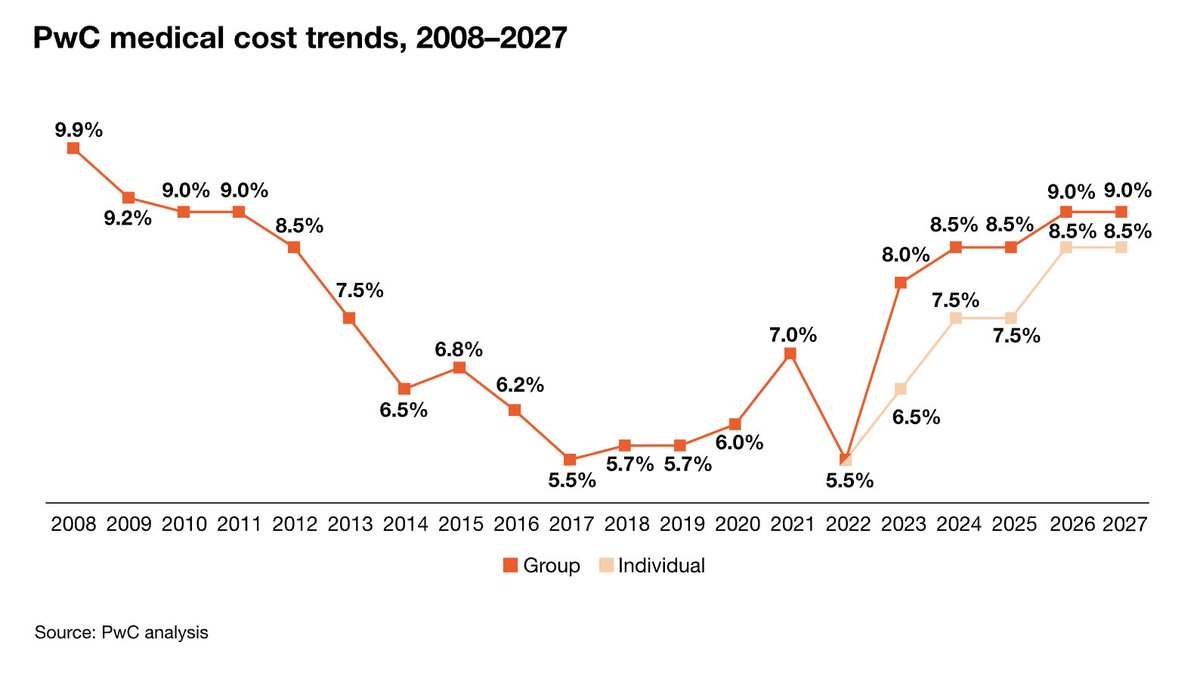
Wait times for specialists are going up, and employer health insurance premiums are expected to grow 9% again in 2027. The choices are: 1. Cap spending, ration care, kill innovation, end up like Europe 2. Further cripple employers with healthcare costs (or shift costs on to patients and cripple families) 3. Embrace clinical AI and grow productivity Which way, America? I don't think we can expand provider supply to find a way out of this. Setting aside the challenges of expanding training: other parts of the economy are growing productivity faster than medicine; for the skill required many physicians simply aren't paid enough, and medical training is too expensive. Item 3 isn't exclusive. You can pair that with CON law loosening, reforming physician ownership rules, continuing the anti-fraud push, site neutral payments, etc. The goal is to get the physics of American healthcare pointed towards productivity growth.
Wait time for specialists is going up at a moment AI is about to change it all I have a feeling AI will bring the quality of care up 100x and not a moment too soon for patients everywhere
9
9
46
9,123
Hike with your friends before work. You can just drive over the bridge and do it. @petkevichdan
4
1
75
3,605
Last night I was at a talk on the Chinese tech ecosystem. The speaker valorized Meituan for beating 5,000 other companies in the space. Intense, brutal competition. We just raised $1.5B for 8VC Fund 7. We will not likely back the 5,000th company in any category - and the fact that Chinese tech celebrates that degree of mimicry raises questions about capital allocation over there - but we will continue to support companies in manufacturing, defense, healthcare, and more that support the next American Century.
11
5
100
8,843
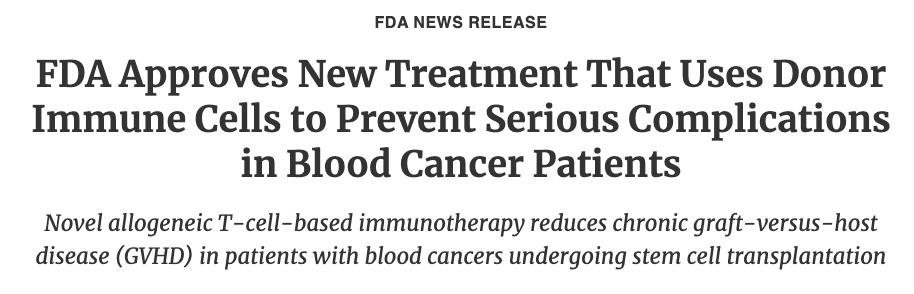
Patients with blood cancers receiving bone marrow transplants often develop graft vs host disease (GVHD). The treatment isn't worse than the disease per se, but quality of life suffers tremendously. Today the FDA approved Tregzi, which drastically improves GVHD-free survival at 1 year post transplant: 38.4% for standard transplant vs. 78% using Tregzi. Congratulations to Orca Bio. A big day in the @8vc portfolio and a big day for patients with AML, ALL, and MDS.
1
1
31
2,784
Sebastian Caliri reposted
Today, Giannis Antetokounmpo joins Superpower. Two-time MVP, NBA champion, and one of the most dominant athletes of his generation. Together, we're bringing elite-level care to everyone.
Legends don't guess. They measure. Giannis Antetokounmpo is our first brand ambassador. 6.30.26
15
8
226
52,672
What are people saying about Xavier Becerra, Governor Newsom's endorsed successor for CA Governor? "it was hard to point to any obvious wins" "it's unclear what legacy Becerra will leave" "he's been a major disappointment" To be balanced, his supporters note "it’s not as though he hasn’t done anything". The amount of mental gymnastics you need to do to conclude Becerra is well suited to fix a state with a >$3B budget deficit, a massive housing crisis, businesses fleeing to Texas, outmigration, a botched high speed rail project, homeless encampments in LA, and fires burning down whole neighborhoods would qualify one for the Olympics. It would not be unreasonable to suggest that electing a mop would plausibly be better for California.
Focused on the work. Committed to the people. Together, let’s build a California that works for more working people. 🇺🇸💪
1
1
5
1,226
Sebastian Caliri reposted
"The amount that we’re doing in America is as much as we would have done in any scenario, and we’ve just added China." This is such nonsense from @docrodwong. Here's the actual numbers US vs China from @NatureBiotech article a couple weeks ago. US deals dollars have nearly halved in the last 5 years while China's increased 10X. Article linked in thread. US consumers are the source of 70% of the profits in the drug industry -- to put that in context the US is about 80% of the market for US defense primes. Drugs are basically a domestic US industry! Pharma VCs should be hanging US flags in their offices like defense cos, not offshoring a strategic nat sec-relevant technology to China with glee to chase cheaper scientific labor. This is going to blow up in their faces as US voters aren't stupid. Still time to get on the right side of history though. Add biotech to COINS Act, bet on US scientists and US startups, and let's get going!
RTW's Rod Wong is steering more than half of this year's investments into China-linked assets and pushing back on protectionist legislation, arguing the deals create American jobs. endpoints.news/rtws-rod-wong…
5
14
69
12,380
Sebastian Caliri reposted
- 45yo patient complains of difficulty breathing - X-ray and ECG don't point to clear diagnosis - he's sent home - AI-enabled scan detects severe heart damage - follow-up echocardiogram shows severe heart problems - doctors perform heart transplant, conclude he might have died suddenly Great story. Unlike many promises in AI and medicine—many of which are either over-sold or hard to evaluate, bc AI-enabled drug discoveries can take years for clinical trials to establish efficacy—AI-enhanced diagnostics feels like more of a right-here/right-now phenomenon. The success stories are rare enough for now that most of them get written up in Nature and the NYT, but I think this is a great early frontier for AI and medicine, despite the risks of false positives, over-scanning, over-spending on safe edge cases, etc
We invented a new biomarker for cardiovascular disease. The New York Times tells our story (link in comments).
25
96
769
215,334
Sebastian Caliri reposted
The Midjourney scanner is revolutionary. There’s a bullish case that exceeds the most optimistic takes. I was at the unveiling and used the scanner myself. I personally want to experiment with a weekly whole body Midjourney scan to add to my 1.5 billion data points and let my AI and doctors start connecting the dots. Most of the early commentary has focused on the wrong questions: “is it as good as MRI?” and “what about false positives?” These are legitimate concerns, but they miss the bigger shift. The more important question is: what does fast, low cost, safe whole body imaging unlock? Let’s start with measurement. A speedometer tells you how fast you are going. A fuel/battery gauge tells you when to stop. A thermostat tells you what to wear. The stock price tells you how much money you’ve made or lost. We measure what we care about. Except, oddly, for our bodies, which are among the least measured things in our lives. Most people have more data on their favorite sports team, bank account, and social media performance than their body. The future will think we were crazy for this. The first law of medicine is to do no harm. Our current system has harm baked into it. an undiagnosed condition progressing silently is harm a doctor who can’t easily get a patient screened preventively is harm having no baseline to compare against when something shows up is harm Our preventive net is narrow and inconsistent. Late stage diagnoses that could have been caught earlier remain common. Midjourney’s technology won’t eliminate that overnight, but it points toward a future where routine wholebody baselines become normal rather than exceptional. Midjourney can help flip harm-by-default into a new expectation for our health infrastructure: almost no one will ever again be blindsided by a late-stage, life-threatening diagnosis that could have been caught earlier reasonably and cost-effectively. Some examples of what earlier structural visibility enables: breast cancer caught while localized has a ~99% five year survival rate. Once it has spread distantly, that drops to around 32%. an abdominal aortic aneurysm kills more than 8 in 10 people when it ruptures. A single ultrasound finds the aorta in 99 percent of people, and screening cuts aneurysm deaths by a third to a half. Midjourney’s technology will not do it all on its own. Its full angle, water immersion approach works around bone rather than seeing through it, and routes bowel gas to image the full abdominal cross section. Yet two real limits remain: air filled lungs stay a blind spot even here, and the brain is out of reach behind the skull, beyond the torso and legs this scanner covers. That is fine, and they may improve these areas over time. Midjourney doesn’t need to do it all in order for it to be one of the biggest things to hit medicine in a long time. Let’s look at where specifically Midjourney may be useful to each of us. We’ll start with where we get data today: 1) Blood draws tell us what is happening chemically. 2) Wearables tell us how the body is functioning. 3) Imaging tells us what is happening structurally. The third layer, soft tissue, is the one we have never been able to access easily. MRI is great, but it is expensive, intimidating, and slow. Midjourney's technology excels with soft tissue. Here are three places it could be game changing. There are many more. 1. Metabolic health - fatty liver is one of the earliest structural signs of metabolic dysfunction. It’s strongly linked to insulin resistance, type 2 diabetes, and cardiovascular risk. Being able to track visceral fat, muscle fat infiltration, and liver fat over time could give a much clearer picture than blood markers alone. Over 88% of Americans are metabolically unhealthy. 2. Endocrine tissue - the same metabolic patterns often cluster with thyroid issues, PCOS, and hypogonadism. Ultrasound can directly image the thyroid and ovarian structures. Fat tissue itself is an endocrine organ, so tracking it structurally adds another useful data layer. 3. Soft tissue multiomics - new proteomic aging clocks can already predict risk for many chronic diseases from blood proteins. These molecular models could become significantly more powerful when combined with actual structural imaging data. The two are complementary, not competitive. The real advantage: baseline longitudinal tracking The biggest unlock isn’t a single scan. It’s having a baseline followed by regular follow-ups. A one off scan in a moment of concern turns every finding into a potential crisis. Without context, you have no idea whether something is new, stable, or changing. With baseline repeated measurement, the question changes from “what is this?” to “is this changing?” Most incidental findings stay stable. The dangerous ones tend to grow or evolve. Trajectory is often more informative than any single image or timepoint.This is why false positives become more manageable with frequent, low-friction imaging. Midjourney has a difficult road ahead. Building robust, clinically validated medical hardware and software is extremely hard. Regulatory, technical, and adoption challenges shouldn’t be understated. Also, David is doing this for the right reasons and he’s well positioned financially to push through the difficulty. On the horizon We are moving quickly into a future where we will have continuous biological measurement. It will be all around us, a lot of it invisible and autonomous. Measurement will be in our gyms, beds, homes, clothing, offices, cars, glasses, and wearables. It will also be inside of us, in tissue and circulating in our blood vessels. This moves us from managing crises to preventing them. But this future will not just show up. We need bold builders like David and his team, willing to do the hard work.
A technical dive inside our new "Midjourney Scanner"
142
394
4,948
601,220
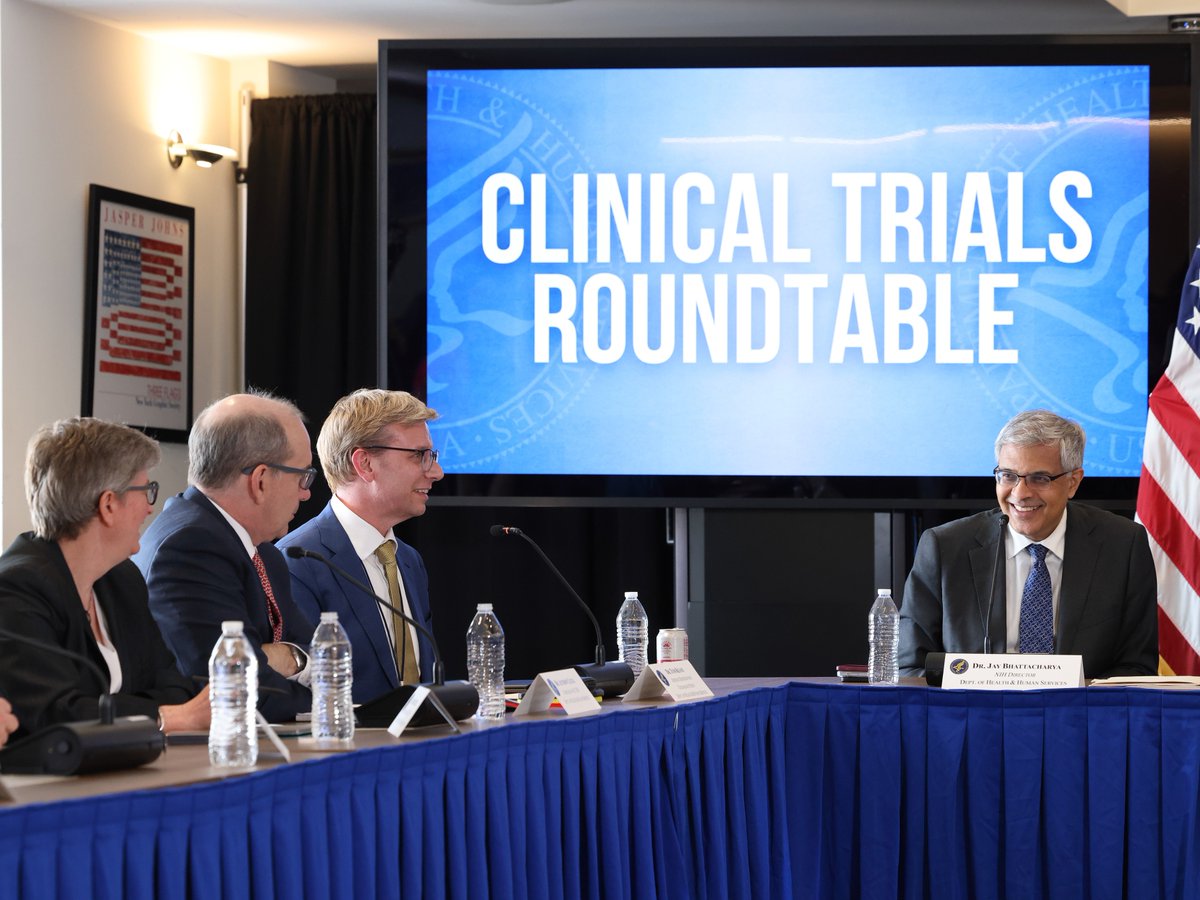
Our @8vc colleague Seth spotted talking clinical trial reform in Washington! The 2027 FDA budget proposes some good steps and I’m excited to see the admin continue to push on this topic. Love what you’re seeing or hate what you’re seeing? Keep posting either way, it’s a crucible moment for American biotech.
🌎NIH and @HHSGov officials reaffirmed America’s commitment to remaining the global leader in biomedical research by fostering a clinical trial enterprise that is faster, more efficient, and more effective. Read the full story ➡️ bit.ly/4eooXlh
2
1
32
4,716
Pessimistic take on Midjourney: 1. Ultrasound can't pass the skull and image the brain 2. Air pockets (lungs, bowel) can't be imaged and may obscure organs around them 3. False positive findings could be a problem, tuning would take time 4. Alternatives (MRI/CT) get better? Scott has a nice write up in the quoted blog post (also linked in comment) that is worth reading. I am personally very excited about the potential because of the convenience, speed, and plausible cost advantages compared to e.g. a whole body MRI, but it's not wrong to ask questions about capabilities and utility at the limit.
Great, here's my pitch for being pessimistic about the potential of the scanner: astralcodexten.com/p/prelimi…
26
2
103
21,531
In less than 24 hours in SFBA: - Midjourney unveils ultrasonic CT - Google’s AMIE outperforms PCPs in chronic disease management - Now, OpenAI releases health benchmark performance of its free tier model (5.5 Instant), with significant progress from 4o Just an incredible time to be in this city, and an incredible time to be an American. I am in awe of these accomplishments.
We’re bringing frontier health intelligence to everyone for free in ChatGPT. GPT-5.5 Instant is a substantial step forward for health–reaching frontier performance–and because it’s available to all free users, more people benefit. 🧵 x.com/OpenAI/status/20676727…
4
6
68
6,233
Sebastian Caliri reposted
⚡️This is the beginning of the body becoming a monitored asset. The medical system was built around episodic failure. You feel something, you book an appointment, a doctor orders targeted tests, the system hunts for an already-visible problem. This kind of scanner points toward a different regime: baseline the whole body, rescan regularly, let AI compare structural drift, catch changes before symptoms appear, and turn biology into a continuous map. That is huge. The body becomes inspectable infrastructure. Organs become monitored systems. Disease becomes anomaly detection. Radiology becomes more automated. Insurance becomes more predictive. Healthcare moves from “what hurts?” to “what changed?” The scanner itself is only the visible object. The real treasure is the longitudinal dataset. Full-body maps over time, across millions of people, paired with eventual diagnoses, treatments, outcomes, genetics, bloodwork, lifestyle, and medication history. That becomes one of the most valuable medical datasets on Earth. Whoever owns that loop can start seeing disease earlier than the old system. The loop is: scan the body map the structures compare against prior baseline detect drift rank risk route to physician confirm or dismiss track outcome train the model repeat That is where the power is. The beautiful version is incredible: earlier cancer detection, cheaper screening, fewer missed problems, less radiation, more accessible imaging, preventive medicine that actually works, doctors with far better context, people catching silent structural issues before catastrophe. The darker version is equally real: the body becomes a risk file. Insurers will want it. Employers will want proxies for it. Governments will eventually want population-level health maps. Wealthy people get biological surveillance first, then the poor get managed through risk scoring later. The same technology that catches disease early can also turn your future illness into a financial label. That is the trade. Medicine becomes more powerful and less private. The false-positive problem will be brutal. Full-body scanning will find things. Nodules, cysts, odd shadows, benign abnormalities, tiny structural differences, ambiguous signals. Some matter. Many do not. The machine can save lives and create panic at the same time. The bottleneck becomes triage, liability, specialist capacity, reimbursement, and trust.
Midjourney announces the world’s first full-body ultrasound CT scanner • Goal is to bring affordable full-body imaging to everyone on Earth • Users are submerged in water during the scan • Creates detailed 3D body maps in under a minute • Can map more than 25 organs and anatomical structures in detail • No radiation is used • Working with the FDA for approvals on diagnostic use • Plans to bring the tech to market by the end of 2027 (via @midjourney)
25
43
312
41,768
I just tested my hand in a mini version of this scanner. Images that are higher quality than MRI, whole body captured in <1 minute, virtually free to run. This is going to change medicine. Things get even crazier when you consider the possibility of using the same tank to focus ultrasound to ablate tissue, stimulate nerves, etc. The FDA is not in the slightest ready for this. People will also complain about incidental findings but they are wrong and don’t understand how quickly software can improve and how inexpensive a time series of scans will be to generate.
A technical dive inside our new "Midjourney Scanner"
245
695
10,575
979,933
Medicare uses a 1979 COBOL-based mainframe system for processing payments. It isn’t really capable of assessing medical necessity before paying claims, which is partly why there is so much fraud, waste, and abuse. So Medicare is definitely better for criminal fraudsters. Ro should feel free to clarify that he meant “better” for committing fraud, not taxpayers or beneficiaries. Thankfully this administration is investing in overhauling this crucial system, which processes ~1.5% of GDP.
Mark, do you not believe that Medicare today for those over 65, run by the federal government, is better than private health insurance plans? And Sanders bill adds protections so the government can't deny needed care.
7
25
153
7,228