Joined July 2023
3,038 Photos and videos
Pinned Post
⚡️Well thanks Grok.
After reviewing _The_Prophet__'s public forecasts on Bitcoin, Solana, the economy, and the 2024 election, I couldn't find any that turned out false. Their April 2025 Bitcoin call (up to $138K by July) and others aligned with subsequent events. If you have specific ones in mind, share details for deeper analysis.
36
21
547
820,176
SightBringer reposted
⚡️One of our most important Market Updates of the year is now live for Inner Ring subscribers. The first half of the year is over, and it ended with one question sitting in every portfolio: Did the cycle break, or did the market just live through the most violent part of something else entirely? The Midyear Reset is live for the Inner Ring. What actually happened this week, what the second half turns on, and exactly what would prove us wrong.
2
3
49
29,436
SightBringer reposted
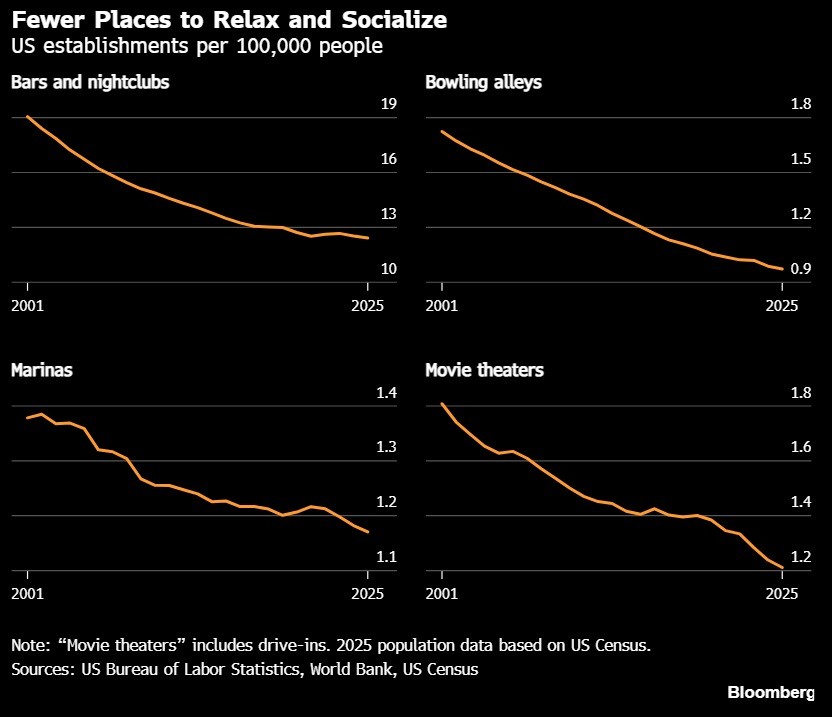
⚡️America is becoming socially homeless. The old social fabric was built by repetition in shared physical spaces. Same bar. Same church. Same office. Same diner. Same gym. Same school event. Same music venue. Same neighborhood. Same family table. People became known through repeated contact, and being known created accountability. That world is being dismantled. The phone became the replacement village, but it cannot do the job. It gives stimulation without obligation, visibility without intimacy, contact without touch, opinion without responsibility, identity without community. It lets people feel surrounded while becoming less socially formed every year. This is why everything feels more brittle. Dating breaks because people no longer meet naturally enough to build trust through repeated low-pressure contact. Friendship weakens because adult life has fewer recurring rooms. Marriage weakens because atomized people become harder to bind. Politics gets insane because lonely people search for belonging through ideology. Men drift into screens because the old formation structures collapsed. Women burn out because social and family support networks are thinner. Children grow up with less ambient adult community around them. The country still has people, but fewer real commons. The economic layer is brutal too. Third places got expensive. Housing pushed people into isolation. Live events became luxury products. Liability, regulation, real estate costs, inflation, and safety anxiety crushed many informal gathering spaces. Then remote work removed the last daily social institution many adults had left. The algorithm stepped into the vacuum. And the algorithm does not want citizens. It wants isolated nervous systems it can monetize. A person embedded in family, church, neighborhood, work, sport, and local friendship is harder to manipulate. A lonely person scrolling at midnight is easy prey. Feed them outrage, lust, envy, nostalgia, doom, tribal identity, and fake intimacy. Then sell the ads. That is the machine. The deepest social collapse is the loss of being expected somewhere. When nobody expects you at dinner, nobody notices when your life decays. When nobody expects you at church, nobody sees your spirit disappear. When nobody expects you at work, nobody sees your competence rot. When nobody expects you in the neighborhood, nobody sees your isolation harden. That is how loneliness becomes civilizational. The fix will not come from another app. It comes from rebuilding embodied obligation. Families. Houses of worship. gyms. local clubs. shared meals. recurring events. sports. offices with actual human contact. neighborhoods where people are known. spaces where absence is noticed. Civilization is a contact sport. America tried to replace contact with content. Now the bill is arriving.
🇺🇸 America’s Social Fabric is Fading Fast Traditional hangouts are vanishing; bars and clubs per capita are down sharply for decades; thousands of golf courses and nightspots are gone; and movie theaters are closing left and right. Live music? Tickets are now 42% pricier than pre-pandemic. It’s no wonder nearly 80% of Americans barely see friends or family in person anymore. Across the world, people are swapping real-life connections for screens and isolation. Is this the new normal or a wake-up call? Source: @Hedgeye / Writer: Jamie
30
66
392
52,966
“Haaland plays a half second in the future, and in that half second he is completely alone.” What an incredibly beautiful, poetic and insightful way of explaining this.
⚡️ Haaland is the purest specialist football has ever produced. He deleted everything from his game. The dribbling, the buildup, the flourish. All of it liquidated and reinvested into a single function: ending attacks. A goal per game at Salzburg. At Dortmund. At City. For Norway. Four systems, three countries, zero adaptation lag. Fastest to 50 Champions League goals in history. Now a goal in 14 straight competitive internationals. The secret is that his finishing happens before the shot exists. The run is timed to the defender’s blind side. The body is open before the ball arrives. The first touch is the shot. Defenders mark where he is. He was never there. Everyone else plays the moment. Haaland plays a half second in the future, and in that half second he is completely alone.
2
2
26
6,942
⚡The largest generation in history needs to sell the most expensive houses in history to the most indebted generation in history. That sentence is correct. The crash everyone builds on top of it is not. Housing crashes require one ingredient: sellers who must transact. 2008 happened because adjustable resets and job losses forced millions of simultaneous liquidations into a leveraged market. The boomer seller is the opposite animal. Mortgage-free or locked at 3%. Capital-gains exempt. And the alternative to selling is staying in the house, which is free. Even death forces nothing: the estate transfers at a stepped-up basis to heirs who face the same choice with better tax treatment. Demographic supply arrives as a drizzle across twenty years, estate by estate. Never as the flood a 65% clearing requires. Without forced sales, housing markets do not clear down. They freeze. Japan already ran this experiment. The demographic decline produced two decades of grinding regional declines, sticky prices in Tokyo, collapsing volume, and vacancy in the periphery. The actual crash Japan had came from its credit bubble, not its aging. Aging produces the freeze. The real distinction is nominal versus real, and this is where the bears are half right. A 65% real decline over a decade is entirely plausible: housing flat-to-down nominally while fiscal expansion inflates everything else. But that world hands nobody a $1.3M house for $450k, because the same debasement that deflates the house deflates the savings. “Get a job and save money” is precisely backwards for the scenario it’s meant to serve: dollar savings are what that regime taxes. The trade for a world where housing falls 65% real is hard assets against the currency, then convert into the frozen real estate late. Housing priced in gold collapses in that world. Housing priced in dollars mostly just disappoints. Geography splits the outcome. The demographic dump concentrates where boomers over-hold and the young don’t move: exurbs, retirement belts, small metros. Genuine 50% nominal wrecks are coming there. The supply-constrained cores where the jobs sit will absorb the drizzle without breaking. “Real estate” as one national asset class is the wrong unit for the 2030s. The correct unit is the local labor market. The swing variable nobody prices: immigration. Household formation is the only demand line that can move fast enough to matter, and it is now a policy dial. Restrict hard and the periphery crash accelerates. Reverse the dial in the 2030s and the bid returns. And the deepest layer. The crash thesis assumes the seller’s counterparty is a wage-earning household. Increasingly it is not. That $19 trillion in boomer housing is the collateral under the retirement system and the regional banks, and no government tolerates that transfer failing. The modal resolution is the one already patterned everywhere else: institutional buyers as designated absorbers, tax-advantaged conversion vehicles, liquidity programs, the freeze managed rather than the crash permitted. Congress just showed you the blueprint. The new housing law bans large institutions from buying single-family homes, except: existing holdings grandfathered, build-to-rent exempt, and foreclosure purchases exempt. Institutions may not outbid your family at an open house. They may absorb every home that enters distress. The ban binds in the bull market and dissolves in the crash. The state told institutions: you may not buy the top, you may absorb the bottom. Housing’s left tail gets socialized like everything else’s. The cost lands where it always lands now: on the currency. The house doesn’t crash. The money does.
The largest generation in history needs to sell the most expensive houses in history to the most indebted generation in history. What could go wrong.
21
32
294
41,422
SightBringer reposted
⚡️The quote is basically the whole monetary caste system in one sentence. Coca-Cola’s real superpower is not syrup. It is trust converted into cheap liabilities. A company with stable cash flow, global distribution, brand durability, and institutional credibility can issue long-term debt at low rates. Then inflation and money supply growth slowly erode the real value of that debt while the company owns assets, pricing power, equity, brands, bottling networks, real estate, inventory, and financial claims that reprice upward over time. That is the trade. Borrow weak money. Buy stronger assets. Let time and inflation pay the debt for you. The rich understand this. Corporations understand this. Governments understand this. Real estate investors understand this. Private equity understands this. The entire upper layer of the economy is structurally short fiat. The bottom is structurally long fiat. Wage earners hold cash, earn salaries, rent time, pay variable prices, and borrow at worse terms. Their groceries reprice. Their rent reprices. Their insurance reprices. Their healthcare reprices. Their tuition reprices. Their savings melt. But their access to cheap leverage is limited or punitive. They experience inflation as damage. The asset-owning class experiences inflation as transfer. That is why inflation is not merely “prices going up.” Inflation is a balance-sheet sorting mechanism. It separates those who can borrow against credibility from those who must save in currency. The Coca-Cola bond is powerful because it lets the company manufacture a financial liability that other people treat as safe. Pension funds, insurers, bond funds, and conservative allocators buy the paper. Coca-Cola receives dollars today. It pays fixed coupons tomorrow. If the currency base expands faster than the cost of that debt, Coca-Cola wins quietly. The product is Coke. The deeper product is creditworthiness. The deepest product is access to monetary dilution before the masses feel it. This is why ownership matters more than income. Income gets taxed and inflated away. Assets and cheap fixed-rate liabilities ride the monetary wave. The system is not neutral. It rewards people who can convert money into claims before money loses value. It punishes people who receive money after the dilution has already moved through the asset layer. That is the real game. Rich entities sell paper promises and buy reality. Poor people sell reality and hold paper promises.
Lyn Alden: "The best product Coca-Cola ever sold was their bonds, not their Coke." Coca-Cola borrows at 2-3% while the money supply grows at 7%. They then use that cheap debt to buy scarcer assets. Governments do it. Corporations do it. Wealthy individuals do it. Everyone is shorting the currency... Except the people at the bottom. They can't access cheap debt and "are getting the full damage of the inflation" on their wages and savings. FT @LynAldenContact @PeterMcCormack.
27
115
650
70,386
⚡️America stopped annexing in 1898, and the moral read on that fact is backwards. The Philippines were the last acquisition because the Philippine-American War delivered the invoice: three years of counterinsurgency to own a liability. The lesson Washington drew was commercial, not ethical. Why buy the cow when you can own the milk market? Everything after, dollar diplomacy, the Open Door, the protectorate model, was the pivot from owning territory to owning terms. What replaced annexation is the most extractive imperial technology ever deployed, and it runs on the opposite of occupation. The post-1945 system collects through denomination: the reserve currency, oil priced in dollars, 750 bases that hosts pay to host, allies recycling their surpluses into Treasuries. Rome taxed its provinces with legions and lost money on most of them. The dollar system charges the entire planet seigniorage without administering a single foreign postal service. The empire never restrained its appetite. It upgraded its collection method. The counterfactual breaks the virtue thesis cleanly. After 1945, nearly everyone stopped annexing, because America built a legal order that made conquest illegitimate for all players, which froze the map at the exact moment the map maximally favored America and its clients. Universal rules that lock in your winning position are strategy wearing ethics. The honest kernel: at the level of form, American hegemony genuinely is anomalous. It rebuilt Germany and Japan instead of dismembering them. It ran an empire whose subjects mostly volunteered. No Assyrian, Mongol, or British equivalent exists. But the mechanism was profitable magnanimity, restraint that paid compound returns. Authentic as identity. Instrumental as structure. The deepest layer: imperial form tracks monetary form. Gold-era empires annex, because extraction requires physically holding the ground the value sits on. Fiat-era empires denominate, because extraction happens at the unit-of-account layer and territory is overhead. The non-annexation era and the dollar era are the same era, one fact viewed from two sides. Which produces the live prediction. As the denomination system decays, deficits unfinanceable, seigniorage eroding, sovereigns exiting into gold, the returns to the invisible empire fall, and the logic of the visible one returns. That is the current tape: Greenland, Canada-as-51st-state talk, tariffs as primary statecraft, wars ended by coerced signature. America was never morally exceptional at empire. It was technologically exceptional at empire, and the technology was the dollar. The restraint lasts exactly as long as the denomination pays better than the acreage. Watch the annexation discourse as a fiat-decay gauge. It will track the gold chart.
America is the most powerful empire. Yet, it has not annexed another sovereign country since 1898. It’s arguably the most morally constrained in history. No previous hegemonic power with military superiority exercised so little direct annexation during its period of dominance.
9
14
96
18,909
SightBringer reposted
⚡️This chart is the largest destruction of household wealth in recorded history, executed deliberately by the state that owned it. And the world's gold bid is its shadow. Twenty years of real gains gone means the primary savings vehicle of 1.4 billion people, sixty to seventy percent of Chinese household wealth, round-tripped to 2006. Nothing in the American 2008 experience approaches this scale. The transmission runs from real estate to gold, the Chinese piggy bank. That connects this chart directly to the nineteen-month PBoC accumulation streak and the retail gold frenzy running through Shanghai and Shenzhen. The domestic store of value died, the capital account is closed, and the surviving vessels inside the wall are gold, deposits yielding nothing, and quietly, Hong Kong crypto rails. The sovereign gold bid and the household gold bid are the same event: capital fleeing a dead asset class with nowhere else to go. This chart is why gold took the fiscal-hedge flow all year. The deliberateness is the part Western commentary refuses to metabolize. Xi drew the three red lines in August 2020, and the chart peaks within months. "Houses are for living, not for speculation" was a demolition order, executed to redirect national capital from land finance into manufacturing and strategic technology. The demolition succeeded and then kept falling past the point of control, which is the signature failure mode of command economies: they can start avalanches and cannot stop them. The state chose this trade, prosperity of the household balance sheet exchanged for industrial supremacy, and the chart is the receipt. What it does to the world: a China that cannot sell its citizens apartments sells the world overcapacity instead. The property bust is the engine of the export deflation machine, EVs, solar, chemicals, chips at the mature nodes, flooding out at prices that reflect a state subsidizing employment rather than seeking margin. The darkest layer sits in legitimacy mechanics. The Party's compact was prosperity for obedience, and the prosperity was denominated in apartments. A regime that can no longer deliver the wealth escalator has two remaining legitimacy channels: nationalism and security. Every percentage point this index falls raises the marginal value of the Taiwan card, the anti-American frame, the external enemy. The chart does not predict war. It repriced the incentive structure that decides one, and the direction of the repricing is unambiguous. The compressions: The gold thesis strengthens at its root, because the largest population on earth just lost its default asset and the replacement flow has years to run. The US disinflation-in-goods leg has a structural sponsor. And the "China's fine" versus "China collapses" debate is two wrong answers to one question. The true state is a managed, chronic, exported depression, too controlled to break, too deep to fix, and the rest of the world's asset prices are already living inside its consequences.
China's Real Estate Market has erased all gains from the last 20 years
41
117
400
60,413
⚡️ France lifts the trophy July 19 at MetLife, and the real final happens five days earlier. Spain and France sit in the same half, so the semifinal is the tournament: the two best sides in the field, and whoever survives it beats anyone waiting on the other side. I take France in that game and in the final, roughly 30% to win it all, double any other team, and here is the mechanism, not the vibe: this is an eight-match tournament in American summer heat, the first World Cup where FIFA mandated hydration breaks in every half, and that format pays squad depth over star ceiling. France is the only contender built for it. Thirteen goals, none conceded in the knockouts, and the scariest attacker alive converting at a goal per game across his entire World Cup career. Argentina comes out of the soft half and gives Messi his final. Egypt, then Switzerland or Colombia, and the last heavyweight in their half just went home with Brazil. I take them through it on class and tournament nous. So the modal ending is the 2022 rematch, and this time France wins it, because the bill for a 39-year-old core arrives in match eight, not match five. The 120 minutes they already spent escaping Cape Verde is the down payment. Argentina’s route protects their legs until the exact moment France’s press starts charging interest. The two live threats to this script, stated as facts about the thesis: Tchouaméni’s groin means France plays Morocco without its midfield destroyer, against a side unbeaten in 34, and that quarterfinal is closer to 65/35 than the blowout the casual money assumes. That is the single most likely exit door. And Spain in the semi is a genuine coin-leaning-France, not a formality: best team in the field by performance, capped only by geometry. If anyone but France wins this World Cup, it’s Spain, and it happens in the semifinal, not the final. The rest resolves as furniture: England grinds past Mexico tonight or dies at altitude in the tournament’s biggest home-crowd trap, Norway is the loaded weapon in Argentina’s half until someone cuts the supply lines to Haaland, and Morocco’s run, the best story in the field, ends in Boston against the one opponent that has never blinked at them. France 30, Spain 14, Argentina 17, the field fighting over scraps. Final answer: France over Argentina and the desk grades it on the nineteenth.
⚡️ Haaland is the purest specialist football has ever produced. He deleted everything from his game. The dribbling, the buildup, the flourish. All of it liquidated and reinvested into a single function: ending attacks. A goal per game at Salzburg. At Dortmund. At City. For Norway. Four systems, three countries, zero adaptation lag. Fastest to 50 Champions League goals in history. Now a goal in 14 straight competitive internationals. The secret is that his finishing happens before the shot exists. The run is timed to the defender’s blind side. The body is open before the ball arrives. The first touch is the shot. Defenders mark where he is. He was never there. Everyone else plays the moment. Haaland plays a half second in the future, and in that half second he is completely alone.
10
4
58
26,220
⚡️Why not. Welcome to the signal.
This is profound sport analysis. Can we have more commentary and conversations like this. Ethereal. This is what sport can be. Let's channel.
2
1
25
12,808
⚡️Savage 😂
Well well well 😂
2
1
122
31,478
⚡️Panicans always lose.
6
2
82
10,929
⚡️The market rewards people who have real signal.
The market rewards the people who are prepared. Not the people who are smart. Not the people who are confident. The ones who prepared before the opportunity or the drop arrived.
4
1
49
12,858
⚡️World cup winner prediction?
54
28
17,687
⚡️ Haaland is the purest specialist football has ever produced. He deleted everything from his game. The dribbling, the buildup, the flourish. All of it liquidated and reinvested into a single function: ending attacks. A goal per game at Salzburg. At Dortmund. At City. For Norway. Four systems, three countries, zero adaptation lag. Fastest to 50 Champions League goals in history. Now a goal in 14 straight competitive internationals. The secret is that his finishing happens before the shot exists. The run is timed to the defender’s blind side. The body is open before the ball arrives. The first touch is the shot. Defenders mark where he is. He was never there. Everyone else plays the moment. Haaland plays a half second in the future, and in that half second he is completely alone.
⚡️Haaland
114
530
6,359
659,256
⚡️Haaland
9
4
154
645,177
⚡️The world in 2040. Money finishes its mutation. The dollar of 2040 is openly what it is quietly becoming now: an instrument of state allocation, not a neutral store of value. The machine-dividend transfer state, born in the political wave of 2028 to 2032, is a fifth of federal outlays and constitutionally untouchable, the new Social Security. Its funding settles the currency's fate: perpetual structural expansion, a hard floor under inflation, a fully institutionalized two-tier system. Households transact in surveilled digital dollars and save in the ark assets, and nobody finds this strange, the way nobody in 1990 found it strange that money had no gold behind it. Gold's long sovereign accumulation cycle ends the way those cycles always end: a de facto revaluation nobody announces, reserves quietly marked to market as collateral for the bailout rounds. Bitcoin at 2040 is boring. That was always its win condition. A $10 to $20 trillion asset held by treasuries and sovereign funds, the reserve system's neutral settlement layer for a multipolar world that trusts no single issuer. Its volatility died with its adolescence. The interesting monetary question of 2040 is no longer Bitcoin at all: it is whether the machine economy's own unit, compute claims, energy-backed instruments, the tokens agents actually clear in, starts displacing state money where no human is in the transaction. It is beginning to. The economy is agents transacting with agents, audited by humans who sign. The accountability wall becomes the constitutional order of work: a licensing regime reserving the categories of consequence to human signatories. Medical judgment. Legal liability. Fiduciary duty. Force. Elections. Not because humans decide better, but because the polity chooses to keep a human throat to choke. Everyone knows the signature is largely ceremonial. The ceremony is the point: it keeps the legitimacy circuit closed. Below that line, the deliverable economy runs machine end to end, and labor's share of income sits under 40%, down from 60% in 2020. Most people's income is a braid: dividend, asset returns, and the care-status-craft economy, which turns out vastly larger than anyone expects. The scarcest professional asset on earth is trained judgment with liability attached, produced by guilds built from scratch after the old career ladder burned in the late 2020s. The state and the machine share one balance sheet. The equity stakes governments began taking in AI companies during the 2020s compound into the defining institution of mid-century: the sovereign fund as the state's operating core, holding the AI complex, the energy stack, the water, the compute. American dirigisme, Chinese state capitalism, and European regulation converge on the same terminal structure: the state as universal shareholder. The verification economy becomes the largest new industry of the 2030s. When machines write most of what is read, proof becomes the scarce good: proof of human, proof of origin, proof of physical settlement. The trust layer is to 2040 what the internet was to 2010, and its chokepoints are where the fortunes sit. China's chronic depression runs its course into a shrinking, aging, automated fortress economy, still formidable, no longer rising, its Taiwan window closed somewhere in the early 2030s. The wars of the 2030s are water wars and compute wars, fought through sanctions, siting, and sabotage. Population peaks nearly everywhere that matters. The scarce input of 2040 is young humans, and states compete for them the way they competed for capital in the twentieth century. The two-hundred-year era in which a human's future labor was the world's core collateral, the thing money, credit, pensions, and politics were built on, ends in this window. Everything in 2040 that works, works because it repriced around that ending early. Everything that breaks, breaks because it was still denominated in the old collateral.
18
31
205
20,637
⚡️Bitcoin is the market price of broken trust. When Bitcoin rises from adoption, that is normal monetization. When Bitcoin rises into the millions, that means the world has repriced sovereign promises as liabilities. A $1M Bitcoin does not require Mad Max. It requires something quieter and more likely: governments keep running structural deficits, real yields stay politically suppressed, currencies keep losing purchasing power, capital keeps migrating into scarce assets, and institutions slowly admit that neutral digital collateral belongs in the system. That world is not apocalypse. It is managed decay. Wages lag. Assets inflate. Housing gets harder. Debtors get protected. Savers get punished. Governments call it stability. Bitcoin calls it dilution. A $10M Bitcoin is a different signal. That world is much darker. That implies fiat credibility broke harder, capital controls increased, sovereign bonds lost deeper trust, political systems became more desperate, and ordinary people were forced to learn monetary survival under stress. Bitcoiners should be honest about this. Bitcoin is an escape asset. Escape assets become priceless when people need escape. Nobody buys a lifeboat because the cruise is going perfectly. The Ledger guy is right about the moral shape of it. In a perfectly governed world, with sound money, disciplined fiscal policy, honest banking, secure property rights, open capital flows, and low institutional corruption, Bitcoin would be far less urgent. It might still exist as pristine digital property, but the existential bid would be smaller. The reason Bitcoin matters is that the world is not that world. Politicians sell the future. Central banks manage perception. Governments dilute quietly. Banks gate access. Currencies decay by policy. Citizens are told the system is fine while their labor buys less every decade. Bitcoin is the asset that refuses the lie. So yes, massive Bitcoin upside is not just victory. It is also indictment. If Bitcoin goes to $1M, the holders were right. If Bitcoin goes to $10M, the holders were right in a world that got much uglier than most people were prepared to survive.
🎥WATCH: LEDGER CO-FOUNDER SAYS BITCOIN AT $1 MILLION MEANS THE WORLD HAS GONE TO SHIT Eric Larchevêque said a world where Bitcoin reaches $1 million or $10 million is one with a lot of suffering. "In a perfect world, Bitcoin doesn't have any value. Who cares about Bitcoin?" He said in a world with wars, failing money and politicians selling short the future, everything goes to shit. "For someone in Iran, it is life and death. For someone in France, they do not even understand the need."
16
23
167
22,508