
Sign up for my new newsletter! (Link below) Also: Co-author of Abundance, host of Plain English, and contributing writer at The Atlantic.

Joined May 2009
2,832 Photos and videos
Pinned Post
Some personal news. Today, I’m leaving The Atlantic after almost 17 years and moving my writing to Substack. It would be convenient, for the purposes of crafting an exciting departure announcement, to have a dramatic exit story: a fight, a grievance, a shouting match with an editor that ended with me hurling a bunch of leather-backed Thoreau volumes across the open-plan office. That is not the case here. I love The Atlantic, and I'll remain a contributing writer there. But after almost two decades at one publication, I wanted to write for myself. The things I've published that I'm most proud of—whether it was the original abundance agenda essay, or my piece on workism—emerged from a very personal expression of frustration, or confusion, or curiosity. I want to know what my thinking and writing is like if I lean into a more independent and personal writing life. That's brought me to Substack, which is already home to an astonishing share of my overall reading. I'm excited to join their community and excited to build my own. The name of the newsletter should be easy to remember: Derek Thompson. The newsletter will have three main pillars 1. Abundance 2. The frontier of science and technology—GLP1s, AI, biotech, energy breakthroughs—covered in a way that’s both curious and skeptical 3. The anti-social century & the social crises of anxiety and aloneness Thanks to The Atlantic for 16.8 incredible years and thanks to everybody who follows me across the river. - dt
320
260
6,641
1,553,098
Two things about ultra-processed food 1) It's not a scientific category. UPF refer to category 4 foods, under the NOVA classification system, which was proposed by some food researchers at the University of Sao Paulo almost 20 years ago, and it's wild that nobody has come up with anything better. Category 1 is raw stuff (olives), Category 2 is minimally processed (olive oil), Cat 3 is stuff you can easily make at home (say, basic olive oil cake), and Cat 4 is stuff made by food industry (a smoothie w/ whey protein ... or Lay's potato chips). The evidence is weak to non-existent that UPFs are universally and intrinsically bad for you. Whole bread with one preservative, or thickened greek yogurt is "ultra-processed." A lot of UPFs are just fine. 2) There is one dominant reason why UPFs are bad for you. They get you to eat more calories. That's like 90% of the problem. Foods w/ higher caloric density are over-consumed bc eaters don't feel full. It's the "holy shit I can't believe I ate all those potato chips without thinking" effect. People tend to not mindlessly over-eat raw olives. Nutrition is complicated, and there's a lot we don't know, but practically everything we know with a high degree of certainty points toward one conclusion: People in chronic caloric surplus gain weight. Eat fewer calories.
I've always thought that the campaign against "ultra-processed" foods was mindless. What the heck does that even mean: the more things you do to food, the less healthy it is? New RCTs and analyses confirm that the stigma is meaningless (it's calories, fiber, & other causes, not "ultraprocessing") and even harmful: it encourages RFKj's MAHA quackery. I suspect that food researchers are subject to class bias: food that poor people like and can afford must be unhealthy. vox.com/future-perfect/49404…
23
23
365
71,316
Derek Thompson reposted
Every Sunday I share my favorite things from past week with my subscribers. My #1 this week? This awesome @DKThomp podcast: open.spotify.com/episode/7Cv… Get ALL my favorite stuff at the link in my next tweet!
2
2
8
18,912
Derek Thompson reposted
I’m offended that some people go as far as suggesting that the latest recipient of the FIFA Peace Prize may have used his influence to get Balogun’s suspension rescinded.
Breaking: Folarin Balogun will be available to play in USA's Round of 16 match against Belgium on Monday, FIFA announced. The FIFA Disciplinary Committee has suspended the red card issued to the USA striker during their Round of 32 win over Bosnia and Herzegovina.
17
37
381
40,827
Derek Thompson reposted
One of my favorite pods in a long time. Wonderful work.@DKThomp
1
1
6
12,915
Derek Thompson reposted
Breaking News: President Trump called the head of FIFA days before the suspension of Folarin Balogun, the U.S.’s top goal scorer in the World Cup, was reversed. nyti.ms/3RnKLVj
1,402
3,236
7,058
3,848,889
Derek Thompson reposted
This is all we want. Just make the corruption, lawlessness, and cronyism work for average Americans.
From @TheAthleticFC: Folarin Balogun will be available to play the USMNT’s round of 16 match against Belgium with his one-game red-card ban suspended. Multiple FIFA officials previously said that a team cannot appeal a red card or suspension. nyti.ms/44KXAvR
84
590
7,878
417,600
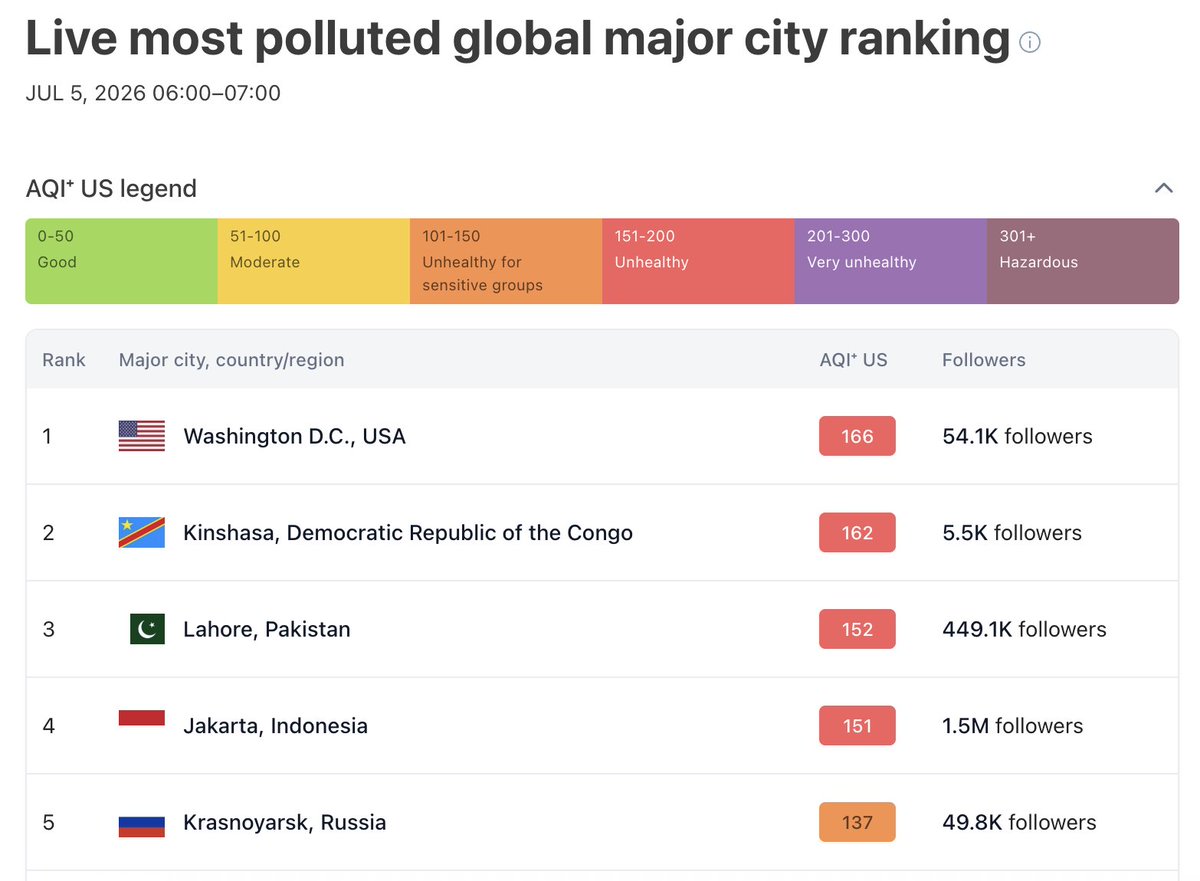
Families with young kids are having a fairly brutal 4th of July weekend in DC - Friday: school's out, but too hot to do basically anything outside - Saturday: heat index of like 110, feels like Venus even in the shade - Saturday night: Air Force shows around the mall means it sounds like the district is getting bombed by a military superpower just as the baby's going down - Sunday: ten degrees cooler but post-infinity fireworks, DC has literally the worst air quality of any city on the planet
20
60
378
55,726
RT @jstein_star: I get the sense that very few people in DC are aware that federal officials wrote detailed analyses warning of the air qua…
1,148
835
~trillionaire celebrates America’s 250 by saying poor ppl shouldn’t vote~ sounds like a tawdry satire of plutocracy and yet
132
404
3,099
155,692
Derek Thompson reposted
This is so good. Entertaining, informative, and a great play-along-at-home.
New ep: AMERICAN HISTORY MEGAPOD I asked three of my favorite historians to draft 1. the most overrated American ever 2. the under-heralded event that changed American history 3. the most underrated POTUS 4. the person or event that most students haven't heard of but should Guests: Stanford's Richard White, Yale's Beverly Gate, and UT-Austin's HW Brands Answers include: Andrew Carnegie; Richard Nixon and Chester A. Arthur; the Declaratory Act of 1766 and World War I; Tecumseh and Ona Judge youtube.com/watch?v=e0uxhmoL…
2
31
38,698
Derek Thompson reposted
it's over
67
452
5,264
392,620
Derek Thompson reposted
Derek at his best. Brilliant essay. Also, I am picking up Freedom From Fear after I finish my current read (Age of Revolutions by Fareed Zakaria).
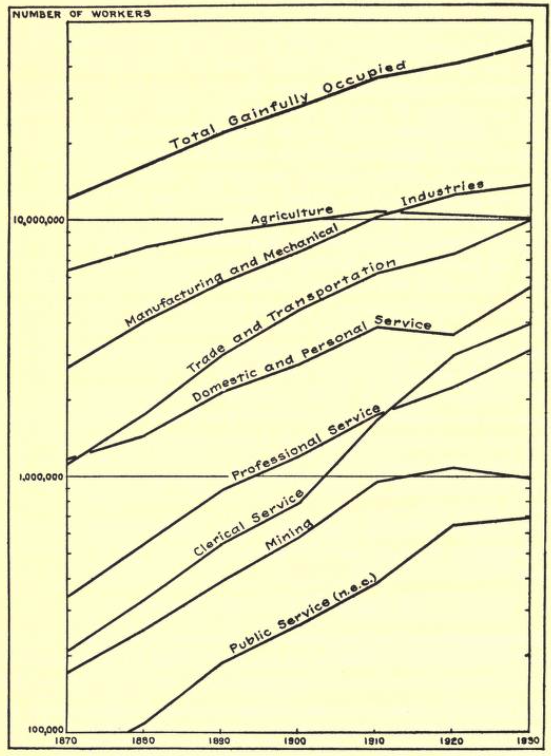
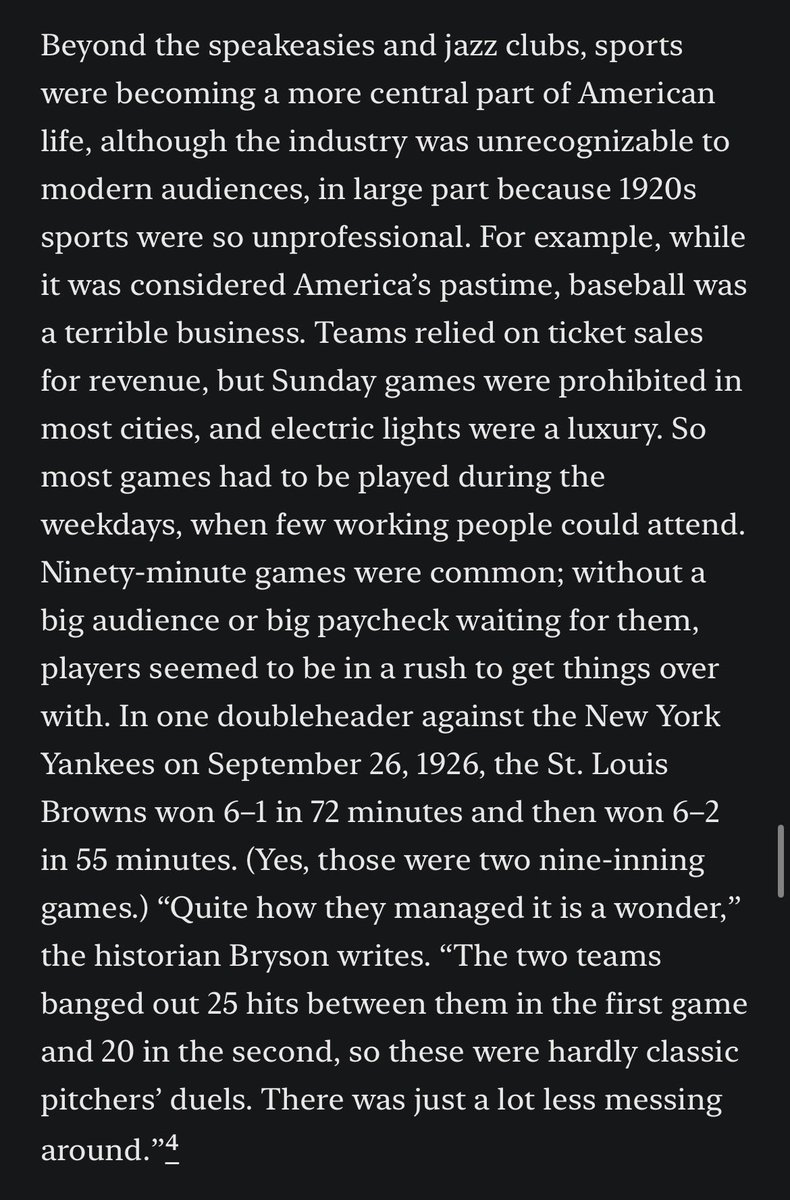
Today's article is an absurdly deep dive into what life was like in America 100 years ago, in 1926, on America's 150th Some favorite factoids about life in 1926: - Farming is collapsing: Agriculture’s employment share fell from 50% in 1870 to <25% in 1926. The price of cotton & corn fell 50% after WWI. percent. - Manufacturing productivity growth is insane: In 1910, it took ~15 hours to put together a Model T; by 1926, a new car rolls off an assembly line every 10 seconds. A vehicle that cost the avg worker two years’ wages before World War I cost 3 months’ earnings in 1926 - Americans are obsessed, obsessed, obsessed with cars: 1920s Kansas had more vehicles than France - The influence of flappers on fashion is quantifiable: The amount of fabric in the avg dress fell from 20 yards in 1910 to 7 yards in 1926 - Prohibition killed a lot of people: 12k people died in 1927 from drinking industrial alcohol that the feds had poisoned on purpose to discourage consumption—adjusted for population, that'd be the mortality equivalent of 36k people dying in 2026, which is roughly the number of car deaths - Sports were very different: No TV means no commercial breaks, and players were in a rush. In one doubleheader against the New York Yankees on September 26, 1926, the St. Louis Browns won 6–1 in 72 minutes and then won 6–2 in 55 minutes with a one-hour break in between - 1926 might have been the high-water mark for literacy in US history: The number of books published annually had doubled since the 1910s; magazine advertising revenues grew by 500% - All this change was driving ppl crazy: In Germany, where medical records were better, the number of patients registered in mental hospitals grew from 40,375 in 1870 to 220,881 in 1910. Over the same period, the share of patients admitted to general hospitals for illnesses of the nervous system rose from 44 to 60%. derekthompson.org/p/america-…
1
3
31
27,915
Derek Thompson reposted
This @DKThomp podcast episode is so interesting. Highly recommend listening. (Better and broader than the episode title.) podcasts.apple.com/us/podcas…
1
13
13,685
Derek Thompson reposted
Fascinating article
Today's article is an absurdly deep dive into what life was like in America 100 years ago, in 1926, on America's 150th Some favorite factoids about life in 1926: - Farming is collapsing: Agriculture’s employment share fell from 50% in 1870 to <25% in 1926. The price of cotton & corn fell 50% after WWI. percent. - Manufacturing productivity growth is insane: In 1910, it took ~15 hours to put together a Model T; by 1926, a new car rolls off an assembly line every 10 seconds. A vehicle that cost the avg worker two years’ wages before World War I cost 3 months’ earnings in 1926 - Americans are obsessed, obsessed, obsessed with cars: 1920s Kansas had more vehicles than France - The influence of flappers on fashion is quantifiable: The amount of fabric in the avg dress fell from 20 yards in 1910 to 7 yards in 1926 - Prohibition killed a lot of people: 12k people died in 1927 from drinking industrial alcohol that the feds had poisoned on purpose to discourage consumption—adjusted for population, that'd be the mortality equivalent of 36k people dying in 2026, which is roughly the number of car deaths - Sports were very different: No TV means no commercial breaks, and players were in a rush. In one doubleheader against the New York Yankees on September 26, 1926, the St. Louis Browns won 6–1 in 72 minutes and then won 6–2 in 55 minutes with a one-hour break in between - 1926 might have been the high-water mark for literacy in US history: The number of books published annually had doubled since the 1910s; magazine advertising revenues grew by 500% - All this change was driving ppl crazy: In Germany, where medical records were better, the number of patients registered in mental hospitals grew from 40,375 in 1870 to 220,881 in 1910. Over the same period, the share of patients admitted to general hospitals for illnesses of the nervous system rose from 44 to 60%. derekthompson.org/p/america-…
2
21
23,339
New ep: AMERICAN HISTORY MEGAPOD I asked three of my favorite historians to draft 1. the most overrated American ever 2. the under-heralded event that changed American history 3. the most underrated POTUS 4. the person or event that most students haven't heard of but should Guests: Stanford's Richard White, Yale's Beverly Gate, and UT-Austin's HW Brands Answers include: Andrew Carnegie; Richard Nixon and Chester A. Arthur; the Declaratory Act of 1766 and World War I; Tecumseh and Ona Judge youtube.com/watch?v=e0uxhmoL…
8
8
127
96,792
Derek Thompson reposted
Aurality and Visualcy
From today's piece on what life was like 100 years ago: Radio was an internet before the internet. For almost every anxiety we have about smartphones and online life today, social scientists rehearsed those fears in the 1920s cc @TheStalwart
1
3
44
29,696
From today's piece on what life was like 100 years ago: Radio was an internet before the internet. For almost every anxiety we have about smartphones and online life today, social scientists rehearsed those fears in the 1920s cc @TheStalwart
9
17
154
51,264
"Unlike print media, radio works the ear rather than the eye—the ear, which cannot close or even focus with ocular precision, but remains always open to the world. One hundred years ago, we were already making our way in a world where waves of information radiated around us, an proto-internet of sound, waiting for an audience and an antenna to tune in. Wired to the emotional values of far-flung events, Americans breathed air that pulsed with spooky electromagnetism, carrying the stories of people we would never meet. Without knowing what it meant to “log on,” our fellow citizens in 1926 were already learning what it means to never be able to log off." derekthompson.org/p/america-…
7
6
107
85,536
Today's article is an absurdly deep dive into what life was like in America 100 years ago, in 1926, on America's 150th Some favorite factoids about life in 1926: - Farming is collapsing: Agriculture’s employment share fell from 50% in 1870 to <25% in 1926. The price of cotton & corn fell 50% after WWI. percent. - Manufacturing productivity growth is insane: In 1910, it took ~15 hours to put together a Model T; by 1926, a new car rolls off an assembly line every 10 seconds. A vehicle that cost the avg worker two years’ wages before World War I cost 3 months’ earnings in 1926 - Americans are obsessed, obsessed, obsessed with cars: 1920s Kansas had more vehicles than France - The influence of flappers on fashion is quantifiable: The amount of fabric in the avg dress fell from 20 yards in 1910 to 7 yards in 1926 - Prohibition killed a lot of people: 12k people died in 1927 from drinking industrial alcohol that the feds had poisoned on purpose to discourage consumption—adjusted for population, that'd be the mortality equivalent of 36k people dying in 2026, which is roughly the number of car deaths - Sports were very different: No TV means no commercial breaks, and players were in a rush. In one doubleheader against the New York Yankees on September 26, 1926, the St. Louis Browns won 6–1 in 72 minutes and then won 6–2 in 55 minutes with a one-hour break in between - 1926 might have been the high-water mark for literacy in US history: The number of books published annually had doubled since the 1910s; magazine advertising revenues grew by 500% - All this change was driving ppl crazy: In Germany, where medical records were better, the number of patients registered in mental hospitals grew from 40,375 in 1870 to 220,881 in 1910. Over the same period, the share of patients admitted to general hospitals for illnesses of the nervous system rose from 44 to 60%. derekthompson.org/p/america-…
32
245
1,330
193,856