Some growth curves look like exponentials from early to the middle of the timeline, (where we are now with AI), but as the tools get commoditised as that timeline matures, the curve reveals itself as an ‘S’ curve.
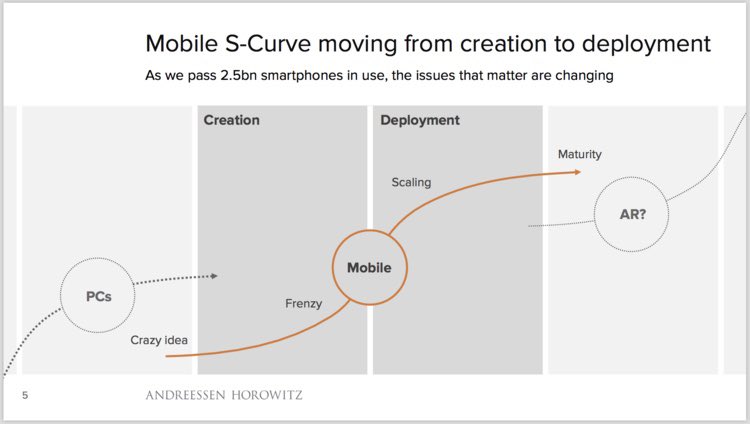
Way beneath the top edge of the ‘S’ curve a paradigm shift slowly begins a new curve, initially flat but trending as what appears to be an exponential. In the classic A16z slide below the mobile platform growth curve is shown as an ‘S’ curve with a new Augmented Reality (AR) growth curve beginning below it.
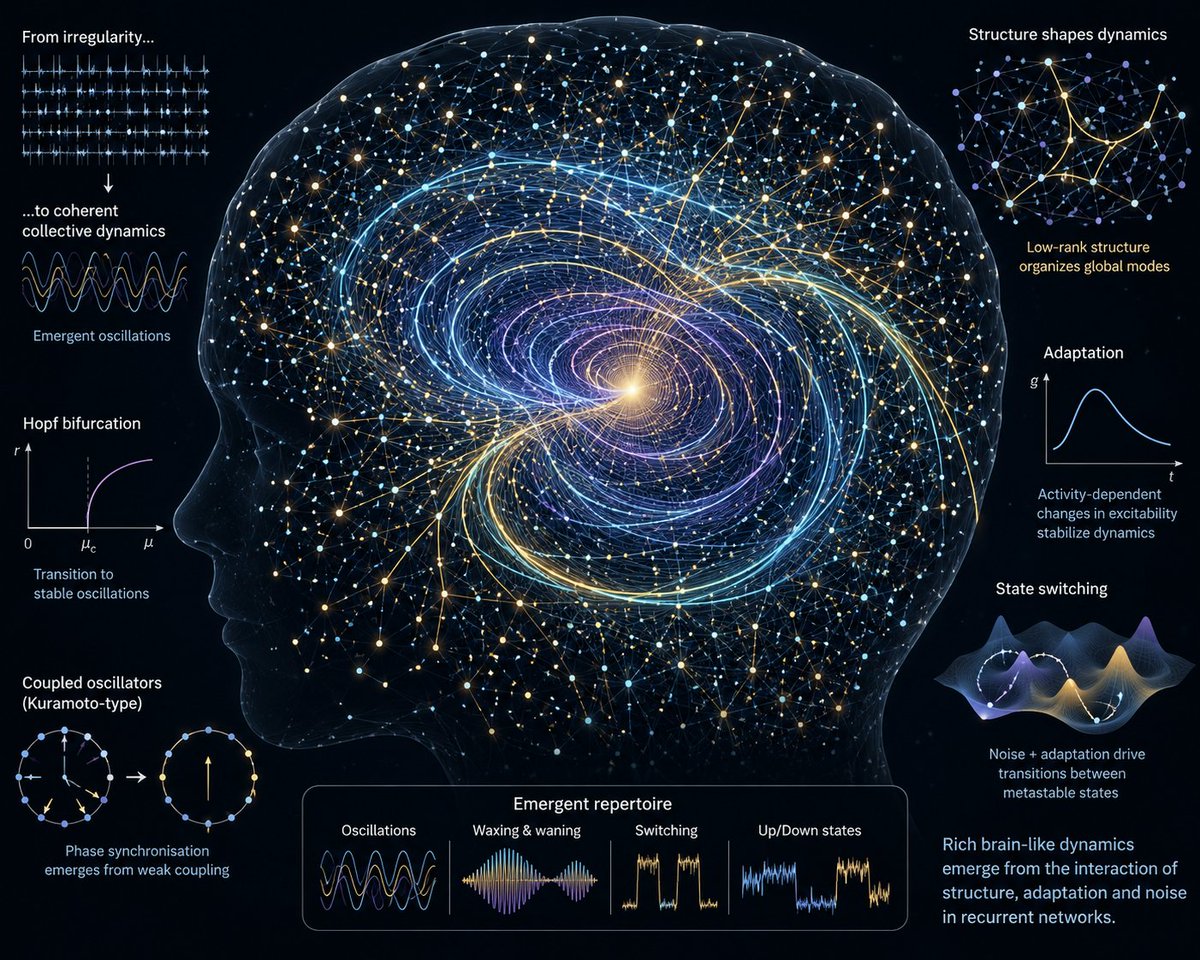
Now we could rename the AR curve as the Agentic AI World Model curve, a virtual physics space that can model the real world for agents plus a visual reasoning engine and a language model to interact with humans and computers.
The old Mobile platform ‘S’ curve we might rename as the LLM curve.
The tweet by
@ylecun below expresses a similar idea from a European perspective.
Exactly. I've been disseminating a similar message for years.
The concentration of power in AI and the desire for control is by far the biggest danger of AI. It could lead to a few private companies and/or countries being in control of access to information, access to knowledge, and access to the tools of economic expansion.
It's a kind of medieval obscurantism akin to the Ottoman empire banning the use of the printing press for 200 years, in part to keep control of the dogma, but also to protect the corporation of the calligraphers and scribes.
Relevant historical bits about the Internet:
1. It took a deliberate decision by Al Gore and Bill Clinton to open up access of what was then ARPAnet to commercial entities and to the public, against the desires of the entrenched telecom industry. During a public roundtable about the "information superhighway" in 1993, the CEO of AT&T told Gore and Clinton "leave it to us". Gore said no.
2. In the late 1980s, setting up an Internet presence required buying proprietary hardware with proprietary OS and software stack from Sun Microsystems, HP, IBM, or Dell. By the 2000s, all of this was wiped out by commodity hardware, Linux, Apache, and an entirely free/open software stack. This migration to open platforms was the result of market forces.
Infrastructure wants to be open.
Foundation models are becoming an infrastructure and will inevitably become commoditized.
Long term, the money is in the application layer, which is what I, Arthur Mensch, Alex Karp, and others have been saying.