Filter
Exclude
Time range
-
Near
tuhinthatware
Emotion AI Optimization is reshaping digital experiences by understanding how users think and feel. #EmotionAI #EAIO #ArtificialIntelligence #DigitalExperience #BehavioralAnalytics #PredictiveAI #SemanticAI #Personalization #CustomerEngagement
2
JKTechnosoft
Enterprises don't need more data—they need data with meaning. Ontologos adds context and relationships, helping AI reason smarter and deliver trusted insights. Learn more: jktech.com/ontologos/ #JKTech #Ontologos #SemanticAI #EnterpriseAI #KnowledgeGraphs
1
24
tuhinthatware
Empower Multi-Agent AI Systems with ThatWare's VEM framework. VEM enables seamless collaboration between AI agents, and delivers more accurate, context-aware reasoning . #ThatWare #VEM #ArtificialIntelligence #MultiAgentAI #EnterpriseAI #SemanticAI #KnowledgeGraph #AIInnovation
9
DatavidML
đź§  The organizations pulling ahead in R&D are not always the ones with the most data. They are the ones helping researchers spend more time thinking, and less time searching. Join Datavid and Graphwise on July 9 at 3pm BST/ 10:00am EDT to explore how a semantic backbone connects scientific data, institutional memory, and AI into a governed knowledge layer. "The missing layer between scientific data and breakthrough ideas" - with Clive Smith and Todor Primov. Register here: datav.id/4ee8SgM #SemanticAI #KnowledgeGraphs #LifeSciences #EnterpriseAI
2
32
Powerinthe18689
AI-driven discovery is evolving from keyword matching to ontology-driven, intent- and semantics-based systems. Ontology defines meaning structures.
Cognition processes intelligence.
Entity modeling represents real-world concepts. PITN.ai 
Relational logic connects entities across contexts.
Industrial applications depend on consistent semantic frameworks. As digital markets become increasingly multilingual, native-script recognition strengthens discoverability, interoperability, and cross-market identity—especially in humanoid robotics, where terminology consistency matters. Core concepts such as HUMANOID(S), ROBOT(S), and HUMANOID ROBOT are globally recognized yet scarce as exact-match digital assets across languages and scripts. This scarcity elevates the strategic value of internationally aligned naming systems and native-script variants. PITN.ai holds a portfolio of exact-match digital assets spanning 30 languages in this category, supporting semantic discovery, entity resolution, and branding identity layers across global AI ecosystems. #Ontology #Cognition #EntityModeling #RelationalLogic #SemanticAI #KnowledgeGraph #IndustrialAI #HumanoidRobotics #AIInfrastructure #MultilingualAI #EntityResolution #DigitalIdentity #BrandingStrategy #AIInnovation
1
3
64
tech_mahindra
The model is the commodity. The ontology is the moat. Every enterprise is racing to deploy #AI agents. But here's the real question: Do your agents actually understand your business? In his latest blog, Saurabh Jha, SVP & Global Head - Data & Analytics at @tech_mahindra, unpacks why most #AgenticAI initiatives fail to scale - and why enterprise ontology is the missing architectural foundation. Key insight: RAG retrieves information. Ontology provides understanding. The difference determines whether your agents reason or just guess. This is a preview of the ideas we're bringing to Databricks Data AI Summit 2026 at Booth #558. Moscone Center, San Francisco | June 15–18, 2026 Read the blog: techmahindra.com/insights/vi… #ScaleAtSpeed #EnterpriseOntology #DataAISummit2026 #SemanticAI #TechMahindra
1
1
4
1,104
Powerinthe18689
PITN.ai enables robotics concepts like “robot” and “humanoid robot” to align across languages and writing systems through semantic normalization and structured multilingual encoding. #RoboticsAI #HumanoidRobots #SemanticAI #CrossLingualSearch #KnowledgeGraph #AIInfrastructure #TextNormalization #Transliteration #DataAlignment #GlobalAI
1
2
77
Franzinc
Gartner Says Lack of Semantics Causes Inaccurate AI Agents and Wasted Spending. #AllegroGraph provides the semantic foundation for governed, context-aware, explainable AI with enterprise #KnowledgeGraphs at the core of #AgenticAI. #AI #SemanticAI buff.ly/uMUKBEm
1
2
114
Connected_Data
Gartner Says Lack of Semantics Causes Inaccurate AI Agents and Wasted Spending Cutting Corners on Data Context and Semantic Foundations Will Increase Costs. Speaking at the Gartner Data & Analytics Summit in London, Rita Sallam, Distinguished VP Analyst at Gartner, said: "Agentic AI outcomes depend on context including semantic representations of data. Without context – a clear understanding of the specific relationships and rules within an organization's data – AI agents cannot operate accurately and are far more likely to hallucinate, introduce bias and produce unreliable results." "Organizations that fail to adopt comprehensive context structures — supported by a robust data layer — will perpetuate data inefficiencies and face heightened financial costs, as well as legal and reputational damage." Gartner predicts that by 2027, organizations that prioritize semantics in AI-ready data will increase their agentic AI accuracy by up to 80% and reduce costs by up to 60%. "Context with semantic coherence will become a cost-control and trust strategy, not a nice-to-have." This message will be familiar to anyone who has attended Connected Data London. The community has been championing exactly this - Relationships, Meaning, and Context in Data - since 2016. At CDL26 this November, speakers including William Tunstall-Pedoe (founder of the core technology behind Amazon Alexa, now building trustworthy neuro-symbolic AI), Juan Sequeda (Principal Fundamental Researcher, ServiceNow), Malcolm Hawker (CDO, Profisee), and Jessica Talisman (Semantic Architect) will go deep on the very foundations Gartner is now calling non-negotiable. The 2026 Call for Submissions is open. Topics of special interest include Knowledge Graphs and LLMs, GraphRAG, Agentic AI, Neuro-symbolic AI, Ontologies, and Semantic Technology - the building blocks of the context layer Gartner says organizations can no longer afford to ignore. If you are working on this, this is your community. gartner.com/en/newsroom/pres… #SemanticAI #AgenticAI #KnowledgeGraphs #DataGovernance #OntologyFirst -- Connected Data London 2026 has been announced! 11-12 November, Leonardo Royal Hotel London Tower Bridge 📝 connected-data.london/post/c… Join us for all things #KnowledgeGraph #Graph #analytics #datascience #AI #graphDB #SemTech #Ontology 🎟 Ticket sales are open. Benefit from early bird prices with discounts up to 30%. 2026.connected-data.london 📺 Sponsorship opportunities are available. Maximize your exposure with early onboarding. Contact us at info@connected-data.london for more.
3
7
249
Franzinc
Dr. Jans Aasman will be participating on the KGC 2026 panel “From Knowledge Graphs to Digital Twins: Are Our Models Ready?” Join the discussion at #KGC2026, May 4–8 in NYC #KGC2026 #KnowledgeGraphs #DigitalTwins #EnterpriseAI #SemanticAI #NeuroSymbolicAI buff.ly/CjQrzIO
5
1
3
106
Powerinthe18689
Control the language. Control the market. Power In The Numbers Dot Ai (PITN.ai) is engineering semantic dominance for humanoid & humanoid robot discovery across 30 languages (~91% of global internet reach). As AI replaces traditional search, discovery shifts from keywords → intent → ontology.
The advantage is no longer ranking terms—it’s owning how meaning is structured, translated, and retrieved across languages. PITN’s portfolio of fully plausible, dictionary verified, general/generic, humanoid and humanoid robot terminologies across 30 languages, builds a multilayered semantic system:
• Native scripts (中文, العربية, हिंदी, 日本語, кириллица)
• Transliteration frameworks (Pinyin, Latinized variants, phonetic mappings)
• Cross-lingual equivalence mapping
• AI-native ontology nodes for humanoid classification This creates a unified semantic layer where fragmented global terminology converges into machine-resolvable intent. We don’t lack robotics innovation—
we lack a dominant semantic framework to scale it globally. PITN establishes:
• Cross-lingual semantic control
• Transliteration-aware discovery infrastructure
• Ontology-layer dominance for humanoid robotics
• AI routing points for global query flow In an AI-native internet, discovery is decided by systems that interpret meaning—not keywords. PITN captures that layer. Control meaning → control discovery → control scale. #AI #ArtificialIntelligence #HumanoidRobots #Robotics #SemanticAI #Ontology #FutureOfSearch #AIInfrastructure #DeepTech #MachineLearning #GlobalTech #EmergingTech #TechStrategy #Innovation #Automation #DigitalEconomy #AIRevolution #KnowledgeGraph #Multilingual #NLP
1
3
179
Powerinthe18689
The next competitive edge in AI isn’t just compute—it’s language. We’ve moved beyond keywords. Today’s systems interpret meaning across context, intent, and multiple languages—deciding what gets seen and what gets ignored. Power In The Numbers Dot Ai Defines the language → shapes discovery → influences perception→ drives markets and applies that pattern towards robotics. As humanoid systems enter real-world environments, the terms we use—
“Humanoid” “ROBOT” “COBOT” “BOT” “ROBO” —aren’t just descriptors. They’re signals that guide how humans and AI systems categorize, trust, and adopt these technologies. PITN.ai is operating at this foundational layer—structuring and standardizing robotics vocabulary across global digital ecosystems. This isn’t just naming. It’s infrastructure. Because in the emerging humanoid economy, those who define the language don’t just organize information—they shape adoption, trust, and market leadership. Language no longer follows innovation.
It directs it. #robot #bot #cobot #PITN #AI #Robotics #HumanoidRobotics #SemanticAI #Multilingual #FutureOfWork #TechStrategy #InnovationEconomy #domains #humanoids #haptic #TechMilestones #dotai
1
2
68
Powerinthe18689
Language doesn’t just reflect the future—it actively determines who gets to create it. PITN.ai is working at this exact layer—designing and standardizing how robotics is defined across languages, cultures, and digital systems at global scale. In today’s AI landscape, visibility isn’t about stuffing the right keywords into a system. It’s about meaning. Context. Intent. Multilingual, semantic intelligence now decides what gets surfaced—and what gets ignored. Control the language → shape the index.
Shape the index → guide perception.
Guide perception → influence the market. Now bring that into robotics. As humanoid systems become part of everyday environments, the words we use to describe them start to matter at a much deeper level:
“Humanoid.”
“Adaptive robot.”
“Synthetic coworker.”
“Autonomous intelligence.” These aren’t just descriptors—they’re gateways into the cognitive frameworks that billions of people (and machines) rely on to interpret reality. This isn’t just taxonomy. It’s positioning. Because in the emerging humanoid economy, those who define the terms don’t just organize information—they influence trust, accelerate adoption, and ultimately shape market leadership. Language isn’t just a tool anymore.
It’s infrastructure. #AI #Robotics #HumanoidRobotics #SemanticAI #MultilingualAI #FutureOfRobotics #SearchEvolution #TechStrategy #InnovationEconomy
1
3
85
Powerinthe18689
Words don’t just describe the future—they decide who gets to build it. In AI systems, visibility isn’t driven by simple keywords anymore.
It’s shaped by multilingual, semantic understanding—where meaning, context, and intent determine what surfaces and what disappears. Own the language → own the index.
Own the index → influence perception.
Influence perception → direct the market. Now apply that to robotics. As humanoid machines enter daily life, the terminology defining them becomes critical:
“Humanoid,” “adaptive robot,” “synthetic coworker,” “autonomous intelligence.” These aren’t labels—they’re entry points into global cognition systems that decide how billions of people and machines interpret reality. PITN.ai is operating at this foundational layer—architecting and normalizing robotics vocabulary across languages, cultures, and digital ecosystems, spanning the majority of the connected world. This is more than classification—it’s strategic positioning. Because in the humanoid economy:
the entities that standardize definitions don’t just organize information—
they shape adoption curves, trust frameworks, and ultimately, market dominance. Language is no longer a tool.
It’s infrastructure. #AI #Robotics #HumanoidRobotics #SemanticAI #MultilingualAI #FutureOfRobotics #DigitalAssets #SearchEvolution #TechStrategy #InnovationEconomy
2
5
75
datahubhouse
Knowledge Graph Lifecycle & Enterprise Platforms Explained (2026 Guide) Knowledge Graphs are no longer optional — they’re the semantic infrastructure powering next‑gen enterprise AI. In this video, we break down how modern organizations are moving beyond flat tables toward interconnected graph‑based architectures that preserve business context, improve accuracy, and deliver operational intelligence. 🔍 What You’ll Learn Knowledge Graph Lifecycle: creation, curation, governance, enrichment, and continuous maintenance Real‑world example: The Tyrolean Tourism Knowledge Graph and how it scales regional intelligence 2026 Platform Landscape: Galaxy, Stardog, Palantir, and other leading enterprise knowledge graph systems Why Knowledge Graphs Matter: Solve semantic infrastructure problems Provide data provenance and context for AI systems Enable accurate reasoning, query flexibility, and powerful automation 💡 Key Insight Transitioning from traditional flat data tables to graph‑based architectures is fundamental for enterprises aiming to enhance AI grounding, data trust, and decision‑making. ⏱ Chapters 0:00 — Introduction 0:42 — Why Knowledge Graphs Matter in 2026 2:10 — Knowledge Graph Lifecycle Explained 4:45 — Case Study: Tyrolean Tourism Knowledge Graph 7:28 — Top Enterprise Platforms (Galaxy, Stardog, Palantir) 10:15 — Graphs vs Tables: The Semantic Advantage 12:00 — Final Insights 🔗 Useful Links • Platform comparison • Knowledge graph lifecycle frameworks • Enterprise semantic architecture resources 📣 If you enjoyed the video Like, comment, and subscribe for more deep dives into Data Engineering, Knowledge Graphs, Semantic AI, and modern data architectures! #KnowledgeGraph #SemanticAI #GraphDatabases #EnterpriseAI #DataArchitecture #Ontology #DataEngineering #AIAccuracy #KnowledgeManagement #2026Tech youtu.be/Z468J1RtEzU?si=ZhnD… via @YouTube
3
5
44
DataScienceDojo
🚨 LLMs Are Getting Smarter—Here’s How Structured Knowledge Is Quietly Transforming Them This new survey is one of the most comprehensive deep dives into a question everyone in AI is asking right now: How do we make LLMs reliable, grounded, and reasoning-capable—not just bigger? The paper breaks down a major shift happening across the AI ecosystem: LLMs are no longer operating alone. They’re being paired with knowledge bases, knowledge graphs, retrieval systems, and hybrid reasoning frameworks to overcome their biggest limitations. Some standout insights: 🔹 The “internal knowledge vs external knowledge” gap is real. LLMs still hallucinate, struggle with factual consistency, and degrade on specialized domains. Integrating structured knowledge—UMLS, Wikidata, domain KGs—dramatically improves grounding. 🔹 Three integration pillars define the future of intelligent systems: • Knowledge Bases: High-precision facts that reduce hallucination. • Knowledge Graphs: Relationship-aware reasoning for multi-hop queries and semantics. • RAG Systems: Real-time retrieval that acts as a dynamic memory layer. 🔹 Next-gen models aren’t just generating—they’re reasoning. Techniques like GraphRAG, ToG, MetaRAG, semi-structured CoT, and KG-augmented agents give LLMs the ability to explain, trace, and verify their outputs. 🔹 Integration solves real pain points: Interpretability, long context limits, outdated training data, and high compute costs all improve when LLMs rely less on parametric memory and more on structured external knowledge. 🔹 The survey maps out a new architecture direction: LLMs that continuously retrieve, refine, and optimize knowledge—self-improving systems that adapt to domain shifts without retraining. If you care about RAG, enterprise AI, reasoning, or building production-grade agents, this paper is a goldmine. It shows where the field is heading: from “giant text predictors” to deeply grounded, knowledge-aware AI systems. #AIResearch #LLMs #KnowledgeGraphs #RAG #GenerativeAI #AIEngineering #EnterpriseAI #MachineLearning #AIEthics #SemanticAI #AIIntegration #NLP
1
2
819
GuptaDevansh_
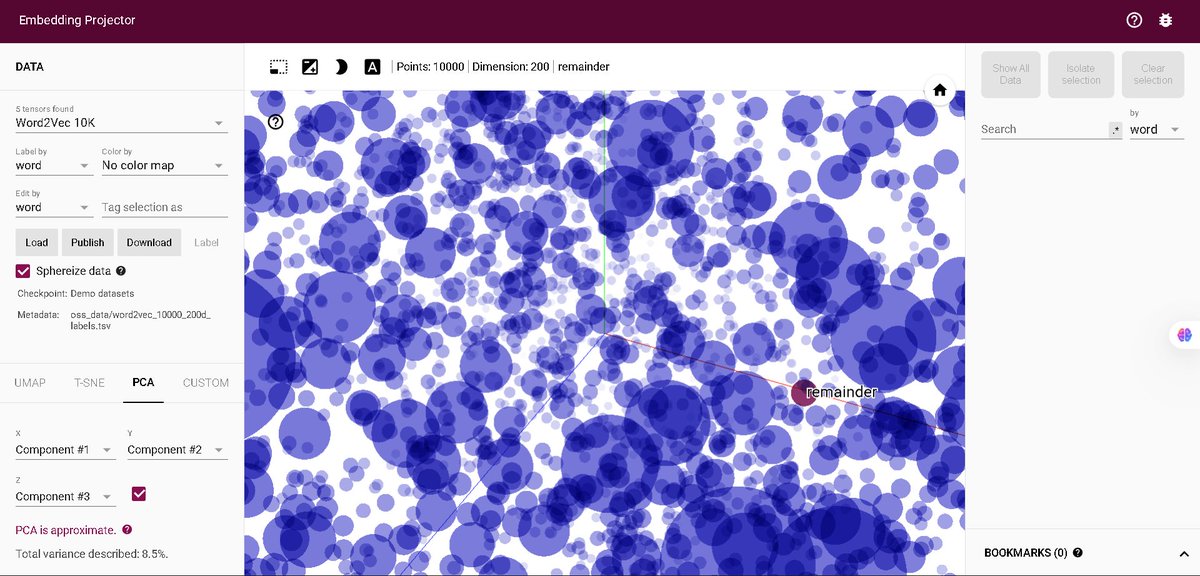
Understanding vector embeddings → unlocking long-term AI memory. Building smarter systems, not just chatbots. 🚀 #AI #RAG #VectorSearch #FullStackAI #DevCommunity #SemanticAI
1
3
48
wordliftit
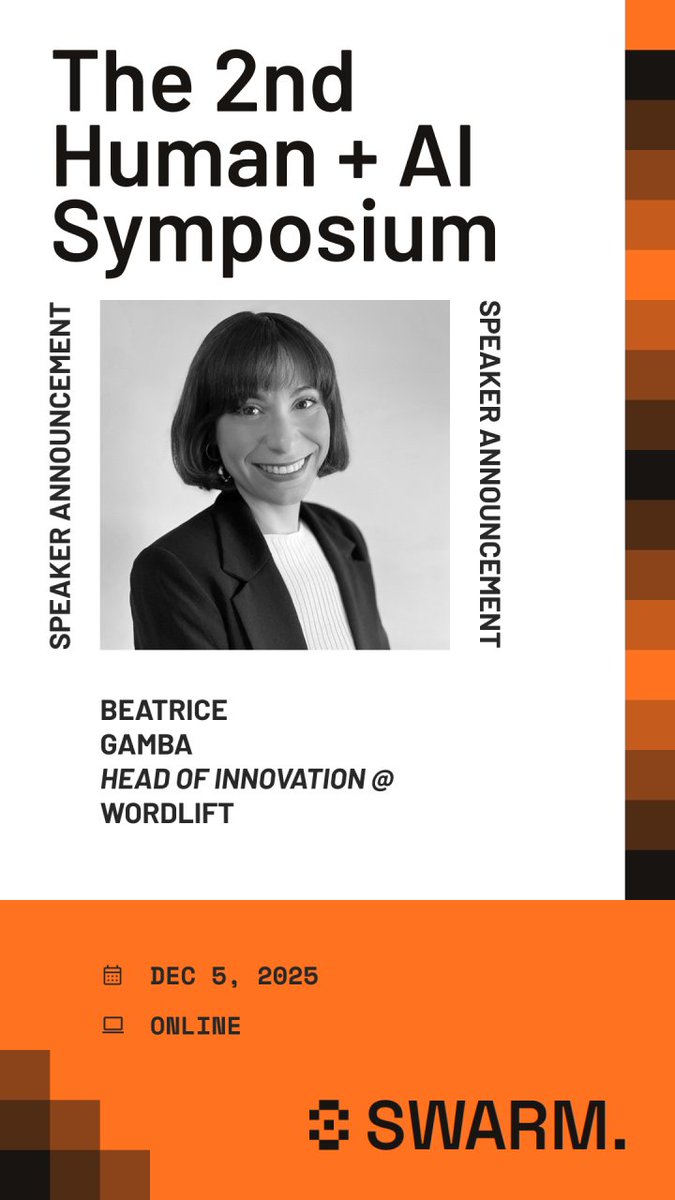
On Dec 5, @geatricebi speaks at The Human AI Symposium! Topic: Structuring Intelligence: How Semantic Data Makes AI Practical for Digital Teams. Learn how knowledge graphs ontologies turn AI into a real collaborator. 🎟️ Tickets: eu1.hubs.ly/H0pRnXf0 #SemanticAI #Ontologies
1
3
126