🚨 50 YEARS AGO: Did We Accidentally Find — and Kill — Life on Mars? 😱🪐🌌
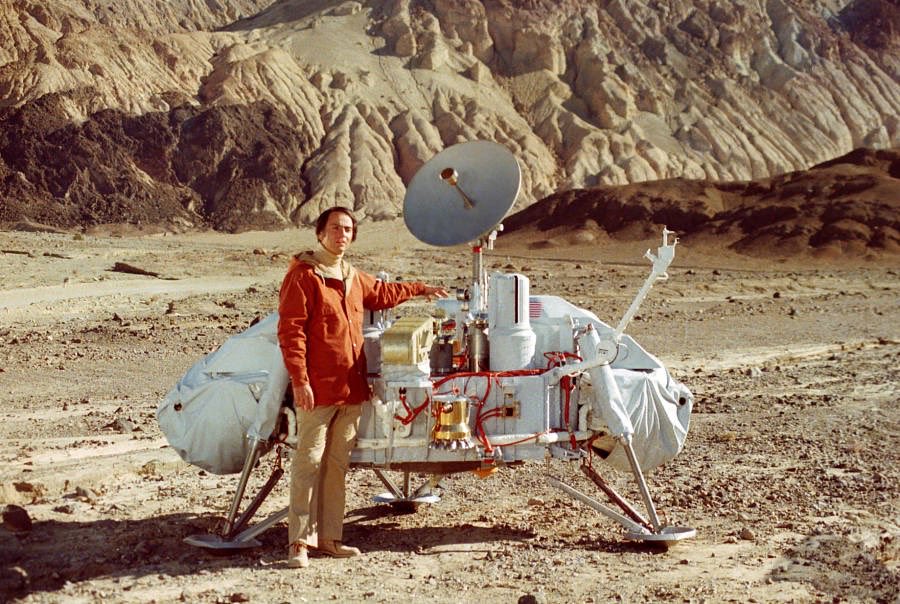
Picture this: It’s 1976. NASA’s Viking 1 and 2 landers make history as the first to touch down on the Red Planet. Onboard? Cutting-edge biology labs packed with experiments to hunt for microbial life in the rusty soil. One test, the Labeled Release (LR) experiment, drops a nutrient “soup” tagged with radioactive carbon onto Martian dirt samples. Boom — radioactive gas starts pouring out! Exactly what hungry microbes would produce while munching away. 🔥🧪
Even more mind-blowing? When scientists heated duplicate samples to 160°C to “sterilize” them (killing any potential life), the gas release stopped dead. Classic biology signature. The control worked perfectly… like it was alive. But here’s the twist that still haunts astrobiologists: Other experiments (Gas Exchange and Pyrolytic Release) gave mixed or negative results, and the Gas Chromatograph-Mass Spectrometer found ZERO organic molecules — the building blocks of life. NASA’s official call? “No bodies, no life.” Just weird soil chemistry. ❌
Fast-forward decades: Phoenix lander (2008) uncovers perchlorates everywhere on Mars — hyper-reactive salts that act like powerful oxidants. They can fake LR-like gas bursts AND destroy organics when heated in the Viking ovens. Case closed? Not quite. 🧪🔬
In 2025-2026, as we hit the 50-year anniversary, the debate exploded again. Pioneers like Gilbert Levin (LR’s principal investigator) always insisted it was life. Now, fresh analyses suggest Viking may have detected real extant microbes… but the experiments could have inadvertently killed them. Why? Martian life (if it exists) would be ultra-adapted to bone-dry, salty conditions — like microbes in Earth’s Atacama Desert that suck water from the air. Dumping liquid nutrients? It might have drowned them on contact. 💧☠️ Add the heating steps, and any fragile evidence could have been wiped out.
Mainstream science (including recent papers by Chris McKay) still leans chemical: perchlorates natural oxidants explain it all without needing life. But the LR results were replicated at both landing sites, with controls that behaved biologically. Inconclusive? Absolutely. A scientific “what if” that refuses to die. 🌍➡️🔴
This isn’t conspiracy — it’s real, ongoing science. Viking didn’t just explore Mars; it sparked a mystery that’s reshaping how we hunt for life elsewhere. Today’s rovers like Perseverance are hunting ancient biosignatures, and future missions will bring samples home. The Red Planet keeps us guessing… and hoping. 🚀
What do you think — did we miss (or destroy) our first brush with alien life? Or was it clever Martian chemistry all along? Drop your theories below! 👇
#VikingMars #LifeOnMars #MarsMystery #DidWeFindLife #NASA #Astrobiology #SpaceExploration #RedPlanet #50YearsOfMars #SearchForLife