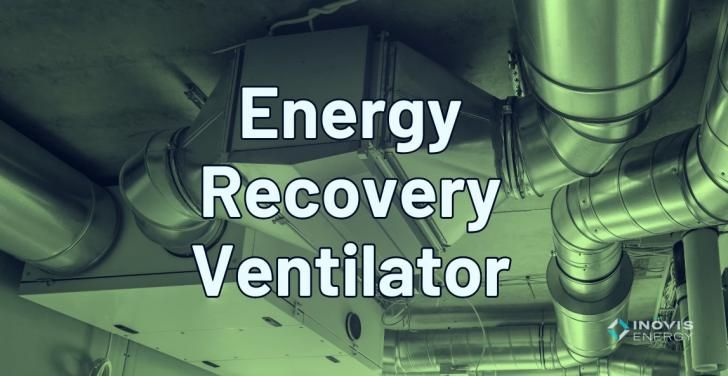
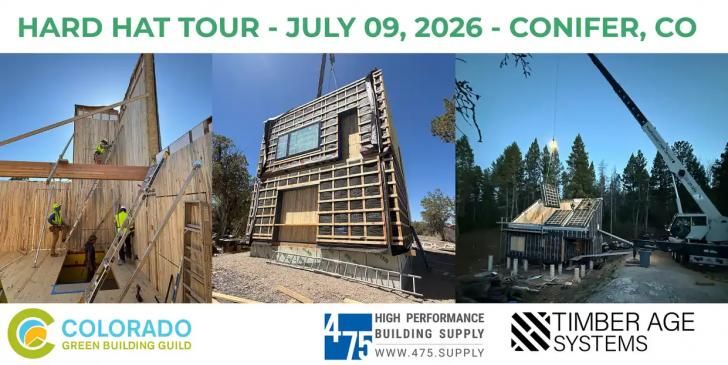
Data Centers need to supply their own electricity and water. We need more antifragile solutions to the new digital frontier we aim to propagate!
#DataCenters#EnvironmentalJustice#greenbuilding
The Capability Consumer — The New Macroeconomic Layer
We are witnessing the emergence of a new macroeconomic layer. This is neither a platform transition nor another product cycle. It is the gradual formation of a Capability Economy.
Capability as Infrastructure
Over more than two decades, an increasingly consistent structural proposition has been validated across multiple domains:
Capability compounds when treated as infrastructure rather than lifestyle.Biological health, cognitive c apacity, financial resilience and institutional quality do not operate independently; together they determine whether households, organisations and economies are able to adapt, produce and sustain long‑term value.
Consumers as Capability‑Bearing Agents
The consequence is profound.
Consumers are no longer best understood as endpoints within a value chain. They are capability‑bearing economic agents whose capacity to function increasingly shapes productivity, resilience and growth.
A Fundamental Inversion in Capital Allocation
This represents a structural inversion.
Historically, investment has concentrated on products, services and channels of distribution. The next structural cycle will increasingly reward the systems that expand human capability itself, because capability underpins:
labour productivity
healthy longevity
purchasing power
innovation
systemic resilience
The New Strategic Question
For investors, policymakers and business leaders alike, the central question is shifting from:
“What are people buying?” to “What increases their capacity to create, sustain and compound value over time?”
The most significant opportunities may emerge not within individual sectors such as healthcare, financial services or consumer markets, but within the infrastructure that connects them.
This is the foundation of the emerging field of Capability Infrastructure.
Read the full article here: theglobalstructurenetwork.co…#UKConstruction#SiteLife#ModernConstruction#ConstructionIndustry#BuildingTheFuture#InfrastructureDevelopment#UrbanRegeneration#SmartCities#SustainableConstruction#NetZeroBuildings#GreenBuilding#LowCarbonDesign#EcoArchitecture#PassiveHouse#CarbonNeutralConstruction#CircularConstruction#EmbodiedCarbon#EnergyEfficientDesign#ModularConstruction#OffSiteBuilding#Prefabrication#MMC#FastBuild#FactoryBuiltHomes#ConstructionTech#DigitalConstruction#BIM#AIInConstruction#DigitalTwins#SmartBuildings#IoTConstruction#ConstructionRobotics#3DPrintingConstruction
Building at the scale of Erisha Smart Manufacturing Hub- RAKEZ in Ras Al Khaimah UAE means every material decision compounds across 335 acres.
At Rana Group, we are evaluating Ultra-High-Performance Concrete (UHPC) for select wall structures across ESMH's Al Ghail Industrial Zone development — a material choice with real engineering and sustainability implications.
UHPC delivers 120-150 MPa compressive strength versus 25-40 MPa for conventional RCC, enabling wall sections roughly a third to a fifth as thick for equivalent structural performance.
The benefits compound across multiple dimensions:
→ Reduced concrete volume — thinner sections at equal or superior strength
→ Lower embodied carbon — once reinforcement offsets are factored in
→ Extended service life — 2-4x durability versus conventional RCC, cutting lifecycle maintenance
→ Reduced permeability — superior resistance to chemical and environmental degradation
→ Lighter structural loads — smaller foundations and structural framing downstream
→ Faster construction cycles — less material handling and formwork per wall section
→ Reduced steel rebar requirement — fiber reinforcement replaces most conventional reinforcement
Applied across our projected wall envelope, early internal estimates suggest concrete volume reductions in the range of tens of thousands of cubic metres, with meaningful embodied carbon savings once full lifecycle factors are considered. These figures remain internal planning estimates, pending validation against final structural drawings and verified emission factor data.
This decision reflects Rana Group's broader ESG and SDG commitments:
→ SDG 9 (Industry, Innovation & Infrastructure) — advanced materials driving resilient, sustainable industrial infrastructure
→ SDG 12 (Responsible Consumption & Production) — material efficiency reducing resource intensity per unit built
→ SDG 13 (Climate Action) — embodied carbon reduction embedded into core construction decisions, not offset as an afterthought
→ Environmental — lower resource extraction and reduced demolition waste across the asset's lifecycle
→ Governance — engineering decisions benchmarked against verified data before being carried into investor-facing disclosures
At Rana Group, sustainable engineering is not a feature of our projects. It is the standard we build to.
#UHPC#SustainableConstruction#ESG#SDG#AdvancedManufacturing#UAE#RAKEZ#CarbonCredits#GreenBuilding#RanaGroup