entrepreneur, investor, contrarian

Joined February 2009
670 Photos and videos
Pinned Post
Formula for startup success: Find large highly fragmented industry w low NPS; vertically integrate a solution to simplify value product.
688
1,912
11,641
Keith Rabois reposted
On the historic USS Nimitz, on our 250th bday, I performed Superman for our amazing @USNavy, @FDNY heroes, and Gold Star Families with former hostage Alon Ohel. Alon is a miracle, alive because of the President, @SecRubio & others. America has a history of making miracles. 🇺🇸❤️
255
1,106
5,948
946,233
Keith Rabois reposted
Told you.
That was not the definition of a red card.
366
6,891
87,835
2,142,826
Keith Rabois reposted
Sources: President Trump, commerce secretary Howard Lutnick, and White House task force head Andrew Giuliani put together a team of elite lawyers — from outside the government — to challenge the Flo Balogun red card. Specifically they challenged the use of slow motion instant replay to give the red card, which they argued violated FIFA rules. The president also conveyed to Gianni Infantino, FIFA’s president, that the appeal had been filed and he believed the red card penalty was excessive. FIFA’s independent committee reviewed the decision and agreed the penalty was incorrectly given, rescinding it under their rule 27 authority.
1,553
4,500
51,032
10,268,395
Interestingly, technology has made baseball, football, hockey and tennis better (mostly) and the NBA and soccer materially worse.
59
7
479
97,747
Keith Rabois reposted
Cape Verde btw
487
7,458
107,490
5,301,627
As predicted….
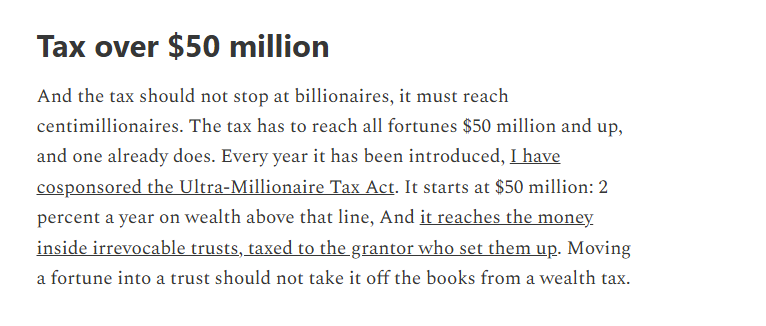
Holy hell, it’s already went from billionaires tax to $50M tax.. Democrats are openly stating their plan to seize wealth from Americans who spent generations building it. They call it “fairness.” It is confiscation. They want to raid private wealth to fund open-border chaos, illegal aliens, dependency, bureaucracy, and the continued decay of the country. Ro Khanna’s own essay starts with billionaires, then quickly expands to fortunes of $50 million and up. That is how every government seizure begins. First they target the people they taught you to resent. Then they work their way down. In any sane country, using the power of the state to loot productive citizens and subsidize national destruction would be treated as a betrayal of the nation itself.
40
43
1,024
91,354
Excellent advice.
GROWTH FOUNDERS: HIRE A NEAR-PEER A portfolio founder approaching $100M in ARR asked me about the single biggest and most impactful hire they can make. I thought for a bit tand said: "Hire a near-peer". In every generational company I've been part of, the founders hired a near-peer, who was essential to the company's success. - Google: Larry and Sergey hired @ericschmidt . - Facebook: Mark hired @sherylsandberg . - Square: Jack hired @rabois . - DoorDash: Tony hired @chrispa - Coinbase: Brian hired @emiliemc Characteristics of a near-peer: 1. They're so good that the founder will be fine reporting to them if the roles were reversed. (Mark has said publicly that he'd be fine reporting to Sheryl) 2. Their strengths perfectly complement the founder's strengths; however, they share many cultural attributes with the founder and pass the founder's airport test, since the founder will be spending a ton of time with them (example: Eric being a Computer Scientist, which was culturally very important at Google back in the day) 3. They're systems builders who have already operated at the scale you're growing into. Pattern recognition on $100M to $1B is not something you build in real-time. A near-peer lets the founder focus on what only the founder can do (product, vision, culture). The near-peer handles everything else. Also, near-peers stay for the long haul. Decade-plus tenure is standard. The reason this hire matters more than any other: after $50M ARR, the bottleneck shifts from product-market fit to organizational scale. The founder is still the visionary. But the company needs someone who has already scaled a company of that size. Most founders wait too long. They hire functional VPs first (Sales, Marketing, Engineering, Finance) and hope the collective covers the gap. It rarely does. A stack of VPs reporting into a founder who has never scaled a company creates coordination overhead, and the founder becomes the bottleneck. The near-peer absorbs that overhead. They turn the founder's vision into daily operating decisions. They give the VPs a leader who has actually run a company this size. Growth founders: if you're between $50M and $300M in ARR and every week feels like a coordination tax, the near-peer is the hire that determines whether you build a $10-100B company or top out at $1B. Start the search now, ideally through warm intros from your venture/angel investors and advisors.
5
8
198
100,371
Keith Rabois reposted
finetuning open source models has been hard to justify. why invest in tuning one when a better model ships within a month? our team just changed that. a finetune can now transfer from one model to the next at a fraction of the cost, radically improving the economics.
27
43
813
156,805
Keith Rabois reposted
Honestly, watch the entire Alex Karp interview. It’s epic as a piece of television, and it provides important insight into the man himself. But he makes a bunch of extremely important points that, as he says, most people who know the same things won’t say in public.
18
68
908
160,774
Keith Rabois reposted
"We don't need to live like this." Matan Grinberg (@matanSF) is the founder and CEO of @FactoryAI, a startup building AI agents, called droids, that handle software engineering the way no single AI lab wants them to: independent of any one model. His conviction is that AI's real constraint isn't capability. It's that the industry keeps building tools locked to one company's model, leaving that company free to dictate the terms of how you can use it. (0:00) Intro (3:50) Noether’s theorem explained (10:53) Why there will always be more problems to solve (20:10) Why Factory abstracts away model choice (35:33) How Matan got into string theory (41:53) Startup founders vs. theoretical physicists (52:53) The origins of Factory (1:08:11) Matan’s predictions for the future of AI and Factory Thank you to the partners who make this possible @dottechdomains: An identity for builders at their core: go.tech/thegeneralistnl @brexHQ: The intelligent finance platform: brex.com/mario @withpersona: Trusted identity verification for any use case: withpersona.com/generalist
8
9
74
18,011
Keith Rabois reposted
There have been nearly 7000 minutes of soccer played in the World Cup in a 48-team format w/ multiple games & short recoveries. Even with this, there hasn’t been multiple castastrophic soft tissue injuries like ACL & Achilles tears. More compelling evidence for grass over turf.
84
237
5,306
250,902
Keith Rabois reposted
Today we're launching @SpellbookLegal's biggest thing yet: Autonomous Contract Management It’s the first end-to-end AI infrastructure for contracts The world is speeding up. We are in one of the biggest investment cycles in decades. Behind every rocket launch, FIFA game, and datacenter, lies a web of hundreds of agreements. Agreements are the invisible threads that allow us to work together. We have infrastructure for finance (Stripe, Ramp), eCommerce (Shopify) and many business functions. But agreement infrastructure is lacking. This creates a painful bottleneck on our ability to work together. Online purchases take milliseconds. But agreements still take weeks. CLMs were supposed to be the answer, but were designed in a pre-AI era. AI fundamentally changed how computers can accelerate agreements. Spellbook is the most used AI contract review tool in the world, with ~5,000 customers in 80 countries Now we are expanding to deliver the first end-to-end, AI native stack for contracts. From the moment a deal lands in your inbox, to the day it renews years later, Spellbook’s AI supports teams every step of the way, across all business teams. It runs 24/7. While you sleep, it's reading the deals that came in overnight, flagging the parts that actually need a lawyer, and clearing the busywork that used to kill mornings. Nothing gets handed off between systems or slips after signature, and the intelligence stays with you for the life of the contract. AI for lawyers is great. There are 20 million lawyers in the world, and many are our users. But there are billions who touch contracts. We're excited to help everyone move faster and do more of what they love, by building the best AI-powered contract infrastructure in the world. Get early access: spellbook.com/acm
47
38
279
74,896
Narrative violation:)
We can finally say AI isn't killing jobs. A new paper from me, @tryramp, and @RevelioLabs uses firm-level spend and workforce data across 21K U.S. businesses to measure AI's impact on jobs. Firms that adopt AI heavily grow headcount 10% over two years following adoption. Low adopters see no statistically significant change.
13
2
179
76,120
Why you need to use AI for your health and not depend on your doctor.
I'm a cardiologist. I've spent twenty years as the person patients trust to interpret their bodies. And I need to tell you something that most physicians won't say out loud: AI is about to change the power dynamic between you and your doctor. Forever. Four days ago, OpenAI's o3 model diagnosed 18 children with rare diseases that the best human specialists at Boston Children's Hospital couldn't solve — some after nearly twenty years of searching. Published in the New England Journal of Medicine. Two weeks ago, WashU researchers proved that nine routine blood markers can calculate your biological age — and predict cancer risk years before any tumor forms. A free calculator. Available to anyone. Last month, AI-enhanced coronary CT angiography detected inflamed arteries in patients whose standard stress tests said "normal." Patients who would have gone home reassured and wrong. The pattern is unmistakable. The tools that used to require a specialist, a referral, a three-month wait, and a $400 copay are migrating into your phone, your bloodwork portal, and your own hands. And I'm watching something in my practice I never expected. Patients are walking in more informed than some of the residents I trained. They've run their PhenoAge score. They know their ApoB. They've read the study about Lp(a) before I've had time to bring it up. They come with questions so specific that the conversation starts at a level it took me years of training to reach. This used to threaten physicians. It shouldn't. It should liberate us. Because here's the truth about the old model: a 15-minute appointment where your doctor runs a basic metabolic panel, glances at the numbers, says "looks fine," and sends you home — that model was never good enough. It was just all we had. It missed 75% of future heart attacks. It caught cancer late. It told women with microvascular disease they had anxiety. It filed children with rare diseases as "unsolvable." AI doesn't replace the physician. I've said this before and I mean it — the human moment, the clinical judgment, the hand on the shoulder when the diagnosis lands — that's irreplaceable. But AI does something the old model never could: it gives you the ability to see inside your own biology with a depth and speed that was impossible a decade ago. To track your own numbers. To calculate your own biological age. To bring data to your doctor that elevates the conversation from "am I sick?" to "where exactly am I heading, and what do we do about it?" The patient who walks in with their ApoB, their Lp(a), their hsCRP, their PhenoAge calculation, and a list of questions from the latest research — that patient doesn't threaten me. That patient is the easiest person in my practice to keep alive. Because they've already done the one thing most patients never do: they stopped waiting for permission to understand their own body. I went into medicine because I wanted to help people live longer. What I've learned is that the patients who live longest are the ones who took ownership — not of my job, but of their own data, their own questions, and their own decisions. The tools are here. The research is published. The calculators are free. The blood tests cost less than a dinner out. You don't need to wait for your annual physical to find out what's happening inside you. You don't need permission to understand your own biology. And you don't need to accept "looks fine" from anyone — including me — when the science offers a deeper answer. The revolution isn't coming. It's in your pocket. In your patient portal. In the published studies you can read yourself. The only question left is whether you'll use it — or keep waiting for someone to tell you it's time. Your body. Your data. Your life. Take ownership. Your future self is counting on it.
35
35
689
369,198
This transcends soccer.
european football has spent the past fifteen years solving futbol like chess. a generation of coaches optimized for pass completion, pressing triggers, territorial control, rest defense, and positional occupation. the problem of this is that they optimize for what is measurable. depth, the willingness to attack space early, attempt the difficult pass, dribble past a defender, or deliberately create chaos, is a high variance play. it fails more often than it succeeds. if you evaluate players by completion rate, ball retention, or positional discipline, those actions look like mistakes. so they get coached out. eventually, everyone converges toward the same local optimum. the game becomes increasingly legible. every team occupies similar spaces, presses in similar ways, builds from the back with similar patterns, and minimizes the same risks. systems become better at defeating other systems, but worse at dealing with players who refuse to behave like systems. south american football never fully abandoned the duel as the fundamental unit of the game. the 1v1 remained sacred. so did the tactical foul, the unpredictable dribble, and the player willing to lose possession five times if the sixth breaks the match open. the objective was never simply to preserve structure, it was to create someone capable of destroying the opponent’s structure. football is not won by completing the most passes. it is won by scoring more goals than the other team. those are related, but they are not the same objective. this is the danger of optimizing proxies. when everyone optimizes the same measurements, they stop optimizing for victory itself. they optimize for looking efficient. italy may have been the first major european football culture to lose part of its identity this way. its historical advantage was never athletic superiority or perfect positional play. it was tactical asymmetry, unpredictability, and an instinct for making matches uncomfortable. as italian football converged toward the same coaching model as the rest of europe, it gradually surrendered the qualities that had made it different. the broader lesson extends well beyond football. every optimization process eventually risks becoming self-defeating. metrics become targets. proxies replace objectives. variance is mistaken for error. the outliers capable of breaking the system disappear because the system itself learns to eliminate them.
34
68
1,366
560,775
Keith Rabois reposted
Cc @travisk Adam Neumann @jack @naval @emilmichael @bhorowitz
"The benefit of Benchmark is, we don't invest in categories, we invest in people." @EverettRandle says Benchmark's strategy is " all based on the founder." "There's zero thought to, 'This is going to be a big category.'" "It's that this is an unbelievable entrepreneur that is going to put their energy to an idea that they've convinced us is really, really interesting." "When you focus and have your strategy around that—great entrepreneurs are always in style."
41
26
572
439,130
Worth reading carefully.
MEMORY IS THE MOAT @nikesharora, Chairman & CEO of @PaloAltoNtwks , interviewed by @HarryStebbings (@20vcFund ) Summary: Nikesh Arora took Palo Alto Networks from an $18 billion company to one worth $225 billion, and his read on enterprise AI is blunt: most companies are doing it wrong, and most of the products are not ready. His core claim is that consumers forgive AI's mistakes while enterprises cannot, so the money will flow to whoever builds the depth (the context, the memory, and the edge-case training) that lets an agent act without a human catching its errors. The companies that win will redesign themselves around AI instead of adding it to yesterday's workflow, and the lasting advantage will be the memory a system builds up about you. He expects token prices to fall 90%, half of G&A roles to disappear in 3 years, and more engineers and salespeople, not fewer. 1. Context Stickiness. The lasting advantage in AI is the context a system holds about you, not the model itself. Arora says the frontier labs are racing to remember what you asked over the last 30, 60, 90 days so each new answer gets easier and you stop wanting to leave. The more a model knows about a user, the higher the cost of switching, and that stickiness is the moat. For enterprises the same logic holds: the company that owns its context wins, not the one renting the smartest model. 2. Breadth Versus Depth. The frontier model problem is a breadth versus depth problem. Consumers tolerate false positives and enterprises have none to spare. Arora had Gemini write a passable investment memo in 4 minutes, and a wrong line or two did not matter because a person was sitting in the middle to catch it. An agent acting on its own has no person in the middle, so a false positive becomes a live failure. Consumer AI wins on breadth and brand, while real enterprise revenue comes from depth. 3. The Waymo Standard. Waymo is the biggest agentic product in the world, and it shows what depth actually costs. Replacing one human, the driver, took tens of billions of dollars of edge-case training and data that exists nowhere on the internet. You cannot drop the next Anthropic model into your Mercedes and tell it to drive you home. Every enterprise agent that truly replaces a person needs that same depth, which is why most agentic enterprise products are not ready. 4. Rethink The Workflow. Most enterprises are losing because they add a little AI to an old workflow instead of redesigning the workflow around AI. Arora's example: scanning an invoice 20% faster is the trap, while the real win is letting AI do 80% of the thinking, like reading every CV and telling you which 20 people to interview and what to ask each one. That means giving up human control, which is exactly what companies resist. The winners over the next 3 years rethink the company with AI, not the task. 5. Software With Opinions. The next wave of enterprise software will have opinions, and that is the real change Arora is pointing at. Coded SaaS gives you the output you defined for the input you fed it. An AI marketing assistant reads your copy, tells you it is off-brand, and says how to fix it. That opinion makes an average employee smarter, which is why Arora expects half the people in G&A functions like marketing, finance, and HR to be gone within 3 years. 6. More Engineers, Not Fewer. The fear that AI shrinks headcount is half wrong. Process-heavy G&A roles compress, but Arora wants more technical and more sales people. His teams keep asking for resources to rework marketing and HR, and for people who can prompt frontier models, build harnesses, and bring in data nobody else has. A good product also needs more sellers: he met 20 customers in Europe last week and half did not know what his 20-year-old company already ships. 7. Tokens At One-Tenth. Long-term token pricing should be a tenth of what it is today. Compute costs 2 to 4 times what it did 2 years ago because more than half of it feeds loss-making consumer AI, which forces the pricing pressure onto enterprise and coding workloads that have to pay. As compute gets more efficient and consumer usage gets capped, prices fall hard over the next 3 to 5 years. The model from 2 years ago was already good enough for 90% of tasks; the problem was it cost too much to run. 8. The Token Allocation Trap. Capping token spend punishes your best people. Arora runs a "use judiciously" model, not a free-for-all, because the smartest AI-savvy employee can burn 20 times the tokens of an average one. Playing whack-a-mole with cost hurts the high performers most and slows the learning you need. The better move is to track usage, leave the power users alone, and cap only the genuine outliers. 9. The Attacker's New Edge. Powerful coding models cut both ways. Trained to write good code, they are just as good at finding bad code. Pointed at his own systems, a model found in 6 weeks what would have taken his team 5 to 6 years. It cannot safely auto-patch, because it would "fix" 30% of things that are not broken, so it arms attackers faster than defenders. The result is urgency: every enterprise has to fix its systems faster, which is good for security companies. 10. The FTE Tell. If a startup needs forward-deployed engineers to sell into the enterprise, the product is not finished. Arora's read: enterprise AI is barely 12 months old, agents keep changing what the product even is, so vendors send engineers to build the product inside the customer while the technology keeps moving. A real forward-deployed engineer brings code back and folds it into the product; many are just adoption consultants. Expect customers to churn from one tool to the next, the way coding went from Windsurf and Devin to Codex, Claude, and Factory. 11. Three Missed Tricks. Miss one trick and you survive, miss two and you are partly impaled, miss three and you could be obsolete. This is why Arora spends more time than ever learning, pinging founders building things he does not yet understand. He buys early and cheap on conviction, treating an acquisition as a 10x or 100x bet where paying 1 or 2 times more does not matter, rather than waiting to buy the proven winner for a billion. He runs a twice-weekly "AI EIO" meeting so his top 15 leaders compete to show what they shipped. 12. The Sunk Cost Walk. A board member taught Arora to separate effort from wanting the outcome. After months grinding through a near-billion-dollar acquisition, he was told to take a long walk and ask one question: if this deal walked in the door right now with zero effort, would I still write the check? You have not spent a dollar yet, so the only thing that counts is whether it stands on its own merits. The same trap catches investors who confuse beating 8 VCs to a term sheet with the deal being good.
17
24
603
261,440
Best post on the topic of building an iconic company in the age of AIz
29
55
883
494,557
Keith Rabois reposted
AI is indoctrinating Americans
267
589
2,306
725,393
Keith Rabois reposted
"Notable accomplishments are rarely achieved by people who work 40 hr per week or less. World-class performers work on average 60 to 80 hr per week with commitment and passion."
7
143
1,376
57,043