Joined May 2015
6,595 Photos and videos
Pinned Post
The work you do in private is the work you are rewarded for in public. Today’s news is 10 years in the making. $400M raised. Time to get back to work and work harder than ever. ft.com/content/7b553b44-7c92…
445
184
3,241
836,803
Young Companies Have To Be In Person: "In particular for a young company, I think it is very challenging to build a culture, as a remote company. It feels great to be part of an amazing team, and it's different when your connection to that amazing team is via a Brady Bunch of Zoom squares. We have rituals that we've developed that we only would have developed if we were all working in person." @claybavor Love to hear your thoughts on this @typesfast @howard @dhh @BrendanFoody
11
8
63
14,597
"The unfair advantage young people have coming out of university; you've just had four years to spend unlimited time ... to master of these AI tools. A thousand companies would love to have you infuse what you know into how they're doing things. I can't remember a time when a young person with no work experience, but with the right mindset and experience using some of these tools, has ever been so valued. Some of our most effective employees are 22 or 23 years old and have been completely AI-pilled and have a comfort and facility with these tools, that many of our more experienced folks don't." @claybavor Do you agree and single biggest advice to young people coming out of university today @matanSF @nikesharora @jasonlk @cory
25
22
168
35,499
The greatest joy of my job is building friendships with the smartest people on the planet. I have interviewed 1,000 of the best CEOs over the last decade. @nikesharora is one of the best (alongside Nik Storonsky, @alanchanguk). Nikesh's story is insane. He came to the US with two suitcases, $200, worked as a security guard, took notes for students and flipped burgers to pay tuition. Today, he is CEO of Palo Alto Networks, a $225BN cybersecurity giant. He is a dear friend and we sat down to chat the other day and he said he was happy for me to release my biggest lessons from the discussion. 🚀 6 Lessons from Nikesh Arora on Building a $225BN Company 1. Product Builds Brand. Not the Other Way Around. If you build a great product and execute well, brand follows. If you have a great brand and the product is poor, the brand dies. Sun Microsystems had a brand. Yahoo had a brand. It did not save them. In tech, brand is not a substitute for product. Brand is the residue of product excellence. 2. Consumer AI Is About Breadth. Enterprise AI Is About Depth. Consumers tolerate false positives. If ChatGPT gets something slightly wrong, you correct it, ignore it, or move on. Enterprises cannot do that. If an AI agent is making independent decisions in a company, false positives are catastrophic. The future of enterprise AI is deep context-rich intelligence. 3. Most Enterprises Are Using AI Wrong. The real opportunity is to rethink the workflow from first principles and let AI do 80% of the thinking. The winners will not be the companies that sprinkle AI on old processes. The winners will be the companies that redesign the company around AI. 4. SaaS Had No Opinion. AI Applications Will. SaaS applications are containers. You define the input. You define the output. AI applications will have opinions. That changes everything. Nikesh thinks many G&A functions — marketing, finance, HR — could have half the people over the next three years because AI will make the average employee dramatically more capable. 5. AI Transformation Has to Be Top-Down and Competitive. Nikesh runs a meeting twice a week called AIIO. The point is simple: get the top technical leaders in the company in one room and force the conversation. What are you doing with AI? Why are you building this? How are you using tokens? How are you changing the product? What have you done in the last three days? The brilliance is not the meeting. It is the social pressure. That is how you transform a 21,000-person company. 6. In Technology, Miss One Trick and You Survive. Miss Three and You Are Obsolete. Miss one trick, you can survive. Miss two tricks, you are partially impaired. Miss three tricks, you could be obsolete. That is the CEO mindset in 2026. Paranoia is not optional. The speed of learning is now the speed of survival. Thank you my friend. Forever learning from you. (Link in comments.)
48
83
868
186,465
I would say how I feel about this but I am legitimately nervous I will get in trouble for doing so… This is a sad state of affairs.
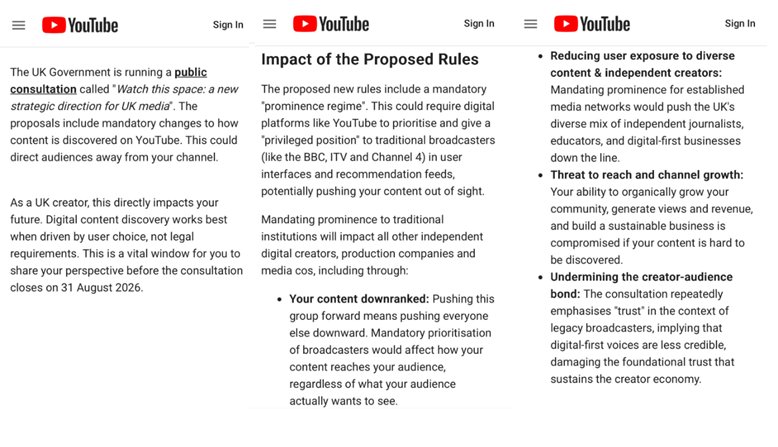
🚨BREAKING: The British government is forcing YouTube to kill off independent journalism by pushing them down the algorithm and giving government approved media organisations (such as BBC, ITV, Channel 4) "privileged position." This is unprecedented for a non-dictatorial country to pursue. Especially considering we are now going to have a government that only 24,927 people from Makerfield voted for.
92
52
693
82,552
Of all new media, Tara is the single greatest talent. The energy, the charisma, the obsession. Unparalleled. Watch this space. 🚀
The best part of building this has been the lifelong friendships I’m making along the way ❤️ @HarryStebbings
11
6
141
82,579
The single best follow in tech on X right now is @nikesharora. One of the best operators of our time spewing wisdom on a daily basis.
Just finished north of 200 meetings in Europe with customers and technologists. The conversations were primarily around AI, common questions include: 1. Are there examples of organizations who have been able to demonstrate production level systems and do those developments show a return in lower cost, efficiency or better top line? 2. What do you think about agents? How will we discover, govern and stop agents if need be. Perhaps the biggest security concern ATM. 3. The frontier AI models are expensive, what's the business case at these token prices to embed AI in our customer facing products? Where will token prices be in the future. 4. What are the longer term implications of Mythos like models? Do we need to update cyber infrastructure or all IT infrastructure? 5. What do you think of Chinese opensource models? Are they secure and what is the downside of using them if they can be secured and they are cheaper? The parts that surprised me were: 1. The pausing of Mythos and Fable 5 caused more consternation and concern in Europe both short term and raised longer term concerns on single model reliance or reliance or models not in ones control. I hadn't seen it from their POV. 2. Sovereignity which was always a topic and still is, is getting more nuanced - they want data residency, data localization and local resources, but there seems to be more willingness to accept global services on clouds. Classified systems continue to be an issue. Net net - we need to ensure we continue to build trust both on our Frontier models and their consistent availability, we need to get the right economics in place and spend more time in Europe communicating and building presence if we want AI adoption to keep pace with the US.
40
70
1,702
1,083,902
Dario just declared war on open-source. Anthropic's message is clear: open source could destroy the entire AI business model, and Chinese open-source models are the cause. I sat down with @jasonlk & @rodriscoll to discuss it, along with the biggest news in tech this week: - Anthropic & Dario Declare War on Open-Source - Coinbase Slashes AI Spend 50%: Is the Token Bubble Bursting? - Kalshi's $40BN Valuation & Impending IPO - Bending Spoons: The Smartest IPO of 2026 & the $100BN SaaS Roll-Up Play My notes below: 1. Anthropic Is Laying the Foundation for a Deal With the U.S. Government on Chinese Models Anthropic accused Chinese open-source AI competitors of “brazen theft” through model distillation that violates its terms of service. Rory noted the hypocrisy, given that U.S. frontier models originally scraped external IP. Still, Anthropic appears to be laying the groundwork for a regulatory trade: complying with domestic access restrictions in exchange for a federal ban on distilled Chinese models. 2. Jason Lemkin’s Response to Brian Armstrong’s AI Tweet Jason dismissed Coinbase CEO Brian Armstrong’s 50% LLM cost-cutting post as “performative social media,” arguing that savings matter little if core revenue is flat or shrinking. He believes AI must actively drive top-line growth. Rory defended the move as “cost management 101,” saying cash-conscious enterprise executives will quickly emulate it to curb runaway frontier model fees. 3. CEOs Are Struggling to See the ROI From AI Massive enterprise spending on AI tokens is failing to deliver the expected revenue or productivity gains, leaving CFOs searching for measurable operational lift. Jason noted that adding millions in AI spend can still produce the same growth rates as prior quarters. Rory argued that AI spending must clearly accelerate software delivery or create definitive bottom-line savings as boards push back on reckless “token maxing.” 4. We Are All So Aligned in Wanting AI to Win Jason warned that the U.S. economy is structurally addicted to AI, with 40% of the S&P 500 tied to the boom, making society eager to prop it up to protect 401(k) portfolios. Rory countered that protectionism artificially inflates intelligence costs for the broader economy. He compared it to banning IBM PC clones in the 1980s just to protect IBM’s stock price, calling the blocking of low-cost open-source alternatives “fricking dumb.” 5. Bending Spoons and the New Playbook for B2B Revenue Arbitrage Bending Spoons’ $20 billion public valuation marks a shift toward tech roll-ups that drive profitability through price hikes and cost-cutting rather than organic user growth. Jason predicts this playbook will expand into mature B2B SaaS. By acquiring sticky but underperforming platforms like Marketo, Asana, or PagerDuty and injecting hungry talent, operators can rapidly improve retention and capture massive revenue arbitrage. (links below)
36
27
166
90,354
"After food, energy sovereignty is one of the most important strategic priorities for any nation. History shows that wars are often fought over access to essential resources, and today, energy is at the center of that competition. The more countries can produce reliable energy domestically, the more resilient, secure, and economically independent they'll become." What is more important energy sovereignty or model sovereignty @jameswise @vkhosla @alanchanguk @wolfejosh @traestephens
When the smartest investor you follow puts 16% of his entire fund into a single stock, you pay attention. That is what Leo Aschenbrenner has done with Bloom Energy. The largest single holding in his portfolio, by a distance. So I had to understand why. KR Sridhar, founder and CEO of @Bloom_Energy. Former NASA rocket scientist. Worked on Mars missions. Then spent 25 years building an energy company almost nobody believed in. The numbers today: $2BN in revenue in 2025. Up 37% YoY. Market cap ~$93BN Market cap. I now completely understand why Leo is so all in. I sat down with KR, took my notes, and have shared the biggest lessons below. 1. The Biggest Management Lesson From Andy Grove The best management advice is simple: walk the floor and talk to your team. They will tell you exactly why things are not working. Do not drown in training binders when you can learn the product by engaging directly. Success requires deep empathy for every part of the business, from shop floor technicians to customers’ real pain points. 2. When Intelligence Becomes Commoditized, What Is the Valuable Asset? When AI makes intelligence ubiquitous, the rarest asset will be wisdom. AI can manufacture information, but it cannot provide happiness, judgment, empathy, or genuine human connection. Because humans are social animals, automated bots will never fully replace real interaction. 3. The True Complexity of Building a Data Center but Why Power Should Not Be Your Constraint A large greenfield data center can take 12 to 18 months to build because supply chains for copper, cooling, and specialized labor are strained. But with modular solid-state technology, power can be deployed faster than the facility itself. Energy should not remain the bottleneck when generation can move to the edge. 4. To What Extent Should Governments Act to Prevent Monopolies? Heavy regulation and government equity stakes can destroy innovative culture and block better startups from competing. Dominant positions often shift naturally over time, as Microsoft and Google show. The best path is a level playing field where free competition lets breakthrough entrepreneurs win. 5. AI Will Do More to Hurt Than Help Income Inequality AI may concentrate enormous wealth among fewer players, but technology has historically been humanity’s greatest equalizer for raising living standards. Intelligence abundance creates a non-zero-sum game that can lift all boats. Leaders still need empathy for the transition generation so they are not left behind. 6. Why Energy Sovereignty Is So Much More Important Than Anyone Thinks After food security, energy sovereignty is the most critical supply chain challenge on Earth. History’s major conflicts have often centered on water, food, and energy. Decentralized power generation at the edge can make communities more self-reliant and reduce exposure to geopolitical conflict. (links below)
3
4
24
13,355
"America should be doing far more with its abundant natural gas resources. Natural gas remains the cleanest widely available fossil fuel, and expanding access to it could help countries move away from coal while meeting growing energy demand. The opportunity is to pair that energy abundance with distributed power infrastructure to deliver reliable, affordable electricity at global scale." Love to hear your thoughts on this @alanchanguk @shaunmmaguire @rabois @zebulgar
When the smartest investor you follow puts 16% of his entire fund into a single stock, you pay attention. That is what Leo Aschenbrenner has done with Bloom Energy. The largest single holding in his portfolio, by a distance. So I had to understand why. KR Sridhar, founder and CEO of @Bloom_Energy. Former NASA rocket scientist. Worked on Mars missions. Then spent 25 years building an energy company almost nobody believed in. The numbers today: $2BN in revenue in 2025. Up 37% YoY. Market cap ~$93BN Market cap. I now completely understand why Leo is so all in. I sat down with KR, took my notes, and have shared the biggest lessons below. 1. The Biggest Management Lesson From Andy Grove The best management advice is simple: walk the floor and talk to your team. They will tell you exactly why things are not working. Do not drown in training binders when you can learn the product by engaging directly. Success requires deep empathy for every part of the business, from shop floor technicians to customers’ real pain points. 2. When Intelligence Becomes Commoditized, What Is the Valuable Asset? When AI makes intelligence ubiquitous, the rarest asset will be wisdom. AI can manufacture information, but it cannot provide happiness, judgment, empathy, or genuine human connection. Because humans are social animals, automated bots will never fully replace real interaction. 3. The True Complexity of Building a Data Center but Why Power Should Not Be Your Constraint A large greenfield data center can take 12 to 18 months to build because supply chains for copper, cooling, and specialized labor are strained. But with modular solid-state technology, power can be deployed faster than the facility itself. Energy should not remain the bottleneck when generation can move to the edge. 4. To What Extent Should Governments Act to Prevent Monopolies? Heavy regulation and government equity stakes can destroy innovative culture and block better startups from competing. Dominant positions often shift naturally over time, as Microsoft and Google show. The best path is a level playing field where free competition lets breakthrough entrepreneurs win. 5. AI Will Do More to Hurt Than Help Income Inequality AI may concentrate enormous wealth among fewer players, but technology has historically been humanity’s greatest equalizer for raising living standards. Intelligence abundance creates a non-zero-sum game that can lift all boats. Leaders still need empathy for the transition generation so they are not left behind. 6. Why Energy Sovereignty Is So Much More Important Than Anyone Thinks After food security, energy sovereignty is the most critical supply chain challenge on Earth. History’s major conflicts have often centered on water, food, and energy. Decentralized power generation at the edge can make communities more self-reliant and reduce exposure to geopolitical conflict. (links below)
1
4
17
11,060
The true complexity of building a data center but why power should not be your constraint. "Building a hyperscale data center is far more complex than just securing power. The real bottlenecks are construction, cooling, copper, equipment, and the skilled labor needed to build it, making 12–18 month timelines the norm. In many cases, power isn't the limiting factor. The physical infrastructure is." What does no one know about building data centres that everyone should know @altcap @DavidCahn6 @JonathanRoss321 @andrewdfeldman
When the smartest investor you follow puts 16% of his entire fund into a single stock, you pay attention. That is what Leo Aschenbrenner has done with Bloom Energy. The largest single holding in his portfolio, by a distance. So I had to understand why. KR Sridhar, founder and CEO of @Bloom_Energy. Former NASA rocket scientist. Worked on Mars missions. Then spent 25 years building an energy company almost nobody believed in. The numbers today: $2BN in revenue in 2025. Up 37% YoY. Market cap ~$93BN Market cap. I now completely understand why Leo is so all in. I sat down with KR, took my notes, and have shared the biggest lessons below. 1. The Biggest Management Lesson From Andy Grove The best management advice is simple: walk the floor and talk to your team. They will tell you exactly why things are not working. Do not drown in training binders when you can learn the product by engaging directly. Success requires deep empathy for every part of the business, from shop floor technicians to customers’ real pain points. 2. When Intelligence Becomes Commoditized, What Is the Valuable Asset? When AI makes intelligence ubiquitous, the rarest asset will be wisdom. AI can manufacture information, but it cannot provide happiness, judgment, empathy, or genuine human connection. Because humans are social animals, automated bots will never fully replace real interaction. 3. The True Complexity of Building a Data Center but Why Power Should Not Be Your Constraint A large greenfield data center can take 12 to 18 months to build because supply chains for copper, cooling, and specialized labor are strained. But with modular solid-state technology, power can be deployed faster than the facility itself. Energy should not remain the bottleneck when generation can move to the edge. 4. To What Extent Should Governments Act to Prevent Monopolies? Heavy regulation and government equity stakes can destroy innovative culture and block better startups from competing. Dominant positions often shift naturally over time, as Microsoft and Google show. The best path is a level playing field where free competition lets breakthrough entrepreneurs win. 5. AI Will Do More to Hurt Than Help Income Inequality AI may concentrate enormous wealth among fewer players, but technology has historically been humanity’s greatest equalizer for raising living standards. Intelligence abundance creates a non-zero-sum game that can lift all boats. Leaders still need empathy for the transition generation so they are not left behind. 6. Why Energy Sovereignty Is So Much More Important Than Anyone Thinks After food security, energy sovereignty is the most critical supply chain challenge on Earth. History’s major conflicts have often centered on water, food, and energy. Decentralized power generation at the edge can make communities more self-reliant and reduce exposure to geopolitical conflict. (links below)
5
4
25
12,958
So @harmonic_ai just released their Hot 25 Report on the most in-demand early-stage companies. The top 3: 🥇 @resolveai reclaims the top spot — joining Lovable as the only two companies to top the list twice. 🥈 Salient skyrockets to #2, up 11 spots. 🥉 @aaruHQ rounds out the podium, as rival Simile debuts at #6. Biggest mover on the list: @BrainCo_AI - climbing 12 spots. Newcomers to watch: @periodiclabs at #7, @sandstonehq at #19, and @Jackandjillai at #25. Find the full report here: harmonic.ai/hot-25-startups/…
8
5
41
9,697
"Governments should be careful not to regulate AI so heavily that they fall behind. If one country slows innovation while others move at full speed, it risks losing both economic competitiveness and technological leadership. The challenge is finding the balance between sensible oversight and enabling innovation." How involved should governments be in the development of AI @rabois @torstenreil @AlistairPullen @Jameswise @vkhosla
When the smartest investor you follow puts 16% of his entire fund into a single stock, you pay attention. That is what Leo Aschenbrenner has done with Bloom Energy. The largest single holding in his portfolio, by a distance. So I had to understand why. KR Sridhar, founder and CEO of @Bloom_Energy. Former NASA rocket scientist. Worked on Mars missions. Then spent 25 years building an energy company almost nobody believed in. The numbers today: $2BN in revenue in 2025. Up 37% YoY. Market cap ~$93BN Market cap. I now completely understand why Leo is so all in. I sat down with KR, took my notes, and have shared the biggest lessons below. 1. The Biggest Management Lesson From Andy Grove The best management advice is simple: walk the floor and talk to your team. They will tell you exactly why things are not working. Do not drown in training binders when you can learn the product by engaging directly. Success requires deep empathy for every part of the business, from shop floor technicians to customers’ real pain points. 2. When Intelligence Becomes Commoditized, What Is the Valuable Asset? When AI makes intelligence ubiquitous, the rarest asset will be wisdom. AI can manufacture information, but it cannot provide happiness, judgment, empathy, or genuine human connection. Because humans are social animals, automated bots will never fully replace real interaction. 3. The True Complexity of Building a Data Center but Why Power Should Not Be Your Constraint A large greenfield data center can take 12 to 18 months to build because supply chains for copper, cooling, and specialized labor are strained. But with modular solid-state technology, power can be deployed faster than the facility itself. Energy should not remain the bottleneck when generation can move to the edge. 4. To What Extent Should Governments Act to Prevent Monopolies? Heavy regulation and government equity stakes can destroy innovative culture and block better startups from competing. Dominant positions often shift naturally over time, as Microsoft and Google show. The best path is a level playing field where free competition lets breakthrough entrepreneurs win. 5. AI Will Do More to Hurt Than Help Income Inequality AI may concentrate enormous wealth among fewer players, but technology has historically been humanity’s greatest equalizer for raising living standards. Intelligence abundance creates a non-zero-sum game that can lift all boats. Leaders still need empathy for the transition generation so they are not left behind. 6. Why Energy Sovereignty Is So Much More Important Than Anyone Thinks After food security, energy sovereignty is the most critical supply chain challenge on Earth. History’s major conflicts have often centered on water, food, and energy. Decentralized power generation at the edge can make communities more self-reliant and reduce exposure to geopolitical conflict. (links below)
4
17
8,399
In the last 24 hours, I have had 5 founders message me of varying-sized companies; some 10-person startups and one $200BN public company. All of them stated they have been able to cut inference spend by 75% or more with little effort, no performance change and better latency. The times they are a changing.
98
56
862
167,104
"When intelligence becomes commoditized, wisdom becomes the scarce asset. AI can provide answers, but it can't replace human judgment, empathy, or the ability to build meaningful relationships. In a world where intelligence is abundant, the people who create the most value will be those with wisdom." If intelligence is abundant, what do you think will be the most valuable asset @AnjneyMidha @omooretweets @kirbyman01 @anneleeskates
When the smartest investor you follow puts 16% of his entire fund into a single stock, you pay attention. That is what Leo Aschenbrenner has done with Bloom Energy. The largest single holding in his portfolio, by a distance. So I had to understand why. KR Sridhar, founder and CEO of @Bloom_Energy. Former NASA rocket scientist. Worked on Mars missions. Then spent 25 years building an energy company almost nobody believed in. The numbers today: $2BN in revenue in 2025. Up 37% YoY. Market cap ~$93BN Market cap. I now completely understand why Leo is so all in. I sat down with KR, took my notes, and have shared the biggest lessons below. 1. The Biggest Management Lesson From Andy Grove The best management advice is simple: walk the floor and talk to your team. They will tell you exactly why things are not working. Do not drown in training binders when you can learn the product by engaging directly. Success requires deep empathy for every part of the business, from shop floor technicians to customers’ real pain points. 2. When Intelligence Becomes Commoditized, What Is the Valuable Asset? When AI makes intelligence ubiquitous, the rarest asset will be wisdom. AI can manufacture information, but it cannot provide happiness, judgment, empathy, or genuine human connection. Because humans are social animals, automated bots will never fully replace real interaction. 3. The True Complexity of Building a Data Center but Why Power Should Not Be Your Constraint A large greenfield data center can take 12 to 18 months to build because supply chains for copper, cooling, and specialized labor are strained. But with modular solid-state technology, power can be deployed faster than the facility itself. Energy should not remain the bottleneck when generation can move to the edge. 4. To What Extent Should Governments Act to Prevent Monopolies? Heavy regulation and government equity stakes can destroy innovative culture and block better startups from competing. Dominant positions often shift naturally over time, as Microsoft and Google show. The best path is a level playing field where free competition lets breakthrough entrepreneurs win. 5. AI Will Do More to Hurt Than Help Income Inequality AI may concentrate enormous wealth among fewer players, but technology has historically been humanity’s greatest equalizer for raising living standards. Intelligence abundance creates a non-zero-sum game that can lift all boats. Leaders still need empathy for the transition generation so they are not left behind. 6. Why Energy Sovereignty Is So Much More Important Than Anyone Thinks After food security, energy sovereignty is the most critical supply chain challenge on Earth. History’s major conflicts have often centered on water, food, and energy. Decentralized power generation at the edge can make communities more self-reliant and reduce exposure to geopolitical conflict. (links below)

9
5
34
14,713
"Andy Grove's biggest management lesson was simple: talk to the people doing the work. If you walk the floor, they'll tell you exactly what's broken and what they don't understand. And once you've heard them, stop looking for someone else to give you the answers. Go figure it out yourself."
When the smartest investor you follow puts 16% of his entire fund into a single stock, you pay attention. That is what Leo Aschenbrenner has done with Bloom Energy. The largest single holding in his portfolio, by a distance. So I had to understand why. KR Sridhar, founder and CEO of @Bloom_Energy. Former NASA rocket scientist. Worked on Mars missions. Then spent 25 years building an energy company almost nobody believed in. The numbers today: $2BN in revenue in 2025. Up 37% YoY. Market cap ~$93BN Market cap. I now completely understand why Leo is so all in. I sat down with KR, took my notes, and have shared the biggest lessons below. 1. The Biggest Management Lesson From Andy Grove The best management advice is simple: walk the floor and talk to your team. They will tell you exactly why things are not working. Do not drown in training binders when you can learn the product by engaging directly. Success requires deep empathy for every part of the business, from shop floor technicians to customers’ real pain points. 2. When Intelligence Becomes Commoditized, What Is the Valuable Asset? When AI makes intelligence ubiquitous, the rarest asset will be wisdom. AI can manufacture information, but it cannot provide happiness, judgment, empathy, or genuine human connection. Because humans are social animals, automated bots will never fully replace real interaction. 3. The True Complexity of Building a Data Center but Why Power Should Not Be Your Constraint A large greenfield data center can take 12 to 18 months to build because supply chains for copper, cooling, and specialized labor are strained. But with modular solid-state technology, power can be deployed faster than the facility itself. Energy should not remain the bottleneck when generation can move to the edge. 4. To What Extent Should Governments Act to Prevent Monopolies? Heavy regulation and government equity stakes can destroy innovative culture and block better startups from competing. Dominant positions often shift naturally over time, as Microsoft and Google show. The best path is a level playing field where free competition lets breakthrough entrepreneurs win. 5. AI Will Do More to Hurt Than Help Income Inequality AI may concentrate enormous wealth among fewer players, but technology has historically been humanity’s greatest equalizer for raising living standards. Intelligence abundance creates a non-zero-sum game that can lift all boats. Leaders still need empathy for the transition generation so they are not left behind. 6. Why Energy Sovereignty Is So Much More Important Than Anyone Thinks After food security, energy sovereignty is the most critical supply chain challenge on Earth. History’s major conflicts have often centered on water, food, and energy. Decentralized power generation at the edge can make communities more self-reliant and reduce exposure to geopolitical conflict. (links below)
4
43
19,907
"There will always be moments when your company faces existential threats. The key is not to avoid those moments, but to refuse to let fear dominate your thinking. If you believe failure isn't an option, your focus shifts from worrying about survival to making tomorrow better than today." Single biggest advice to someone making big decisions that impact the life of their company @AlexHormozi @businessbarista @austin_rief @thesamparr
When the smartest investor you follow puts 16% of his entire fund into a single stock, you pay attention. That is what Leo Aschenbrenner has done with Bloom Energy. The largest single holding in his portfolio, by a distance. So I had to understand why. KR Sridhar, founder and CEO of @Bloom_Energy. Former NASA rocket scientist. Worked on Mars missions. Then spent 25 years building an energy company almost nobody believed in. The numbers today: $2BN in revenue in 2025. Up 37% YoY. Market cap ~$93BN Market cap. I now completely understand why Leo is so all in. I sat down with KR, took my notes, and have shared the biggest lessons below. 1. The Biggest Management Lesson From Andy Grove The best management advice is simple: walk the floor and talk to your team. They will tell you exactly why things are not working. Do not drown in training binders when you can learn the product by engaging directly. Success requires deep empathy for every part of the business, from shop floor technicians to customers’ real pain points. 2. When Intelligence Becomes Commoditized, What Is the Valuable Asset? When AI makes intelligence ubiquitous, the rarest asset will be wisdom. AI can manufacture information, but it cannot provide happiness, judgment, empathy, or genuine human connection. Because humans are social animals, automated bots will never fully replace real interaction. 3. The True Complexity of Building a Data Center but Why Power Should Not Be Your Constraint A large greenfield data center can take 12 to 18 months to build because supply chains for copper, cooling, and specialized labor are strained. But with modular solid-state technology, power can be deployed faster than the facility itself. Energy should not remain the bottleneck when generation can move to the edge. 4. To What Extent Should Governments Act to Prevent Monopolies? Heavy regulation and government equity stakes can destroy innovative culture and block better startups from competing. Dominant positions often shift naturally over time, as Microsoft and Google show. The best path is a level playing field where free competition lets breakthrough entrepreneurs win. 5. AI Will Do More to Hurt Than Help Income Inequality AI may concentrate enormous wealth among fewer players, but technology has historically been humanity’s greatest equalizer for raising living standards. Intelligence abundance creates a non-zero-sum game that can lift all boats. Leaders still need empathy for the transition generation so they are not left behind. 6. Why Energy Sovereignty Is So Much More Important Than Anyone Thinks After food security, energy sovereignty is the most critical supply chain challenge on Earth. History’s major conflicts have often centered on water, food, and energy. Decentralized power generation at the edge can make communities more self-reliant and reduce exposure to geopolitical conflict. (links below)
7
8
40
14,907
How to manage regret and learning "Don't replay bad experiences in your mind like a movie. Learn the lesson, leave the regret behind, and focus on what's ahead. Life gets a lot easier when you believe tomorrow can be better than today." Single biggest advice to someone struggling to get over a mistake from the past @pmarca @Codie_Sanchez @SahilBloom @ElishaDLong
When the smartest investor you follow puts 16% of his entire fund into a single stock, you pay attention. That is what Leo Aschenbrenner has done with Bloom Energy. The largest single holding in his portfolio, by a distance. So I had to understand why. KR Sridhar, founder and CEO of @Bloom_Energy. Former NASA rocket scientist. Worked on Mars missions. Then spent 25 years building an energy company almost nobody believed in. The numbers today: $2BN in revenue in 2025. Up 37% YoY. Market cap ~$93BN Market cap. I now completely understand why Leo is so all in. I sat down with KR, took my notes, and have shared the biggest lessons below. 1. The Biggest Management Lesson From Andy Grove The best management advice is simple: walk the floor and talk to your team. They will tell you exactly why things are not working. Do not drown in training binders when you can learn the product by engaging directly. Success requires deep empathy for every part of the business, from shop floor technicians to customers’ real pain points. 2. When Intelligence Becomes Commoditized, What Is the Valuable Asset? When AI makes intelligence ubiquitous, the rarest asset will be wisdom. AI can manufacture information, but it cannot provide happiness, judgment, empathy, or genuine human connection. Because humans are social animals, automated bots will never fully replace real interaction. 3. The True Complexity of Building a Data Center but Why Power Should Not Be Your Constraint A large greenfield data center can take 12 to 18 months to build because supply chains for copper, cooling, and specialized labor are strained. But with modular solid-state technology, power can be deployed faster than the facility itself. Energy should not remain the bottleneck when generation can move to the edge. 4. To What Extent Should Governments Act to Prevent Monopolies? Heavy regulation and government equity stakes can destroy innovative culture and block better startups from competing. Dominant positions often shift naturally over time, as Microsoft and Google show. The best path is a level playing field where free competition lets breakthrough entrepreneurs win. 5. AI Will Do More to Hurt Than Help Income Inequality AI may concentrate enormous wealth among fewer players, but technology has historically been humanity’s greatest equalizer for raising living standards. Intelligence abundance creates a non-zero-sum game that can lift all boats. Leaders still need empathy for the transition generation so they are not left behind. 6. Why Energy Sovereignty Is So Much More Important Than Anyone Thinks After food security, energy sovereignty is the most critical supply chain challenge on Earth. History’s major conflicts have often centered on water, food, and energy. Decentralized power generation at the edge can make communities more self-reliant and reduce exposure to geopolitical conflict. (links below)
13
10
90
25,261
When the smartest investor you follow puts 16% of his entire fund into a single stock, you pay attention. That is what Leo Aschenbrenner has done with Bloom Energy. The largest single holding in his portfolio, by a distance. So I had to understand why. KR Sridhar, founder and CEO of @Bloom_Energy. Former NASA rocket scientist. Worked on Mars missions. Then spent 25 years building an energy company almost nobody believed in. The numbers today: $2BN in revenue in 2025. Up 37% YoY. Market cap ~$93BN Market cap. I now completely understand why Leo is so all in. I sat down with KR, took my notes, and have shared the biggest lessons below. 1. The Biggest Management Lesson From Andy Grove The best management advice is simple: walk the floor and talk to your team. They will tell you exactly why things are not working. Do not drown in training binders when you can learn the product by engaging directly. Success requires deep empathy for every part of the business, from shop floor technicians to customers’ real pain points. 2. When Intelligence Becomes Commoditized, What Is the Valuable Asset? When AI makes intelligence ubiquitous, the rarest asset will be wisdom. AI can manufacture information, but it cannot provide happiness, judgment, empathy, or genuine human connection. Because humans are social animals, automated bots will never fully replace real interaction. 3. The True Complexity of Building a Data Center but Why Power Should Not Be Your Constraint A large greenfield data center can take 12 to 18 months to build because supply chains for copper, cooling, and specialized labor are strained. But with modular solid-state technology, power can be deployed faster than the facility itself. Energy should not remain the bottleneck when generation can move to the edge. 4. To What Extent Should Governments Act to Prevent Monopolies? Heavy regulation and government equity stakes can destroy innovative culture and block better startups from competing. Dominant positions often shift naturally over time, as Microsoft and Google show. The best path is a level playing field where free competition lets breakthrough entrepreneurs win. 5. AI Will Do More to Hurt Than Help Income Inequality AI may concentrate enormous wealth among fewer players, but technology has historically been humanity’s greatest equalizer for raising living standards. Intelligence abundance creates a non-zero-sum game that can lift all boats. Leaders still need empathy for the transition generation so they are not left behind. 6. Why Energy Sovereignty Is So Much More Important Than Anyone Thinks After food security, energy sovereignty is the most critical supply chain challenge on Earth. History’s major conflicts have often centered on water, food, and energy. Decentralized power generation at the edge can make communities more self-reliant and reduce exposure to geopolitical conflict. (links below)
18
16
151
163,860