Joined August 2012
27 Photos and videos
Pinned Post
Robotics: coding agentsโ€™ next frontier. So how good are they? We introduce CaP-X: an open-source framework and benchmark for coding agents, where they write code for robot perception and control, execute it on sim and real robots, observe the outcomes, and iteratively improve code reliability. From @NVIDIA @Berkeley_AI @CMU_Robotics @StanfordAILab capgym.github.io ๐Ÿงต
20
125
632
173,041
Introducing WARP-RM: A Warp-Augmented Relative Progress Reward Model for Data Curation ๐Ÿงต We gave our t-shirt folding robot more demonstrations and it got worse. Every extra demo ended in a successfully folded shirt. The data wasn't bad. It was noisy. The policy couldn't tell productive motion from dead time, and it imitated both equally. So which moments of a demo are actually worth copying? ๐ŸŒ Project Website: uynitsuj.github.io/warp-rm ๐Ÿ“„ Paper: arxiv.org/abs/2606.28320 ๐Ÿ’ป Code: github.com/uynitsuj/WARP-RM ๐Ÿ“จ XDOF blog post: xdof.ai/blog/warp-rm
6
22
141
26,788
Max Fu reposted
Introducing ASPIRE, the first automated /๐šœ๐š”๐š’๐š•๐š• discovery system for robotics. Rather than solving tasks one by one, ASPIRE continuously discovers and accumulates reusable skills. These persistent skills become the building blocks of robot intelligence, enabling multi-task transfer, sim-to-real transfer, and cross-embodiment transfer. ๐Ÿ”—ย research.nvidia.com/labs/geaโ€ฆ From @NVIDIA, @UMichCSE, @ECEILLINOIS, @Berkeley_AI, @CMU_Robotics. Check out how it works in ๐Ÿงต:
6
35
190
29,939
Excited to be attending ICML this year โœˆ๏ธ๐Ÿ‡ฐ๐Ÿ‡ท and presenting CaP-X on agentic robotics (co-led with @letian_fu and @HaoruXue, among others who are not on X!) DMs are open. Letโ€™s grab a coffee and talk shop on harnesses for embodied AI, reward modeling, or the latest in hardware!
Robotics: coding agentsโ€™ next frontier. So how good are they? We introduce CaP-X: an open-source framework and benchmark for coding agents, where they write code for robot perception and control, execute it on sim and real robots, observe the outcomes, and iteratively improve code reliability. From @NVIDIA @Berkeley_AI @CMU_Robotics @StanfordAILab capgym.github.io ๐Ÿงต
1
2
22
2,182
Max Fu reposted
Today, we give robots a /skills library that self-evolves and compounds indefinitely! Introducing ASPIRE: a robot solving its 100th task is no longer as clueless as solving its first. Coding agents observe multimodal sensory traces from simulation and real robots, launch an evolutionary search over control programs, and distill the best know-how into an ever-expanding library. ASPIRE is a new type of continual learning: "training" is skill refinement instead of gradient descent. "Trained model" is a repo of sensorimotor skills instead of floating weights. โ€œDistributed trainingโ€ is a panel of agents each practicing a different skill instead of sharded minibatches. Here's the beauty: ASPIRE gives the tired terms "sim2real transfer" and "cross-embodiment transfer" a whole new meaning. Bridging the sim-to-real gap is notoriously brutal. An end-to-end policy has to swallow both the visual shift (sim looks toyish next to a real camera) and the subtle contact physics it never quite gets right. ASPIRE sidesteps the mess, because it doesn't ship pixels or weights across the gap, but ships the know-how. The robot still has to practice in the real world, not zero-shot, but it gets there way faster because it isn't rediscovering the strategy from scratch. Same for going single-arm to bimanual hardware, which usually requires new data and retraining from zero. ASPIRE achieves up to ~10x cut in "transfer learningโ€ tokens (yes, tokens are the new unit of *training* compute ;) Check out our gallery of 150 tasks and 90 skills the robots taught themselves, all on the website! Kind of wild that we can ship the "learned weights" as an HTML page rather than a GGUF. We'll open-source the full stack so your own robot library starts compounding from ours! Deep dive in thread:
69
221
1,624
185,236
Max Fu reposted
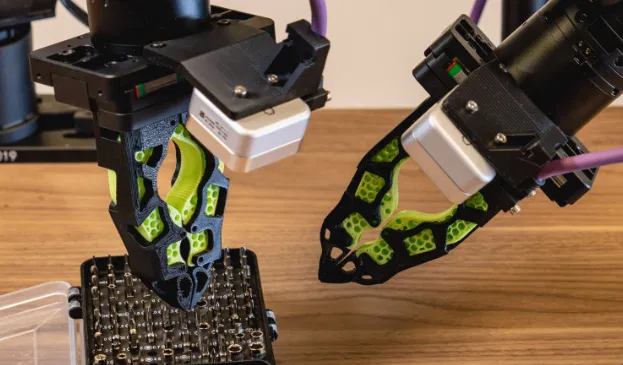
Open-sourced on Maker World makerworld.com/en/models/298โ€ฆ
Are the gripper jaws used for ENPIRE open-source?
9
32
289
33,594
Max Fu reposted
Great work using offline agentic exploration to develop robot skills!
Children learn from play. Can robots do the same? We propose ๐๐ฅ๐š๐ฒ๐Ÿ๐ฎ๐ฅ ๐€๐ ๐ž๐ง๐ญ๐ข๐œ ๐‘๐จ๐›๐จ๐ญ ๐‹๐ž๐š๐ซ๐ง๐ข๐ง๐ , a paradigm that gives embodied coding agents a play stage before downstream tasks arrive, and instantiate it with ๐‘๐€๐“๐ฌ (Robotics Agent Teams), where robots discover reusable skills through curious play. Co-led with @jiaxin_ge_
1
10
70
22,781
Max Fu reposted
3 of 3: Kids can learn how to generalize via play (vs rote repetition of goal tasks) to learn skills that are useful for the future; we think agentic robotics should do so as well. We revisit curiosity-based intrinsic learning for agentic robotics:
Children learn from play. Can robots do the same? We propose ๐๐ฅ๐š๐ฒ๐Ÿ๐ฎ๐ฅ ๐€๐ ๐ž๐ง๐ญ๐ข๐œ ๐‘๐จ๐›๐จ๐ญ ๐‹๐ž๐š๐ซ๐ง๐ข๐ง๐ , a paradigm that gives embodied coding agents a play stage before downstream tasks arrive, and instantiate it with ๐‘๐€๐“๐ฌ (Robotics Agent Teams), where robots discover reusable skills through curious play. Co-led with @jiaxin_ge_
1
3
37
4,532
Max Fu reposted
What excites me most isnโ€™t just that we built an agentic coding system for robots and ran it in the real world. Itโ€™s that the agentic system learned a generalizable prior during "Play-Time", and then reused it to adapt across multiple downstream tasks.
Children learn from play. Can robots do the same? We propose ๐๐ฅ๐š๐ฒ๐Ÿ๐ฎ๐ฅ ๐€๐ ๐ž๐ง๐ญ๐ข๐œ ๐‘๐จ๐›๐จ๐ญ ๐‹๐ž๐š๐ซ๐ง๐ข๐ง๐ , a paradigm that gives embodied coding agents a play stage before downstream tasks arrive, and instantiate it with ๐‘๐€๐“๐ฌ (Robotics Agent Teams), where robots discover reusable skills through curious play. Co-led with @jiaxin_ge_
2
6
29
2,909
Max Fu reposted
Excited to share T-Rex: Tactile-Reactive Dexterous Manipulation ๐Ÿฆ–๐Ÿค– Touch is fundamental to human dexterity, yet most Vision-Language-Action (VLA) models either ignore tactile feedback or lack the ability to react to high-frequency contact signals. In this work, we tackle both the data and architectural challenges of tactile-reactive dexterous manipulation. ๐Ÿฆ– A 100-hour tactile-synchronized dexterous manipulation dataset with 7,700 trajectories, 22 motor primitives, and 200 everyday objects. ๐Ÿฆ– A tactile-reactive MoT architecture with spatial-temporal tactile encoding and asynchronous high-frequency tactile refinement. ๐Ÿฆ– A scalable training recipe combining 22,889 hours of human egocentric pretraining with tactile-grounded robot mid-training. Across 12 real-world contact-rich manipulation tasks, T-Rex achieves over 30% higher average success rate than the strongest baseline. We are fully open-sourcing the dataset, models, teleoperation stack, training code, and inference pipeline. ๐ŸŒ Project: tactile-rex.github.io/ ๐Ÿ“„ Paper: arxiv.org/abs/2606.17055 ๐Ÿ’ป Code: github.com/ZhuoyangLiu2005/Tโ€ฆ ๐Ÿค— Dataset: huggingface.co/datasets/zekaโ€ฆ ๐Ÿงต Thread โ†“
21
65
240
72,159
While ENPIRE w/ @nvidia @_wenlixiao @DrJimFan enables coding agents to explore algorithms and improve policies for a given real-world task, RATs asks: what can agents learn before a human specifies the task? Through curiosity-driven play, agents propose tasks, hill-climb toward solutions, and accumulate reusable, transferable skills. When a human later requests a new task, the agents retrieve and compose these skills to solve it. RATs explores an analogue of pre-training for embodied coding agents: broad skill acquisition through play, which accelerates task-specific problem solving with the skills acquired. Looking forward to the agentic future of robotics! See the detailed tweet from @junyi42!
Children learn from play. Can robots do the same? We propose ๐๐ฅ๐š๐ฒ๐Ÿ๐ฎ๐ฅ ๐€๐ ๐ž๐ง๐ญ๐ข๐œ ๐‘๐จ๐›๐จ๐ญ ๐‹๐ž๐š๐ซ๐ง๐ข๐ง๐ , a paradigm that gives embodied coding agents a play stage before downstream tasks arrive, and instantiate it with ๐‘๐€๐“๐ฌ (Robotics Agent Teams), where robots discover reusable skills through curious play. Co-led with @jiaxin_ge_
2
8
37
6,548
Max Fu reposted
Children learn from play. Can robots do the same? We propose ๐๐ฅ๐š๐ฒ๐Ÿ๐ฎ๐ฅ ๐€๐ ๐ž๐ง๐ญ๐ข๐œ ๐‘๐จ๐›๐จ๐ญ ๐‹๐ž๐š๐ซ๐ง๐ข๐ง๐ , a paradigm that gives embodied coding agents a play stage before downstream tasks arrive, and instantiate it with ๐‘๐€๐“๐ฌ (Robotics Agent Teams), where robots discover reusable skills through curious play. Co-led with @jiaxin_ge_
9
63
341
88,068
Max Fu reposted
Announcing @xdofai: Weโ€™ve raised $70 million to build the core robotic infrastructure ecosystem for robot foundation models. My cofounders Fred (@YideShentu), Nemo (@itsnemojin) and I have been pursuing the dream of general purpose robots for our entire lives. After work at Covariant, Meta and Tesla, it became clear to us that general purpose robots are coming, and we are building XDOF to help make them a reality. For the last two years, weโ€™ve been working behind the scenes to support major labs and companies deploying robots. In us, they have a partner with full-stack expertise, from hardware to operations to policy training. As our first public contribution to the space, we are open-sourcing ABC-130K, the largest open source teleoperation dataset, in collaboration with our partners from UC Berkeley, Carnegie Mellon, MIT and Amazon FAR. Thank you to our customers, partners, collaborators and investors for your trust and conviction in us. Together, we can accelerate the future of robotics!
86
71
698
172,726
Max Fu reposted
Today, we enable AutoResearch in the physical world for the first time! Introducing ENPIRE: we give 8 Codex agents a fleet of robots, an allocation of GPUs, and generous token budget. We set them free with a simple goal: solve the task as quickly as possible, keep the robots busy but stay safe, don't waste precious compute. Make no mistake. Then humans step aside and our watch begins. The robot fleet starts to come alive: they learn to look for visual clues, reset the scene, practice novel skills, tinker with control stack, read papers online, debate, reflect, get stuck, and try again directly on the hardware. All we did is to give Codex an API to the world of atoms, and the rest is emergence. ENPIRE is able to solve high-precision tasks like tying zip-ties, organizing fine pins, and installing GPUs all by itself. We also discovered a new type of "physical scaling": 8 robots exploring in parallel improves significantly faster than fewer ones. A part of our NVIDIA GEAR lab now self-improves tirelessly over night. We just read the reports in the morning. /goal: we all take a holiday and Jensen wouldn't even notice ;) We will be open-sourcing everything, so you can host your self-running robot lab at home too! Deep dive in the thread:
187
570
3,845
653,050
We believe AGI will play a key role in building physical AGI. Today, we introduce ENPIRE: fleet agentic autoresearch meets the physical world. Across precise manipulation tasks, teams of coding agents can autonomously hill-climb performance using heuristic learning, behavior cloning, and reinforcement learning. But ENPIRE is about more than automating physical algorithm search. The coding agents drive the entire research loop: reviewing the literature, proposing algorithms, building reset and verification mechanisms, designing rewards, improving training infrastructure, running experiments, and learning from real-world outcomes. The results suggest that strong multimodal reasoning and coding capabilities are key ingredients for closing the self-improvement loop in the real world. The age of experience is already here. By learning from online interaction, we hope multimodal models can learn to probe, experiment, and ultimately build in the physical world.
Autoresearch just left the sandbox and entered the embodied world. We are excited to introduce ๐„๐๐๐ˆ๐‘๐„: a system that drops frontier coding agents onto a fleet of real robots and hands them the entire loop: reset the environment โ†’ search the literature โ†’ implement ideas and build the infra โ†’ train and deploy โ†’ self-verify โ†’ analyze the logs and rewrite the code โ†’ repeat, until the policy is reliable in the real world. No human in the loop. Guided only by the robot's self-proposed, heuristic-based success signal, the agents hill-climb to 99% on dexterous real-world tasks: organizing pins into a box, seating GPUs, tying zip-ties. We envision the bottleneck in robotics shifting โ€” from building smarter algorithms to building the closed physical feedback loops an agent can finally turn on its own. ๐Ÿ”— research.nvidia.com/labs/geaโ€ฆ From @NVIDIA @CMU_Robotics @Berkeley_AI ๐Ÿงต
1
8
23
2,858
Max Fu reposted
Curious about a key โ€œunknown unknownโ€ in physical AGI? This work on physical autoresearch is worth your time. ENPIRE lets frontier coding agents fully evolve robotics research in the real world. They propose ideas, execute experiments on physical robots, auto-reset the environment, analyze results, and iterate. All autonomously in a continuous hill-climbing loop. Six months ago with CaP-X, we set out to understand why frontier LM capabilities werenโ€™t transferring effectively to robotics foundation models, which often lack even basic generalization. That effort gave us a clear baseline for what pure LMs can achieve without VLAs. Today we introduce ENPIRE, our latest step: addressing physical autoresearch as an ultra-long-horizon challenge. What started as a task has become autonomous evolution. Looking ahead, I believe the real leap will come from natively agentic robotics models: systems that inherently carry agency to gather context, follow checklists, generate actions, and self-verify completion, all inside one model. Excited to see where this goes ๐Ÿ‘€ Huge thanks to the whole team. Incredibly proud of what weโ€™ve built together. ๐Ÿ”— Project: research.nvidia.com/labs/geaโ€ฆ CaP-X: capgym.github.io
Autoresearch just left the sandbox and entered the embodied world. We are excited to introduce ๐„๐๐๐ˆ๐‘๐„: a system that drops frontier coding agents onto a fleet of real robots and hands them the entire loop: reset the environment โ†’ search the literature โ†’ implement ideas and build the infra โ†’ train and deploy โ†’ self-verify โ†’ analyze the logs and rewrite the code โ†’ repeat, until the policy is reliable in the real world. No human in the loop. Guided only by the robot's self-proposed, heuristic-based success signal, the agents hill-climb to 99% on dexterous real-world tasks: organizing pins into a box, seating GPUs, tying zip-ties. We envision the bottleneck in robotics shifting โ€” from building smarter algorithms to building the closed physical feedback loops an agent can finally turn on its own. ๐Ÿ”— research.nvidia.com/labs/geaโ€ฆ From @NVIDIA @CMU_Robotics @Berkeley_AI ๐Ÿงต
3
3
69
8,421
Max Fu reposted
Autoresearch just left the sandbox and entered the embodied world. We are excited to introduce ๐„๐๐๐ˆ๐‘๐„: a system that drops frontier coding agents onto a fleet of real robots and hands them the entire loop: reset the environment โ†’ search the literature โ†’ implement ideas and build the infra โ†’ train and deploy โ†’ self-verify โ†’ analyze the logs and rewrite the code โ†’ repeat, until the policy is reliable in the real world. No human in the loop. Guided only by the robot's self-proposed, heuristic-based success signal, the agents hill-climb to 99% on dexterous real-world tasks: organizing pins into a box, seating GPUs, tying zip-ties. We envision the bottleneck in robotics shifting โ€” from building smarter algorithms to building the closed physical feedback loops an agent can finally turn on its own. ๐Ÿ”— research.nvidia.com/labs/geaโ€ฆ From @NVIDIA @CMU_Robotics @Berkeley_AI ๐Ÿงต
18
96
470
258,911
Max Fu reposted
It's not VLAs vs World Models; production robotics needs both in addition to model-based methods, all integrated by agentic coding. At ICRA last week I presented a perspective on divisions in our field, including Specialist vs Generalist, etc: bit.ly/Agentic-Robotics-plenโ€ฆ
14
153
14,302
Max Fu reposted
I'm giving a spotlight talk tomorrow, June 4, 10am in Room 2A. Sharing the latest series of ๐—ฟ๐—ผ๐—ฏ๐—ผ๐˜ ๐—ฐ๐—ผ๐—ฑ๐—ถ๐—ป๐—ด ๐—ฎ๐—ด๐—ฒ๐—ป๐˜ works we built at UC Berkeley / NVIDIA GEAR. capgym.github.io/
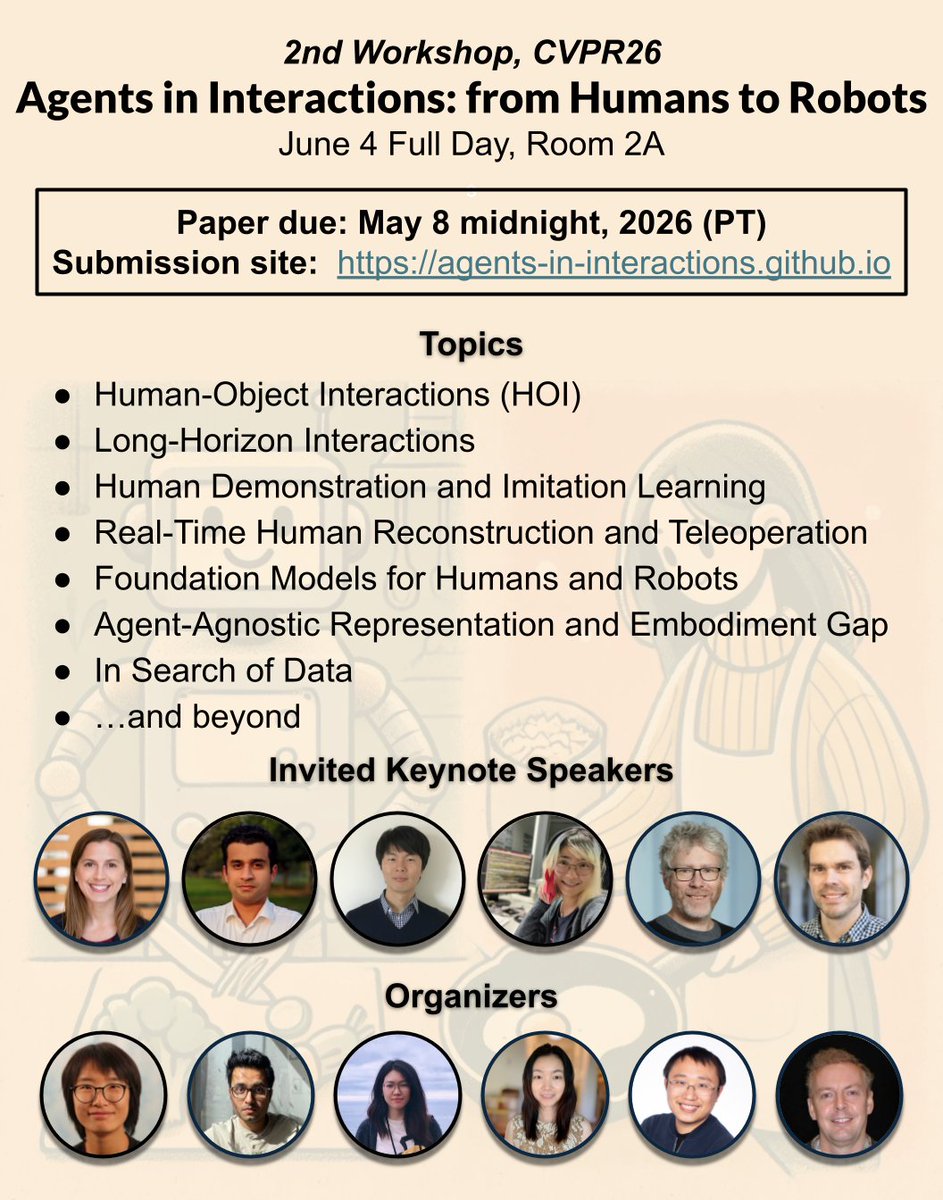
We're thrilled to organize the 2nd Workshop on Agents in Interactions: From Humans to Robots! Submit your best work by May 8 and join us at CVPR in Denver to discuss research in this exciting space w/ @yufei_ye @DandanShan_ @jiaman01 @xiaolonw Alan Yuille
1
9
35
5,092
Max Fu reposted
My students and I are very excited about the potential of agentic coding for robotics. Looking fwd to presenting new results in plenary talk on Tues 2 June, the first day of @IEEEorg #ICRA2026 in Vienna: invt.io/1txbkmc73b7
5
13
123
46,566
Max Fu reposted
Robotics lab, ca. 2026 ember-lab.eecs.berkeley.edu
11
9
265
13,549