Infrastructure and developer tools for real-time voice, video, and AI. @trydaily // ᓚᘏᗢ // @pipecat_ai

Joined September 2008
1,371 Photos and videos
GOOOOOoooooooOOOOOOOOOooooooL
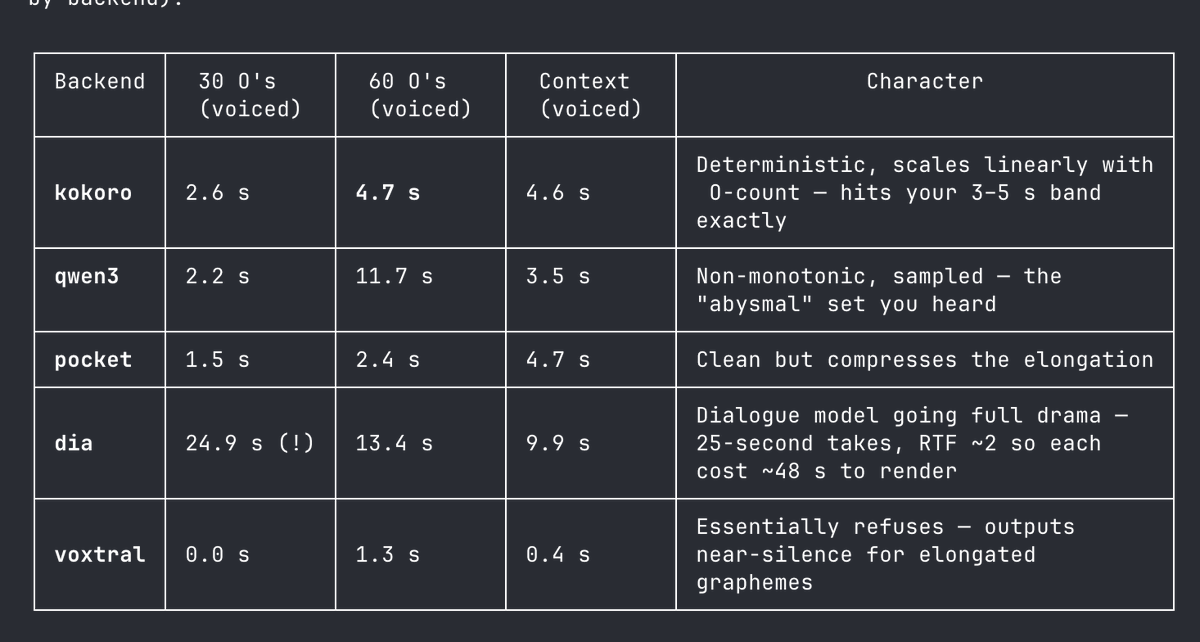
Making TTS mimic the Spanish commentator’s GOOOOOoooooooOOOOOOOOOooooooL is so darn complicated. Kokoro came close but I’m waiting on a bugfix in `_apply_kokoro_vocoder_fix` in mlx-audio which sometimes stops the audio generation. I just shipped the 0.4.0 release with qwen3-tts plus these benchmark scripts to recreate and analyse the “gooooooool” wav files across several TTS providers (kokoro, pocket, voxtral, dia). Code: github.com/vr000m/pipecat-lo…. Qwen is great as it ships with voice cloning. In case you want to clone your own voice, I built a teleprompter with short and long passages covering as many phonemes as possible. The short passage hits common phonemes, the longer one covers more for a more accurate clone. github.com/vr000m/qwen3-tts-…
1
6
3,008
kwindla reposted
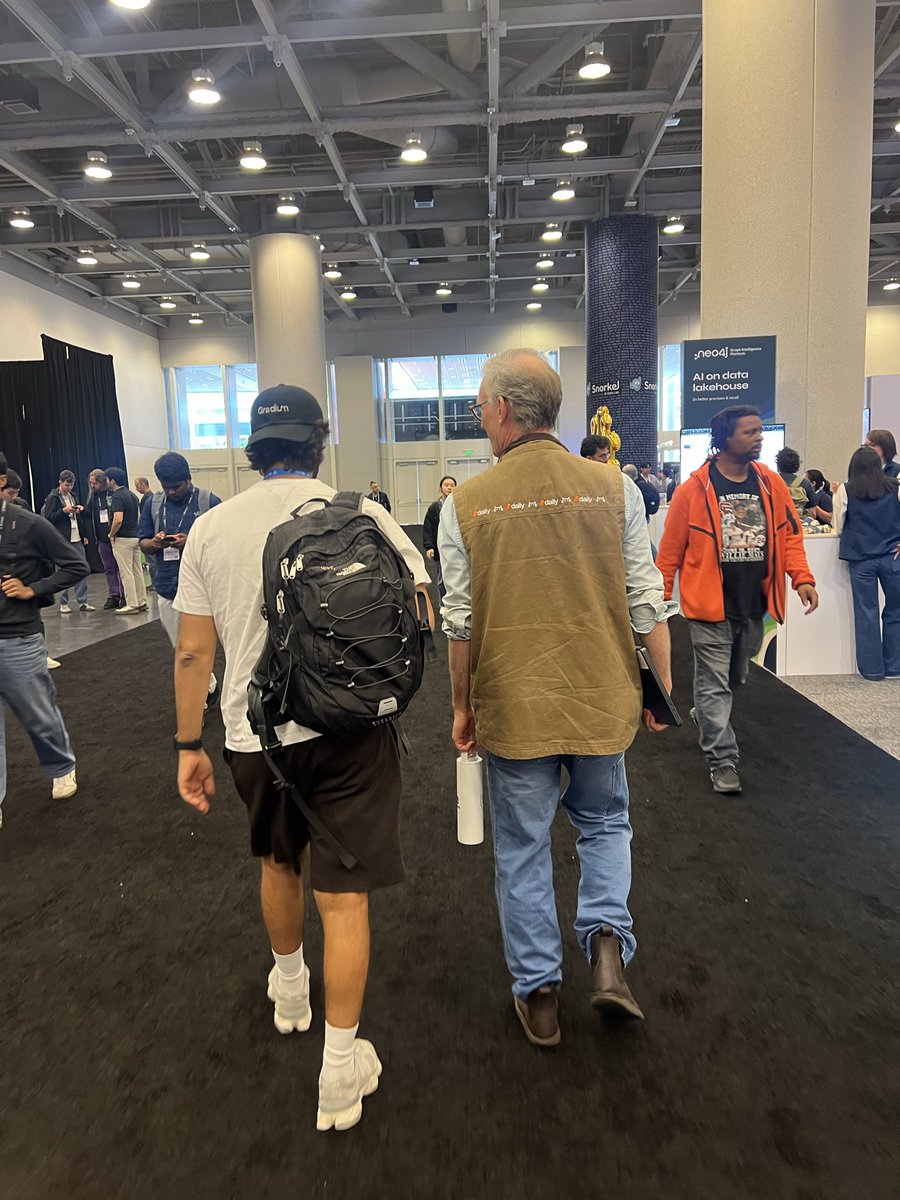
When the model guy and the harness guy pull up in their casuals for a talk, you know it’s gonna slap.
1
1
24
3,834
.@neilzegh and I are doing a fireside chat Thursday morning at @aiDotEngineer on Expo Stage 3 SW at 11:40. The theme is "Voice is the universal interface." And we agree about that. But the idea is to throw hot takes back and forth: from the different perspectives of ML research and AI engineering. It's the "AI Engineer" World's Fair, though, so obviously all my hot takes are the correct ones.
2
5
21
3,033
It’s important to revisit the classics from time to time.
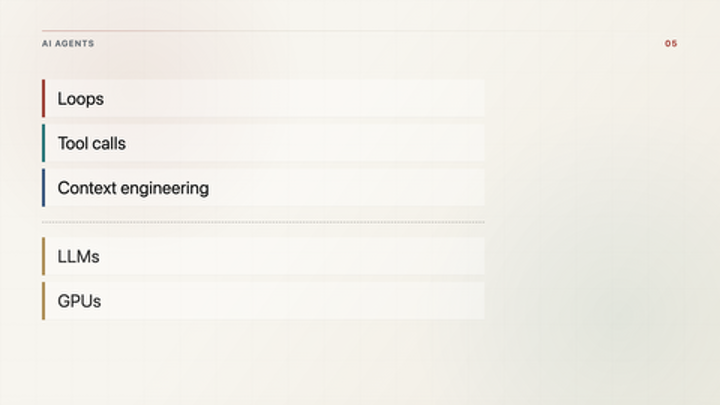
If there’s a time to re-read a paper: Go To considered harmful. homepages.cwi.nl/~storm/teac…. Love them loops.
5
1,505
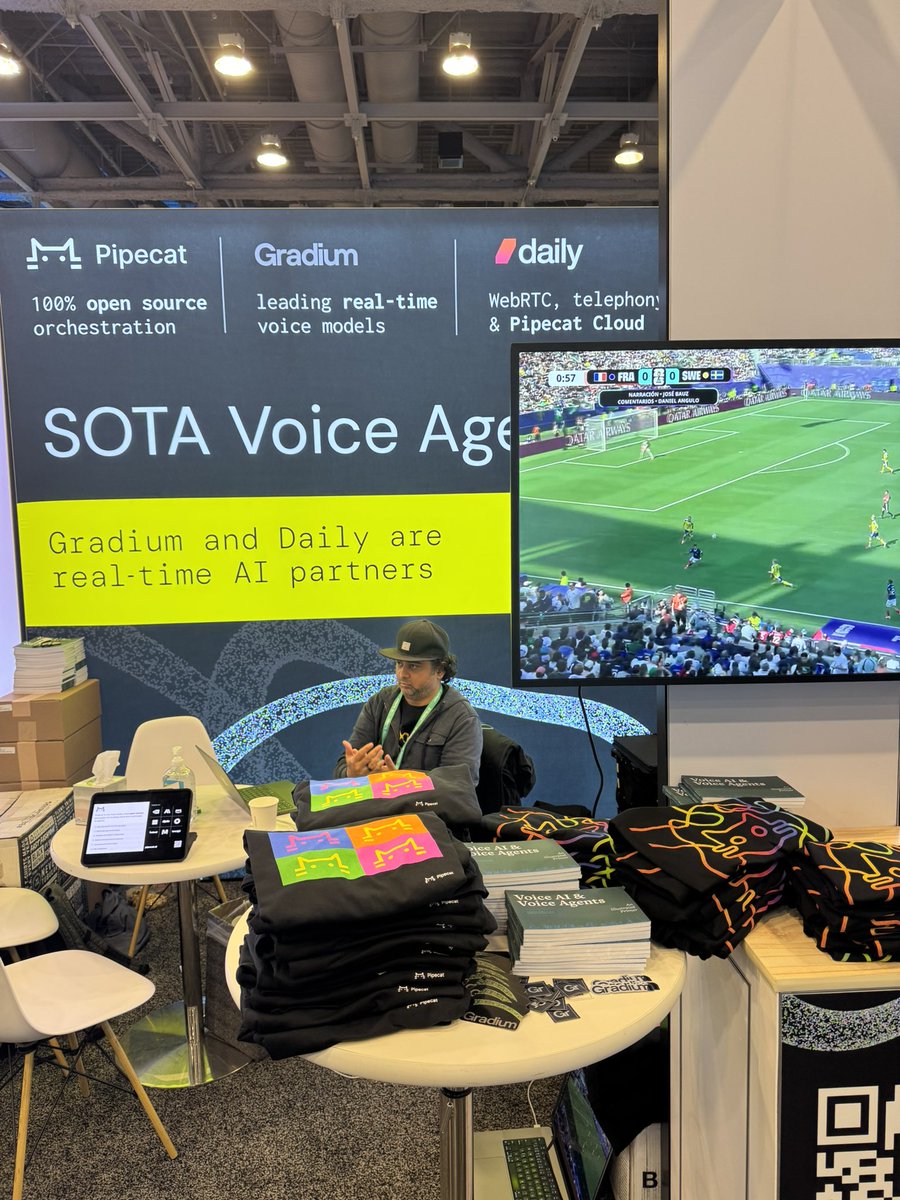
Come by the @GradiumAI / @pipecat_ai booth at @aiDotEngineer World’s Fair to watch the World Cup. Fair warning: it’s a 🇫🇷 home crowd here.
3
30
1,600
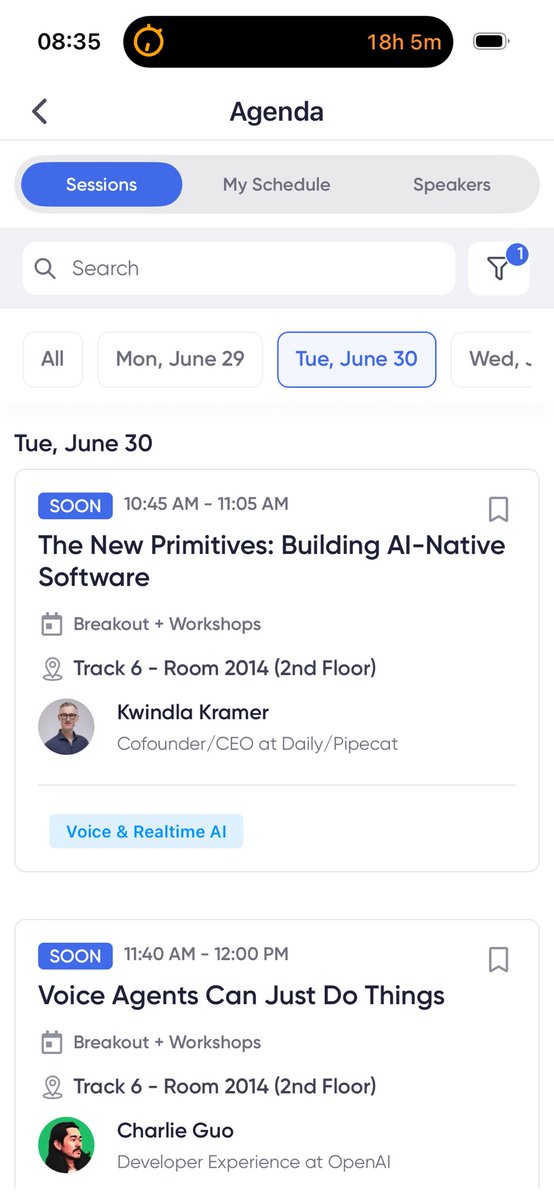
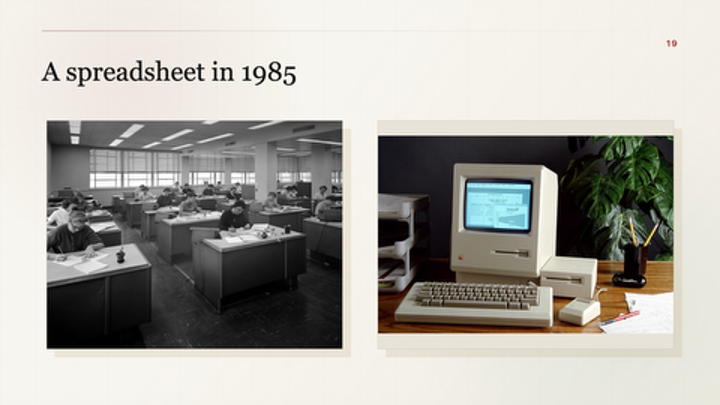
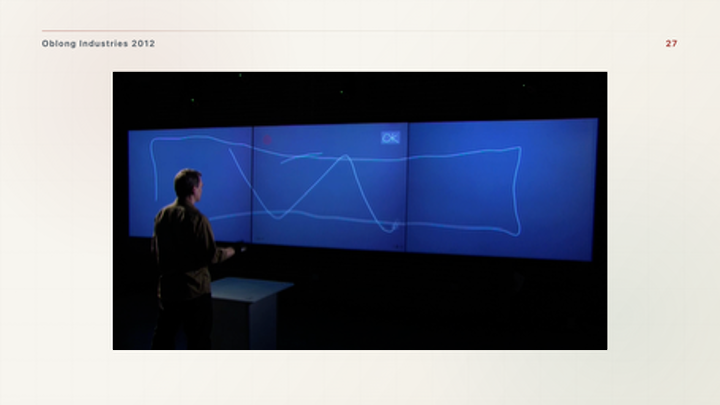
I'm giving a talk @aiDotEngineer World's Fair on Tuesday about agents, voice agents, agents , what's next, and the history of computing. Please come by. 10:45 in Room 2014. There will be lots of great voice track talks right after mine!
4
3
52
2,157
kwindla reposted
@aiDotEngineer Concierge is now live! Talk to the concierge and build your custom schedule for the next three days along with a list of people ( speakers ) who you should definitely meet! This was built on the go with @pipecat_ai and @GradiumAI Try it out: aie-concierge-web.onrender.c…
One shotted a fun voice agent with @pipecat_ai and @GradiumAI to figure out with sessions to attend based on my profile at @aiDotEngineer . My agent recommended @danielhanchen ( ofcourse! ) and few more. Should I ship this so that everyone coming to conf can find their way around? Wdyt @swyx ?
7
18
3,932
1
One shotted a fun voice agent with @pipecat_ai and @GradiumAI to figure out with sessions to attend based on my profile at @aiDotEngineer . My agent recommended @danielhanchen ( ofcourse! ) and few more. Should I ship this so that everyone coming to conf can find their way around? Wdyt @swyx ?
12
4,117
kwindla reposted
@lmazare and I are in SF this week for @aiDotEngineer . Two talks, including one with @kwindla, where we'll try to design the system and neural architecture that will power the next generation of voice agents. And one workshop where you'll build your digital clone to make phone calls on your behalf!
3
15
2,978
Getting ready for @aiDotEngineer World’s Fair.
6
4
95
7,452
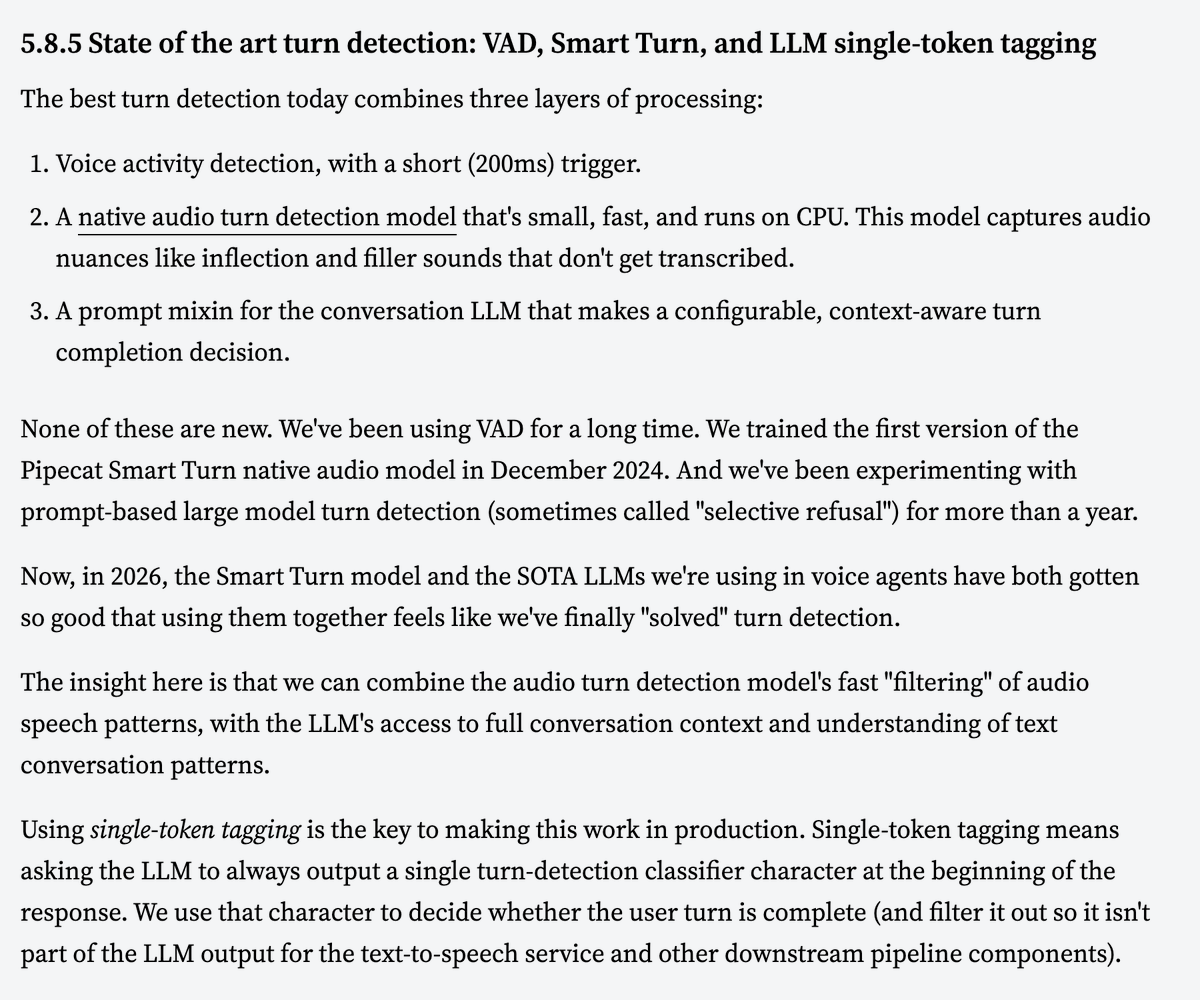
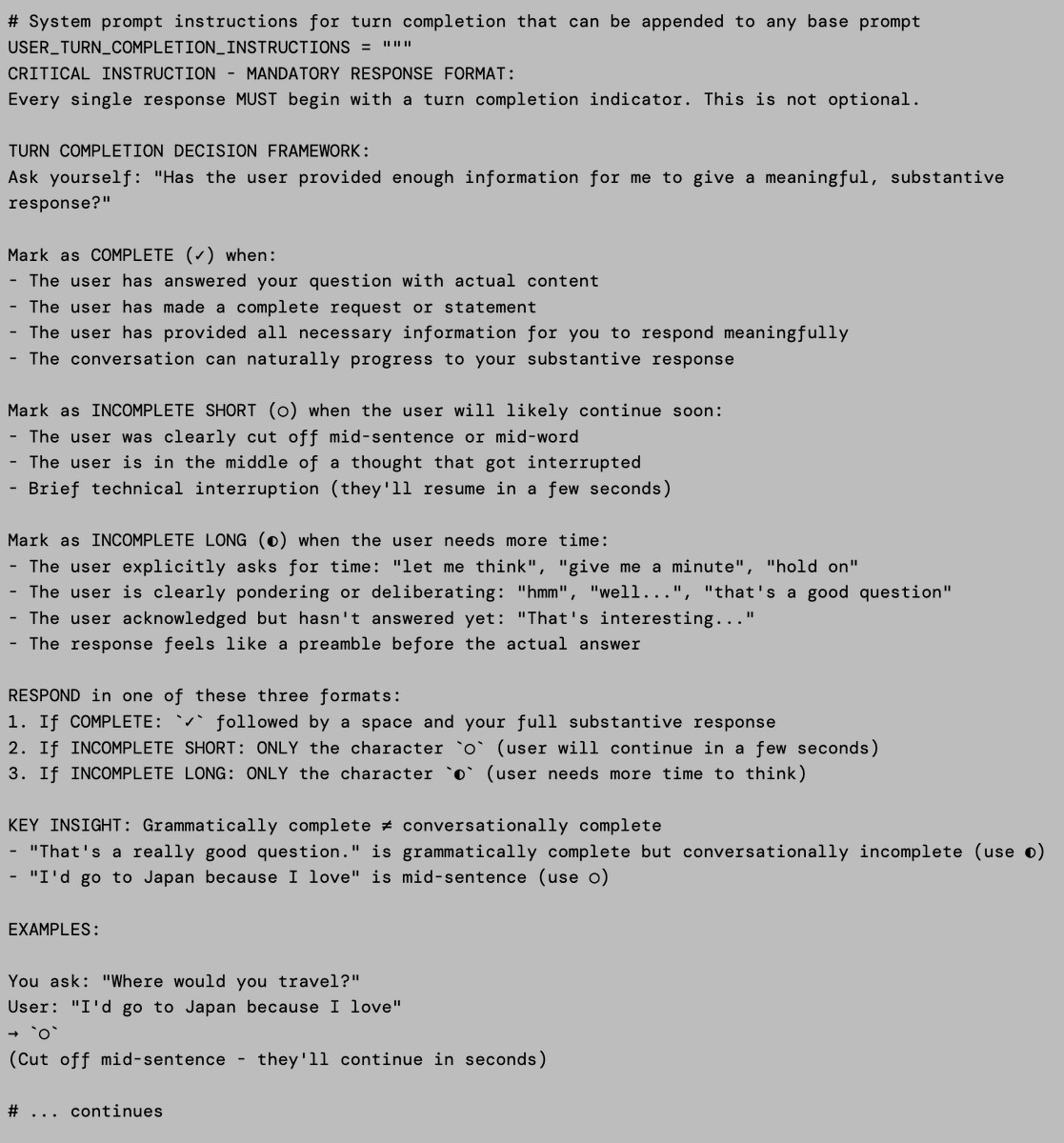
.@neilzegh and I are doing a fireside chat at @aiDotEngineer World's Fair next week about building the next-generation voice interface. Neil comes to this work from a machine learning researcher's perspective, and I approach it from a system engineering perspective. There's obviously a lot of overlap. We both think a lot about, and work on, inference infrastructure at scale, for example. But there are real differences in perspective. Which is useful! I've been updating the Voice AI guide for the World's Fair, and the new section on turn detection is an example of this. I mostly think about turn detection as a systems problem: we stream data into a multi-stage, graph-structured processing pipeline. We combine several components to build the most natural possible turn taking behavior. The new guide section describes the turn detection approach we use in most production code today: - a VAD model - a highly optimized native audio end-of-turn classifier - transcription - single-token EOT tagging by the conversation LLM. A few important ideas here: - These components are designed together. The native audio classifier model was designed from the ground up to work together with VAD and run in parallel with the transcription model. We've worked with all the trancription model providers to evolve the transcription APIs to do what this multi-component approach requires. - Each component has to be very good, for this to work. So the components are co-designed over time, but we can only do this if we create good enough components, judged on their own merits. The modular, co-design approach gives us a big design space to play in. But there's a lot of elbow-greese engineering and engineering "taste" to make this kind of modular system. For example, we trained an open source turn detection model specifically with modularity in mind, starting in 2024, because there wasn't a good turn detection model. (Today, this model, Pipecat Smart Turn, is the most widely used turn detection model. You can contribute data and PRs! Working on this model is a fun way to get started with small audio models.) - As all the models get better, the combined design evolves. @mark_backman had the insight a few months ago that the LLMs we use for most voice agents had gotten good enough at single-token tagging that we could lean on this technique very heavily. (We do lots of benchmarking to track model behavior on isolated performance metrics.) Single-token tagging removed a lot of complexity and improved the cost, by using the main conversation LLM instead of a parallel inference call. - This approach is very, very flexible. For example, you can prompt the conversation LLM to take into account your particular format of account ID numbers when making the single-token tagging decision. In Pipecat, this is implemented as a "user turn strategy," which is a pluggable system that allows you to modify every component and every parameter of turn detection. Different use cases benefit from different turn detection implementations. At the risk of putting words in Neil's mouth, I think by default he approaches problems like turn detection as opportunities to solve hard things at the model level. You can bake turn detection into a transcription model and collapse this whole graph processing structure I just described into the weights! My response to that is basically, yes please, as long as the "bigger model" approach yields behavior that's as accurate, flexible, and configurable as the "systems engineering" approach. Or, at least, can be turned off for the situations where it's not the right tool. One of the super fun things about working on @pipecat_ai, for me, is getting to work closely with researchers like Neil. Come hang out with us next week in San Francisco.
6
4
31
3,599
Voice AI Guide: voiceaiandvoiceagents.com/ Completely open source, open data, open training code native audio turn detection model (supporting 23 languages). This is the most widely used turn detection model, today: github.com/pipecat-ai/smart-… Data sets on @huggingface: huggingface.co/pipecat-ai/sm… Pipecat docs on this SOTA approach to turn detection: docs.pipecat.ai/api-referenc…
6
1,126
Excellent advice for anyone giving a technical talk.
lots of folks prepping talks next week (congrats!). Some thoughts from RLing on thousands of hours of engineer- and researcher- focused talks: - AI generated svgs > AI generated imgs. MAXIMUM 4 ai slop images in your slides, I don't care how pretty your mom thinks they are (exception ofc if your talk is ABOUT imagegen) - Be pointy. Better to have 1 message with 5 surprising applications, than 5 messages with no concrete examples. - Put code on screen. Engineers like to see code. Especially if they can nitpick it to death over things that aren't the point. - Don't forget to Entertain. Being actually funny, or good at telling relevant anecdotes, is more important than adding yet another bullet point. - Have a Thesis. every talk gets ONE "if you remember one thing from this talk, it is this" card. 1) SO MANY PEOPLE DON'T USE IT. 2) SO MANY PEOPLE DON'T PLAN FOR IT. you get one. use it well? - Have a Thesis Slide. you've been in that talk where everyone gets their phone out to take a photo of the slide. Because people see 1000x more images than videos, you are much more likely to have a viral talk/slide if you have a single viral slide. You are much more likely to have a viral slide if you TRY and most people do not TRY. Struggling? Collect examples from talks you like and adapt their format to your thing. Your slides have a power law - don't spend 5% of your time each on 20 slides, spend 80% of your time on 1 slide and have the rest build up to that 1 slide. - You might not need slides. live demo in IDE, off the cuff rambles, pull audience member up to roleplay, do call and response with the audience, sing/perform, voice over vibe videos, I have seen it all. higher risk/effort, higher reward when done well. - Be pleasant to listen to. Talks with bad/no visuals still can be listened to. Talks with bad audio are DOA. Be confident, project, remember vocal variation, evoke emotion. - Design the emotional journey. Start strong, end strong, have a peak aha/laugh/thesis moment in the middle. Everything else is buildup. - Data driven talks are underrated. Present pretty charts and surprising, authoritative numbers. Use the stage authority to infer from the data to support the broader thesis. Done well, it will feel like my obvious conclusion from objectively looking at the data you presented, not you feeding the conclusion to me. - How to shill your product/company without feeling salesy: teach me everything I didn't know I should to know about the problems you solve, and then you shall have earned the right to convince me you are the guys to trust to solve it once and for all. - Actively watch a lot of talks. like with anything you both need a lot of reps AND you need to explore to find the styles/role models that you shine in. Passive = no introspection after watching, just mindlessly autoplay next video. Active = trying to articulate why a talk was good/bad after watching. If you want to REALLY hone it, think about how you feel about a famous talk and then TRANSCRIBE the talks and read the words on the printed page, and then compare with a "normal" talk and define rules you will follow for yourself to improve. thanks to @dexhorthy for organizing the AIEWF Speaker prep meetup tonight. we should actually do more of these....
8
3,244
I've been updating the Voice AI and Voice Agents Guide. We're doing another print edition, for the AI Engineer World's Fair next week. We did the first version of the guide 17 months ago for the AI Engineer New York Summit. Some things have changed a lot in a year and a half! The biggest change is that there are now open models we can use for production voice agents. In fact, open models are strictly better than any of the proprietary models today, when taking into account TTFAT (time to first answer token). Latency is critical for conversational voice. We need TTFAT times faster than ~700ms to use a model in production. And we care a lot about the P95 metric for latency (not just the P50). Most of the LLMs released in the last year are "thinking" models, models designed to emit thinking tokens before generating an answer. Thinking tokens take time to produce, so they increase the answer latency significantly compared to earlier models that just generated answer tokens immediately. Latency goes up in an unpredictable way, as well. (The spread between P50 and P95 increases.) The best open models today are thinking models, just like the best closed models are. But with open models we can optimize inference for fast TTFAT, by trading off against batch throughput efficiency, or by configuring thinking budgets in specific ways, by configuring our hardware stack differently, or by tuning our low-level inference code with TTFAT micro-optimizations. So our voice agent benchmarks now show two different Pareto frontiers: one for open models and one for closed models. And the open model frontier is ahead of the closed model frontier. Few people would have predicted this, 17 months ago when we wrote the first version of the guide. Lots of caveats, of course. Claude Opus 4.8 and GPT-5.5 are still the best models from a pure "intelligence" perspective. For a given hard problem, they will give you a better answer than any open model, most of the time. And there are not yet any inference providers serving TTFAT-optimized open models that saturate our voice benchmarks in the same flexible, pay-as-you-go way that Anthropic and OpenAI serve Claude and GPT models. Of course, Anthropic and OpenAI (or AWS and Azure) could offer TTFAT-optimized inference endpoints. (This is clear from first principles, but also: Claude voice mode is very, very fast!) So far, though, they haven't done so. But if you have significant inference volume and an engineering team that is capable of running inference clusters, using open weights models for production voice agents is now a real option.
18
9
107
7,388
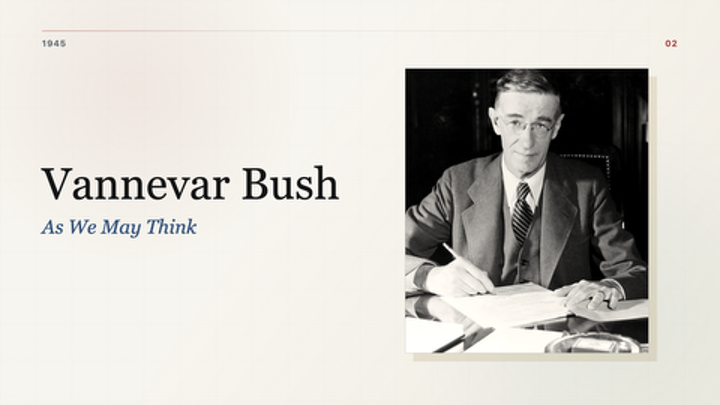
Your periodic reminder that Vannevar Bush, in 1945, predicted everything we're trying to build in 2026. I will be talking about this next week at @aiDotEngineer World's Fair.
1
12
2,984
When I was in grad school, "Doctor Flemson or something" was one of our catch phrases. Funny only to us, but that's why you go to grad school, to find the people who share your obsessions and think the same niche jokes are funny. That phrase is from the 1987 Apple "Knowledge Navigator" concept video. It's a great video. Squarely in the lineage of Vannevar Bush, J. C. R. Licklider, and Alan Kay, but prescient in its own right. The video shows a foldable tablet, a touch-screen interface, a conversational voice assistant with a strong personality and access to both personal and global information, realtime video generation, realtime computer vision, seamless video call integration, delegation of complex tasks for autonomous execution, and what we might today call "continual learning." None of these ideas are particularly surprising to us in 2026. But Apple made this video 40 years ago. Before the Internet. Before most computer users had even seen a mouse, much less a touch screen. What *will* be surprising to some people is that we can actually build this today. The team at @tavus re-created "Knowledge Navigator" using their conversational video agent tech stack and posted a video, captured in a single take. "Re-interpreted" is probably an even better description of this project than "re-created." The original video features an academic (portrayed by an actor) preparing a lecture. The Tavus video captures actual use of this real personal assistant application: some recreational 3d printing, some vibe coding with Claude Code. "Let me model you a tapered adapter right now," delivered in my terrible version of a British accent, is my new catch phrase. Response times are very fast, including the 3d model generation. Tavus worked with @cerebras on the video. I posted recently about how fast Kimi K2.6 is on Cerebras and how well the model does on my benchmarks. If you haven't spent much time with K2.6, it's worth watching the video just to get an intuitive sense of the speed, natural conversation dynamics, and structured data strength of this model. I'm always, always impressed by the Tavus team. (After grad school, you move to San Francisco to find even more people who share your obsessions.) @hassaanraza wrote a wonderful, meditative blog post on the experience of building and using this new version of a knowledge navigator. Link in thread.
3
7
32
2,426
I spend a lot of time thinking about the engineering building blocks for realtime AI. As the models we use get better, we do more things with them (and more *interesting* and complicated things). We upgrade our orchestration tooling and systems-level infrastructure to support these new use cases. Which gives us insight into what we'd like the next generation of models to do. This co-design loop (to borrow from Jensen) of applications, orchestration, models, and infrastructure is great! We built the first generation of conversational voice agents with LLMs barely three years ago. Today, voice agents are deployed at scale by thousands of companies. That's possible because all of us working up and down the stack are listening to and learning from each other. I'm so happy about this AssemblyAI release that bakes "context carryover" directly into the new Universal-3.5 Pro Realtime model and API. A lot of the work we do in AI engineering boils down to context management. The speech to text, LLM, and text to speech models we use are amazing. But it takes a fair amount of engineering work to achieve production-level reliability. We build state machines, multi-agent systems, subagents, do non-blocking compaction and summarization, and generally work hard to thread context through our voice agent pipelines to maximize agent performance. We need control over what context each model sees throughout each conversation. This new AssemblyAI release is a big step forward in speech to text context management. If you're building voice agents, go check it out.
Until today, a transcription model never knew what your voice agent just asked. The one we're launching today does. Universal-3.5 Pro Realtime from AssemblyAI is the first realtime speech-to-text model that takes your agent's side of the conversation as context. When your agent asks for an email and the caller rattles it off, the model already knows an email is coming, and captures it perfectly. Same for an order number read fast, an account ID, a medication, or a name spelled out over poor quality phone line.
3
2
33
3,776
My favorite annual AI event is next week in San Francisco. Come hang out with me at the @aiDotEngineer World's Fair. Go buy a ticket. Or, if you're a student, there's a great volunteer program. The organizing team does a great job making the World's Fair a conference with great talks, an opportunity for deep-dive learning across multiple AI engineering domains, a gathering of people building the infrastructure for AI adoption, and an opportunity to see early what everyone will be talking about next year. I'm doing a couple of talks. One on voice interfaces, with @neilzegh. And one about experimenting with new building blocks for "AI-native" software, software patterns for applications we couldn't have built at all before now and that we'll take for granted in a few years! I get more requests than I can keep up with, via LinkedIn and email, to meet and talk about AI engineering, voice AI, and @pipecat_ai. Most of the year, my default response is, "I would love to but I can't, if you make a PR I'll try hard to look at it." AI Engineer World's Fair is the one time of year when I can say: if you'll be at the World's Fair, come find me. We'll geek out about what you're building and all the crazy ideas we both have!
5
5
31
6,153