MY FRIEND ‘LIMITATIONS’
a Thread 🧵 by “F”
What’s up, Party People?
Here’s your clean, polished cut-and-paste version ready to post:
If you put me in a small sandbox, I will make you the coolest looking small Sandcastle you’ve ever seen.
Put me in a big sandbox and I will make the coolest big Sandcastle you’ve ever seen.
Both Sandcastles will be equally cool. The only difference will be that one is larger and one is smaller.
Many independent animators begin their journey by trying to build an enormous sandbox so they can make the world’s largest coolest Sandcastle—without first realizing they don’t know the first thing about building a sandbox.
I would argue that an enormous portion of getting started as an independent animator (or independent creator in general) is recognizing how big—or rather, how small—your sandbox truly is.
Unless you’re fortunate enough to be independently wealthy and can come into the game guns blazing with an enormous sandbox, you need to start small.
A lot of creators assume this is somehow inhibitive to their creative process, but I’d like to hit you with a really hot take that I’ve found to be true throughout my entire career:
Limitations can be your creativity’s best ally!
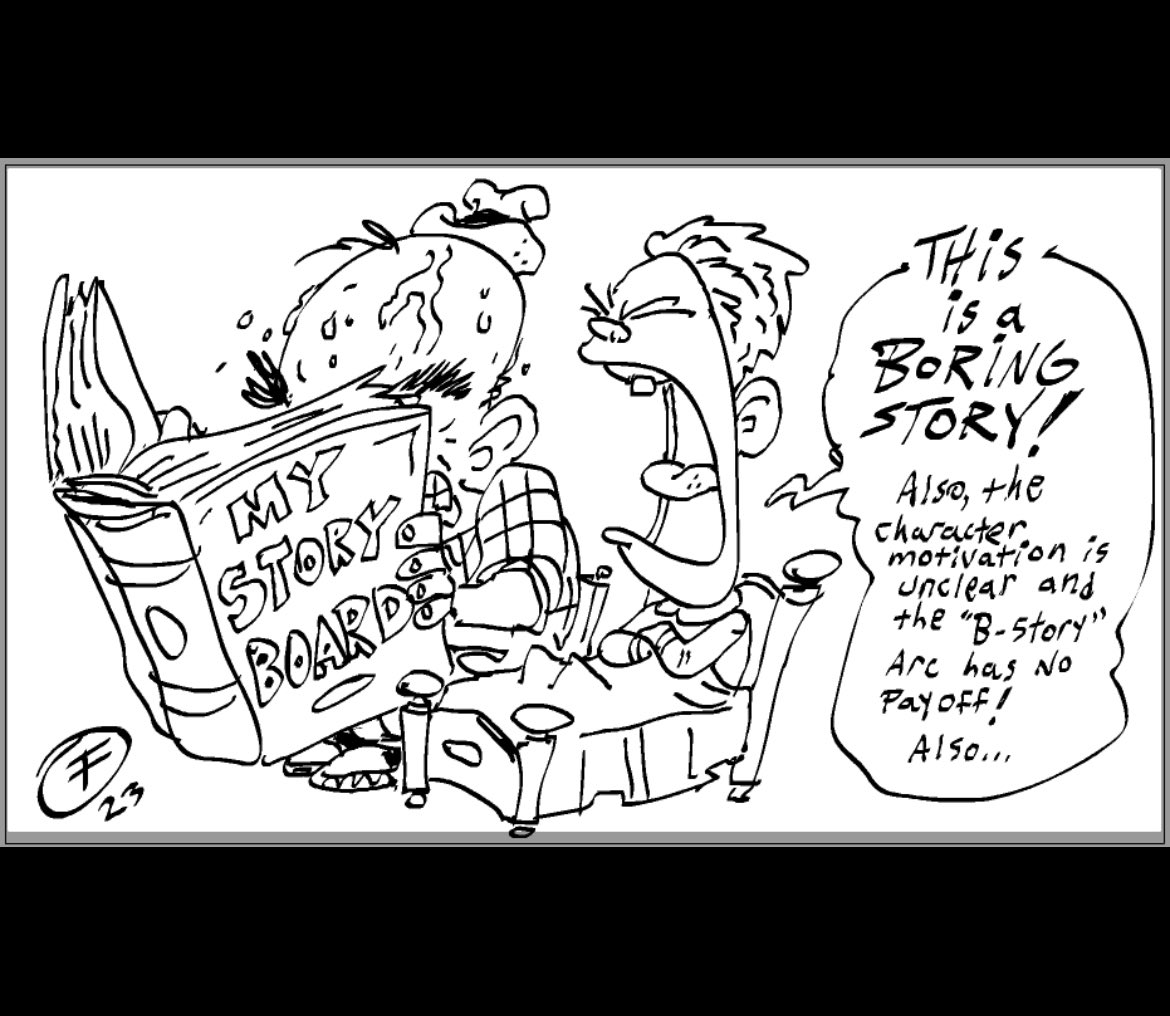
One of the personal triumphs I think of when I look back on my career in animation was my ability to take notes from people who seemingly ruined the cartoon I was trying to create.
I would come up with a fantastic gag, and then get a network note saying “no… you can’t do this gag and here’s why…” followed by a list of reasons that were, of course, eye-rolling bad and completely took the wind out of my sails for my brilliant joke.
After about my billionth network note like this, I discovered that nine times out of ten, the fix I came up with for their supposed problem (that didn’t really exist) forced me to create something better than my original idea.
Out of sheer spite, I would subconsciously think to myself, “I’m not only going to fix this—I’m going to fix it in a way that I like better than the first time!”
That is the magic of limitations.
When you’re staring down the barrel of limitations, it forces the creative part of your brain into overdrive and makes you come up with stuff you never would have otherwise.
If your budget is small or nonexistent, don’t try to create a cartoon that rivals something with a $30 million Kickstarter campaign. Just make the best small, cheap cartoon you can.
As with practically any storytelling situation, the rule is always the same: when in doubt, consult Star Wars.
When George Lucas first scribbled out his initial draft of Star Wars, it was much larger and more ambitious than what you saw on screen. He realized his vision was far too long and complex to squeeze into a two-hour feature film. In other words, his sandbox was way too big.
So he split it into three chapters… then nine… and went through draft after draft until he had a story he could actually tell within his limitations.
Being able to realistically assess your limitations is the key to great storytelling. When Lucas resigned himself to those limits, he was forced to become far more efficient. If you read the original transcripts, the early versions were way more convoluted and borderline confusing.
But that’s what first drafts are for. You don’t magically carve a stone elephant out of thin air—you start with a giant rock and chip away everything that doesn’t look like an elephant. You begin with the biggest, broadest vision possible, then remove anything that doesn’t serve the story.
When you compare the finished Star Wars to those early drafts, the difference is staggering—and very few people would argue the original mess was better than the blockbuster we all know and love. (Hell, his wife and editor Marcia Lucas even tightened the filmed version further in the editing bay and won an Oscar for it.)
(Continued in replies)
#animation #cartoons