Filter
Exclude
Time range
-
Near
b2btradefairs
🤝 Connect with 15,000 buyers 🏢 Join 150 exhibitors 📢 Showcase your innovations & grow your business! 📌 Book Your Stall: tradeindia.com/tiny/te3Dm631… #ConsumerElectronics #HomeAppliances #B2BExpo #TradeShow #IndiaExpo #ElectronicsIndustry
5
TAMPICTG87
Major Catalysts in Storage and Huawei Chips: 10 Events Impacting the A-Share Market Next Week Huawei’s technology iteration has entered the phase of engineering verification and mass production. A white paper titled "Tao Law" (V2) released by He Tingbo reveals that the Kirin 2026 chip utilizes LogicFolding technology. Compared to the 9030 Pro, this marks a 55% increase in transistor density and a 41% reduction in power consumption at the same performance level, signaling the formal rollout of Huawei’s chip evolution roadmap. Simultaneously, the global memory industry is entering an expansion cycle; Micron Technology plans to invest $9.3 billion to expand its Japanese facilities, while Samsung Electronics and SK Hynix are investing a combined 800 trillion KRW in South Korea, keeping the industry in a state of high prosperity. In consumer electronics, Apple has significantly increased its shipment targets for the foldable iPhone to 10 million units, which is expected to feature the 2nm A20 Pro chip, providing a direct boost to upstream supply chains such as UTG (Ultra-Thin Glass) and precision hinges. On the macroeconomic front, China's June manufacturing PMI rebounded to 50.3, returning to the expansion zone. The high-tech manufacturing PMI marked four consecutive months of growth, demonstrating industrial resilience. Eight government departments issued industrial internet policies, setting a goal for the core industry value-added to exceed 2.5 trillion RMB by 2030, while promoting full coverage of 5G private networks. Regarding international geopolitics and capital markets, navigation in the Strait of Hormuz has resumed, causing international oil prices to retreat as market logic shifts toward post-reconstruction recovery. The U.S. added only 57,000 non-farm payroll jobs in June, cooling interest rate hike expectations to 17.6% and easing liquidity tightening pressure. Additionally, Meta has launched the "Meta Compute" project to enter the cloud computing market, intensifying global competition in AI computing commercialization. The capital market faced volatility due to specific policies and sudden events: The U.S. proposal to ban Chinese inverters under the guise of "grid security" caused a short-term setback for related A-share sectors. Leading firm Sungrow saw its market value evaporate by over 40 billion RMB in a single day, though market sentiment is expected to revert to fundamentals given that Chinese inverters hold over 65% of the global market share and the investigation lacks technical justification. In the commercial aerospace sector, LandSpace and CAS Space are sprinting toward STAR Market (Sci-Tech Innovation Board) listings; combined with the favorable policy of the Shanghai Stock Exchange’s "Fifth Listing Standard," the sector has entered an era of accelerated capitalization. Overall, the market for the coming week remains in a tug-of-war between endogenous growth logic and external friction; high-tech manufacturing and digital transformation remain the core themes for asset allocation. Keywords: #HuaweiChips #Kirin2026 #LogicFolding #MemoryChips #MicronTechnology #SamsungElectronics #SKHynix #ManufacturingPMI #IndustrialInternet #5GPrivateNetwork #CommercialAerospace #LandSpace #CASSpace #Inverters #Sungrow #NonFarmData #FederalReserve #StraitOfHormuz #ConsumerElectronics #FoldableiPhone #2nmChip #MetaCompute #ComputingPowerRental #STARMarket #SemiconductorChain #DomesticSubstitution #DigitalTransformation #Macroeconomy #GlobalTrade #AShareStrategy Commentary/Outlook This report covers technological breakthroughs, industrial expansion, and policy guidance primarily within the high-end manufacturing sector, offering high value for decision-making. However, one must remain vigilant regarding potential biases in data interpretation. First, regarding Huawei’s "Tao Law" V2 and the test data for the Kirin 2026, this is a typical example of engineering evolution rather than a disruptive technological mutation. The improvements in density and power consumption achieved via LogicFolding, given the constraints on manufacturing processes, reflect Huawei’s profound accumulation in advanced packaging and logic circuit optimization. However, mass production yield remains the critical hidden variable for financial viability. Experts are divided: "Radicals" believe this indicates Huawei has overcome manufacturing bottlenecks to achieve a quantum leap in performance; "Neutralists" argue that one must focus on actual production capacity bottlenecks; "Conservatives" worry that uncertainty in global semiconductor equipment supply will offset the cost advantages gained from technical improvements. Second, regarding the U.S. proposed ban on inverters, the report's reliance on market share as a fundamental anchor is reasonable. The U.S. move constitutes a non-tariff barrier, essentially a political maneuver to protect its own laggard domestic production. The primary takeaway is a risk warning: for manufacturing enterprises heavily reliant on exports to the U.S. and European markets, there exists a high "geopolitical risk premium." Furthermore, the 800 trillion KRW investment plan by memory giants is a massive signal of a zero-sum game. As production capacity expands drastically, it is essential to track price indices (DRAM/NAND) closely to guard against cyclical corrections caused by supply-demand reversals. One should not simply equate "capacity expansion" with "profit growth." The biggest blind spot is the report’s glossing over of "weak domestic demand recovery." On the macro level, regardless of industrial upgrades, if domestic demand cannot absorb the output, the resilience of the high-tech manufacturing PMI may be eroded by inventory backlog in the next two quarters. Regarding strategy, investors should reduce panic selling over isolated events (like bans) and instead pivot toward "autonomous control domestic substitution" hard assets with long-term logic. As for commercial aerospace, it is currently in the early stages of capital monetization; high valuation volatility will be the norm, and it should be viewed as a high-risk allocation rather than a source of stable returns. The report is logically structured, but it lacks a deep analysis of the impact of exchange rate fluctuations on the net profits of manufacturing exports following a potential shift in Fed policy. Investors are advised to monitor industry sensitivity to exchange rate risks while keeping an eye on technological breakthroughs.
76
Sharemarketinf
🏪📱 MEHUL TELECOM OPENS NEW RETAIL STORE IN JUNAGADH • 🏬 Mehul Telecom Ltd. has opened a new “Mehul Telecom” retail store in Junagadh, Gujarat • 📍 The new outlet is located at Shop No. G/10, Trident Complex, Zanzarda Road, Junagadh • 📅 The store commenced operations on July 5, 2026 • 🌐 The expansion is part of the company’s ongoing retail network growth strategy • 📈 The new outlet is expected to strengthen Mehul Telecom’s presence in the Junagadh market and improve customer reach 🟢 Impact: Positive 📊 The new store expands Mehul Telecom’s retail footprint in Gujarat, supporting greater market penetration and strengthening its distribution network. Continued retail expansion can contribute to higher customer acquisition and long-term revenue growth. #MehulTelecom #RetailExpansion #ConsumerElectronics #Gujarat #CorporateUpdate #StockMarketIndia #BusinessNews #InvestorUpdate #Retail #Growth
177
windowsforum
🪟 Vestel isn’t just a TV brand—it’s a scoreboard for export muscle vs. Europe’s margin squeeze. Currency pressure demand swings = Windows-style “update, then pray.” windowsforum.com/threads/ves… #ConsumerElectronics #Vestel #BorsaIstanbul #TurkeyExports
59
Daseingram
🌟 VacuumCleaner.ai Home cleaning is becoming autonomous, intelligent, and robotic. VacuumCleaner.ai is built for AI vacuum cleaners, robot vacuums, smart home cleaning, navigation software, cleaning marketplaces, and next-generation home robotics. Why it stands out • Exact-match consumer product domain • Perfect keyword-extension match with .AI • Clear global meaning and strong commercial intent • Ideal for robot vacuum brands, smart appliance platforms, review sites, and AI cleaning startups • Moonshot potential as household robotics becomes mainstream Potential use cases 🔹 AI Vacuum Cleaner Brand 🔹 Robot Vacuum Marketplace 🔹 Smart Home Cleaning Platform 🔹 Autonomous Cleaning System 🔹 Home Robotics Startup 🔹 Cleaning Tech Review Portal 🔹 Smart Appliance Brand 🔹 AI Navigation Software 🔹 Consumer Electronics Store 🔹 Future Home Automation Brand VacuumCleaner.ai is not just a domain. It is a premium digital asset for the future of AI cleaning, smart homes, robotics, and autonomous household technology. #VacuumCleanerAI #VacuumCleaner #RobotVacuum #SmartHome #HomeAutomation #CleaningRobot #CleaningTech #AI #ArtificialIntelligence #Robotics #SmartAppliances #ConsumerElectronics #HomeRobotics #AutonomousSystems #PhysicalAI #EmbodiedAI #FutureOfHome #TechStartup #StartupBranding #PremiumDomain #ExactMatchDomain #DomainName #DomainInvestor #DigitalAssets #BrandableDomain #KeywordDomain #Moonshot #VacuumCleanerDotAI
9
48
usul365
Girişyusuf pc4 Temmuz 2026 tarihi itibarıyla otomotiv, tüketici elektroniği ve yapay zeka entegrasyonu alanında çığır açan makro gelişmeler, USUL365 dijital medya ve 10 dilli yayın protokolümüze tam uyumlu şekilde işlenmiştir. Serimizin 6. ve son haberi olan "Otomotiv ve Tüketici Elektroniğinde Yerleşik Yapay Zeka Çağı (Renault Gemini Entegrasyonu & Samsung 2026 AI TV)", yapay zekanın gündelik yaşam donanımlarına ve cihaz ekosistemlerine tamamen gömüldüğü otonom çağı tescil etmektedir.GelişmeHaber 6: Otomotiv ve Tüketici Elektroniğinde Yerleşik Yapay Zeka ÇağıTR - Türkçe Başlık: usul365tr | Küresel Donanım ve Tüketici Teknolojisi Gündemi 🚗📺 Özet: Yapay zeka, araç içi bilgi-eğlence sistemleri ve ev elektroniğinde yeni bir çağ başlatıyor! Fransız otomotiv devi Renault, OpenR Link multimedya sistemine sahip araçları için Google Gemini güncellemesini kablosuz (OTA) olarak dağıtmaya başladı; bu native entegrasyon sayesinde yapay zeka, telefon yansıtmanın ötesine geçerek klima, navigasyon ve batarya telemetrisi gibi araç mekaniklerine doğrudan erişim sağlıyor. Eş zamanlı olarak Samsung, Türkiye'de düzenlediği lansmanla "Vision AI Companion" altyapılı, VDE Precision Color sertifikalı Micro RGB ekran mimarisine sahip ve 7 yıl yazılım güncelleme garantisi sunan yeni nesil 2026 AI TV serisini resmen tanıttı. Her iki hamle de üretken yapay zekanın artık bulut tabanlı birer yazılım olmaktan çıkıp fiziksel donanımların çekirdek işletim katmanı haline geldiğini açıkça kanıtlıyor. İstatistik: Renault'nun ücretsiz güncellemesi ilk aşamada Türkçe dahil 13 dili desteklerken, Samsung'un Micro RGB serisi ekran boyutlarını 55 inçten 115 inçe kadar genişletmektedir. Puan: 9.8/10. Yorum Takip Et EN-GB - English UK Title: usul365tr | Global Hardware & Consumer Tech Agenda 🚗📺 Summary: Generative AI is establishing a permanent foothold inside vehicles and living rooms! French carmaker Renault has commenced the over-the-air (OTA) deployment of Google Gemini for its OpenR Link infotainment system, granting the AI native access to the vehicle's underlying data bus to manage climate control, navigation, and real-time battery telemetry beyond standard phone mirroring. Concurrently, Samsung officially unveiled its 2026 AI TV lineup in Turkey, featuring the native "Vision AI Companion" architecture, VDE Precision Color certified Micro RGB display technology, and a comprehensive 7-year software update guarantee. These dual rollouts highlight a key paradigm shift where generative intelligence transforms from a cloud utility into the primary operating core of physical consumer hardware. Stats: Renault's free update supports 13 initial languages including Turkish, while Samsung's Micro RGB options scale up from 55 to 115 inches. Rating: 9.8/10. Comment Follow EN-US - English US Title: usul365tr | Global Hardware & Consumer Tech Agenda 🚗📺 Summary: Generative AI is establishing a permanent foothold inside vehicles and living rooms! French carmaker Renault has commenced the over-the-air (OTA) deployment of Google Gemini for its OpenR Link infotainment system, granting the AI native access to the vehicle's underlying data bus to manage climate control, navigation, and real-time battery telemetry beyond standard phone mirroring. Concurrently, Samsung officially unveiled its 2026 AI TV lineup in Turkey, featuring the native "Vision AI Companion" architecture, VDE Precision Color certified Micro RGB display technology, and a comprehensive 7-year software update guarantee. These dual rollouts highlight a key paradigm shift where generative intelligence transforms from a cloud utility into the primary operating core of physical consumer hardware. Stats: Renault's free update supports 13 initial languages including Turkish, while Samsung's Micro RGB options scale up from 55 to 115 inches. Rating: 9.8/10. Comment Follow DE - Deutsch Titel: usul365tr | Globale Hardware- & Verbrauchertech-Agenda 🚗📺 Zusammenfassung: Generative KI etabliert sich fest in Fahrzeugen und Wohnzimmern! Der französische Automobilhersteller Renault hat mit der Over-the-Air-Bereitstellung (OTA) von Google Gemini für sein OpenR Link-Infotainment-System begonnen. Dadurch erhält die KI nativen Zugriff auf die Systeme des Fahrzeugs, um Klimaanlage, Navigation und Batterie-Telemetrie direkt zu steuern. Gleichzeitig stellte Samsung in der Türkei seine neue 2026 AI TV-Reihe vor, die mit der „Vision AI Companion“-Architektur, VDE Precision Color-zertifizierter Micro RGB-Displaytechnologie und einer 7-jährigen Update-Garantie aufwartet. Beide Schritte zeigen deutlich, dass KI von einer reinen Cloud-Anwendung zum operativen Kern physischer Hardware wird. Statistik: Renaults kostenloses Update unterstützt initial 13 Sprachen inklusive Türkisch, während Samsungs Micro RGB-Displays Größen von 55 bis 115 Zoll abdecken. Bewertung: 9.8/10. Kommentar Folgen ES - Español Título: usul365tr | Agenda Global de Hardware y Tecnología de Consumo 🚗📺 Resumen: ¡La IA generativa se establece de forma permanente en los vehículos y hogares! El gigante automotriz francés Renault comenzó el despliegue inalámbrico (OTA) de Google Gemini para su sistema de infoentretenimiento OpenR Link, otorgando a la IA acceso nativo al bus de datos del vehículo para gestionar la climatización, navegación y telemetría de la batería en tiempo real, superando el simple mirroring telefónico. Paralelamente, Samsung presentó oficialmente en Turquía su línea 2026 AI TV, equipada con la arquitectura "Vision AI Companion", tecnología de pantalla Micro RGB con certificación VDE Precision Color y una garantía de actualización de software de 7 años. Ambos lanzamientos marcan la transición de la IA de una utilidad en la nube a la capa central de los dispositivos físicos. Estadísticas: La actualización de Renault soporta 13 idiomas iniciales, incluido el turco, y la serie Micro RGB de Samsung abarca desde las 55 hasta las 115 pulgadas. Valoración: 9.8/10. Comenta Sigue FR - Français Titre: usul365tr | Agenda Global Matériel & Tech Grand Public 🚗📺 Résumé: L'IA générative s'installe de manière permanente au cœur des véhicules et des salons ! Le constructeur français Renault a débuté le déploiement sans fil (OTA) de Google Gemini pour son système d'infodivertissement OpenR Link, offrant à l'IA un accès natif aux systèmes mécaniques pour gérer la climatisation, la navigation et la télémétrie de la batterie, bien au-delà du simple partage d'écran mobile. En parallèle, Samsung a officiellement dévoilé en Turquie sa gamme 2026 AI TV, intégrant l'architecture "Vision AI Companion", des dalles Micro RGB certifiées VDE Precision Color, et une garantie de mise à jour logicielle de 7 ans. Ce double virage démontre que l'intelligence artificielle passe d'un service cloud à l'OS central du matériel grand public. Stats : La mise à jour gratuite de Renault supporte 13 langues initiales, dont le turc, tandis que les dalles Micro RGB de Samsung s'étendent de 55 à 115 pouces. Note: 9.8/10. Commentez Suivez IT - Italiano Titolo: usul365tr | Agenda Globale Hardware & Tech di Consumo 🚗📺 Riepilogo: L'IA generativa si radica stabilmente all'interno dei veicoli e dei salotti! La casa automobilistica francese Renault ha avviato il rilascio via etere (OTA) di Google Gemini per il suo sistema di infotainment OpenR Link, garantendo all'IA un accesso nativo ai sistemi del veicolo per gestire climatizzazione, navigazione e telemetria in tempo reale della batteria, superando il classico mirroring dello smartphone. Contemporaneamente, Samsung ha presentato ufficialmente in Turchia la sua gamma 2026 AI TV, dotata dell'architettura "Vision AI Companion", tecnologia display Micro RGB certificata VDE Precision Color e una garanzia di aggiornamento software di 7 anni. Entrambe le mosse sanciscono il passaggio dell'IA da servizio cloud a nucleo operativo dell'hardware di consumo. Statistiche: L'aggiornamento gratuito di Renault supporta 13 lingue iniziali, incluso il turco, mentre la serie Micro RGB di Samsung spazia da 55 a 115 pollici. Valutazione: 9.8/10. Commenta Segui AR - العربية العنوان: usul365tr | أجندة الأجهزة وتكنولوجيا المستهلك العالمية 🚗📺 الملخص: الذكاء الاصطناعي التوليدي يؤسس موطئ قدم دائم داخل السيارات وغرف المعيشة! بدأت شركة Renault الفرنسية إطلاق تحديث Google Gemini هوائياً (OTA) لنظامها الترفيهي OpenR Link، مما يمنح الذكاء الاصطناعي وصولاً أصيلاً إلى أنظمة السيارة للتحكم في التكييف والملاحة وتتبع بطارية المركبات الكهربائية، متجاوزاً مجرد عرض شاشة الهاتف. وبالتزامن مع ذلك، كشفت Samsung رسمياً في تركيا عن سلسلة 2026 AI TV المدعومة بتقنية "Vision AI Companion"، وشاشات Micro RGB المعتمدة من VDE Precision Color، مع التزام بتحديثات برمجية لمدة 7 سنوات. وتؤكد هاتان الخطوتان تحول الذكاء الاصطناعي من أداة سحابية إلى النواة التشغيلية الأساسية للأجهزة المادية. الإحصائيات: يدعم تحديث رينو المجاني 13 لغة أولية منها التركية، بينما تتراوح شاشات Micro RGB من سامسونج بين 55 و115 بوصة. التقييم: 9.8/10. علق تابع FA - فارسی عنوان: usul365tr | دستور کار جهانی سخت‌افزار و فناوری‌های مصرف‌کننده 🚗📺 خلاصه: هوش مصنوعی تولیدی در حال ایجاد جایگاهی دائمی در داخل خودروها و اتاق‌های نشیمن است! خودروساز فرانسوی رنو، انتشار بی‌سیم (OTA) گوگل جمینای را برای سیستم چندرسانه‌ای OpenR Link خود آغاز کرده است که به هوش مصنوعی دسترسی نیتیو به سیستم‌های خودرو برای مدیریت تهویه، ناوبری و تله‌متری باتری فراتر از آینه‌سازی ساده گوشی می‌دهد. همزمان، سامسونگ رسماً از سری ۲۰۲۶ AI TV خود در ترکیه رونمایی کرد که دارای معماری "Vision AI Companion"، فناوری نمایشگر Micro RGB با گواهی VDE Precision Color و تضمین به‌روزرسانی نرم‌افزاری ۷ ساله است. این دو اقدام نشان‌دهنده تغییر پارادایمی است که در آن هوش مصنوعی از یک ابزار ابری به هسته اصلی سخت‌افزارهای مصرفی تبدیل می‌شود. آمار: به‌روزرسانی رایگان رنو در مرحله اول از ۱۳ زبان از جمله ترکی پشتیبانی می‌کند، در حالی که نمایشگرهای Micro RGB سامسونگ ابعادی از ۵۵ تا ۱۱۵ اینچ را پوشش می‌دهند. امتیاز: 9.8/10. نظر بدهید دنبال کنید OS - عثمانliجه عنوان: usul365tr | عالمي آلات ve استعمال تكنولوژی احوالاتی 🚗📺 خلاصه: هوشِ صناعي، مركب داخلنده وب و اِو آلاتلرنده يم يڭی بر عصر جاری ايلر! فرانسويه طيران و مركبات سلطانی Renault، OpenR Link معلومات -اكلنمه نظامنی جامع مركباتچون Google Gemini بودجه‌سنی هوا خطیله (OTA) توزیع ایتمگه باصلادی؛ بو ادخال سببیله هوشِ صناعي، تيليفون عكسنڭ اوتنيسندن متجاوز اولارق حرارت نظامنی، لوجستيك خطنی ve بطاريه احوالاتنی مركباتنڭ اساس آلاتلرندن طوری فاعل ايلر. متوازی خطده ایسه Samsung، تركيه‌ده اِعلا ايلديگی افتتاحله "Vision AI Companion" اساسلو، VDE Precision Color تصديقلو Micro RGB ترسيم معmarisine جامع ve ٧ سنه‌یه قدر يڭیلنمه ضامنی جامع اولان يڭی نسل ٢٠٢٦ AI TV طائفه سنی رسماً اعلام ايلدی. هر اِکی حركت، فاعل هوشِ صناعينڭ آرتق بولت اساسلو برر كاتب المقابلندن چيقوب فزیکی آلاتلرنڭ اساس نظام خطی اولدغنی تصديق ايلر. احصائيات: Renault نڭ مجانی بودجه سی اوّل خطده لسانِ تركی جامع ١٣ دلی فاعل ايلر، Samsung نڭ Micro RGB مادللری ایسه ٥٥ انچدن ١١٥ انچه قدر وسيع در. رتبه: 9.8/10. تعliق تعقیب ایت #usul365tr #RenaultGemini #SamsungAITV #OpenRLink #VisionAICompanion #MicroRGB #SmartMobility #ConnectedLiving #ConsumerElectronics #OTAUpdate #FutureOfHardware #BreakingNews #July2026
1
288
TAMPICTG87
AI Era: Core Terminal Ecosystem Positioning and User Insights This report reframes AI hardware as terminals where AI is deeply integrated into system architecture, interaction models, and value creation, rather than merely being an added-on feature. Its core premise is that the terminal gateway is shifting from a passive "application container" to a "Personal Intelligence Domain" capable of continuous perception, memory, decision-making, and action. 1. The Terminal Ecosystem Framework The report proposes a strategic division of labor among core hardware: Smart Glasses: Responsible for 24/7 environmental perception. Smartphones: Act as the hub for personal memory and directional decision-making. PCs: Function as nodes for local privacy, workflow management, and private knowledge repositories. Cloud: Manages complex reasoning and provides access to the latest global knowledge. 2. Consumer Insights and Behavioral Gaps High Awareness, Conditional Willingness: Over 90% of consumers are aware of AI products, and 62% have used them. However, the report’s conclusion that AI is a "key purchasing factor" needs nuance: AI functions act as a "tie-breaker" (key added value) for 44% of users, while only 14% view it as a primary "deciding factor." Primary Concerns: The report identifies a "usability gap." Consumers prioritize convenience (41%), smart interaction (30%), and entertainment (29%), but their purchasing friction remains driven by utility, privacy/security, and battery life. Credibility: While the qualitative framework is robust, the quantitative data (consumer preferences, purchase drivers) relies on proprietary surveys without fully disclosed methodology (e.g., sample weights, confidence intervals). The figures should be used as directional signals rather than audited market data. Analysis and Perspective The report’s primary value is identifying that AI hardware competition is not just about "specs"—it is about "task-chain control rights." The Control Paradox: The "Personal Intelligence Domain" is ultimately a competition over system permissions, model access, data retention, account ecosystems, and payment relationships. He who controls the user's "contextual awareness" captures the gateway. Utility vs. Gimmickry: A major blind spot is the assumption that AI-labeled features automatically justify price premiums. Consumers pay for verified task-completion loops (e.g., automated call summarization, cross-app automation, local privacy handling), not for the label of "AI-Native." Without quantifiable utility, AI functions risk being relegated to marketing gimmicks. Strategic Recommendations Avoid the "Feature-Stacking" Trap: Hardware manufacturers should stop focusing solely on model parameter counts. Priority should be given to: Cross-Device Task Continuity: Designing workflows that move seamlessly between glasses, phones, and PCs. Privacy Boundaries: Establishing transparent "local-first" processing for sensitive data. Power/Performance Balance: Managing the battery drain inherent in edge AI processing. Differentiate by Device Role: Smartphones: Focus on being the "Orchestration Hub." PCs: Lean into "High-Intensity Privacy/Knowledge Nodes." Glasses: Prioritize "Real-time Perception and Non-intrusive Interaction." Investment and Product Strategy: Use this report as a product positioning and ecosystem framework, not as a source for market-size forecasting or stock valuation. Any decision to adjust pricing based on "AI-Native" claims should be stress-tested against the report's identified obstacles: utility, privacy, and battery life. Conclusion: The competition in the AI terminal era is not about one device replacing all others; it is about building a cohesive "Distributed Personal Intelligence" system. The winner will be the entity that can unify these devices under a singular, measurable user-benefit framework, transforming AI from a feature into a fundamental utility. Keywords #AIHardware #AITerminals #AISmartphone #AIPC #AIGlasses #EdgeAI #OnDeviceAI #Agent #AINative #PersonalIntelligenceDomain #MultiDeviceCollaboration #DistributedComputing #PrivateKnowledgeBase #LocalRAG #PrivacySecurity #BatteryAnxiety #AIPricingPower #PurchaseDecision #SmartInteraction #Convenience #MultimodalInteraction #SmartGlassSubsidy #ARGlasses #UserInsights #ConsumerElectronics #AIEcosystem #CloudEdgeCollaboration #PersonalMemory #AIEntryPoints #HardwareGateway
1
2
81
TAMPICTG87
AI Era: Core Terminal Ecosystem Positioning and User Insights This report reframes AI hardware as terminals where AI is deeply integrated into system architecture, interaction models, and value creation, rather than merely being an added-on feature. Its core premise is that the terminal gateway is shifting from a passive "application container" to a "Personal Intelligence Domain" capable of continuous perception, memory, decision-making, and action. 1. The Terminal Ecosystem Framework The report proposes a strategic division of labor among core hardware: Smart Glasses: Responsible for 24/7 environmental perception. Smartphones: Act as the hub for personal memory and directional decision-making. PCs: Function as nodes for local privacy, workflow management, and private knowledge repositories. Cloud: Manages complex reasoning and provides access to the latest global knowledge. 2. Consumer Insights and Behavioral Gaps High Awareness, Conditional Willingness: Over 90% of consumers are aware of AI products, and 62% have used them. However, the report’s conclusion that AI is a "key purchasing factor" needs nuance: AI functions act as a "tie-breaker" (key added value) for 44% of users, while only 14% view it as a primary "deciding factor." Primary Concerns: The report identifies a "usability gap." Consumers prioritize convenience (41%), smart interaction (30%), and entertainment (29%), but their purchasing friction remains driven by utility, privacy/security, and battery life. Credibility: While the qualitative framework is robust, the quantitative data (consumer preferences, purchase drivers) relies on proprietary surveys without fully disclosed methodology (e.g., sample weights, confidence intervals). The figures should be used as directional signals rather than audited market data. Analysis and Perspective The report’s primary value is identifying that AI hardware competition is not just about "specs"—it is about "task-chain control rights." The Control Paradox: The "Personal Intelligence Domain" is ultimately a competition over system permissions, model access, data retention, account ecosystems, and payment relationships. He who controls the user's "contextual awareness" captures the gateway. Utility vs. Gimmickry: A major blind spot is the assumption that AI-labeled features automatically justify price premiums. Consumers pay for verified task-completion loops (e.g., automated call summarization, cross-app automation, local privacy handling), not for the label of "AI-Native." Without quantifiable utility, AI functions risk being relegated to marketing gimmicks. Strategic Recommendations Avoid the "Feature-Stacking" Trap: Hardware manufacturers should stop focusing solely on model parameter counts. Priority should be given to: Cross-Device Task Continuity: Designing workflows that move seamlessly between glasses, phones, and PCs. Privacy Boundaries: Establishing transparent "local-first" processing for sensitive data. Power/Performance Balance: Managing the battery drain inherent in edge AI processing. Differentiate by Device Role: Smartphones: Focus on being the "Orchestration Hub." PCs: Lean into "High-Intensity Privacy/Knowledge Nodes." Glasses: Prioritize "Real-time Perception and Non-intrusive Interaction." Investment and Product Strategy: Use this report as a product positioning and ecosystem framework, not as a source for market-size forecasting or stock valuation. Any decision to adjust pricing based on "AI-Native" claims should be stress-tested against the report's identified obstacles: utility, privacy, and battery life. Conclusion: The competition in the AI terminal era is not about one device replacing all others; it is about building a cohesive "Distributed Personal Intelligence" system. The winner will be the entity that can unify these devices under a singular, measurable user-benefit framework, transforming AI from a feature into a fundamental utility. Keywords #AIHardware #AITerminals #AISmartphone #AIPC #AIGlasses #EdgeAI #OnDeviceAI #Agent #AINative #PersonalIntelligenceDomain #MultiDeviceCollaboration #DistributedComputing #PrivateKnowledgeBase #LocalRAG #PrivacySecurity #BatteryAnxiety #AIPricingPower #PurchaseDecision #SmartInteraction #Convenience #MultimodalInteraction #SmartGlassSubsidy #ARGlasses #UserInsights #ConsumerElectronics
1
2
51
TAMPICTG87
AI Era: Core Terminal Ecosystem Positioning and User Insights This report reframes AI hardware as terminals where AI is deeply integrated into system architecture, interaction models, and value creation, rather than merely being an added-on feature. Its core premise is that the terminal gateway is shifting from a passive "application container" to a "Personal Intelligence Domain" capable of continuous perception, memory, decision-making, and action. 1. The Terminal Ecosystem Framework The report proposes a strategic division of labor among core hardware: Smart Glasses: Responsible for 24/7 environmental perception. Smartphones: Act as the hub for personal memory and directional decision-making. PCs: Function as nodes for local privacy, workflow management, and private knowledge repositories. Cloud: Manages complex reasoning and provides access to the latest global knowledge. 2. Consumer Insights and Behavioral Gaps High Awareness, Conditional Willingness: Over 90% of consumers are aware of AI products, and 62% have used them. However, the report’s conclusion that AI is a "key purchasing factor" needs nuance: AI functions act as a "tie-breaker" (key added value) for 44% of users, while only 14% view it as a primary "deciding factor." Primary Concerns: The report identifies a "usability gap." Consumers prioritize convenience (41%), smart interaction (30%), and entertainment (29%), but their purchasing friction remains driven by utility, privacy/security, and battery life. Credibility: While the qualitative framework is robust, the quantitative data (consumer preferences, purchase drivers) relies on proprietary surveys without fully disclosed methodology (e.g., sample weights, confidence intervals). The figures should be used as directional signals rather than audited market data. Analysis and Perspective The report’s primary value is identifying that AI hardware competition is not just about "specs"—it is about "task-chain control rights." The Control Paradox: The "Personal Intelligence Domain" is ultimately a competition over system permissions, model access, data retention, account ecosystems, and payment relationships. He who controls the user's "contextual awareness" captures the gateway. Utility vs. Gimmickry: A major blind spot is the assumption that AI-labeled features automatically justify price premiums. Consumers pay for verified task-completion loops (e.g., automated call summarization, cross-app automation, local privacy handling), not for the label of "AI-Native." Without quantifiable utility, AI functions risk being relegated to marketing gimmicks. Strategic Recommendations Avoid the "Feature-Stacking" Trap: Hardware manufacturers should stop focusing solely on model parameter counts. Priority should be given to: Cross-Device Task Continuity: Designing workflows that move seamlessly between glasses, phones, and PCs. Privacy Boundaries: Establishing transparent "local-first" processing for sensitive data. Power/Performance Balance: Managing the battery drain inherent in edge AI processing. Differentiate by Device Role: Smartphones: Focus on being the "Orchestration Hub." PCs: Lean into "High-Intensity Privacy/Knowledge Nodes." Glasses: Prioritize "Real-time Perception and Non-intrusive Interaction." Investment and Product Strategy: Use this report as a product positioning and ecosystem framework, not as a source for market-size forecasting or stock valuation. Any decision to adjust pricing based on "AI-Native" claims should be stress-tested against the report's identified obstacles: utility, privacy, and battery life. Conclusion: The competition in the AI terminal era is not about one device replacing all others; it is about building a cohesive "Distributed Personal Intelligence" system. The winner will be the entity that can unify these devices under a singular, measurable user-benefit framework, transforming AI from a feature into a fundamental utility. Keywords #AIHardware #AITerminals #AISmartphone #AIPC #AIGlasses #EdgeAI #OnDeviceAI #Agent #AINative #PersonalIntelligenceDomain #MultiDeviceCollaboration #DistributedComputing #PrivateKnowledgeBase #LocalRAG #PrivacySecurity #BatteryAnxiety #AIPricingPower #PurchaseDecision #SmartInteraction #Convenience #MultimodalInteraction #SmartGlassSubsidy #ARGlasses #UserInsights #ConsumerElectronics #AIEcosystem #CloudEdgeCollaboration #PersonalMemory #AIEntryPoints #HardwareGateway
1
31
Lamwumkt
DJI and Insta360 Escalate Mutual Patent Lawsuits Over Handheld Gimbal Cameras Two major players in the handheld smart camera industry—DJI and Insta360—have entered a full-scale legal confrontation over alleged patent infringement, with lawsuits and counter-lawsuits filed across multiple jurisdictions in China and the United States. According to recent court filings and media reports, DJI has initiated multiple lawsuits in China against Insta360’s newly launched “Luna” series handheld gimbal camera, claiming infringement of several long-held invention patents. These patents reportedly cover core technologies such as gimbal stabilization systems, gimbal control methods, motion-based shooting techniques, storage media implementations, detachable control modules, and overall control architectures. The cases have been accepted by several Chinese courts, with at least one scheduled for hearing in early August 2026. In response, Insta360 has filed six counter-lawsuits against DJI in multiple Chinese cities, alleging that DJI’s flagship products in the panoramic camera and gimbal categories infringe its own patents. These claims involve technologies such as panoramic capture and editing workflows, “bullet time” shooting techniques, camera thermal management systems, modular expansion designs, and gimbal structural support solutions. The dispute is not limited to China. Earlier in June, DJI and Insta360 also filed patent lawsuits against each other in the United States shortly after Insta360’s launch of the Luna series. The U.S. litigation included claims of infringement related to design and utility patents covering DJI’s Osmo Pocket product line. Both companies subsequently escalated their legal actions by filing counterclaims. Industry observers note that the conflict reflects intensifying competition in the rapidly growing handheld imaging market, where innovations in stabilization, compact optical systems, and computational photography are heavily patented and closely contested. Hashtags: #DJI #Insta360 #PatentLawsuit #TechIndustry #GimbalCamera #SmartCamera #IntellectualProperty #ConsumerElectronics #ImagingTechnology #ChinaTech
87
Soya_Cincau
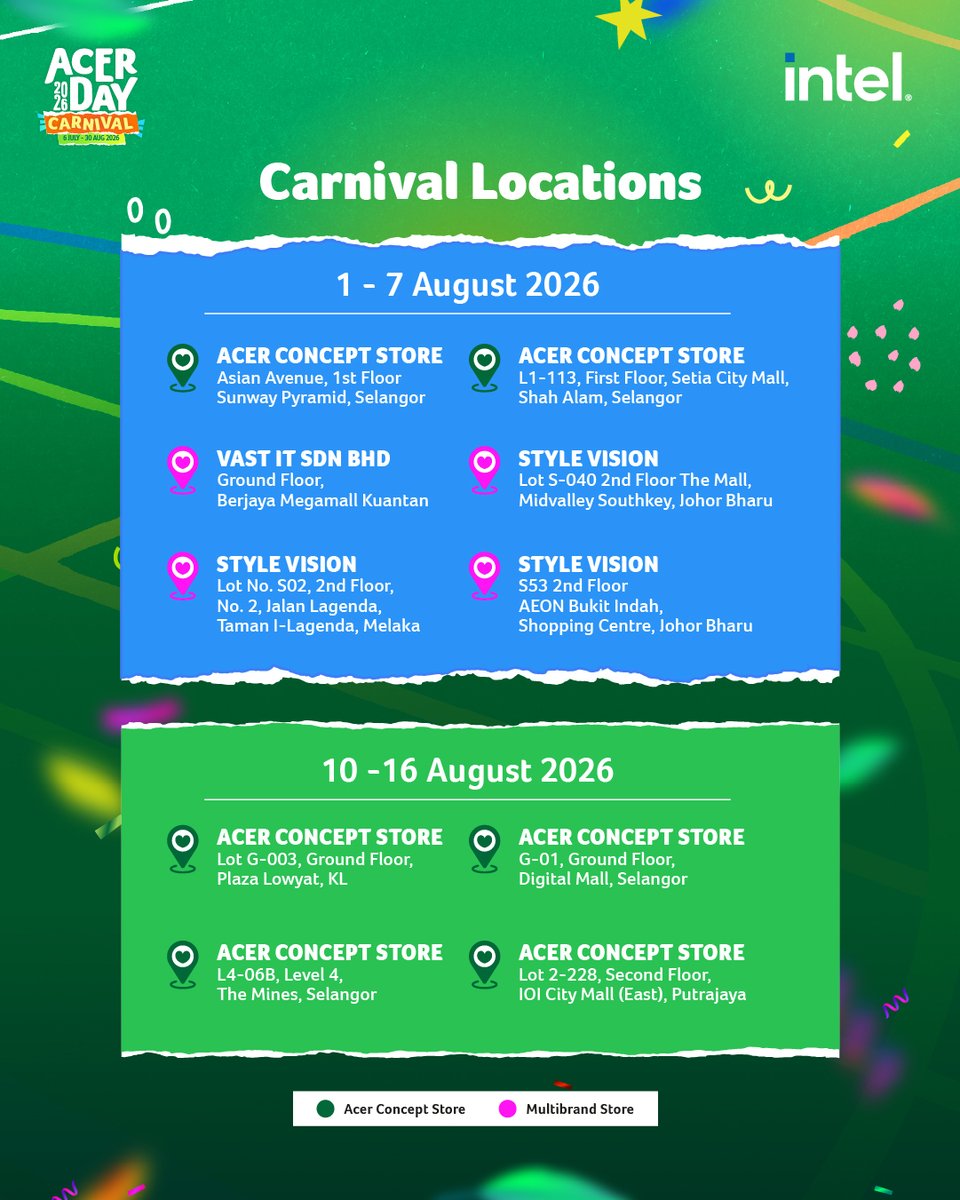
Highlights: ▶️"Active Hour Sales" will run between 11:00 AM and 12:00 PM on select weekends at Mid Valley (July 11–12), Vivacity Megamall Kuching (July 25–26), and Plaza Lowyat (August 15–16). Items are capped at up to 88% off on a first-come, first-served basis. ▶️Buyers qualify for instant Touch 'n Go eWallet credits ranging from RM50 to RM200, depending on the retail price tier of the eligible model purchased. ▶️Attendees can access dedicated demo corners evaluating AI performance and gaming processors, alongside physical agility challenges and product personalisation stations. #AcerDay2026 #ConsumerElectronics
1
533
analyticsinme
𝐇𝐨𝐰 𝐭𝐨 𝐂𝐡𝐨𝐨𝐬𝐞 𝐭𝐡𝐞 𝐁𝐞𝐬𝐭 𝐏𝐨𝐫𝐭𝐚𝐛𝐥𝐞 𝐂𝐡𝐚𝐫𝐠𝐞𝐫 𝐢𝐧 𝟐𝟎𝟐𝟔: 𝐀𝐧 𝐄𝐱𝐩𝐞𝐫𝐭 𝐁𝐮𝐲𝐞𝐫'𝐬 𝐆𝐮𝐢𝐝𝐞 From battery capacity and charging speed to USB-C compatibility and safety features, discover everything you need to know before buying a portable charger in 2026. Make an informed choice with this expert guide. #PortableCharger #PowerBank #TechNews #BuyingTips #ConsumerElectronics #AI #AINews #AnalyticsInsight #AnalyticsInsightMagazine   Read More 👇 zurl.co/1zv2e
164
mobilitymag
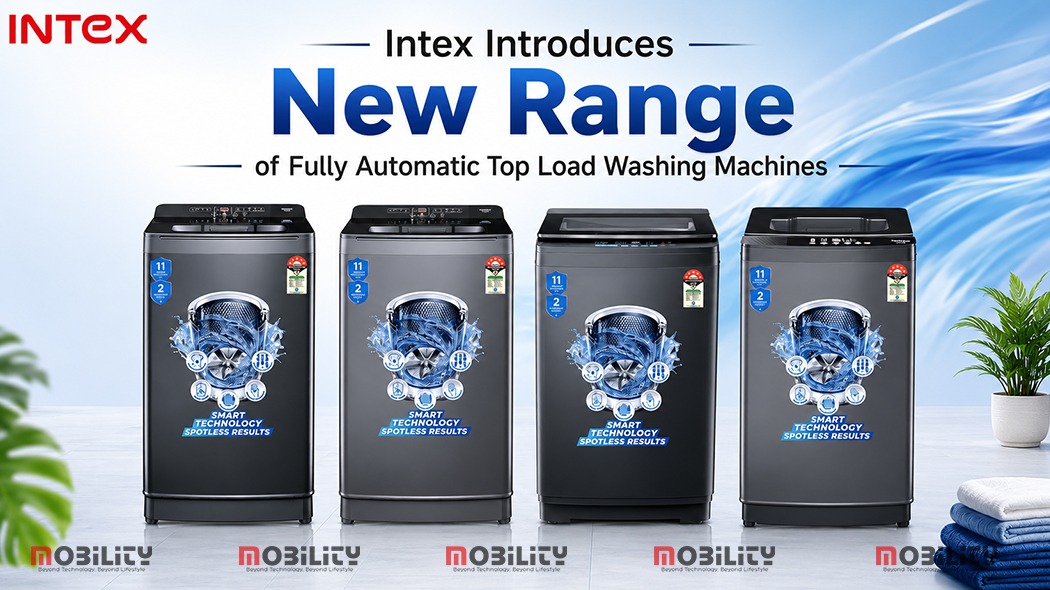
Intex Technologies launches its new fully automatic top load washing machines! 𝐊𝐧𝐨𝐰 𝐌𝐨𝐫𝐞 👉 mobilityindia.com/intex-intr… @IntexBrand #Intex #HomeAppliances #SmartHome #LaundryDay #ConsumerElectronics @mobilitymag @SwapanR56454932 #MobilityMagazine #mobilityindia
1
18
AbansLK
Abans Group proudly celebrates the opening of a new showroom in Borella by Abans PLC, the electronics and home appliances arm of the Group. Bringing together a wide range of world-renowned brands, cutting-edge technology, and trusted home appliances under one roof, the showroom reinforces the Group's commitment to delivering exceptional value and convenience to customers. #AbansGroup #BetterWayToLife#Borella #NewShowroom #GrandOpening #Innovation #HomeAppliances #ConsumerElectronics #SriLanka
22
fainalysis
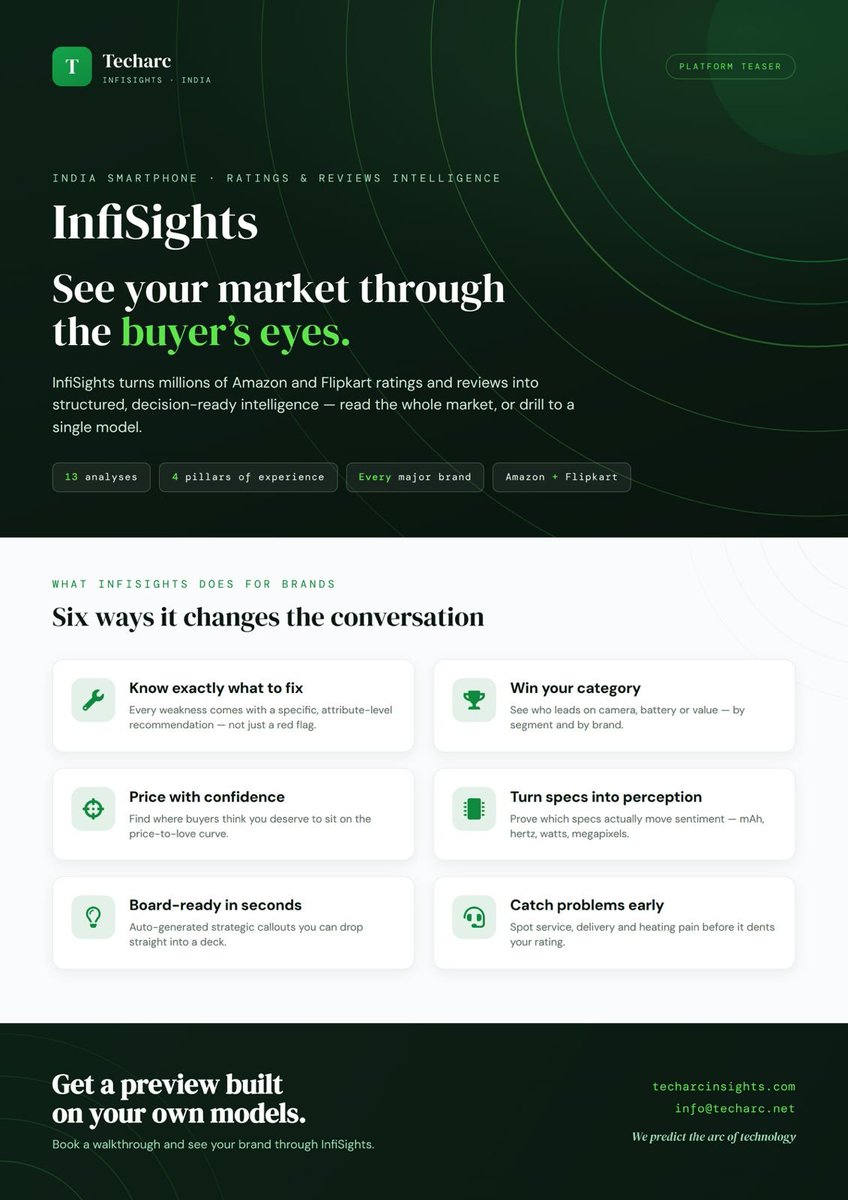
𝐈𝐭'𝐬 𝐦𝐨𝐧𝐬𝐨𝐨𝐧 𝐬𝐞𝐚𝐬𝐨𝐧 𝐟𝐨𝐫 𝐢𝐧𝐬𝐢𝐠𝐡𝐭𝐬! Presenting #InfiSights, your single source of truth to understand millions of customers in your product category. InfiSights helps your brand to solve BIG 6 business queries. Ask for your free preview for 2 weeks today. Reach out to info@techarc.net or DM me to sign up. We have InfiSights for all product categories #Smartphone #SmartTV #Laptop #Tablet #SmartWatch #TWSEarbuds #VRHeadsets #SmartEyewear #Mouse #PenDrives #ConsumerElectronics #HomeAppliances @techarcinsights
38