Joined October 2011
68 Photos and videos
Pinned Post
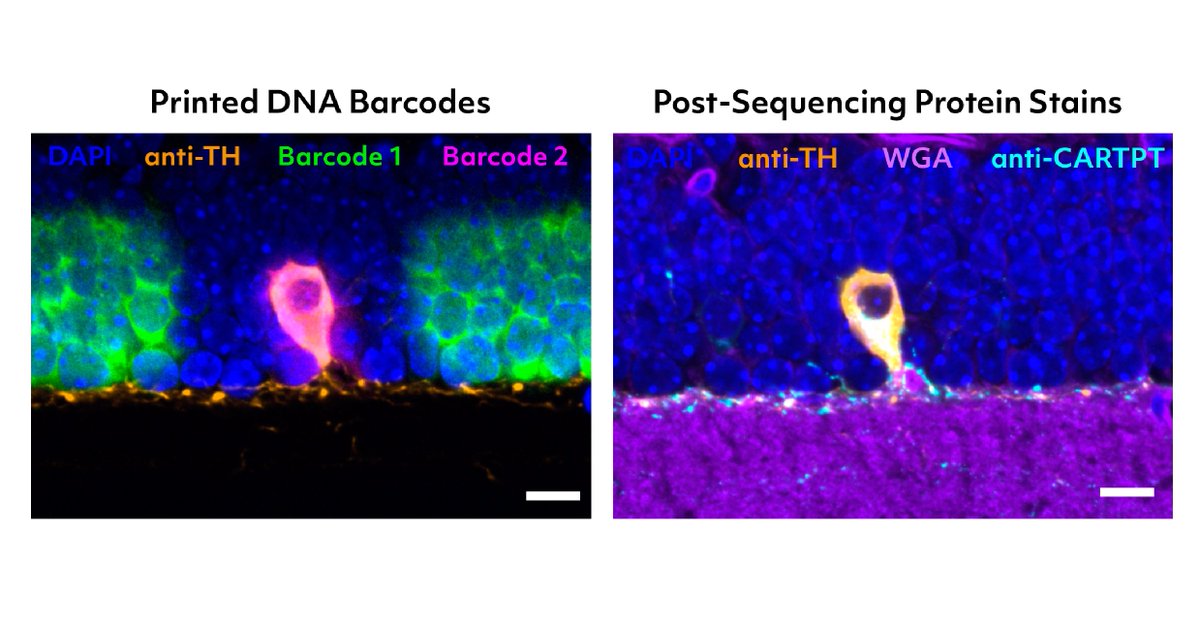
What if you could image cells in fixed tissue sections, choose which ones to sequence 🔬, and then return to the same cells after NGS? Light-Seq⚡️🧬: high-res spatial sequencing of cells in fixed tissue for directly linking imaging NGS protein stains! nature.com/articles/s41592-0…
18
282
1,405
Emma West reposted
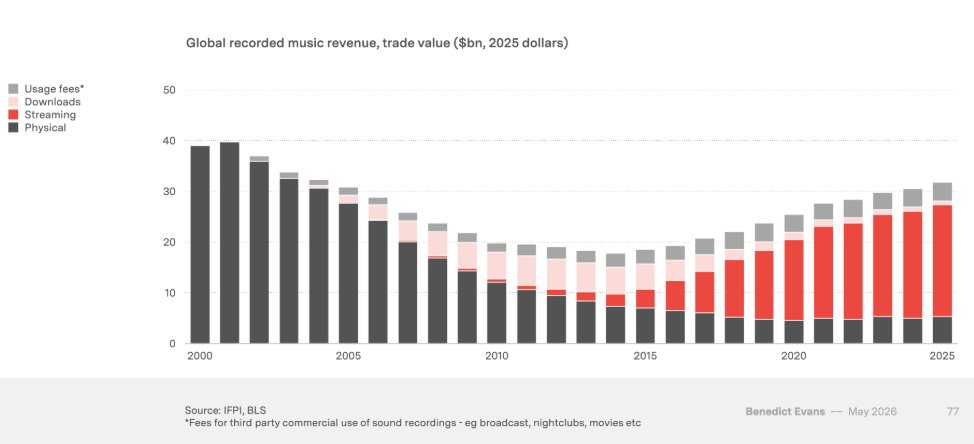
We will consume medical care like music. Music went from “what if I don’t have to pay $15 for the album” to “what happens if $15 gets me every song in the world?” The marginal cost of distribution went to ~$0, subscription pricing enabled unlimited consumption, and listening skyrocketed. Today, we don’t have enough capacity to provide all the care people want. So we ration healthcare with high prices, long wait times, and administrative hoops. But as AI drives down the marginal cost of medical expertise, we will no longer need to throttle access. Like music, everyone will get infinite healthcare.
27
16
118
21,214
Wake up everyone, Anthropic is making MEDICINES! Improving the human condition is the most valuable opportunity that has ever existed and will ever exist. The industry is about to reflect that. Cool to see @ManifoldBio @LatchBio @boltz_bio here - models, data, workflows are key
12
54
12,320
If you're wondering why folks are up about bio, this is it. No hype, just transformative medicines designed with atomic precision. Personalized immunotherapies engineered in weeks. Cancer patients can't wait, and soon they won't have to. If you're not watching @nabla_ai, you MUST
New paper from the @nablabio team expanding generative drug design to multispecifics, the intracellular proteome, and pushing the limits of atomic precision. A tour de force of computation wet-lab and some incredible results, including zero-shot design of a KRAS G12V pMHC-targeting bispecific that recruits primary T-cells from human donors and achieves picomolar cell killing. Much more in our post and report
2
5
48
13,317
Emma West reposted
New paper from the @nablabio team expanding generative drug design to multispecifics, the intracellular proteome, and pushing the limits of atomic precision. A tour de force of computation wet-lab and some incredible results, including zero-shot design of a KRAS G12V pMHC-targeting bispecific that recruits primary T-cells from human donors and achieves picomolar cell killing. Much more in our post and report
Today, we expand zero-shot drug design beyond binding to the design of multifunctional medicines, the intracellular proteome, and state-of-the-art atomic precision with our model, JAM-2. In a new report (below), we show: 1. The first drug-grade, fully computationally designed multispecific antibodies against five peptide-MHCs: Routine picomolar T-cell activation/cell-killing EC50s, >100-fold selectivity, and drug-like developability 2. The first fully generatively designed, drug-grade dual-variant KRAS G12 multispecifics: They recruit primary T-cells from human donors to kill G12V and G12C presenting cells at pM to single-digit-nM potency, completely sparing wild-type. 3. Atomic accuracy, from sequence alone: Angstrom-level agreement between Cryo-EM and JAM-2 de novo designs, requiring only target sequences (not structure) as input. 4. Unrivaled speed with an AI-native in-house wet lab: Designed, built, and tested five programs in one parallelized campaign, end-to-end in-house in ~6 weeks. 5. A higher validation bar for AI-generated drug candidates: In a field increasingly rife with hype and uneven standards of proof, we provide the highest quality public wet-lab validation of AI-designed antibodies to date. We share experimental methods in full, and invite folks to adopt and build on these standards. Truly individualized therapies will be the most important contribution of AI in drug design. These advances help accelerate this future.
10
27
155
55,358
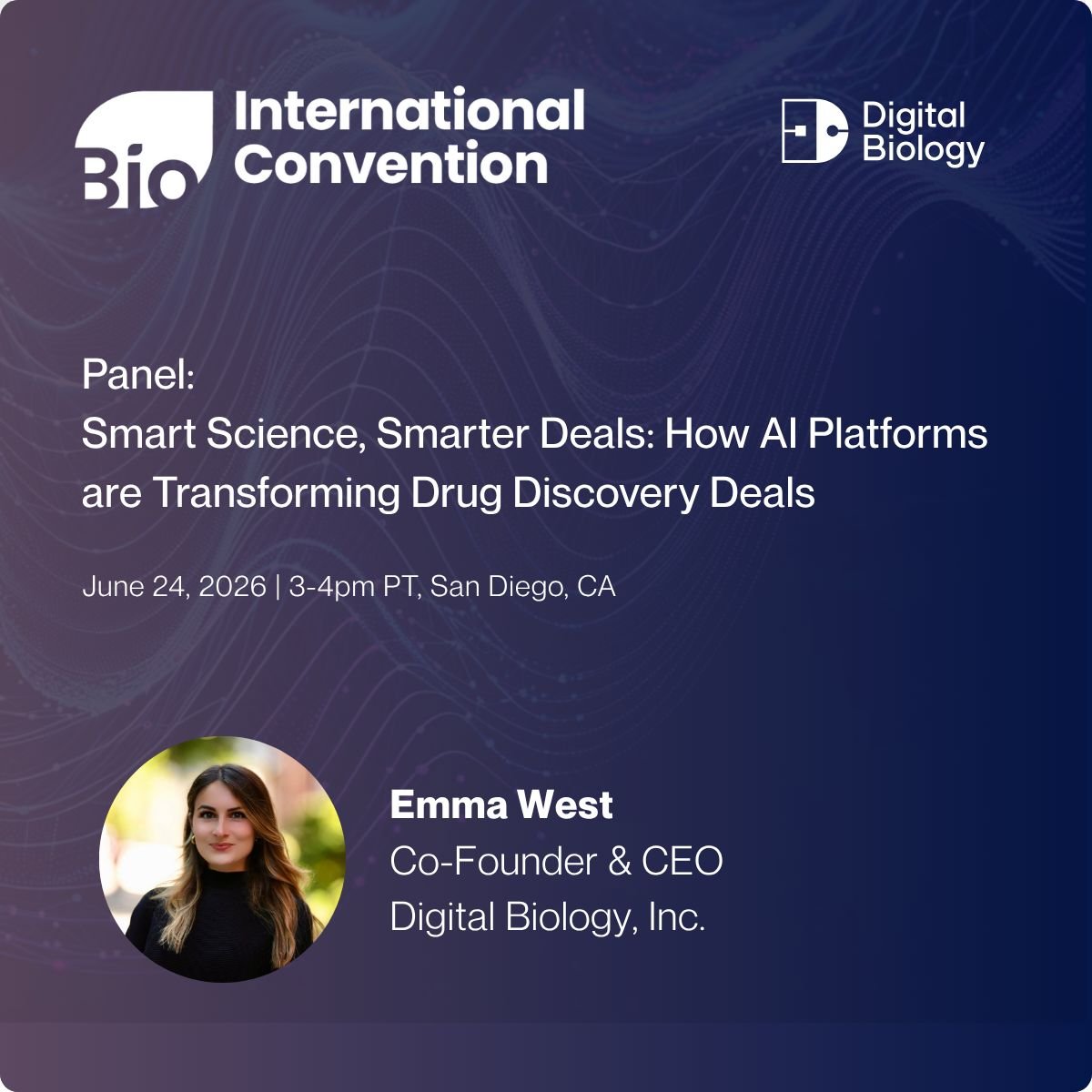
Deals, deals, deals! Thrilled to be part of this conversation at BIO tomorrow with folks at the frontier of dealmaking in bio AI platforms: Nabla, Manifold Bio, Roche, Haya, Digital Bio. If you're in SD this week, DM me to meet up!
3
283
Emma West reposted
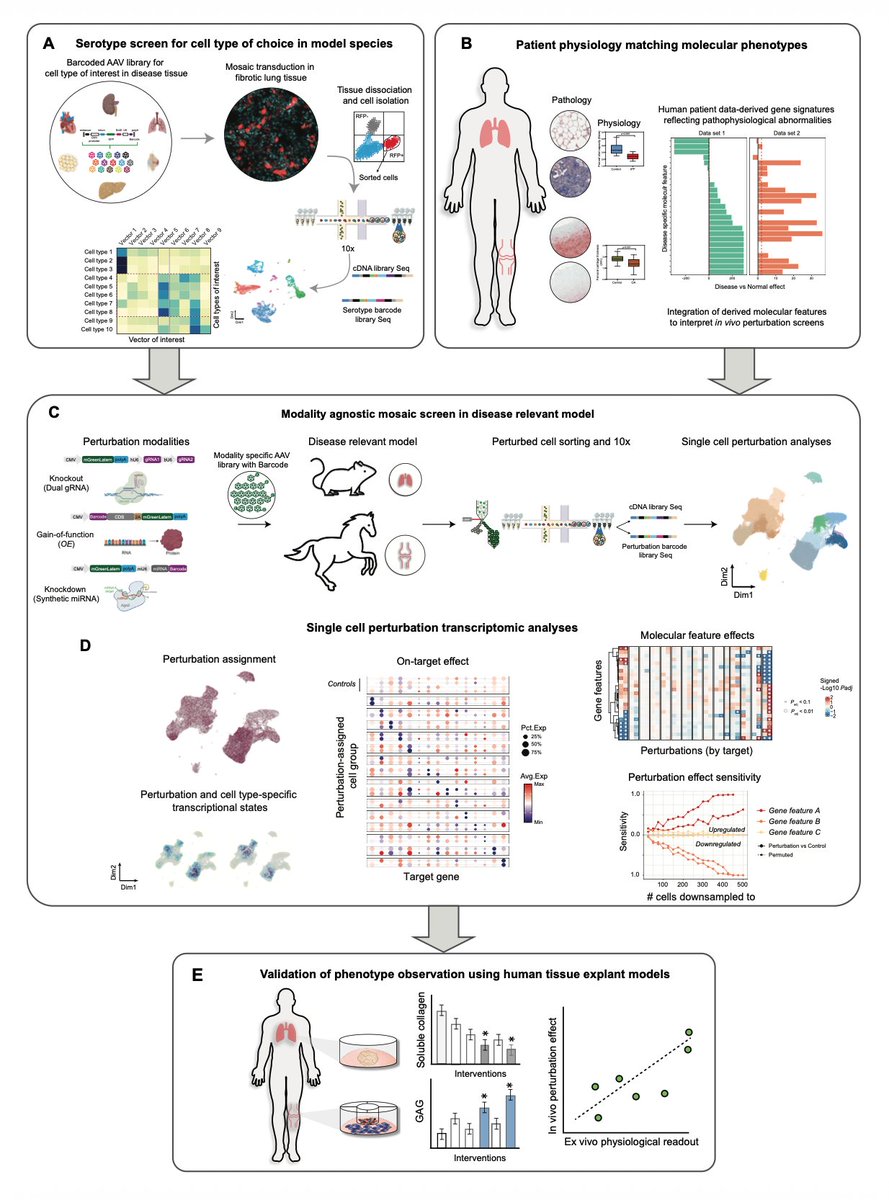
Finding new medicines is getting more and more expensive, and AI won't help much unless we can generate physiological data at scale. In our new preprint, @GordianBio extends the progress of the functional genomics community to run pooled in vivo screens at scale, in a way that answers questions about physiology and therapeutic potential. We show screens in mice and horses, fibrotic and degenerative disease, with a framework for physiological predictions validated in human ex vivo tissues. Very proud of @v_sontake, @vkartha88, Neety and the rest of the team. Tweetorial follows:
9
58
203
38,784
Bioengineering is wild. We can build drugs to sense multiple cues in human tumors before recruiting killer immune cells to the scene - sparing adjacent healthy tissues. These 3D human tissues show the tumor being attacked lighting on 🔥, only when multiple signals are sensed
3
10
98
5,024
Emma West reposted
biotech needs its own david sacks in reflecting on this past year, one thing has become increasingly obvious to me: biotech desperately needs a public champion. someone who can translate scientific progress into policy, coordinate the industry’s scattered voices into a coherent agenda, and frame biotech as a strategic national priority rather than a niche technical field. this is perhaps the biggest structural weakness facing our industry. watching the policy momentum behind AI and crypto has been frustrating. these sectors have moved quickly not just because the technology is advancing, but because people like david sacks have created a central organizing force. they’ve built a coherent narrative, rallied founders and investors, and focused the tech industry’s efforts in washington. biotech has no equivalent. what makes this more frustrating is that the rationale driving urgency in AI policy applies almost word-for-word to biotech: competition with china. national security. domestic manufacturing capacity. strategic dependence on foreign supply chains. you could literally replace “AI” or “rare earths” with “biotech” in many of the recent executive orders, and the logic would hold perfectly. these should be obvious, bipartisan reasons to invest in and accelerate the biotech ecosystem. yet the case isn’t being made with the same clarity or force. part of the problem is a PR failure. most policymakers don’t understand that biotech ≠ pharma. biotech startups are the innovators; pharma is the innovation buyer. but in washington, these groups get conflated. early-stage biotech gets pulled into the same policy debates as multibillion-dollar incumbents, and the result is predictable: the people doing the actual innovation are not represented. another issue is fragmentation. AI and crypto accelerated because the community acted like a movement. there was a center of gravity pulling together founders, operators, investors, and policymakers. biotech, by contrast, is spread across academic labs, NIH, the FDA, startups, pharma, state governments, and a long tail of investors. large pharma and small biotech don't often have the same priorities and incentives. there is no unifying node that turns these pieces into a coherent whole. biotech doesn’t just need more innovation; it needs coordination. it needs someone who can articulate why this industry matters, make the geopolitical case, advocate for regulatory clarity, and translate between science and washington. it needs someone who can build a narrative around biotech as a strategic national asset rather than a niche technical field. biotech needs its david sacks: a movement builder, a policy champion, a narrative architect. until someone steps into that role, the industry will continue to produce world-class science while punching far below its weight in culture, policy, and national strategy.
51
40
377
113,220
Emma West reposted
Very excited to announce Manifold's partnership with Roche to deliver the next generation of brain shuttled therapeutics for CNS diseases, using Manifold unique capabilties in AI massively scaled in vivo measurment of drug molecules. This deal is the culmination of over 6 years of effort building a technology to generate the data at a scale needed for AI model training, but to have that data be what has been the ultimate bottleneck for drug development and discovery: in vivo. We all know that AI requires massive data to enable the immense leaps in progress we have seen. The challenge with biology is most of the data is in vitro, or cells in a dish. A lot of groups are making excellent progress here, applying AI to very large datasets in vitro, and I hope that these results lead to better drugs. But the challenge is the humans are not cells in a dish. We've cured many diseases in petri dishes, only for those drugs to have unexpected results when put into the patients. Living systems are so complex that they are hard to reduce, despite how hard we try. This is what makes the Manifold approach so different, instead of simplifying the system down to a petri dish to generate the data we need for AI, we test millions of molecules in living systems so we can generate the relevant data we need for drug discovery. We believe that this is the true unlock for AI in drug discovery. We are generating massive datasets of millions of potential drugs to hundreds of targets and asking the question of where do these molecules go, directly in animals. This allows us to build AI models of drug delivery, and eventually drug function. Delivery to the brain and this collaboration with Roche is just the start. We are rapidly scaling this approach to other tissues, and ultimately using it to understand drug affect on all organs in the body. If you are excited about AI, drug development, and totally novel data of drug function in animals, please reach out. We are hiring across many roles and always interested in collaboration with groups in AI and drug development as well! endpoints.news/roche-manifol…
5
15
81
13,367
Emma West reposted
Manifold and Roche partner for up to $2B There are lots of cool things about this deal. First off, obviously the science. Roche has been at the forefront of blood-brain barrier (BBB) delivery with really exciting early data around Trontinemab which opened this space up. And Manifold has a fantastic platform to help advance the next generation of brain-targeted medicines. The deal structure is also very interesting. Platforms often have to make a hard trade-off decision between equity dilution and asset dilution. This structure strikes a unique balance: 1. Meaningful upfront economics *and* backend economics, with 2. Preservation of asset value by the ability for Manifold to use their BBB shuttles for other targets. I recently covered Manifold in-depth, writing about the ML² platform, Roche's early data, and their well-reasoned partnering strategy. Now we can all see it in action! As their Exec Chair Steve Holtzman said, this is a "foundational partnership that contains key structural elements that will enable the Company to grow as an independent biopharmaceutical company, thereby enabling us to create significant value for patients, caregivers, employees, and shareholders.” Congrats to both Roche and Manifold. For further reading: - centuryofbio.com/p/manifold - centuryofbio.com/p/on-biotec…
2
8
60
6,858
Emma West reposted
What you’re seeing at @ManifoldBio is what happens when two exponentials begin to resonate–the evolution of AI and the evolution of massively parallel molecular measurement and design. When we started Manifold Bio with @PierceOgdenJ , @geochurch , and @slofgren, we set out to do something bold: to build an AI-first biopharma company that could map the astronomic space of molecular design against the complexity of human biology. We had already become world leaders in the secret art of combining Machine Learning and Multiplexed Libraries, or ML². We believed this approach could be transformative to drug discovery. AI in drug discovery has always faced one fundamental barrier: the translational gap between what works in a petri dish and what will work in a patient. We believed that closing that gap required a way to power AI models with massive-scale experimental feedback directly from living organisms. Such a platform would be positioned to solve grand challenges in human health, including creating medicines that could cross the blood-brain barrier. To succeed in such a challenge, it not only takes a culture of scientific boldness, but also bold partners. The boldness of the Roche team was clear from the moment we started mapping out this collaboration, both in their rigor in evaluation of the Manifold platform and the ambition we both shared in how to best leverage our approach. This is the company that has literally integrated the Genentech DNA, and charted many firsts along the way, including some of the most compelling brain-shuttling clinical data to date. It’s a privilege to combine forces to advance the frontier of brain delivery together. This deal is fantastic validation of the power of our approach. And we’re just getting started.
The hardest problems in medicine will not be solved by incremental innovation. They will require a fundamentally new approach that grounds AI-driven design in large-scale data from living systems. Excited to announce our partnership with @Roche manifold.bio/news/manifold-b…
5
17
71
11,270
Emma West reposted
We were thrilled to host Biotech in the Year 2048: From Signal to Solution in Boston! It was an incredible day full of conversations and ideas, from panels on measuring novel biomarkers and turning data into drugs, to our quick-fire pitch competition showcasing some of biotech’s most exciting emerging founders. Thank you to our insightful panelists @travishughes (@digitalisvc), @_emmarosewest (Digital Biology), @BrooksLeitner (VO Health), Laura Holberger (@novonordisk), Ser-Chen Fu (Pacific 8 Ventures), and @DrMariKari (@blueyard) and our incredible judges Jeff Knox (@InnosparkV), Vinny Beranek (@engineventures), Alex de Winter (@DanaherCorp), @JulieMarieWolf (@2048vc) and @sperezbaos (@2048vc). Congrats to our Biotech Pitch Competition winner: Anomer Bio (Sophie James and Marcos Burger Ramos)! A huge thank you to our co-hosts at @Orrick! More to come — onward! The 2048 VC Team
1
7
685
Emma West reposted
We’re excited to share a new multi-year collaboration with @TakedaPharma, building on the success of our first engagement. Under the agreement, Nabla will receive double-digit millions in upfront and research payments and is eligible for success-based payments exceeding $1 billion. The partnership deploys Nabla’s AI-driven JAM platform across Takeda’s early-stage programs to include de novo design of antibodies in parallel for multiple targets, multispecifics, challenging targets, and other custom therapeutics. Read more below
7
20
119
107,568
Emma West reposted
📢 Biotech in the Year 2048 is happening next week in Boston! On October 14th, we’re bringing together founders, investors, and industry leaders to time-travel into the future and explore the technologies and data that will shape the next two decades of biotech. 💡 Hear from leading voices in biotech innovation, including @travishughes (@digitalisvc), @_emmarosewest (Digital Biology), Laura Holberger (@novonordisk), Ser-Chen Fu (Pacific 8 Ventures), and @DrMariKari (@blueyard). 🎤 Watch our Biotech Pitch Competition finalists take the stage and pitch in front of our panel of judges: Jeff Knox (@InnosparkV), Vinny Beranek (@engineventures), Alex de Winter (@DanaherCorp), @JulieMarieWolf (@2048vc) and @sperezbaos (@2048vc). 🔗 RSVP here: partiful.com/e/HccQfYhKHzFrX…
2
4
604
Emma West reposted
AI is not on track to eradicate disease in our lifetime. Scientists need to generate more data, but they’re physically limited by how fast they can work. That’s why we’re launching Medra: Physical AI in the lab, doing and optimizing real experiments. Thread👇
30
119
469
566,419
Emma West reposted
𝐀𝐈 𝐱 𝐁𝐢𝐨 𝐒𝐮𝐦𝐦𝐢𝐭: @ManifoldBio Co-Founder & CEO @glebkuz describes the company’s ability to screen proteins it has designed in silico at scale in vivo.
4
13
5,357
Emma West reposted
a core tension in applying "virtual cell" models to therapeutic development is the mismatch between the scale at which we measure biology and the scale at which we intervene. we often measure at the cell level (eg single-cell RNA-seq), but we treat at the tissue or organ level (e.g., cardiac fibrosis, skin rash). drugs act on tissues or organs, sometimes with cellular specificity, but often not. biologics and CGT are increasingly targeted, but their impact still depends on the broader tissue context. so the outcome of an intervention—efficacy, toxicity, side effects—emerges at the organ or patient level, not the single cell. a cell-level model might predict that drug X will downregulate the TGF-β pathway in fibroblasts. but will that reverse lung fibrosis in vivo? that depends on: - whether the drug reaches the relevant cell types, - whether it affects the broader ECM remodeling loop, - whether the immune system modulates or counteracts it, etc this is why virtual cell predictions can be correct but irrelevant—they solve a problem at the wrong level of abstraction. a couple promising strategies to address this: - multiscale modeling, embedding cellular simulations inside larger tissue-level or organ-scale models - spatial transcriptomics, which adds context to cell-level data by preserving spatial relationships—more closely mirrors tissue biology - surrogate modeling, training higher-level predictors (e.g., for clinical biomarkers or histopathology) using outputs from cell models
13
18
124
13,617
Emma West reposted
𝐀𝐈 𝐱 𝐁𝐢𝐨 𝐒𝐮𝐦𝐦𝐢𝐭: Digital Biology Co-Founder & CEO @_emmarosewest describes how the AI field is moving on from modeling protein folding to a next phase of better understanding binding function.
2
12
1,913
Digital Bio is hiring. JOIN US! job-boards.greenhouse.io/dig…
4
11
1,212