Gloves are off!
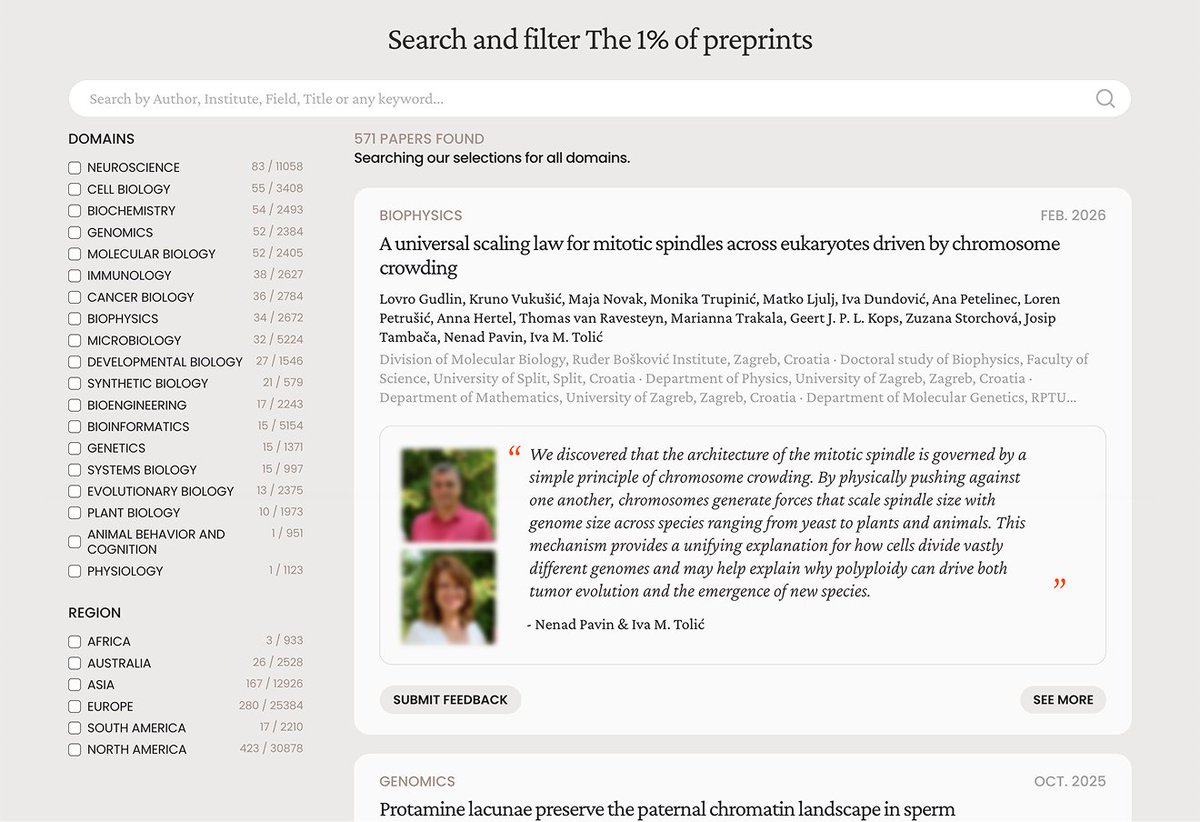
TODAY WE RELEASE THE 1%
A list of the year’s very best papers.
When we launched QED a little over half a year ago, I told you that our mission is to revolutionize scientific publishing. Revolutions don’t happen overnight… or maybe they do? When new technologies enable it? Time to put the power back in the scientists’ hands, not the journals’. Many scientists are depressed, and think journals will stay the same forever, no matter how dysfunctional, but no, it’s happening. Sooner than most people (or committees, or universities) can imagine. Check this out:
When we released our AI review platform, it started a whole debate (and social media storm) on what it is that human reviewers can do that AI review still can’t. There are such things (and I’m happy about it), but the list is getting shorter and shorter. Numerous scientists already use QED to find gaps in their manuscripts and grants and to get constructive feedback that improves their experiments. And now, with your help, we take it to the next level.
Today we release reviews and scores for all the experimental Life Science pre-prints that came out last year: 57,455 manuscripts!! If we are being conservative, and estimate that it takes a minimum of 8 hours to review a paper (it takes longer), and if we agree that 3 reviewers are typically required to review every submission, then reviewing this amount of manuscripts would take human experts >1 MILLION REVIEWER HOURS… Assuming you can find so many experts (not going to happen!), and assuming the experts who agree would have no conflict of interest (ha!!).
QED did it. Then, we chose the best papers in every field (you can browse and search for key words), based on the originality and validity of the claims being made. We benchmarked our reviews not only using eventual journal selections but also by comparing our evaluations to those of human experts. When there were disagreements between the QED score and journal rank, we asked domain experts to judge who’s right (blindly), and they overwhelmingly sided with QED. No need to rely on glam journals anymore. No need to wait for two years to get their stamp of approval. No need to beg the reviewers, or worse, to write less ambitious papers, so no one would be upset. Want to find the most interesting papers in your field? Want to see where your paper stands? (“What’s your QED SCORE?”) Just visit
qedscience.com!
One last thing: We want good science to be seen (you can read the winners’ comments about their selection and the stories behind their discoveries on our website). We plan to organize a conference where the first authors (yes, the first authors, not the PIs) will present their work. We are not here to shame anyone (papers that got low scores). The reviews of the best papers that we selected explain why QED’s AI thought these papers are especially good - what’s unique about them, what their strengths are, which conceptual leaps were made, and what cutting-edge tools were developed. However, on the QED Science site you can analyze any paper in private, it’s fully transparent, and see if there are any gaps and what’s missing. Run your paper to see how it can improve, and maybe next time your paper will reach the top (if it’s not there already).
Whether you’re on the 1% list of just have a good score that you want to share, on our website you can download the report and share it, for example with your tenure, promotion, or hiring committee, or with your university PR department. Forget about journal embargoes and waiting for it to be “accepted”. Improve your work until it’s good enough for YOU. You decide.