Robot Learning Infrastructure to Scale and Deploy Faster | Record asynchronous data, train VLA models, and ship solutions faster than competitors.

Joined May 2025
134 Photos and videos
Pinned Post
๐——๐—ฎ๐˜†๐˜€, ๐—ป๐—ผ๐˜ ๐—บ๐—ผ๐—ป๐˜๐—ต๐˜€. ๐—ง๐—ต๐—ฎ๐˜'๐˜€ ๐—ต๐—ผ๐˜„ ๐—น๐—ผ๐—ป๐—ด ๐—ถ๐˜ ๐˜๐—ฎ๐—ธ๐—ฒ๐˜€ ๐˜๐—ผ ๐—ด๐—ฒ๐˜ ๐—ป๐—ฒ๐˜„ ๐—ต๐—ฎ๐—ฟ๐—ฑ๐˜„๐—ฎ๐—ฟ๐—ฒ ๐—ฟ๐˜‚๐—ป๐—ป๐—ถ๐—ป๐—ด ๐—ผ๐—ป ๐—ก๐—ฒ๐˜‚๐—ฟ๐—ฎ๐—ฐ๐—ผ๐—ฟ๐—ฒ. Get started with our @MetaQuestVR teleop, open source on @github, and start collecting data on day one. Neuracore is hardware agnostic by design. OpenArm is the latest addition to our growing list of supported platforms, and like every embodiment we integrate, the code is open for the community to pick up and build on. The OpenArm repository is landing in the next couple of weeks. With Neuracore, teams can skip the integration slog and get straight to the interesting part: collecting data, training policies, and deploying to the real world. Get started for free today: neuracore.com/ Access our Github here: github.com/NeuracoreAI/neuraโ€ฆ
5
21
179
61,939
This is what enterprise robot-learning infrastructure looks like. Behind the scenes, our integration tests run around the clock so our users don't have to think about whether things will work.. they just do. Many of the people relying on us are large enterprises running mission-critical workloads. For them, downtime isn't an inconvenience, it's not an option. That standard is exactly what we build to: every test, every check, every safeguard exists so the systems our customers depend on stay up. Reliability isn't a feature. It's the foundation.
2
2
15
354
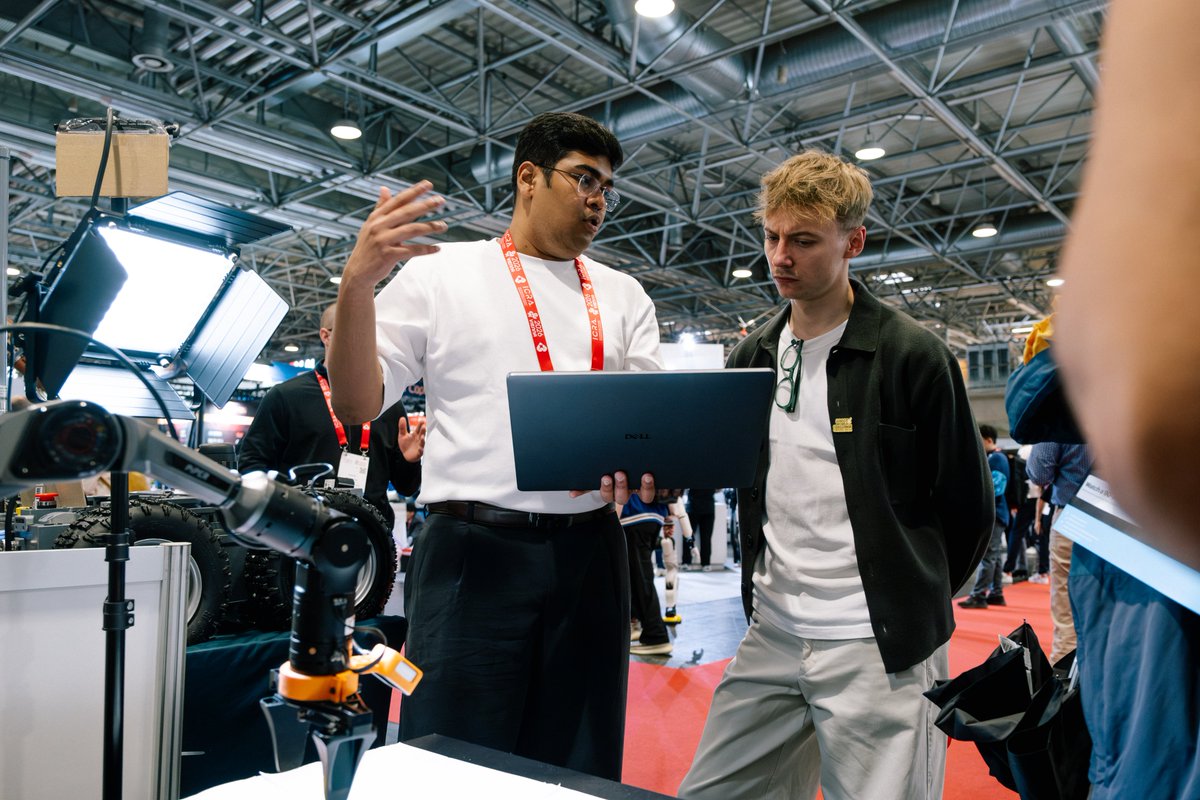
We took one question to @ieee_ras_icra 2026: what's the biggest challenge in industrial robotics right now? Data scarcity. Sim-to-real gaps. Deployment that takes months, not days. Researchers, founders and engineers from KUKA, @Universal_Robot, @FlexivRobotics & @noitomocap all pointing at the same bottlenecks. And all of them are exactly what we're building Neuracore to solve. We're working with robot learning teams on exactly these problems. If that sounds like yours, get in touch. #ICRA2026 #Robotics #RobotLearning #PhysicalAI
2
5
18
790
One week on from @ieee_ras_icra 2026. It was great to connect with researchers, system integrators and so many people working in the field. The conversations confirmed what we're hearing everywhere: teams want to take on robot learning projects, but the infrastructure to collect data, train and deploy at scale is holding them back. If you're a system integrator or automation team looking to take on projects you couldn't before, and deliver them faster than your competitors, let's talk. #ICRA2026 #Robotics #RobotLearning #SystemIntegrators #wuji @AgilexRobotics
1
8
1,788
What an incredible week at @ieee_ras_icra 2026! The Neuracore team had the opportunity to connect with researchers, engineers, collaborators, and innovators from across the global robotics community. Weโ€™re grateful to be part of such a vibrant and forward-thinking community, and weโ€™re excited about the opportunities ahead as we continue building the future of machine learning. Thank you to everyone who stopped by to connect with us! #ICRA #ICRA2026 #Neuracore
7
201
Thanks @lukas_m_ziegler for coming by and meeting the team at @ieee_ras_icra today!
2
12
637
Neuracore reposted
Spotting PiPER & NERO around #ICRA2026 Everywhere we go, we keep finding teams building with AgileX platforms. How many PiPER & NERO moments can you spot? ๐Ÿ“ Booth 87 #Robotics #EmbodiedAI #ROS #PiperArm #Nero #Robotarm #research #mobilerobot
4
11
758
@Neuracore_AI Building the unified Physical AI infrastructure that lets robotics teams go from messy data to deployed robot learning models in days - not months. No more Frankenstein stacks. Just seamless data flywheels, VLA model training, real-time inference, and faster shipping of intelligent robots. London-based (Imperial College roots), founded 2024 by Prof. Stephen James. Live demos at ICRA 2026 right now. One of the critical infrastructure layers powering the UKโ€™s AI robotics explosion.
2
2
167
Looking to find us at @ieee_ras_icra? Weโ€™re right at the entrance to hall B at booth S006. If youโ€™re a system integrator, or looking to go from demo to deployment faster than ever, come and chat with the team!
1
7
401
Are you at @ieee_ras_icra this week? Booth S006 is where you'll find us. We have a live demo running all week, plus the full team on hand to show you what the Neuracore platform can do for your company.
2
8
835
Neuracore reposted
Another week, another robotics map! ๐Ÿ‡ฌ๐Ÿ‡ง This time, we will take a closer look at the busy streets of London and see what robotics companies are located there. London has excellent engineers and researchers, especially from universities like @imperialcollege and @ucl, which are well known for robotics, AI, and engineering. Many robotics founders and early employees come directly from these universities. London is home to @GoogleDeepMind, one of the worldโ€™s leading AI labs. Its work on robot learning, control, and general AI has helped push forward how robots learn and adapt in the real world. The city also has one of Europeโ€™s strongest investor ecosystems. London is a major global finance hub, so itโ€™s easier to find venture capital, corporate investors, and early customers, especially for robotics companies working in areas like logistics, healthcare, and automation. It is very international and business-friendly. Itโ€™s easy to hire talent from around the world, set up a company, and sell globally. โ†’ @TheHumanoidAI builds general-purpose AI-driven humanoid robots capable of physical tasks across domains. โ†’ @automata_tech develops easy-to-deploy robotic automation hardware and software for SMBs to reduce manual labor. โ†’ @shadowrobot creates advanced dexterous robotic hands and manipulation systems for research and industrial automation. โ†’ @PaddingtonR7 designs small autonomous robots for retail and service environments to assist staff. โ†’ @KAIKAKU_AI builds robotics and AI enterprise solutions to optimize warehouse and logistics processes. โ†’ Automated Architecture (AUAR) develops spatial computing and robotic systems that blend physical and digital environments for construction and design. โ†’ @recycleye creates AI-powered robotics that identify, sort, and automate recycling and waste processing, and has raised ~$20M in funding. โ†’ @Neuracore_AI builds AI-based perception and planning software for autonomous robots. โ†’ @apianhealth_ develops autonomous robotic systems for automated medication dispensing and hospital logistics. โ†’ @SlamcoreLtd offers high-performance SLAM navigation and vision software to help robots map and localize in complex environments, and has raised ~$6M . โ†’ @MoleyRobotics builds fully automated robotic kitchen systems (โ€œrobotic chefโ€) and has raised tens of millions in funding (reports ~$30M ). โ†’ @dexoryHQ develops autonomous warehouse robots and AI software that continuously scan inventory and turn it into real-time operational insights, and has raised $80M Series B and a $165M Series C & growth round. โ†’ @extend_robotics builds tele-operation technology for robots, and helps with orchestrating the fleets of robots. โ†’ Cambrian Robotics develops AI-powered 3D vision software that gives industrial robots high-precision perception. โ†’ @engineered_arts builds highly expressive humanoid robots like Ameca for humanโ€“robot interaction, entertainment, research, and embodied AI applications. โ†’ All3 develops AI-powered robotic construction systems that automate building design and fabrication to reduce housing costs and construction time It seems that if you wanted to explore London from the perspective of robotic startups, it would take a few days! ~~ โ™ป๏ธ Join the weekly robotics newsletter, and never miss any news โ†’ ziegler.substack.com
4
7
66
6,469
Neuracore is exhibiting at the @ieee_ras_icra 2026 in Vienna, Austria. Join us to see how robotics teams are eliminating the 80% of engineering time currently spent on data pipelines instead of robot learning. Come discuss the infrastructure bottlenecks killing your transition from lab prototypes to distributed fleets. Meet the team. See live demos of data recording, visualisation, training and deploying model using our infrastructure. Booth S006, June 1-5, 2026 | VIECON in Vienna, Austria #Neuracore #ICRA26
1
6
648
Neuracore reposted
Thanks to the STIQ team for hosting last night. It was great to share what weโ€™re building at @Neuracore_AI and discuss some of the harder questions around where robotics is headed. Also great to be sharing the stage with All3, @recycleye , and @dexoryHQ. If youโ€™re exploring VLA, VLM, or robot learning deployments, my DMs are open - always happy to chat. #Robotics #RobotLearning #UKRobotics #STIQROBOTICS
1
10
578
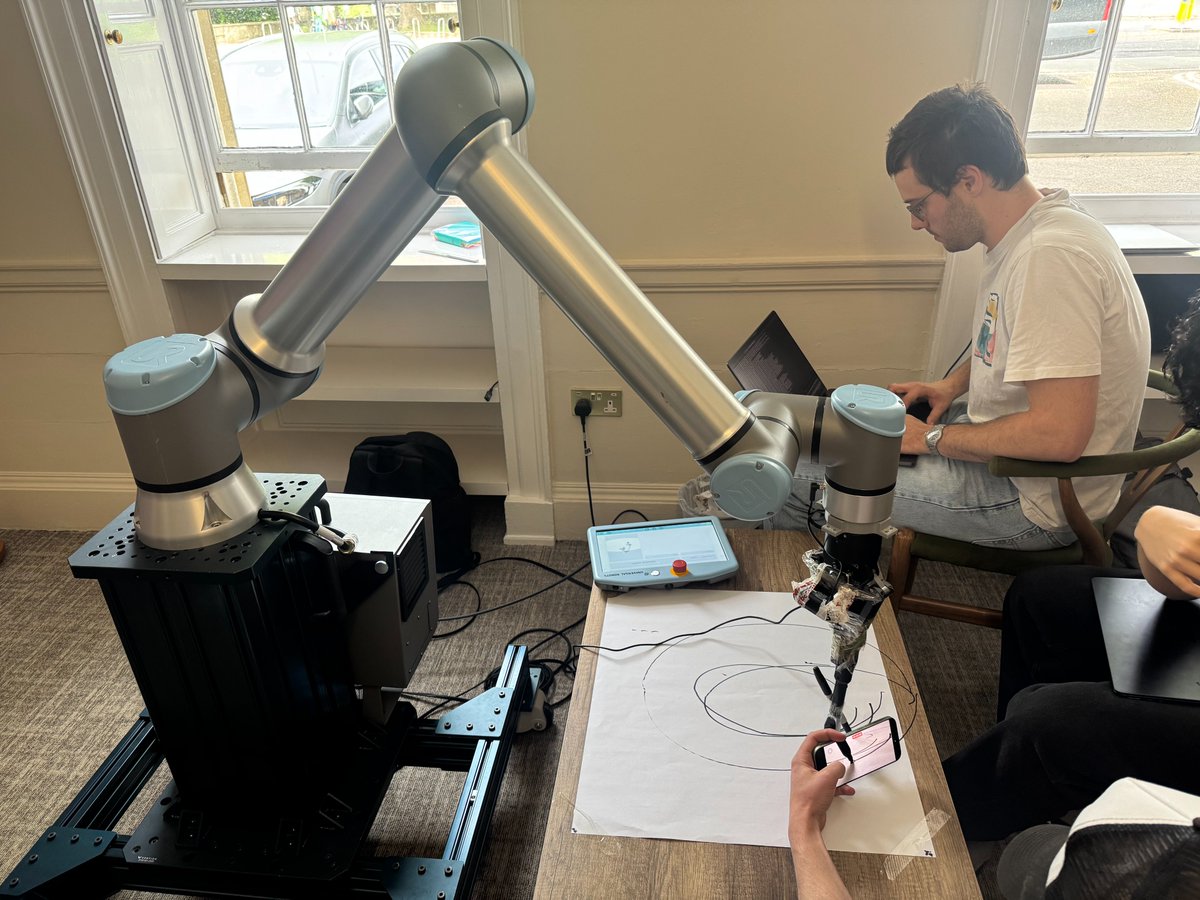
That's a wrap on our inaugural sponsored hackathon! Congratulations to the winners of the "Best Use of Neuracore" award at the Oxford Edge and Oxford Artificial Intelligence Society Hackathon this weekend. Well done to Sarthak Das from the robot learning team at Neuracore for his effort on-site supporting teams and presenting the award!
1
1
13
473
Neuracore reposted
Most simulation benchmarks for VLAs cannot tell you whether their numbers map to reality. REALM can: p < 0.001 correlation with real-world rollouts across 7 manipulation skills and 5 perturbations. The sim-to-real gap has been the central reason I have argued for collecting real data wherever possible. Most simulation benchmarks tell you something, but you cannot tell whether that something maps to reality. REALM, from Martin Sedlacek and the team at CTU Prague and Amsterdam, takes that problem seriously. The team built a simulation environment designed to correlate with real-world performance, and then validated it. Pearson values close to identity on task progression curves. Attention maps from ฯ€0 show 0.85 cosine similarity between matched real and simulated frames. They did not skip the validation step. They led with it. That changes what the simulation results actually mean. Across 15 perturbation factors covering visual, semantic, and behavioural variation, ฯ€0, ฯ€0-FAST, and GR00T N1.5 all show noticeable performance drops under semantic perturbations despite their internet-pretrained VLM backbones. All show sensitivity to camera viewpoint despite training on DROID's unusually diverse viewpoint distribution. The hardest axis of generalisation is across objects and their properties, not across skills. Reliability under perturbation is low across all three models. If the sim correlates with reality at the level REALM demonstrates, these are not simulation artefacts. They are real failure modes that real teams should be planning around. Two things this tells us. Validated simulation has a role in evaluation that it does not yet have in training. The cost of running thousands of perturbed rollouts in the real world is prohibitive. If REALM's correlation holds up across more task families, sim-based evaluation could become a serious tool for surfacing failure modes that ad-hoc real-world testing misses. The failure pattern across all three tested models also points back at the same place it always does. Pretraining buys you semantic grounding and skill primitives. It does not buy you robustness. The next generation of training data needs to focus on demonstrations where the object, scene, and viewpoint move underneath the skill, not on more demonstrations of the same skill on the same object. Paper link in comments.
3
8
78
6,900
New to Neuracore? Check out our latest platform tour on YouTube and see how teams collect, observe, train, and deploy, all in one workflow. youtu.be/kjQ8RWJExb4
9
1,797
This weekend we're powering the Oxford Hardware / Physical AI Hackathon at @UniofOxford, with free access to the Neuracore platform for every participant. Hosted by The Oxford Edge and @OxfordAI with hardware from @FoundryRobotics, @Quanser and @huggingface LeRobot. Sensor kits from Atech. Coding credits from @AnthropicAI and @Cursor. If you're going, come find us!
1
2
11
1,957
Watch the full episode here: youtu.be/9VYgVsK5orU?si=10mdโ€ฆ
2
140
๐—ฅ๐—ฒ๐˜€๐˜๐—ฎ๐˜‚๐—ฟ๐—ฎ๐—ป๐˜๐˜€ ๐—ฑ๐—ผ๐—ป'๐˜ ๐—ป๐—ฒ๐—ฒ๐—ฑ ๐—ฐ๐—ผ๐—ป๐˜ƒ๐—ถ๐—ป๐—ฐ๐—ถ๐—ป๐—ด ๐—ผ๐—ป ๐—ฟ๐—ผ๐—ฏ๐—ผ๐˜๐—ถ๐—ฐ๐˜€. ๐—ง๐—ต๐—ฒ๐˜† ๐—ป๐—ฒ๐—ฒ๐—ฑ ๐˜๐—ต๐—ฒ ๐—น๐—ฎ๐˜†๐—ฒ๐—ฟ ๐˜๐—ต๐—ฎ๐˜ ๐˜€๐—ถ๐˜๐˜€ ๐˜‚๐—ป๐—ฑ๐—ฒ๐—ฟ๐—ป๐—ฒ๐—ฎ๐˜๐—ต ๐—ถ๐˜. @IvanTregear, CTO of @KAIKAKU_AI speaks on the misconception that operators are tech resistant. Most are eager to deploy. The real blocker is foundational: no databases, no analytics, no sensing layer for automation to act on. Head to the link in comments to watch our new series exploring Robotics in Europe.
1
7
859
Most robot learning stacks assume you've already picked your hardware. Switch arms, switch grippers, switch sensors, and your data pipeline breaks. That's the Infrastructure Tax. And it's the reason teams spend more time wiring up robots than training models. Neuracore is hardware agnostic by design. Here it is making a cup of tea on an Open Arm. The same platform runs the same way on any embodiment you point it at, from research arms to industrial manipulators to humanoids. One stack. Any robot. Clean, high-fidelity data flowing into your training pipeline regardless of what's holding the kettle. Your hardware shouldn't decide your roadmap.
6
51
5,607