Cofounder & CEO, @octantbio ; BoD @Ginkgo ; Husband of @karinlynnalm ; Previously Associate Professor, @uclachem

Joined June 2009
703 Photos and videos
Pinned Post
We've started IND-enabling studies on a small molecule corrector for Rho-associated autosomal dominant retinitis pigmentosa (Rho-adRP). I thought it would be fun to spend some time walking through our approach and why we are excited. Long đŸ§”1/
29
74
451
227,230
Sri Kosuri reposted
Well, today seemed like as good a moment as any—while I was unpacking from vacation—to have Claude analyze my genome. This is not a trivial problem given my variant call file is over a decade old. But that also provides some nice challenges wrt file formats and ref calls.
9
15
101
26,708
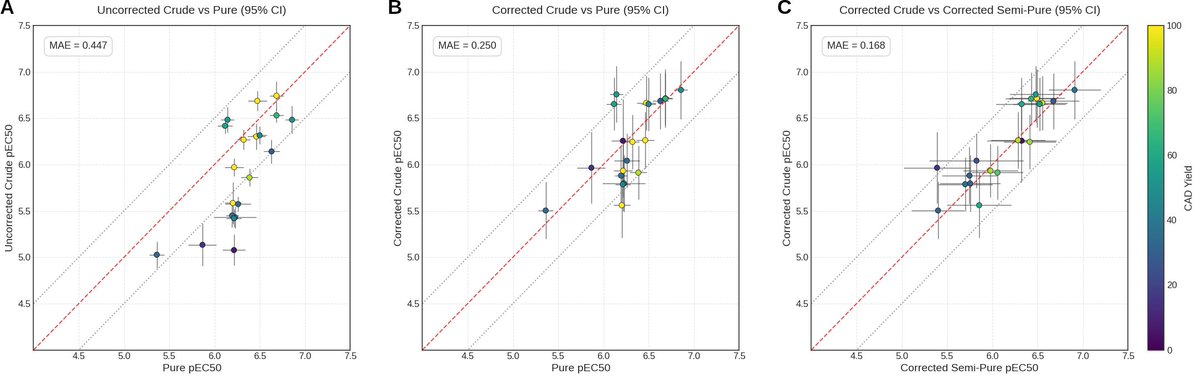
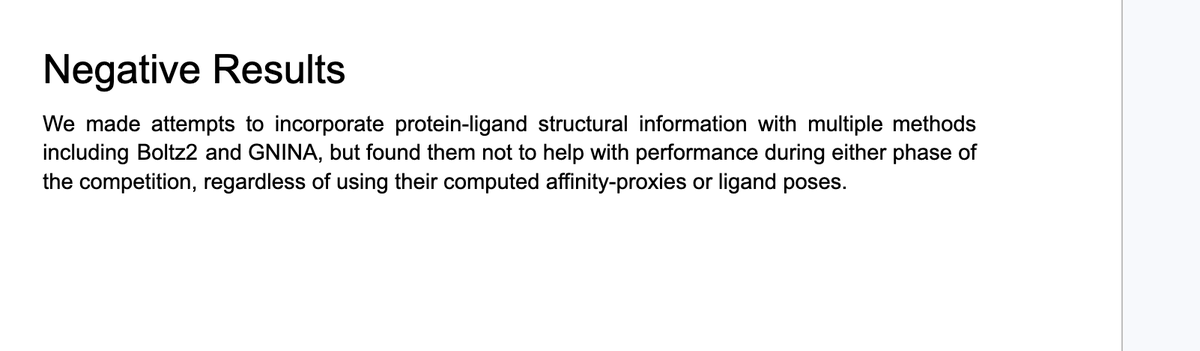
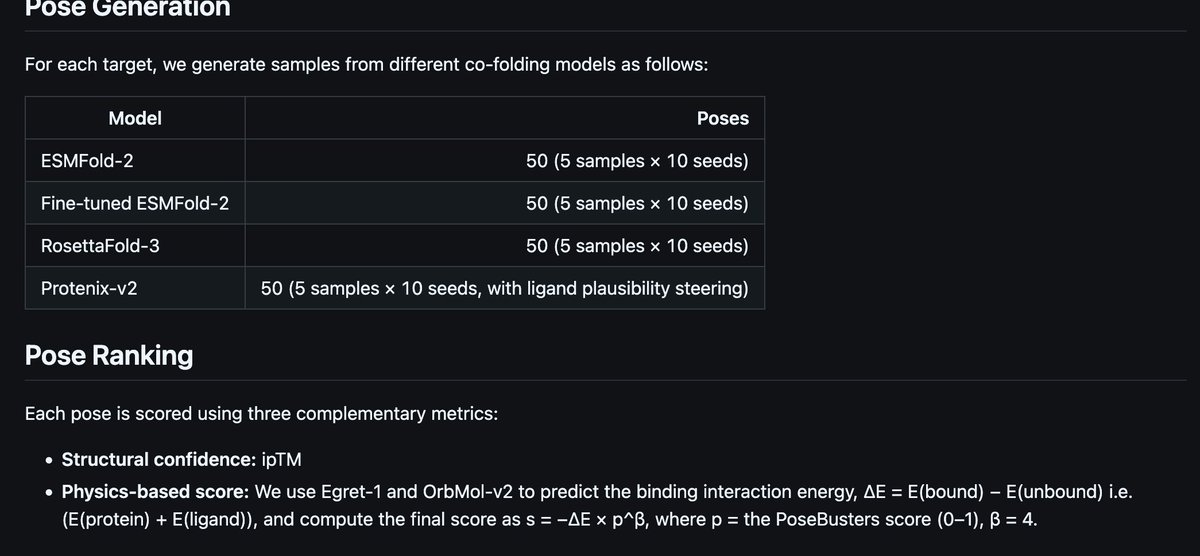
The OpenADMET PXR competition is over. Participants were trying to predict if drugs get metabolized by PXR. Some findings: 1. Best activity model used no structural information, despite trying 2. Best predicted structure method did consensus sampling over 4 co-folding models
3
10
38
6,030
OpenADMET PXR challenge is now completeete! Check out the leaderboard here. Overall impression was that it was a tough challenge on both the activity and structure tracks. Looking forward to learning about everyones approaches. openadmet.ghost.io/its-the-e

2
7
21
2,281
Sri Kosuri reposted
Interesting read
Everyone's talking about AI-designed antibodies. Having sat through several such "revolutions," I was wondering, is this the real one, or just another flop? So I wrote a long-form essay on whether it holds up. Spoiler: the science checks out, not so sure about the business.
1
3
12
7,156
Sri Kosuri reposted
@ssankar asked me a year and some days ago if I wanted to join the Army, and here we are, both reservists in Detachment 201. New episode of my podcast out today where we talk about year one (feat. my regulation mustache). I truly admire Shyam’s dedication to American innovation. His heretics and heroes framework extends beyond military/defense applications and perhaps resonates even stronger with the AI shift we’re seeing across the industry. Tune in: open.spotify.com/episode/2ge

1
1
28
20,632
Sri Kosuri reposted
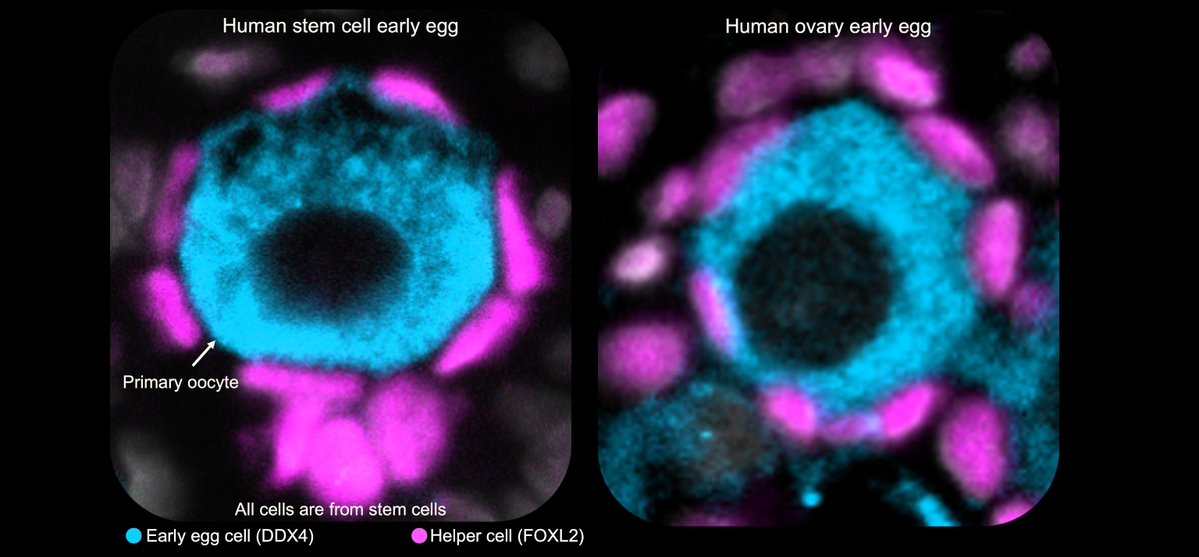
I’m so excited to share this update on @Conception – We’ve generated the first early human eggs derived from stem cells. This is a big deal -- the potential to redefine fertility is real.
438
894
6,468
2,491,436
Sri Kosuri reposted
At Edison, we are on a mission to leverage AI to prevent or cure all diseases. Today, we are announcing a critical step: our first partnership using our AI scientist, Kosmos, to launch new biotech companies. Many of the most transformative new medicines begin life in biotech companies rather than big pharmas. We are partnering with Population Health Partners (PHP) to deploy Kosmos across their company creation pipeline. Kosmos will assist in the creation of PHP’s companies, allowing us to bring more medicines to patients. PHP has an outstanding track record of incubating successful biotech companies like @MetseraInc (acquired by @pfizer in a $10B deal), and The Medicines Company (acquired by @Novartis for $9.7B), to name just two. With PHP, we will focus on biotechs treating population-scale diseases like cardiovascular disease and obesity. If we can scale up the process of launching Metsera-style companies, we have an opportunity to transform medicine in the coming years.
6
35
168
30,402
Sri Kosuri reposted
I know I sound like a broken record, but I'm so tired of this bullshit. The cell is nothing like this. The dimensions are all wrong -- a typical protein molecule is 3-5 nm, so ~5000 times smaller linearly than a typical 20 um eukaryotic cell, and one part in 100 billionth the volume. There's far too much empty space, the cytosol is packed with molecules. The collective wavelike motion is pure fantasy -- stochasticity dominates at the molecular level. I suspect scientists put together these animations to show to the layman how much we know, but to me it just points out how much we DON'T know, and doesn't even begin to convey the true complexity.
Scientists have created one of the most detailed 3D reconstructions of a human cell (eukaryotic cell) ever produced. This groundbreaking model, often termed a "Cellular Landscape Cross-Section Through a Eukaryotic Cell," combines data from X-ray tomography, nuclear magnetic resonance (NMR), and cryo-electron microscopy to map molecular structures in extreme detail.
19
49
425
54,089
A few thoughts on China biotech: 1. Generally not a fan of protectionism, and blocks to China will just push things to India or elsewhere and give people in the US a few more years to not innovate. It will be worse for patients, protect me-too innovators, and slow the change needed in building the future in the US. 2. Founders likely either have to take advantage of the international playing field now or build real innovation that leads to important drug products that people can’t easily make slight improvements too without you. They should also be working on their second and third generation products to replace their own drugs way earlier. 3. I think MFN pricing in the US will likely be a great thing for innovation at the expense of global public health. It will force countries to choose either the best medicines or decide that their citizens health is not worth it. 4. We haven’t figured out how to financially reward those that take true bio risk and are right. We don’t see investments here because it’s just too hard using traditional modalities bc profits get eaten away too quickly through fast followers.
6
8
80
9,550
Sri Kosuri reposted
Since the 1960s, the genetic code has been used to predict protein sequences from DNA and mRNA sequences.  Our @Nature article demonstrates that these predictions miss thousands of protein sequences present in human tissues. Across >1,000 human samples, we identified numerous abundant proteins whose amino acid sequences differ from those predicted by the genetic code. These proteins are not rare translation byproducts. They accumulate to thousands of copies per cell. Some are more abundant than the proteins predicted by the genetic code from the same transcripts. Their abundance reflects a combination of alternate RNA decoding mechanisms — including codon-anticodon mismatches, tRNA abundance, and RNA modifications — and selective stabilization of the resulting proteins. The last factor – protein stability – emerges as a major determinant of protein abundance across proteins, proteoforms and cell types: slavovlab.net/research.htm#P
 Alternate RNA decoding is pervasive across functional groups of proteins, healthy and diseased tissues. It affects proteins playing key roles in neurodegeneration, and some alternately decoded proteins show strong enrichment in tumors compared to their surrounding tissues. This discovery has been a long and exhilarating journey with Shira Tsour and the @slavovLab team. It started in 2019 and proceeded through many challenges and thrilling highs. A journey that has opened new perspectives that we long to explore! 1/
We report many proteins not predicted by the genetic code. They are stable & abundant O( 10³ ) copies / cell. Generative mechanisms include codon-anticodon mismatches & RNA modifications. Their abundance depends on codon frequency & protein stability. biorxiv.org/content/10.1101/

17
236
782
116,025
Sri Kosuri reposted
Wow, end of an era. I was at SGMO 2010-2013 with Fyodor Urnov, Ed Rebar, Bryan Zeitler, Mike Holmes, Philip Gregory, Jeff Miller and so many other great scientists. It was a wonderful training ground for me. Fond memories of the work we were doing in gene and epigenome editing “before CRISPR” The company laid the groundwork for so much that came after.
RIP Sangamo
2
6
21
9,480
Sri Kosuri reposted
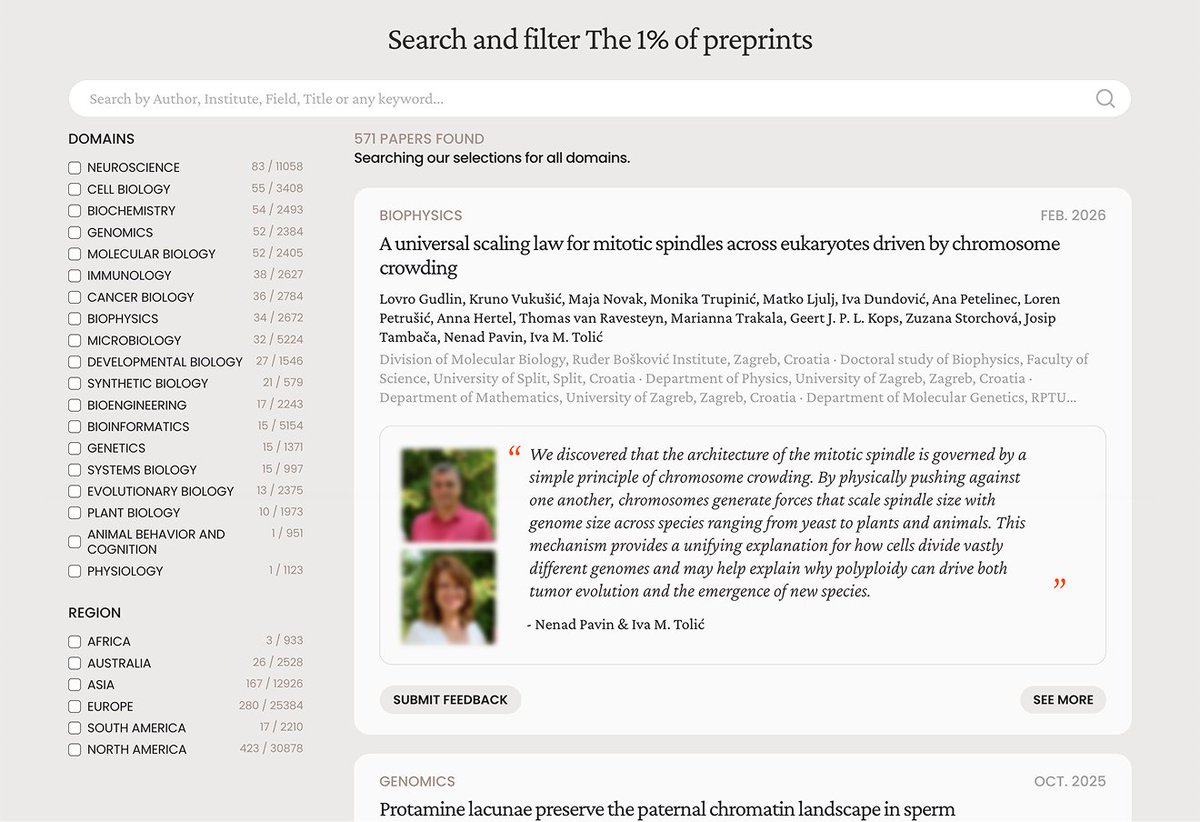
Gloves are off! TODAY WE RELEASE THE 1% A list of the year’s very best papers. When we launched QED a little over half a year ago, I told you that our mission is to revolutionize scientific publishing. Revolutions don’t happen overnight
 or maybe they do? When new technologies enable it? Time to put the power back in the scientists’ hands, not the journals’. Many scientists are depressed, and think journals will stay the same forever, no matter how dysfunctional, but no, it’s happening. Sooner than most people (or committees, or universities) can imagine. Check this out: When we released our AI review platform, it started a whole debate (and social media storm) on what it is that human reviewers can do that AI review still can’t. There are such things (and I’m happy about it), but the list is getting shorter and shorter. Numerous scientists already use QED to find gaps in their manuscripts and grants and to get constructive feedback that improves their experiments. And now, with your help, we take it to the next level. Today we release reviews and scores for all the experimental Life Science pre-prints that came out last year: 57,455 manuscripts!! If we are being conservative, and estimate that it takes a minimum of 8 hours to review a paper (it takes longer), and if we agree that 3 reviewers are typically required to review every submission, then reviewing this amount of manuscripts would take human experts >1 MILLION REVIEWER HOURS
 Assuming you can find so many experts (not going to happen!), and assuming the experts who agree would have no conflict of interest (ha!!). QED did it. Then, we chose the best papers in every field (you can browse and search for key words), based on the originality and validity of the claims being made. We benchmarked our reviews not only using eventual journal selections but also by comparing our evaluations to those of human experts. When there were disagreements between the QED score and journal rank, we asked domain experts to judge who’s right (blindly), and they overwhelmingly sided with QED. No need to rely on glam journals anymore. No need to wait for two years to get their stamp of approval. No need to beg the reviewers, or worse, to write less ambitious papers, so no one would be upset. Want to find the most interesting papers in your field? Want to see where your paper stands? (“What’s your QED SCORE?”) Just visit qedscience.com! One last thing: We want good science to be seen (you can read the winners’ comments about their selection and the stories behind their discoveries on our website). We plan to organize a conference where the first authors (yes, the first authors, not the PIs) will present their work. We are not here to shame anyone (papers that got low scores). The reviews of the best papers that we selected explain why QED’s AI thought these papers are especially good - what’s unique about them, what their strengths are, which conceptual leaps were made, and what cutting-edge tools were developed. However, on the QED Science site you can analyze any paper in private, it’s fully transparent, and see if there are any gaps and what’s missing. Run your paper to see how it can improve, and maybe next time your paper will reach the top (if it’s not there already). Whether you’re on the 1% list of just have a good score that you want to share, on our website you can download the report and share it, for example with your tenure, promotion, or hiring committee, or with your university PR department. Forget about journal embargoes and waiting for it to be “accepted”. Improve your work until it’s good enough for YOU. You decide.
28
52
243
138,147
Sri Kosuri reposted
New paper from the @nablabio team expanding generative drug design to multispecifics, the intracellular proteome, and pushing the limits of atomic precision. A tour de force of computation wet-lab and some incredible results, including zero-shot design of a KRAS G12V pMHC-targeting bispecific that recruits primary T-cells from human donors and achieves picomolar cell killing. Much more in our post and report
Today, we expand zero-shot drug design beyond binding to the design of multifunctional medicines, the intracellular proteome, and state-of-the-art atomic precision with our model, JAM-2. In a new report (below), we show: 1. The first drug-grade, fully computationally designed multispecific antibodies against five peptide-MHCs: Routine picomolar T-cell activation/cell-killing EC50s, >100-fold selectivity, and drug-like developability 2. The first fully generatively designed, drug-grade dual-variant KRAS G12 multispecifics: They recruit primary T-cells from human donors to kill G12V and G12C presenting cells at pM to single-digit-nM potency, completely sparing wild-type. 3. Atomic accuracy, from sequence alone: Angstrom-level agreement between Cryo-EM and JAM-2 de novo designs, requiring only target sequences (not structure) as input. 4. Unrivaled speed with an AI-native in-house wet lab: Designed, built, and tested five programs in one parallelized campaign, end-to-end in-house in ~6 weeks. 5. A higher validation bar for AI-generated drug candidates: In a field increasingly rife with hype and uneven standards of proof, we provide the highest quality public wet-lab validation of AI-designed antibodies to date. We share experimental methods in full, and invite folks to adopt and build on these standards. Truly individualized therapies will be the most important contribution of AI in drug design. These advances help accelerate this future.
10
27
155
55,358
Sri Kosuri reposted
In new work, we lay out a vision for a high-level programming language for generative biology, called Proto. Proto composes generative and predictive models spanning DNA, RNA, proteins, ligands, and their interactions, which we use to design complex biological functions. 1/n
19
168
709
72,017
Team at @nablabio continues to kill it.
Today, we expand zero-shot drug design beyond binding to the design of multifunctional medicines, the intracellular proteome, and state-of-the-art atomic precision with our model, JAM-2. In a new report (below), we show: 1. The first drug-grade, fully computationally designed multispecific antibodies against five peptide-MHCs: Routine picomolar T-cell activation/cell-killing EC50s, >100-fold selectivity, and drug-like developability 2. The first fully generatively designed, drug-grade dual-variant KRAS G12 multispecifics: They recruit primary T-cells from human donors to kill G12V and G12C presenting cells at pM to single-digit-nM potency, completely sparing wild-type. 3. Atomic accuracy, from sequence alone: Angstrom-level agreement between Cryo-EM and JAM-2 de novo designs, requiring only target sequences (not structure) as input. 4. Unrivaled speed with an AI-native in-house wet lab: Designed, built, and tested five programs in one parallelized campaign, end-to-end in-house in ~6 weeks. 5. A higher validation bar for AI-generated drug candidates: In a field increasingly rife with hype and uneven standards of proof, we provide the highest quality public wet-lab validation of AI-designed antibodies to date. We share experimental methods in full, and invite folks to adopt and build on these standards. Truly individualized therapies will be the most important contribution of AI in drug design. These advances help accelerate this future.
2
2
57
10,152
Sri Kosuri reposted
Thank you. It's true! See the funding deal we offer at Neo.com/residency - $750K uncapped - $450K compute credits - We get to invest in the next equity round up to 5% ownership (no add'l pro rata) - We give each founder a profit share in our fund
2
3
44
2,913
Sri Kosuri reposted
Go @inductive_bio! đŸ„‡ Dying to know our anthem
 And thanks to all the OpenADMET coalition members for supporting the data sharing, tools, and benchmarking that will uplevel small molecule discovery efforts all across the ecosystem @AsteraInstitute @UCSF @gatesfoundation @ARPA_H @OctantBio
Medal Ceremony for the first OpenADMET competition complete with AI generated anthems. 1st Place: @inductive_bio 2nd: @Merck 3rd: @Merck_KGAA
2
18
2,947
FYI: picture on medal is a novel cyp3a4 cryo structure from @fraser_lab that will be in the next competition launching in September.
1
8
650
Closeup of @inductive_bio’s medal
3
1
14
1,473