
The marketing has been excellent. The movie could be complete shit, but when everyone’s making memes out of it and posting theories on X, the networking effect takes over.
Jamie Brown retweeted

In South Africa its:
networking when you are white, cadre deployment when you are black
lobbying when you are white, corruption when you are black
1
73
113
1,228

Stealth is not everything. 5th gen is any day far better than 4.5 gen in BVR and networking capabilities.
23h

As per Vishnu Som, the Su-57 has suboptimal stealth comparable to the Rafale, and argues the Rafale is the better choice.
In contrast, Air Marshal Anil Chopra has argued on India Today that India should directly import two squadrons of the Su-57.

Mike Baller(Ø,G)🇱🇷 retweeted

Networking is overrated.
Being genuinely good at what you do gets you further than collecting business cards.
13
106
105
347

It's officially Summer Pathology Conference week!
We can't wait for a weekend of outstanding education featuring distinguished faculty. Plus, plenty of networking with colleagues!
See the agenda: flpath.org/page/SummerAgenda
Register here: flpath.org/event/Summer2026
#FSPsummer26

5

Structural Investment Themes for the Next Decade
1. Life Sciences & Longevity
Aging populations create a structural, non-cyclical demand driver for healthcare innovation. GLP-1 therapies, oncology, cell and gene therapy, and longevity biotech are reaching commercial scale after years of scientific progress, expanding the addressable market over time.
2. Power & Energy Infrastructure
The defining bottleneck of the decade. AI compute, electrification, and industrial growth are overwhelming grid capacity and power delivery. Investment in transmission, grid-scale storage, data-centre power, and energy security is supported by both commercial demand and sovereign priorities.
3. Automation & Intelligent Systems
Structural labour shortages are making robotics, autonomous logistics, and AI-powered manufacturing operational necessities rather than optional upgrades. Advances in AI and rising defence spending broaden the opportunity while adding a counter-cyclical element.
4. AI & Digital Infrastructure
AI growth depends on physical infrastructure. The highest-conviction opportunities lie in the enabling layers—compute, networking, liquid cooling, and power delivery—rather than more richly valued semiconductor companies.
5. Circular Economy & Advanced Materials
Regulation, particularly in Europe, is creating durable, policy-backed demand for recycled materials and sustainable manufacturing. Advanced recycling, waste-to-value technologies, and sustainable packaging offer steadier growth than consumer-driven sustainability themes.
6. Housing & Built Environment
Chronic housing shortages across developed markets require more productive construction. Modular building, digital platforms, and industrialised construction offer scalable solutions, though adoption remains gradual due to planning, financing, and regulatory constraints.
7. Food Security & AgTech
Climate volatility, population growth, and supply-chain risks make food security a long-term strategic priority. Precision agriculture, resilient farming systems, and alternative proteins offer significant potential but require patient capital due to slower adoption.
Invest where long-term demand is inevitable, capital intensity creates barriers to entry, and structural tailwinds can compound value over many years.
#Housing
#MMC
#Infra
#Circular-economy
#Peptides
#Longevity
#Energy
2

Minnesota State Representative Huldah Momanyi Hiltsley and Guinness World Record-holding climate activist Truphena Muthoni have crossed paths at a major leadership networking event in Mombasa, bringing together top trailblazers in global politics and environmental conservation.
328

Join with us to Meet ‘n’ Greet Dr. C. K. Ashok Kumar, Founder - First World Community firstworldcommunity.org/ CIIC 5th Mega Demo Day!!
On August 5th, 2026 at Vandalur campus.
Participant Registration: Register Here
ciicventures.accubate.app/ex…
@aicciic @startupindia @investindiaofficial
@meitystartup_hub @thestartuptn
@msmedepartment @AICTE_INDIA @TheStartupTN
@AIMtoInnovate @parvezalamm @nisha_muks @trnataraj2002
#CIIC #Crescent #edii #meity #ITNT #Investors #AngelInvestors #Networking #Startup #Tamilnadustartups #Incubator #StartupEcosystem #Accelerator #Students #Startupenabler #Innovation #Entrepreneurs #Entrepreneurship #StartupCommunity #StartupSupport #InnovationHub #StartupLife #Mentor #EntrepreneurGoals #BusinessGrowth #Industryconnect #TechnicalAdvisors #agriculture #standards #export

3


Startups, Investors and Professionals Pitch and Networking Event NYC
meetup.com/startup-pitch-net…

6
pg casaroli retweeted

Computer Networking 101: Sockets 🛠️
The best way to understand what sockets are and how they work is to write a few simple client-server programs. The good news is that it's only a few lines of Python or Go. Or if you feel courageous, try C - the code will be more verbose, but it's as close as it gets to the actual system API.
A few problems to practice (in a friendly, controlled environment with helpful hints):
- Write a simple TCP Echo server labs.iximiuz.com/challenges/…
- (simpler) Write a client for a telemetry server labs.iximiuz.com/challenges/…
- (harder) Write a client for a chat server labs.iximiuz.com/challenges/…
- Make one server work with both TCP and Unix sockets labs.iximiuz.com/challenges/…
Happy hacking!

2
14
98
2,845

For years, member networking has evolved from printed directories to online directories and then event applications. Now, a fourth stage is emerging: Relationship Discovery.
Download Moving Beyond the Directory:
connectorapp.co/whitepaper3.…


gMummmmmmm~~!
I always thought installing a new networking protocol would be the hard part.
Turns out... that's probably the easy part :3
The real challenge starts after that.
Every network behaves a little differently.
Some days everything runs smoothly.
Then traffic suddenly spikes, a bunch of nodes end up in the same region, or your network provider decides to have a bad day 😂
That's usually when you find out whether your settings actually work.
That made me think about mump2p a little differently.
It doesn't feel like something you install once and forget.
It feels more like a tool you gradually learn how to use.
Instead of asking, "How many copies of this message should I send?", you're asking, "How can I spread these shards in the smartest way?"
That's where parameters like ShredFactor, PublisherShardMultiplier, and ForwardShardThreshold come in.
Changing those values can completely change how your network behaves.
What's interesting is that two operators can run the exact same blockchain with the exact same client... and still get different results just because they tuned their networks differently!
I kind of like that :3
It means there isn't one perfect setup for everyone.
You're always making trade-offs.
Maybe latency goes down... but CPU usage goes up.
Maybe packet recovery gets better... but bandwidth usage increases a little.
So you tweak one thing, watch the results, and tweak it again.
Over time, you slowly figure out what works best for your network.
One thought kept popping into my head though.
Why not just throw more bandwidth at the problem?
It sounds simple, right?
But that usually isn't a great long-term solution.
Bandwidth isn't free, and networks can't absorb unlimited traffic forever.
Optimum seems to take a different approach.
Instead of sending more data, it tries to send smarter data.
Honestly.........
I like that idea a lot more!
The more I learn about mump2p, the less it feels like a plugin.
It feels more like a toolbox.
The protocol gives you the building blocks.
How you tune them is up to you.
And I think that's where the fun starts :3
At the end of the day, I don't think the goal is finding the "perfect" configuration.
It's about understanding your own network a little better every day and making small improvements over time.
That probably matters much more than chasing one magical setting!
@get_optimum


gMum!
Today I spent some time thinking about Optimum(@get_optimum) from a validator's point of view.
At the end of the day, validators care about numbers.
How many slots did I miss?
How much reward did I earn?
Did my APY improve?
The technology behind it is important, but the real question is much simpler.
"How does this affect my returns?"
That is where Optimum started to make more sense to me.
There are many reasons a validator can miss a slot.
But some of them come down to the network.
Sometimes data arrives too late.
Sometimes it never arrives.
Sometimes it arrives, but not in time to be useful.
Blocks, transactions, blobs, and attestations all need to reach validators quickly.
If they do not, a validator can miss an opportunity even if everything else is working correctly.
When that happens once, it may not seem like a big deal.
But over time, those small misses add up.
Two validators can run the same hardware on the same chain and still end up with different results simply because one receives information a little faster.
That is exactly the problem Optimum is trying to improve.
Instead of sending full messages, mump2p spreads RLNC-encoded shards across the network.
Intermediate nodes do not wait for the complete message.
They can recode the shards they already have and immediately forward new ones.
In simple terms, the goal is to reduce the number of times data arrives too late or does not arrive at all.
What stood out to me is that this is not only about improving average speed.
It is also about reducing tail latency those rare moments when an important message arrives much later than expected.
For validators, those moments can be surprisingly expensive.
Most of the time everything works fine.
But if a critical block or attestation arrives late at exactly the wrong moment, it can mean a missed slot.
One missed slot may not matter much.
Over hundreds or thousands of slots, however, those small losses can slowly reduce APY.
For large validators, even a small percentage difference can become meaningful over time.
I also started thinking about MEV.
The sooner a validator receives transactions and bundles, the more options it has when building a block.
Better information arriving earlier can mean better block construction, not just faster block construction.
That means network propagation can affect more than basic rewards.
It can also affect MEV opportunities.
Another thing I like about this approach is that it is not based on throwing more hardware or bandwidth at the problem.
Instead, mump2p tries to deliver more useful information using the same network resources.
The idea is not: "Spend more money to get better performance."
It is closer to: "Use the same infrastructure more efficiently."
The more I think about it, the more it feels like Optimum is making a simple argument to validators.
Maybe part of the revenue you are losing is not caused by your hardware.
Maybe it is caused by the way information moves through the network.
If the propagation layer becomes faster and more reliable, fewer opportunities are lost.
Over time, that can show up in the numbers that validators care about most:
Higher APY.
Fewer missed slots.
Better MEV opportunities.
Behind all the RLNC, shards, and recoding, the message feels surprisingly simple.
The same infrastructure. The same risk. Better results! :3

2
🍻MONDAY 🗽NYC CONNECTS Young Professionals | Networking Happy Hour🚕
meetup.com/nycconnects-socia…

7

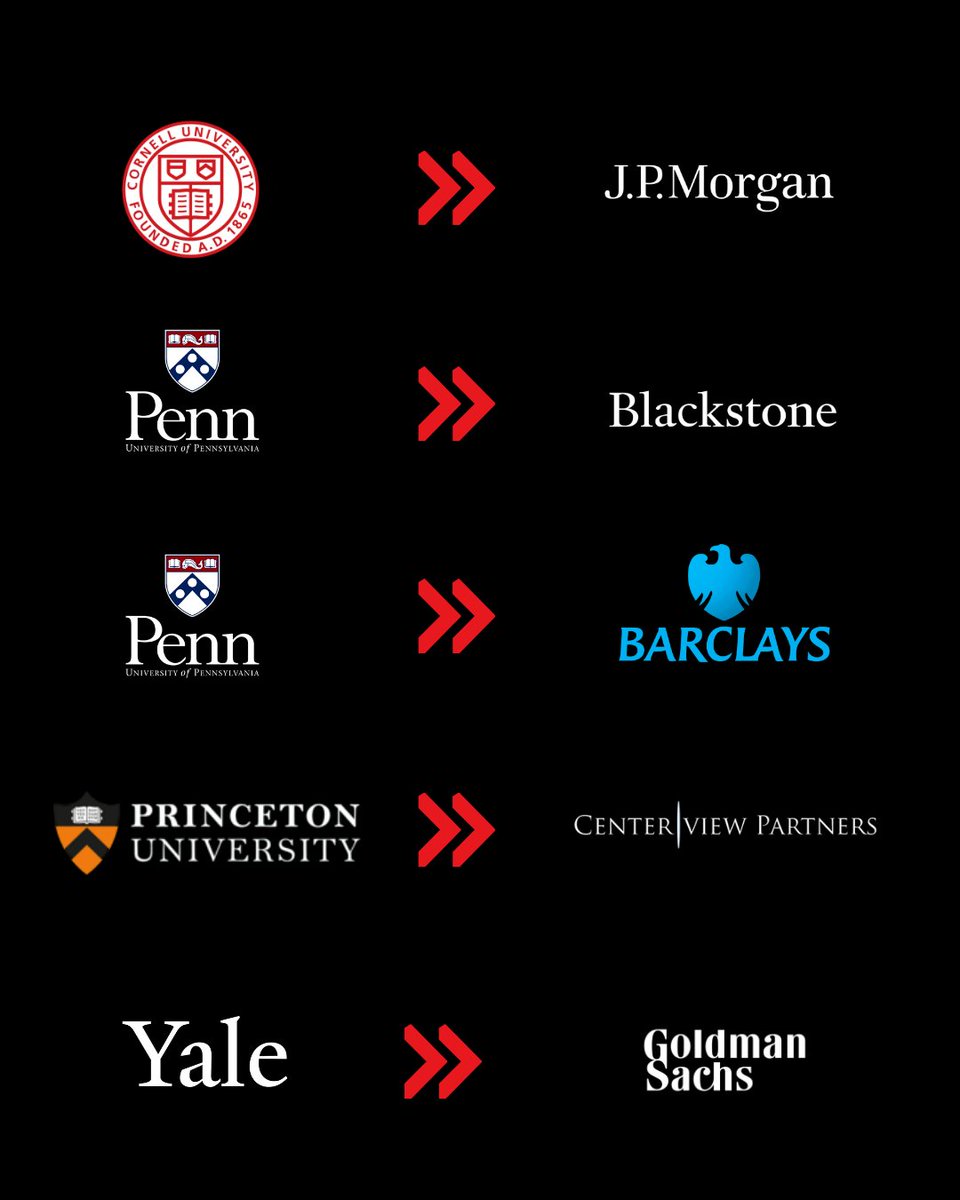
🚨 Break into High Finance Now 🚨
WSO Academy ⚡ Fast Track has helped students from non-target schools and all backgrounds master technicals, behaviorals, resumes, and networking — and land at least one offer.
👉 Apply to WSO Academy NOW >>> 🔗 wallstreetoasis.com/academy/…
⏳ Start now or miss out.



31

🎟️ Have you purchased your gala ticket yet?
Join the KTF Tourism Networking Gala on 18th Sept 2026 at Tamarind Tree Hotel – Mitsumi Gardens.
Table (8): KES 50,000
Members: 7,000 | Non-members: 8,500
📞 0738 614 499 / 0722 745 645
📧 admin@ktf.co.ke
Do not miss out!

17

'networking & social activities' next to 'devil's elbow' is the most honest event description i've ever seen