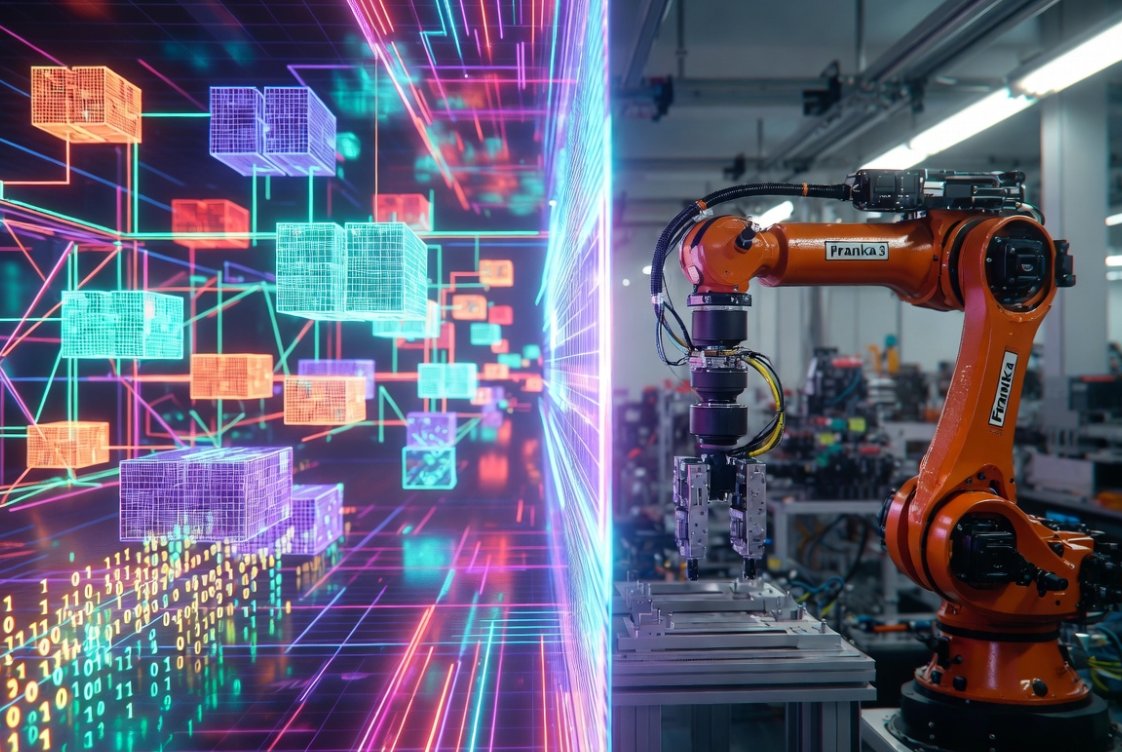
Axis Robotics’ @axisrobotics simulation engine is the part of the stack that turns human demonstrations into scalable robot training data. It sits at the center of the company’s simulation-first approach and connects browser teleoperation, augmentation, and sim-to-real deployment into one pipeline.
The core idea is simple: users control robots in a browser through a MuJoCo WebAssembly frontend, so they can create demonstrations without special hardware or heavy compute. Those demonstrations are saved in a unified trajectory format, then replayed on GPU-based Linux servers where an IsaacSim-based backend generates realistic, domain-randomized rollouts. This makes the data more diverse and more useful for training robot policies.
What makes the simulation engine technically interesting is that it supports multi-simulator development and cross-machine orchestration across web, Mac, Windows, and Linux GPU systems. That means the platform is not tied to one environment or one machine type. It can move data and tasks across different systems while keeping the training pipeline coherent.
The engine also feeds two production workflows: data cleaning and trajectory refinement, plus model training with sim-to-real evaluation. In other words, it is not just replaying motions for display - it is actively preparing data for real-world robot deployment.
Axis Robotics describes this as a way to solve the robotics data bottleneck by building a distributed data engine for Physical AI. The broader vision is to convert raw human intuition into valid trajectories, scale them through simulation, and turn them into robot intelligence that can work in the physical world.
#AxisRobotics #PhysicalAI #Robotics #AI #SimToReal

25
146