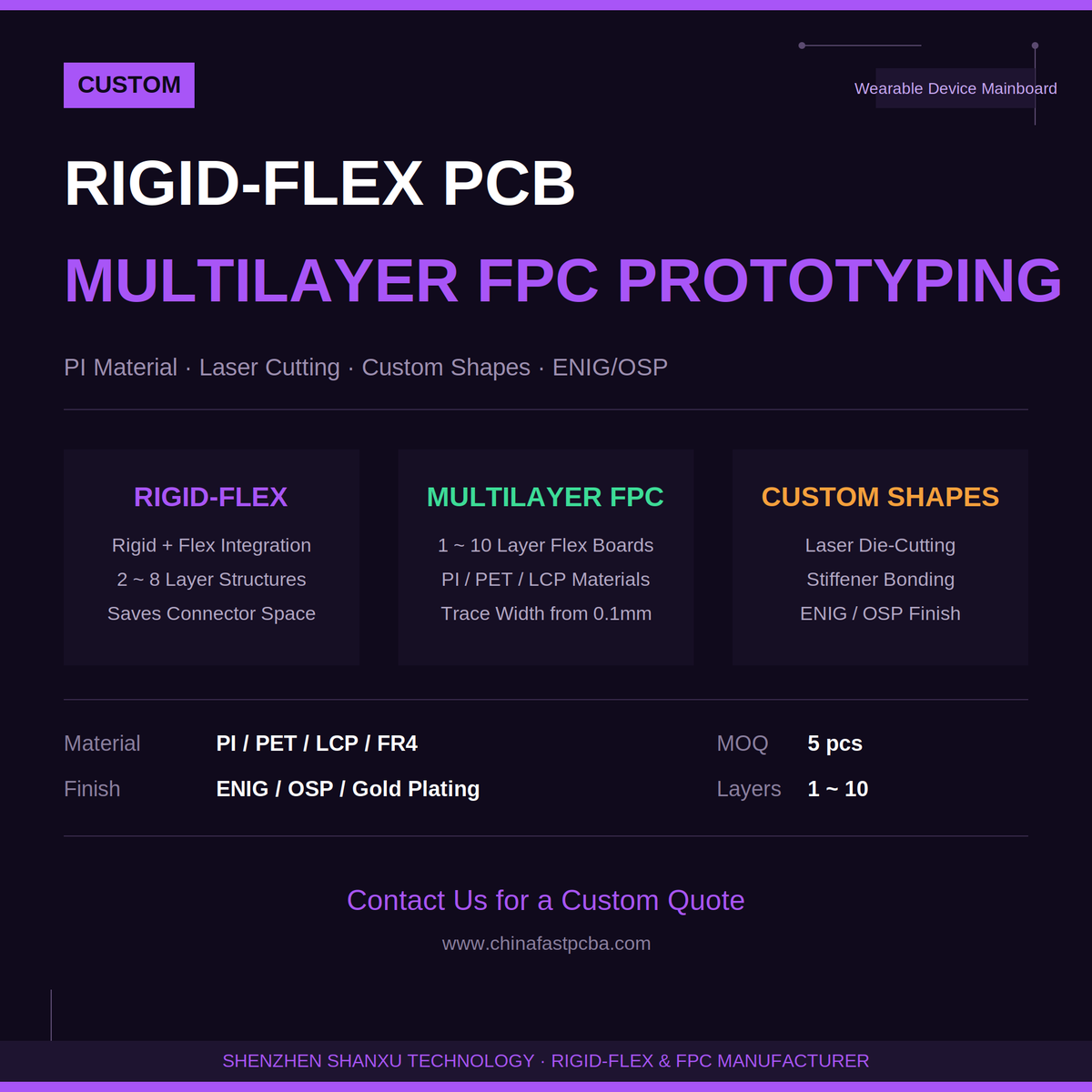
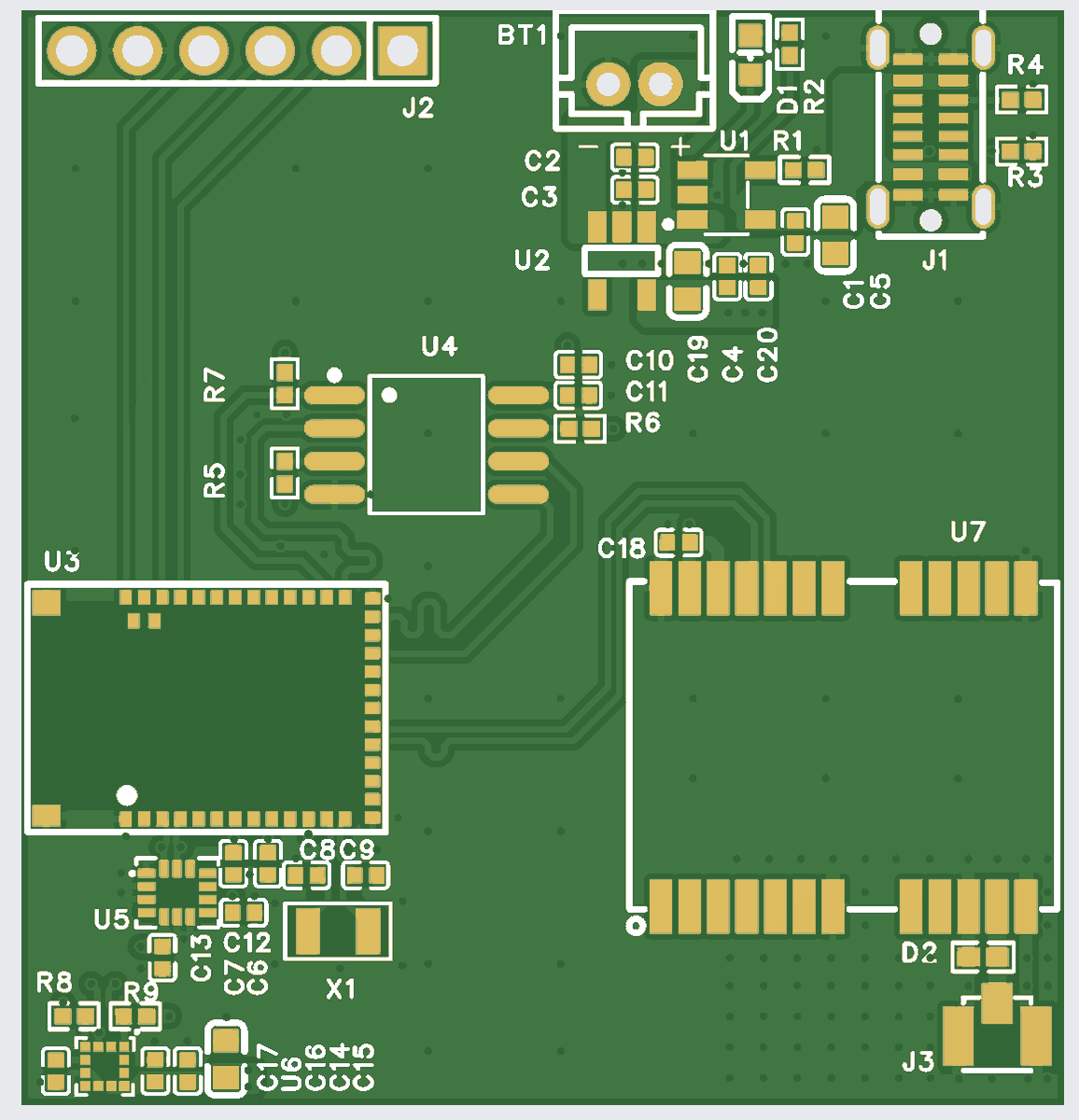
The rigid-flex PCB market is valued at $2.59 billion in 2026 — and wearable technology is one of its strongest growth engines. More than 68% of advanced wearable devices introduced in 2024 integrated rigid-flex structures. The reason isn't hard to find.
Flat rigid boards don't fit inside a smartwatch. Separate rigid and flex assemblies joined by connectors add weight, take up space, and introduce failure points that show up under the constant movement wearables endure. Rigid-flex solves all three: rigid sections carry high-density component placement, flex sections route signals through tight bends, and the whole assembly becomes one integrated structure with no connectors in between.
The manufacturing challenge is real — yield losses in multilayer rigid-flex builds can reach 12%, driven by the precision required at lamination, drilling, and the transition zones between rigid and flex sections. Getting that right consistently is what separates manufacturers who can build wearable-grade rigid-flex from those who claim they can.
At Shanxu Technology, Shenzhen, we manufacture custom rigid-flex PCBs and multilayer FPCs for wearable hardware teams across Europe, Japan & South Korea — smartwatch boards, fitness tracker assemblies, medical monitoring modules — prototype to volume.
Interested? Send us a message!
#RigidFlex #FPC #WearableTech #PCBA #PCB #ElectronicsManufacturing #Shenzhen #Wearables