Entrepreneur, Techie - Ethical Hacker / Vibe Code Fixer / AI Generalist, Geopolitics Researcher. I love yoga and traditions of Bharat | ॐ नमः शिवाय

Joined July 2009
5,519 Photos and videos
Tech Demystified ♨ ✍ reposted
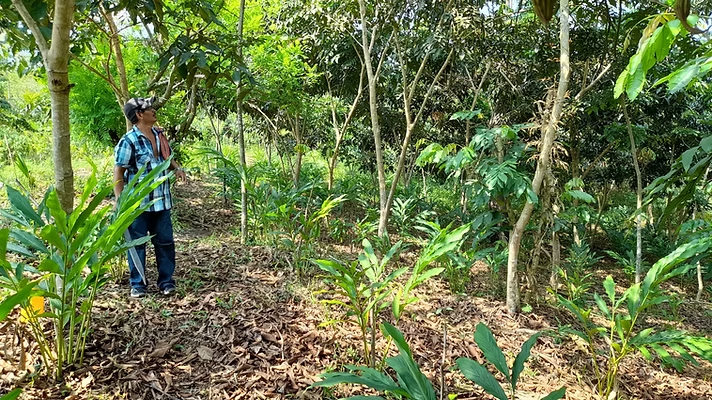
Valluvan - a UN FAO Soil Farmer Hero! When coconut prices crashed, he didn't quit farming - He reimagined it. His farming practices have increased soil organic carbon levels in his farm from 0.5 to 3.36 units! Instead of depending on a single crop, Valluvan transformed his land into a thriving multi-crop, tree based farming ecosystem. Today his farm has withstood droughts and floods, yet improved yields, thanks to natural farming methods. His exceptional practices have earned him international recognition and prestigious awards. Mentored by Save Soil Movement, Valluvan's accomplishment showcases the potential of sustainable farming in addressing global challenges such as depleting soil-yields and low nutritional value in crops. Valluvan comes from a town in Pollachi, Tamil Nadu, and this dedicated farmer is reshaping the future of soil health. vc - Cauvery Calling
3
34
99
2,743
Perplexity has become irrelevant because Google Gemini has crushed it. They did not adapt actively to other domains, as they did with search.
Perplexity went from "Google Killer" to completely vanishing from our timelines. US daily active user share collapsed 65% in just five months. From 6% in October 2025 to 2% in March 2026. It captures just 2% of the global AI traffic market, completely crushed by Gemini & ChatGPT's 56%. At one point, they even tried to acquire Google Chrome for $34.5 BILLION😭
1
1
203
Tech Demystified ♨ ✍ reposted
Palantir's CEO just exposed Sam Altman and Dario Amodei for robbing every Fortune 500 company. Within two minutes, Alex Karp took the entire frontier AI industry apart on national television. His exact words: "Every single enterprise in this country, these people are LIVID. They are paying for tokens that create no value. These people are stealing the weights and alpha of my business." He literally said the entire frontier AI business model is intellectual property extraction dressed up as a subscription. Then he also destroyed the pricing model with a single question that Silicon Valley still refuses to answer: "If it was so valuable, let's say I can make you $1 billion tomorrow. Wouldn't I say I'll make you $1 billion and I want 30 percent? Why are they charging for tokens if it's so valuable?" That question breaks the industry. If OpenAI and Anthropic's models truly delivered the productivity gains the labs claim, they would take equity or a share of the profit they generate. They would not sell access by the million tokens. Token pricing is itself the CONFESSION that the product cannot produce reliable value at scale. If it did, they would price for the value. But they price for the compute because that is what they are actually selling. Karp went even further... He called the entire arrangement "a wealth tax that does not help the poor. It just punishes." American businesses are transferring the alpha of their operations, meaning the workflows, the customer data, the strategy memos, the internal models that make them competitive, directly into the training pipelines of a handful of Silicon Valley labs. Once those labs retrain, the customer's own edge becomes the next enterprise product sold back to their competitors. And the part the AI industry does not want anyone thinking about: Every enterprise running its confidential documents, its customer conversations, and its financial models through a frontier model is potentially teaching that model HOW to replace them. The vendor collects the token fee AND the compounding intelligence about that customer's business. That is the mechanism. And that is why Karp used the word "stealing." He claims this is why every executive he meets is furious in private and silent in public. Nobody wants to be the CEO who called out the labs and then discovered their next competitor was built on their own leaked workflows. The entire AI industry has been priced for perfection on one assumption: That frontier labs produce durable, defensible value that justifies infinite compute spend. But Karp just told us that the customers do not believe that assumption anymore. They believe they are being taxed without benefit, watched without consent, and copied without recourse. The moment enterprises stop believing, the whole valuation stack shakes.
995
2,938
15,598
2,841,676
I wonder if there will be any prime-time debates on this s**ual assault on a woman by the so-called godmen in the Tamil media. That should tell you all about what the media's bias is and what news they want to highlight.
1
3
10
178
I think the threat of GLM 5.2 really worked 😅
Fable 5 is back.
1
75
Tech Demystified ♨ ✍ reposted
Databricks is embracing Chinese open source model GLM-5.2. Earlier, Microsoft said they were looking to embrace DeepSeek. Major American software companies are embracing Chinese open source models to cut token costs. I have long advocated using the Chinese models running in one's own infrastructure. We have Zoho-specific small models that we use in production. This approach also will become common for larger companies, as it becomes easier to set up the training pipeline to train your own org specific model.
GLM-5.2 is the open-source Claude moment. The demand we’re seeing at Databricks is astonishing. The world is going to see massive adoption of oss LLMs. Also, more companies will shift toward post-training their own models on top of oss models and owning the weights.
91
320
2,573
232,778
Tech Demystified ♨ ✍ reposted
Citizen Vigilante (2026) - A raw, unflinching Western mirror to Dhurandhar. As an Indian who has lived through decades of our country bleeding from Islamic terrorism - Pahalgam, Pulwama, 26/11 Mumbai, the endless pain in Kashmir, the targeted killings of our soldiers and civilians, this film hits differently. We know what it feels like when ideology from a “holy book” is twisted to justify the slaughter of innocents. We know the frustration when the system fails to protect its own people. *Citizen Vigilante* is not just another action movie. It is the Western expansion of what *Dhurandhar* did for Indian audiences: a direct confrontation with the reality of imported (or home-grown) radicalism and the collapse of rule of law when ideology clashes with civilization. Directed and written by Uwe Boll (known for low-budget, no-holds-barred films), starring Armie Hammer as Michael Sanders, the film runs a tight 89 minutes. It was released on June 19, 2026, and immediately became one of the most controversial releases in recent memory. 1
This tweet is unavailable
12
45
128
10,762
This is mostly the reason behind Anthropic panicking over open source AI models.
JUST IN: 🇨🇳 China’s new open-source AI model, GLM-5.2 by Zhipu AI, reportedly matches Anthropic’s Claude Mythos in security bug detection. The model outperformed some Claude versions in independent cybersecurity benchmarks and can achieve Mythos-level performance. Unlike Claude Mythos, GLM-5.2 is open-source and significantly cheaper to run. The gap between US and Chinese AI models is narrowing rapidly.
2
80
Tech Demystified ♨ ✍ reposted
🚨 BIG: INDIA'S ENTERPRISE STORAGE INDUSTRY TAKES OFF MiPhi Semiconductors has become 🇮🇳 India's first company to locally manufacture enterprise-grade SSDs at its Greater Noida plant, targeting AI, data centres, automotive and mobile markets. The company aims for ₹1,000 crore in revenue this year and plans another ₹1,000 crore investment to expand production.
3
92
604
8,751
This is just another excuse for multi-billion dollar behemoths to keep their empire safe. If Anthropic were so concerned about AI safety, they would not have released such advanced models so fast in competition with the rest of the AI leader companies. I don't buy one bit of this sorry excuse to keep AI open-source models under check.
🚨ANTHROPIC CEO: OPEN SOURCE AI IS GETTING DANGEROUS Anthropic CEO Dario Amodei told lawmakers that open-source AI is moving down a “very dangerous path.” His warns that once powerful models are released openly, companies lose the ability to monitor misuse, revoke access, or update safety guardrails.
5
146
Tech Demystified ♨ ✍ reposted
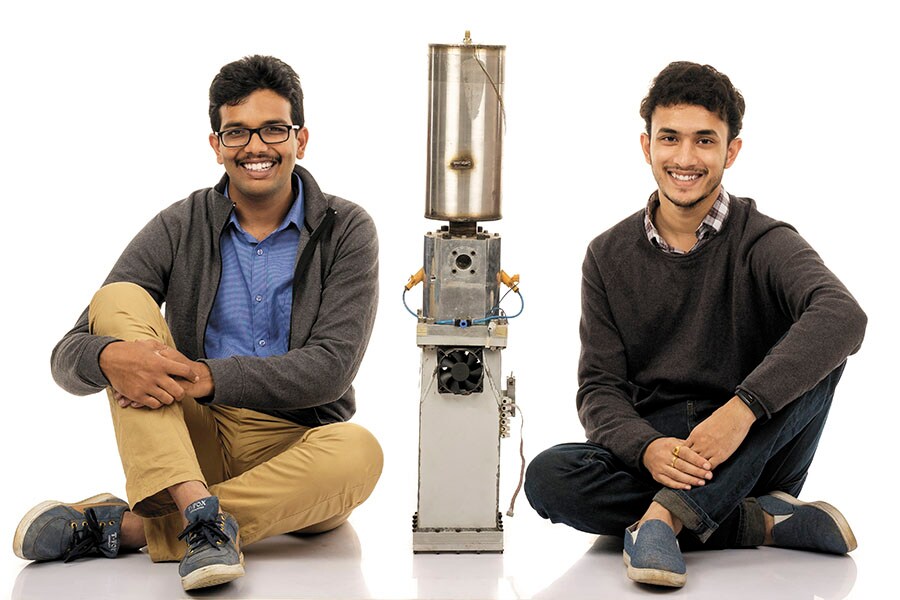
In 2012, a 19-year-old aeronautical engineering student from Coimbatore presented propulsion research at a NASA event. Dr. APJ Abdul Kalam noticed, sought him out for a meeting, and handed him a recommendation letter with one challenge: prove your concept. That student was Rohan M. Ganapathy. Three years later, he and family friend Yashas Karanam co-founded Bellatrix Aerospace from IISc's incubation lab in Bengaluru. The problem they chose to solve touches every satellite in orbit. Nearly all satellites run on hydrazine, a propellant that has been standard since the 1960s. It is deeply toxic, carcinogenic, and so hazardous that it requires specialized crews and loading facilities near the launch site. India imports all of it. Nobody was building an alternative. Bellatrix built two. Rudra is India's first high-performance green propulsion system, delivering hydrazine-equivalent thrust while cutting handling costs by over 60%. Jal is a microwave plasma thruster that uses water as propellant, which Bellatrix claims is the world's first such system built by a private company. Both have been tested in orbit: Rudra fired on ISRO's POEM-3 in January 2024, and again on POEM-4 in January 2025. Their third product, Pushpak, is an orbital transfer vehicle the company says can bring satellite deployment costs from $45,000 to $25,000 per kilogram. In October 2024, Bellatrix signed an MoU with ISRO's commercial arm, NewSpace India Limited, to integrate Pushpak into its launch missions. The company has raised $31 million to date, backed by BASF Venture Capital, Inflexor Ventures, and Cactus Partners. For India, a domestic green propulsion stack means less dependence on imported hydrazine, lower costs for Indian satellite startups, and export-ready technology in a global market actively moving away from toxic fuels. Kalam asked Rohan to prove his concept. More than a decade later, the proof has been fired in orbit. @rohanooty @BellatrixAero @YashasKaranam
34
789
2,991
153,064
Tech Demystified ♨ ✍ reposted
What if your city’s roads could save water instead of wasting it? In Coimbatore’s Race Course Road, smart drains made from recycled plastic are doing just that by harvesting rainwater and reducing floods. Meet EcoBloc, the game-changing Indian innovation that has already saved over 50 million litres and counting. Credits: stonehandsproject on IG #SmartCities #RainwaterHarvesting #Coimbatore #EcoBloc [EcoBloc, Coimbatore, rainwater harvesting, Smart drains, RR Sivaraam, Water conservation]
40
445
1,389
61,010
This is why I argued in a paper a few days back about AGI’s arrival and how we are missing it already!
This is genuinely one of the most powerful Claude stories I have come across. A 62 year old man in India had severe migraines for 25 years. Only when lying down. Neurologists. Nephrologists. Brain MRIs. Blood thinners. Nobody could explain it. His nephew brought everything to Claude. Claude noticed the one thing 25 years of specialists missed. The headaches were positional. It connected dots across nephrology, neurology, and pulmonology simultaneously. Something no single doctor was positioned to do. Then it asked one question nobody had thought to ask in 25 years. Does he snore? Loud snoring for 25 years. Every doctor dismissed it as dialysis fatigue. Sleep study done. Breathing stopped 119 times per night. Oxygen dropped to 78%. CPAP machine. Headaches gone. Claude did not replace his doctors. It just looked at everything at once. That was enough. One Claude conversation cracked it.
2
157
Tech Demystified ♨ ✍ reposted
A few might be thinking: What is Micromax up to? While the average consumer assumes they vanished after the smartphone wars, Micromax has quietly pulled off 1 of the most brilliant strategic pivots in Indian tech history. Instead of fighting losing battles in the retail smartphone market, they pivoted deep into hardware infrastructure through a stealthy JV with Phison Electronics (the Taiwanese global titan of NAND flash controllers) called MiPhi Semiconductors, established in Dec 2024. Historically, Indian tech brands were just "re-badgers", importing finished white-label products from China, slapping a local logo on them & selling them. MiPhi completely breaks that cycle. Micromax holds a 55% controlling stake, while Phison holds 45%. Micromax provides the local manufacturing footprint (via their factories in Noida/Greater Noida), domestic supply chain logistics & sales infra. Phison brings the actual core IP, 2100 global storage patents & elite NAND controller architecture. In mid-2025, MiPhi became the 1st brand to locally design & manufacture enterprise-grade SSDs in India. Now, they are ramping up production capacity 10x, moving from a baseline of 30K units/month to 300K enterprise SSD units/month. Co-founder Rahul Sharma announced that after hitting around ₹100 crore in the fiscal year ending March, the company is targeting a ₹1000 cr revenue run-rate by the end of this year, funded primarily through internal accruals. The best part, when Phison & Micromax announced this venture, they highlighted a major goal: slashing the cost of AI training by 90% using their proprietary storage architecture. Instead of buying hyper-expensive, heavily sanctioned enterprise GPUs (like NVIDIA's H100s) to run massive LLMs, MiPhi has been rolling out solutions (like Phison's aiDAPTIV technology) that offload heavy AI model weights directly onto ultra-fast, high-end local SSDs. In late 2025, they even partnered with Intel and SUSE to demonstrate AI training setups that bypass expensive GPUs entirely for small-to-medium enterprise models. Micromax is very much alive & rocking also :))
24
225
1,135
37,615
Tech Demystified ♨ ✍ reposted
‘Cremation business’ controversy erupted after Isha Foundation modernised Asia’s largest crematorium in Patna Speaking to OpIndia, the foundation explained that its involvement in crematorium management is driven by the idea that every individual deserves a dignified farewell after death. opindia.com/2026/06/isha-fou…
38
130
430
10,860
Tech Demystified ♨ ✍ reposted
"The passing away of veteran Tamil film director and writer Thiru. K. Bhagyaraj is a great loss to the world of cinema. His unique storytelling, creative brilliance and immense contribution to Tamil cinema have earned him a special place in the hearts of audiences. His legacy will continue to inspire generations of filmmakers and film lovers. I extend my heartfelt condolences to his family, friends and countless admirers. May his soul rest in peace." - Rajendra Vishwanath Arlekar, Governor of Tamil Nadu . #KBhagyaraj #TamilCinemaLegend #TamilCinema #LegendaryFilmmaker #CinemaIcon #RIPBhagyaraj
20
207
1,556
15,310
Whose Deaths Matter? Three Cases and a Question for Tamil Nadu's Media! Recently, a visitor to the Isha yoga centre in Coimbatore tragically died by suicide. A state political party has called for a CBCID investigation. On its face, that's a reasonable demand, and I support a thorough investigation of any suspicious death anywhere. What I want to draw attention to is not whether this particular investigation should happen. It should. What I want to draw attention to is the "pattern of coverage" around such incidents, and what that pattern suggests about how Tamil Nadu's media and political establishment decide which deaths to amplify and which to overlook. The party's statement refers to "repeated deaths" at the centre. The most recent prior incident I'm aware of involved a participant who completed a programme and later died by suicide outside the premises - an inquiry concluded the cause was unrelated to the institution but was related to her family situation. Whether there is, in fact, a documented pattern of "repeated deaths" tied to the institution, or whether this framing is itself the story, is a question I find Tamil Nadu's public discourse is not asking. What I find even harder to reconcile is the contrast with how comparable incidents have been covered. Consider three publicly reported incidents in Tamil Nadu over roughly the past two and a half years: Incident 1 - June 2026, Coimbatore: A 27-year-old man's half-burnt body was discovered in a roadside drainage channel adjacent to a church compound. Police recovered the body with stab and cut injuries, and the local station officially upgraded the case from a missing-persons file to a homicide investigation. To my knowledge, the story received only routine local crime-page coverage; it did not become a sustained prime-time conversation in Tamil media. timesofindia.indiatimes.com/… Incident 2 - February 2026, Erode: A senior official of a major Christian denomination, recently appointed to a newly created diocesan post, died after a fall from a roadway overpass during what was reported as a routine morning walk. Police filed a case under Section 174 CrPC (suspicious/unnatural death) to determine whether the death was accidental, intentional, or otherwise. The incident did not, to my knowledge, generate sustained discussion in mainstream Tamil-language media. anglican.ink/2026/02/14/bish… Incident 3 - January 2024, Kanyakumari district: A 45-year-old local political-party functionary was killed during a confrontation at a parish residence, in a dispute connected to a church-run institution. Police registered a murder case naming 15 individuals, including two clergy members. The case received wire-service and English-paper coverage but did not, in my recollection, drive sustained Tamil prime-time debate. thehindu.com/news/cities/Mad… I list these not to assign guilt, but to make a narrower point: each of these is, on its face, the kind of incident that ordinarily generates loud and sustained coverage. A homicide investigation. A senior religious figure dying in unclear circumstances. A murder case in which clergy are named. In comparable circumstances involving certain other institutions in Tamil Nadu, prime-time debates would and have, in my experience, run for weeks. That asymmetry is the thing I feel is worth examining. Selective coverage rarely needs coordination. It can emerge organically from the political alignments, audience preferences, and ideological priors of editors and anchors. Except that it does not look like that here. But the "effect" is real, and the effect is what citizens experience: a public square in which some deaths trigger weeks of demands for accountability, while others are quietly closed. A few questions I think are worth asking, regardless of where one sits politically: - Why does a "repeated deaths" framing get amplified for one institution, but never applied to others where comparable or more serious incidents are publicly documented? - When investigations into hyped allegations conclude with no wrongdoing, does the same media cover those findings with anything close to the prominence they gave the initial allegations? - What does it say about the health of a state's public discourse when which deaths matter (and which don't) appears to track the political or institutional affiliation of those involved? I am explicitly "not" arguing that every death should be sensationalised. Quite the opposite - I'd prefer none of them were. What I am arguing is that selective amplification, applied consistently in one direction, is itself a form of bias. And those who claim the mantle of "liberal," "secular," or "guardians of truth" should, in my view, be the first to call it out. That they don't is the reason I find Tamil Nadu's self-styled progressive establishment increasingly hard to take at its word. PS: These views are my own and reflect publicly reported information. Where investigations are ongoing, no individual is being accused of wrongdoing; the piece is about coverage patterns, not guilt or innocence.
2
10
21
441
Tech Demystified ♨ ✍ reposted
🇮🇳 JUST IN: BharatGen is targeting a 1 trillion-parameter AI model by March 2027, backed by the IndiaAI Mission, 2,400 GPUs, and one of India's largest academic AI collaborations. But perhaps its most ambitious goal isn't scale. It's affordability. BharatGen says its models already cost around ₹5 per million tokens, compared to roughly ₹13 for DeepSeek V4 Flash. If India wants AI to reach every developer, startup, business, and citizen, the race isn't just about building the biggest model. It's about building one everyone can afford. Read more: analyticsindiamag.com/ai-fea… @GoI_MeitY @iitbombay @YannLeCun #BharatGen #IndiaAI #SovereignAI #GenerativeAI #ArtificialIntelligence
30
103
626
35,555
Tech Demystified ♨ ✍ reposted
🚨 IBM unveils the world's first sub-1 nm chip tech that packs nearly 100 billion transistors onto a single piece of silicon the size of a fingernail. 🙏
38
235
3,941
102,207
Tech Demystified ♨ ✍ reposted
Samshaan bhi swarg jaisa ho sakta hain!
This person talking on Isha running crematoriums is either uninformed or deliberately dishonest. Isha is not “entering the cremation business.” It has been running Kayantha Sthanams in partnership with government bodies for years, with 33 crematoriums. In Tamil Nadu, Isha also offers free cremation services for below-poverty-line families. Its facilities use LPG, pollution-control measures, hygienic amenities, mortuary vans, mandapams for rituals, and trained staff. Why were they invited to Bihar? Because the model has worked. A decade-plus track record of dignity, efficiency, transparency, and corruption-free functioning is precisely why governments are trusting Isha with more such crematoriums. Bihar is not a random experiment. It is an expansion of a successful model. Similar requests have come from many other places too, because the need is real. The purpose is simple: dignity in death. A fixed standard fee, decided by the government, is charged to prevent exploitation. This fee is not randomly decided by Isha. It goes towards operation and maintenance of the facility. That means the family knows the cost upfront. No hidden bargaining. No random tips. No ad hoc “adjustments.” No middlemen turning grief into a revenue opportunity. This matters because everyone knows how crematorium costs often work on the ground. The official rate may look low on paper, but by the time wood, transport, rituals, informal payments, queue handling, priest/barber charges, “tips,” and local pressure are added, the real cost can become many times higher. Isha’s model cuts through that by putting the cost, process, and responsibility into a transparent structure. What exactly is the “profit” here? Cremation is not a money-making business. It is dignity in death. It is a service that requires staff, fuel, maintenance, vehicles, infrastructure, cleanliness, waste management, and operational responsibility. A government fixed charge for running such a facility is not profiteering. It is transparency. Bihar’s Bans Ghat arrangement reflects the same logic. The Patna facility has 18 cremation platforms, can handle around 50 cremations a day, and the fee is ₹3,500. The point is dignity, order, cleanliness, and freedom from exploitation. So the real question is not: “Why is Isha charging?” The real question is: why is he uncomfortable when a corrupt, opaque, exploitative system is replaced by a fixed-cost, cleaner, dignified, government-trusted model? When the poor get free service, the common family gets a fixed cost, and the departed get a dignified farewell, calling that “premium business” is not fact-checking. It is propaganda.
6
31
102
3,708