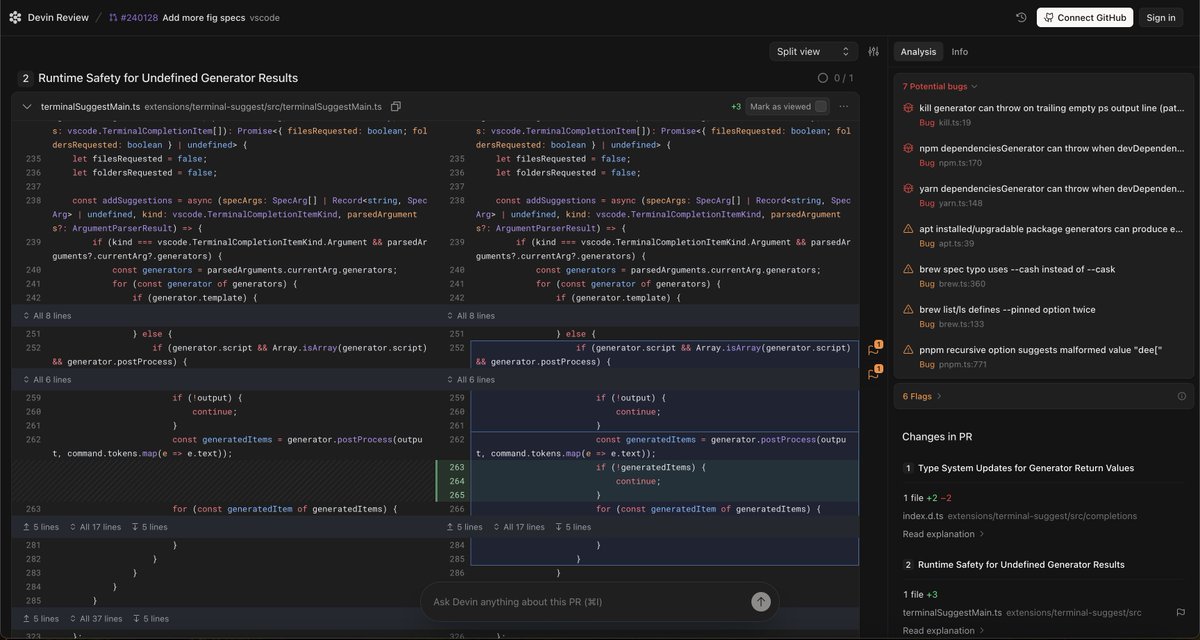
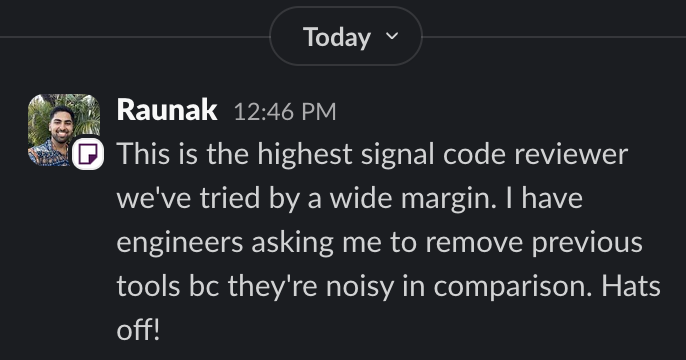
Frankly I think this is the reason Devin is having such a comeback
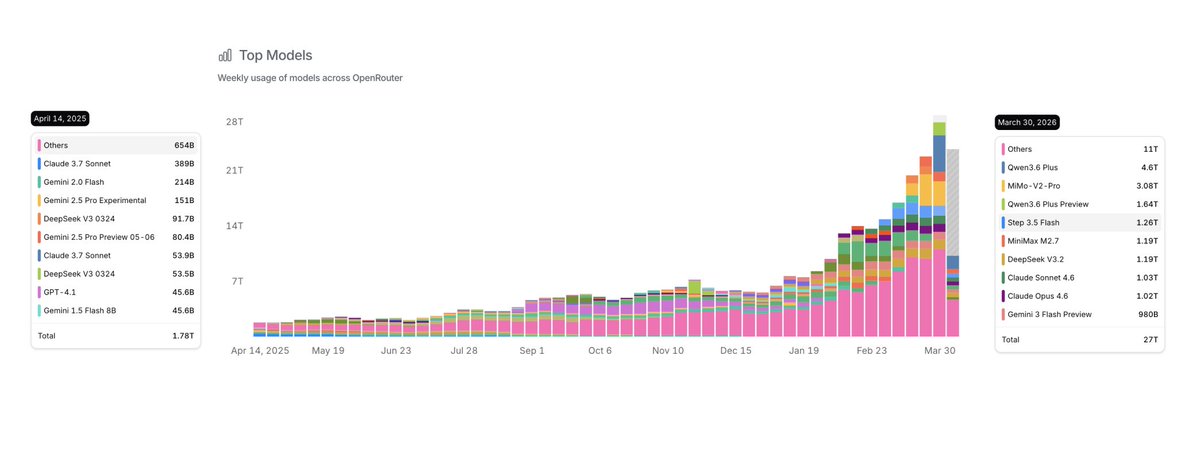
Nobody is really doubting the productivity gains of AI, and I would guess that companies would still be willing to pay the exponential if they must... But token spend is scaled and open source is now really good. It makes sense we are now spending energy to curb the runaway train
Extreme high-growth startups are only now thinking about token spend, but this has been an enterprise (read: Publicly Traded Company) concern since day 1
Want to understand how Cognition so quickly grabbed all the big banks and giant Fortune 100 enterprises as customers? Aligned incentives is the answer.
1. Being an independent company
Because we are not a model lab with $100B raised and $1T of data center commitments, we don't need to "catch up" by selling increasingly more expensive tokens
Nor do we need to push a specific model family to make margins.
Our only calculus is
- "Is this the best model for the job?"
- "Can we make the user more productive?"
- "Can we save the user money?" (increasingly)
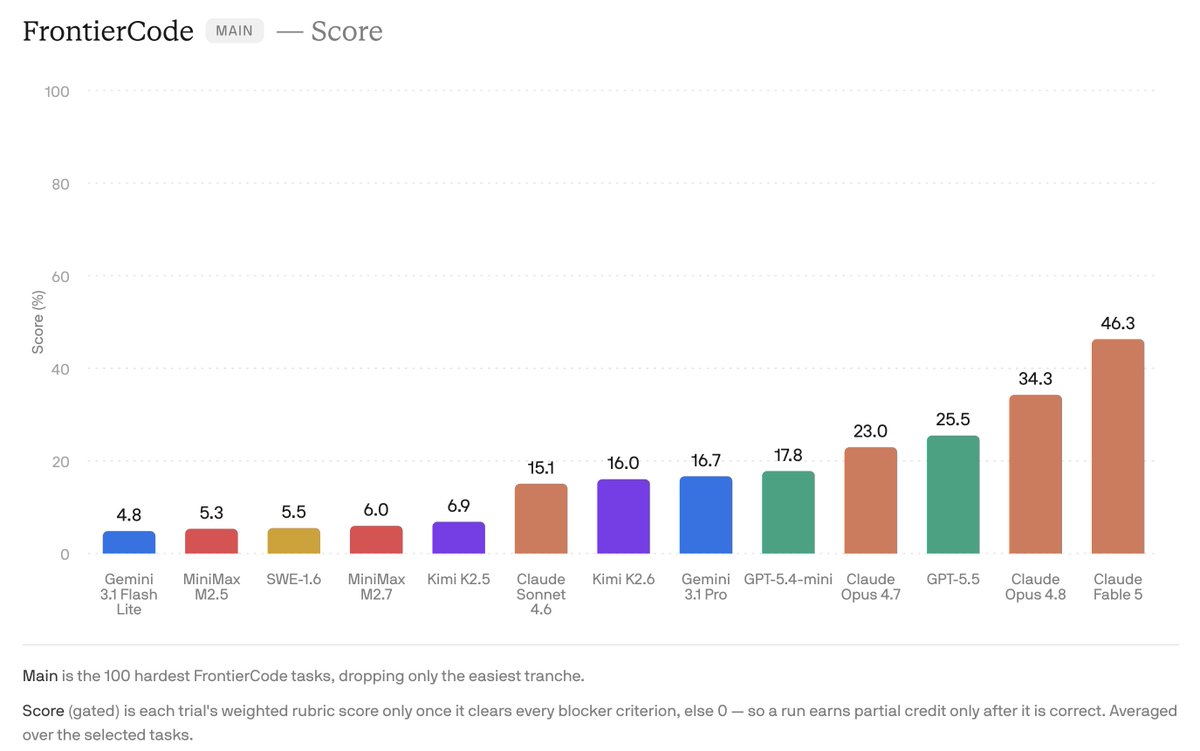
This comes in the form of post-training research (building cheap specifically tuned coding models) new coding evals (FrontierCode benchmarks) model routing (a lot behind-the-scenes of Devin's cloud harness).
You should be skeptical of an Italian restaurant pushing the expensive market price specials. Just like you should be skeptical of a model lab pushing the newest most expensive model
2. Enterprise cost controls
As a pre-requisite to selling enterprise contracts to the biggest companies in the world, you need really good spend controls.
These banks and big conglomerates have been token-sensitive since day 1. They saw the writing on the exponential.
For this reason, Devin has the most complete & robust spend controls of any coding agent on the market.
The boring stuff of orgs, users, scopes, limits. But it matters.
3. AI Productivity alignment
Cognition has an "AI Productivity Guarantee"
That means if Devin delivers less engineering value than you’re paying for, Cognition will fund your usage until it does, up to $10 million.
This is the tip of the iceberg and the one thing about Cognition that has been most novel to me since joining. Everything (and I mean everything) in our GTM motion is oriented around ROI.
Every conversation is rooted in the actual engineering tickets we are taking off the backlog.
I can only imagine what it would be like if instead conversations were rooted in "how can we entice users to burn through tokens"
How to keep AI spend flat while token usage grows exponentially: Not with friction and spend alerts. With better defaults, routing, and caching.
Better Defaults (not Usage Caps) – Engineers can choose any model they want, but defaults matter. We’re experimenting with defaulting to open weight models like GLM 5.2 and Kimi 2.7 through our LLM gateway, while still encouraging engineers to choose the right model for the task. 91% of our employees were never hitting their usage caps, so instead of lowering caps and driving up alerts, we're moving to cheaper defaults. Note that code reviews use a diversity of models, so they can check each other's work.
Better Routing – In our custom harnesses, we preprocess prompts and route to the best model for the job, considering cache hits and model pricing. For instance, you may want a frontier model for planning, but not for execution where they can be overkill. Ultimately, humans shouldn't be choosing models - AI can automate this task.
Better Caching – Cache misses are the easiest way to drive your cost up. All of our requests are cache aware, so we’re reusing a warm cache wherever possible. For example, our cache hit rate went from 5% → 60% in LibreChat once properly implemented.
Keep Context Lean – Start fresh sessions when switching tasks. Scope file context narrowly. Disconnect unused tools. Don't just compact. The goal isn't fewer tokens used, it's fewer tokens wasted.
Better Visibility – Our engineers can use as many tokens as they want, from whatever model they want, but we’ve made usage visible – and the more you spend on AI, the more impact we expect.
The goal isn't to suppress usage. It's to build the infrastructure that makes exponential growth sustainable.
Putting this into practice has cut our AI spend nearly in half, while our token usage continues to grow.