Joined May 2019
38 Photos and videos
Pinned Post
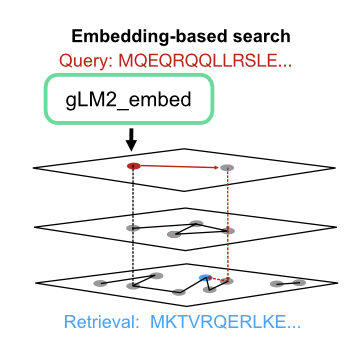
Protein–protein interactions (PPIs) are key to discovering and interpreting new biological functions. We’re excited to introduce 𝑭𝒍𝒂𝒔𝒉𝑷𝑷𝑰: a new application of gLM2 that uses genomic language modeling to predict proteome-wide PPIs in microbial genomes in minutes.
9
77
454
23,918
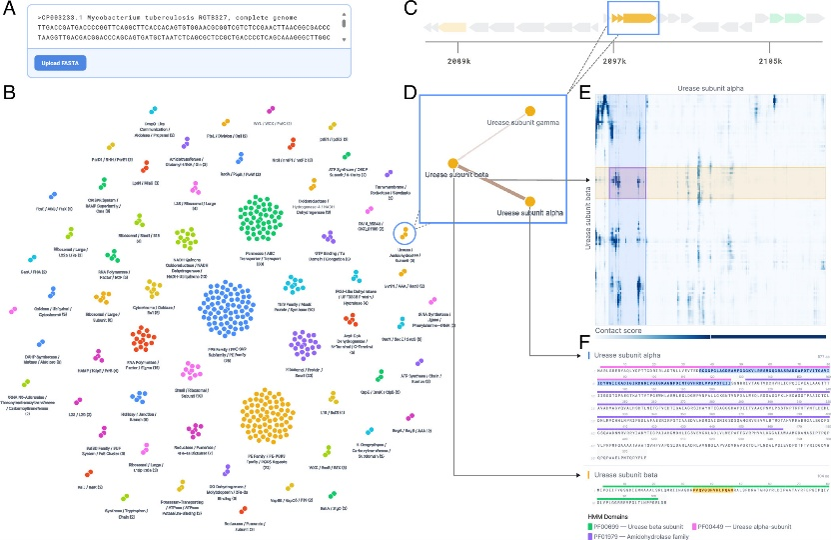
With pre-calculated FlashPPI2 interactions in SeqHub, you can immediately discover predicted physical interaction partners in the native genomic context AND examine how conserved these patterns are across diverse organisms. Give your favorite protein a try, and let us know what you find!🪄
In SeqHub, you can now search a protein to find FlashPPI2-predicted interaction partners across all 400 million proteins and 132K microbial genomes in our database (OpenGenome). You can still upload full genomes to find interactions within and between genomes.
2
19
3,190
We used FlashPPI2 to predict PPIs across hundreds of millions of proteins across 130K genomes on SeqHub, surfacing these interactions in the context of a protein search. A big thank you to Steinegger Lab, Milot Mirdita, @sacdallago, EBI et al. for making the high-confidence AlphaFold complexes openly available!
Two weeks ago, our FlashPPI paper was published in @PNASNews. Today, we introduce our updated model, FlashPPI2. Fine-tuned on new AlphaFold structures, this new model achieves a 17% improvement over FlashPPI on the E. coli protein interaction benchmark. seqhub.org/blog/flashppi2
10
64
9,762
Yunha Hwang reposted
Two weeks ago, our FlashPPI paper was published in @PNASNews. Today, we introduce our updated model, FlashPPI2. Fine-tuned on new AlphaFold structures, this new model achieves a 17% improvement over FlashPPI on the E. coli protein interaction benchmark. seqhub.org/blog/flashppi2
1
2
15
10,834
Yunha Hwang reposted
One of the most-viewed PNAS articles in the last week is “Linear-time prediction of proteome-scale microbial protein interactions.” Explore the article here: ow.ly/MrN950ZhVpi For more trending articles, visit ow.ly/TVz850ZhVpk.
8
31
5,686
Yunha Hwang reposted
Life update: after an incredible year at Noetik, I’ve joined the OpenAI Foundation (@FoundationOAI) to help create its "Public Data for Health" program. The OpenAI Foundation is a well-capitalized philanthropy, and a meaningful share of its funds will be committed to building and opening up the datasets necessary to massively accelerate biomedical research. Some of our grants will go toward efforts to relieve known data bottlenecks, but others will be more speculative, made on the premise that artificial intelligence is currently reshaping how scientific discovery happens, and that this reshaping will surface fundamentally new data bottlenecks of its own. We have a long to-do list ahead of us, and I’m ecstatic to be joining @JacobTref on this effort! On writing: I’ve spent the last few years covering the intersection of AI with many, many subfields of the life sciences at owlposting.com, and it will continue remain independent. Many exciting essays and podcasts are planned! Lastly, I remain extremely optimistic on Noetik and am very thankful for my time there. Consider following @Ronalfa and @recursus to stay updated on their efforts!
144
58
971
87,358
Excited to be back in Korea for ICML, please DM me if you are in town and want to connect!
We'll be at ICML in Seoul July 6 - 11! Our Chief Scientist, @Micro_Yunha, will be speaking at the GenBio Workshop on July 10 at 1:30pm local time, presenting "Genomic Language Modeling for Context-Aware Biological Discovery."
1
1
23
3,710
Yunha Hwang reposted
We'll be at ICML in Seoul July 6 - 11! Our Chief Scientist, @Micro_Yunha, will be speaking at the GenBio Workshop on July 10 at 1:30pm local time, presenting "Genomic Language Modeling for Context-Aware Biological Discovery."
2
2
13
4,315
Yunha Hwang reposted
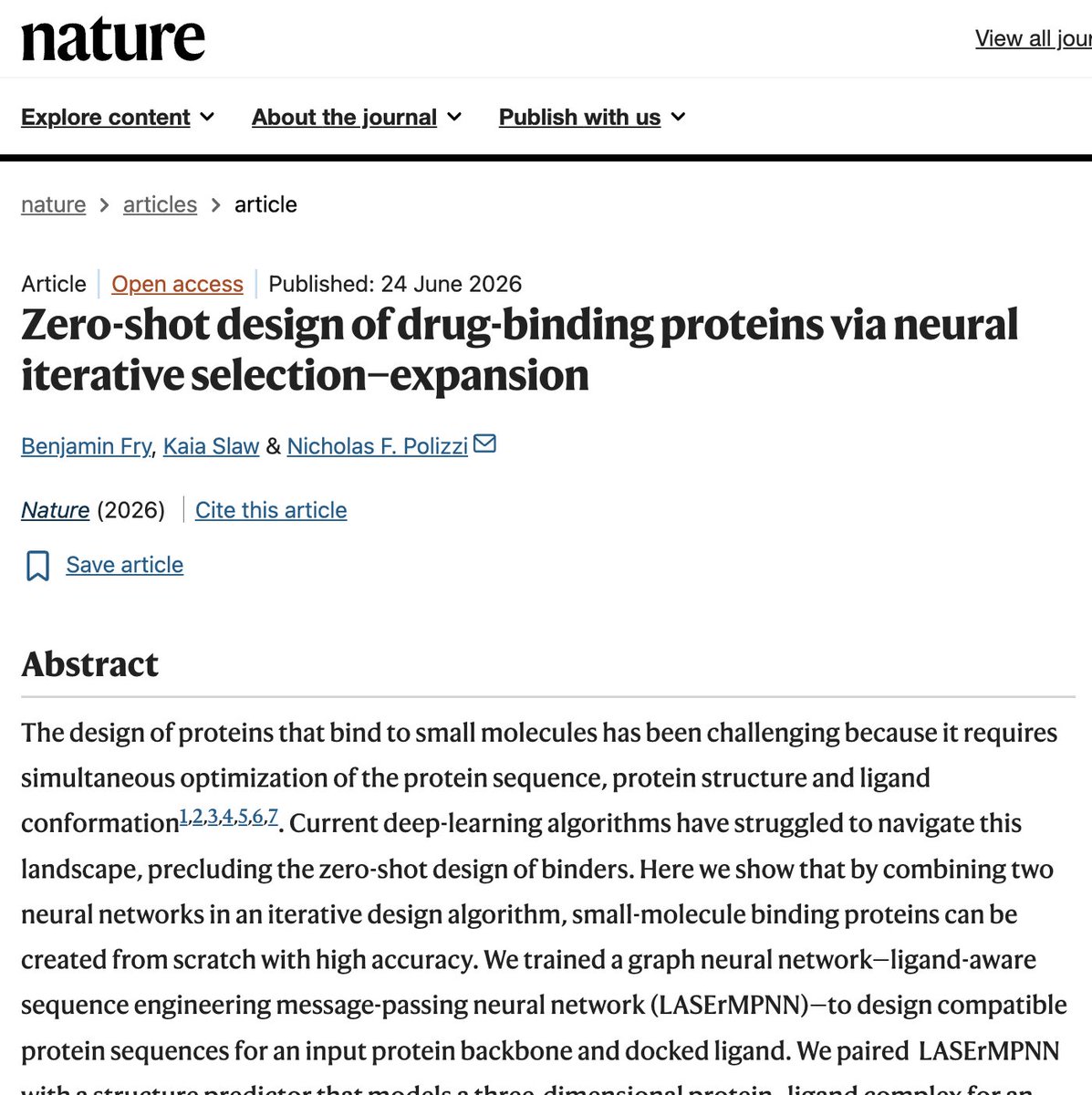
My first-author paper describing our protocol for the zero-shot de novo design of drug-binding proteins is now available as an article in Nature! Here’s what we did and what's new from the preprint posted last year 🧵 (1/10):
15
92
582
47,150
Yunha Hwang reposted
In new work, we lay out a vision for a high-level programming language for generative biology, called Proto. Proto composes generative and predictive models spanning DNA, RNA, proteins, ligands, and their interactions, which we use to design complex biological functions. 1/n
19
168
709
72,026
Yunha Hwang reposted
"SeqHub has become an integral part of our workflow...[it's] typically the first place we go to begin understanding what a gene might be doing and to identify its genomic neighbors across bacterial genomes." - Jeremy Rock, Rockefeller University seqhub.org/blog/rock-lab-mtb…
1
2
3
546
Yunha Hwang reposted
CSHL: AI in Biology centuryofbio.com/p/cshl Since 1933, @CSHL has hosted an annual Symposium on Quantitative Biology. At first, "quantitative biology" meant the use of chemical, physical, and mathematical techniques. This conference became the Schelling point for the pioneers of molecular biology. Watson first presented the structure of DNA at the 1953 Symposium. This year, the topic for this famous conference was AI in Biology. For five days, the top researchers in this field gathered from around the world to present their latest work. I went, and have done my best to summarize some of the major themes and results from the Symposium. It was a lot of fun attempting to synthesize ideas from superstars including @pushmeet, @Avsecz, @zhou_jian, @Micro_Yunha, @pkoo562 @anshulkundaje, @Prof_Lundberg, @recursus, @ZhongingAlong, @marinkazitnik, @lecong, and more! I hope you enjoy reading—it was one of my favorites conferences I've ever been to. Some truly beautiful research on display.
6
53
284
19,474
Yunha Hwang reposted
We're excited to share our latest publication, from graduate student Julia Dierksheide in the lab! In B. subtilis, the fast-moving RNA polymerase outpaces the leading ribosome, leaving mRNA transcripts vulnerable to the transcription termination factor Rho. (1/2)
1
13
45
7,883
Yunha Hwang reposted
Together with my co-founders Michael @MichaelPoli6, Stefano @Massastrello and Armin @athmsx, I am excited to announce @RadicalNumerics is emerging from stealth with a $50M seed round to build general biological intelligence. We’re also sharing an early preview of our new model Omnii, the most powerful genome language model to date. Omnii preview link: radicalnumerics.ai/blog/radi… At Radical Numerics, our mission is to master the code of life, and to drive the frontier of biological AI for both design and defense. This is our dual mandate, which comes from something our own team helped make possible. Our founding team trained Evo and Evo 2, the largest biological AI models (40B params) trained on DNA sequences. Trillions of tokens across all of life, from microbes to mammals. It’s fully open source, and created the field now known as generative genomics. Last year, scientists used Evo to generate the world’s first complete genome from scratch using AI. Turns out it was a bacteriophage—a type of virus. It functioned in the real world, and in this case it was harmless. But for us, it was a clear turning point. It showed that AI is no longer just analyzing biology. It is on the cusp of generating functional lifeforms. Eventually, AI will have the power to design and control life itself. That should make all of us incredibly excited, and incredibly uneasy. (Anyone can design DNA with a new function, and have it synthesized and delivered, like something from Amazon Prime). The same technology that will help us cure cancer is the very technology that might create the next global pandemic, or worse, allow the creation of bioweapons that can wipe out populations. We believe these forces are inseparable. If you work on the frontier of biology, you have to build technology to safeguard it from its misuse. Existing biosecurity tools are sorely losing the arms race, relying on outdated “have I seen this exact thing before?” style algorithms. We founded Radical Numerics to turn the tide. And we can’t do that by training on textbooks and natural language. We must understand the language of biology from the raw physical data itself, to reason across every molecule and modality, from DNA to proteins. The next frontier for AI goes far beyond chatbots or video generators to models that can understand and engineer life. Today, we’re previewing Omnii, which is already far surpassing Evo 2, and will continue improving as we scale and add new modalities (training now). 1. For human health, Omnii can read and write whole genomes (more on writing later). It’s state of the art (SOTA) on detecting causal variants for disease, and can rank Alzheimer's mutations zero-shot. We’re partnering with a diagnostics company to use Omnii for early cancer detection (pancreatic and multi-cancer). 2. For defense, Omnii is SOTA at detecting AI-generated pathogens. We benchmarked existing detection tools, and they simply can’t detect the AI-generated ones (“deepfake viruses”). We’re partnering with a US national lab to pilot Omnii for detecting the next pandemic, both natural and AI-generated. We have a data center full of Blackwells in construction now to build the most powerful biological AI models ever. This mission takes a new kind of AI lab that can actually scale on physical, biological data: new alignment research (mid/post training), scaling long context, building out mech interp teams to dissect what these models learn, new architectures and systems designs, all from the ground up. Our team is made up of AI researchers and scientists from top labs and institutions (e.g. Stanford, MIT, Google DeepMind), but more importantly, we all share the belief that this is the most important challenge of our lifetime. If you feel similarly, we are hiring. We aim to bring the brightest minds in AI and science together to save lives. Thanks to our partners on this journey, led by Emergence Capital @emergencecap, with Obvious Ventures @obviousvc, Triatomic @TriatomicCap , and Patrick Collison @patrickc. Our advisors include Eric Horvitz @erichorvitz, CSO of Microsoft, Chris Re @HazyResearch of Stanford, George Church @geochurch of Harvard, and Andrew Weber @AndyWeberNCB, former Assistant Secretary of Defense for Nuclear, Chemical and Biological Defense Programs. Fortune article: fortune.com/2026/06/15/exclu… Jobs: radicalnumerics.ai/join-us
154
309
1,391
2,553,020
Excited to share the latest version of FlashPPI published with @PNASNews! And stay tuned for updates soon…👀
Our FlashPPI paper is out in @PNASNews. FlashPPI is a model for proteome-wide protein-protein interaction prediction. 🔹4x better predictive performance & 2,400x faster than existing sequence-based methods 🔹20,000x faster than leading structure-based approaches. pnas.org/doi/10.1073/pnas.26…
1
5
22
4,672
Yunha Hwang reposted
ASM Microbe starts today. We're at booth 2324, next to the Applied and Environmental Microbiology Hub. Come find @ancornman1 and Steph if you're curious to learn more, provide feedback, or just say hello!
2
1
3
421
Yunha Hwang reposted
Our Chief Scientist @Micro_Yunha is speaking at FOG tomorrow! Catch her talk on Genomic Language Modeling for Sequence Analysis and Management in the Age of AI at 12:30pm at the Biopharma Data Management Stage.
1
369
Yunha Hwang reposted
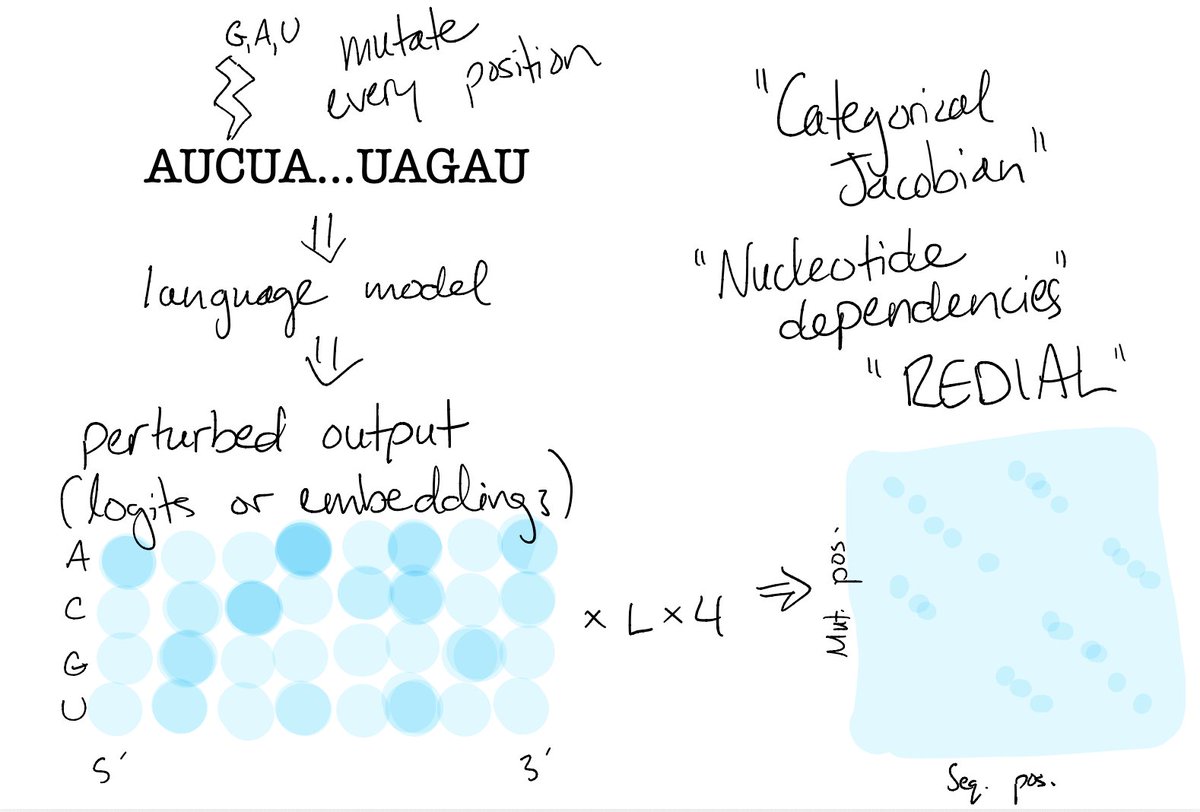
In the W-S lab's first preprint, we describe how genomic language models know something about RNA thermodynamics. Though we think this is cool, things get tricky! A growing practice for interpreting LMs is to perturb input tokens, often called "Categorical Jacobian": 👇
4
28
126
10,868
Come by @tatta_bio’s booth to learn more about AI tools for microbiologists! I will also be giving a talk in the AI & "Dark Matter" Session (10:45a-12:45p on Sunday, 6/7 in Room 145AB) 🦠🦠🦠
We'd love to connect at ASM Microbe in D.C.! Stop by booth 2324 to learn more about our research or talk through how SeqHub could support your work.
4
598