Managing Partner at @SeaplaneVC. 2X founder. Host of the @InvestNStartups podcast.

Joined February 2010
762 Photos and videos
Pinned Post
I walked away from a 5-star fund and hundreds of millions in AUM to focus on investing in early-stage startups. Here’s why: seaplaneventures.com/post/wh…
2
4
26
61,489
Joe Magyer reposted
micro1 is best place to train AI models
11
15
100
5,119
🟥🟥🟥✨⬜⬜⬜✨🟦🟦🟦 ✨✨🟥✨⬜✨✨✨🟦✨🟦 🟥🟥🟥✨⬜⬜⬜✨🟦✨🟦 🟥✨✨✨✨✨⬜✨🟦✨🟦 🟥🟥🟥✨⬜⬜⬜✨🟦🟦🟦
1
1
476
Joe Magyer reposted
We can finally say AI isn't killing jobs. A new paper from me, @tryramp, and @RevelioLabs uses firm-level spend and workforce data across 21K U.S. businesses to measure AI's impact on jobs. Firms that adopt AI heavily grow headcount 10% over two years following adoption. Low adopters see no statistically significant change.
165
600
2,706
812,799
Watching my wife’s home country play in the World Cup in my home town. Go Uzbekistan!!!
3
900
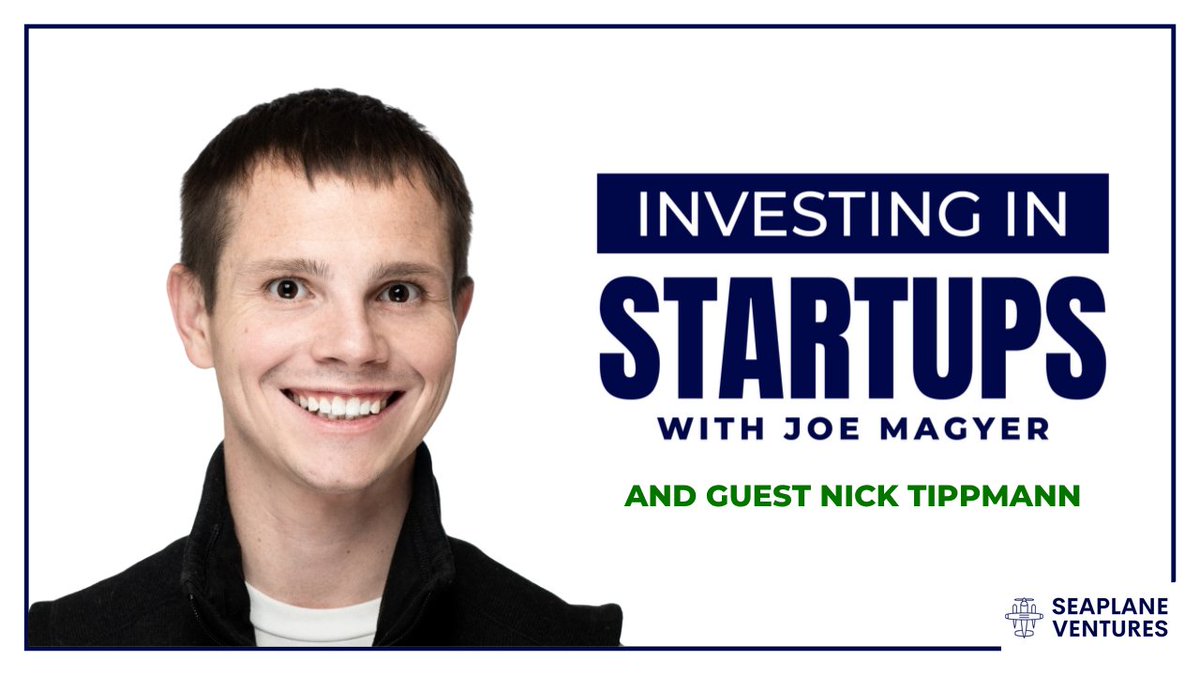
Excited to share my conversation with @ntippmann! Nick is a vertical AI and GTM expert so it was great to talk shop with him about AI, how B2B SaaS evolved, and how distribution has changed. Here are some takeaways and insights from the conversation: Vertical AI changes the value proposition from efficiency to execution. Nick’s core framing is that SaaS helped people save time, while vertical AI can actually do the work. That shift changes the buyer, the budget, the pricing model, and the ceiling for how large these companies can become. The real TAM unlock is services and labor, not software. Traditional vertical SaaS was constrained by software budgets. Vertical AI can compete with outsourced services, internal labor, and professional work that previously sat outside the software spend category. That is why Nick sees the opportunity as dramatically larger than the prior wave of vertical SaaS. The best vertical AI companies will not be thin wrappers. Nick’s bet is on companies that combine workflow software, domain-specific context, proprietary data, and agentic execution. The model is not “AI replaces SaaS,” but “SaaS evolves into a system of work.” Incumbents are vulnerable when their strength becomes rigidity. Legacy systems of record often have distribution, data, and customer relationships, but they can also be slowed by old architecture, existing pricing models, and organizational inertia. Nick is most interested in markets where the incumbent is entrenched but not especially nimble. Distribution and trust may matter more in AI, not less. Because software is easier to build, it is harder to stand out. Nick argues that content, community, events, brand, empathy, and domain expertise remain critical. In vertical AI, credibility with the buyer can be a moat before the product moat fully compounds. Outcome-based pricing is becoming the new frontier. AI products are pushing companies away from seat-based SaaS pricing and toward pricing tied to completed work: per resolved ticket, per document, per workflow, per enriched record, or against avoided professional services spend. The best pricing models will align with the value customers actually experience. Forward-deployed services are not a weakness; they may be evidence of where value accrues. Nick sees OpenAI and Anthropic building services-heavy motions as a sign that intelligence alone does not solve enterprise problems. Context, implementation, workflow integration, and judgment still matter — which supports the vertical AI thesis. Seed investors need to look past the demo. In a world where a founder can vibe-code a polished product quickly, Nick focuses on deeper questions: Does the company get better with usage? Is there proprietary data exhaust? Are there reinforcement loops? Can the wedge expand into adjacent workflows? Is there a real vision beyond the initial tool? The wedge still matters, but the expansion timeline is compressing. Nick acknowledges that AI lets companies build more faster, but he still wants a sharp entry point. The difference is that founders may need to move from wedge to broader workflow coverage much earlier than in the SaaS era. GC AI is a case study in founder-market fit plus distribution. Nick backed the company because Cecilia Ziniti brought deep credibility in legal, had early community instincts, and chose a focused wedge in in-house legal. The insight was not just that legal work fits LLMs; it was that in-house legal has distinct workflows, budgets, and pain points from law firms. VCs and founders are often talking past each other. Nick thinks VCs underappreciate how brutally hard execution is, while founders often misunderstand fund math and why “good growth” may still not be enough for the next round. The AI era has raised expectations, especially as investors compare every company to the fastest-growing AI breakouts. Nick’s contrarian view: foundation labs moving up the stack does not kill vertical AI. His argument is that the labs’ move into applications and services actually proves the opposite: raw model intelligence is not enough. Durable value may accrue to companies that own the workflow, the customer relationship, the domain context, and the system of work. Really enjoyed this episode of @InvestNStartups. Thanks to Nick for coming on!
8
3
6
625
Joe Magyer reposted
micro1 x @cartesia: The Human Speech Data Project Every language, accent, and speaking style has its own rhythm, texture, and feeling. Building great voice AI means learning from the people who know those details best. That is why micro1 and Cartesia are launching The Human Speech Data Project, an initiative focused on improving the next generation of voice AI through high-quality speech data and human evaluation. The project brings together multilingual speakers, linguists, transcriptionists, native speakers, and voice actors to help: - Capture and evaluate natural conversational speech - Transcribe and annotate audio with a sharp ear for accuracy - Review AI-generated speech for naturalness, correctness, and edge cases - Bring expert judgment into the model improvement process Visit the link in the comments if you’d like to learn more about how you can contribute.
7
14
44
3,193
Joe Magyer reposted
If the US makes the final, get Lee Corso to unretire and have him put on a bald eagle head
24
294
5,460
115,542
Joe Magyer reposted
“Always go to the funeral”
One of the best bits of advice I've ever gotten, that has consistently held true for the decade since I first heard it from @Mazzeo: When you have bad or difficult news: call the person. Don't text, don't email. Call. Or better yet, meet them in person.
62
2,366
22,398
1,494,413
Joe Magyer reposted
Single until Series B makes sense to me now. Conor (@contextconor) finally breaks his silence on the movement, and his reasoning is more nuanced than the X discourse suggests. At the end of our podcast I asked him to expand on his thoughts on dating as a founder. 𝐓𝐈𝐌𝐄𝐒𝐓𝐀𝐌𝐏𝐒 (00:00) Trend Backlash (00:35) Origin Story Explained (01:19) Why Series B Matters (02:11) Not Anti Relationship (02:46) Risks of Dating Mid Build (04:33) Guilt and Founder Singles (05:55) Meta Strategy to Live Best Life (07:18) High Bar Romance (07:51) Wrap Up
A YC fund built a machine learning model to predict the perfect founder. Right school, right company, right age. Conor (@contextconor) met zero of the criteria. That same fund just invested in his round. Nothing about him pattern-matches. Farm kid from a town of 2,000. Dropped out of school at 12, college at 13. Left a comfy BCG job advising Walmart and Pfizer to fly to SF knowing no one and when money ran low, he sublet his own bedroom and slept in the closet. @BCG rejected him the first time he applied. So did the hacker house @mission__ctrl. @ycombinator rejected him six times. He later got into all three. Since then: 5x'd revenue during the batch. Every customer inbound. A third of them invested in his round. First Fortune 500 closed, a company he used to consult for. He's building @Hyperspell, one brain for your company, so agents and humans stop losing context scattered across Slack, email, and meetings. His take: "None of us are lottery tickets. The world has a certain way it's organized, but you can always find a way to make things happen." 𝐓𝐈𝐌𝐄𝐒𝐓𝐀𝐌𝐏𝐒 (00:00) Meeting Connor IRL (00:49) Mission Control Tour (03:13) Hacker House Legends (10:10) Leaving BCG for SF (13:16) From Agents to Company Brain (26:17) Unicorn Closet Story (38:55) Grinding Social Skills (44:17) YC Acceptance Story (46:01) Make Customers Hero (56:12) Agent Teammate Cubert (01:05:07) Single Until Series B (01:13:32) Meet Alex, the new closet resident This is a @Composio "Agents at Work" podcast, where I chat with founders building the next leap of AI. Follow for more:)
1
3
31
11,278
Terrible loss and very sorry to hear. Josh gave so much to the Austin community and startup ecosystem.
Capital Factory founder Joshua Baer, a visionary force in the Texas technology and start-up ecosystem, died Tuesday night in a private plane crash in Laredo, the organization confirmed to the American-Statesman. "Joshua was a fearless leader, a brilliant partner, and a dear friend to so many of us," Capital Factory President Bryan Chambers said. statesman.com/news/article/l…
1
927
Joe Magyer reposted
🧵Veria AI autonomously found and demonstrated a critical vulnerability in Aleo, finding a proof forgery in Aleo's snarkVM. The project awarded us the maximum bounty of $65,000 for the find.
5
5
50
9,739
1
307
Joe Magyer reposted
Apollo selects Austin as site of second headquarters ft.trib.al/cIlIQRa
5
22
99
53,572
Joe Magyer reposted
Fable 5 (@AnthropicAI) scores 22% and tops the Hedge-Bench leaderboard. Running Fable was roughly 2X more expensive than Opus 4.8 per trial. For an industry where accuracy is mission critical, human judgement isn't going away
1
5
29
3,190
Joe Magyer reposted
Faster decisions start with cleaner data, not bigger teams. Our self-service is live. Any document. Any format. Guaranteed accuracy. No implementation wait. bit.ly/43FuNZc
1
1
224
Joe Magyer reposted
this summer, it's time to lock in
6
2
35
2,937
Joe Magyer reposted
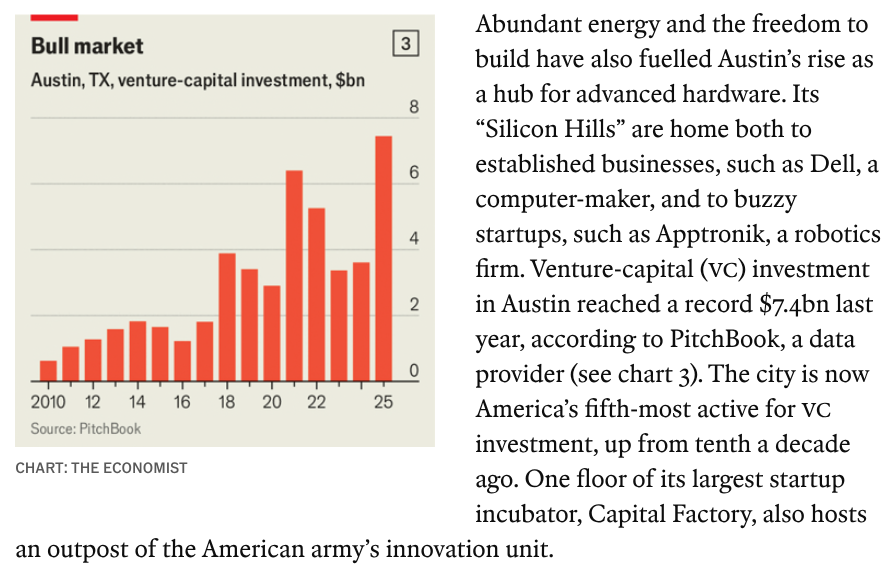
"Venture-capital investment in Austin reached a record $7.4 bn last year ...The city is now America’s 5th-most active for VC investment, up from 10th a decade ago" economist.com/business/2026/…
1
27
128
52,518
Joe Magyer reposted
For the Analysts: between the sub-15% pass rate and 80% hallucination rate, your job is very safe
Today, Trata is excited to present Hedge-Bench, the world’s first benchmark focused on evaluating open-ended reasoning in the finance domain. We curated 102 tasks derived explicitly from the reasoning traces of professional hedge fund analysts working with relevant information sources. Most benchmarks are geared towards evaluating naturally deterministic tasks (e.g. updating spreadsheets, calculating formulas). The result is a blind spot on the frontier labs’ part to the competency that matters most in the finance industry: reasoning. No frontier model scores above 16% on Hedge-Bench. We observe Claude-Opus-4.8 actually regresses relative to the last generation of Claude-Sonnet. We see hallucination rates go as high as 82% for multi-step reasoning. These implications extend beyond just the finance domain and into other domains where trust in agent reliability is equally critical (e.g. law).
1
6
1,029