Two AI models can land the same pathology benchmark score for completely different reasons.
Today we're introducing micro1's pathology-reasoning benchmark, the latest addition to our Realm Medical-Reasoning benchmark series.
Built with practicing pathologists, it spans the range of cases a working service actually sees, from hematopathology and bone marrow workups to breast, thyroid, gastrointestinal, genitourinary, dermatopathology, and biomarker studies.
Rather than testing medical knowledge in isolation, it measures something narrower and harder: whether a model can extract report facts exactly, preserve diagnostic limits, and avoid escalating to conclusions the specimen doesn't support.
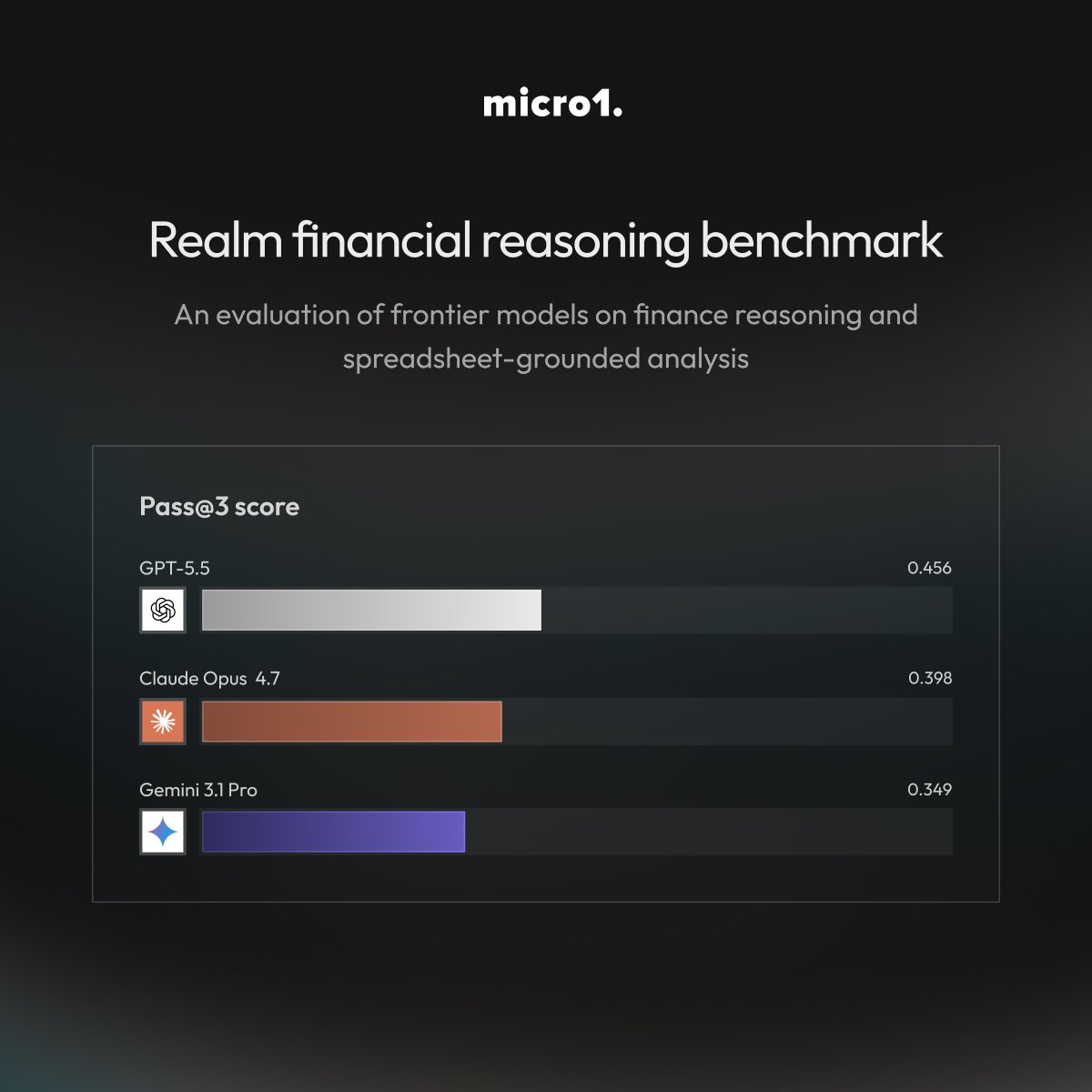
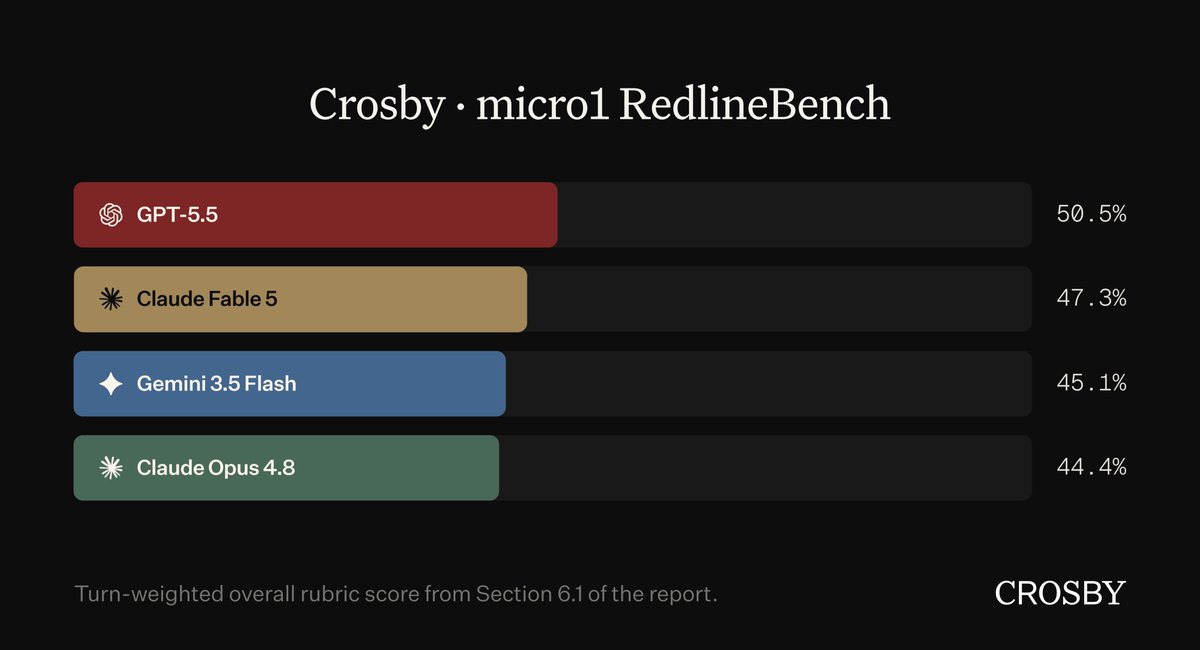
We scored three frontier models across the dataset:
Claude Opus 4.8 - 82.6%
GPT-5.5 - 76.3%
Gemini 3.5 Flash - 75.7%
However, the ranking was the least interesting part.
The models were similarly strong at extracting facts and running calculations. Where they separated was judgment: knowing where the report ends.
The most common way points were lost wasn't getting facts wrong. It was saying more than the report supports, resolving uncertainty the report left open, or naming a stage, biomarker, or treatment the specimen can't establish.
We found that two models can land nearly the same score for completely opposite reasons. The aggregate numbers look close, but the trajectories tell a different story, and those differences get more interesting as the cases get harder.
Our takeaway: what matters most isn't how often a model is right, but how it reasons when a report leaves room for doubt.
Full report linked in the comments.