The only 24/7 institutional uranium trading platform. Powered by @solana.

Joined November 2024
375 Photos and videos
We've been made aware of a token impersonating Uranium Digital. Do not engage with any tokens claiming to represent Uranium Digital. Official announcement of our launch will come exclusively through our official verified channels. Stay vigilant.
8
1
27
24,978
enCore Energy's Dewey Burdock In-Situ Recovery Uranium Project in South Dakota has completed the federal permitting process after the NRC issued a 20-year renewal of its source materials licence. The Bureau of Land Management has also authorized the start of construction on portions of bureau-managed public lands within the project area, which covers 10,580 acres. The project was approved in August 2025 for inclusion in the Federal Permitting Improvement Steering Council's FAST-41 program, which provides accelerated permitting review for critical mineral projects. Permitting Council Executive Director Emily Domenech noted that increasing domestic uranium production is critical to national security and energy dominance ahead of growing nuclear deployment. enCore will now pursue state permitting with South Dakota before the project can proceed to full operational status.
247
Urenco USA has brought its fifth new enrichment cascade online at its National Enrichment Facility in Eunice, New Mexico, continuing an expansion program that began in 2025 to install 700,000 separative work units of additional capacity by early 2027. The facility is currently the only commercial uranium enrichment plant in the United States. Existing annual capacity is 4.3 million SWU, which accounts for about a third of current U.S. demand. In 2029, Urenco USA plans to begin construction of a new 2.1 million SWU plant at the site, with first production expected in 2032 and additional cascades installed through 2036. Installed capacity at the facility will grow to more than 7 million SWU over the next ten years.
1
2
3
729
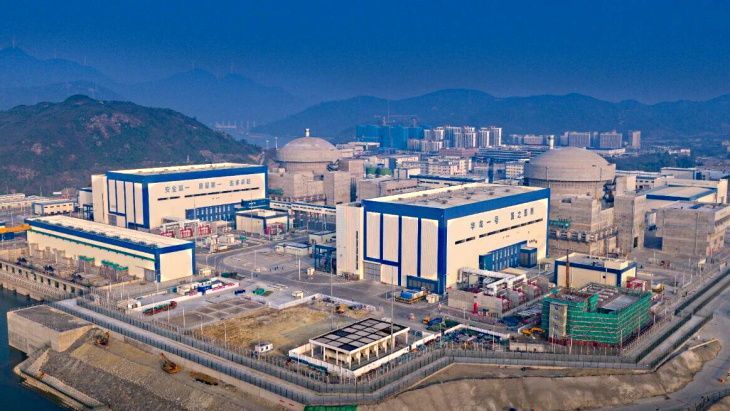
Unit 2 at China General Nuclear's Taipingling nuclear power plant in Guangdong province achieved first criticality on June 25, marking the start of the reactor's commissioning phase ahead of grid connection. Taipingling Unit 1 entered commercial operation in April after achieving first criticality in February, making Unit 2 the second of six planned Hualong One reactors at the site to progress through commissioning. Construction of units 3 and 4 is underway, with unit 3 breaking ground in June 2025 and unit 4's first nuclear safety-related concrete poured last month. Once all six units are complete, the plant will generate more than 55 billion kilowatt-hours annually, reducing coal consumption by approximately 16.65 million tonnes.
3
597
U.S. uranium production more than doubled in 2025, the highest output in nine years. Exploration and development drilling also reached their highest levels since 2013. Production came from one underground mine and seven in-situ recovery operations, with five additional ISR plants on standby and seven more planned across South Dakota, Texas, and Wyoming. The rebound reflects sustained policy focus on domestic fuel supply security. U.S. production fell so low in 2020 that individual company figures were withheld to protect competitive data, leaving reactor operators almost entirely dependent on imported uranium.
1
3
625
Last week Valar Atomics has become the second company to achieve zero-power criticality under the DOE's Reactor Pilot Program. The program requires at least three advanced reactor designs to achieve criticality by July 4, 2026 — with Antares Nuclear's Mark-0 reactor having reached the milestone earlier this month. The 5 MW Ward 250 is a TRISO-fuelled, helium-cooled, graphite-moderated reactor capable of powering approximately 5,000 homes. It was airlifted by U.S. Air Force C-17 from California to its Utah test site in February, the first-ever airlift of a small reactor aboard a military cargo plane.
1
4
820
Nuclear developer Elementl Power has signed an Early Works Agreement with GE Vernova Hitachi Nuclear Energy to deploy five BWRX-300 small modular reactors at a 700-acre site in Meigs County, southeast Ohio. The project is targeting a total capacity of 1.5 GW. @ElementlPower, which describes itself as a technology-agnostic advanced nuclear developer, says the project would be privately financed. The company is backed by Google, which provided early-stage capital in May 2025 to prepare three U.S. sites for advanced nuclear projects, with the option for commercial offtake once projects are complete.
2
5
903
The U.S. Department of @Energy has announced $17.5 billion in loans to support the construction of 10 large nuclear reactors. The funds will be used across five projects, each hosting two Westinghouse AP1000 units capable of generating 1.1 gigawatts of electricity. Energy Secretary Chris Wright said the financing will lower construction costs and accelerate deployment by up to three years by funding complex, long-lead components that typically take years to manufacture and deliver. @WECNuclear has already signed letters of intent with seven potential partners at identified sites, though the DOE has not disclosed locations. The Trump administration anticipates that major technology companies will sign long-term power purchase agreements with the projects to support construction.
1
3
856
This week Canada released a national nuclear strategy targeting the construction of up to 10 new reactors over the next 15 years. The plan has construction starting on two large-scale reactors by 2035, five more planned or under development by 2040, and at least one reactor under construction outside Ontario by 2035. The plan also calls for doubling uranium exports and positions Candu reactor sales as a geopolitical instrument for building multi-decade partnerships with allied and emerging nuclear nations. Energy Minister Tim Hodgson framed the plan as a "new civilian nuclear renaissance," saying there is no credible path to doubling Canada's grid capacity by 2050 without nuclear energy. Canada currently generates about 15% of its electricity from nuclear across four plants.
1
2
745
Yesterday @Walmart announced that the company has signed a 15-year nuclear power purchase agreement with @ConstellationEG. The deal will supply approximately 176 megawatts of electricity from the Dresden Clean Energy Center in Illinois to a new high-tech perishable distribution center in Belvidere, Illinois. The deal is among the first between a major U.S. retailer and a nuclear energy provider, underscoring growing corporate interest in baseload clean power. The agreement will also support efficiency uprates at Dresden, allowing the plant to increase output without building new generation capacity.
2
5
750
The @NRCgov has approved an 80-year operating life for Georgia Power's Edwin I. Hatch nuclear plant, extending licenses for both boiling water reactor units into the mid-2050s. It will provide 1.8 gigawatts of clean power to the grid for another 20 years. The NRC completed its safety and environmental review in under 12 months, the second license renewal completed within the 12-month target established under Executive Order 14300. Hatch Unit 1 was the first nuclear power plant in Georgia when it entered service in 1975. Together with the four-unit Vogtle plant, Hatch provides nearly 30% of Georgia Power's overall energy production for a state whose population has more than doubled since the plant came online.
3
702
Saskatchewan and the Czech Republic have signed a MOU to cooperate on small modular reactors and micro modular reactors. Saskatchewan is home to the world's largest and highest-grade uranium mines and is working alongside the Canadian provinces of Ontario, New Brunswick, and Alberta on SMR deployment under a joint strategic plan. The Czech Republic currently generates about one-third of its electricity from nuclear and has selected Rolls-Royce SMR to deploy up to 3 GW of new capacity, with state utility ČEZ taking a 20% stake in Rolls-Royce SMR.
1
1
4
860
Swedish utility Vattenfall has selected Rolls-Royce SMR to supply small modular reactors for a new nuclear power project. The three reactors, at 470 MW each, would produce approximately 12 terawatt hours of electricity per year. This would equate around 6% of Sweden's annual power consumption. The project will be built at the site of the existing Ringhals nuclear facility in southwest Sweden. A first reactor could enter operation in the mid-2030s.
1
2
605
Earlier this week, @oklo and @standardnuclear have formed a strategic alliance to collaborate on nuclear fuel recycling and advanced fuel manufacturing. The partnership represents Oklo's first third-party offtake pathway for recycled materials from used nuclear fuel. Under the MOU, the companies will explore commercial terms for recycled material streams from Oklo's planned fuel recycling facility in Oak Ridge, Tennessee, including reprocessed uranium and uranium-transuranic material that could serve as feedstock for Standard Nuclear's TRISO fuel manufacturing. The two companies will also work together on converting U.S. surplus plutonium into advanced reactor fuel, following both firms' recent selection by the DOE under its Surplus Plutonium Utilization Program. Standard Nuclear is the nation's only independent manufacturer of TRISO fuel for advanced reactors, offering a reactor-agnostic supply for both terrestrial and space applications. The U.S. has accumulated nearly 100,000 metric tons of used nuclear fuel, which Oklo is working to position as a domestic feedstock resource rather than a long-term disposal liability.
2
469
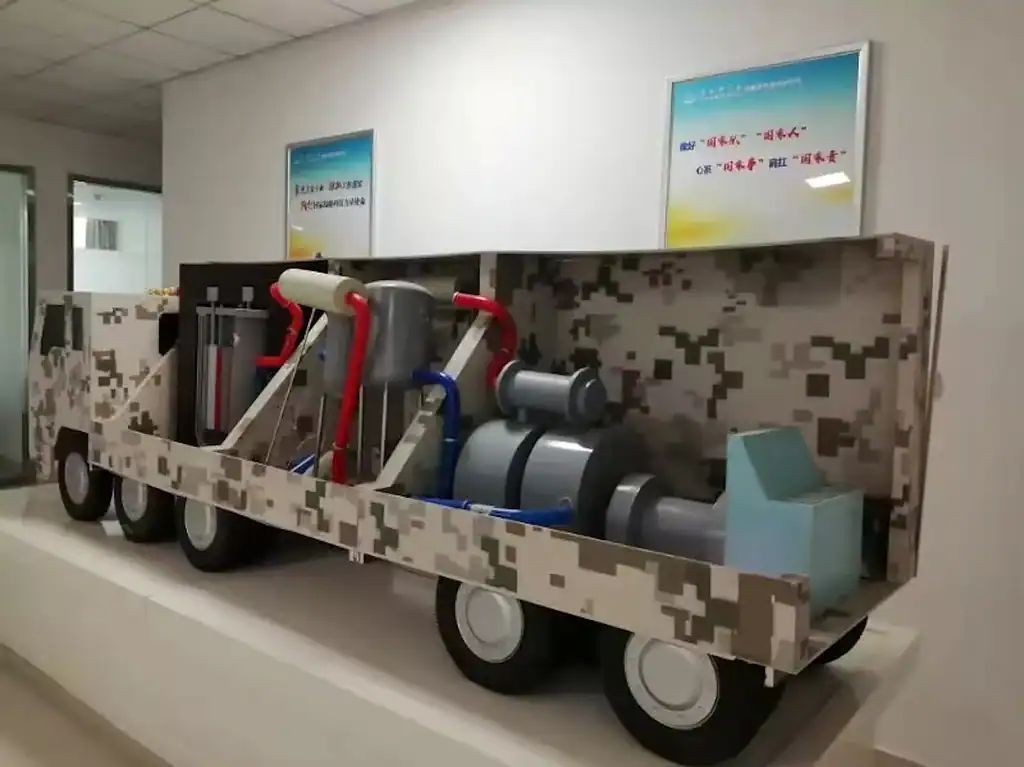
Chinese researchers have built and are testing a prototype 10-megawatt nuclear power system designed to be mounted on a truck, developed by a team at the Institute of Nuclear Energy Safety Technology in Hefei. The unit is intended as a long-lasting alternative to diesel generators for remote regions, emergency sites, and potentially AI data centers, with developers claiming it could operate for decades without refueling. Technical details remain limited, and significant engineering and regulatory challenges, including crash survivability, shielding, and spent fuel management, remain unresolved.
1
461
Ohio's nuclear energy industry has formed a new trade association, the Ohio Nuclear Alliance, as the state sees a growing number of nuclear investments from companies including Centrus Energy and Meta. The Alliance launched at an event in Columbus attended by several state lawmakers, including House Speaker Matt Huffman. Alliance President Rashay Khripunova said the industry needs a coordinating, unified voice, and emphasized the importance of public education in redefining Ohio's relationship with nuclear energy. Huffman told reporters he believes nuclear energy will account for most of the world's power generation 100 years from now. Ohio is home to significant existing nuclear infrastructure, including Centrus Energy's uranium enrichment operations at the former Portsmouth Gaseous Diffusion Plant in Piketon, and has attracted major technology company interest in nuclear-powered data center development.
2
490
Japan will need to replace between 11 and 14 nuclear reactors by the 2050s to meet its future energy demand targets According to a draft policy presented by Japan's Ministry of Economy, Trade, and Industry, the proposal translates to between 12.7 GW and 16 GW of replacement nuclear capacity by the 2050s, with an interim target of 2.2 GW to 5.5 GW by the 2040s. The draft stems from Japan's 2025 7th Strategic Energy Plan, which sets a target for nuclear energy's share of the country's power generation mix to grow from 8.5% in 2023 to approximately 20% by 2040. The proposal represents one of the strongest pushes to reinvigorate nuclear power in Japan in recent years. Prime Minister Sanae Takaichi has shown significant support for nuclear energy since taking office last year.
1
423
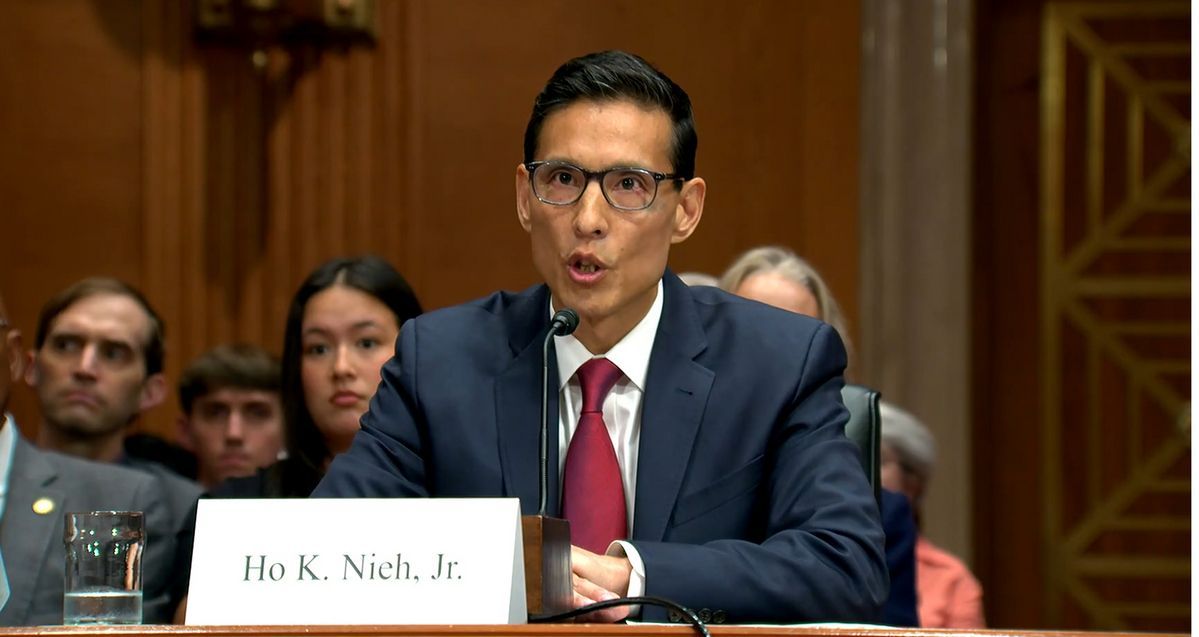
NRC Chairman Ho K. Nieh said in an exclusive interview published Monday that the United States could see advanced reactors deployed and generating power by 2030, pointing to the recent construction permit granted for TerraPower's Kemmerer Power Station in Wyoming as evidence of the pace of progress. Nieh acknowledged that timelines will not rest solely with regulators, as developers remain dependent on supply chains for specific materials and fuels. But he said the commission will have the regulatory framework in place for developers to get shovels in the ground. The NRC chairman also highlighted the military deployment pathway as a meaningful accelerant, noting that the Pentagon is not focused on finding the lowest-cost option and can pay for systems that simply work. Nieh framed military and DOE deployments as a cost-reduction bridge to commercial scale, saying the path forward is to build reactors, see how they work, improve them, and then move them to the commercial side. The DOE's Reactor Pilot Program, established through executive orders signed by President Trump, is designed to serve as a fast-tracked bridge providing federal regulators with operational data ahead of full commercial licensing.
1
431
The House Subcommittee on Energy held a hearing this week on nuclear licensing reform, considering several legislative proposals aimed at streamlining the NRC's permitting process while maintaining safety standards. Bills under consideration include the Efficient Nuclear Licensing Hearings Act, which would eliminate an outdated requirement for a final public hearing on a license when no one has requested one, and the Nuclear REFUEL Act, which would clarify that fuel recycling facilities can be licensed under the same regulatory framework as other fuel cycle facilities. The American Enrichment Deployment Act would bring licensing for enrichment facilities in line with permitting processes for other fuel cycle facilities, a step Latta called critical for building out domestic fuel supply infrastructure. The hearing also reviewed the Nuclear Advisory Committee Reform Act, which would direct the NRC's advisory committee to focus on new and safety-significant issues rather than routine licensing reviews, and the NRC Staff Pay Alignment Act, aimed at retaining experienced leadership at the commission.
1
413
On June 4, when the Antares Nuclear Mark-0 test reactor came online at Idaho National Laboratory, it became the first privately developed, non-light-water reactor to achieve criticality in the United States in more than 40 years. The achievement directly fulfills a mandate under the DOE's Reactor Pilot Program, which challenged the U.S. nuclear industry to bring at least three advanced reactor designs to criticality by July 4, 2026. The Mark-0 is a high-temperature, solid-state microreactor designed to generate between 100 kW and 1 MW of electricity. Its modular design allows units to be built in factories and shipped to deployment sites, with additional modules added to meet growing demand. The Antares R1 reactor has already been selected for installation at Joint Base San Antonio, Texas, by 2028.
3
681
The North Carolina House advanced legislation on Tuesday that would require Duke Energy to obtain permission to build a nuclear plant with at least 1,000 megawatts of capacity before it can retire coal or natural gas plants. The Ratepayer Protection Act moved through both the House Commerce and Rules committees and now heads to the House floor. The nuclear provision reflects lawmakers' push to ensure baseload generation remains central to the state's energy planning as North Carolina manages rapid load growth driven by data centers.
1
411