🚨 Breaking Stories | 🌍 Global Events | ⚡ Stay Ahead with the Latest News — Fast, Accurate, Now.

Joined September 2025
12,178 Photos and videos
🚨 EARTH’S FINAL GREEN HORIZON. Scientists say Earth’s last plants could hang on for about 1.87 billion more years as the Sun slowly brightens. The estimate comes from new climate modeling that looks far ahead, well beyond human timescales. The research suggests rising solar energy and falling carbon dioxide will eventually push plants past their limits. As temperatures climb and CO₂ drops, photosynthesis will break down. Once plants fail, food webs collapse and complex life ends. The study highlights how Earth’s natural thermostat has kept conditions stable for billions of years. But that balance won’t last forever. The Sun’s output increases by roughly 10% every billion years, and that slow shift will reshape the planet’s climate. Earlier estimates predicted a much shorter timeline for plant survival. This new work pushes the deadline far into the future, showing how long Earth can remain habitable before extreme heat and carbon starvation take over. It’s a reminder of how fragile life is on cosmic timescales. While 1.87 billion years sounds distant, it marks a real boundary for Earth’s biosphere. Scientists say the final chapter will come when temperatures reach levels that shut down photosynthesis entirely. At that point, even the hardiest species won’t survive.
4
🚨 EU REBUKES FIFA OVER RED CARD REVERSAL. The European Union criticized FIFA after the governing body suspended a red‑card ban for U.S. striker Folarin Balogun during the 2026 World Cup. The move let him play in a knockout match despite receiving a straight red in the previous round. EU officials echoed UEFA’s warning that the decision undermines fair play and sets a risky precedent. They argued that automatic suspensions are a core rule and should not be changed mid‑tournament. The controversy grew after reports suggested political pressure from the U.S. government influenced FIFA’s call. The dispute highlights growing tension between football’s global bodies and raises questions about transparency, consistency, and the integrity of major competitions.
25
🚨 ULTRA‑BLACK COATING AIMS TO DIM SATELLITE GLARE. New research from the University of Surrey shows that Vantablack 310, an ultra‑black coating, could help cut satellite glare that disrupts telescope observations. The coating reflects only about two percent of incoming light, which makes satellites appear much dimmer from Earth. Astronomers worry about rising light pollution as satellite numbers grow. More than 8,000 satellites orbit Earth today, and projections suggest as many as 60,000 could be in orbit by 2030. Bright streaks from reflective surfaces often spoil long‑exposure images and interfere with surveys that track faint galaxies, asteroids, and other targets. The Surrey team measured how the coating behaves under different lighting conditions and used those results to simulate how a coated satellite would look from the ground. Their models show the coating could bring satellite brightness close to limits recommended by the International Astronomical Union. A real‑world test is planned aboard the Jovian‑1 CubeSat mission. One side of the spacecraft will be coated with Vantablack 310 to measure how much the darkened surface reduces brightness once in orbit. The mission, scheduled for launch in 2026, will give researchers their first chance to evaluate the coating’s performance in space and its impact on ground‑based astronomy.
1
13
🚨 STARLINK WINS APPROVAL TO EXPORT UNFILTERED INTERNET FROM BANGLADESH. Bangladesh has cleared Starlink to export unfiltered internet bandwidth to nearby countries. This marks the first time the country has allowed a satellite operator to send unrestricted data traffic across its borders. Regulators say the move could turn Bangladesh into a regional connectivity hub and open new revenue streams for local telecom firms. The plan uses International Private Leased Circuit links. The state-owned Bangladesh Submarine Cable Company will supply most of the bandwidth under a three‑year deal. If it falls short, Starlink can tap private operators like Summit Communications and Fiber@Home. The exported traffic will bypass government filters, unlike domestic internet, which remains monitored and regulated. Officials say countries such as Nepal and Bhutan could benefit from faster, more reliable satellite internet routed through Bangladesh. Industry experts note that unfiltered IP transit is key for cross‑border data flows because it avoids firewalls and deep packet inspection. The approval follows months of technical reviews and signals Bangladesh’s intent to compete in South Asia’s growing digital infrastructure market.
11
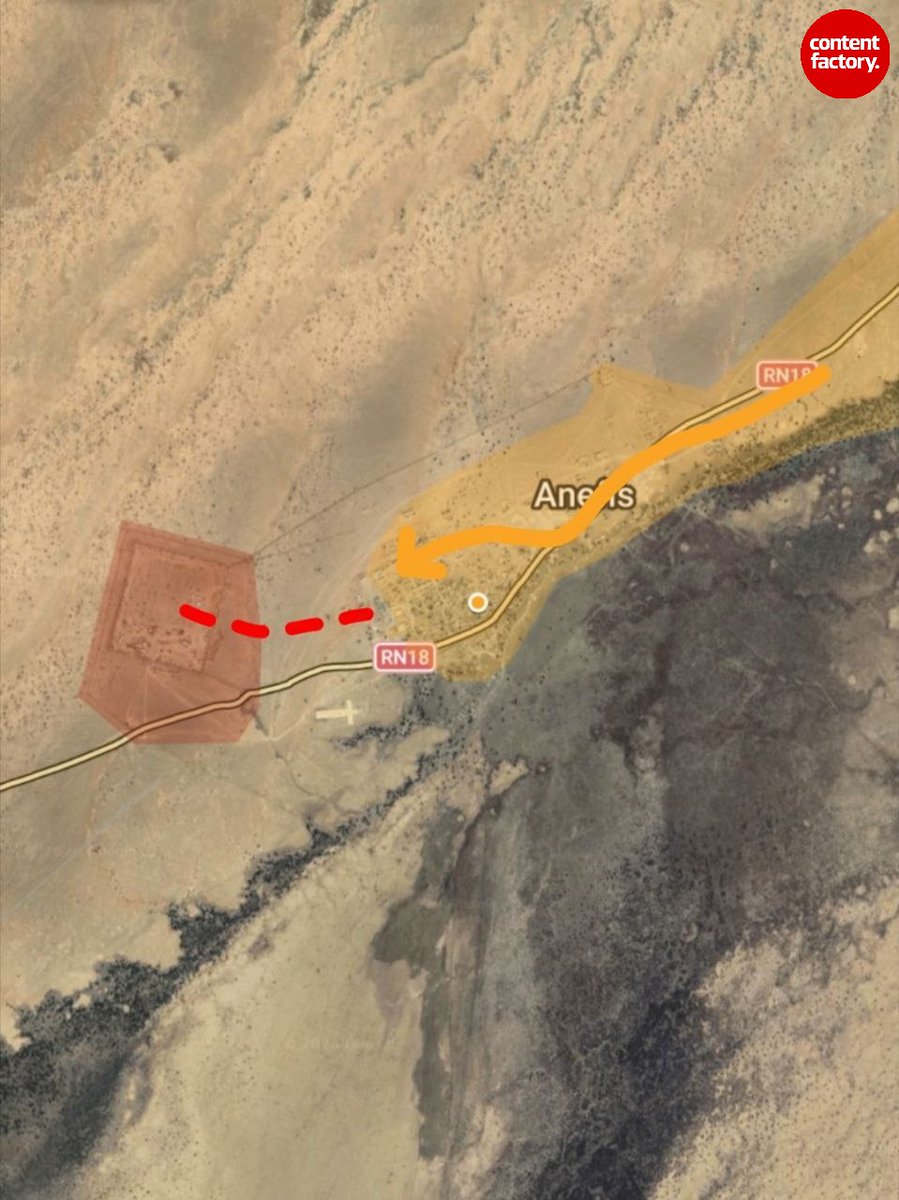
🚨 FLA FORCES SEIZE GROUND IN NORTHERN MALI CLASH. FLA fighters pushed Malian troops and their Russian partners out of Anéfis, a strategic town on the Kidal–Gao route. The move marks one of the most serious setbacks for the military since coordinated attacks swept across Mali this week. The fighting erupted on July 4 and spread across several regions, including Gao, Aguelhok, Sévaré, and Kenieroba. FLA and the al‑Qaeda‑linked JNIM claimed responsibility for the assaults, which targeted army positions and disrupted reinforcement routes. In Anéfis, FLA forces briefly took control of the town and pressed attacks on the nearby military base. Malian and Russian Africa Corps units responded with airstrikes and artillery fire. Reports say helicopters attempting to land at the base came under fire, and a convoy from Gao was ambushed and forced to turn back. The clashes highlight the growing pressure on Mali’s junta and its Russian allies as armed groups expand operations across the north. Anéfis remains contested, with government forces holding the base but facing continued strikes. The situation underscores the volatility of the region and the resilience of separatist and jihadist factions seeking territorial control.
40
🚨 RIPPLE WINS FULL MICA APPROVAL ACROSS EUROPE. Ripple just secured full MiCA authorization in the EU, giving it the green light to offer regulated crypto services across all 30 countries in the European Economic Area. The approval, issued by Luxembourg’s financial regulator, marks the final step after Ripple’s preliminary clearance earlier this year. This license makes Ripple one of the few crypto firms fully compliant under Europe’s new rulebook. More than 1,200 companies once operated in the region, but only about 210 met the July 1 deadline. Major players like Tether did not pursue compliance, and exchanges such as Binance are still waiting for approval. Ripple now holds both a CASP license for crypto services and an EMI license for electronic money. Together, they allow banks, fintechs, and businesses to move fiat and crypto through a single setup. The company already has more than 75 regulatory approvals worldwide, and this latest milestone strengthens its push into regulated payments, stablecoin settlement, and institutional crypto infrastructure. The approval does not directly regulate XRP, but the token could benefit if Ripple’s payment volume grows and flows through the XRP Ledger. Still, most payments today settle in RLUSD or fiat, so any impact on XRP depends on future adoption. Europe’s MiCA framework is reshaping the crypto landscape, and Ripple now enters the post‑transition era as one of the few fully cleared operators—positioned to scale while many competitors exit the market.
23
🚨 CHINA SENTENCES OFFICIAL TO DEATH IN MASSIVE BRIBERY CASE. China has handed a rare death sentence to Yang Youlin, a former senior official in the Nanjing Development Zone, after finding he took more than $325 million in bribes over a decade. Courts say Yang abused his power across multiple roles from 1993 to 2023, steering land deals, project contracts, and business operations in exchange for huge payments. Judges also found he embezzled public funds, laundered money, and offered bribes to other officials. The ruling marks one of the harshest penalties in China’s ongoing anti‑corruption drive under President Xi Jinping. Death sentences for economic crimes are uncommon, but China has used them in a few major graft cases in recent years. Yang’s assets were seized, and his political rights were stripped for life. The case highlights the scale of corruption China says it is trying to root out. Yang’s bribe total — more than 2.21 billion yuan — is among the largest ever recorded in a Chinese corruption trial. The government says the punishment is meant to send a clear warning as it continues its campaign to clean up both civilian and military ranks.
14
🚨 LEBANESE VILLAGES PUSH BACK ON NETANYAHU’S ANNEXATION CLAIM. Israeli Prime Minister Benjamin Netanyahu says some Christian villages in southern Lebanon asked Israel to annex them for protection from Hezbollah. He made the claim during a Fox News interview, framing it as part of Israel’s broader effort to defend Christian communities in the region. Lebanese officials quickly denied the allegation. The mayor of Rmeish said the idea was “absolutely out of the question,” noting that 15 Christian towns issued a joint statement rejecting Netanyahu’s remarks and reaffirming their loyalty to Lebanon. The claim comes amid an ongoing war that began on March 2, when Hezbollah fired rockets at Israel after Iran’s supreme leader was killed in US‑Israeli strikes. Israel responded with heavy airstrikes and a ground invasion of southern Lebanon. Israeli forces now hold territory near the border, and clashes with Hezbollah continue despite a US‑brokered agreement meant to ease hostilities. Christian villages in the region have faced shelling, displacement, and damage to homes and churches. Many residents have stayed despite evacuation orders, choosing to protect their land and religious sites. Israeli troops have warned village leaders not to allow “strangers,” meaning Hezbollah fighters, into their communities. Netanyahu’s comments also land at a time when he faces an International Criminal Court arrest warrant over alleged war crimes tied to the Gaza conflict, which he denies. The situation adds another layer of tension to an already volatile border, where both sides continue to trade fire and political narratives shape public perception of the conflict.
1
1
40
🚨 BRYAN JOHNSON SAYS HIS STOMACH IS EATING ITSELF. Biohacker Bryan Johnson has revealed he is living with autoimmune gastritis, a rare and incurable condition where the immune system attacks the stomach lining. He shared the news after years of unexplained low iron levels led doctors to perform extensive tests, including blood work, endoscopy and stomach biopsies. The results confirmed early‑stage autoimmune gastritis, a disease that affects an estimated 2–5% of people and often goes undetected for years. Johnson, known for his high‑profile anti‑ageing experiments and strict health routines, said the condition explains his long‑running iron deficiency and links to his earlier thyroid issues, a combination sometimes called thyrogastric syndrome. He warned that the disease can cause anemia, vitamin B12 deficiency and an increased risk of stomach cancer if not monitored. Despite the diagnosis being considered incurable by conventional medicine, Johnson says he plans to explore experimental approaches, including AI‑designed antibodies, while continuing regular medical care. His disclosure has sparked widespread interest in autoimmune gastritis and the challenges of detecting silent autoimmune disorders.
98
🚨 MAN SURVIVES EIGHT DAYS BURIED AFTER VENEZUELA QUAKES. A Venezuelan security guard has become a symbol of hope after surviving eight days trapped under the rubble of a collapsed building following twin earthquakes that struck the country on June 24. Hernán Gil, 43, was on duty in a basement guard booth when the first tremor hit. The second quake brought the building down, sealing him inside a small air pocket that kept him alive while thousands around him perished. Rescue teams from Venezuela, Chile, Costa Rica, the United States, Portugal, Mexico, and El Salvador worked for days to reach him. They used cameras, hoses, and narrow tubes to deliver water, oxygen, and reassurance. Parts of the tunnels collapsed more than once, forcing crews to dig again through unstable debris. When they finally pulled Gil out, rescuers erupted in applause. His wife said she had feared the worst but called his survival “a miracle.” The twin quakes, measuring 7.2 and 7.5, devastated northern Venezuela, killing more than 2,200 people and leaving tens of thousands missing. Gil’s rescue stands out as one of the few successes in a disaster that has overwhelmed emergency services and deepened the country’s humanitarian crisis. His story offers a rare moment of relief in a week marked by loss, uncertainty, and relentless aftershocks.
1
2
66
🚨 TEEN STABBED AT MALAYSIAN SCHOOL SPARKS POLICE PROBE. A 15‑year‑old student is recovering in hospital after being stabbed several times at a secondary school in Banting, Malaysia. The attack happened on Monday and caused panic on campus as students ran for safety. Police say the victim was stabbed in the back and shoulder. He is now in stable condition. The alleged attacker, also 15, had reportedly been away from school for months while receiving medical treatment. Kuala Langat district police confirmed the case and opened an investigation. Officers are now working to understand what led to the assault and how a weapon entered the school. The incident has raised fresh concerns about student safety and mental health support in Malaysian schools. Authorities are expected to release more details as the investigation continues.
199
🚨 MODI HEADS TO JAKARTA FOR KEY INDO‑PACIFIC TALKS. Prime Minister Narendra Modi has left for Jakarta to begin a three‑nation tour focused on strengthening India’s role in the Indo‑Pacific. He will spend July 6–8 in Indonesia, marking his first bilateral visit there since 2018. The trip comes at a time when both countries are deepening cooperation on defence, maritime security, digital payments, and critical minerals. Modi will meet President Prabowo Subianto, address the Indian community, and visit the Prambanan Temple in Yogyakarta. The visit highlights India’s Act East Policy and its MAHASAGAR vision, which aims to boost security and economic ties across the Indian Ocean. Indonesia plays a major role in the Malacca Strait, one of the world’s busiest sea lanes. Both nations see closer coordination as essential for stability in the region, especially amid rising geopolitical competition and supply‑chain challenges. Modi’s stop in Jakarta sets the tone for the rest of his Indo‑Pacific tour, which continues in Australia and New Zealand later this week.
1
1
95
🚨 MUMBAI–PUNE RAIL ROUTE HIT BY LANDSLIDE DURING HEAVY RAINS. Heavy monsoon rain has triggered multiple landslides along the Mumbai–Pune railway corridor, bringing one of India’s busiest routes to a halt. Debris fell onto tracks in the Karjat–Lonavala Bhor Ghat section, affecting all three lines and forcing officials to cancel, divert, or reschedule dozens of trains. Popular services like the Deccan Queen, Indrayani Express, Pragati Express, and several long‑distance trains were stopped as crews worked through the night to clear boulders and restore movement. The disruption comes amid a wider weather emergency across Maharashtra. Mumbai and Pune have been under a red alert, with flooding, road cave‑ins, and expressway closures reported. The Pune–Mumbai Expressway’s “Missing Link” section also saw a landslide near Tunnel 2, halting traffic and prompting police to urge people to avoid travel unless essential. This stretch of the Western Ghats is known for steep gradients and heavy monsoon runoff, and similar landslides have hit the route in past years. But this week’s rainfall has been unusually intense, with more than 300 mm recorded in parts of the ghat. Restoration teams are working to reopen the tracks, but officials warn that more rain is expected. For now, passengers are advised to check real‑time updates before heading to stations, as conditions remain unstable and further delays are likely.
1
1
857
🚨 BRITISH ARMY HIT BY ANOTHER SECURITY BLUNDER. Sensitive British Army files from Catterick Garrison were found in a recycling bin at a local waste site, sparking fresh concerns about how the UK handles classified material. A member of the public spotted a folder marked “MoD” sitting on top of other rubbish and handed it in. The documents reportedly listed soldiers’ names and ranks, guard shift patterns, weapons storage details, alarm responses, and breach records. MPs called the incident “embarrassing” and a “serious security breach.” This is the latest in a long line of disposal failures. In recent years, Army files have been found on a Newcastle street, a classified spreadsheet was emailed in error exposing Afghan applicants, and a 50‑page MoD dossier was discovered at a bus stop in Kent. Even a laptop containing nuclear submarine security details was once left on a commuter train. The Catterick case highlights ongoing concerns about defence readiness and procedural discipline. It also raises questions about how often sensitive material is mishandled — and how close these lapses come to putting personnel and operations at risk.
31
🚨 BLACKROCK CHIEF SIGNALS POSSIBLE PULLBACK FROM NYC. BlackRock CEO Larry Fink says he is worried about New York City’s direction under Mayor Zohran Mamdani. He told an audience at the Aspen Institute’s Ideas Festival that the city’s tax structure and quality‑of‑life issues could push him to shift future investments and jobs elsewhere. Fink pointed to a striking figure: about 47% of NYC’s tax revenue comes from the top 1% of earners. He warned that losing even a few thousand high‑income residents could hit the city’s budget hard. He also criticized what he sees as years of weak leadership and said he no longer feels the services he receives match the taxes he pays. The comments land at a tense moment for New York. The city has faced outflows of residents and businesses in recent years, and debates over taxes, crime, and affordability continue. Fink’s remarks add pressure to Mamdani’s administration, which has pushed a more progressive agenda and dismissed fears of a wealthy exodus as exaggerated. This clash reflects a long‑running pattern in global cities: business leaders warn about competitiveness, while governments try to balance equity goals with economic stability. With BlackRock managing more than $11 trillion in assets, even hints of shifting investment carry weight. Whether Fink follows through or not, his comments have already intensified the debate over New York’s future.
31
🚨 UK PLANS NEW RULES TO BOOST TRUSTED NEWS ON SOCIAL PLATFORMS. The UK government is moving ahead with plans that would force major social platforms like YouTube, TikTok, and Meta to give more visibility to trusted news outlets. The proposal appears in a new media Green Paper published in late June 2026. It calls for making BBC, ITV, Channel 4, and other regulated public service media easier to find in feeds and search results. The government says the goal is to curb misinformation. Ofcom data shows social media is now a main news source for most UK adults and three‑quarters of people aged 16–24. Research also found that four in ten adults encountered misinformation online in a single month. Ministers argue that boosting reliable news sources could help during crises or periods of social unrest. The plan is still at the consultation stage. The government wants platforms to adopt these changes voluntarily first. Legislation would follow only if companies refuse. Social media firms have raised concerns that mandated ranking rules could override user choice and disadvantage independent creators. This proposal fits into a broader effort to modernize the UK’s public service media system and ensure traditional broadcasters can compete in an online world. It also mirrors earlier rules in the Media Act 2024, which created prominence requirements for TV apps on smart devices. If adopted, the new rules could reshape how news appears on social platforms and how millions of people discover information each day.
1
43
🚨 PROTESTERS RALLY AHEAD OF TRUMP’S ISTANBUL VISIT. Crowds in Istanbul gathered with sharp slogans and bold signs as they prepared for Donald Trump’s expected visit. Demonstrators lined the streets near key U.S. sites in the city, chanting against U.S. policy and warning families to “hide your children.” The rally adds to a tense regional backdrop, with recent protests in Turkey often tied to wider U.S.–Middle East friction. This moment fits into a long pattern of political demonstrations in Istanbul, where public anger over foreign policy frequently spills into the streets. Similar rallies earlier this year saw protesters burn images of Trump and other leaders, reflecting frustration over U.S. actions in the region. Turkey’s role as a strategic hub makes these protests especially visible, and Trump’s arrival has amplified emotions. The gathering highlights how global politics shape local sentiment. Istanbul has become a focal point for expressing dissent, especially when U.S. leaders visit during periods of heightened geopolitical tension. As Trump’s trip approaches, authorities are bracing for more demonstrations and tighter security measures.
37
🚨 TRUMP ESCALATES FEUD WITH ITALY’S MELONI. Donald Trump has reignited his clash with Italian Prime Minister Giorgia Meloni, posting another meme that mocks her on Truth Social. The image shows Meloni looking up at him with the caption “Restraining order needed.” The jab comes after weeks of tension sparked by Trump’s claim that Meloni “begged” him for a photo at the G7 summit in France. Meloni called the claim “completely fabricated,” and Italy’s foreign minister canceled a U.S. trip in protest. The feud has grown into a diplomatic headache. Trump has criticized Italy for refusing to let U.S. forces use its airfields during the Iran conflict, while Meloni says his attacks are “senseless” and insists her popularity depends on defending Italy’s national interest. The timing is awkward: both leaders are set to attend the NATO summit in Ankara, where allies aim to present a united front. Instead, the dispute highlights widening cracks between Washington and Rome at a moment when NATO is trying to project stability. The back‑and‑forth shows no sign of cooling. Trump continues to accuse Meloni of seeking his approval to boost her standing at home. Meloni says her country “never begs” and urges Trump to focus on his own popularity. Their first face‑to‑face meeting since the fallout is expected at the summit, adding tension to an already delicate diplomatic stage.
1
1
111
🚨 IRAN SPEAKER REJECTS PEACE WITH U.S., REAFFIRMS STANCE ON ISRAEL. Iran’s Parliament Speaker Mohammad Bagher Ghalibaf says Tehran will not make peace with the United States and will not recognize Israel. His comments come during a tense moment in the region, with a temporary truce in place and political talks on hold. Ghalibaf stressed that Iran’s core positions will not change, even as negotiations continue around security issues, the nuclear program, and maritime tensions in the Strait of Hormuz. He framed the stance as part of Iran’s long‑standing policy and a message to both domestic audiences and international observers. The remarks highlight the deep rift between Washington and Tehran and signal that any future talks will face major political hurdles. Regional powers are watching closely as Iran prepares for the next phase of diplomacy following recent leadership changes.
21
🚨 CUBA’S LEADER WARNS NATION IS READY FOR ANY U.S. ATTACK. Cuba’s president Miguel Díaz‑Canel has issued one of his strongest warnings yet, saying the island is not afraid of a U.S. attack and is preparing so it is “not surprised or defeated.” His remarks echo a series of recent statements in which he vowed that Cubans are willing to defend their revolution “to the very last drop of blood.” The comments come amid rising tensions with Washington. U.S. President Donald Trump has repeatedly suggested that Cuba could be a future military target, especially after conflicts in Iran and Venezuela. Cuba faces deep economic strain from an intensified U.S. energy blockade, which has caused widespread blackouts and shortages. Díaz‑Canel says Cuba does not seek war but insists the country has a “legitimate right” to defend itself. He argues that U.S. threats violate international law and recalls Cuba’s long history of resisting foreign intervention, including the 1961 Bay of Pigs invasion. The situation remains volatile. Talks between the two countries have taken place, but no breakthrough has been reported. Many Cubans say they are exhausted by the crisis but ready to resist if needed. The government continues to frame the moment as a test of national sovereignty and endurance.
30