Joined December 2009
1,814 Photos and videos
Pinned Post
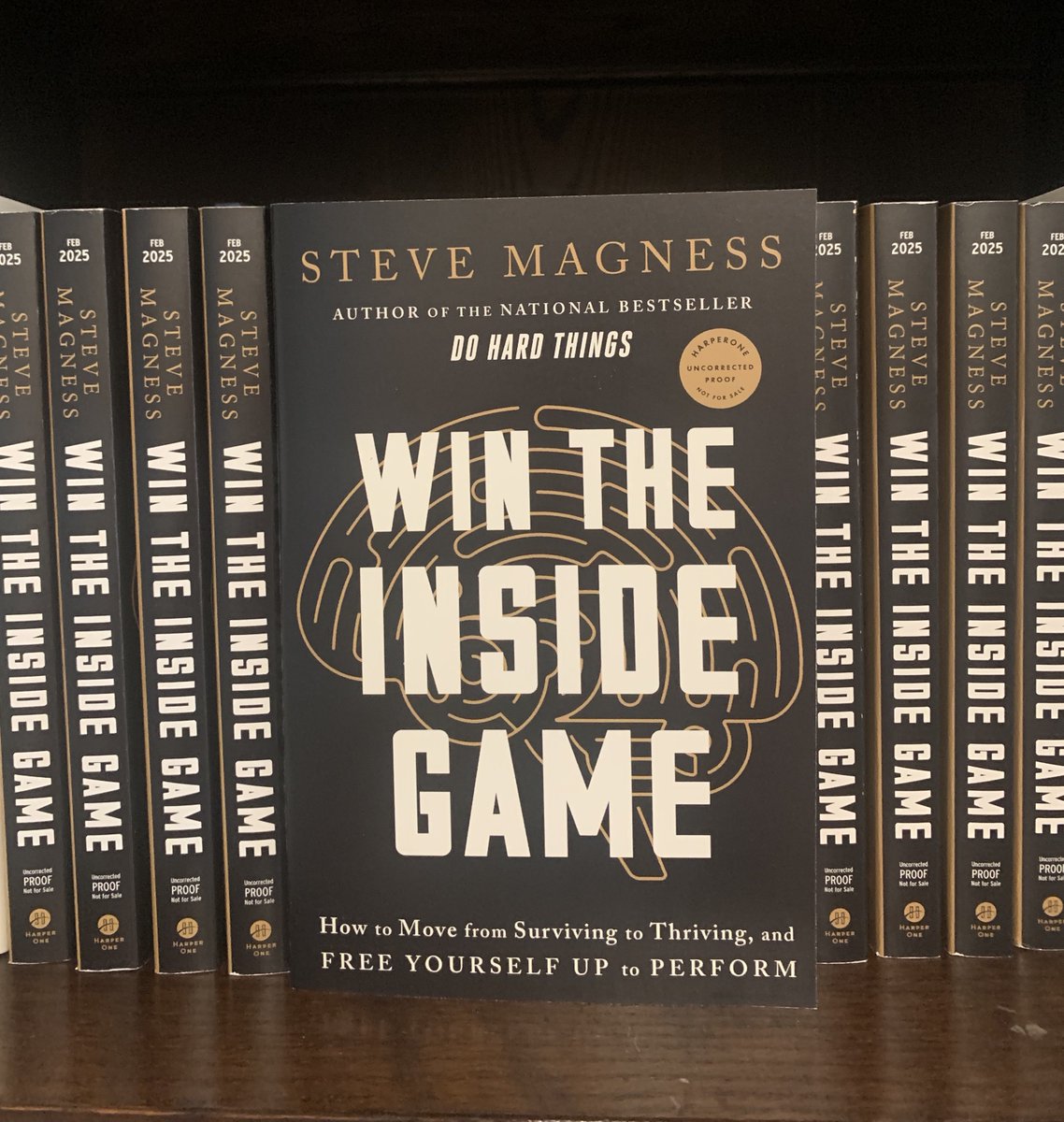
I’ve been waiting a long time to announce this: My new book, WIN THE INSIDE GAME, is available for preorder! Learn to: -Perform under pressure -Find Courage -Come through in the clutch -Free yourself from insecurity Order today & get great bonuses here: stevemagness.com/win-the-ins…
52
28
525
252,023
When I was in 4min mile shape, my VO2max was only ~67, but my running economy was ~175 ml/kg/km @ 5:30 pace. No single physiological parameter determines performance. Some have a big engine, others are super efficient. Some have great speed, others have unbelievable recovery.
4
2
21
1,747
Steve Magness reposted
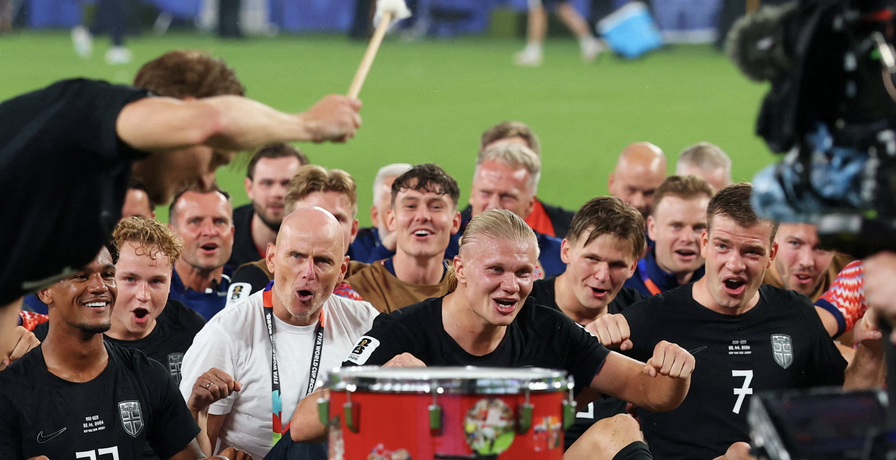
"Don't Keep Score." Norway's youth sports motto is building winners. Norway has long dominated the Winter Olympics, but increasingly they’re having success in summer sports. They just made the round of 16 with their defeat of the Ivory Coast. Beyond soccer, they have top triathletes, runners, decathletes, tennis players, and have had global success in handball and beach volleyball. They won 8 medals at the 2024 Summer Olympics, spanning 6 sports. Norway has fewer people than the Houston metropolitan area, yet continues to produce world champions across both winter and summer sports. And this is their youth sports program: -If you give trophies, they have to go to all kids. -No keeping score until they’re 11. -National championships: prohibited through age 12. -No posting youth results or standings online. -Youth sport is local-first with travel being minimized. -Motto: “Joy of Sport for All.” They let kids be kids. And it works. In Norway, 93% of kids play some sort of youth sport. In America, that number is 58%, with kids in the US in the lowest income bracket only reaching 38%. By any metric, Norway’s elite athletes are achieving on a global stage. Yet, if we turn to their youth sports, their programs are the opposite of the US. Norway doesn’t allow for official score keeping until the age of thirteen. They dissuade early national travel teams in favor of local leagues. You can’t even post the results of youth games online without being fined. And almost sacrilegious in certain American circles, Norway doesn’t allow trophies unless everyone gets one. As Tore Ovrebo, Norway’s director of elite sport, told USA Today writer Dan Wolken, “We think the biggest motivation for the kids to do sports is that they do it with their friends and they have fun while they’re doing it and we want to keep that feeling throughout their whole career.” Their youth sporting model can be summed up with their chosen slogan, “Joy of Sport for All.” But not keeping score, giving out trophies, not being “win at all costs”...that’s anti-American! How can they be competitive? Research backs their approach up. The Fire Has To Come From Within: If you look at ​research​ on prodigies who eventually become standout adult performers, a deep intrinsic drive is paramount. Researchers found that intrinsically motivated football players were 3.5x more likely to make it to the next level, and athletes in general 2x more likely. The problem is that early success often pulls young people away from this inner drive. Kids start playing soccer (or violin or chess—this isn’t just about sports) because it is exciting and fun. As they improve, they gain accolades and praise from their parents, coaches, and teachers. They start winning trophies or seeing their names in online commentary. Without even realizing it, their intrinsic drive gets replaced by external validation and a need to please and impress others. The quickest way to kill that internal motivation? Hype achievements and be a crazy controlling parent or coach. The best way to create and maintain intrinsic motivation is to let kids dabble, explore, and find something with which their interests and talents align. Then, let them enjoy it without an undue emphasis on success. Praise effort, character, and teamwork, not results. This is easy to talk about but hard to do. Find ways to reward and incentivize the values you want to instill. That means not taking the easy road and talking about who set a new mile best or scored the most points, but instead highlighting who hustled during the fourth quarter, rallied after it seemed like the match was over, or displayed exemplary sportsmanship. Go Broad over Specialization Even if the entire point of youth sports was to create future champions (which it’s not), we’d still adopt something similar to the Norwegian model. An ​analysis​ of over 6,000 athletes explored what separates athletes who reached world class and those who came up short. Those who reached world-class had during their youth: -More multi-sport than specialized practice -Started their primary sport later -Accumulated less overall formal practice -Initially progressed slower than national class peers Those who performed well when young, but didn’t progress: -Started their primary sport earlier -Specialized, engaging in more practice in one sport -Made quicker initial progress Norway doesn’t have 300 plus million people and an NCAA system to funnel talent. They have to develop theirs. And they realize the best way to do that is keep as many people in the system as possible. Sure, soccer tends to start early and not quite have as much sports generalization, but all research points to lots of unorganized play even in soccer. Why? Because you can’t predict talent development very well! Just go look at the age group record books. It’s easy to fool yourself into thinking early performance equals talent and potential. The kid running a 6-minute mile at 10 looks way better than the one running 6:45. But if the faster one is at track practice 5 days a week and the slower one rolls out of gym class in jeans and runs it off “fitness” from just playing, well I’m betting on the slower one! When we assess performance early on, we’re not measuring talent, we’re looking at training age and opportunity. And we’re crowning winners based on who started grinding first. Research backs this up, kids born early in the year are 9x more likely to be picked at U16 than late-born kids, an edge that nearly vanishes by adulthood. America gets away with the insane achievement model because we can burn out 9 kids to get 1 survivor. When we narrow our focus too early, we create fragility. A prospective study of 1,544 high-schoolers found highly specialized athletes had 1.85x the rate of lower-body injury vs. low-specialization peers. Norway can’t afford that. They take the longer, more sustainable model. Their football associations entire motto is "as many as possible, as long as possible, as good as possible." This is also reflected in their coaching style, which varies based on sport, but generally takes advantage of a more modern ecological approach. Instead of the old school football coach dictating and demanding, doing his best job of imitating a drill sergeant, Norway and other Scandanavian countries are at the forefront of using more constraints led approaches. They let the environment do more of the coaching. There’s more of an emphasis on play, exploration,varying the game dynamics with small sided games, and constraints. This isn’t every coach or situation, but many of the European development models are at the forefront of minimizing the over prescribing we see all too much in America. Rethinking Youth Sports: The whole point of youth sports should be for kids to learn, develop, have fun, and want to come back and play again next season! The best chance of developing a D1 scholarship athlete is essentially to do the exact opposite of what our current youth sports fiasco promotes. Even the poster child for early specialization, Tiger Woods, ​acknowledged​ it’s not a good thing for parents to push their kids too hard: “Don’t force your kids into sports,” he says. “I never was. To this day, my dad has never asked me to go play golf. I ask him. It’s the child’s desire to play that matters, not the parent’s desire to have the child play. Keep it fun.” While youth sports in America aren’t going to adopt the Norwegian model anytime soon, we can rebalance the equation. As I outlined in my book, it’s not getting rid of competitiveness, it’s rebalancing the equation to make sure that crazy mom, dad, or coach don’t extinguish the fire that makes great competitors (and sport fun!). And even though we like to blame that “crazy” parent, it’s often not the root of the problem. The entire system surrounding youth sports is. A 2026 study of 1,229 families found that parents’ over-investment in youth sports was driven by external pressure, especially from club coaches, and not by a delusional belief that their kid was the next pro. In fact, belief in the child’s potential didn’t predict greater spending on youth sports at all. The pressure is manufactured by the system the family is standing in. Change the incentives, and the behavior changes with it. In research on performance orientation and grades in school, a teaching environment that supported and emphasized mastery , where students focused on the process of learning and comprehension instead of a comparison to others, was also linked to better grades. But it wasn’t the direct relationship that an outcome orientation had. Instead, in one study on college students, a mastery approach was linked to challenge-seeking, which in turn predicted end-of-the-year grades. In another study, mastery goals predicted higher levels of interest and enjoyment. Mastery works on our approach system without activating avoidance. It frees us up to take on a challenge and pursue our interests without getting bogged down by the pressure or judgment that often comes with an obsession with outcomes. The same findings hold true when looking at sport or the workplace. In a large meta-analysis that analyzed the impact of goal setting in sports, process-orientated goals had a large effect on performance. Outcome goals had little to no effect. These two paths represent a fast versus slow road to success. Both a mastery or outcome focus can lead to better performance, but the latter is akin to taking a shortcut. Obsession over outcomes is the most direct path to improvement, but it comes with some downsides that shift us toward avoidance. The slow path takes a longer, indirect route. It helps improve our performance not by focusing on the results themselves but by supporting the foundation that ultimately leads to better performance. It stokes the fire of enjoyment and interest to sustain our curiosity and work ethic over the long haul. It pushes us toward challenge-seeking so that when we inevitably hit a roadblock, we’ll take it on instead of trying to protect our ego. Both approaches work. One is more sustainable, providing success with less angst. Society has thrown us so far out of balance that we can’t even see the slow route right in front of us. We can either instill a love of sport in our youth, or we can turn sport into a burden where kids are exhausted, stressed, and scared. We’ve seen this go both ways, and the results couldn’t be more different. One leads to happy, healthy, and better young athletes. The other leads to burnout, family tension, mental health challenges, and quitting. As parents, volunteers, coaches, and community members, let’s all do what we can to minimize the latter and champion the former. -Steve
13
27
189
28,558
Steve Magness reposted
A long read. But worth reading if you want to understand how we got here with this Norwegian team
"Don't Keep Score." Norway's youth sports motto is building winners. Norway has long dominated the Winter Olympics, but increasingly they’re having success in summer sports. They just made the round of 16 with their defeat of the Ivory Coast. Beyond soccer, they have top triathletes, runners, decathletes, tennis players, and have had global success in handball and beach volleyball. They won 8 medals at the 2024 Summer Olympics, spanning 6 sports. Norway has fewer people than the Houston metropolitan area, yet continues to produce world champions across both winter and summer sports. And this is their youth sports program: -If you give trophies, they have to go to all kids. -No keeping score until they’re 11. -National championships: prohibited through age 12. -No posting youth results or standings online. -Youth sport is local-first with travel being minimized. -Motto: “Joy of Sport for All.” They let kids be kids. And it works. In Norway, 93% of kids play some sort of youth sport. In America, that number is 58%, with kids in the US in the lowest income bracket only reaching 38%. By any metric, Norway’s elite athletes are achieving on a global stage. Yet, if we turn to their youth sports, their programs are the opposite of the US. Norway doesn’t allow for official score keeping until the age of thirteen. They dissuade early national travel teams in favor of local leagues. You can’t even post the results of youth games online without being fined. And almost sacrilegious in certain American circles, Norway doesn’t allow trophies unless everyone gets one. As Tore Ovrebo, Norway’s director of elite sport, told USA Today writer Dan Wolken, “We think the biggest motivation for the kids to do sports is that they do it with their friends and they have fun while they’re doing it and we want to keep that feeling throughout their whole career.” Their youth sporting model can be summed up with their chosen slogan, “Joy of Sport for All.” But not keeping score, giving out trophies, not being “win at all costs”...that’s anti-American! How can they be competitive? Research backs their approach up. The Fire Has To Come From Within: If you look at ​research​ on prodigies who eventually become standout adult performers, a deep intrinsic drive is paramount. Researchers found that intrinsically motivated football players were 3.5x more likely to make it to the next level, and athletes in general 2x more likely. The problem is that early success often pulls young people away from this inner drive. Kids start playing soccer (or violin or chess—this isn’t just about sports) because it is exciting and fun. As they improve, they gain accolades and praise from their parents, coaches, and teachers. They start winning trophies or seeing their names in online commentary. Without even realizing it, their intrinsic drive gets replaced by external validation and a need to please and impress others. The quickest way to kill that internal motivation? Hype achievements and be a crazy controlling parent or coach. The best way to create and maintain intrinsic motivation is to let kids dabble, explore, and find something with which their interests and talents align. Then, let them enjoy it without an undue emphasis on success. Praise effort, character, and teamwork, not results. This is easy to talk about but hard to do. Find ways to reward and incentivize the values you want to instill. That means not taking the easy road and talking about who set a new mile best or scored the most points, but instead highlighting who hustled during the fourth quarter, rallied after it seemed like the match was over, or displayed exemplary sportsmanship. Go Broad over Specialization Even if the entire point of youth sports was to create future champions (which it’s not), we’d still adopt something similar to the Norwegian model. An ​analysis​ of over 6,000 athletes explored what separates athletes who reached world class and those who came up short. Those who reached world-class had during their youth: -More multi-sport than specialized practice -Started their primary sport later -Accumulated less overall formal practice -Initially progressed slower than national class peers Those who performed well when young, but didn’t progress: -Started their primary sport earlier -Specialized, engaging in more practice in one sport -Made quicker initial progress Norway doesn’t have 300 plus million people and an NCAA system to funnel talent. They have to develop theirs. And they realize the best way to do that is keep as many people in the system as possible. Sure, soccer tends to start early and not quite have as much sports generalization, but all research points to lots of unorganized play even in soccer. Why? Because you can’t predict talent development very well! Just go look at the age group record books. It’s easy to fool yourself into thinking early performance equals talent and potential. The kid running a 6-minute mile at 10 looks way better than the one running 6:45. But if the faster one is at track practice 5 days a week and the slower one rolls out of gym class in jeans and runs it off “fitness” from just playing, well I’m betting on the slower one! When we assess performance early on, we’re not measuring talent, we’re looking at training age and opportunity. And we’re crowning winners based on who started grinding first. Research backs this up, kids born early in the year are 9x more likely to be picked at U16 than late-born kids, an edge that nearly vanishes by adulthood. America gets away with the insane achievement model because we can burn out 9 kids to get 1 survivor. When we narrow our focus too early, we create fragility. A prospective study of 1,544 high-schoolers found highly specialized athletes had 1.85x the rate of lower-body injury vs. low-specialization peers. Norway can’t afford that. They take the longer, more sustainable model. Their football associations entire motto is "as many as possible, as long as possible, as good as possible." This is also reflected in their coaching style, which varies based on sport, but generally takes advantage of a more modern ecological approach. Instead of the old school football coach dictating and demanding, doing his best job of imitating a drill sergeant, Norway and other Scandanavian countries are at the forefront of using more constraints led approaches. They let the environment do more of the coaching. There’s more of an emphasis on play, exploration,varying the game dynamics with small sided games, and constraints. This isn’t every coach or situation, but many of the European development models are at the forefront of minimizing the over prescribing we see all too much in America. Rethinking Youth Sports: The whole point of youth sports should be for kids to learn, develop, have fun, and want to come back and play again next season! The best chance of developing a D1 scholarship athlete is essentially to do the exact opposite of what our current youth sports fiasco promotes. Even the poster child for early specialization, Tiger Woods, ​acknowledged​ it’s not a good thing for parents to push their kids too hard: “Don’t force your kids into sports,” he says. “I never was. To this day, my dad has never asked me to go play golf. I ask him. It’s the child’s desire to play that matters, not the parent’s desire to have the child play. Keep it fun.” While youth sports in America aren’t going to adopt the Norwegian model anytime soon, we can rebalance the equation. As I outlined in my book, it’s not getting rid of competitiveness, it’s rebalancing the equation to make sure that crazy mom, dad, or coach don’t extinguish the fire that makes great competitors (and sport fun!). And even though we like to blame that “crazy” parent, it’s often not the root of the problem. The entire system surrounding youth sports is. A 2026 study of 1,229 families found that parents’ over-investment in youth sports was driven by external pressure, especially from club coaches, and not by a delusional belief that their kid was the next pro. In fact, belief in the child’s potential didn’t predict greater spending on youth sports at all. The pressure is manufactured by the system the family is standing in. Change the incentives, and the behavior changes with it. In research on performance orientation and grades in school, a teaching environment that supported and emphasized mastery , where students focused on the process of learning and comprehension instead of a comparison to others, was also linked to better grades. But it wasn’t the direct relationship that an outcome orientation had. Instead, in one study on college students, a mastery approach was linked to challenge-seeking, which in turn predicted end-of-the-year grades. In another study, mastery goals predicted higher levels of interest and enjoyment. Mastery works on our approach system without activating avoidance. It frees us up to take on a challenge and pursue our interests without getting bogged down by the pressure or judgment that often comes with an obsession with outcomes. The same findings hold true when looking at sport or the workplace. In a large meta-analysis that analyzed the impact of goal setting in sports, process-orientated goals had a large effect on performance. Outcome goals had little to no effect. These two paths represent a fast versus slow road to success. Both a mastery or outcome focus can lead to better performance, but the latter is akin to taking a shortcut. Obsession over outcomes is the most direct path to improvement, but it comes with some downsides that shift us toward avoidance. The slow path takes a longer, indirect route. It helps improve our performance not by focusing on the results themselves but by supporting the foundation that ultimately leads to better performance. It stokes the fire of enjoyment and interest to sustain our curiosity and work ethic over the long haul. It pushes us toward challenge-seeking so that when we inevitably hit a roadblock, we’ll take it on instead of trying to protect our ego. Both approaches work. One is more sustainable, providing success with less angst. Society has thrown us so far out of balance that we can’t even see the slow route right in front of us. We can either instill a love of sport in our youth, or we can turn sport into a burden where kids are exhausted, stressed, and scared. We’ve seen this go both ways, and the results couldn’t be more different. One leads to happy, healthy, and better young athletes. The other leads to burnout, family tension, mental health challenges, and quitting. As parents, volunteers, coaches, and community members, let’s all do what we can to minimize the latter and champion the former. -Steve

1
5
6,533
You don't rise to the occasion. You sink to your preparation. Then you shrink the moment down to the only thing you control: the next move.
8
79
6,543
Wait...did the FIFA Peace Prize actually pay off... What a wild world...and FIFA as a governing body, I don't even know what to say. They make every US league office look like geniuses.
It’s time for the ultimate bring America together moment. Donald Trump needs to use his FIFA Peace Prize to pressure FIFA into rescinding the ultimate birthright citizen Flo Balogun’s red card so he can play against Belgium. Let’s get it done USA.
10
1
104
25,285
Also...can we talk about the irony of Trump advocating for arguably the most famous birthright citizen in America right now... This timeline is wild.
2
43
4,614
People love the hard-ass hype speeches and drill-sergeant coaches, and there is nothing the marketing bro gurus love more than tweeting about "obsession." But some of the most important factors driving greatness are having fun, joy, and love: thegrowtheq.com/to-perform-b…
1
2
30
6,124
In track, we stick a bunch of the countriea at the same hotel for worlds… Not sure why FIFA doesn’t just mandate both teams at same hotel.
Would love to speak to a player and see if stuff like this actually works. All efforts are futile if players just pack… earplugs.
3
66
21,035
As England prepared to take on Mexico at 7,200 feet altitude… how much will it impact performance and what should they do about it? I’ve got you covered: open.substack.com/pub/stevem…
2
1
25
6,739
Listen to World champion Josh Kerr: “I don’t do crazy workouts or crazy mileage. I just don’t miss days. Consistency is my biggest weapon. I’ll break any athlete down with how consistent I’m going to be training wise and just getting the work done.”
9
41
356
29,436
There are two kinds of striving: secure and insecure. The insecure variety comes from fear. Secure striving comes from wanting to win, to do your best, but realizing that it’s not the end of the world if you fall short. thegrowtheq.com/the-power-an…
1
1
20
5,597
All I know is that the USA was beating Paraguay 3-0 at this point...And #1 seed France is tied 0-0. By the transitive property...the USA is winning the World Cup...
11
3
176
17,092
And in all seriousness, I guess the social media pundits who said Paraguay were trash after they got dominated by the US were wrong...
7
1
33
5,134
France should be warming-up in Ice vests. But they aren't. Why? Even at the highest level, not every team does everything or covers all their bases. It's true in every sport In soccer, it's not normal to play in these temps. In running, it occurs. So ice vests are 2nd nature
17
3
223
43,418
It is 98 degrees at game time for France vs. Paraguay. The heat is going to play a major factor. France is the heavy favorite, but...it's going to be real. A few insights from an exercise physiologist who coached someone to get 6th at the World Champs in the marathon In Qatar...(i.e. hot as hell...) Playing soccer in that heat will decrease performance by a lot. At the 2018 World Cup, games played at 86 degrees saw: -9% drop in total distance -26% decline in high-intensity running At the 2025 women's world cup, for every 1°C rise in air temperature, players covered 0.18 m/min less at high speed and 0.30 m/min less at moderate speed. Research on runners shows the lower the fitness, the more they feel it. For example in marathons, for every 5 degree C increase in WBGT, elites saw a 0.9% decline, while mid-pack saw a 3.2%. Soccer players aren't going to like elite endurance runners, but they'll be better than mid-pack level. Paraguay is sitting and defending. They are going to play a low block...This helps them. France has to press, run and move. They're going to feel this more. What's going on? It'll increase fatigue, make cramping and dehydration way more prevalent. We used to think you just go close to a critical core body temp and then you fatigue a lot or get catastrophic damage. Modern models tell us that our brain anticipates it, and helps influence fatigue by increase perception of effort to try to slow us down. So our fatigue occurs well before we reach critical moments. From the early moments, we'll pace and slow down from normal conditions. But it's anticipatory. Which matters (and brings in hydration breaks). Part of it is keeping core body temperature down, but also keeping our perception of effort under control. So what can teams do? 1. Cool Down constantly: Ice, cold water, frozen towels on your kneck, the fancy ice glove that cools palm. Drink ice slushies. All of those things matter. Before the match, they can pre-cool. They should "warm-up" with ice vests on. For the marathon, we even do ice baths before hand. Keep core temp low going in. And then try to address during it. Half-time should be ice vests and/or cold tub. At hydration breaks, towels, slushies, hand cooling glove. It's a constant battle. Runners switch out hats with ice in the marathon. 2. Hydrate Water sugar electrolytes. No, electrolytes aren't tied to cramping really. Cramping is about fatigue more so. But the combo will help you stay hydrated, which helps stave off some fatigue, and also keep perception of effort there. 3. Pace and Sub You get too fired up, play like normal, you are screwed. Treat it like racing a marathon in hot conditions. Start easier. Use your subs strategically...and keep those subs cool! And of course...it helps a lot to by heat adapted. They've been over in the US, so hopefully both teams have. But we'll see... France is a heavy favorite. But if they aren't prepared....the heat will win. It can knock guys out, cause catastrophic slow down. As someone who's spent most of his life training in the summers of Houston, TX...You gotta prepare and respect the heat. Should be fun...
7
5
119
20,334
I love how every single British TV station/newspaper has sent one of their reporters out for a run or stuck them in altitude chamber to suffer at altitude. 7k ft sucks. Even for elite endurance athletes accustomed to it.
How hard is it to run at high altitude? 🤔 This is something the England team will have to face tomorrow in their last-16 tie against Mexico in Mexico City 🇲🇽
13
15
282
68,693
Meta-analysis finds that taking an ice bath after strength training impairs gains. The inflammation, damage, stress is the SIGNAL for adaptation. Take it away...we blunt the response. Sometimes, damage is a good thing...
11
14
157
14,720
Cape Verde...almost pulled off the unthinkable. What an insane run. Their coach, Bubista, is a quote machine on how to instill the right approach: "The key? Our team's unity and resilience. We've always talked about our organisation, but also about our determination to do things without fear." "We're a small country, but we fight for what we want to achieve. For us, nothing is impossible." "Everyone is entitled to dream, and nothing is impossible." "If others did not respect us, that was their issue. We trust our work." "You can achieve great things regardless of your challenges… so long as you have a dream and chase after it." Play to win. Put in the work. Trust your training. Team first. Chase a dream. Believe
4
38
410
25,463
Cape Verde! Tied 1-1 with the defending World Cup champs in the 60th minute... You gotta love their story. Doesn't matter the name or the credentials...in the arena everyone has a chance. The magic of sports.
6
5
203
10,527