
founder, techno-optimist, college dropout, partner at @ycombinator.

Joined April 2007
167 Photos and videos
Pinned Post
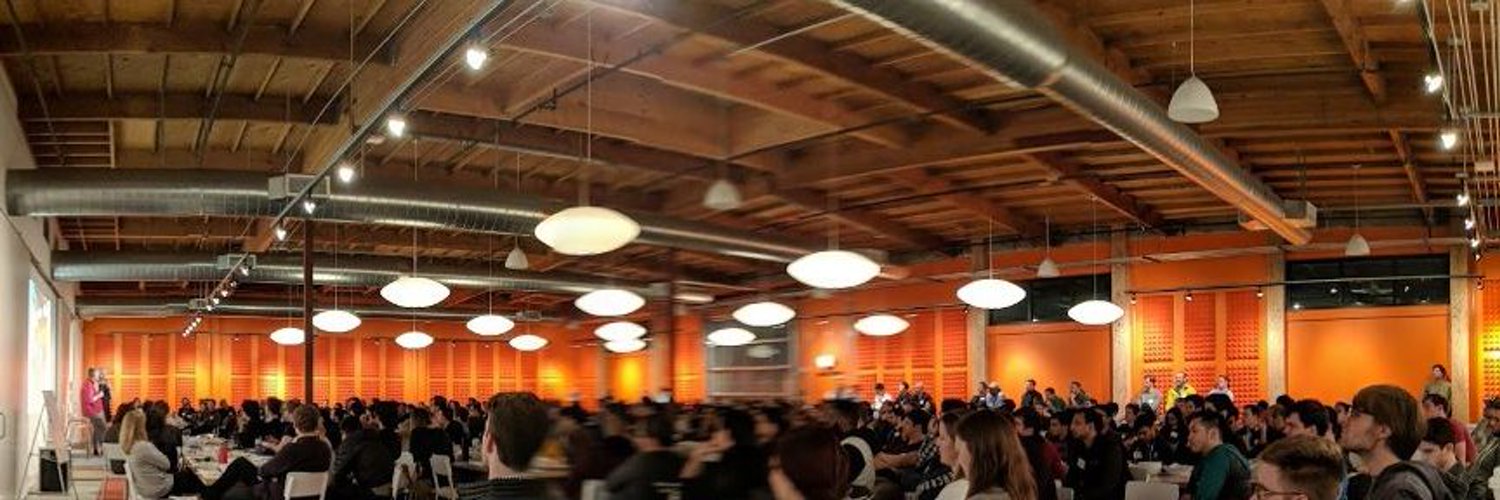
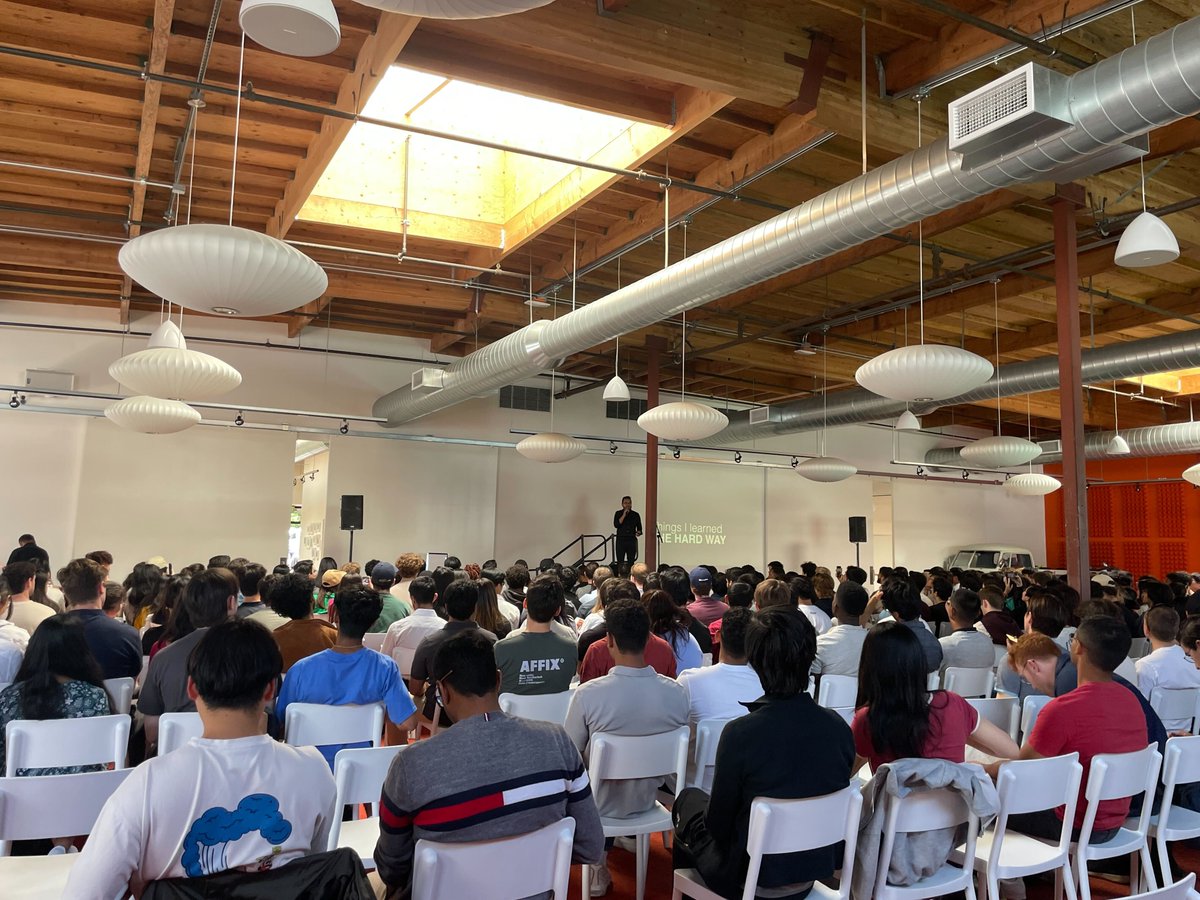
Yesterday we hosted 400 top university students at the YC Summer Conference - a fun day of talks about startups.  Talking to the students afterwards, I found myself giving a lot of the same advice. So in case it's useful to others, here is my startup advice for students.
56
251
1,732
847,593
Fable is so insanely good. Deserves the hype.
80
33
789
58,666
You can read the full book at amazon.com/Freedoms-Forge-Am…
9
21
224
7,862
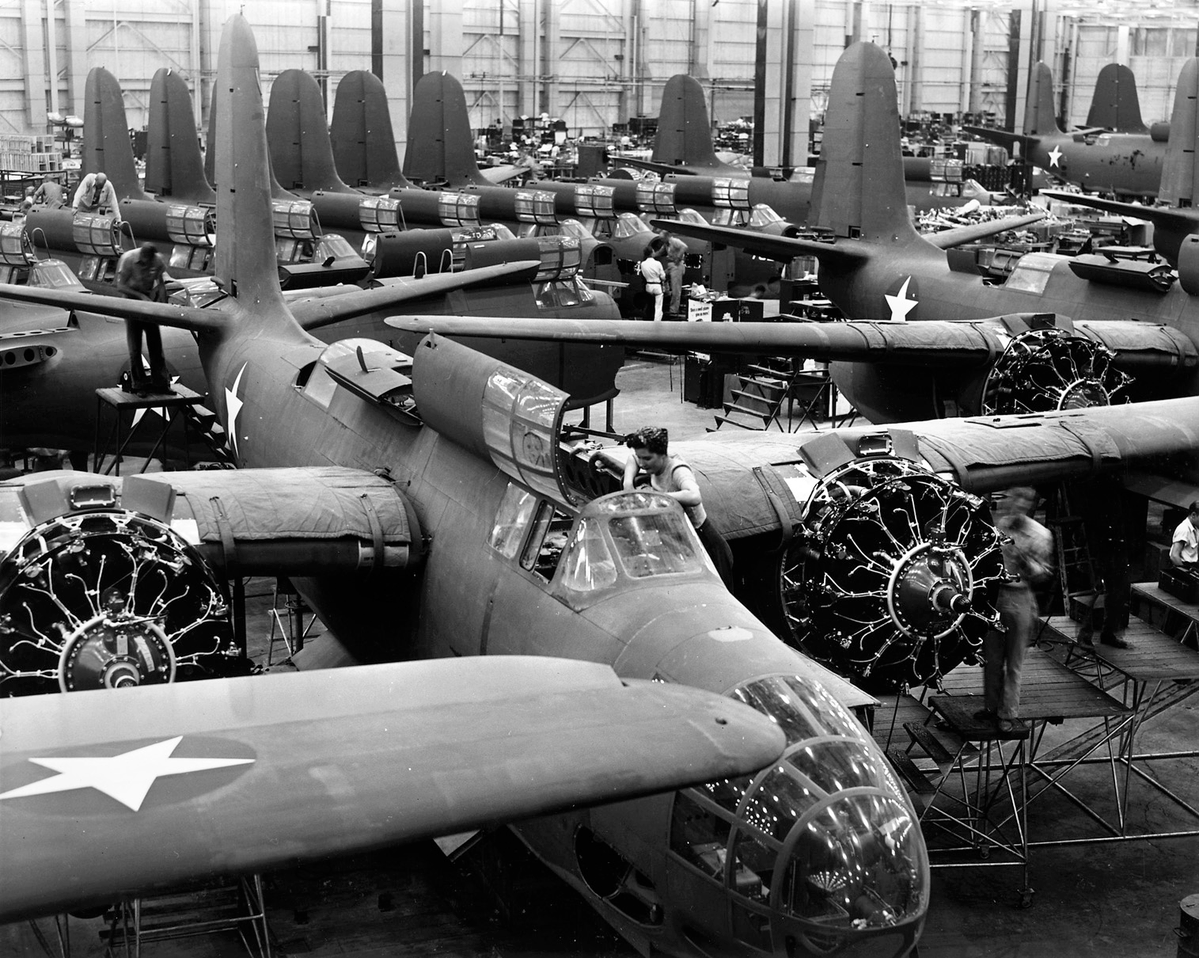
At peak velocity in 1944, America produced fifty merchant ships a day, 9,000 tons of steel an hour, and a warplane every five minutes. That is roughly a 100x scale up during the war. That's what this country is capable of.
3
23
197
7,704
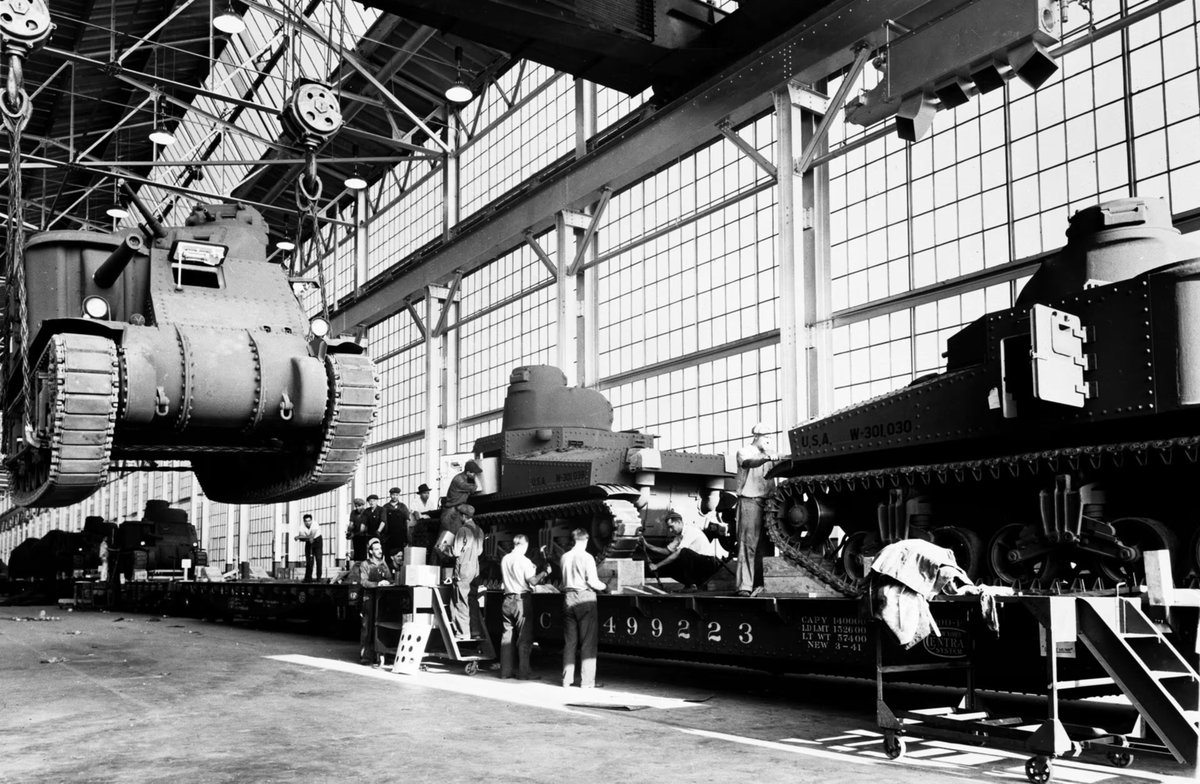
And it worked. America produced two-thirds of ALL Allied military equipment in WWII: 86,000 tanks, 2.5 million trucks, half a million jeeps, 286,000 warplanes, 8,800 naval vessels, 5,600 merchant ships, 434 million tons of steel, 2.6 million machine guns, and 41 billion rounds of ammunition.
1
14
140
7,112
Scaling industrial production during WWII is rightly remembered as America at its best. Millions of engineers and workers, scattered across thousands of factories, worked hard and creatively to solve whatever bottlenecks came up. The government helped finance the effort but did not centrally plan it. Just Knudsen in his little plane, flying around the country and loosely coordinating efforts.
1
7
122
6,778
Because Knudsen had run production at GM, he understood that machine tools would become the bottleneck to everything if not solved first. So early in the war effort, before Pearl Harbor, he was getting machine tool manufacturers to scale up. By 1941 Cincinnati Milling was producing a new machine tool every 17 minutes, 24/7. Tooling scaled first so everything else could.
2
8
148
7,339
There's an unsung hero of the story: machine tools. Machine tools are "the machines that make machines" - the machines that sit in factories. Unlike tanks and airplanes which are made by famous companies like GM, machine tools in 1940 were made by ~200 tiny firms you've never heard of. But you can't scale factories without them.
3
8
139
7,169
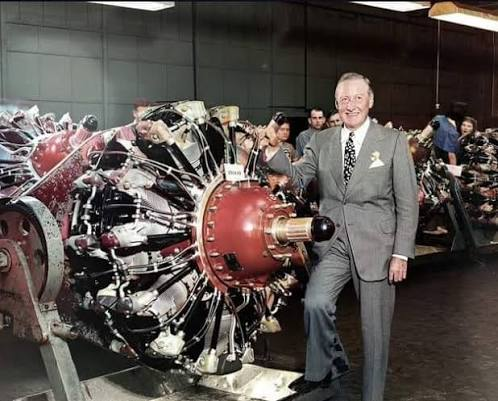
Convincing car makers to make airplane parts was not easy. Henry Ford refused to build airplane engines for Britain. But eventually we did it: Buick and Chevrolet built Pratt & Whitney B-24 engines, Packard took the Merlin engine, and GM's Eastern Aircraft built entire Navy fighters.
2
10
125
7,744
A key turning point was that we got our car companies, which were world class at the time, to start making parts for airplanes.
1
7
112
7,086
Today we regard American supremacy in aerospace as a given, but in 1940, the US aviation industry was far behind the British, French, German and Japanese. It was the the war that "resurrected America's aviation industry from the dead".
2
8
138
7,231
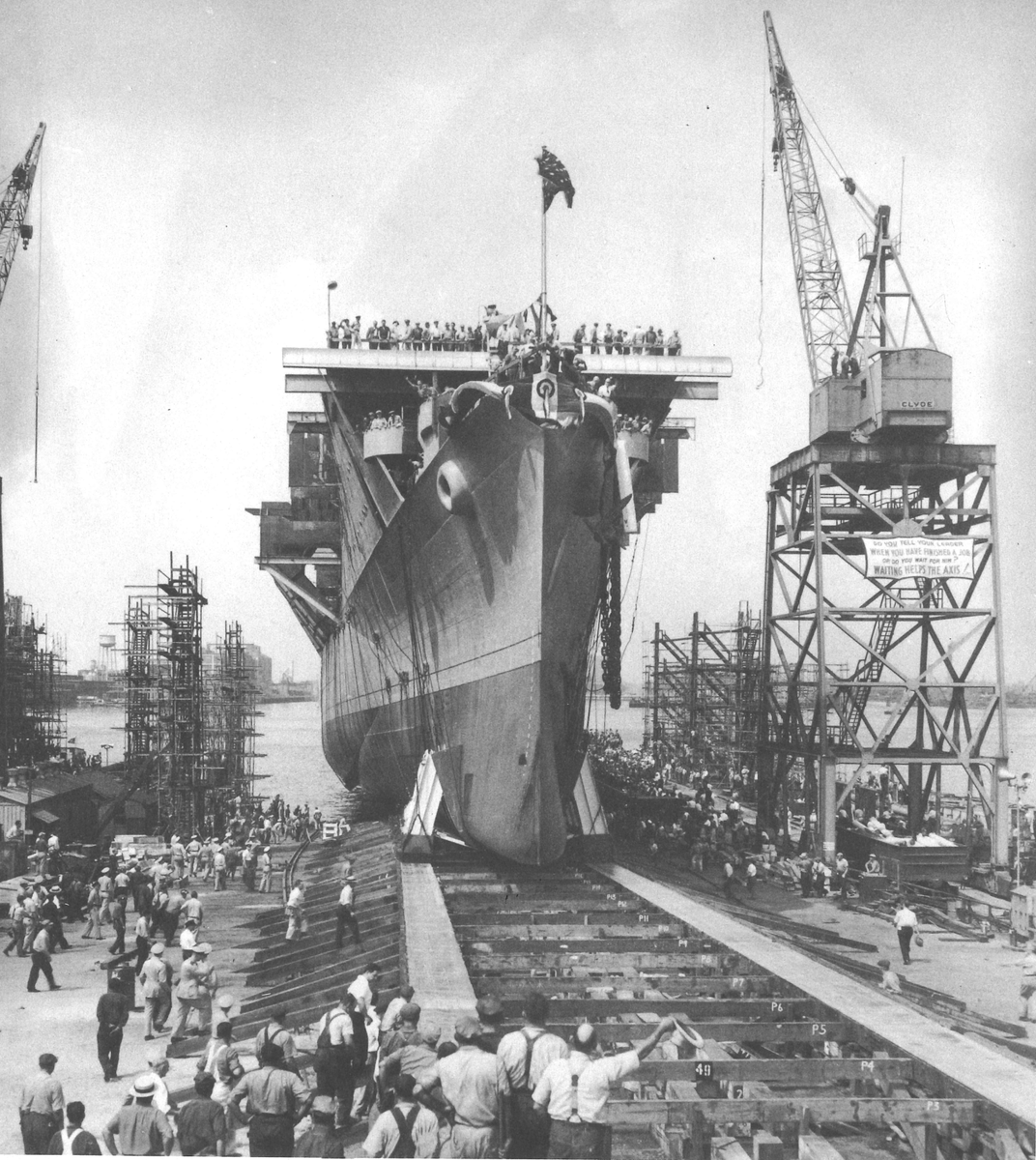
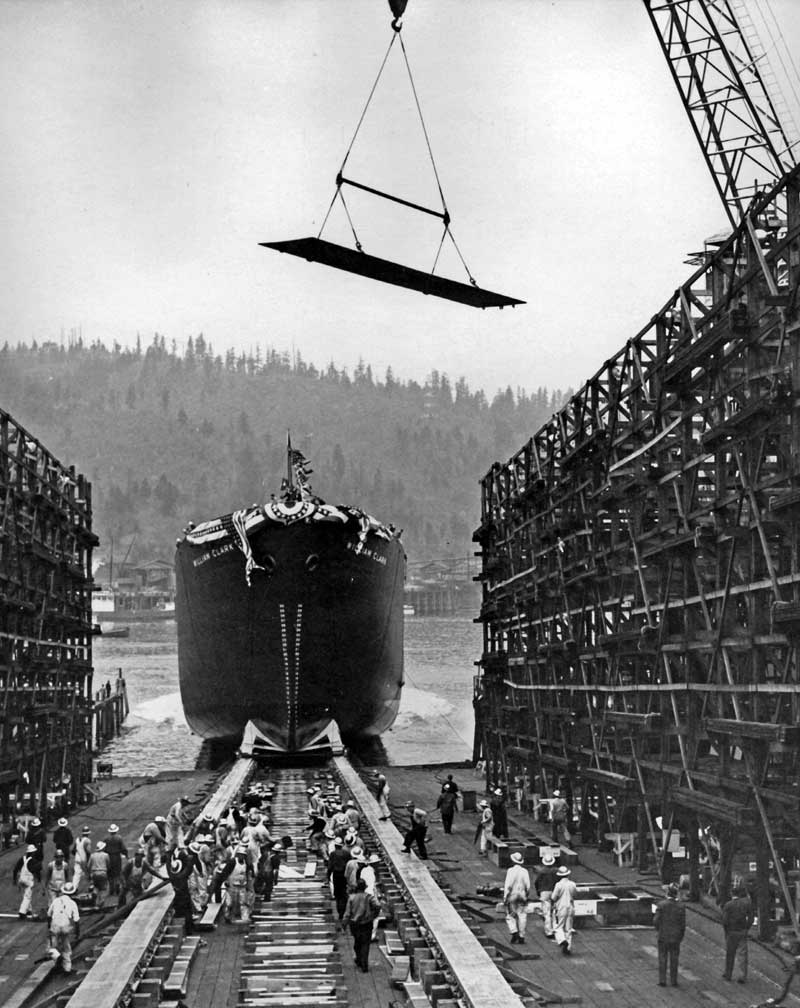
Despite being run by people with no experience, Kaiser's shipyards were incredibly productive. And they got relentlessly better. The first Liberty ship took 253 days. A year later it took 4 days. They measured everything and treated build-time like a startup's KPI. They got a 98% cycle-time reduction in 18 months.
4
15
183
8,593
To build those transport ships, we built massive new shipyards on empty land. These shipyards were built by a colorful America Industrialist named Henry Kaiser. Most of Kaiser's shipyard workers had mostly never seen a shipyard or built a ship: they were orchestra leaders, nightclub owners, and cabinetmakers. 70% were women - like in the famous "Rosie the Riveter" poster.
2
9
142
8,859
America had a few premier shipyards, but their capacity was consumed by battleships and carriers. To fight a war across two oceans we needed thousands of new cargo and troop ships - and no spare shipyards to build them.
1
7
107
8,282
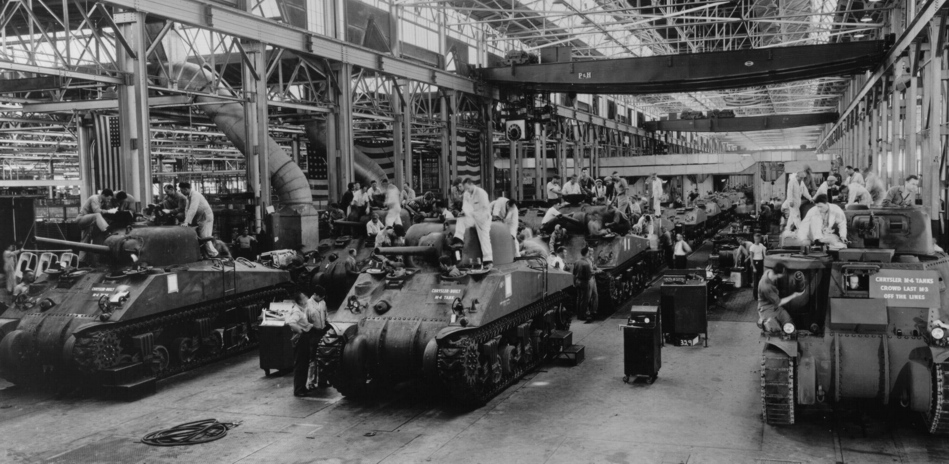
Then the Army handed Chrysler several hundred pounds of tank blueprints. But the Army's plans turned out to be junk. Chrysler's engineers, who had never seen a tank before, quietly redesigned the whole tank, over the army's objections. Their design is the one that worked.
3
18
199
8,977
First, we had to convince Detroit to do it at all. Because Knudsen had run GM before and had standing among the automakers, he got them to suspend annual model changes - directly against their financial interest, a year before Pearl Harbor - freeing capacity for war production.
2
8
144
10,306
It's true that we converted our car factories to tank factories. But the road to doing so was bumpy.
1
6
102
10,414
Knudsen, the former GM president who ran mobilization for the US govt, is the man who convinced the factories to convert. Later, In his mid 60s, he got a plane and crisscrossed the country visiting one factory at a time. In 3 years, he logged a quarter of a million miles and visited 1,200 factories.
1
8
135
11,182
It was also not a given. Factory owners were reluctant to retool their factories, which required them to take all the financial risk of producing totally new products.
1
5
108
11,470
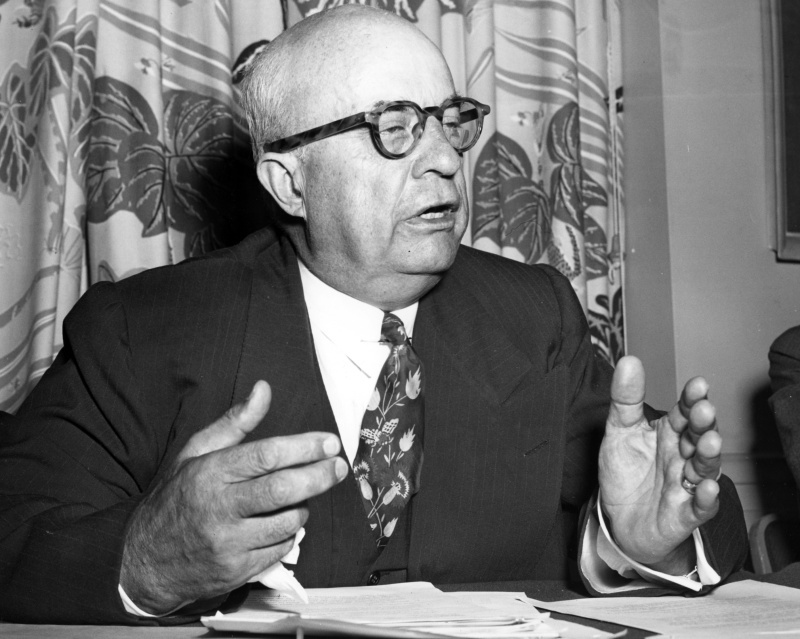
Reindustrialization was not just a bottoms-up grass roots phenomenon. The work was done by millions of workers, but it would probably not have happened without the efforts of two extraordinary men: Bill Knudsen, a Danish immigrant machinist and Henry Kaiser, a 7th-grade-dropout road builder.
3
10
158
14,580
In 1940, America's defense industries had been hollowed out for 20 years - after a wave of deindustrialization just like today's. Merchant shipyards were building only 4 ships a month. We made almost no gunpowder. The army's weapons and machinery were largely leftovers from WWI.
2
12
157
15,356