
The success of LLMs gave people a costly illusion: text→image→video all flattened by scaling, so surely digital→physical (robots) is just 'stack more compute' one more time. It isn't. Embodied AI runs headfirst into four walls digital AI never faced. #EmbodiedAI

Weave Robotics unveiled Isaac 1, a mobile humanoid robot designed for household chores.
The robot handles tidying rooms, folding laundry, making beds, and organizing clutter. It uses a wheeled base and telescopic body to navigate homes and reach different heights while operating autonomously most of the time.
Remote human operators step in for complex situations through hybrid autonomy. This approach bridges current limitations in full autonomy while delivering reliable task completion.
Physical agentic systems like Isaac 1 represent the next frontier beyond digital agents. Enterprises tracking embodied AI will see implications for warehouse operations, elder care, and service robotics.
The technology advances rapidly. Organizations must evaluate integration pathways and governance models for safe deployment of humanoid robots in real environments.
Read the article here: interestingengineering.com/a…
#HumanoidRobots #Robotics #AgenticAI #EmbodiedAI #FutureOfWork #HomeAutomation #AIinRobotics #AISafety

19

Sydney-bound for #RSS2026, and not gonna lie, we’re buzzing! 🔥
On our slate:
OpenDriveLab.com/rss2026/
🎤 Dr. Hongyang Li — Early Career Spotlight
📄 Two papers we're proud of: RISE & EgoHumanoid
🤖 A humanoid doing real work on the floor - July 13th Morning Workshop
Full rundown where to find us 👇
medium.com/@opendrivelab/ope…
Come have a yarn.
#EmbodiedAI #WholebodyIntelligence #VLA #WorldModels #Sydney #ICC

Jun 30

Sydney, come sundown. 🌃
OpenDriveLab x @archon_robotics are throwing an afterparty!
TopTalents for Embodied AI, a social mixer at W Sydney, harbour views, golden hour, and the people building the next gen of Embodied Intelligence.
📅 Jul 14 · 7–10PM
📍 W Sydney
🎟️ Apply: luma.com/0ml7kuwb
#RSS2026 #EmbodiedAI #Sydney #WorldModel #FoundationModel

33

AI에게 중요한 것은 더 많은 데이터를 모으는 것이 아니라 더 가치 있는 데이터를 배우는 것이라고 생각합니다.
Axis Robotics는 단순히 원격 조작(Teleoperation)을 개선하는 것이 아니라, 불필요한 움직임은 줄이고 접촉(Contact), 그립(Grasp), 수정(Correction)처럼 학습 가치가 높은 행동에 집중할 수 있도록 시스템을 발전시키고 있습니다.
결국 Physical AI의 경쟁력은 얼마나 많이 움직였는지가 아니라, 얼마나 의미 있는 경험을 학습했는가에서 결정될 것입니다.
💡 HD Insight
"좋은 AI는 모든 행동을 기억하지 않는다. 가장 가치 있는 경험을 배우는 AI가 더 빠르게 성장한다."
🔖 태그
@axisrobotics
#Axis #Robotics #PhysicalAI #EmbodiedAI #AI #MachineLearning #AIEconomy

On the teleoperation side, we continued improving direct gripper dragging, object selection with automatic pre-grasp movement, and bimanual control.
The goal is to skip low-information but high-effort actions—like manually moving the gripper close to the target—while preserving the high-value parts of the demonstration: contact, grasping, gripper closing, and correction.
After fixes around latency, sensitivity, penetration, and grasp stability, bimanual collection is more natural. The bimanual interface is now much smoother, preparing us for future mobile-bimanual tasks.
4

1h
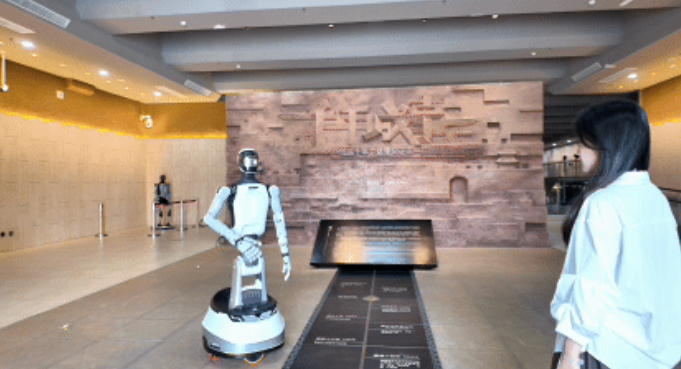
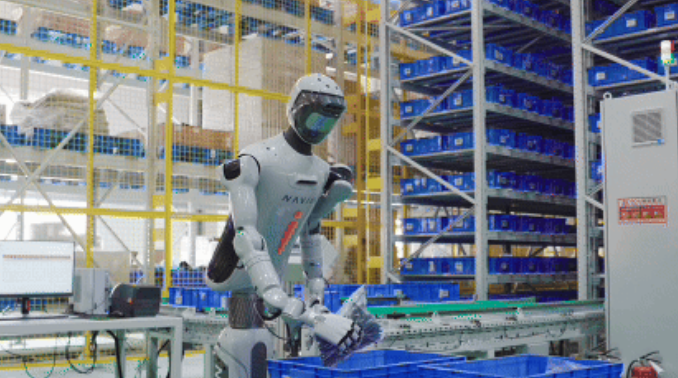
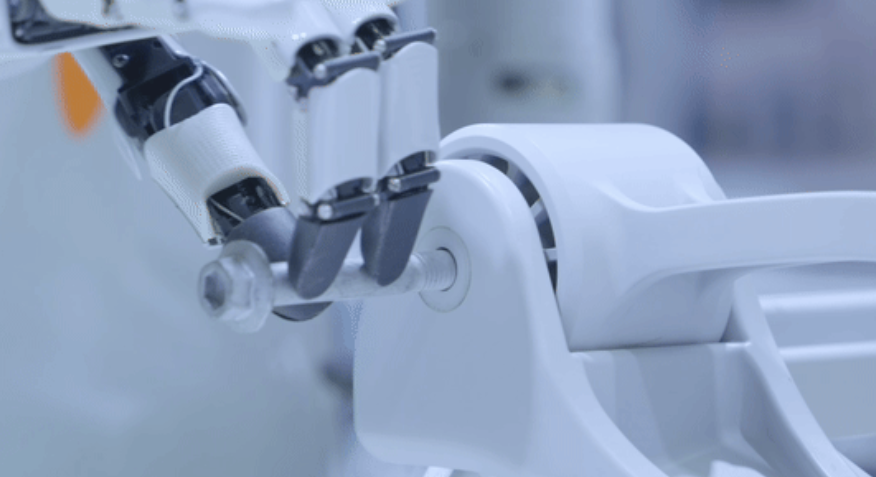
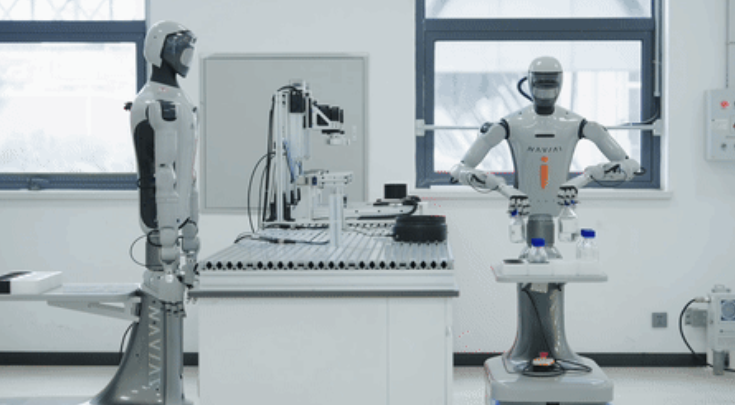
Zhejiang Humanoid’s NAVIAI humanoid robots serve manufacturing, retail, education and data scenarios with ±0.02mm ultra-precision. Cooperating with 50 universities, it has trained over 1,000 robotics professionals.
#HumanoidRobot #EmbodiedAI #NingboTech
2
Erickk Rico () 🪂 retweeted

Fully Autonomous Operation.
What's driving them? The answer starts tomorrow. 🔥
#LingBot2 #Robotics #EmbodiedAI
119
128
400
520,509

A Reflection on Embodied Intelligence
Over the past few years, embodied intelligence has attracted increasing attention, capital, and talent. More people now believe that robots may eventually enter ordinary homes and become our colleagues, partners, and companions. Yet we must also admit a less exciting fact: truly deployable solutions are still rare. A bubble may be forming, and a downturn may be approaching. Still, I believe the vision itself is too bright to ignore. The road is winding, but the future is bright.
Robotics is not a new playground created by the recent AI wave. It is an old and deep engineering discipline, with foundations no less rich than computer science or AI itself. However, both industry and academia today often pay too much attention to benchmark scores, flashy demos, fundraising narratives, and publicity. We seem to spend too little effort studying robots as robots, and too much effort importing paradigms from other fields.
This “importism” may be one of the most unhealthy trends in embodied intelligence today. If we simply apply discriminative or generative foundation models from other domains to robotics, without seriously considering the structure, constraints, and physical reality of robots, we may end up with fast-moving but shallow trend chasing. This happened in the VLA era, is happening in the WAM era, and may soon happen again in the agent era.
I also do not think blindly following these imported paradigms is necessarily a good strategy for ordinary academic teams. From the WAM era onward, the leadership of the paradigm has increasingly been taken by companies with stronger resources, infrastructure, and publicity channels. This makes traditional academic research even more important. Academia should not merely follow authority. It should challenge assumptions, explore new paradigms, and ask what is truly essential for robotics.
This is also why World Guidance means a lot to me. In many latent world model approaches, the latent space is still constructed around visual differences. But for robotics, this may not be fundamental enough. The latent space for action generation should not merely compress visual change. It should capture what truly matters for action.
WoG follows this belief. Instead of hand-designing a hidden space, or simply borrowing one from another paradigm, we let action supervision drive the formation of the condition space in a data-driven way. In other words, the objective of action generation itself tells the model what future information is useful. To me, this is a more fundamental and elegant way to think about world modeling for robotics.
The future of embodied intelligence will not come from chasing every new slogan. It will come from respecting robotics as a discipline, understanding its real constraints, and building original paradigms that can truly push the field forward.
The road is winding, but the future is bright.
#EmbodiedAI #Robotics #WorldModels #VLA #WAM


1
27

The best moments from #DavosTechSummit weren't on the stage—they happened across the city. ✨
As part of #RobotCity, Pudu robots worked across retail, hospitality and public spaces, bringing #EmbodiedAI into everyday operations through real-world cleaning and delivery tasks.
🎥 Watch the highlights.
#PuduRobotics #Robotics #PhysicalAI #CommercialRobotics
3
71