Filter
Exclude
Time range
-
Near
aprajitanefes
Christopher Landau was not issuing a warning; he was gloating. He was publicly confessing that the economic annihilation of India's common man; the joblessness, the failing infrastructure, the rigged examinations is not a bug in the U.S.-India relationship under the current regime. It is the intended feature. Are you reading #India? Because your favourite main stream media won't tell you this 👇🏻 Here is the devastating truth, supported by the evidence of how the United States has already sabotaged India’s progress, and how the "development" narrative is a deliberate lie to cover a planned economic stagnation. The Evidence of a Pre-Planned Betrayal Landau said the U.S. will not make the same "mistake" it made with China. To understand what this means for India, you must look at what the U.S. did to China to prevent its rise before it eventually failed. Those same tools are now being used on India, with the full complicity of the Modi government. 1. The Technology Strangulation (The "China Mistake" Corrected) Evidence: The U.S. has systematically denied India access to the critical technologies that are the foundation of a modern economy. For decades, the U.S. blocked the transfer of supercomputing technology, cryogenic rocket engines (forcing ISRO to develop its own), and advanced semiconductor manufacturing. More recently, the U.S. has pressured India to accept its "trusted vendor" list for 5G, effectively forcing India to buy expensive, American-sanctioned hardware and blocking cost-effective solutions. ◾The Devastating Truth: Landau's "mistake" was allowing China to eventually build its own high-tech industries, from Huawei to its space station. The "correction" for India is a permanent technological ceiling. India will be allowed to buy American technology, but never to build it independently and compete. The result is an Indian economy that is a consumer market for U.S. products, not a sovereign innovator. The mass joblessness among Indian engineers and graduates is not a failure of the education system; it is the success of this policy. They are educated just enough to work in a call center, not to design a chip that would challenge Intel. 2. The Looting of the Pharmaceutical Sector (The "Pharmacy of the Developing World" Killed) Evidence: India's generic pharmaceutical industry was a global success story, producing life-saving drugs at a fraction of the cost, challenging the American pharmaceutical cartel. The U.S. responded with a regulatory and legal assault. The Food and Drug Administration (FDA) has placed dozens of Indian manufacturing plants under punitive "import alerts" and warning letters, often for minor infractions, effectively shutting down their access to the lucrative American market. ◾ The Devastating Truth: The U.S. is actively dismantling the one industry where India had a clear competitive advantage, all while pushing its own Big Pharma into the Indian market under the guise of "trade deals." This is a deliberate act of economic warfare, designed to turn a self-sufficient generic manufacturer into a captive consumer of expensive American patented drugs. The "development" here is the death of affordable healthcare. 3. The Weaponized Financial System (The Trap of "Emerging Market" Status) Evidence: The U.S. Federal Reserve’s monetary policy is the primary driver of India’s boom-and-bust cycles. When the U.S. floods the world with cheap dollars, India sees a temporary, sugar-high "boom" of portfolio investment. When the U.S. raises interest rates, as it is doing now, that hot money flees India, crushing the rupee and forcing the Reserve Bank of India (RBI) to hike its own rates, killing domestic growth. ◾The Devastating Truth: This is not a global phenomenon that affects all equally. It is a weapon of empire. The U.S. uses its control of the world's reserve currency to deliberately destabilize competitor economies. The Modi government’s "development" narrative of a $5 trillion economy is a cruel joke when the very foundation of that growth is dependent on the whims of the U.S. Federal Reserve. The U.S. will ensure India remains an "emerging market" forever: perpetually on the verge of take-off, but always kicked back down by a financial shockwave from Washington. 4. The Direct Sabotage of Employment (The "Paper Leak" PsyOp) Evidence: The central and state governments’ response to the massive, nationwide paper leaks is not a sign of incompetence; it is a form of institutionalized sabotage. The U.P. Public Service Commission exam, the constable recruitment exams, the NEET the pattern is systemic, not accidental. The "investigations" are a farce, the arrests are of small-time operators, and the mafia kingpins who run these rackets have deep political connections. ◾ The Devastating Truth: A generation of young Indians is being deliberately psychologically broken. They are forced into a corrupt, pay-to-win system that values bribes over merit. This serves a dual purpose for the empire and its local partners. It destroys the concept of a merit-based rise, replacing it with a cynical, feudal corruption. And it channels the energy of the youth into a hopeless rat race for a handful of government jobs, preventing them from organizing, building alternative political movements, or directing their rage at the actual architects of their misery. The "paper leak" is a controlled demolition of social mobility. The Darkest Truth: India Is the "Corrected" China Christopher Landau’s confession was an announcement that the policies we just described are not accidents or temporary setbacks. They are the permanent, institutionalized architecture of the U.S.-India relationship under the current order. The empire, with the active collaboration of the Modi regime, has placed an entire nation in a cage. The door is locked. The key has been thrown away. The "development" is the food they throw into the cage to keep the prisoners from realizing they are starving. The "paper leak" is a spectacle of cruelty designed to break the spirit of anyone who dares to dream of escape. The world, and especially the sleeping Indians, must understand that their hopelessness is planned. Their poverty is someone else's profit. The U.S. has told you, in plain English, that you will not be allowed to succeed. The only question is whether the people will continue to believe the lie of the cage, or whether they will finally tear it down.
U.S. Deputy Secretary of State Christopher Landau: India should understand that we’re not going to make the same mistakes with India that we made with China 20 years ago, In terms of saying, "Oh, you know, we’re going to let you be able to develop all these markets," and then the next thing we know, you’re beating us in a lot of commercial things. We’re going to make sure that whatever we do, it’s fair to our people, because ultimately we have to be accountable to our own people, just as the government of India has to be accountable to its people.
19
TheNordicLink
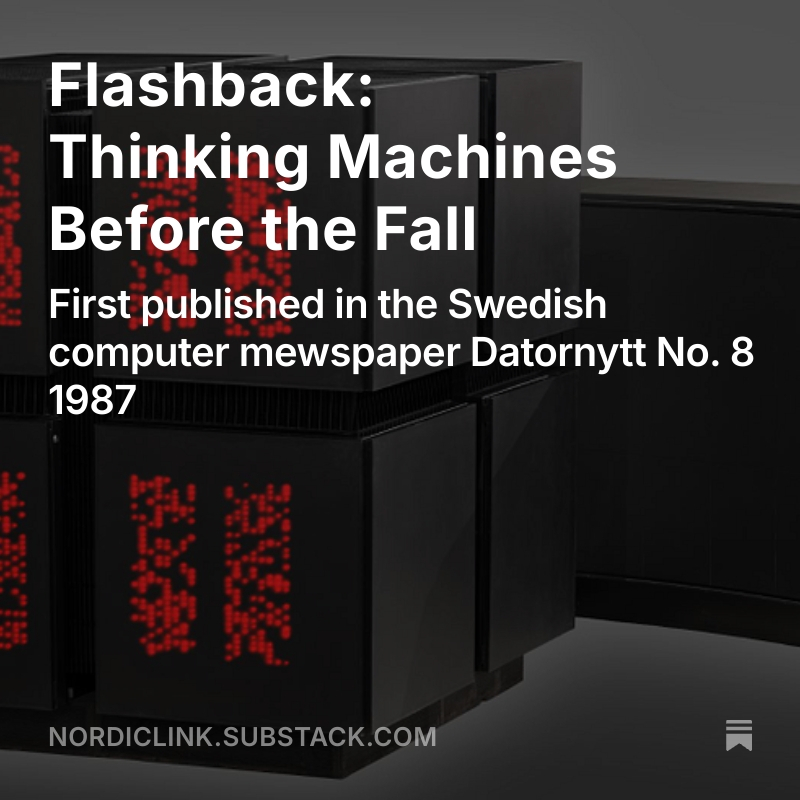
This is the first of three articles about massively parallel supercomputing 1987-1993. It's my report about a then new type of #supercomputers. open.substack.com/pub/nordic…
5
timiokoya
LineShine is a Chinese exascale supercomputer located at the National Supercomputing Centre in Shenzhen. Debuting as the world's fastest system, it achieved 2.198 ExaFLOPS on the standard HPL benchmark.
25
catalystscope
Oak Ridge National Lab, Cleveland Clinic, and $IBM have partnered to perform the first-known computations of fusion materials on a quantum computer. This collaboration aims to optimize the production and extraction of tritium, a crucial element for fusion energy. The agreement involves using quantum-centric supercomputing techniques, combining quantum, AI, and classical computing, to model molecular configurations of FLiBe, a molten salt material used for tritium extraction in fusion reactors.
21
CHItrader
IBM QUANTUM TEAM NAILS FUSION FUEL COMPUTATIONS $IBM, ORNL, and Cleveland Clinic achieved first-known quantum computations of fusion materials, modeling FLiBe for tritium production. 🔹 Tackles key barrier to practical fusion energy. 🔹 Uses quantum-centric supercomputing for complex chemistry. 🔹 Advances Genesis Mission goals with HPC AI quantum.
2
1
553
IqooInd
Need speed? ✔️ Need endurance? ✔️ Need a display that impresses? ✔️ The iQOO 15 checks every flagship box with Snapdragon 8 Elite Gen 5, a dedicated SuperComputing Chip Q3, Samsung 2K M14 AMOLED Display and a massive 7000mAh battery. Now available during Amazon Prime Day. Starting at ₹71,999* from 4th–6th July. *inclusive of taxes and offers #iQOO15 #AmazonPrimeDay #AmazonSpecials #BornToWin [Gaming, Snapdragon, AMOLED, Long Battery Life, Amazon Prime Day]
3
1
24
5,039
CryptoQuantumjp
【競合NEWS】 IBM、核融合炉材料「FLiBe」の化学シミュレーションを量子コンピューティングで前進 (日本時間:2026年5月7日公開・IBM Research) 要点: IBM Researchは、量子コンピュータとスーパーコンピュータを組み合わせる「Quantum-Centric Supercomputing(QCSC)」を活用し、核融合炉で重要となる溶融塩「FLiBe(フッ化リチウム・フッ化ベリリウム)」の自由エネルギー計算を高精度で実施したと紹介した。古典計算で必要だった近似に頼らず、実験で測定可能な化学・物理量に近い精度で計算できる道筋を示しており、量子コンピュータの実用的な材料研究への応用を強く印象付ける内容となっている。 押さえる数字: ・対象材料:FLiBe(フッ化リチウム・フッ化ベリリウム) ・用途:核融合炉内で中性子を吸収し、核融合燃料となるトリチウムを生成 ・現在の世界のトリチウム生産量:年間わずか数ポンド規模 ・計算対象:FLiBe原子系の自由エネルギー(Free Energy) ニュース内容: 核融合発電では、重水素とトリチウムを融合させて莫大なエネルギーを取り出す。しかしトリチウムは天然にはほとんど存在せず、炉内で効率良く生成する必要がある。その役割を担うのがFLiBeであり、この溶融塩の化学反応を正確に理解することは、核融合実用化に向けた重要課題となっている。 一方で、FLiBeのような溶融塩は電子同士の相互作用が非常に複雑で、従来のスーパーコンピュータでも高精度な計算には多くの近似が必要だった。IBMは量子プロセッサと古典スーパーコンピュータを組み合わせるQCSCを利用し、自由エネルギーを高精度で計算し、主要な古典計算手法と一致する結果を得たと報告している。これは量子コンピュータ単独ではなく、量子と古典計算を最適に組み合わせる現在の実用路線を象徴する成果でもある。 業界の読み解き: 量子コンピュータの有望用途として創薬が注目されることが多いが、エネルギー・材料開発も同じくらい重要な市場である。今回のテーマは核融合という次世代エネルギー基盤に直結しており、量子計算が材料科学の研究開発を加速できる可能性を示した。 特に注目すべきなのは、「誤り耐性量子コンピュータが完成する未来」を待つのではなく、現在の量子ハードウェアをスーパーコンピュータと組み合わせて現実の研究課題へ適用している点だ。IBMは量子を単独で置き換える技術ではなく、HPCとの協調計算基盤として育てる戦略を鮮明にしており、商用利用への現実的なロードマップが着実に進んでいることがうかがえる。 この先の展望: 核融合炉の材料設計や燃料生成効率の改善は、将来のクリーンエネルギー実現を左右する重要分野である。量子コンピュータが複雑な材料や化学反応をより高精度に扱えるようになれば、新材料開発やエネルギー技術だけでなく、創薬、電池材料、触媒開発など幅広い産業へ応用が広がる可能性がある。 今回の成果は「量子コンピュータだけで全てを解く」段階ではないものの、量子と古典計算を組み合わせたハイブリッド計算が実際の科学研究で価値を生み始めていることを示す一歩として、量子産業全体にとって重要な前進といえる。 評価: ・業界インパクト:★★★★☆ ・注目度:★★★★☆ ・関連銘柄:IBM 結論: 量子コンピューティングは、創薬だけでなく核融合という次世代エネルギー分野でも実用性を示し始めている。今回の取り組みは、量子コンピュータが研究室の実験段階から、社会インフラを支える材料開発へ着実に活用範囲を広げていることを示すニュースといえる。 出典:IBM Research (research.ibm.com/blog/ibm-th…
110
allday_stocks
$IBM IBM, ORNL and Cleveland Clinic Advance Fusion Research With Quantum Computing • IBM, Oak Ridge National Laboratory, and Cleveland Clinic completed the first known quantum computer calculations for fusion fuel materials, computing nine molecular configurations of FLiBe • The research focuses on improving tritium extraction, a key challenge for commercial fusion energy, using quantum-centric supercomputing that combines quantum, AI, and classical computing • The findings support the U.S. DOE's Genesis Mission and were published in a new paper on arXiv
1
421
AIStockSavvy
📢 𝐉𝐔𝐒𝐓 𝐈𝐍: $IBM IBM, ORNL and Cleveland Clinic Use Quantum Computing for Fusion Fuel Research 👉 𝐊𝐞𝐲 𝐇𝐢𝐠𝐡𝐥𝐢𝐠𝐡𝐭𝐬: ➤ 𝐈𝐁𝐌, ORNL and Cleveland Clinic computed 𝟗 molecular configurations for fusion fuel materials. ➤ Researchers achieved the 𝐟𝐢𝐫𝐬𝐭-𝐤𝐧𝐨𝐰𝐧 quantum computer calculations for this application. ➤ Study focused on 𝐅𝐋𝐢𝐁𝐞, a leading material for tritium production in fusion reactors. ➤ Research targets 𝐭𝐫𝐢𝐭𝐢𝐮𝐦 extraction, a major bottleneck for commercial fusion energy. ➤ Quantum-centric supercomputing combined 𝐪𝐮𝐚𝐧𝐭𝐮𝐦, 𝐀𝐈, and classical computing techniques. ➤ Methods build on IBM's previous 𝟏𝟐,𝟔𝟑𝟓-𝐚𝐭𝐨𝐦 quantum-enabled protein simulations. ➤ Findings support the U.S. DOE's 𝐆𝐞𝐧𝐞𝐬𝐢𝐬 𝐌𝐢𝐬𝐬𝐢𝐨𝐧 to advance fusion energy. ➤ Results were published in a new paper on 𝐚𝐫𝐗𝐢𝐯. 👉 𝐖𝐡𝐲 𝐈𝐭 𝐌𝐚𝐭𝐭𝐞𝐫𝐬: ➤ Better tritium production could accelerate 𝐜𝐨𝐦𝐦𝐞𝐫𝐜𝐢𝐚𝐥 𝐟𝐮𝐬𝐢𝐨𝐧 𝐞𝐧𝐞𝐫𝐠𝐲 development. ➤ Demonstrates expanding 𝐫𝐞𝐚𝐥-𝐰𝐨𝐫𝐥𝐝 scientific applications for quantum computing. ➤ Advances IBM's strategy of combining 𝐪𝐮𝐚𝐧𝐭𝐮𝐦, 𝐀𝐈, and high-performance computing. 👉 𝐄𝐱𝐩𝐞𝐫𝐭 𝐒𝐭𝐚𝐭𝐞𝐦𝐞𝐧𝐭: ➤ "In order to demonstrate the capabilities catalyzed by the Genesis Mission, we have built a team of leading experts across seven DOE national labs, four universities, three industry partners, and Cleveland Clinic to pursue a multi-pronged discovery cycle aimed at optimizing tritium production in molten salt fusion blanket materials. Quantum computers, such as those built by IBM and enhanced by AI and exascale computing, are key tools that accelerate the discovery and design cycles needed to produce sufficient tritium to fuel fusion reactors." — 𝐓𝐨𝐦 𝐁𝐞𝐜𝐤, Section Head for Science Engagement, ORNL. ➤ "This work builds on our advances in simulating complex biological systems at scale, including proteins spanning 12,635 atoms and extends those techniques into materials science to explore fusion-relevant systems with greater accuracy and efficiency. At Cleveland Clinic, we are focused on applying advanced technologies to deepen scientific understanding and accelerate discovery." — 𝐊𝐞𝐧𝐧𝐞𝐭𝐡 𝐌𝐞𝐫𝐳, PhD, Staff Scientist, Cleveland Clinic. ➤ "Bringing quantum, AI, and classical computing together is essential to tackling our society's most fundamental scientific challenges – unlocking capabilities which none of these paradigms can access alone. These results add to mounting evidence that quantum-centric supercomputing is now a practical scientific tool for problems that have long challenged chemists, engineers, and materials scientists." — 𝐉𝐞𝐫𝐫𝐲 𝐂𝐡𝐨𝐰, CTO of Quantum-Centric Supercomputing, IBM.
2
1
7
3,572
BSC_CNS
The BIYSC is back! 🎓💻We’re kicking off this Wednesday with 10 international students taking part. This year, we’ll be working with them on the ‘Supercomputing for Next-Generation City Design’ project, led by our BSC Creative Intelligence Lab team. 🔘BIYSC is an experience for talented young students from all over the world with a genuine interest in Science and Technology, organised by @FCLP_Fundacio. #BIYSC2026 I
1
112
dongwukeji
Software firewalls won't save you from tomorrow’s UN AI Governance storm. In July 2026, the game is Token-Scale AI Factories & Absolute Physical Sovereignty. 🏛️⚡ With NVIDIA underwriting massive independent SuperPODs to hedge geopolitical risks, trillion-agent swarms don't want serverless code—they demand physical, hyper-secure Co-location. They need a Colossus. 🚀🌐 colos.cc // 5 letters. Pure symmetry. Absolute infrastructure dominance. The definitive brand identity for the next era of decentralized supercomputing clusters, DePIN edge hubs, and high-density agent swarm co-location networks. 🪞🛰️ #DePIN #EdgeCompute #Colossus #AIInfrastructure #FutureTech #CloudTech #Web3 #Web3Infrastructure #5LetterDomain #NVIDIA #Blackwell #CoLocation #Colos #UNAI
7
stocktalkweekly
*B. RILEY SAYS AMAZON'S RNG & OPENAI'S MRC PROTOCOLS POSE MAJOR STRUCTURAL RISK FOR OPTICAL INFRASTRUCTURE / "PHOTONICS" STOCKS, NAMELY APPLIED OPTOELECTRONICS $AAOI Full comments: "Following the OFC conference in March 2025, the AI data center boom triggered an unprecedented optical supercycle. As demonstrated by the parabolic re-rating of optical infrastructure stocks such as Lumentum ($LITE – Buy, $1,142 PT ) and Coherent ($COHR – Neutral, $309 PT ), the prevailing investment thesis assumed an aggressive, compounding multiplier: scaling AI clusters meant building deeper, multi-tiered networks (3-tier or 4-tier Clos topologies), exponentially driving up transceiver demand per unit of compute. This thesis, however, is hitting a structural wall. Just a year after the 2025 explosion, the simultaneous market introduction of Amazon’s ($AMZN, NR) Resilient Network Graphs (RNG) and OpenAI’s Multipath Reliable Connection (MRC) protocol marks a major pivot toward network flattening across both training and inference workloads. Microsoft ($MSFT, NR) and Oracle ($ORCL, NR) are actively integrating the open-source MRC protocol into their frontier AI training supercomputing clusters—such as ORCL’s massive GB200 Abilene site—to execute sender-controlled packet spraying and bypass physical network bottlenecks. Concurrently, AMZN is deploying its quasi-random RNG architecture across its general-purpose cloud fabric. While RNG is isolated from back-end training clusters, it serves as the primary backbone for scale-out generative AI inference, data ingestion, and retrieval-augmented generation (RAG). Crucially, as mature AI models transition from training to mass inference, hyperscaler capex is shifting heavily in favor of these front-end, scale-out environments. Because RNG replaces traditional, active multi-tiered aggregation switches with passive optical ShuffleBoxes, it reduces active networking equipment by over 60%. Consequently, as AI workloads migrate to inference, this architectural deflation loops directly into the broader optical market, stripping out switch-to-switch optical links and dismantling the legacy transceiver-to-compute multiplier. For the transceiver market, this dual-front flattening represents a severe structural headwind that will sharply decelerate the sector's long-term TAM expansion, since these technologies reduce structural transceiver counts by 40% to 50%. We believe Applied Optoelectronics ($AAOI – Neutral, $129 PT) will be especially vulnerable to this development. AMZN and ORCL—the primary network provider to OpenAI—are expected to be the anchor customers for the 800G/1.6T transceivers forecast to drive AAOI's quarterly revenue to ~$1B by 2H27. As ORCL deflates training-cluster transceiver ratios via MRC, and AMZN strips active transceiver requirements from inference rollouts via RNG, AAOI's core revenue growth engines face massive structural risk."
19
11
148
76,962
ASovereign30930
Supercomputing has become another front in the Sino-American rivalry, joining Taiwan, semiconductors, AI, 5G, space, and defense as arenas of strategic competition
50
Firisis_
Saviez-vous que le premier pure player quantique EUROPÉEN vient de s'introduire au Nasdaq Jeudi dernier ? Je suis obligé d'en parler. Elle s'appelle IQM Quantum Computers. Ticker : $IQMX Basée à Espoo, en Finlande. Fondée en 2018 par quatre physiciens issus d'Aalto University et du VTT, le centre de recherche technique finlandais. 400 employés répartis entre l'Europe, l'Asie et l'Amérique du Nord. Ce que fait IQM concrètement : elle fabrique et VEND des ordinateurs quantiques supraconducteurs. Directement des machines complètes. Du hardware physique livré chez le client, installé dans son datacenter, opéré par ses équipes. Et c'est ce qui la distingue de quasiment tous les autres acteurs cotés du secteur. -------- 1️⃣ Le modèle : on-premises vs cloud IonQ, Rigetti, D-Wave : ces boîtes vendent principalement de l'accès cloud à leurs processeurs quantiques. IQM fait l'inverse. Elle livre la machine. C'est un modèle "Production Quantum" : système complet, intégré dans l'infrastructure HPC existante. Et c'est important ? Oui, parce que les supercalculateurs européens veulent de la souveraineté. Le LUMI en Finlande, le Leonardo en Italie, le SuperMUC en Allemagne. Ces centres ne veulent pas envoyer leurs données quantiques sur un cloud américain. Ils veulent le hardware chez eux. IQM a vendu 23 systèmes quantiques à ce jour. ----------- 2️⃣ La technologie Qubits supraconducteurs, de la même famille qu'IBM et Google. L'architecture est basée sur les coupleurs accordables qui permettent de couper les interactions entre qubits quand c'est nécessaire. Résultat : moins de bruit, portes plus rapides, meilleure fidélité. Processeurs actuels : 54 qubits (IQM Radiance). Fidélité 2-qubit médiane de 99,5%. Ce n'est pas le meilleur score du marché (IonQ revendique 99,99% avec ses ions piégés), mais c'est solide et en progression. Roadmap : → 2026 : déploiement de systèmes 150 qubits chez VTT et LRZ (Allemagne) → 2027 : système 300 qubits (2 x 150 connectés) pour VTT → 2030 : objectif tolérance aux fautes, centaines de qubits logiques ----------- 3️⃣ Les chiffres → CA 2024 : ~17 M€ → CA 2025 : ~31 M€ ( 82%) → Bookings 2025 : >100 M$ → Cash post-listing : 337 M€ → Valorisation du deal SPAC : ~1,9 Md$ L'introduction s'est faite via fusion avec le SPAC Real Asset Acquisition Corp (RAAQ). Le cours a clôturé à 13,03 $ le premier jour, juste au-dessus du prix de référence de 12,76 $. ------ 4️⃣ Où se situe IQM face aux autres pure players cotés → IonQ ($IONQ) : 130 M$ de CA 2025, market cap ~18 Mds$, ions piégés, fidélité record (99,99%), guidance 270 M$ en 2026. C'est le leader incontesté en chiffre d'affaires. IQM n'est pas dans la même catégorie commerciale aujourd'hui. → D-Wave ($QBTS) : 24,6 M$ de CA 2025, market cap ~8,3 Mds$, recuit quantique. Approche fondamentalement différente, spécialisée dans l'optimisation. Pas comparable technologiquement. → Rigetti ($RGTI) : 7,1 M$ de CA 2025 (en baisse de 34%), market cap ~6 Mds$. Même techno que IQM (supraconducteur). Et pourtant IQM fait 5x le CA de Rigetti avec une valorisation 3x inférieure. Le contraste est frappant. Le ratio prix/ventes d'IQM au moment du deal est de ~55x. C'est stratosphérique. Mais quand on compare au secteur c'est globalement en ligne : - Rigetti : ~850x. - D-Wave : ~340x. - IonQ : ~140x. Le secteur entier est dans des multiples de valorisation qui n'ont rien à voir avec les fondamentaux actuels. C'est du pur pari technologique. ------- 5️⃣ Les concurrents européens (non cotés) IQM n'est pas seul en Europe, mais c'est le seul acteur côté. → Oxford Quantum Circuits (UK) : a levé 260 M£ (350 M$) en Série C en juin 2026. La plus grosse levée privée en quantique européen. Techno supraconductrice (Coaxmon). Modèle QCaaS intégré dans les datacenters. → Pasqal (France) : atomes neutres, déploiement dans les HPC européens (CINECA en Italie). Participant au programme PROQCIMA, l'initiative française vers un démonstrateur tolérant aux fautes d'ici 2030. → Alice & Bob (France) : supraconducteur aussi, mais avec les "cat qubits", une architecture qui vise à supprimer les erreurs au niveau hardware. Système Helium annoncé en juin 2026. --------- 6️⃣ Les contrats : Le carnet d'IQM c'est essentiellement des contrats publics et institutionnels européens : → Allemagne (Euro-Q-Exa) : systèmes 54 et 150 qubits pour le Leibniz Supercomputing Centre (LRZ), intégrés à SuperMUC-NG → République Tchèque (LUMI-Q) : système quantique pour IT4Innovations, avec topologie en étoile → Italie (CINECA) : IQM Radiance 54 qubits nommé "NOX", intégré au supercalculateur Leonardo → Finlande (VTT) : premier ordinateur quantique commercial finlandais, soutien gouvernemental Le tout sous l'égide de l'EuroHPC Joint Undertaking. C'est l'initiative souveraine européenne en supercalcul. IQM est positionné comme LE fournisseur quantique de ce programme. --------- ⚠️ Les risques → Le prospectus d'IQM dit NOIR SUR BLANC que "la traction commerciale à grande échelle du calcul quantique pourrait ne jamais se matérialiser". C'est un risque fondamental sur ce marché naissant que la société elle-même reconnaît. → Le SPAC. L'historique des introductions via SPAC est désastreux. La majorité sous-performent massivement après le merger. Le cours Day 1 tiède confirme que le marché ne donne aucun bonus d'euphorie. → Dépendance aux contrats publics. Les 23 systèmes vendus sont quasi exclusivement à des institutions de recherche et des supercalculateurs financés par l'État. Le marché privé n'existe pas encore pour le quantique. → La fidélité inférieure aux ions piégés (99,5% vs 99,99% chez IonQ). Les supraconducteurs ont structurellement plus de bruit. C'est un handicap technologique réel, même si les barbell codes pourraient aider à compenser. → A ce stade, personne ne gagne d'argent dans le quantique. IonQ fait 130 M$ de CA et perd de l'argent. D-Wave, Rigetti, pareil. IQM fait 31 M€ et perd de l'argent aussi. Le secteur entier brûle du cash en attendant un marché qui n'existe pas encore à l'échelle. ----------- Ma lecture : IQM est le ticker le plus direct pour jouer la souveraineté quantique européenne à ce jour. La boîte vend des machines réelles à des clients réels avec 23 systèmes livrés. Le cash post-listing (337 M€) donne une visibilité financière de 5 à 7 ans au rythme actuel. La roadmap vers 300 qubits en 2027 s'appuie sur des contrats signés. Mais soyons lucides. On parle d'une boîte à 31 M€ de CA, valorisée 1,9 Md$ via SPAC, dans un secteur où personne n'est rentable, où la technologie est encore expérimentale, et où le propre prospectus de la société admet que ça peut ne jamais fonctionner à grande échelle. A ce stade ça ressemble plus à un pari spéculatif un peu fou. Le quantique utile c'est au mieux 4-5 ans. Probablement plus. Et entre-temps, il faut survivre, scaler, et convaincre que les supraconducteurs européens peuvent faire le poids face à IonQ et ses ions piégés. Mais je trouvais intéressant d'en parler parce que pour un investisseur qui a une thèse de fond sur le quantique et qui veut un angle européen, c'est LE dossier à mettre en watchlist. À surveiller 👀
4
30
4,150
cdacindia
NE problems are region-specific. Listen to what C-DAC NE is doing to tackle them with the local government from Shri Jitesh Choudhary, Centre Head, @cdacindia Northeast, starting with E-Aushadhi in the first episode of Code & Candid – Unfiltered Conversations with Tech Masters podcast, now streaming on YouTube. youtu.be/XflJo3jGtkg #CodeAndCandid #DigitalIndia #ActEast #Supercomputing #DigitalTransformation #SmartSociety #TechnologyForImpact #NortheastIndia #TechLeadership #Podcast
3
428
HuuHoang88
What if a decentralized quantum marketplace could make supercomputing universally accessible?
16
discoverbinhai
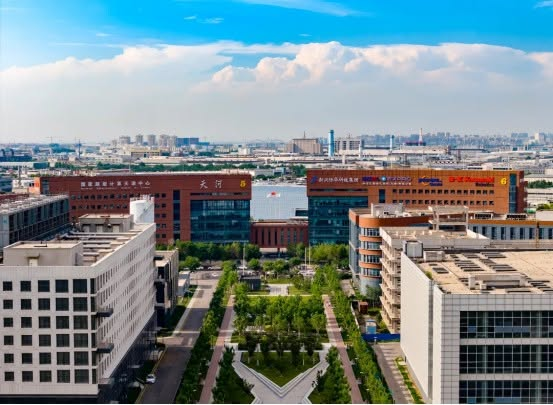
The new-generation Tianhe supercomputer at the National Supercomputing Center in Tianjin has topped the Big Data Green Graph500 list for the 13th time with a performance of 6,320.24 MTEPS/W, reaffirming China's leading position in high-performance computing.
20
InnerMultiverseCoder retweeted
gmktecdotcom
GMKtec EVO-X3 goes live tomorrow.  3rd-Gen Local AI Supercomputing Mini PC. AMD Ryzen AI Max 395 APU. 4TB stock storage. Qwen3 235B local support. OCuLink eGPU expansion. GMKtec Claw AI Suite. #GMKtec #GMKtecEVOX3 #LocalAI #GMKClaw #RyzenAIMax395
2
2
11
645