Filter
Exclude
Time range
-
Near
_MMCapital
Selling most of my $SIVE at €9.6 worked out well. I still think it’s a solid long-term hold into 2027/28, but too many people FOMO’d in and are now panicking over price action.
14
itachidata28
Replying to @aleabitoreddit
and btw did some research the lasers some robots internally will need is the same SIVE produces long term here and im not talking about lidar im talking about internal inside the robot @aleabitoreddit
2
andiamonow
Not selling my $SIVE shares
2
6
92
Pierre-Jordan retweeted
ciainvestor
Funny. Those “investors” that invested in $SIVE were very giga bullish on them when the stock was trading at 100SEK. Saying that they will not sell a single share because they believe this is only the start. Now apparently they sold at 80-90 SEK because their intuition told them that. Maybe it’s because you don’t have a thesis and you copy people on X? LARP.
4
1
37
3,758
baihaqqi81
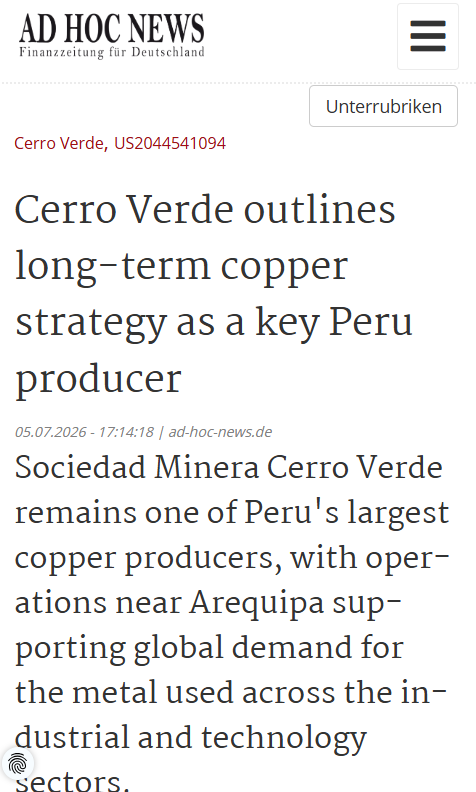
I had to read this twice… Cerro Verde is the proof, but the speculative upside story might be NRED #Nifty #Rashmer #jonita MU LIT SIVE
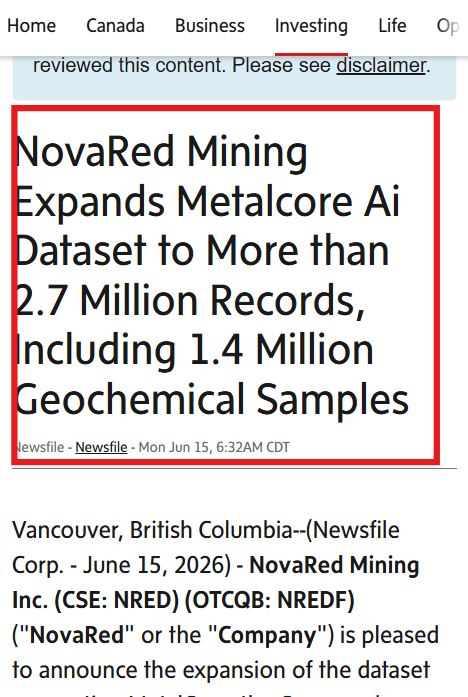
Cerro Verde is the big-money proof that copper still runs the show We’re talking about a major producer in Peru, one of the world’s key copper regions, supplying concentrates and cathodes for wiring, motors, construction, power infrastructure, electronics and renewable energy That same demand chain is why I’m watching $NRED / $NREDF. NovaRed is earlier in the cycle, but Wilmac has scale: 16,078 hectares in British Columbia and a location about 10 km west of Copper Mountain Add MetalCore using 2.7M mineral records plus 57 years of Wilmac data, and I see a junior copper-gold story with real data behind the hype Trade your own plan $ORCL $SOFI $SMCI
77
angelucci_marc
Writing details about $sive isn't looked upon favorably. I was just hoping for some additional information from her. Serenity @aleabitoreddit blocked me!!!
1
58
itachidata28
Tell me you don’t understand sive tech without telling me you understand sive tech lmao
10
ZCap retweeted
aleabitoreddit
I personally think $SIVE can be the next $LITE. In the past few months alone, we've seen: 1. Partnerships with O-Net pushing ELS into mass production 2. $JBL 1.6T LRO mass production signals with "relatively dramatic moats" for pluggables using Sivers. 3. $GFS SCALE reference level laser for hyperscalers with pluggable, NPO, CPO. -> -> where $AMD and others went to GFS for CPO. 4. Ayar, which joined $NVDA NVLink for CPO -> -> which removed Lumentum/Macom from their website and likely made Sivers their primary laser supplier. -> -> AlChip likely Trainium win from Amazon price placement (Ayar's customer) -> -> GUC rack level design in with Ayar. -> -> Raised $500m for mass production by AMD, Alchip, Mediatek, and NVIDIA 5. ~ $AEVA starting HVM H2 2026. 6. $POET starting HVM H2 2026 with hyperscaler suppliers like Lumilens ("top 3 hyperscaler initial customer") 7. TFLN $SIVE CW Lasers with Lightium 8. Likely direct relationships with $MRVL Celestial and CPO players like Lightelligence/Lightmatter. 9. Multiple new undisclosed relationships for pluggables following Jabil in their quarterly transcripts With new Trendforce reports that $AMD and other hyperscalers are trying to source LTAs for CW laser sources, serving as a direct catalyst for independent CW sources. So when hyperscaler suppliers from Jabil to O-Net are incentivized to mass produce as many as they can: That's very material for revenue for Sivers relative to current valuations, and it looks like just a waiting game. Even in the past week: - $SIVE raised an oversubscribed institutional round for volume ramp... This is very nuanced since Sivers is fab-lite so it's not going to in-house foundry capex to scale. Likely toward Win Semi and others (they mentioned other partners too), for laser scaling foundry allocations. So this is likely signaling material for revenue ramp is coming. - Sivers also mentioned NASDAQ listing completion targeted in the next few quarters (probably H2 2026 or Q1 2027 is my est. timeframe). This would fund M&A efforts, since it's impossible with the fundraising environments in local Swedish markets. As for becoming the next $LITE: M&A makes their lasers more valuable, so downstream IP acqusition -> into contract manufacturing like $FN, and others to make the full 1.6T pluggable or optical engines. Is how they get there, since laser array ASP scaling that people are modeling off of, wouldn't command a $60B valuations. There's going to be a lot of bridge architectures like NPO/pluggables, etc and noise around certain architectural delays in the meantime. But markets misunderstand laser companies like $LITE, $SIVE, $AAOI and others are used across different architectures compared to if you just look at certain passive optical components. So markets see "CPO delay headlines" algos sell off laser companies that benefit from other architectures. Being included in the pluggable 1.6T ramp to CPO scale out (Which Sivers is included in), helps bridge revenue waiting gaps until scale up inflection point H2 2027. I'm personally holding long term, since I haven't seen a ~$1.4B company mapping to this many hyperscalers before. TLDR: - Waiting on volume ramps from different architectures to play out across their hyperscaler supplier mapping -> 1.6T LRO/CPO scale out late H2 2026 start into high volume ramp 2027 -> H2 2027 CPO scale up volume ramp - Waiting on NASDAQ listing likely H2 2026/Q1 2027 for M&A efforts to fully take off, unless Sivers get more creative with equity financing in the meantime.
Replying to @aleabitoreddit
Hi stock God, you said before $SIVE has potential to be the next $LITE. What milestones do you expect $SIVE to hit in order to achieve this? Is it simply mass production of lasers for pluggable first and then CPO/NPO? How does M&As play into this?
188
108
1,384
391,841
CBW retweeted
Million_Sancet
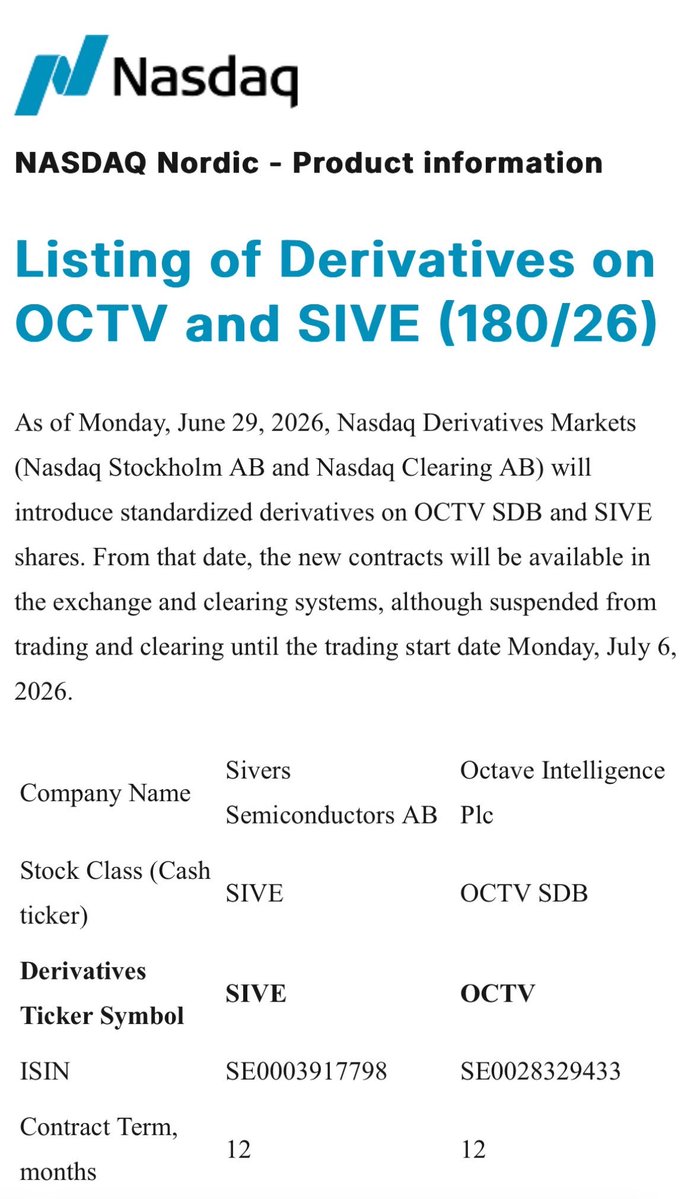
Reminder for all $SIVE holders Nasdaq derivatives start today, July 6 Great news for $SIVE This will boost incoming liquidity and strengthen all consolidation levels
6
4
94
9,007
Mr milewski retweeted
Matrix_B0SS
I haven’t sold a single share of $SIVE and not planning to sell any share until I see the the US listing and volume ramp Keep in mind JP Morgan and many institutions bought in 50s SEK and sleep with peace. One big order news will take $SIVE to 100 SEK Bookmark this
10
7
118
12,758
reinhard retweeted
JinYu762
想在美股赚钱,先学会关注对的人 我花了很长时间,筛出一批自己追踪的投研账号 不是推荐,下面分享真正对我有帮助的美股信息源 @aleabitoreddit 白毛股神,$SIVE一战成名。专注深挖 AI 供应链,通常能提前捕捉市场信号 @ShanghaoJin FICC执行董事,机构视角强。从宏观、资金流、供应链三条线拆解市场 @TrumpsPortfolio长期追踪特朗普相关交易和持仓,适合观察政策、资金与市场情绪联动。 @jiroucaigou 美股干货分享,涵盖ETF与实用信息渠道,偏实操落地 @MMMusol 不追热点,专注底层逻辑,挖掘被市场忽略的优质标 @artinmemes 美股OG,板块生态拆解清晰,财报讲解细致,适合长期跟踪 @JinYu762 专注美股与半导体产业链拆解,抓住真正有价值的信号 后面会继续整理第二期 欢迎补充真正有价值的美股投研账号👇
46
12
61
3,204
FlippieFinance
Replying to @OJH212
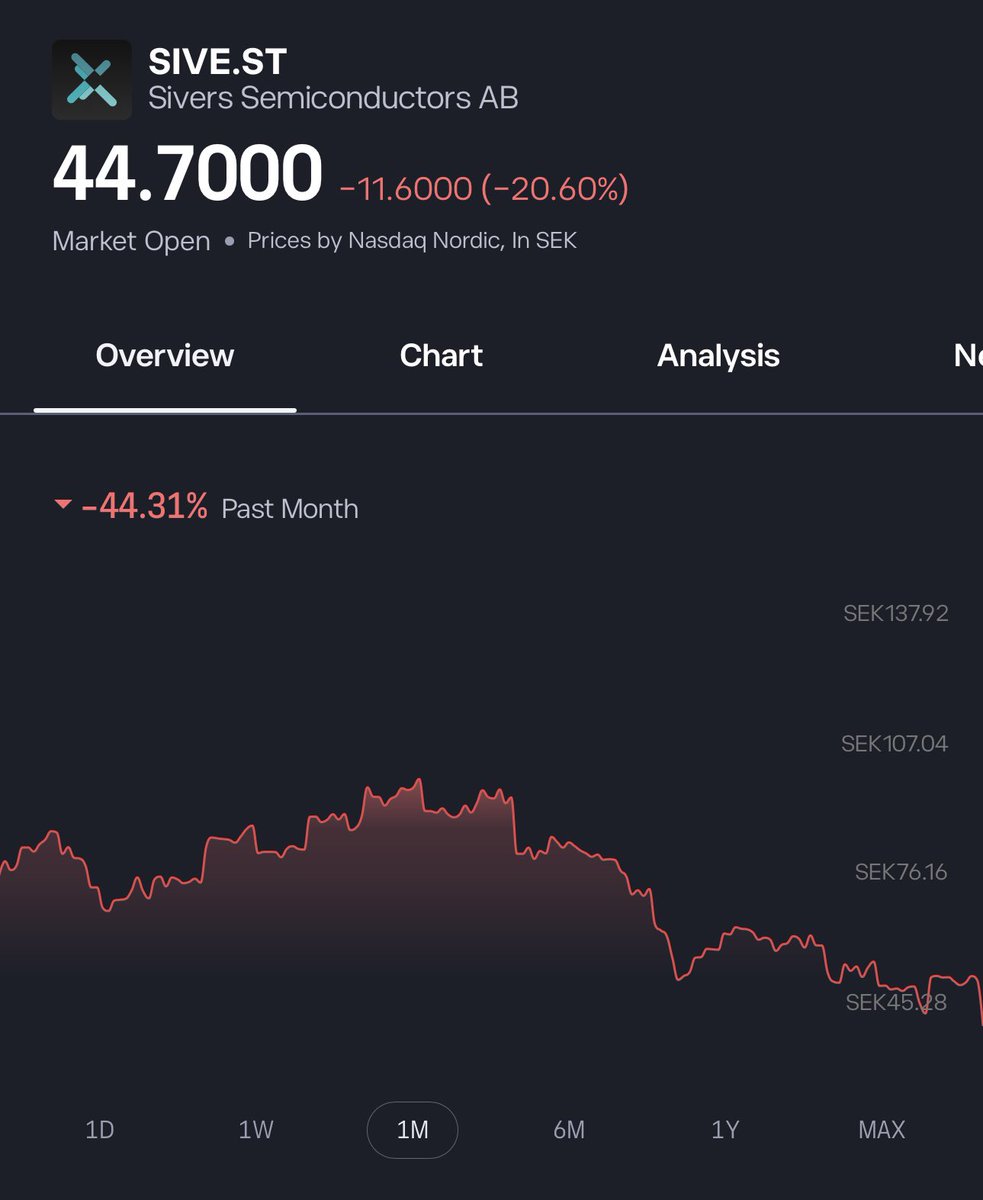
$SIVE looking ugly today bro.. Nice to connect with you btw!
107
AheadOfTmrw
Why $IQE remains one of my highest conviction long-term positions alongside $SIVE. It comes down to one word: bottlenecks. As AI infrastructure scales, the conversation usually revolves around GPUs and networking. I'm more interested in what sits upstream the companies that are much harder to replace. IQE is one of the global leaders in InP epitaxial wafers, a critical input used in optical lasers and photonic devices. Recent institutional research has highlighted both IQE and AXT as leading players in the InP supply chain, while also showing meaningful price increases across InP substrates and epiwafers. To me, that's an early sign that supply is tightening as optical demand accelerates. The thesis isn't based on one quarter or one partnership. It's based on where AI infrastructure is heading over the next several years. As hyperscalers continue investing in optical networking, demand eventually works its way upstream from transceivers and lasers to the materials those products are built on. That's also why I own $SIVE. Sivers is exposed further downstream through InP lasers and optical components, while IQE sits earlier in the value chain supplying a critical enabling technology. I see them as complementary positions rather than overlapping ones. Of course, there are risks. Execution matters, customer ramps can take longer than expected, and optical adoption won't happen overnight. But if the AI photonics thesis plays out the way I believe it will over the coming years, I'd rather own companies supplying critical bottlenecks than chase whichever AI stock is trending that week. That's why IQE remains one of my highest conviction long-term holdings.
116
ocloudyoda
Replying to @aleabitoreddit
Do you think this post about the delay of their $sive ER has any credit at all?
$SIVE moved its Q2 report from Aug 6 to Aug 27. Can you guess why? The new date carves out a 12-day gap between lockup ending and blackout beginning - !!July 16-28!! - where insiders can dump SEK 1B before soft numbers print. This, after breaking their no-dilution promise in June and letting their lender convert at 4.77 SEK while you paid 57. If you thought today's dump was bad... wait until they dump 22 MILLION shares onto the open market. We're about to see a generation of bagholders that held through every red flag in existence.
2
2
284
stoicordercapital retweeted
stoocapital
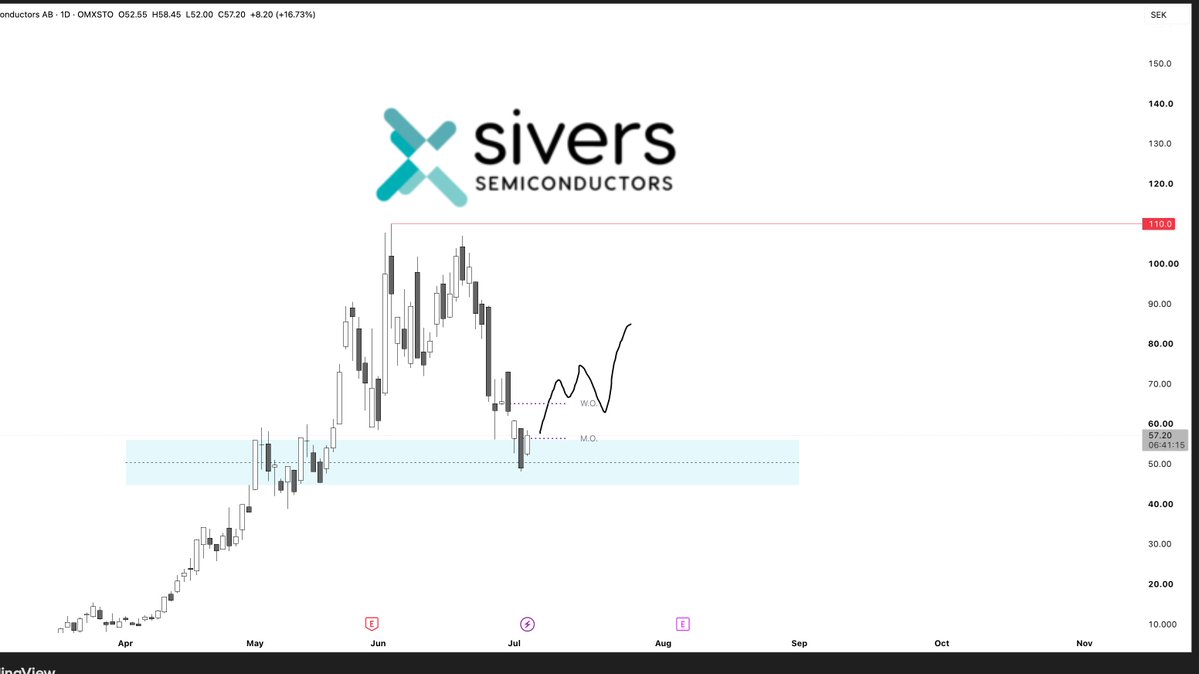
$SIVE can it get a V shape reversal here? Reacting to the Monthly gap nicely so far. Next week will be interesting.
1
1
2
421
Mr. Shorte retweeted
wliang
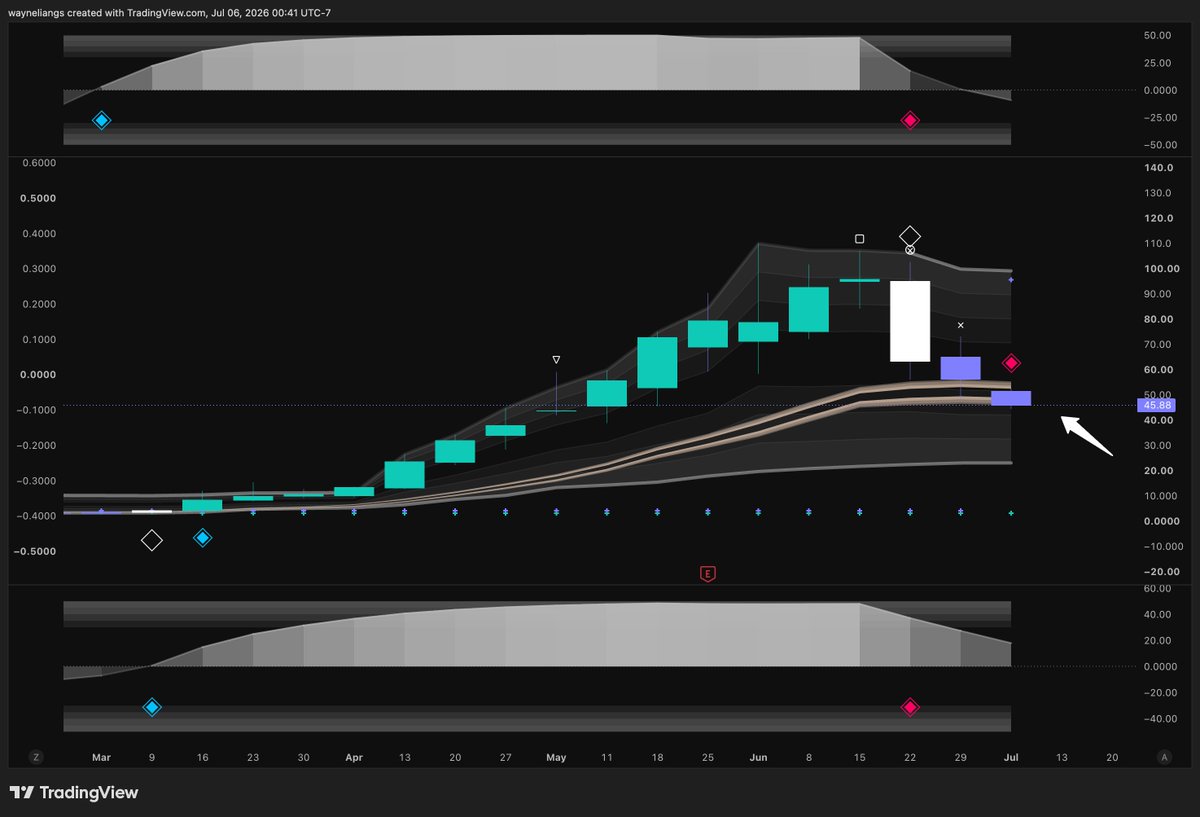
$SIVE is sitting just below our weekly gold zone. Could see a perfect retest and bounce here if that ~49 level is reclaimed. I'll share updates as we go... our indicators have been near-perfect here. 🎯
We’re about to see a pretty solid rally until ~September. You don’t want to miss out on great entry opportunities… > Sign up for Startup.io > Takes one click to install our indicators on TradingView > Create a watchlist of your favorite tickers, or use our list of trending themes > Set alerts for Blue and Pink Diamonds > When you get a Blue alert, open a position > When you get a Pink alert, close the position It’s as simple as that.
17
6
135
40,680
Mr. Shorte retweeted
softmaxedx
In this series of looking at the people around $SIVE The next $SIVE person I wanted to understand is Todd Thomson. And I don’t think he should be seen as just another board member. This is someone who has been CFO of Citigroup. CEO of Citigroup’s $10B Global Wealth Management division. Led acquisition and strategy work at Citigroup and GE Capital. Advised Fortune 500 companies at Bain, Booz Allen, and Barents Group. Chaired investment committees. Co-founded Dynasty Financial Partners, an investment and technology platform serving nearly 50 RIA firms with around $50B under management. Now COO/CFO at Kairos Ventures, where the job is basically the tension between scientific promise and financial reality. That background matters. Because Todd is not a photonics scientist. He is a capital allocator. A financial controls person. A governance person. A person who should understand dilution, balance sheets, reporting quality, investor trust, and whether a company is financing a real scale-up or just financing a story. That is why his role at Sivers is interesting. He has been on the Sivers board since 2021. He has also been Chair of the Audit Committee. That committee is not cosmetic. It deals with internal control, financing matters, cash flow, financial reporting, financial systems, audit outcomes, and audit evaluation. In other words, exactly the things investors are debating now. Dilution. Convertibles. Cash burn. Reporting trust. U.S. listing readiness. Whether the company can become credible to larger institutions. Then comes the ownership part. Sivers 2025 annual report lists Todd Thomson with 13,060,758 shares and 0 options, including holdings by related parties. Using the post Bootstrap share count of 355,081,317 shares, that reported holding would still represent roughly 3.7% of the company, assuming it is unchanged. So the recent dilution does not only hit retail holders. It hits him too. And the recent dilution was not small. If the company is issuing shares just to survive, that is one thing. If the company is issuing shares to expand InP laser and optical amplifier capacity, strengthen the balance sheet, support the U.S. listing process, and convert pipeline into revenue, that is a very different thing. Todd should understand that difference better than most people around the table. There is a caveat. Kairos affiliated entities have sold Sivers shares before. So this is not a clean “insiders only buy” story. But Sivers clarified that the Kairos reduction was related to fund-level rebalancing and payment of fund expenses, and Todd stated that his personal Sivers holding remained intact. That distinction matters. Fund liquidity is not the same thing as personal conviction. My takeaway: Todd Thomson does not prove the Sivers thesis. But his continued alignment is a signal worth studying. Because if someone with his background in CFO work, M&A, audit oversight, investor networks, venture finance, and institutional capital still remains meaningfully exposed after the dilution, then the signal is not hype. It is that someone who understands financial risk is still willing to sit with the risk.
In this series of looking at the people around the table for $SIVE, the next person who caught my eye is Helena Svancar. Primarily because she was added to the board during the latest AGM. While many were disappointed: No US listing. No big announcement. No M&A. My hypothesis was that, on the surface, yes, the AGM looked boring. But if you look at the people brought into the room, it may give clues about what $SIVE is preparing for going forward. Let's dig deeper. Her background clusters into four interesting buckets. Investment / growth equity lens CIO at Rettig 2026-present Partner / Senior Advisor at Verdane 2022-present This matters because both roles point to capital allocation and scaling. A CIO thinks about where limited capital should go, what risk is worth taking, and which opportunities deserve funding. A growth equity investor thinks about what can scale: what is financeable, what should be built, what should be partnered, and what becomes more valuable inside a bigger ecosystem. That lens is relevant to $SIVE because the company has many possible futures: AI photonics. External light sources. CPO / optical I/O. SATCOM. Defense. FWA. LiDAR. Sensing. All of them sound exciting. But a small semiconductor company cannot fund every possible future equally. The important question is not only: "Which markets are big?" It is: "Which opportunities deserve capital now, which need partners, and which can convert into revenue before dilution hurts shareholders?" Strategic communications-tech M&A lens Head of M&A at $ERIC 2018-2022 This is the most interesting part to me. At $ERIC, Helena was operating inside major communications-tech strategy. That lens is highly relevant to $SIVE because the company sits close to several communications infrastructure markets. Her $ERIC period also shows both sides of strategic tech dealmaking. Cradlepoint acquisition, 2020: the positive flagship deal. Specialized enterprise wireless asset. Clear 5G adjacency. Larger ecosystem fit. Clearer route to scale. Vonage acquisition, 2021-2022: the major negative mark. Huge strategic story. 5G APIs. Developers. Enterprise communications. Network monetization. Global platform. Then came massive impairments. That is the lesson. As I have said before, a perfectly clean CV can be overrated. The scars are often what make a CV interesting. In this case, the scar shows that a beautiful strategic story is not enough. Timing, valuation, integration, and revenue conversion matter. And she has seen that from inside the room. Capital markets lens Managing Director / Head of Corporate Finance Nordics at Deutsche Bank 2007-2017 This matters because $SIVE is no longer just a technology story. It has to become understandable to larger pools of capital. Cross border investors. Strategic investors. Potential US institutions. Banks. Auditors. Transaction counterparties. If $SIVE wants a more credible international capital markets story, this background is relevant. Especially with the company evaluating a potential Nasdaq New York dual listing and upgrading reporting standards. Public-company governance lens Board roles at Truecaller and Ratos Truecaller: 2021-2026 Ratos: 2022 This adds the public-company governance layer. Truecaller gives exposure to a listed communications platform company. Ratos gives exposure to an investment-company / portfolio-governance environment. This matters if $SIVE wants to move from speculative small-cap story to a more institutionally credible company. So when I look at Helena, I do not see this as just "M&A incoming." I see someone whose background maps to the non technical layer $SIVE now needs to mature. Choose better. Partner better. Finance better. Communicate better. Avoid treating every exciting TAM as equally fundable. That is why Helena Svancar caught my eye. Not because she proves execution. But because her background fits the kind of board-level questions $SIVE now has to answer. What I am watching next: Strategy Does $SIVE become clearer about which verticals are actually core? Capital allocation Do they fund the highest-probability ramps and deprioritize weaker or non-core efforts? Partnerships Do collaborations become more concrete: licensing, JVs, manufacturing partnerships, asset-level moves? Capital markets Does the US listing path and international investor story become more credible? Governance The board withdrew AGM items 14-16 to review the employee incentive plan. I want to see whether the replacement is more aligned, clearer, and easier to understand.
3
3
35
4,828
TheWaitingGameX
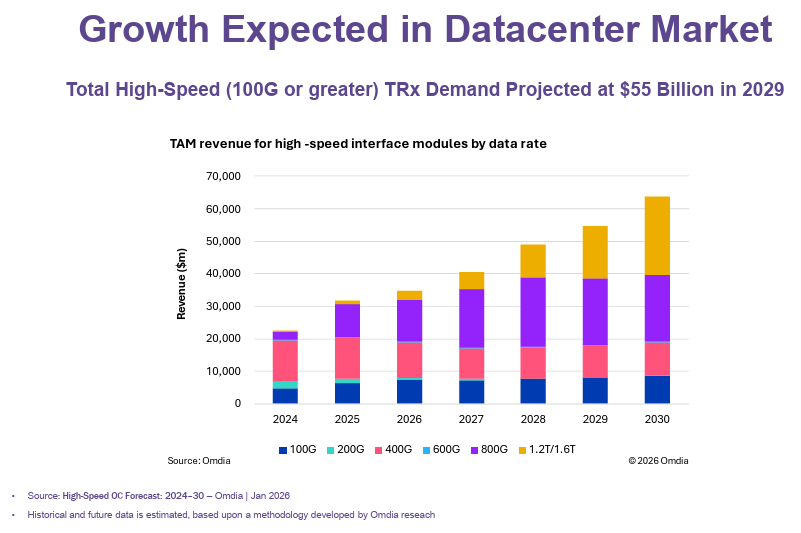
$AAOI is now close to a 50% drawdown from its ATH in... May. It is, of course, a sector-wide issue, as other players like $SIVE have been hit as well. However, as usual, this sell-off might be disconnected from the actual business momentum. The demand for high-speed optical transceivers (especially 400G and 800G architectures) is booming, positioning $AAOI perfectly to capture this multi-year growth cycle. As we can see in the attached chart, 1.2/1.6T high-speed interface modules will be growing at an enormous pace, reaching almost half of the total TAM by 2030. Their strategic partnership with Microsoft remains a massive revenue catalyst. Being a key supplier for a hyper-scaler provides them with a stable backlog that smaller competitors cannot match. What is even more interesting, the margins are bound to improve as the product mix shifts towards higher-generation optics. At these levels, the R/R is getting tempting. NFA/DYOR Chart source: Omdia research via Applied Optoelectronics IR.
1
270
andrewrwyatt
Replying to @wliang
CPO is going to get pushed back to 2028 and $SIVE is going to be about 10 sek in two weeks
1
1
177