🚨 The Long Retreat: Lee's Army Escapes Destruction 🚨
In the aftermath of Pickett's Charge's bloody failure on July 3, 1863, Robert E. Lee faced an urgent and dangerous problem: extracting his battered, exhausted army from deep within enemy territory while burdened with thousands of wounded men, all while a victorious Union army under George Meade remained close at hand and swollen rivers threatened to trap him against the Potomac.
Lee began withdrawing his army on the night of July 4, moving south and west through the mountain passes toward Williamsport, Maryland, where he intended to cross the Potomac back into Virginia.
The retreat, executed with remarkable discipline and organization despite the army's shattered condition, became one of the most skillfully managed withdrawals of the entire war, a testament to the resilience of Confederate soldiers and officers even in the wake of catastrophic defeat.
Central to the retreat's logistics was Brigadier General John D. Imboden (played a huge role)..whose cavalry brigade was assigned the grim and grueling task of escorting a seventeen-mile-long….wagon train of wounded soldiers over rough mountain roads toward Williamsport.
The journey proved harrowing and many wounded men endured agonizing jolts over rutted roads with little medical care, and the column faced harassment from Union cavalry patrols along the way, but Imboden's men successfully shepherded the vast train through hostile territory largely intact, an unheralded logistical achievement critical to preserving what remained of Lee's fighting force.
Meanwhile, JEB Stuart's cavalry, having failed to break through at East Cavalry Field on July 3, was tasked with screening the army's main retreat route, fighting a series of sharp rearguard skirmishes against pursuing Union cavalry at places like Fairfield and later at Boonsboro and Funkstown, buying precious time for Lee's infantry and wagon trains to reach the river.
When Lee's army arrived at Williamsport, disaster nearly struck again: recent heavy rains had swollen the Potomac far beyond fording depth, and Union forces had destroyed the Confederate pontoon bridge, trapping Lee's army against the riverbank for nearly a week while Meade's pursuing forces slowly closed in.
Lee's soldiers dug in and fortified a strong defensive line, and though Meade considered attacking, he ultimately hesitated, giving Confederate engineers time to construct a new pontoon bridge and allowing the river to recede enough for fording.
On the night of July 13-14, Lee's army successfully crossed back into Virginia, narrowly escaping what could have been a war-ending disaster, though Meade's failure to aggressively pursue and destroy Lee's trapped army drew sharp criticism from President Lincoln, who believed a golden opportunity to end the war had slipped away.
Bobby Lee got away again..
Images:
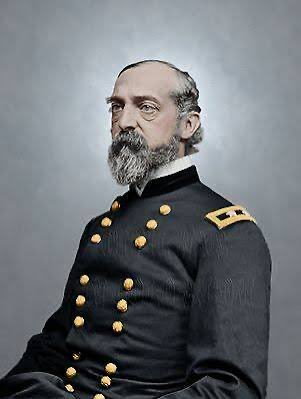
1. Union Maj. Gen. George Meade
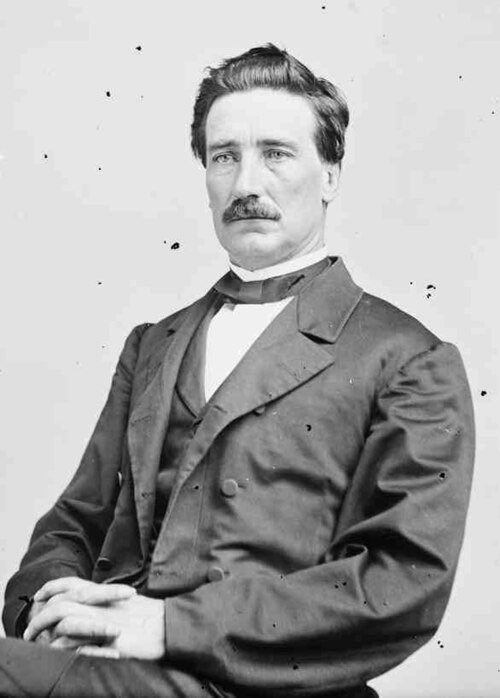
2. CSA Brig. Gen John Imboden
3. Robert E. Lee
4. Map of Lee’s retreat from Gettysburg
#History #Gettysburg