Filter
Exclude
Time range
-
Near
DHNInsight
๐—ช๐—ต๐˜† ๐—ถ๐˜€ ๐—ฑ๐—ฎ๐˜๐—ฎ ๐˜€๐˜๐—ฎ๐—ป๐—ฑ๐—ฎ๐—ฟ๐—ฑ๐—ถ๐˜‡๐—ฎ๐˜๐—ถ๐—ผ๐—ป ๐˜๐—ต๐—ฒ ๐—บ๐—ถ๐˜€๐˜€๐—ถ๐—ป๐—ด ๐—น๐—ถ๐—ป๐—ธ ๐—ถ๐—ป ๐—ต๐—ฒ๐—ฎ๐—น๐˜๐—ต๐—ฐ๐—ฎ๐—ฟ๐—ฒ ๐—”๐—œ? At the DHN City Meetup Kochi, Sajan Nair, Managing Director, Sales, Datanyx, explains why clean, standardized data is the foundation of effective healthcare technology. He discusses the challenge of fragmented data spread across multiple systems and how data standardization enables hospitals to create a single, reliable source of information. By ensuring different systems "speak the same language," healthcare organizations can unlock more accurate insights, improve operational efficiency, and support better patient care. As AI adoption accelerates across healthcare, one thing is clear: better outcomes begin with better data. @datanyxai #DHNCityMeetupKochi #HealthcareData #DataStandardization #AIinHealthcare #HealthTech #DigitalHealth #HealthcareInnovation #DataDrivenCare
27
encore_mk
AI-powered data standardization automation, bundled with a server. Meet META# AI NOW โšก Simplify deployment. Accelerate AI Ready Data adoption ๐Ÿ“ˆ #์—”์ฝ”์•„ #encore #METAAINOW #METAAI #AIReadyData #DataReadiness #DataStandardization #DataAutomation #AI #AX
1
32
miningcomau
Your AI isn't failing. Your data is. ๐Ÿ›‘ Got 40 identical pumps across different sites? Without standardised data, AI treats them like 40 total strangers. You can't scale predictive maintenance on broken foundations. Fix the baseline first. ๐Ÿ”— ap1.hubs.ly/H011RDd0 #AssetReliability #MiningInnovation #Industry40 #DataStandardization
206
SylvianGuibal
๐Ÿ‡ต๐Ÿ‡ญ Philippines Mandates ISO 20022 Adoption to Modernize Retail Payments ๐Ÿ’ณโš™๏ธ The Bangko Sentral ng Pilipinas (BSP) has taken a major ุฎุทูˆุฉ forward in modernizing its financial system by mandating the adoption of the ISO 20022 international standard across all retail payment systems in the country. This move, formalized through Circular No. 1223 ๐Ÿ“„, aims to standardize electronic data exchange and enhance the efficiency, security, and transparency of both domestic and cross-border transactions ๐ŸŒ๐Ÿ’ธ. ๐Ÿ”„ A Strategic Standardization of Payments With this initiative, BSP seeks to harmonize practices across the Philippine payments ecosystem. ISO 20022, a globally recognized standard ๐ŸŒ, enables richer and more structured payment data. This enhanced data capability allows for: ๐Ÿ“Š Improved transaction monitoring ๐Ÿ›ก๏ธ Stronger compliance and security checks โš–๏ธ More effective handling of consumer complaints The central bank emphasized that this standardization will reduce friction in payment processes and improve interoperability between financial institutions. โš ๏ธ Uneven Adoption Across the Sector Although key systems like InstaPay โšก and PESONet ๐Ÿฆ have already adopted ISO 20022, BSP noted that implementation across the industry remains inconsistent. Circular No. 1223 now requires all relevant players to adopt the standard uniformly, ensuring a cohesive and efficient payment infrastructure nationwide. ๐ŸŒ Aligning with Global Standards This reform is also part of a broader international alignment effort. BSP is following recommendations from the Committee on Payments and Market Infrastructures, under the Bank for International Settlements (BIS). Additionally, the initiative supports the goals of the G20 ๐Ÿค to improve the speed, cost, and transparency of paymentsโ€”especially cross-border transfers and remittances ๐Ÿ’ฑ. ๐Ÿ‘ฅ Real Benefits for Consumers For users, the benefits are clear and tangible: โฑ๏ธ Faster resolution of payment inquiries ๐Ÿ” Better traceability of transactions ๐Ÿ“ More complete and detailed payment information These improvements are expected to enhance user trust and overall experience in digital financial services. ๐Ÿ—“๏ธ A Two-Year Transition Plan BSP has outlined a two-year phased implementation period โณ to allow institutions to adapt. To guide the process, it will establish an ISO 20022 Harmonization Industry Project Team ๐Ÿ‘จโ€๐Ÿ’ผ๐Ÿ‘ฉโ€๐Ÿ’ผ. This team will coordinate efforts across the industry and work closely with stakeholders to ensure a smooth and timely transition. ๐Ÿš€ A Major Step Toward Financial Modernization With this mandate, the Philippines joins the global movement toward standardized payment infrastructures. The widespread adoption of ISO 20022 is expected to boost operational efficiency, strengthen transparency, and build greater trust in digital transactions ๐Ÿ’ก. This reform marks a significant milestone in creating a more integrated, secure, and future-ready financial ecosystem. ๐Ÿ”– Hashtags #Philippines #BSP #ISO20022 #Fintech #DigitalPayments #BankingInnovation #FinancialTechnology #Payments #GlobalFinance #CrossBorderPayments #Remittances #FinancialInclusion #Banking #Finance #TechInFinance #PaymentsInnovation #DigitalTransformation #EconomicGrowth #MoneyTransfer #SecurePayments #Compliance #DataStandardization #FintechNews #AsiaFinance #ModernBanking #Innovation #FinancialSystem #Transparency #Efficiency #FutureOfPayments
6
24
672
GoIStats
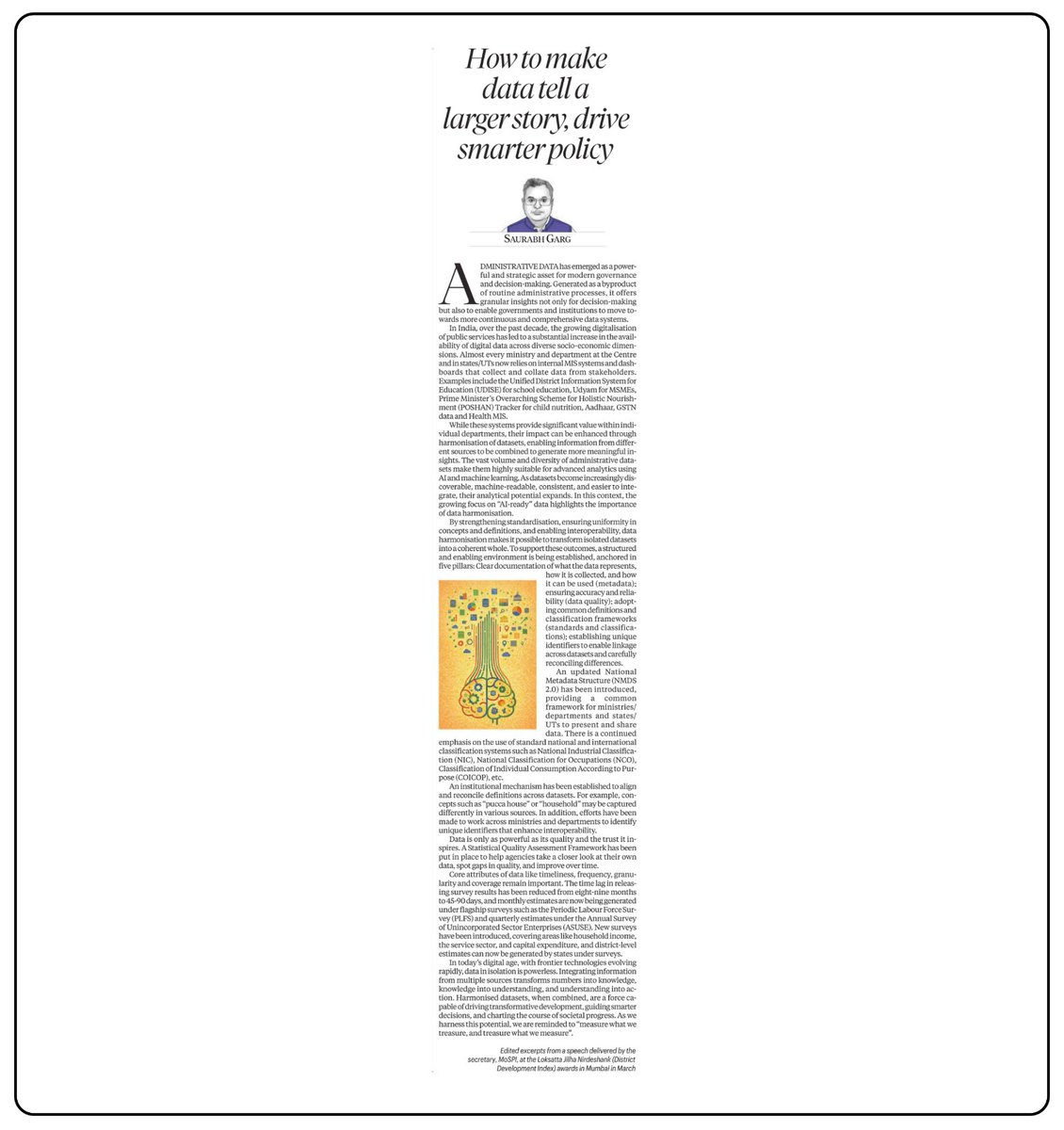
โ€œAdministrative data has emerged as a powerful and strategic asset for modern governance and decision-making.โ€ Dr. Saurabh Garg, Secretary, MoSPI, mentions in an article in The Indian Express that strengthening data standardisation, integration, and quality is key to unlocking deeper insights and enabling evidence-based policymaking for Indiaโ€™s growth. Visit MoSPI's official website for more such information: mospi.gov.in #NSO #MoSPI #DataDrivenGovernance #EvidenceBasedPolicy #AdministrativeData #DigitalGovernance #DataForDevelopment #PublicPolicy #DataIntegration #DataStandardization #GoodGovernance #IndiaData #PolicyInsights #GovernanceReform #DataQuality @PMOIndia @_saurabhgarg @PIB_India @PibMospi @Rao_InderjitS @mygovindia @NITIAayog @IndianExpress
5
20
637
SylvianGuibal
๐ŸŒ ISO 20022: A Major Milestone in November 2026 โ€“ The End of Unstructured Addresses The global payments industry continues its transformation with the progressive adoption of ISO 20022, now the standard for cross-border transactions. A new key milestone is approaching: the removal of unstructured postal addresses by November 2026, as part of the SR 2026 standards release.This change represents a significant step toward greater data standardization, with major implications for all financial ecosystem players. ๐Ÿš€โ“ Why Are Unstructured Addresses Being Removed? The elimination of unstructured addresses aims to improve data quality in cross-border payments.Unlike free-format data, structured addresses enable:โšก More efficient straight-through processing ๐Ÿ” More accurate compliance screening ๐Ÿ”— Greater transparency across the payment chain This initiative supports global objectives set by the G20 and international bodies to enhance transparency and traceability in payments, particularly in the fight against financial crime (e.g., FATF Recommendation 16).As ISO 20022 adoption matures, structured and rich data becomes essential. Unstructured formats are now seen as a barrier to automation and operational efficiency.๐Ÿ‘ฅ Who Is Impacted? This transformation affects the entire financial ecosystem:๐Ÿฆ Banks ๐Ÿข Corporates ๐Ÿ’ป Vendors ๐ŸŒ Market infrastructures Banks, in particular, must ensure they can capture, structure, and validate customer address data across all channels.โš™๏ธ A Major Operational Impact for Banks This change goes far beyond internal system updates. Financial institutions must rethink both operations and client interactions.Key challenges include:Structuring existing customer databases ๐Ÿ“Š Updating systems to capture structured address formats ๐Ÿงฉ Educating clients on new data requirements ๐Ÿ“ฃ This requires strong coordination between business, operations, and IT teams, along with early client engagement.๐Ÿ“… What Will Be Mandatory from November 2026? Starting November 2026:๐Ÿ“ City and country must be provided in structured fields for all parties in CBPR payment messages โŒ Unstructured addresses will no longer be accepted Exception:๐Ÿท๏ธ Using a BIC alone for agents will still be allowed This applies to all payment types:Corporate payments Securities Trade finance FX Funds โš ๏ธ Non-compliant payments may be rejected, potentially causing significant operational disruptions.๐Ÿ“‰ Adoption Still Lagging Behind Despite strong progress, adoption remains uneven: ๐Ÿ‘‰ Around 65% of payment messages still contain unstructured addresses.With less than a year remaining, the industry must accelerate efforts to avoid last-minute challenges. โณโš ๏ธ Important: No fallback solution will be provided. Financial institutions must be ready on time.๐Ÿš€ What Should Financial Institutions Do Now? Banks should take immediate action:Analyze systems and processes ๐Ÿ” Adapt data capture channels ๐Ÿ–ฅ๏ธ Engage clients early ๐Ÿค Test structured address capabilities ๐Ÿงช Address interoperability challenges ๐ŸŒ They should also take steps to prevent the use of unstructured addresses going forward.๐Ÿข What Should Corporates Do? Corporates are strongly encouraged to:Engage with their banking partners ๐Ÿค Understand required address formats ๐Ÿ“˜ Update internal systems โš™๏ธ Participate in onboarding and testing phases ๐Ÿงช Close collaboration with banks will be key to a smooth transition.๐Ÿ”‘ An Unavoidable Transformation The removal of unstructured addresses marks a critical step in modernizing cross-border payments.As highlighted by Thomas Delaet, Chief Product Officer at Swift: This evolution is essential to avoid disruption and fully unlock the benefits of ISO 20022.๐Ÿงญ Conclusion The November 2026 deadline is not just a technical update โ€” it is a structural transformation requiring anticipation, coordination, and commitment across the industry.Organizations that act now will gain a strong operational advantage, while late adopters risk significant disruption. โš ๏ธ#๏ธโƒฃ #ISO20022 #Payments #CrossBorderPayments #Banking #Fintech #FinancialServices #DataQuality #Compliance #AML #KYC #PaymentsTransformation #DigitalTransformation #BankingInnovation #Finance #GlobalPayments #SWIFT #CBPRPlus #StructuredData #Automation #FinCrime #RegTech #Innovation #FinanceTransformation #DataStandardization #PaymentsIndustry #TransactionBanking #CorporateTreasury #Liquidity #RiskManagement #FinancialInfrastructure #FutureOfPayments ๐Ÿš€
2
11
59
1,700
SylvianGuibal
๐Ÿš€ Migration to ISO 20022: A Strategic Transformation of Securities Operations in Europe ๐Ÿ“… October 1, 2025 The European financial landscape is undergoing a profound transformation. At the heart of this shift is the gradual adoption of the ISO 20022 messaging standardโ€”a global framework redefining how financial data is exchanged between market participants. Driven by the European Central Bank through the AMI-SeCo working group, this initiative reflects a clear ambition: to build a harmonized, automated, and interoperable post-trade ecosystem across Europe ๐ŸŒ. Extending through 2030, this roadmap represents a cornerstone in strengthening capital markets integration, particularly in the areas of securities processing and collateral management ๐Ÿ“Š. ๐ŸŽฏ A clear objective: standardization and seamless data flows The primary goal of ISO 20022 migration is to streamline data flows by adopting standardized, structured formats. Today, fragmented systems and multiple messaging standards still hinder efficiency in post-trade operations โš™๏ธ. With ISO 20022, market participants benefit from: ๐Ÿ“ˆ Enhanced data quality through richer data structures ๐Ÿ”— Improved interoperability between institutions ๐Ÿค– Greater automation of operational processes ๐Ÿ’ธ Reduced operational costs and error rates This transformation also aligns with the broader SCoRE (Single Collateral Management Rulebook for Europe) initiative, supporting the development of a truly unified European financial market ๐Ÿ‡ช๐Ÿ‡บ. ๐Ÿ—บ๏ธ A phased transition through 2030 The migration to ISO 20022 is designed as a gradual process, structured into four key phases to ensure smooth adoption across the ecosystem. 1๏ธโƒฃ Phase 1: Initiation (starting June 2025) CSDs begin offering ISO 20022-compliant messages while still supporting ISO 15022. Early adoptersโ€”including central banks and triparty agentsโ€”start using the new format ๐Ÿ. 2๏ธโƒฃ Phase 2: Progressive adoption (2026โ€“2028) Participants must comply with SCoRE and provide ISO 20022 messaging: ๐Ÿ“… 2026: general meetings ๐Ÿ“… 2028: corporate actions 3๏ธโƒฃ Phase 3: Full adoption (2026โ€“2030) Communication becomes fully ISO 20022-based: โœ… 2026: general meetings โœ… 2030: corporate actions 4๏ธโƒฃ Phase 4: Legacy decommissioning (end-2030) Old formats are completely phased out, marking the final step of the transition ๐Ÿงน. ๐ŸŒ A broader transformation beyond technology Although often viewed as a technical upgrade, ISO 20022 migration goes far beyond IT systems ๐Ÿ’ป. It requires coordinated evolution across: โš–๏ธ Legal frameworks ๐Ÿ“œ Regulatory environments ๐Ÿ’ฐ Tax systems ๐Ÿ”„ Operational processes A successful transition depends on strong coordination among issuers, investors, intermediaries, and service providers ๐Ÿค. ๐Ÿค Client support: a key success factor Financial institutions play a crucial role in facilitating this transition. A pragmatic approach involves maintaining dual support for ISO 20022 and ISO 15022 during the migration period ๐Ÿ”„. This strategy: ๐Ÿงญ Allows clients to transition at their own pace ๐Ÿ›ก๏ธ Minimizes operational risk ๐Ÿ” Ensures business continuity Support also relies on communication, planning, and anticipation ๐Ÿ“ฃ. ๐Ÿ”ฎ Outlook: towards a more integrated and efficient market The migration to ISO 20022 is a foundational step in modernizing Europeโ€™s financial infrastructure ๐Ÿ—๏ธ. It paves the way for: ๐Ÿ” Greater transparency โšก Enhanced efficiency ๐Ÿงฉ Reduced fragmentation ๐ŸŒ Deeper integration By 2030, this transformation will significantly improve financial flows and strengthen Europeโ€™s global competitiveness ๐Ÿ’ช. Ultimately, ISO 20022 is not just a technical upgradeโ€”it is a strategic enabler shaping the future of finance ๐Ÿš€. #ISO20022 ๐Ÿš€ #CapitalMarkets ๐Ÿ“Š #Finance ๐Ÿ’ฐ #FinTech ๐Ÿค– #Banking ๐Ÿฆ #Securities ๐Ÿ“ˆ #PostTrade ๐Ÿ”„ #CollateralManagement ๐Ÿ” #CSD ๐Ÿ›๏ธ #EuropeanMarkets ๐Ÿ‡ช๐Ÿ‡บ #ECB ๐Ÿฆ #AMISeCo #SCoRE #FinancialInfrastructure ๐Ÿ—๏ธ #DigitalTransformation ๐Ÿ’ป #DataStandardization ๐Ÿ“Š #Interoperability ๐Ÿ”— #Automation ๐Ÿค– #Innovation ๐Ÿ’ก #Regulation ๐Ÿ“œ #Compliance โœ… #FinancialServices ๐Ÿ’ผ #MarketInfrastructure ๐Ÿงฉ #CorporateActions ๐Ÿ“ฃ #Payments ๐Ÿ’ณ #TradeProcessing ๐Ÿ”„ #RiskManagement โš ๏ธ #FutureOfFinance ๐Ÿ”ฎ #EuropeFinance ๐Ÿ‡ช๐Ÿ‡บ #GlobalFinance ๐ŸŒ #TechInFinance ๐Ÿ’ป #FinancialTransformation ๐Ÿš€ #BankingInnovation ๐Ÿฆ #DataDriven ๐Ÿ“Š #Efficiency โšก #FinancialEcosystem ๐ŸŒ #FinanceTrends ๐Ÿ“ˆ #XFinance #FinServ
11
31
804
AISecHub
Transformation of Cybersecurity Playbooks into CACAO Format - arxiv.org/pdf/2508.03342 Existing cybersecurity playbooks are often written in heterogeneous, non-machine-readable formats, which limits their automation and interoperability across Security Orchestration, Automation, and Response platforms. This paper explores the suitability of Large Language Models, combined with Prompt Engineering, to automatically translate legacy incident response playbooks into the standardized, machine readable CACAO format. Authors: @stefanjdecker, @matzutt Mehdi Akbari Gurabi, Lasse Nitz, Radu-Mihai Castravet, Roman Matzutt, Avikarsha Mandal, Stefan Decker / @Fraunhofer_FIT @knowpipelines @RWTH #Cybersecurity #Automation #IncidentResponse #CACAO #PromptEngineering #LLMIntegration #WorkflowAutomation #SecurityStandards #MachineLearning #SemanticAccuracy #SyntacticValidation #KnowledgeInjection #TaskDecomposition #SOARPlatforms #PlaybookAutomation #AIinSecurity #GraphSimilarity #DataStandardization #ThreatResponse #LegacyMigration #JSONValidation #AISecurity @OASISopen
3
160
_sciforce_
Medical vocabularies are messyโ€”SNOMED CT, LOINC & RxNorm donโ€™t always align. Our new #DataStandardization case study shows how we unified these systems into OMOP CDM, making #MedicalResearch easier & more accurate. ๐Ÿ“„ Read more: surl.lu/lyvhsp
1
2
37
ZMatalab
Use PERPLEXITY formulas to classify products by categoryโ€”fast, accurate, and stress-free! ๐ŸŽฏ AI does the work while you focus on strategy. ๐Ÿ“Š๐Ÿค– matasoft.hr/QTrendControl/inโ€ฆ #SmartSpreadsheets #DataStandardization #ProductivityTools #AI #Spreadsheets #DataScience #DataAnalytics #BI
38
CladisticsAlert
โš ๏ธ #NewPaperAlert ๐Ÿšจ [๐—ด๐—ฒ๐—ป๐˜‚๐˜€]_[๐˜€๐—ฝ๐—ฒ๐—ฐ๐—ถ๐—ฒ๐˜€]; ๐—ฃ๐—ฟ๐—ฒ๐˜€๐—ฒ๐—ป๐˜๐—ถ๐—ป๐—ด ๐—ฝ๐—ต๐˜†๐—น๐—ผ๐—ด๐—ฒ๐—ป๐—ถ๐—ฒ๐˜€ ๐˜๐—ผ ๐—ณ๐—ฎ๐—ฐ๐—ถ๐—น๐—ถ๐˜๐—ฎ๐˜๐—ฒ ๐˜€๐˜†๐—ป๐˜๐—ต๐—ฒ๐˜€๐—ถ๐˜€ By Chesters et al., onlinelibrary.wiley.com/doi/โ€ฆโ€ฆ #Phylogenetics #DataStandardization #MachineReadableTrees #Cladistics #Systematics
7
12
628
EntrepreneurAPJ
#Update India's AI adoption is growing rapidly, with 87% of companies in the middle stages of adoption. Many companies have AI strategies in place and are moving from proof-of-concept to full-scale production. Read the story: ow.ly/rBme50Tcsqx #IndiaAI #TechServices #Startups #AIAdoption #DataStandardization #SMBs #TechSMEs #LeadershipCommitment #DataRegulations #PeerLearning
3
24
179
najmi_ariffin
Discover how adopting a "Sekufu" approach to data management can create a more cohesive, integrated, and high-quality information ecosystem across your organization. #DataStandardization #DataQuality #InformationManagement #DataEcosystem #DataEquality ๐Ÿ”—: linkedin.com/pulse/data-equaโ€ฆ
1
40
XBRL_IRIS
Standardizing financial info is crucial & #XBRL is transforming global data communication. Discover the basics and benefits of XBRL in our latest blog "Introduction to XBRL: Understanding the Basics". Read more: bit.ly/3S8YCfB #FinancialReporting #DataStandardization
4
254
consulting_opex
Care to know the financial reporting game-changer?๐Ÿค” Leverage the expertise of Opex Consulting๐Ÿ˜‰ #XBRL #FinancialReporting #Innovation #OpexConsulting #banks #BusinessTransformation #DataStandardization #BusinessIntelligence #RegulatoryCompliance #fintech #CBN #Goals #banks #ISO
1
4
5
145
DDO_Chain
๐Ÿ”“Unlocking the power of data in financial technology! ๐Ÿš€DDO Chain leads the way in metadata standardization, enabling seamless data sharing and driving innovation. #DDOChain #DataStandardization #FinTech medium.com/@ddochain/metadatโ€ฆ
15
324
26,664
Precision_Grow
Identifying Challenges and Solutions in Measuring Organic Carbon in Soils Dive into the intricate world of soil organic carbon (SOC) measurement with our comprehensive guide. . #SoilOrganicCarbon #SOCMeasurement #SoilHealth #CarbonSequestration #DataStandardization #SoilScience
1
7
362