chillin and good vibes only | ๐Ÿ’Š engineer | ZenStudent

Joined May 2009
3,071 Photos and videos
thank you โฆ@auualia_dreamsโฉ โค๏ธ poap day our wedding 16 September 2023 art by โฆ@darius_026โฉ
6
2
28
2,261
Happy Sale at a discount
Strategy has sold 3,588 $BTC for $216 million to fund dividends on our Digital Credit securities. As of 7/5/2026, we hodl โ‚ฟ843,775 in our BTC Reserves and $2.55 billion in our USD Reserves. strategy.com/press/strategy-โ€ฆ
4
06elu.eth๐Ÿ”ฎ๐ŸŒโ˜ฎ๏ธ๐Ÿณ๐ŸŒˆ reposted
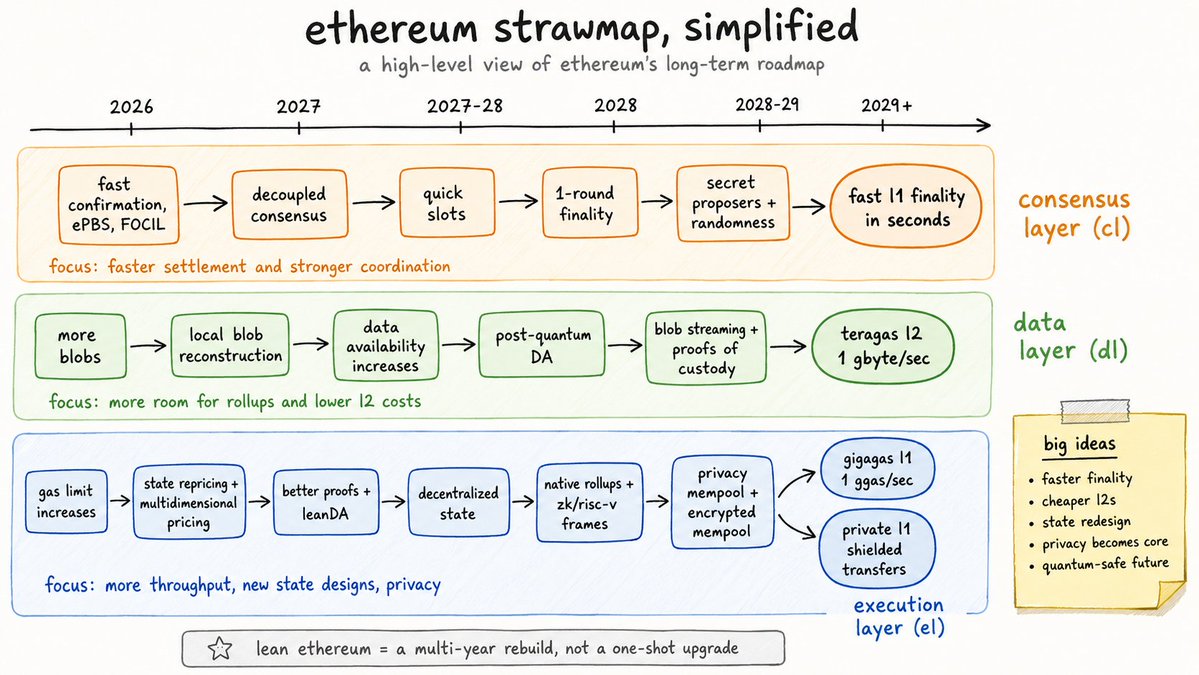
yesterday, vitalik shared one of the biggest updates on ethereumโ€™s future. a lot of people saw the chart and got confused, so hereโ€™s the tldr: - two weeks ago, ethereum researchers met in berlin after earlier talks with client teams in svalbard. - the big idea from those talks is "lean ethereum". - not one upgrade. more like a 3 to 4 year rebuild of ethereumโ€™s core parts. - the merge changed ethereum from proof of work to proof of stake. - lean ethereum looks like the next major chapter after that. - it touches consensus, execution, blobs, privacy, proofs, gas, state, and client architecture. - ethereum wants faster finality, so l1 transactions can settle quicker. - it wants more blobs, so l2s get more space and cheaper fees. - it wants recursive starks to handle more verification, instead of making everyone recheck everything the hard way. - privacy also gets more attention inside the protocol, especially around mempools, frames, and shielded transfers. - quantum safety has moved up the priority list too, especially for blobs, signatures, and other vulnerable parts. - the biggest change for apps is "state". - state is where ethereum keeps token balances, nfts, smart contracts, defi positions, and onchain records. - vitalik says ethereum may keep todayโ€™s flexible state mostly intact, but add new state types that are cheaper and easier to scale. - that could work well for erc20s, nfts, and many defi use cases. - apps may not be forced to rewrite everything. - but apps that adapt to the new design could get much lower fees. - over the next few years, expect higher gas limits, more blob capacity, faster slots, better privacy, stronger proofs, and a lighter ethereum design.
Two weeks ago, Ethereum researchers met in Berlin to continue charting the protocol's long-term trajectory, following along discussions with client teams in Svalbard in April. The updated strawmap is at strawmap.org, and I attached a picture of it to this post. My own high-level takeaways: * "Lean Ethereum" is not a single one-shot upgrade, it is a collection of improvements that will come online to the Ethereum network over the course of three or four years. But make no mistake, this IS the third major iteration of Ethereum in the same way that the Merge was the second. Almost every major piece of the protocol will be replaced: - Verification through recursive STARKs, rather than direct re-execution. Recursive STARKs become an enshrined first-class core component of the protocol - Replacing everything quantum-vulnerable with quantum-safe alternatives - Consensus: decoupled available chain and finality, one or two-round finality. Theoretically optimal security properties, simpler than today, and faster than today - Multidimensional gas - State: not just tree structure, but what *types* of state are available - Changes to client architecture ... At the same time, simplification, cleanup and future-proofing. And this will all be done in a way that minimizes disruption to existing application. We've done this before (the Merge), we can do it again. * H-star (aka Hegota) is probably Ethereum's last thematically "pre-Lean" fork. Starting from I-star, most of everything we do will have a very strong "Lean" feel to it in one way or another. * Privacy is no longer an afterthought, it is a first class goal. When designing Frames, the mempool, additions to the state tree, we explicitly ask the question "okay, how do quantum-safe, intermediary-free privacy protocol transactions go through this, and what is the overhead?" * Formal verification of everything for security. * FV also makes us much more comfortable with canonicalization (having pieces of the protocol that are directly defined as a piece of bytecode expressed in some language). evm-asm is being written in part to become a canonical proof system for the EVM. * Quantum safety has shifted up a LOT in priority. This adds a lot of work (eg. finalizing a quantum-safe blobs design has become urgent; this work has already been ongoing for months) * Probably the single most disruptive part of the plan is the changes to state. There is growing consensus around leaving present-day-style "dynamic state" mostly unchanged, but scaling it only a medium amount, and adding new types of state that are more scalability-friendly (eg. no need for builders to sync/store all of it) but more restrictive, and that will scale a large amount. eg. possible Ethereum in 2030: 2 TB of present-day-style (dynamic) state, and 100 TB of new-style (scalable but restrictive) state This "new-style" state would work very well for ERC20s, NFTs, many defi use cases, but not eg. highly "central" objects like Uniswap contracts, or onchain order books, or other complex things (which are crucial for Ethereum but which only take up a small percentage of state) Hence, it will not be *necessary* to rewrite any apps, but it will be *very cost-effective* to eg. rewrite an ERC20 token into a newer design that uses a new type of UTXO storage that is currently being explored, so that it will have >10x lower txfees. Design of these new state types (current ideas: keyed nonces, ring buffers, UTXOs, statically accessible state, temp state) is an area where we will need a lot of feedback from application developers (incl. privacy-friendly application developers) and probably several rounds of rethinking and iteration. * In the context of a much larger total state size, we need to figure out the incentive issues around who stores this state and what motivates them to. Even saying "each node stores 1%" is not good enough - why do they store that 1% and why are they willing to serve it? This is being elevated as a first-class research area. * Ethereum will need to have a "VM" other than EVM in one form or another - at the very least, we need something like leanISA for recursive STARKs - and the gains are large in exposing it to users so that we support programmable privacy and better scalability. Right now, the most likely contenders are leanISA and RISC-V. My own ideal is that in this world, we adjust the protocol so that the EVM becomes a high-level-language compiler-level feature, and the protocol only "sees" RISC-V / leanISA directly. But this is still far away. * Gas limit increases, blob increases and slot time decreases will happen many times over the next ~5 years. We expect a large gas limit increase with Glasterdam. Each step of increased scale or decreased slot time is a matter of getting to the point where it is safe to do it, which comes from a combination of client optimization and protocol changes. Ethereum is CROPS. Ethereum is scaling. Ethereum is reinventing itself. Onward.
8
10
48
4,785
gud tech
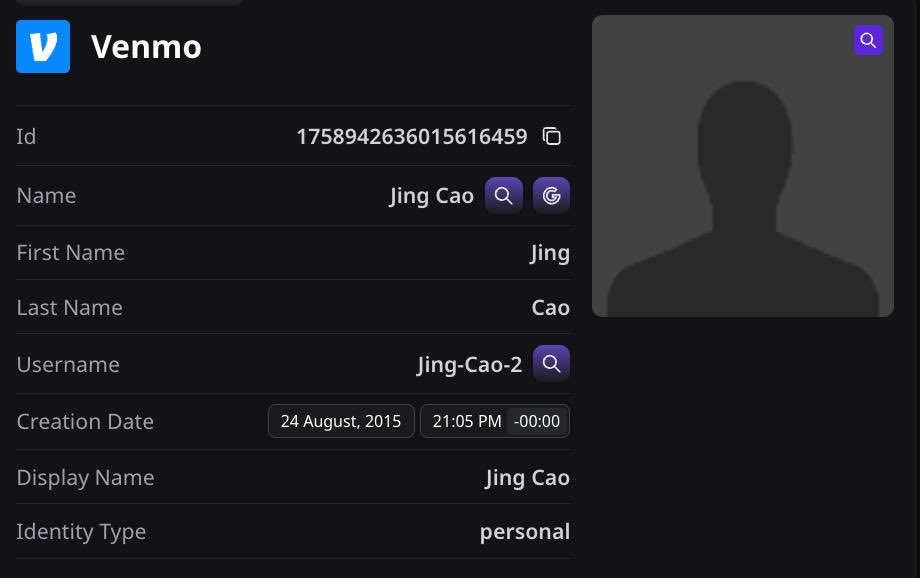
Hereโ€™s the AscendEX co-founder George (Jing) Caoโ€™s Venmo account try requesting your money from him directly since they will not process withdrawals and he hides from users.
1
10
06elu.eth๐Ÿ”ฎ๐ŸŒโ˜ฎ๏ธ๐Ÿณ๐ŸŒˆ reposted
Breaking: Strategy Sells 3,588 BTC, Marking Its First Major Bitcoin Sale Strategyโ€™s official website data shows that the BTC Acq figures disclosed by Strategy on June 30 and July 6 were -1,363 BTC and -2,225 BTC, respectively, representing a total reduction of 3,588 BTC, worth approximately $225.606 million. As of July 6, its BTC holdings stood at 843,775 BTC. This also marks Strategyโ€™s first large-scale sale of Bitcoin, following its previous symbolic sale of 32 BTC.
24
9
72
18,585
06elu.eth๐Ÿ”ฎ๐ŸŒโ˜ฎ๏ธ๐Ÿณ๐ŸŒˆ reposted
STRATEGY BTC HOLDINGS DECREASES BY 3,588 BTC (~$225.606M) TO 843,775 BTC: WEBSITE
21
20
137
28,812
the $eth plan
Two weeks ago, Ethereum researchers met in Berlin to continue charting the protocol's long-term trajectory, following along discussions with client teams in Svalbard in April. The updated strawmap is at strawmap.org, and I attached a picture of it to this post. My own high-level takeaways: * "Lean Ethereum" is not a single one-shot upgrade, it is a collection of improvements that will come online to the Ethereum network over the course of three or four years. But make no mistake, this IS the third major iteration of Ethereum in the same way that the Merge was the second. Almost every major piece of the protocol will be replaced: - Verification through recursive STARKs, rather than direct re-execution. Recursive STARKs become an enshrined first-class core component of the protocol - Replacing everything quantum-vulnerable with quantum-safe alternatives - Consensus: decoupled available chain and finality, one or two-round finality. Theoretically optimal security properties, simpler than today, and faster than today - Multidimensional gas - State: not just tree structure, but what *types* of state are available - Changes to client architecture ... At the same time, simplification, cleanup and future-proofing. And this will all be done in a way that minimizes disruption to existing application. We've done this before (the Merge), we can do it again. * H-star (aka Hegota) is probably Ethereum's last thematically "pre-Lean" fork. Starting from I-star, most of everything we do will have a very strong "Lean" feel to it in one way or another. * Privacy is no longer an afterthought, it is a first class goal. When designing Frames, the mempool, additions to the state tree, we explicitly ask the question "okay, how do quantum-safe, intermediary-free privacy protocol transactions go through this, and what is the overhead?" * Formal verification of everything for security. * FV also makes us much more comfortable with canonicalization (having pieces of the protocol that are directly defined as a piece of bytecode expressed in some language). evm-asm is being written in part to become a canonical proof system for the EVM. * Quantum safety has shifted up a LOT in priority. This adds a lot of work (eg. finalizing a quantum-safe blobs design has become urgent; this work has already been ongoing for months) * Probably the single most disruptive part of the plan is the changes to state. There is growing consensus around leaving present-day-style "dynamic state" mostly unchanged, but scaling it only a medium amount, and adding new types of state that are more scalability-friendly (eg. no need for builders to sync/store all of it) but more restrictive, and that will scale a large amount. eg. possible Ethereum in 2030: 2 TB of present-day-style (dynamic) state, and 100 TB of new-style (scalable but restrictive) state This "new-style" state would work very well for ERC20s, NFTs, many defi use cases, but not eg. highly "central" objects like Uniswap contracts, or onchain order books, or other complex things (which are crucial for Ethereum but which only take up a small percentage of state) Hence, it will not be *necessary* to rewrite any apps, but it will be *very cost-effective* to eg. rewrite an ERC20 token into a newer design that uses a new type of UTXO storage that is currently being explored, so that it will have >10x lower txfees. Design of these new state types (current ideas: keyed nonces, ring buffers, UTXOs, statically accessible state, temp state) is an area where we will need a lot of feedback from application developers (incl. privacy-friendly application developers) and probably several rounds of rethinking and iteration. * In the context of a much larger total state size, we need to figure out the incentive issues around who stores this state and what motivates them to. Even saying "each node stores 1%" is not good enough - why do they store that 1% and why are they willing to serve it? This is being elevated as a first-class research area. * Ethereum will need to have a "VM" other than EVM in one form or another - at the very least, we need something like leanISA for recursive STARKs - and the gains are large in exposing it to users so that we support programmable privacy and better scalability. Right now, the most likely contenders are leanISA and RISC-V. My own ideal is that in this world, we adjust the protocol so that the EVM becomes a high-level-language compiler-level feature, and the protocol only "sees" RISC-V / leanISA directly. But this is still far away. * Gas limit increases, blob increases and slot time decreases will happen many times over the next ~5 years. We expect a large gas limit increase with Glasterdam. Each step of increased scale or decreased slot time is a matter of getting to the point where it is safe to do it, which comes from a combination of client optimization and protocol changes. Ethereum is CROPS. Ethereum is scaling. Ethereum is reinventing itself. Onward.
4
06elu.eth๐Ÿ”ฎ๐ŸŒโ˜ฎ๏ธ๐Ÿณ๐ŸŒˆ reposted
Summer Finance (@summerfinance_) was exploited for 6.017M $DAI. ๐Ÿšจ etherscan.io/tx/0x0db528c44fโ€ฆ
44
16
121
67,866
06elu.eth๐Ÿ”ฎ๐ŸŒโ˜ฎ๏ธ๐Ÿณ๐ŸŒˆ reposted
If we want to make the Lean Ethereum consensus chain aggressively more "lean", and add strong validator privacy (ZK-unlink deposit from staking activity from withdrawal, and re-anonymize stakers every day), here is a path: ethresear.ch/t/the-extremelyโ€ฆ
253
200
1,405
180,653
06elu.eth๐Ÿ”ฎ๐ŸŒโ˜ฎ๏ธ๐Ÿณ๐ŸŒˆ reposted
The internet is better when everyday services respect the people using them. @ProtonMail inspires the broader privacy movement with encrypted web tools for everyone to use.
154
188
2,011
210,494
$eth birdwatching the ticker is eth
Announcing Ethereum Birdwatching. An independent non-profit dedicated to accelerating the adoption of Ethereum, its L2s, applications and overall ecosystem across the worldwide birdwatching community.
20
06elu.eth๐Ÿ”ฎ๐ŸŒโ˜ฎ๏ธ๐Ÿณ๐ŸŒˆ reposted
We took a 30B model and split it in two to write tokens in parallel instead of one at a time. Introducing Nemotron-Labs-TwoTower: a diffusion language model from NVIDIA Research adapted from Nemotron-3-Nano-30B-A3B. Hereโ€™s how it works: one half holds the context, the other writes the tokens, with both reusing the pretrained model instead of training a new one from scratch. We found it kept 98.7% of the original modelโ€™s quality at 2.42ร— faster generation.
129
600
4,790
737,729
06elu.eth๐Ÿ”ฎ๐ŸŒโ˜ฎ๏ธ๐Ÿณ๐ŸŒˆ reposted
Slap yourself, if you sold $BTC under $10,000.
912
1,286
7,520
06elu.eth๐Ÿ”ฎ๐ŸŒโ˜ฎ๏ธ๐Ÿณ๐ŸŒˆ reposted
We are proud to support the launch of @ethereuminsti alongside @BitMNR and @ethereumjoseph. This nonprofit is the dedicated front door for the world's largest institutions entering Ethereum, built by former Ethereum Foundation leaders and the team behind 500 institutional relationships. Following @ethlabs_org, this is the second independent steward organization for Ethereum's next chapter. globenewswire.com/news-releaโ€ฆ
33
99
719
73,234
06elu.eth๐Ÿ”ฎ๐ŸŒโ˜ฎ๏ธ๐Ÿณ๐ŸŒˆ reposted
1/ Announcing Ethereum Institutional An independent non-profit dedicated to accelerating the institutional adoption of Ethereum, its L2s, applications and overall ecosystem.
271
666
3,210
862,357
06elu.eth๐Ÿ”ฎ๐ŸŒโ˜ฎ๏ธ๐Ÿณ๐ŸŒˆ reposted
If you're in the NFT space, two launches this week are worth a look. Both are rebuilding how NFTs move. ๐Ÿ‘‡
3
4
24
1,554
06elu.eth๐Ÿ”ฎ๐ŸŒโ˜ฎ๏ธ๐Ÿณ๐ŸŒˆ reposted
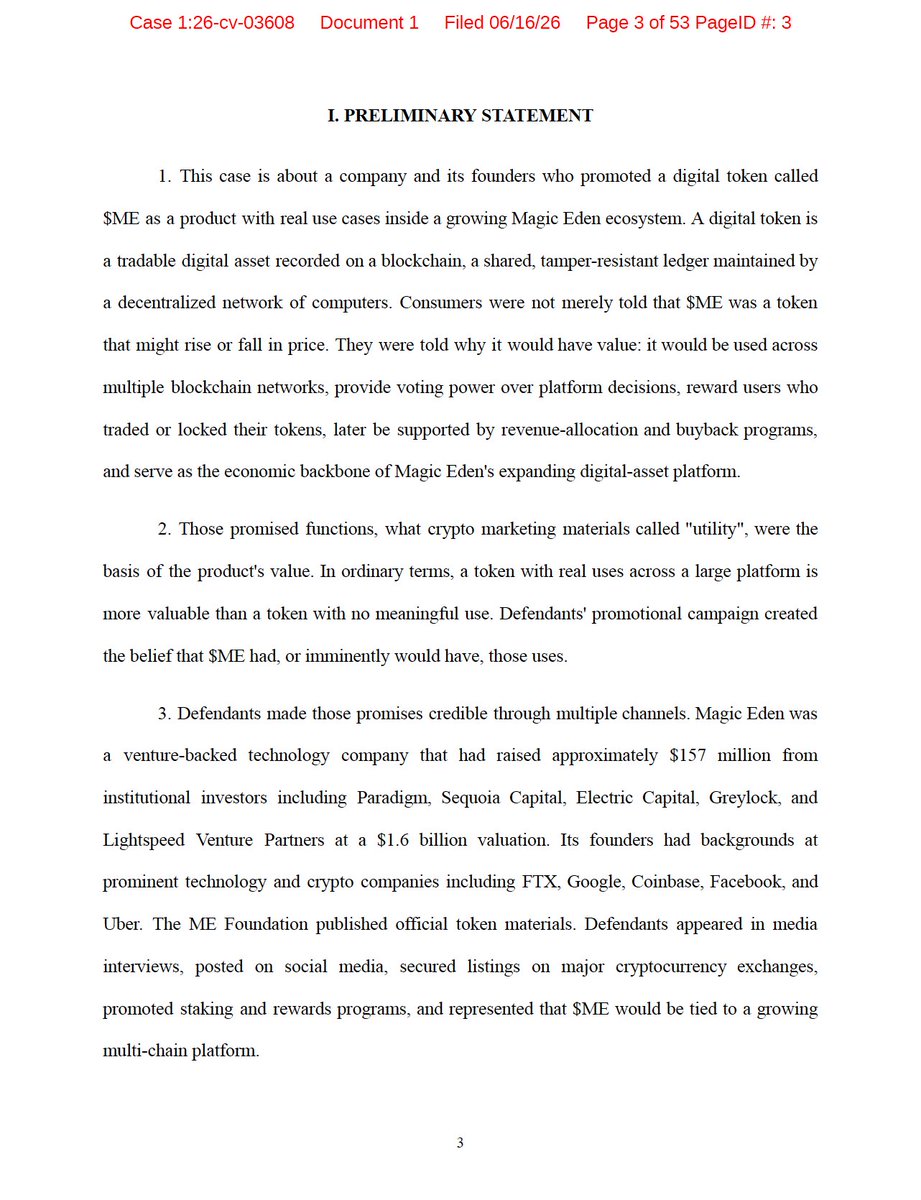
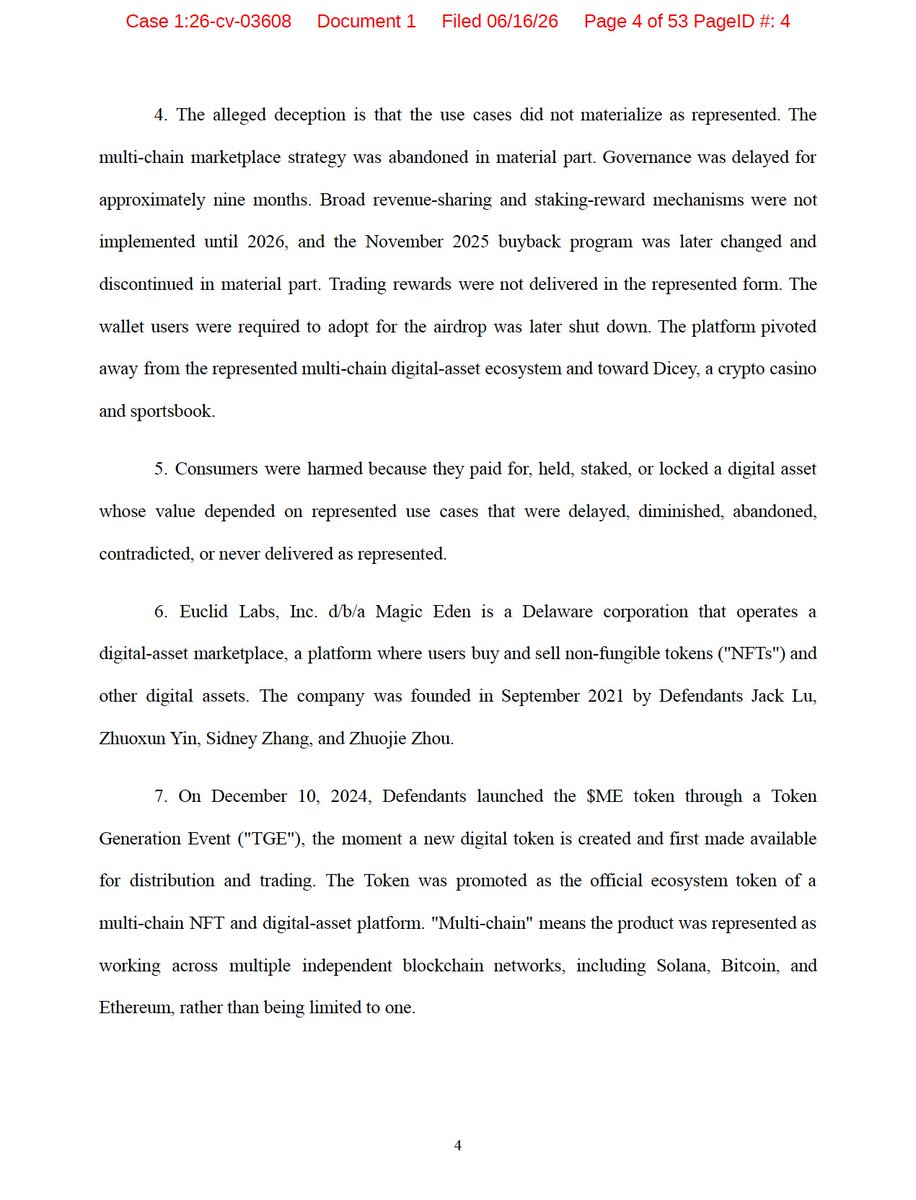
Magic Eden Lawsuit
1
46
347
48,649
the nfts are still alive
Launching soon on Ethereum mainnet. nftx.io/whitepaper
13