Joined December 2020
290 Photos and videos
Pinned Post
To make big money in business, you usually have to do something no one else can do, or have something no one else can have. Steve Ross did neither. Nor did Wayne Huizenga, or the great bearded Mark Leonard. Ross started out renting his father-in-law's funeral parlor limousines at night. He added a rental car company, a parking lot business, a cleaning company, a plumber, then he took the whole thing public, funeral parlor included. In 1969 he bought Warner Bros. for $400 million. In 1990 he took home $78 million, the biggest pay package in America. Huizenga became a billionaire buying garbage trucks. Leonard bought tiny software companies nobody wanted and built Constellation Software, which has compounded at 34% a year for 20 years. What they did wasn't special. Any of us could start the way they did, tomorrow. We won't. Who wants to tell people they're in garbage? And that's why the money is there. Nobody looks, so nobody competes. Nobody competes, so the profits persist. These are invisible companies. Here's how to find them, if you're willing to get your hands dirty. New essay by @ganeumann, Jay Barney, and Haiyang Zhang. Read it below.
2
5
38
4,816
Colossus reposted
Jay Barney is one of my biggest intellectual influences. When he asked me if I wanted to write something with him, I jumped at the chance
To make big money in business, you usually have to do something no one else can do, or have something no one else can have. Steve Ross did neither. Nor did Wayne Huizenga, or the great bearded Mark Leonard. Ross started out renting his father-in-law's funeral parlor limousines at night. He added a rental car company, a parking lot business, a cleaning company, a plumber, then he took the whole thing public, funeral parlor included. In 1969 he bought Warner Bros. for $400 million. In 1990 he took home $78 million, the biggest pay package in America. Huizenga became a billionaire buying garbage trucks. Leonard bought tiny software companies nobody wanted and built Constellation Software, which has compounded at 34% a year for 20 years. What they did wasn't special. Any of us could start the way they did, tomorrow. We won't. Who wants to tell people they're in garbage? And that's why the money is there. Nobody looks, so nobody competes. Nobody competes, so the profits persist. These are invisible companies. Here's how to find them, if you're willing to get your hands dirty. New essay by @ganeumann, Jay Barney, and Haiyang Zhang. Read it below.
1
4
1,125
Colossus reposted
banger of an early access exclusive feature from @colossusmag this week😶‍🌫️
1
3
864
You can now listen to one of the most remarkable stories in business. Thomas Peterffy is the 18th richest person in the world and a chief architect of modern finance. He was born in a Budapest basement during a Soviet bombing raid in September 1944. His father left when he was 2, his mother couldn't hold a job, and for the first 20 years of his life, Peterffy lived in fear of starvation as an ‘enemy of the communist state.’ At 21, he escaped to New York. Over the next three decades, he transformed Wall Street's chaotic trading floors into computerized markets. He invented options pricing theory before the Black-Scholes model, a handheld computer before the iPad, and the first automated trading system in Wall Street history. His firm, Timber Hill, became the largest options market maker in the world. In 1993, he launched Interactive Brokers to give ordinary investors the same technological advantages he had built for himself. That business is now worth $150 billion. Peterffy owns 70% of it. It operates with higher profit margins than Visa while offering some of the lowest trading costs in the industry. The man who grew up where markets were forbidden devoted the rest of his life to building systems so everyone could participate in capitalism. At 81, he's still working on that mission every day. Thomas Peterffy is one of the most important people in finance, and you can listen to his story in the link below.
2
4
50
13,122
Colossus reposted
Rob survived stage four cancer as a teenager. The story he tells here is remarkable. Having watched him operate for the last three years, I'd run through a wall for him––not something I'd say about many 24 year olds.
Three years ago, two Harvard dropouts set out to build a better AI chip than the largest companies in the world. Almost everyone I called at the time said it was impossible. Today, Etched (@Etched) comes out of stealth with $800M total raised, $1B in signed customer contracts, and a working next-gen AI chip. This was my excuse to ask the two founders, @UbertiGavin and @robertwachen, every question I have about compute and inference. We discuss: - Why they built an entire rack and not just a chip - The two technical bets behind their architecture no one else has tried - How two founders in their twenties recruited industry legends - The night they nearly ran out of money - Why whoever produces the most tokens wins If you care about the future of compute, Gavin and Rob are two people to know. I think you will find the story of what they have built hard to forget. Enjoy! TIMESTAMPS 0:00 Intro 1:00 Why Nobody Believed Etched Would Work 14:06 Why Inference Is the Bottleneck 22:27 Gavin and Rob’s Origin Stories 33:24 Taking Huge Risks to Move Faster 49:43 Kernels, Compilers, and the AI Stack 1:02:08 Raising $100M to Survive 1:16:00 The Future of Models, Agents, and Intelligence
7
16
220
67,805
Colossus reposted
Patrick is consistently one of @UbertiGavin and my’s first calls when problem solving. Super fun to do this together
Three years ago, two Harvard dropouts set out to build a better AI chip than the largest companies in the world. Almost everyone I called at the time said it was impossible. Today, Etched (@Etched) comes out of stealth with $800M total raised, $1B in signed customer contracts, and a working next-gen AI chip. This was my excuse to ask the two founders, @UbertiGavin and @robertwachen, every question I have about compute and inference. We discuss: - Why they built an entire rack and not just a chip - The two technical bets behind their architecture no one else has tried - How two founders in their twenties recruited industry legends - The night they nearly ran out of money - Why whoever produces the most tokens wins If you care about the future of compute, Gavin and Rob are two people to know. I think you will find the story of what they have built hard to forget. Enjoy! TIMESTAMPS 0:00 Intro 1:00 Why Nobody Believed Etched Would Work 14:06 Why Inference Is the Bottleneck 22:27 Gavin and Rob’s Origin Stories 33:24 Taking Huge Risks to Move Faster 49:43 Kernels, Compilers, and the AI Stack 1:02:08 Raising $100M to Survive 1:16:00 The Future of Models, Agents, and Intelligence
4
8
75
23,173
Colossus reposted
Three years ago, two Harvard dropouts set out to build a better AI chip than the largest companies in the world. Almost everyone I called at the time said it was impossible. Today, Etched (@Etched) comes out of stealth with $800M total raised, $1B in signed customer contracts, and a working next-gen AI chip. This was my excuse to ask the two founders, @UbertiGavin and @robertwachen, every question I have about compute and inference. We discuss: - Why they built an entire rack and not just a chip - The two technical bets behind their architecture no one else has tried - How two founders in their twenties recruited industry legends - The night they nearly ran out of money - Why whoever produces the most tokens wins If you care about the future of compute, Gavin and Rob are two people to know. I think you will find the story of what they have built hard to forget. Enjoy! TIMESTAMPS 0:00 Intro 1:00 Why Nobody Believed Etched Would Work 14:06 Why Inference Is the Bottleneck 22:27 Gavin and Rob’s Origin Stories 33:24 Taking Huge Risks to Move Faster 49:43 Kernels, Compilers, and the AI Stack 1:02:08 Raising $100M to Survive 1:16:00 The Future of Models, Agents, and Intelligence
64
216
2,322
1,307,502
Colossus reposted
great deck on the state of the AI Economy from @ExponentialView via @colossusmag weekly email docs.google.com/presentation…
2
9
2,268
Colossus reposted
Stern: When can I start smoking weed again? Wu: Not yet.
You can now listen to famous audiobook narrator Scott Brick read this piece in the Colossus Magazine podcast feed: open.spotify.com/episode/7CW…
1
2
9
3,098
Colossus reposted
'Home Alone' saved Rupert Murdoch from losing his media empire! Fascinating snippet from Barry Diller (via the @colossusmag @InvestLikeBest episode)
1
3
54
12,257
Colossus reposted
Can confirm first-hand this is all accurate. If an enterprising writer wants to cover it and get it a lot of attention please DM me
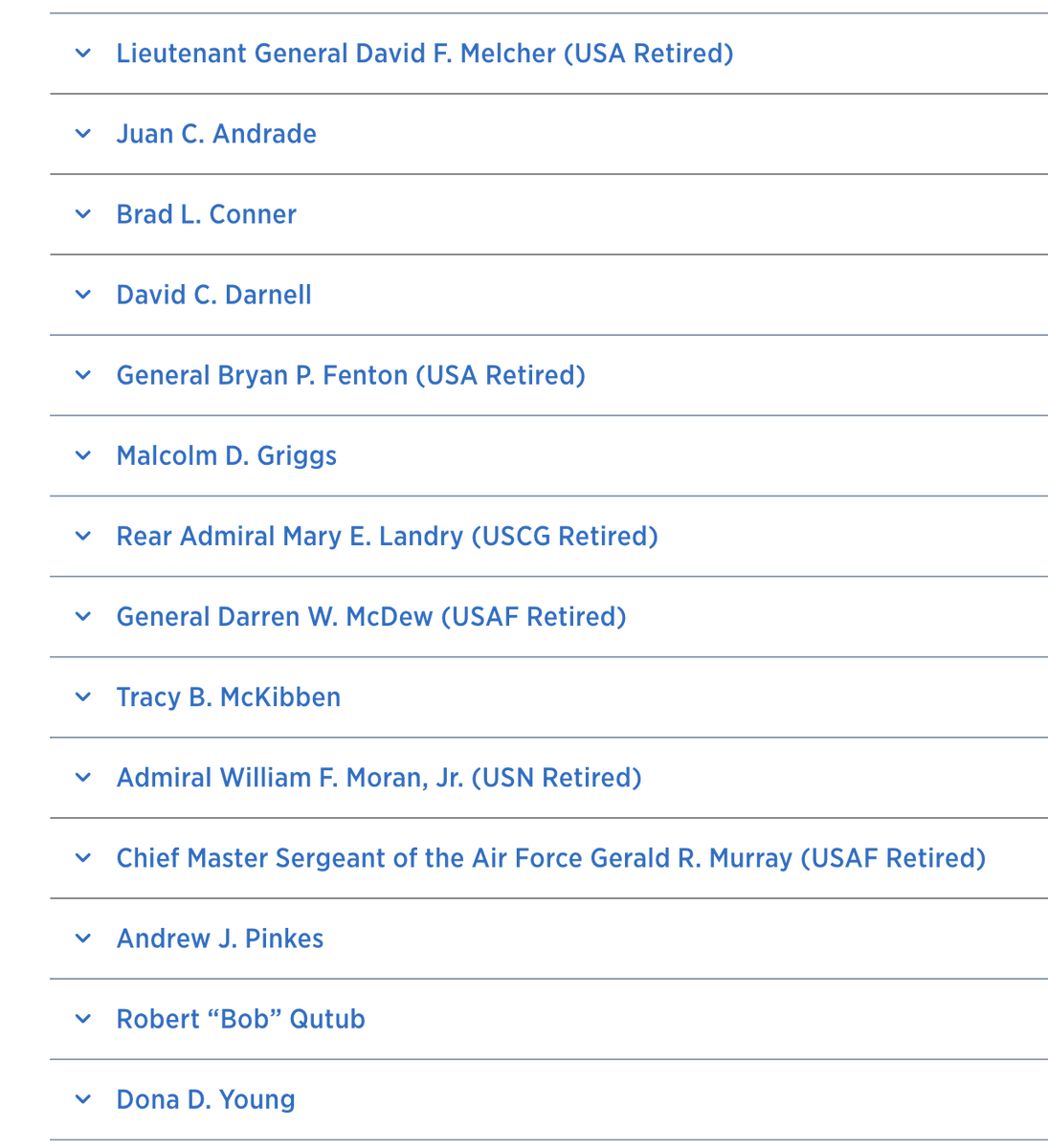
I posted this not really as the usual X griping. There is a genuine crazy story to be had here for some financial reporter. If you never used USAA before, you probably don't care and/or don't quite get it, but they were legit the best company in the US. Banking and insurance where the company actually cared and had super competent support people that answered your queries right away. When you dealt with them, it was so shocking because it was so different than any other company you ever deal with. It showed what was possible. That all of this was in service of members of the military and their families was equally shocking and refreshing. No doubt all of this was expensive, and they have gotten rid of more and more helpful humans over time to make more money. The company's decline is almost impressive. It seems like it would take actual work and effort to degrade it to this point. Their tech systems - that they replaced people with - are so antiquated and basic. I have no idea what they spend the extra money they're making on now but suspect it's going to a small cadre of executives. Look at this MASSIVE list of board members. They should be ashamed because whatever they do in their meetings is the opposite of what they should be doing. Some business publication should do a massive deep dive on this. I guarantee there is a story there.
2
3
10
7,292
You can now listen to famous audiobook narrator Scott Brick read this piece in the Colossus Magazine podcast feed: open.spotify.com/episode/7CW…
2
12
9,301
Live in the Colossus Magazine podcast feed now.
If you’ve ever listened to Dune, Moneyball, Jurassic Park, Atlas Shrugged, Chernow’s Washington and Hamilton, or the Foundation or Jack Ryan series on audiobook, you know the voice of Scott Brick, the legendary voice actor of epic science fiction and historical nonfiction, and inductee to Audible’s Narrator Hall of Fame. We’re pleased to announce that Scott is now the official voice of Colossus Magazine. To hear our writing brought to life in audiobook form, subscribe to the new Colossus Magazine podcast feed:
1
2
15
3,851
@colossusmag is the first magazine subscription I genuinely enjoy, cover to cover. It brings me back to when you could rely on a publications thoroughly, not having to pick through the slop rubble for a tasty morsel.
2
7
1,934
Colossus reposted
Very much loved everything I've read so far by Colossus. Bravo!
3
1
8
2,597
Colossus reposted
I've always been a loyal user and big fan of IBKR. Reading this story has only grown my respect to the product, and more so to the person behind it. What an incredible story. Worth reading every word.
Thomas Peterffy is the 23rd richest person in the world, a chief architect of modern finance, and has one of the most remarkable stories in business. Yet he remains virtually unknown. Born in a Budapest basement during a Soviet bombing raid in September 1944, his father left when he was 2, his mother couldn't hold a job, and for the first 20 years of his life, Peterffy lived in fear of starvation as an ‘enemy of the communist state.’ At 21, he escaped to New York. Within a year, he was drafted to fight in Vietnam. A sympathetic NYU dean saved him from the war. A chance encounter with programming opened the door to everything else. Over the next three decades, he transformed Wall Street's chaotic trading floors into computerized markets that worked on math. He invented options pricing theory before the Black-Scholes model, a handheld computer before the iPad, and the first automated trading system in Wall Street history. His firm, Timber Hill, became the largest options market maker on Earth. In 1993, he launched Interactive Brokers to give ordinary investors the same technological advantages he had built for himself. That business is now worth over $100 billion, and Peterffy owns 70% of it. It operates with higher profit margins than Visa while offering some of the lowest trading costs in the industry. The man who grew up where markets were forbidden devoted the rest of his life to building systems so everyone could participate in capitalism. At 80, he's still working on that mission every day. Thomas Peterffy is one of the most important people in finance, and you can learn about him in @domcooke's latest profile.
2
15
4,388