library maximalist | founder @consorvia | sometimes writing @future_remember | sharing nonlinear thoughts on knowledge, culture, innovation

Joined November 2011
407 Photos and videos
2026 is a year for staying: with complexity, with consequence, and with the invisible, unknowable paths. Here are 26 more insights from this growing garden keeping me company on the way through:
For 2025, I thought I'd add 25 new insights to this greenhouse: 1. A beginning is a transformation made possible 2. the underlying premise of asking about the origins of life is that there is something there that needs an explanation
1
4
848
Christina Fedor reposted
As we celebrate our nation’s legacy, we must ensure we honor the horses who supported us. Sadly, tens of thousands of American horses are shipped into the slaughter pipeline each year. Join WBF and @aspca to urge Congress to pass the SAFE Act losthorses.org & aspca.org/SAFEAct #thelosthorses
12
18
823
gestures > behaviors > patterns > strategies > cultural systems
1
25
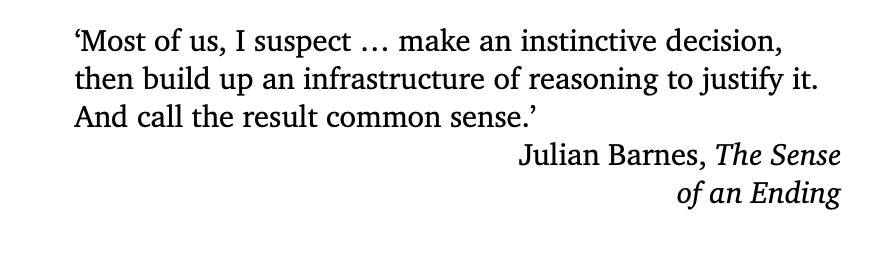
let's call it common instinct, just to tell each other about pleonasms
24
get with the program, Jeff
16
perhaps we’re nothing more than the world’s poetically intelligent nerve endings, after all
1
31
Most big things happen in little ways. This film is one of those big things. I am so happy this exists. Thank you @AndriMagnason for your art.
“This film was captivating, haunting, spiritual, magnificent, sad, inspiring, deep, and poetic. The narrator’s voice was calm and almost musical. The cinematography was inspiring. See it.” splashmags.com/2026/06/time-…
1
3
471
I don't think this tells us much about any intrinsic value the company believes the tools are providing. If anything, this story is predictable of a public company reporting that tokenmaxxing doesn’t scale and then doing some very boring, very normal things to bolster its vendor negotiating positioning, tighten procurement standards, and signal capex discipline and free cash flow focus to investors. It's too early to draw verdicts on realized enterprise value so all we can reasonably infer is that leaders are doing what leaders do by steering attention away from uncertainty (in this case, about what on the value chain is actually measurable) towards certainty about pricing power and capital allocation (the quantifiable stuff). Uber's tokens vs headcount framing lets them justify continued ai spend as labor substitution while hedging against accusations that they’re chasing a speculative bubble. It’s also a reminder that user acceptance is a genuine constraint in software innovation more broadly, and that friction eventually shows up in macro trends. Public markets seem to be moving towards drawing a harder line between ai as an investment and ai as speculation cloaked as r&d, marking a shift from the pure‑euphoria phase of the adoption cycle towards an intermittent resolution phase. Buyers showing reduced willingness to pay for vibes while seeking quantifiable operating leverage was inevitable.
Uber reportedly now caps coding agents at $1,500/month per employee per tool - seems sensible to me, but it's also an interesting hint at the value Uber thinks these tools are providing simonwillison.net/2026/Jun/3…
100
14/ The Edge of Meaning White is a remarkable modern intellectual and legal scholar whose article in the University of Michigan Law Review, The Judicial Opinion and the Poem: Ways of Reading, Ways of Life, inspired me to pick up this book. Here, he keeps bringing meaning back to the body of language. Sounds, shapes, the physical feel of words. We build coherence because we want something we can live inside. Language helps, and then it also slips. Also inspired by Owen Barfield's "Poetic Diction: A Study in Meaning"
144
13/ The Scientific Buddha Lopez is at his best right where East and West collide. He takes the historical Buddha seriously as an intellectual operator and a careful empiricist of mind, then shows how that figure gets re-cast when modern Western categories move in (science, religion, philosophy, “spirituality,” the whole translation mess). Inspired by Radhakrishnan's "Eastern Religions and Western Thought"
1
67
12/ Preface to Plato (Eric A. Havelock) I am a classicist by training, so it's a return home to pick up a book like this. Havelock makes you read The Republic (in a way that feels obvious in hindsight) as a historical-philosophical report from inside an information-tech regime change. Plato is watching an oral civilization (poetry as the storage medium for knowledge and norms) get displaced by literacy (prose, abstraction, analytic definition). His call for the banishment of the poets is essentially the first recorded argument over an upgrade to the human operating system.
1
14
11/ Against Intellectual Monopoly (Michele Boldrin & David K. Levine) I went into this with a pretty hazy grasp of IP law and a hunch that something in this regime was jamming the gears of information‑age innovation. Boldrin and Levine are blunt about their stance with respect to patents and copyright, taking opposition to manufactured scarcity that allows incumbents to extract rent while experimentation gets pushed behind legal gates. IP takes on the character of political choice rather than a natural law, especially once you see how often intellectual monopoly raises costs, slows diffusion, and concentrates power in ways that actively dampen innovation. Inspired by Stephan Kinsella's "Against Intellectual Property"
1
39
10/ News of the Universe I had been tracking down a good anthology of poetry and I'm so glad Bly obliged a real desire. This really is a big love letter to the idea that poetry is a way of knowing. “Twofold consciousness” is his phrase for psyche world talking to each other. The poems are a collective nudge towards non-dual awareness. It’s not subtle, which is kind of the point.
1
19
9/ The Individual and the Cosmos in Renaissance Philosophy (Ernst Cassirer) I came to this because a renaissance concept is getting invoked again, usually as an antidote to the industrialization of everything, now including information itself. It felt worth asking what that word is actually pointing to and shat kind of shift in consciousness would make a renaissance more than an abstract ideal. Cassirer pinpoints a shift in the basic coordinates of thought, which tracks the cultural shift away from a fixed, hierarchical cosmos toward a world organized through mathematics, method, and symbolic systems. That shift doesn’t just change what people believe, it changes what can be known at all.
1
15
8/ The Nothing That Is (Robert Kaplan) I came to this sideways, through a long-running curiosity about emptiness in the Buddhist canon and an inability to leave the question of nothingness alone. How no thing ends up entangled with the intuition of infinitely many somethings and how absence gets formalized. Kaplan makes zero feel like a small grenade that begins in math and bookkeeping, then slips into something more. Inspired by Kitty Ferguson's The Music of Pythagoras
1
13
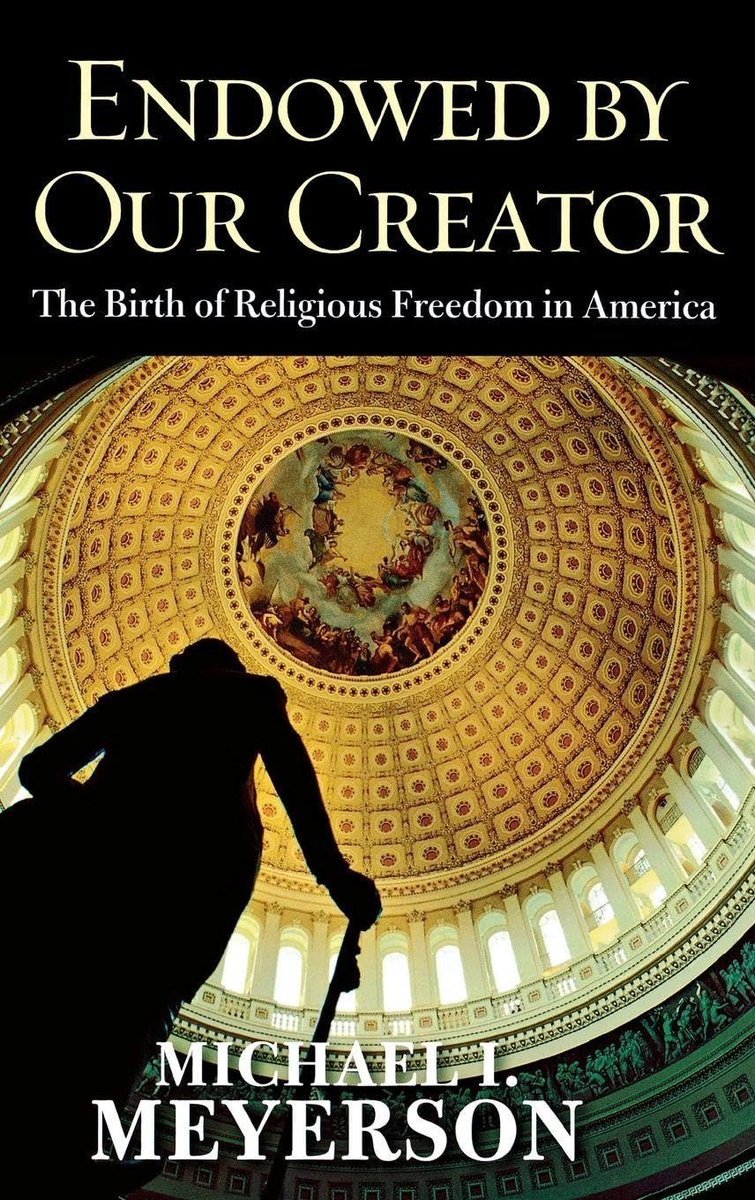
7/ Endowed By Our Creator (Michael I. Meyerson) Meyerson tells the story of religious freedom the way it actually happened, through conflict, compromise, and messy legal inventions. I came to this book with a persistent itch around secularism and a sense that something in the concept doesn’t quite hold along with a growing urge to understand what the founders thought they were actually building. It turns out that what emerges from the ambiguity is a conceptual drift that hardens into procedure, then into habit, then into a kind of national reflex that keeps contradicting itself. Inspired by Talal Asad's "Formations of the Secular"
1
11
6/ Key Debates in Anthropology (Tim Ingold) Basically anthropology refusing to agree with itself. I came to Ingold through Dave Snowden (thanks, Dave!) and am very glad for it. The classic fights are all in here, but I find myself drawn in particular to the one that disturbs our conceptual grasping onto the meaning of “society” itself. Reading this leaves you noticing yet another layer of modernity that is held together by concepts we rarely stop to examine.
1
2
46
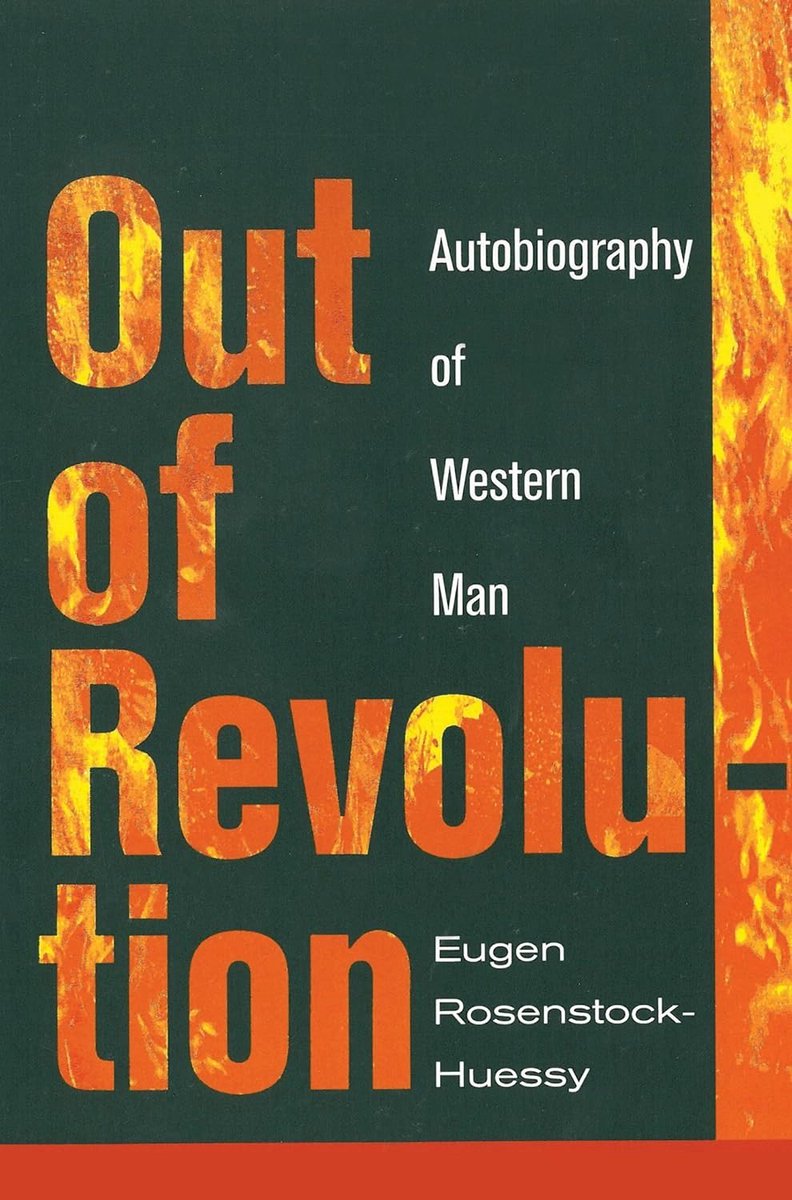
5/ Out of Revolution (Eugen Rosenstock-Huessy) Rosenstock-Huessy writes history like it’s alive. Revolutions, for him, change the whole grammar of a society. Language shifts, institutions shift, people start speaking in new tenses. I was weirdly pleased when this book popped up in a conversation I had about how semiotics drives cultural transformation (how symbols actually move worlds). It can feel prophetic and a little odd, but that’s part of the charm. You read it and can’t not see politics as merely surface foam on deeper currents. Inspired by Andrew Feenberg's "Alternative Modernity: The Technical Turn in Philosophy and Social Theory"
1
22