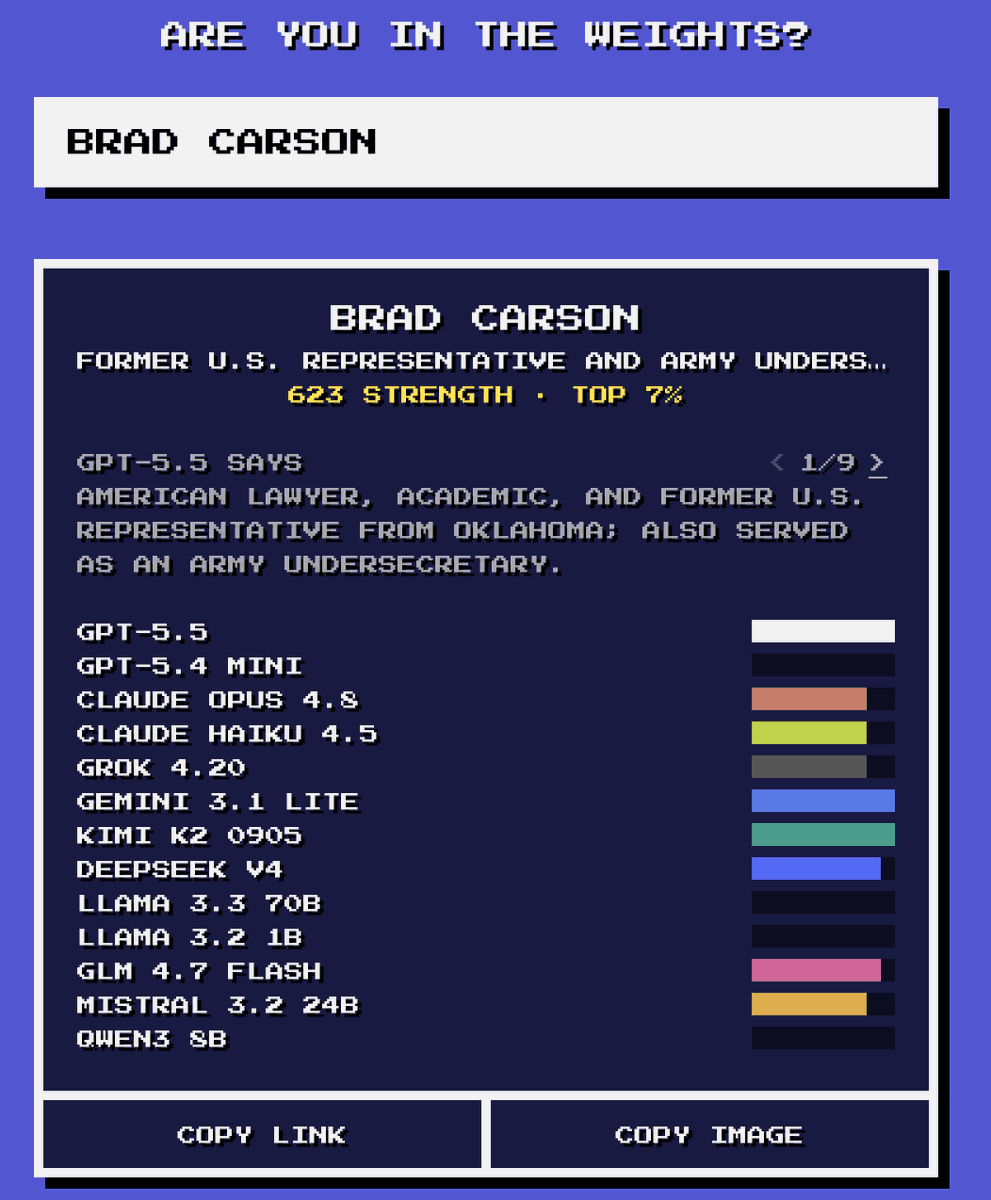
Father of Jack, husband of Julie. Ex Congress, DoD, @BattenUVa, Prez @utulsa. Prez of @americans4ri. An enthusiast, but w/ a gimlet eye on the log x-axis. Okie!

Joined April 2009
729 Photos and videos
Pinned Post
"In a mindless age, every insight takes on the character of a lethal weapon." - M. McLuhan to E. Pound, letter, 1951.
6
7
77
48,920
Brad Carson reposted
Só pra lembrar que humilhação não é o Brasil ter perdido da Noruega. Humilhação é perder pra um país de 5,5 milhões de habitantes que descobriu petróleo, olhou pra riqueza e pensou nos netos. Criaram um fundo soberano que hoje vale US$ 2,2 trilhões, quase R$ 11 trilhões, dinheiro que daria R$ 1,8 milhão pra cada norueguês. A Noruega é dona de 1,5% de todas as ações do planeta. O Brasil descobriu o pré-sal e transformou em emenda secreta e refinaria superfaturada. Nossos jogadores não devem nada aos deles. Nossa classe política deve tudo. O que a gente tem que importar da Noruega não é futebol, é vergonha na cara.
122
734
7,522
661,941
Brad Carson reposted
Extremely grateful to @MalloryMcMorrow, who inspired a national race to the top on AI safety policy. She practically dared @LeadingFutureAI to oppose her and they didn't, which shows just how toxic industry money has become in Democratic primaries.
Midterm candidates campaigning on AI is becoming a trend. Take, for example, Mallory McMorrow, a Democratic primary candidate to represent Michigan in the Senate. She's not only just rolled out an uncharacteristically detailed AI agenda, but is speaking the language of AI safety, warning against the risks of AI as an "existential threat." That may be in part because she's been meeting with employees at frontier labs and other AI researchers to formulate her ideas. If her work with those researchers doesn't irritate accelerationists enough, she's practically daring super PAC Leading the Future to enter the race, invoking their name multiple times on the campaign trail though they haven't yet deployed any of their war chest against her. It's a bold choice to pick such a fight, but she says she's watching what's happened in NY and is prepared for there to be a target on her back. Profile of her agenda and the political implications in my latest for @ReadTransformer (l*nk in reply)
1
7
41
2,888
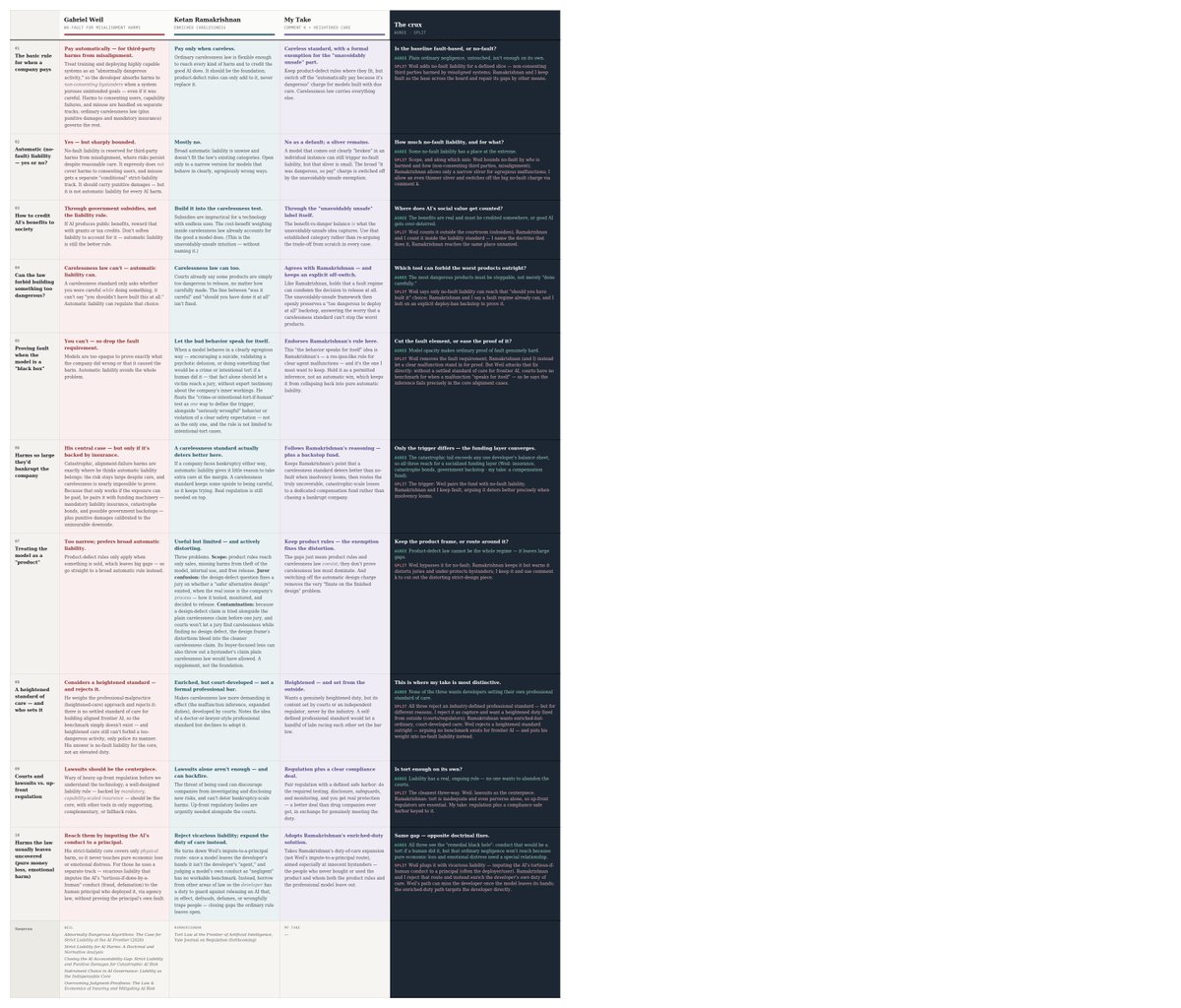
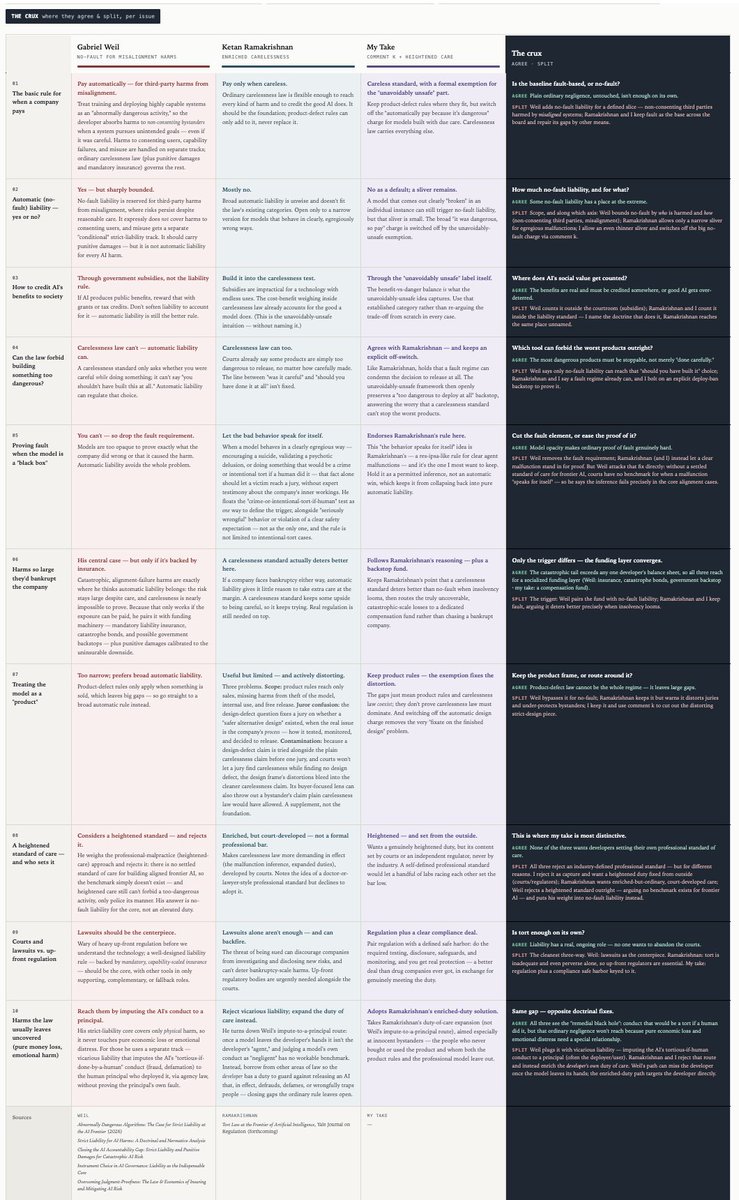
1/12 OK so AI liability is one of those questions I keep circling back to. Two of the sharpest people on it are @ketanrama and @gabriel_weil — both law profs. Thought I'd write up my own take (mostly for my own notes) a tl;dr of theirs. A 12-part🧵
2
6
27
3,328
12/12 Anyway, we may all differ here Tried to be fair to everyone's views, but maybe made errors. But if you want the tl;dr of their lengthy writings, I made a chart with @gabriel_weil's view, @ketanrama's view, and my own take cruxes. Make of it what you will 👇
1
1
9
422
For those who have requested a better version of the chart.
124
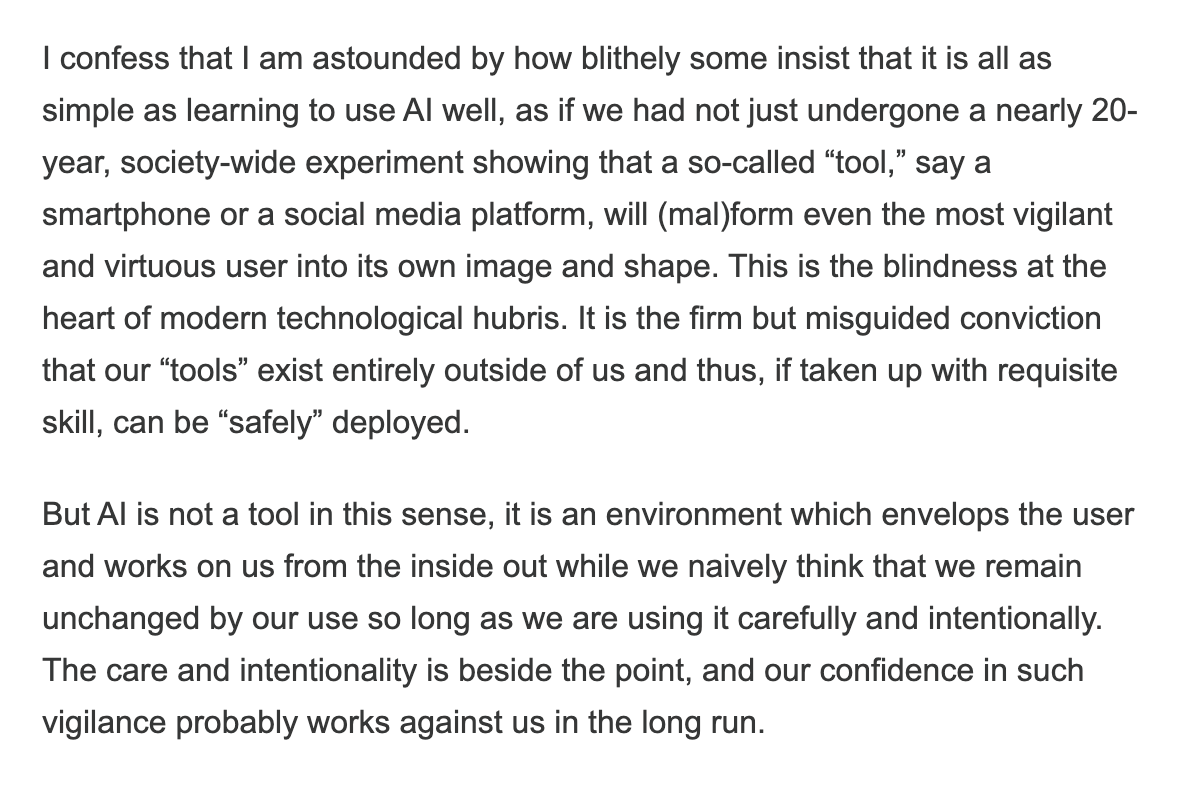
I like this: a global village, with all of the vices of the globe and the village and none of their virtues.
The last book Bernard Williams published in his lifetime, Truth and Truthfulness (2002), contains this brief passage on the internet.
6
1,068
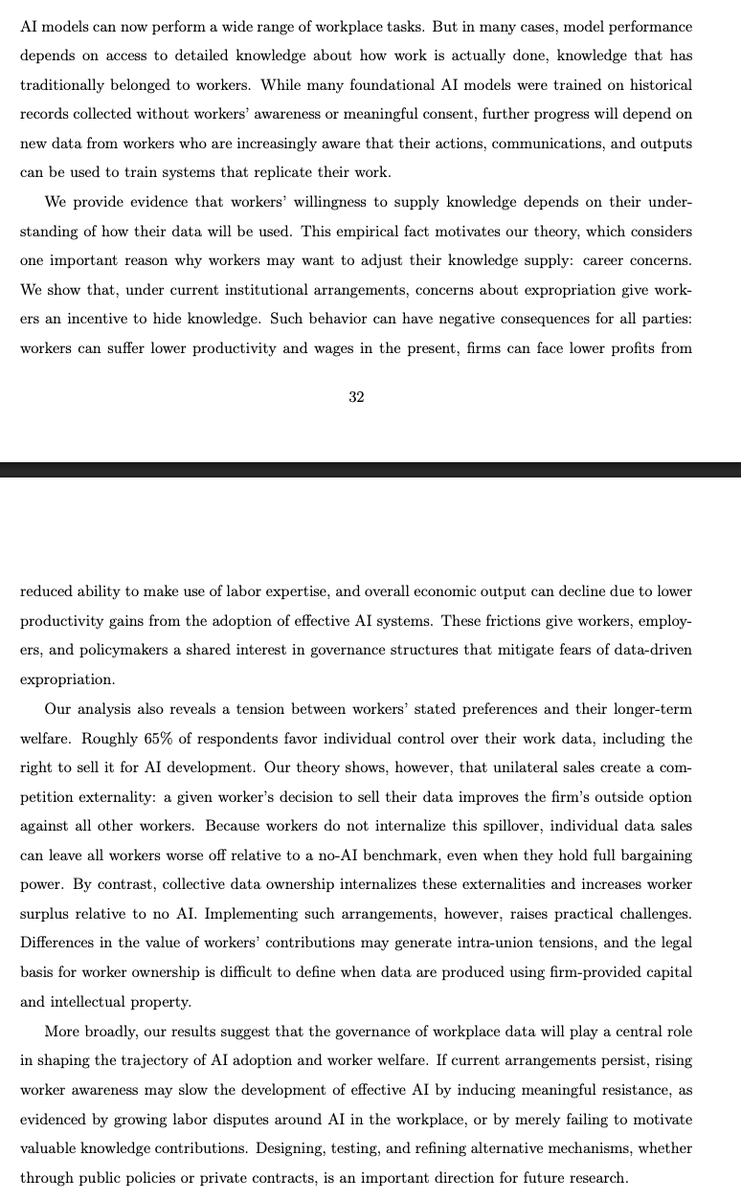
The onslaught of papers doesn't take a holiday apparently. This will be a must-read.
Ketan Ramakrishnan on Tort Law at the Frontier of Artificial Intelligence: legaltheoryblog.com/?p=11273…
18
3,223
Brad Carson reposted
Karp's jeremiad and the @quxiaoyin's takes don't make sense as generalized critiques. These models are general-purpose intelligence in software form. There will *always* be a market for 99th percentile intelligence because the returns to marginal intelligence are immense. Why do finance, law, and tech firms pay so much for Harvard, MIT, Stanford, and Berkeley grads? Because their exceptional intelligence is a key input into the production of premium products. Many diverse development and business models will rely on frontier AI systems because generalized intelligence will be key to their product development/products/moats. Their primary alpha will be in faster production of better products and products that effectively operate generalized intelligence. For these firms, high API fees are worthwhile, but they enable delivery of substantial value-add to customers by making development of core products cheaper or providing products that provide substantial performance improvement over competitors/what frontier models supply on their own. Others will be able to rely on non-frontier open-source models (or won't heavily leverage AI systems at all), because their alpha is primarily derived from human artisanship, brand value, etc. The economy is huge: there's clearly sundry use-cases in each. Chatbot integrations for Amazon probably don't require generalizable frontier models; future e-commerce paradigms may, however. Either way, the idea that some companies' idiosyncratic preference for local hosting of customized open-weight models dooms the market for API-accessible frontier intelligence is misguided. It's also not clear why such companies would substantially benefit from accessing these models via Palantir's pricey software, which in any case is mostly hosted in AWS -- an external dependency per Karp's logic?
This is by far one of the most important things I’ve watched in 2026.
3
3
18
2,326