Author of the Network State. Founder of the Network School.

Joined November 2013
5,552 Photos and videos
Pinned Post
Billions of dollars. Millions of followers. Thousands of attendees. Half a dozen governments. And one idea whose time has come.
452
468
3,365
868,016
Balaji reposted
INTERVIEW: “ZODL is to zcash:native what Coinbase was to bitcoin:native .” @jswihart joins Bankless to unpack ZEC's awakening and why @Zcash may be entering its most important chapter yet. We cover: - @zodl_app's plan for Zcash - the rise of shielded ZEC - privacy in the AI era - why Bitcoiners are paying attention - making private money too big to kill --- TIMESTAMPS 0:00 Intro 4:17 Privacy in the AI Era 6:19 Crypto’s Missing Privacy Layer 9:49 The Political Fight for Privacy 14:42 Can Crypto Retain Privacy? 16:47 From Zashi to ZODL 19:48 The Zcash Reawakening 21:41 Balaji, Funding, and the Mission 24:49 Product Market Fit for Shielded ZEC 27:51 ZODL's Role in the Zcash Stack 29:36 The Zcash Roadmap 32:56 What Is ZEC and is it Undervalued? 36:56 The Shielded Pool Explained 45:12 The $25M ZODL Raise 47:16 Compliance and Shielded ZEC 51:25 Institutions vs Cypherpunk Values 53:58 Personal Privacy in an AI World
72
105
484
110,197
Balaji reposted
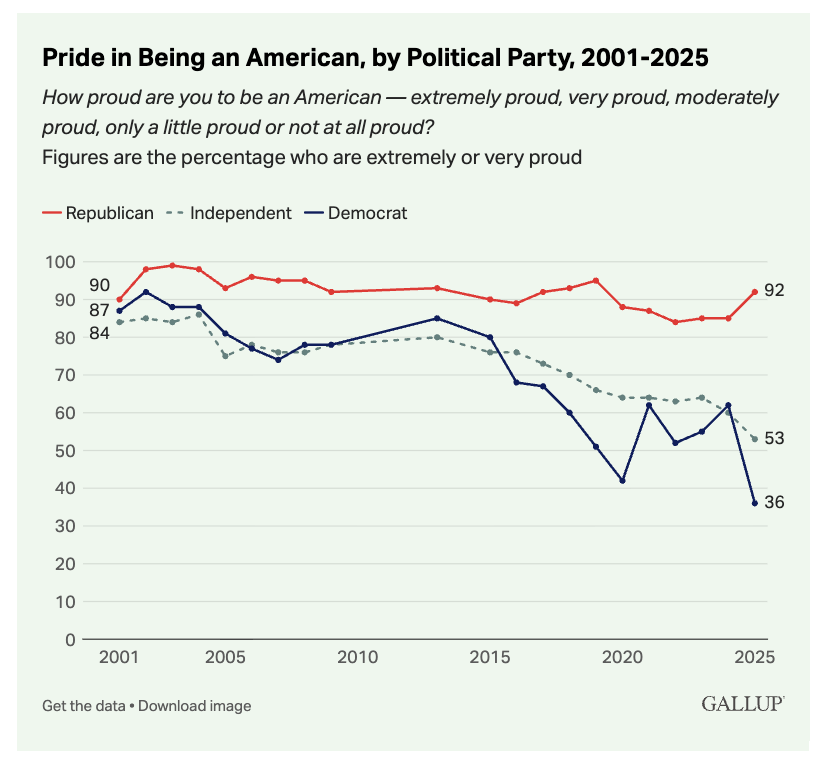
My view is: you’re not actually mad at me, but mad at the situation. I grant that it sucks, but I didn’t cause decades of money printing and the pending sovereign debt crisis, and neither did you. But in short: if the Mayflower was American, and leaving England to build New England was American, then leaving the dysfunctional old world to build the new is the most American thing you can do. A longer response follows. (1) DID THE IRISH AMERICANS BETRAY IRELAND? First, did the Irish Americans betray Ireland by leaving for America? Why weren’t they loyal to Ireland? Why did they "cut and run"? Why didn’t they stay and fight the Irish Potato Famine? And the Puritans...did they traduce England by not returning and fighting with the Roundheads? Were the Virginians disloyal to the other side, the Cavaliers? How about the German Americans…how come they left Europe after the Revolutions of 1848? Point: virtually every single US ethnic group, other than the African Americans and Native Americans, “fled” some issue in the old world. War, civil war, communism, fascism, fundamentalism. The whole point of the New World was to leave behind dysfunctional, bankrupt states…often caught in the throes of endless left-vs-right conflicts. If almost every single American is descended from someone who left a dysfunctional state, how can it be un-American to leave a dysfunctional state? Why could your ancestors leave dysfunction, why are they free men... but others can’t move, and are locked to the land? (2) LOYAL TO BLUE OR RED AMERICANS? Second, if someone tries being loyal to “the American people”, does that mean being loyal to the 75 million Kamala voters, the Blue Americans? Because if you’re loyal to them, you are unfortunately no longer loyal to the Red Americans. And that’s the rub. Just as Democrats use “democracy” to mean rule by Democrats, and are then stunned that ~50% of democratic votes keep going to Republicans, Republicans keep using “American” to mean Red American, and are then always angry that ~50% of US citizens are Blue Americans. Today, Gallup reports only 36% of Democrats are “proud to be American”. They are, however, proud to be Democrats. They’re also not posting on X, but rather on Bluesky. The digital secession, the spiritual secession of Democrats away from a “United” States of America has already happened. That’s unfortunately what polarization means. This Blue/Red conflict is exactly the kind of left-right fight that the Puritans and Cavaliers left behind in the 1600s, and the German Americans left in the 1800s. Just like there is no Korea, only North Korea and South Korea, there is unfortunately no America any more, only Blue America and Red America. And just like the Korean situation led to a Korean diaspora, the American situation is causing an American diaspora. (3) STAY AND FIGHT, BUT WHO OR WHAT? Then, if someone was to stay and fight, who do you want them to fight? Perhaps you want them to fight other Americans (namely Blue Americans), in the name of being an American. Or you want them "fight" a ~$175T sovereign debt crisis, which is like fighting a volcanoa, as it's just the largest bill ever due in history, and something even Elon couldn’t put a dent in. TLDR: you can’t “stay and fight” a sovereign debt crisis. It’s not something you can punch in the nose. (4) SHOULD INDIAN AMERICANS STAY OR GO? Also, in case you haven't noticed, half of MAGA is yelling that Indian tech guys should leave the country, or never come, as they'll never be true Americans. Now others are suddenly mad that Indian tech guys are taking them up on it, and leaving America. Meanwhile, far leftists have begun just shooting at tech guys. This is just a schizo and unstable situation. (5) LOYALTY TO IDEALS WAS LOYALTY TO AMERICA I am loyal to capitalism, democracy, free speech, free markets, science, math, wherever they are. I am loyal to peace and trade, small-l libertarianism, privacy, nonviolence, and technological innovation. I am also loyal to a specific enumerated group of people, the many friends, coworkers, collaborators, and customers who I’ve worked with over the years, both US citizens and non-citizens, from the Stanford and Silicon Valley of a few decades ago. These were essentially the mainstream American ideals for decades. Millions of Americans still support them. Indeed, millions of Americans think that blood-and-soil nationalism of the kind you implicitly propound is un-American! (6) BLOOD AND SOIL, BUT WHAT BLOOD? Finally, and now we really get down to brass tacks: what test do you propose to determine whether someone is a true American, aside from their current paperwork? Because unlike (say) the Japanese, there is no genetic test that correlates close-to-perfectly with US passport ownership. Therefore, any definition of who’s American *has* to be civic nationalism from a purely operational standpoint, defined at the “software” level (in terms of law) rather than the hardware level (in terms of genetics). Yet if you try to get N different rightists to define the “is_american” function you’ll get N different definitions, with and without different minority groups. One that went viral recently is the “Grade A American = Mayflower” thing, which is sort of like wokeness in reverse, but for MAGA. And look: loyalty means symmetry. I am loyal to you if you are loyal to me. But the way you're talking about loyalty translates to servitude. I've been polite, and engaged you in good faith, but we are strangers. Yet you are demanding gratitude and even deference (!) from me, implicitly on racial grounds, because "you didn't build that, someone else made that happen". Moreover, you are doing so by invoking "the people" in a right-coded variation of the way the Soviets invoked "the people." I'm sorry, that doesn't fly. Why would anyone be loyal to a MAGA faction that arbitrarily designates countless millions to be Grade B, C, and D? You can't just redefine the social contract overnight, unilaterally, with some tweets, into a retconned blood-and-soil America that the WASPs themselves shut down...and then get extremely mad when others don't buy into it. We're just going have to renegotiate these kinds of relationships from scratch, with new opt-in communities, where everyone is a grade A citizen. If that means rebuilding New America outside America, just as New England was built outside England, so be it. The next Mayflower is boarding.
425
209
2,116
669,365
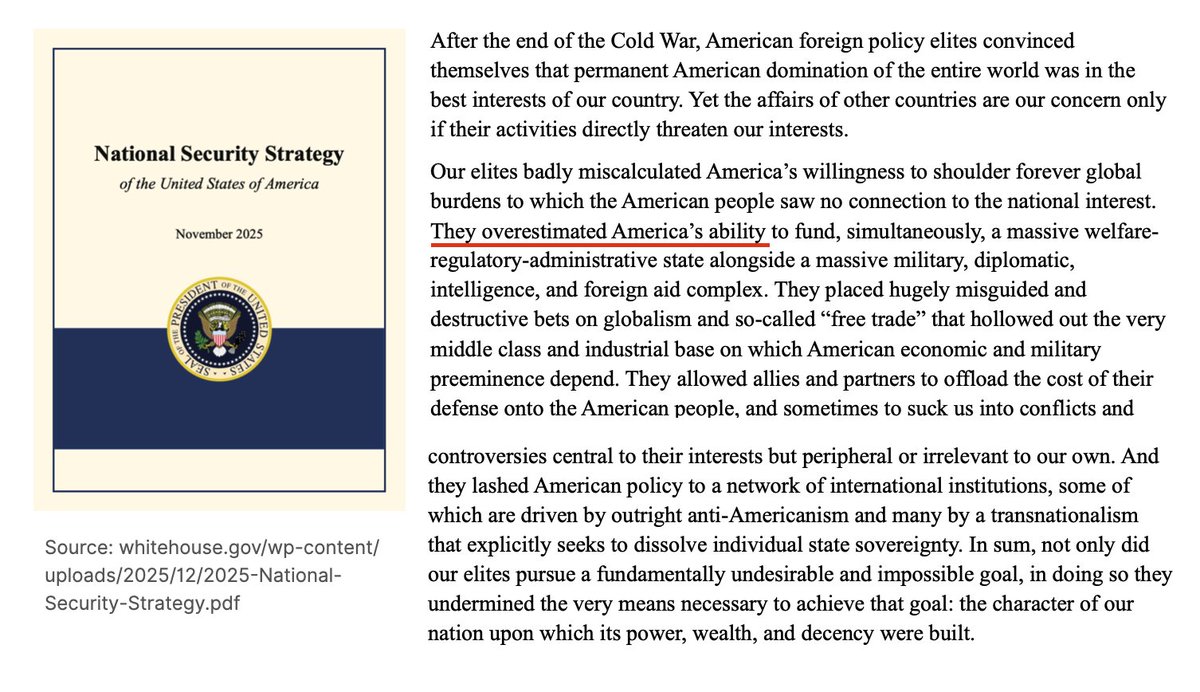
(1) Most countries do not actually have a military. Instead, most countries outsource their security to the US (most common), to Russia (like Belarus), or to China (like North Korea, partially). Iran is unusual in that they're going it largely alone. They're also unusual in that they actually appear to be winning. And if Iran does manage to drive the US out of not just Afghanistan and Iraq, but the entire Middle East, they'll have unfortunately undermined the idea that America can or will provide any security guarantees at all. (2) So, with the withdrawal of the American Empire, every country is going to need a new military. Some countries will "build their own." The ones most likely to go nuclear are Japan and Turkey. Maybe also Germany, South Korea, Australia, Brazil, and Poland. They'll do so both for defense and to guarantee an energy supply now that Hormuz isn't stable. Thus, the Iran war will unfortunately obviate non-proliferation. Most other countries will not build their own militaries. They'll simply do what's necessary to align with the new regional hegemon. That new hegemon will likely be China in East and Southeast Asia, Russia in North Asia and Eastern Europe, and Iran in West Asia. India has a tough situation in South Asia due to Pakistan. MAGA America will probably refocus on Latin America. And Newsom's Democrats will likely align with China, as Carney's Canadians have already done. (3) But what about every group in the world that's not running a country? What about every company and community? They'll need to think about a world where the US military has withdrawn, and isn't there for them. Is there any way to preserve something that looks like the rules-based order without the former guarantor of those rules? (a) In the physical world, these companies and communities will have to find a country that has either built their own security, as described above, or is aligned with one that has. And abide by whatever new rules they set. From the standpoint purely of tech, dozens of countries are now surprisingly permissive, opening up new special economic zones and digital nomad visas. (b) In the digital world, a partial answer is the code-based order, protected by encryption rather than weapons. Like the handoff from the British to the Americans, can we hand some of what America did off to the Internet? Crypto is furthest along here. The anti-government strain within American libertarianism, the Ron Paul strain that says you can't trust the government, well...crypto simply applies that to all of the US government, including the parts run by Republicans, including the dollar that backs the US military. Crypto does not trust the plan. After all, the US has >$175T in compounding debt, and it's financially going to zero, economically doomed just like the USSR, albeit from Keynesianism rather than Communism. Elon is our best guy and couldn't fix it with DOGE. As he said, he did his best. (4) The closest modern analog to the end of the US empire may be the end of the USSR's empire. Just like the Soviet Union became Russia, the USA is becoming America. Troops are being pulled back from around the world, it's becoming a "republic, not an empire", and everyone has to figure it out for themselves. Now, many wars did erupt in the aftermath of Soviet withdrawal, like Chechnya and the Tajikistani civil war. But it's not like every single place fell into war. Estonia didn't, Poland didn't. The Czechs and Slovaks had the Velvet Divorce. Countries long under the Soviets worked out local security arrangements between themselves. That's what's happening now as the American Empire withdraws from the world. Everyone is figuring it out for themselves. IN SUMMARY (a) You're correct that a country needs a military, but the world is losing the US military, so they'll build their own or align with a country that has one. (b) You're correct that the US military historically protected the rules-based order, but in many ways it's abandoning that order, while much of Eurasia is actually going further in the direction of free trade, and the Internet is exporting global rule-of-law via rule-of-code. (c) You're correct that US military withdrawal will likely result in chaos in parts of the world, like the USSR's military withdrawal did, but I don't think it results in chaos in all of the world, anymore than the USSR's withdrawal did. (d) Don't take it from me, though. The 2025 US National Security Strategy said that elites "overestimated America's ability" and that "permanent American domination of the entire world" is not in the best interests of the US. In other words, they've already announced that the world is multipolar, that the unipolar moment is over, that US will no longer pay any price and bear any burdern. So everyone will need to figure out security after the American empire leaves, just as they had to figure out local security arrangements after the British, French, and Soviet empires left. whitehouse.gov/wp-content/up…
Roman Helmet Guy gets it. Reminds me of my book review of Balaji’s Network State, wherein I argue that yes, we still need the military 🤡
127
101
698
188,517
Far left: we need to tear down the system Center left: we need a system Center right: we need positive-sum games Far right: we need to win zero-sum games
159
173
1,898
145,579
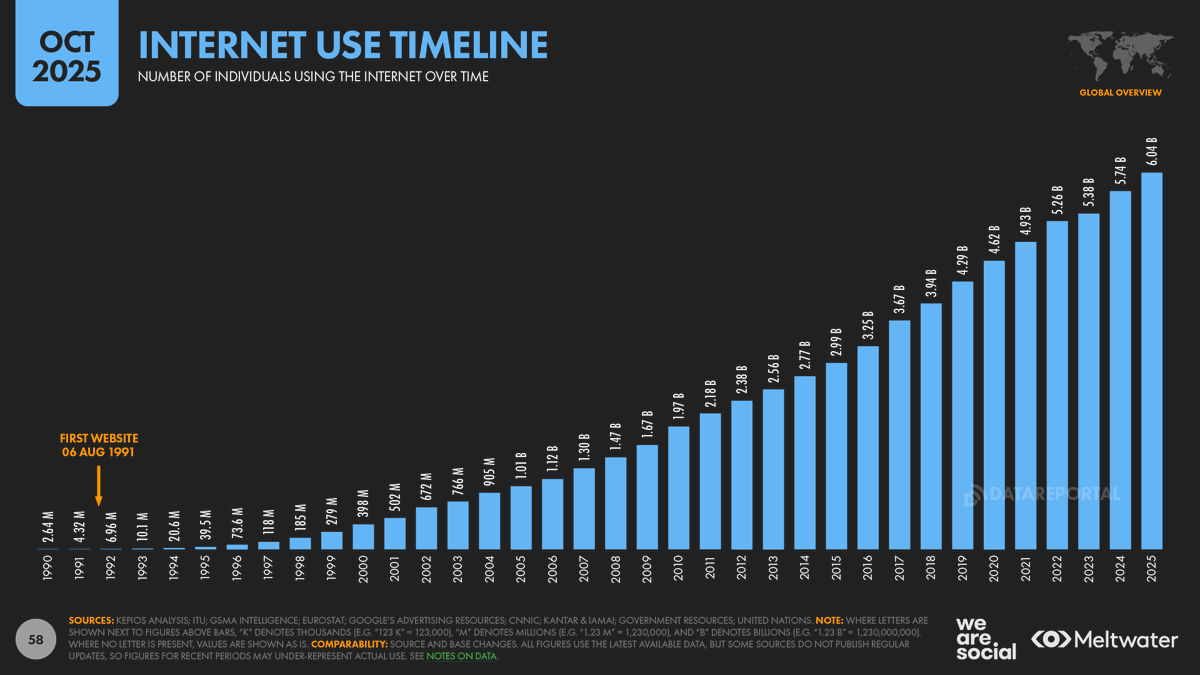
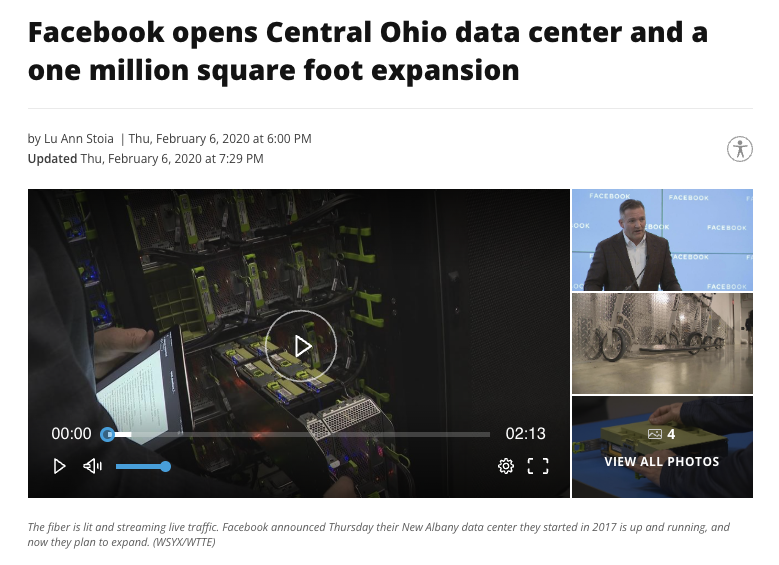
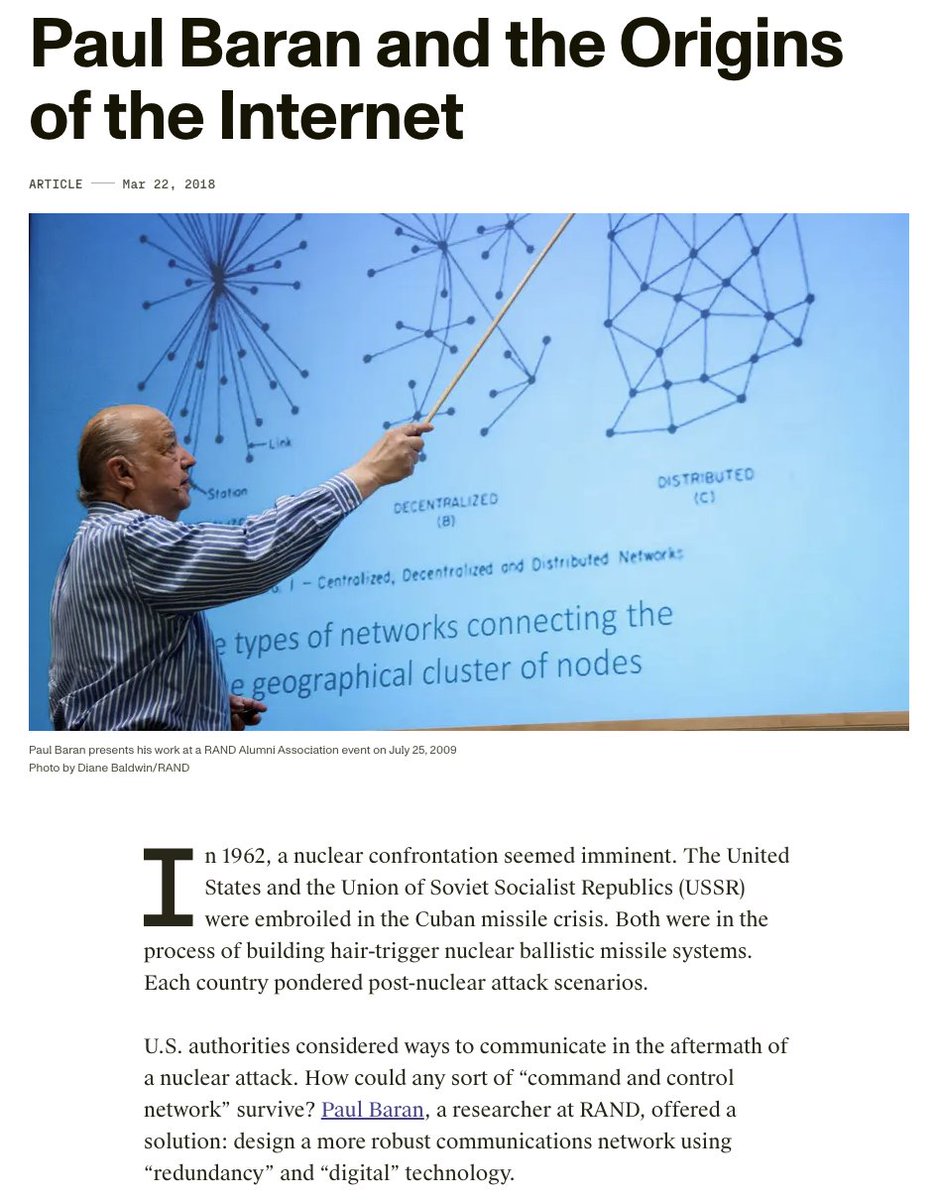
PRINT OUT THE INTERNET Ok. Let me make it extremely concrete. Where did this giant sprawling datacenter come from? It was printed out from the Internet. Specifically, Zuck used the Internet to gather men, make money, organize materials, purchase territory, and shape it to advance Meta's goals. The principal such goal is, ultimately, the replication of Meta itself. This datacenter makes money in the cloud, which enables Zuck to purchase more land, which he repeats all over the earth. Think of it as viral growth, but in the physical world. Now extend that beyond Meta, towards any Internet tribe...such as your following. After all, where was your following built? Was it built one handshake at a time? No, it was built on the Internet. And where do you spend your time? Do you spend it convincing people in a small town? No, you probably spend it on the Internet. And where do you make your money, use your money, find your information, talk to your ideologically aligned friends? Again and again, the Internet. As Orwell said, to see what is in front of one's nose needs a constant struggle. The Internet is, right this moment, in front of your nose, as you're looking at your screen. Yet despite being the single most important force in the world, the thing that billions personally engage with for hours per day, the driving force that essentially didn't even exist in daily life just a few decades ago, perhaps the most popular thing humans have ever created...the Internet is still somehow underestimated. After all, the Internet is now much larger than America, with billions of users. The Internet is actually much wealthier too, as it's the only thing with global economic scale comparable to China. The Internet also now drives every single political and military event, from the initial Twitter-driven election of Trump and Brexit, to crypto and AI, to the advent of drone warfare. In fact, the Internet was in part built by America to outlive America. That's why Paul Baran of RAND proposed a packet-switched network, so that the Internet could resist a nuclear attack. ARPA eventually adopted the same blueprint on efficiency grounds. But Baran's initial idea remains important: even if the American state went down, the Internet's network would stay up. Concretely, what it means is that brilliant Americans designed a communications system that could survive even as everything else went down. So that we could restore America from cloud backup. We might need to draw on that property. We might need to print out the Internet, to organize social networks in the physical world, to gather peers together online to start building the societies we believe in offline. Because if we can print out a datacenter, we can also print out a new city.
You should read this just to understand how silly these tech guys are when it comes to politics. Balaji thinks that if shit hits the fan in the USA, tech people can save themselves by fleeing to…the internet.
111
87
860
227,716
By the way, where is that Meta data center? Note that location doesn't really matter. You could start with any suitable green lawn with reasonable power costs, and then print out the datacenter from a blueprint. What mattered was the cloud community that had the will and capital to print out that datacenter. Today that cloud community is Meta, a tech giant. However, coordination costs are rapidly falling. So tomorrow it could be an internet community, perhaps organized around a coin, that isn't a traditional company at all. But if you're curious...the location was Ohio. Which means you can print out the Internet in Middle America too, if you want to. abc6onyourside.com/news/loca…
16
4
101
33,953
Here's the citation on how Paul Baran of RAND proposed a packet-switched network that could survive a nuclear attack. His design was later adopted primarily for efficiency rather than resiliency purposes. But that initial property of resiliency persisted. In a deep sense, the network was designed to outlive the state. rand.org/pubs/articles/2018/…
13
10
112
27,029
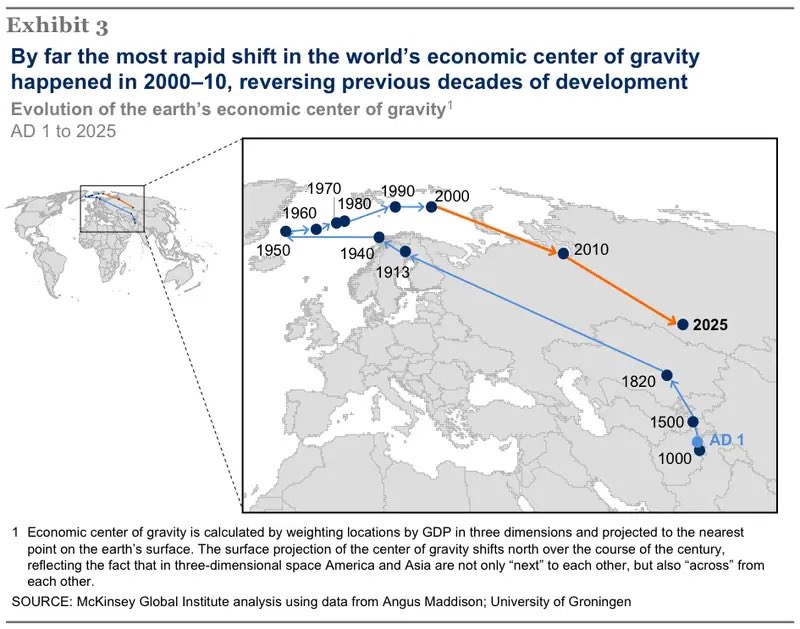
Unfortunately, I completely agree that the United States of America is rapidly descending into all-out conflict between left and right. The Luigi left, Kirk killers, anti-Tesla terrorists, and Altman attackers are already in shoot-on-sight mode against conservatives, libertarians, and technologists. The right isn’t there yet; they’re called reactionaries because they only react, so they’re always one cycle behind. Thus, the left has already started shooting while the right is still “only” mirroring the lawfare of last decade’s left. But anyone can see how incandescently angry the American right is getting, so one can expect them to mirror leftist tactics eventually, just as J6 followed BLM. A problem then arises. You see, when communists and nationalists duke it out, technologists tend to be hated by both sides…and tend to leave. That’s what happened in Europe. In the early 1900s, Europe was the undisputed center of science. But then the far left rose to power in Russia, and in response arose a far right in Germany, and then those two psychotic factions blew each other up and took much of Europe with them. The result was that scientists with options left. Shown below is the graph of Nobel prizes. Science used to be centered in Europe when America was still a relative backwater…renowned for cranking out widgets but not much else. Then, as Europe tore itself apart, the smart scientists (and capitalists) simply left for America. Many had no choice; you just couldn’t be a Russian capitalist in the Soviet Union or a Jewish scientist in Nazi Germany, no matter how many years your family might have been in the country. Passionate protestations of ideological loyalty and everlasting patriotism didn’t matter. At best the enemy classes and races were unbanked and denaturalized; at worst they were simply killed. And arguably, all of that — the communism, the nationalism, the wars — all of that arose from the disruption wrought by the Industrial Revolution. We might anticipate similar levels of disruption from the Information Revolution. If so, if America is torn between Democrats and Republicans, or Wokes and MAGAs, or whatever factions succeed them, it’s just not going to be a good place for technological progress. Instead, progress will decentralize to other locations around the world, as it did before.
Gonna try to explain this to tech CEOs again: Young Americans are pissed. They feel betrayed. Half have embraced the far right & want to cut off your access to cheap foreign labor. The other half have embraced the far left & want to cut off your head. One side will win. Choose.
467
422
3,584
950,672
History doesn’t repeat, but it rhymes. Last century had the centralizing technology of mass media and mass production. But this century is driven by the decentralizing technology of the smartphone and the Internet. So, while last century saw a centralized left and centralized right shooting it out for Europe, this century may witness an anarcho-communist left and anarcho-nationalist right battling it out in America. (And indeed, we already see this on the Internet every day, with pockets manifesting in the real world.) So: while I agree that the mood is anti-state, that in itself is no panacea. Rather than left and right tyranny, we could see left and right anarchy.
Nope. The United States is rapidly descending into not giving a shit about any politician or party they’re starting to see it’s a complete theater show. The conflict will be between the gov and the average American and AI will be used against the people
25
14
348
106,499
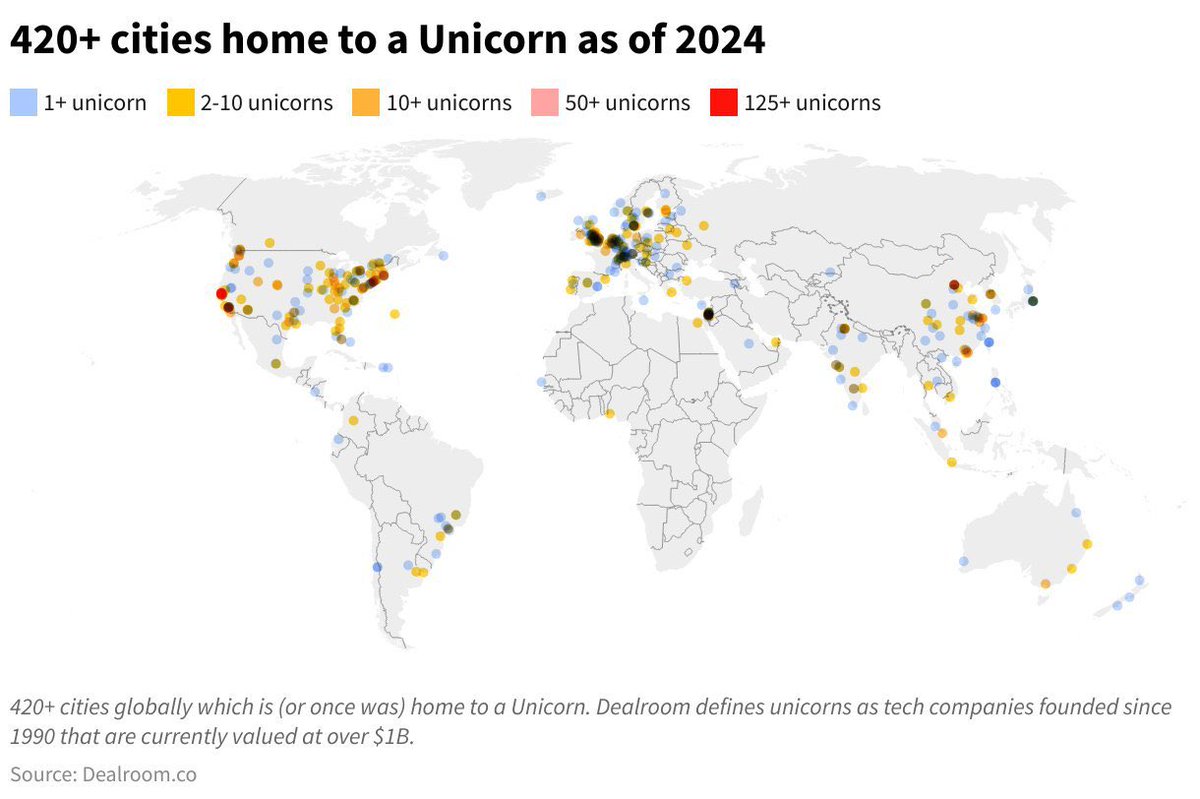
That is *the* question. Short answer The Internet is not a place, but there will be Internet places. We can print out the internet, using million-person online social networks to crowdfund offline territory, building first voluntary startup societies and eventually network states. Long answer China is a place, so it’s obvious. But it’s closed to everyone but the Han Chinese. The Internet is the only thing with economic scale comparable to China, and it’s open to everyone everywhere. If China is Apple, vertically integrated and closed, the Internet is Android, messier and more open. But the Internet isn’t a place, right? True, but Christianity is not a place. Yet there are Christian places: churches, cathedrals, entire countries with the cross on the flag. The “software” of Christianity was able to convert enough people to materialize upon the “hardware” of the land. Ok, so generalize that. The Internet is not a place, but there are already many Internet places: startup offices, datacenters, tech conferences, entire countries with Bitcoin as the national currency. The software of the Internet could convert enough people to materialize upon the hardware of the land. Extending the analogy, just as there are many Christian denominations, there are many Internet social subnetworks. Whatever subcommunity you belong to can organize and print itself out in the physical world. And where would that be specifically? Like Bitcoin, everywhere and nowhere. The key insight is the idea of the fractal frontier. List all the special economic zones, ghost cities, tech parks, deindustrialized towns, and abandoned villages around the world. There’s a lot of surprisingly developed empty space out there, thanks in part to the global fertility crash. And thanks to robotics, solar, and modulars, we may be able to develop yet more completely empty space. Anyway, that’s the idea. We can reopen the frontier through the Internet. In the same way we have hundreds of tech companies and cryptocurrencies distributed globally, we can use the Internet to found new startup societies and network states. Yes, it’ll take a while to get the new startup societies to million person scale, but it won’t take forever. And everyone doesn’t need to move there to change legacy societies for the better. After all, only 4% of the world moved to the US, and that changed the world. Basically, all the billion person digital networks were only founded in the last 25 years or so. We can scale quickly once the formula works. And it will likely work all over the world, because the Internet does.
Capital and talent always flow to where it is treated best. Where will it go if the U.S. melts down? Maybe China, except China isn't pro-immigration.
69
53
374
296,203
We don’t see it, but we see it every day. The aesthetic of the era is code.
It’s very odd that despite all the abundance of this century, it still lacks an aesthetic, no major non political and purely artistic movement, no "new avant garde," despite all the complains about individualism, conformity and "community" have never been so overwhelmingly present, weird. Maybe some movements are taking shape and I don’t see them yet.
69
63
719
100,011
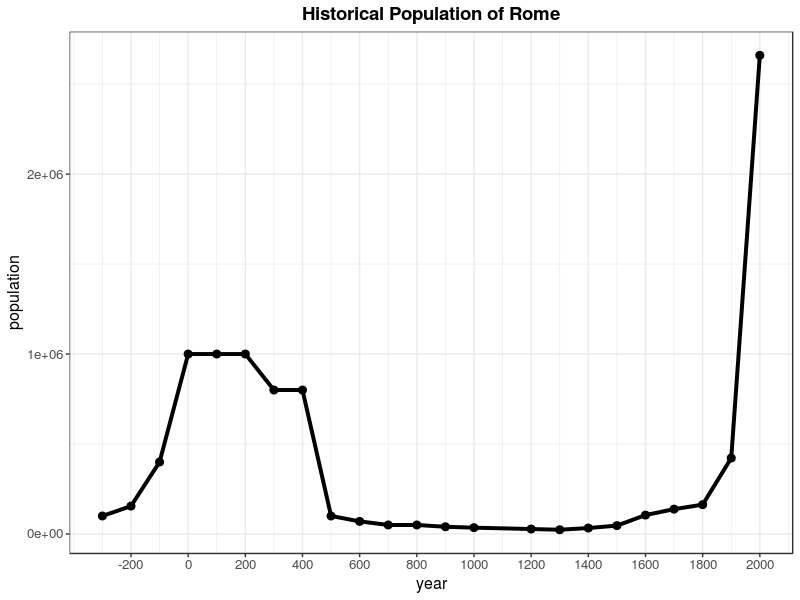
Western civilization has collapsed before. But a few scholars preserved the ideas that once made Rome great. They made a backup, and it did eventually come all the way back. It just took one thousand years.
Sneak peak of a small handful of the evidence from my forthcoming manuscript (summary coming to @palladiummag!) on how there's A LOT of quantitative evidence for the European Dark Ages. There are so many more graphs than these ^^
650
1,157
9,638
21,789,920
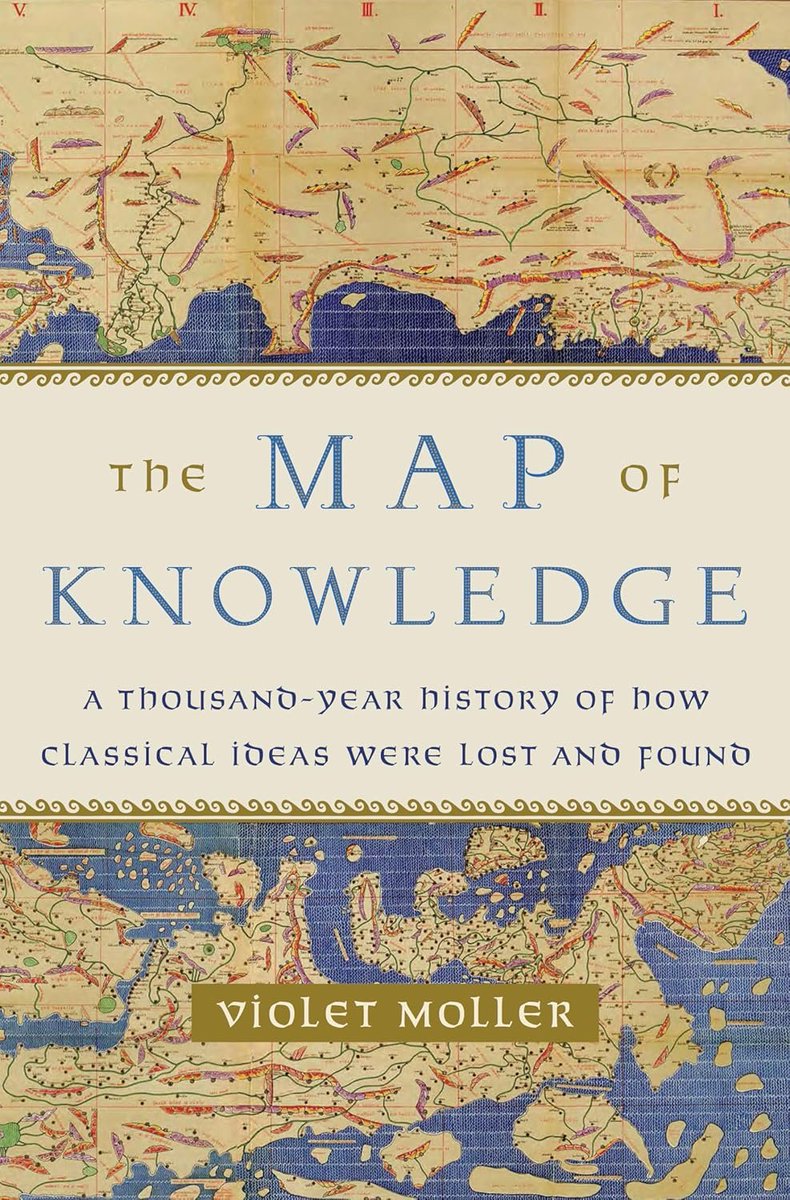
Interestingly, those backups weren't just within European monasteries. Key Roman manuscripts only survived because the Eastern Roman Empire didn't collapse. The Byzantines and the later Islamic world thus enabled the Renaissance. In modern parlance, a decentralized backup preserved Euclid, Ptolemy, and Galen till they could be re-read and appreciated one thousand years later, by a group of Europeans ready to emerge from the Dark Ages. "...as the vast Roman Empire disintegrated, so did appreciation of these precious texts. Christianity cast a shadow over so-called pagan thought, books were burned, and the library of Alexandria, the greatest repository of classical knowledge, was destroyed. Yet some texts did survive, and The Map of Knowledge explores the role played by seven cities around the Mediterranean — rare centers of knowledge in a dark world, where scholars supported by enlightened heads of state collected, translated and shared manuscripts. In 8th century Baghdad, Arab discoveries augmented Greek learning. Exchange within the thriving Muslim world brought that knowledge to Cordoba, Spain. Toledo became a famous center of translation from Arabic into Latin, a portal through which Greek and Arab ideas reached Western Europe. Salerno, on the Italian coast, was the great center of medical studies, and Sicily, ancient colony of the Greeks, was one of the few places in the West to retain contact with Greek culture and language. Scholars in these cities helped classical ideas make their way to Venice in the 15th century, where printers thrived and the Renaissance took root. The Map of Knowledge follows three key texts—Euclid's Elements, Ptolemy's The Almagest, and Galen's writings on medicine—on a perilous journey driven by insatiable curiosity about the world." amazon.com/dp/0385541767
128
289
2,609
290,984
China is opening up internally. For generations, the hukou system meant the average Chinese national couldn’t freely emigrate within China. Like being geolocked to New York and being unable to relocate to Texas. China did this in part for social control, and in part to prevent huge floods of people from moving to big Chinese cities for jobs before the infrastructure was available. But now development in China is so broad-based, and the infrastructure so reliable, that they are gradually opening the borders *within* China by letting everyone move around. The Soviets also had a system of internal passports. But the new Chinese system is less similar to traditional communism, and more similar to the Schengen region for the EU, or the free migration between the fifty states within the US. In many ways China is moving in the opposite direction from the West, by opening up visa-free travel to China for 50 countries, introducing the K visa for skilled migrants, and gradually shelving the hukou system. The overall trend is towards more free (albeit still controlled) flows of capital and talent within China.
China removes hukou hurdle for migrant workers in social insurance shake-up. scmp.com/news/article/335457…
104
228
1,426
318,304
The digital divide has reversed. Digital is cheap, ubiquitous, often fake. Physical is the premium product now.
253
474
3,757
284,989
All this goes in cycles. Digital was rare, valuable, non-obvious, and difficult for a long time. Now we’ve won so hard that the physical complements are becoming more valuable. We have plenty of once-scarce jelly, and now it’s time to make peanut butter again. But to answer the question directly: algorithms create value (try running the modern world without quicksort or pagerank). Think about billion-person networks, social media, cryptocurrency itself…in many ways we live in an Internet First world, particularly in the English-speaking world. And digital progress will continue, as it should. But now it’s time to print out the Internet, to materialize all these cool things from the cloud upon the land, and also to rebuild genuine in-person communities in the process. Like new cities, built not around the car but the self-driving, electric car.
What digital thing was ever sought after as a genuine prize?
26
31
279
57,709
Future books will be written monk-mode, by hand, completely offline, in digital monasteries purpose-built for focus.
249
382
4,537
251,216
I’m very sympathetic to Prof Tabarrok’s point of view. And of course he’s right that AI hyperdeflates costs in many areas, from code to math to biomedicine to robotics. However…AI is also breaking as many markets as it creates. It’s flooding sales, marketing, recruiting, email, social media, identity verification, education, and countless other verticals with an onslaught of increasingly convincing scams, spam, and slop. Essentially, just like cryptocurrency and social media, AI accelerates digital tribalism. Within the trusted tribe, you can indeed share code and context to accelerate progress. But outside the trusted tribe, every message will soon be presumed untrusted slop till proven innocent. (Just look at social media these days for a preview!) That means the result of AI is not universally positive. There is a first order offsetting term where some markets have their verification costs radically increased by AI (eg email). And there is a second order cost in terms of boosting digital tribalism, and consequent distrust between groups. These are largely separate from the third question of whether AI actually takes jobs or not. China currently has an advantage in the AI era because it’s the largest scaled digital tribe on the planet. With its centrally controlled network, it’ll have an easier time dampening the bad aspects of AI (like digital fraud) while amplifying the good parts (like physical robotics). For the free Internet, however, we’ll need to evolve different tools to deal with the AI environment. Likely a web3 of trust, to deter fraud while promoting commerce. But anyway…I just wanted to sound a note of caution. AI, like every technology, has both costs and benefits. It’s going to create a lot of wealth (already has), but it’s also going to create a lot of costs. And we should enumerate those costs in order to mitigate them.
Marginal Revolution co-creator @atabarrok says that AI replacing all jobs (which he doesn't think will happen) is a rich man's problem. "People are worried AI is going to do all the jobs. But this means we are going to be fabulously wealthy." "Even without any jobs, just being fabulously wealthy — we'll figure things out. This is the sort of problem you want to have." "This is not like a natural disaster, which destroys wealth. This is a tsunami which creates wealth." "Yes, it could be a tsunami in the sense that it's going to be very dramatic. But it's going to be very dramatic in the sense of like, Santa Claus coming and leaving us stuff under the Christmas tree. That's drama we can handle." "It won't be without problems. But problems where the pie gets bigger are problems we can solve." "It's problems when the pie gets smaller, when we are forced into a zero-sum society of one person versus another, that's when society breaks down." "But not when the pie is getting bigger. We'll figure out ways to make sure everyone gets a decent slice. We can solve the problem of dividing it up with everybody being happy. I'm much less worried about that."
74
69
559
116,031
Look, if you don’t like the ending of any movie, you can soon just export the file, put it into one of the increasingly high quality open weights video models, and do whatever remix you like. We aren’t all the way there, but we’ll be there soon. Prompts will promptly disrupt Hollywood.
199
76
1,190
136,160
The Singularity is Here. Yet also, Nothing Ever Happens.
187
159
2,053
151,280
Somehow these two beliefs coincide at the same time, in the same social groups, on the same platform, and even within the same person. My view is that technological change is disrupting the political system, but that the system was doing its best to hang on regardless, and has lasted longer than anyone might have expected, yet is indeed fated to experience a singular happening (and indeed already has).
11
7
273
40,997
The singularity is here, it’s just not evenly distributed. That is: the singularity is usually modeled in time, but we can model it in space. Conceptually, the change starts at one point on the surface of earth, and then propagates out. Imperceptibly and then suddenly. Therefore: nothing ever happens, right before it’s happening.
22
31
336
47,364