founder @tryscope_app (YC P26) - make your product discoverable, usable, & trusted by AI agents | ex-research @UCBerkeley @Princeton

Joined September 2024
16 Photos and videos
Anand Paj reposted
The ultimate ragebaiter. šŸ˜‚
15
974
9,720
60,029
football won, what a shameless Paraguayan team
3
81
If you're thinking about joining an early stage startup, the thing that matters most isn't the product, market or how much they've raised. It's whether the founders will keep going when things get really hard. Because if they do and the company survives two years, there's a 70% chance it makes it to a good outcome. Betting on the idea is good, but betting on the people is better.
3
1
19
897
startups die because founders quit it’s so true
I’ll try and compress 20 years of experience into 30 seconds Startups have a GREAT FILTER that kills almost everyone. It’s there to weed out the people who aren’t meant to build companies The good news is it can be beaten - even with little or no capital. Once you beat it, you can do it again. You can choose to stay at the current level or attempt to level up The level boss is always the same: if you quit, you fail I can’t stress this enough: almost every skill can be learned. Never stop improving. You can acquire new skills, hire better people, change the product, pivot the strategy, or rethink your assumptions You’ll hit the wall. Most will quit. But just keep going If something isn’t working, change course. Change your vector: reassess your hypothesis, measure the results, and keep iterating Also working hard compounds. The more quality work you can put in, the better your odds. There is no balance Almost nobody succeeds on their first attempt If you want it badly enough, you can bend the future in your direction Just start. And keep pushing
5
1,141
i see a lot of yc companies low ball ppl on equity just because of the YC logo if you are asking someone to work startup hours you need give them startup upside
8
60
4,702
talk to your customers as much as humanly possible. they're the only ones with clear signal.
8
515
team @tryscope_app dinner! the peking duck was ok I guess idk
7
1
20
3,038
Anand Paj reposted
Hi SF! Hosting a giant LAN tournament style party (LEAGUE, TFT, VAL, SPEED TYPING) to gather the most CRACKED gamers and builders for some friendly competition. @nicole_clash and I want to go all out and are looking for potential sponsors and venues that can host 150 people. If you’re interested please DM me!! PS. About us: both ex competitive gamers now in tech and can potentially bring some big streamers/ pro players as special guests :)
38
8
139
18,295
Most YC companies raise with 10–15% dilution as a target. I’m raising at 5%. Not because I’m raising less money. Because we’re profitable. That changes the conversation. When you are burning a lot, fundraising is survival. When you are profitable, fundraising becomes a choice. You can still raise, but you do not need the money in the same way. That gives you leverage. It does not make fundraising easier. In some ways, it makes it harder. Less dilution means less allocation, and less allocation means more investors will pass because the check size does not fit their model. This is not the strategy if your goal is to close the round as fast as possible. But being profitable changes what you can ask for. You do not have to optimize only for speed. You can optimize for ownership, control, and the right partners. To be clear, I don’t think every startup should chase profitability early. Sometimes that would be the wrong goal. Growth matters. Speed matters. Market capture matters. But if profitability happens, it is a huge bonus. It turns fundraising from needing permission into choosing partners.
7
22
2,207
Highly recommend having a terrible investor call first. It can only get better from there. My first investor call this round ended in the strangest way. I did the pitch. I showed the demo. We had the whole conversation. Then, after all of that, he told me he only invests before friends and family. As in, the very first check. Which is fine, except he knew I was in YC before the call. So I told him it probably was not a fit. Not because of anything personal, just because we were obviously not at that stage anymore. Then he called YC founders dickheads. And that was the end of the call. Honestly, great start. Every call since has felt easy by comparison.
4
14
1,223
Every investor call makes you better at pitching. But not because you get better at saying the same thing. You get better because you realize what the pitch actually is. On my first call, I was pitching what we have today. The product, the demo, the customers, the revenue. All useful. But also incomplete. On every call after that, I started pitching the agent economy. Why it is happening. Why companies will need to understand how agents discover and use their products. Why this market has to exist. And why starting with where we are now is the right way to get there. The conversations changed immediately. They became much more interesting. We talked about the new economy, what enables it, what breaks first, and what needs to exist for it to work. The product still mattered, but now it was part of a bigger story. That is when I started feeling like I was leading the conversation instead of presenting. Investor calls can go two ways. Either the investor leads, and you end up answering questions in whatever order they ask them. That can work, but it is dangerous. You might spend the whole meeting on the least interesting parts of your company. Or you lead. You show them the world you see. You teach them why it is changing. You make the company feel inevitable. And then you show why you are the person who should build it. That second version works much better.
1
1
26
1,538
Can any other founder relate to this? I think I close investors better when I don’t use my deck. Not because the deck is bad. A deck is useful. It helps structure the story. It gives investors something to read, share, and remember. But in the meeting, the best conversations I had often happened when I put it aside. Then it stops feeling like a pitch. It becomes a discussion. I can ask questions. I can understand what they already believe. I can show the product when it matters, not when slide 12 says it is time. The demo becomes interactive, because we are walking through the problem together instead of me presenting at them. That is usually when the product clicks. The questions get better. The conversation gets more honest. And I feel much more confident, because I am not trying to perform the pitch. I am just talking about the thing I am building. Maybe that is what a good pitch is supposed to become. Not a presentation. A conversation where the other person starts seeing what you see.
1
17
771
Anand Paj reposted
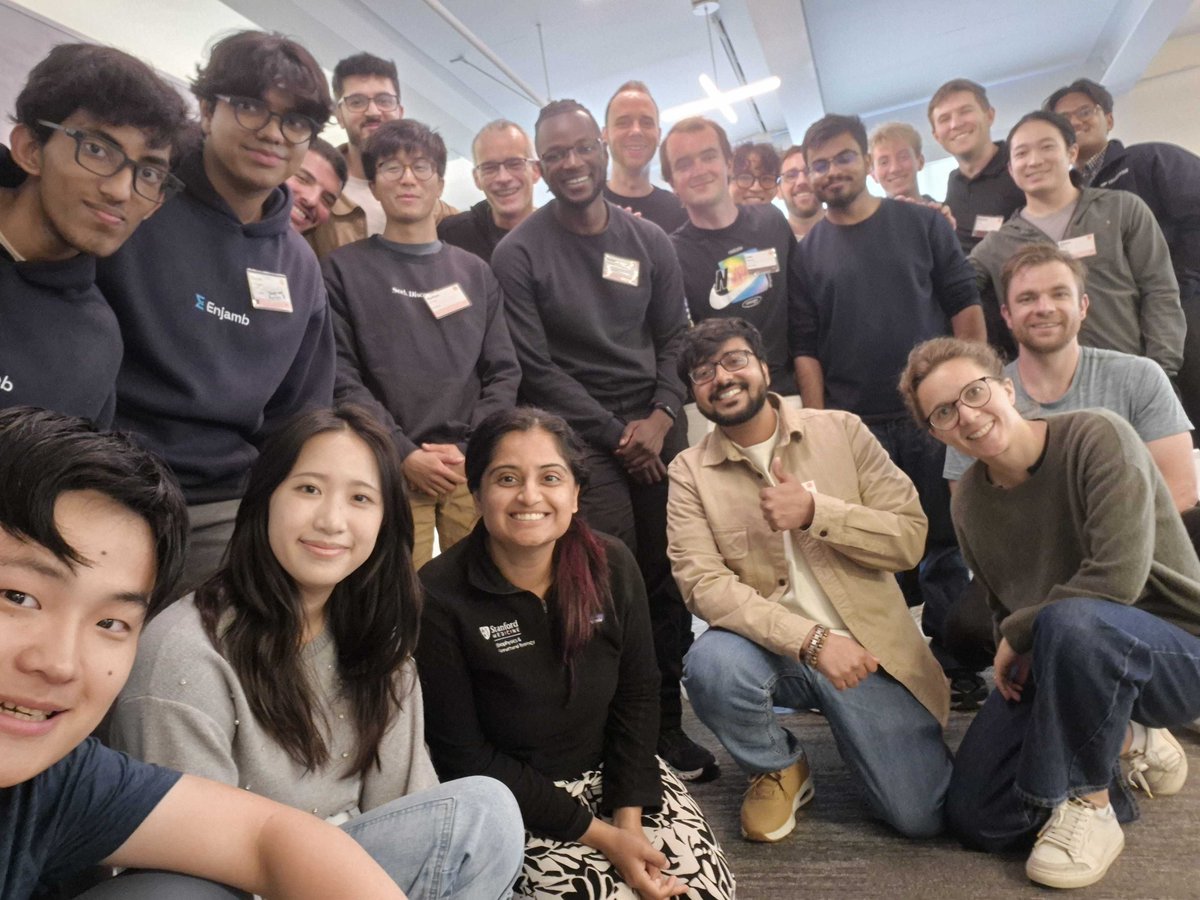
It's a wrap! YC P26 was special because of all these amazing founders.
14
12
87
23,990
Every investor has asked me ā€œwhy won’t Anthropic or OpenAI just build this internally?ā€ I answer it the same way every time. First: every time you use something and it gives you a feedback loop, it gets harder and harder to replicate. We’re building that layer. Second: would you trust Claude to honestly tell you if your own product works well for agents? Probably not. We’re the neutral third party they aren’t. In marketing there’s always a neutral third party for attribution. They don’t care about your preferences. They just give you the true value. That’s what we are but for the agent economy. If your product is bad for agents, we’ll tell you. Straight up.
6
4
84
13,075
Anand Paj reposted
Introducing Sqim - a free tool that lets you sign and upload your iOS project binaries, and serve temporary web pages to sideload on your iPhone straight from Codex Mobile. This closes the feedback loop in your mobile agentic iOS development workflows on any network without requiring tailscale, VPN, or simulator streaming hacks!
39
20
334
132,657
Four weeks ago, we pivoted. Yesterday was Demo Day. I was honestly nervous about how to tell investors. The product was moving fast. Some parts were rough. Some features were still in beta. Most things were not perfect. But being upfront ended up being one of the best things we did. When something is not perfect, just say it.ā€œThis feature is in beta. It is not perfect yet. But it is getting better every day, and in a few weeks it is going to be killer.ā€ That kind of honesty works when it is backed by speed. We talk to customers nonstop. We ship like crazy. We learn fast. Every week, the product gets better because the market is telling us exactly what to build. You do not need to be perfect to be impressive. You need to know what is true. Own what you know. Own what you do not know. Then show how fast the gap is closing. Since the pivot, we went from 0 to $30k MRR. Last week, we became profitable. Don’t be scared to pivot.
22
6
98
10,364
A mistake I see founders make is thinking a lower price makes selling easier. Sometimes it does. Free gets people in the door. Cheap removes friction. You get more users, more calls, more logos. But you learn the most when you ask someone to pay. That is when you find out what they actually care about. What problem is urgent. What budget exists. What feels risky. What is just nice to have. In enterprise, I think low prices can even hurt you. If the price is too low, the buyer starts to wonder why. Is this real? Is it serious? Is it built for companies like us? Will this still exist in a year? Price is not just a number. It is also a signal. You should price in proportion to the value you create. Not as high as possible. Not as low as possible. High enough that the customer takes it seriously, and fair enough that trust stays intact. The goal is not to win by being cheap. The goal is to find the price where both sides believe the product matters.
1
8
1,144