AI isn't a tool you buy for the technology. It's an operating model you design for the business.
Run a company long enough and you realize the CEO and CXOs job is mostly one thing.
Resource Allocation.
Where the capital goes. Where the people go. Get those two right over a decade and you build something great. Get them wrong and no strategy deck saves you.
But there's a part we never said out loud.
Only one of those was ever truly "allocation." Capital you could move. People you could not. So when demand spiked, we overworked the team we had. When it dropped, we cut the team we built. Our people absorbed every swing in the business. That was never smart.
Headcount sat in the OpEx column, but it behaved like CapEx. Every hire was a multi-year commitment for the business. Months to recruit, months to ramp, real cost to unwind. So we hired for the peak and carried it through the trough, and people paid for the math either way.
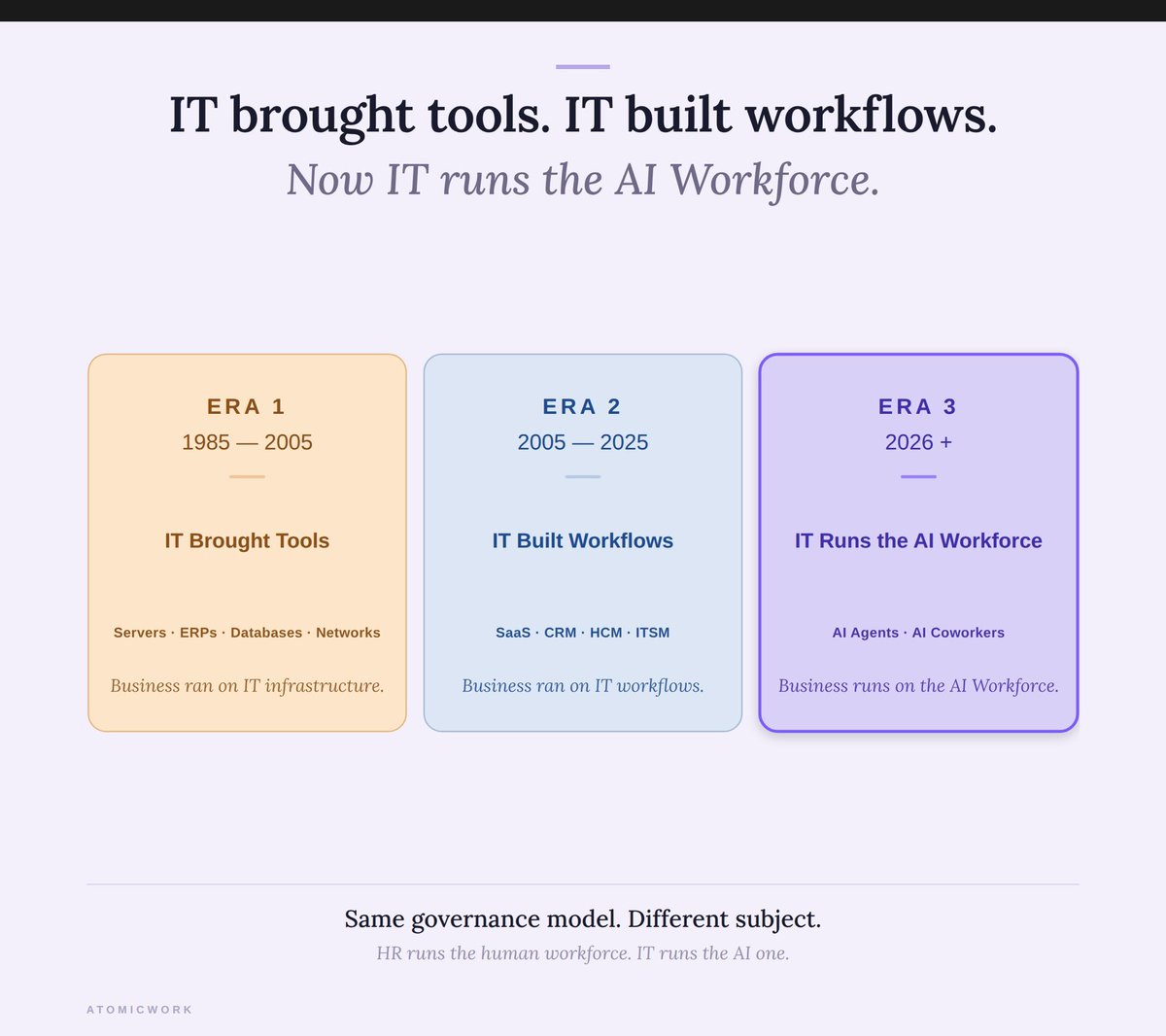
AI coworkers change the shape of this. Not by replacing the team. By giving it a layer it can lean on. Your people are the baseline. The judgment, the relationship context, the accountability, the taste and judgement for what good looks like. That's the part you invest in and keep.
AI coworkers are the expansion layer. The capacity that flexes up when the work surges and settles back when it passes.
So the volatility moves off your people and onto the elastic workforce layer.
That sounds like an HR story of AI workforce for IT but it's also a finance story too.
The human baseline stays a long-term investment, the part of the company worth committing to. The variable load on top becomes a real OpEx decision, handled by AI coworkers that scale to the work in front of you instead of the forecast you made last December.
Three things change the day you take this seriously.
Your people stop being the surge capacity. They stop covering volume they were never meant to carry, and get to do the work only humans can.
You stop hiring and firing through every cycle. You can grow into a new market or a heavy quarter without over-hiring people you may have to let go when it slows.
And the question changes. Not "how many people do we add or cut this year," but "what is the human core worth protecting, and how much AI do we build around it."
The C-suite job isn't shrinking. It's getting bigger to redesign the operating model of every business.
We've always allocated capital. Now we allocate capacity around our people, not instead of them. The companies that win will treat their people as the foundation they build on, and let AI carry the swings.
Time to think of AI as a workforce strategy for the business not just a productivity workflows strategy.
This vision is what we are building towards at
@atomicworkhq.