Research scientist @valeoai | Teaching @Polytechnique @ENS_ULM | Alumni @upb1818 @Mines_Paris @Inria @ENS_ULM | Feedback: admonymous.co/abursuc

Joined November 2008
1,061 Photos and videos
Pinned Post
The unreasonable magic of simplicity! Meet DrivoR (Driving on Registers): our latest end2end autonomous driving model. We teared down complex dependencies & modules from current models to obtain a pure Transformer-based SOTA driving agent (NAVSIM v1 & v2, HUGSIM). Find out more👇
1/🧵 Q: Can we have both a simple and SOTA architecture in autonomous driving? R: Yes! 😍 Introducing Driving on Registers (DrivoR): a pure Transformer backbone that achieves SOTA results in NAVSIM v1 / v2 and closed-loop HUGSIM evaluation. Here is how 👇
2
15
4,439
Andrei Bursuc reposted
Presenting MIRA, a multiplayer world model you can experience live from your browser. Play a dream of Rocket League with your friends using your keyboard. Try the live demo here: mira-wm.com/
1
2
8
169
Andrei Bursuc reposted
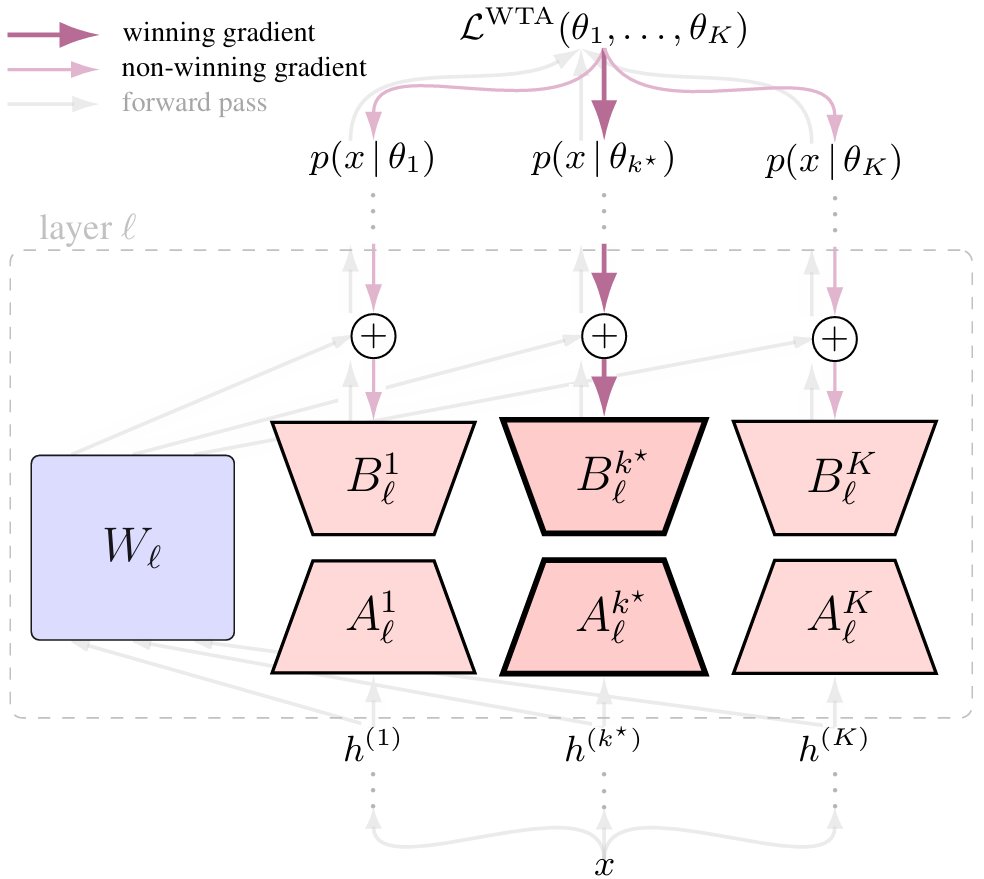
Language modeling is ambiguous. If you ask someone to caption an image, describe an audio clip, or to translate a sentence, you’ll get several valid outputs. In this work, we handle this with a winner-takes-all training objective that encourages diverse, plausible predictions.
Replying to @valeoai
1/ Multiple Choice Learning of Low-Rank Adapters for Language Modeling TL;DR: LoRA heads Winner-Takes-All loss → diverse, plausible LLM outputs 📄 arxiv.org/abs/2507.10419 💻 github.com/Victorletzelter/L… @VLetzelter, H. Malard, M. Fontaine, G. Richard, S. Essid, @abursuc, @ptrkprz
1
2
7
1,160
Andrei Bursuc reposted
valeo.ai is heading to #ICML2026 and #ACL2026 with two papers: - diverse LLM decoding with LoRA-MCL - counterfactual explanations for driving LLMs with DRIV-EX 🧵👇
3
3
16
523
That definition of technical report 🔥
Don't understand all the AI jargon everyone around you keeps saying? You're welcome, I made the updated AI dictionary 🥳🥳- : - The bitter lesson - scale beats everything else, especially your clever idea - Brain-inspired - we read one neuroscience abstract in 2019 - AGI - whatever the current models can't do yet - Superintelligence - AGI, but the last name was taken - Self improvement - letting a coding agent run your experiments - Recursive self improvement - the same thing but it sounds more impressive - RL - it works now, we just don't know why this time - Memory - a text file the agent appends to - Continual learning - solved next year, every year since 2016 - Agent framework - the same model prompted five different ways and called a team Novel architecture - a transformer - Frontier model - our model - Technical report - a paper with the methods section removed - Emergent capabilities - a metric we didn't plot until it went up - Neolab - a bunch of ex-{Meta, OpenAI, GDM} people who think they know better - We fired because of AI - we did not fire because of AI - We're hiring - we raised Hope this helps. See you in the next edition, the field should generate enough new terms by Friday!
9
1,409
Andrei Bursuc reposted
Super excited to share the last paper of my PhD: "Hallucination in World Models is Predictable and Preventable"✨ We train a 350M-param generative world model on a large dataset w/ 210 tasks and show that we can predict *when* hallucination happens and use that to fix it! 🧵1/n
9
74
448
50,984
Andrei Bursuc reposted
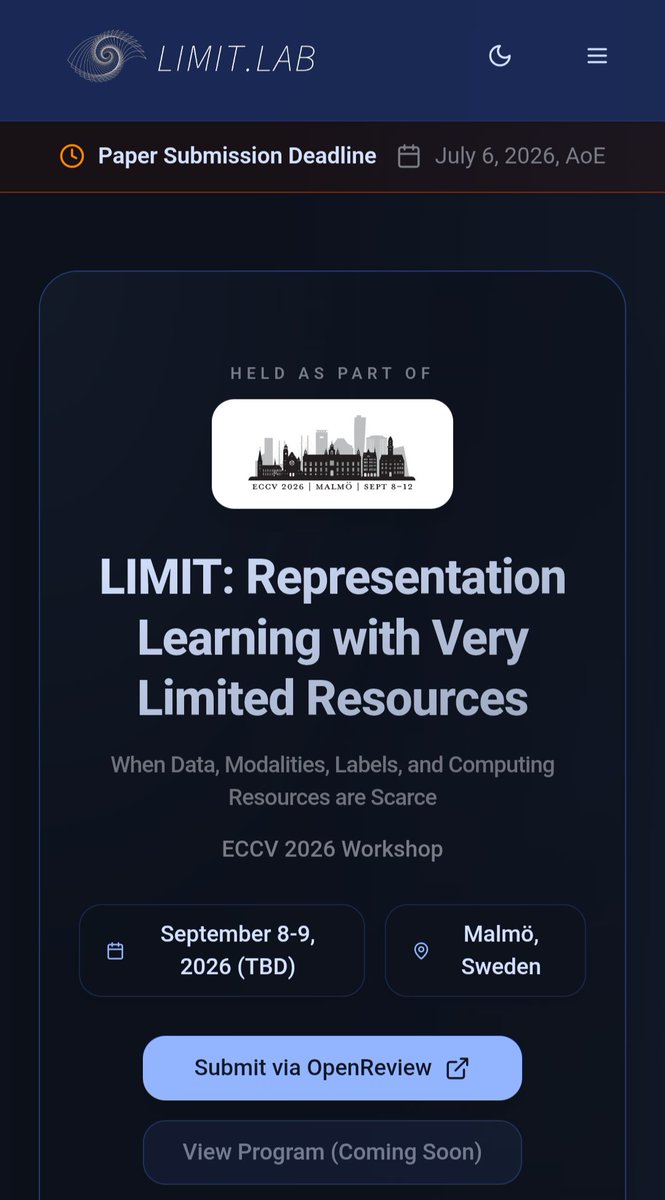
Call for papers: #ECCV2026 / @eccvconf LIMIT Workshop Paper deadline: 6 July, 2026 (AoE) Website: eccv2026-limit-workshop.limi… OpenReview: openreview.net/group?id=thec…
[LIMIT Workshop has been accepted at #ECCV2026 ] LIMIT: Representation Learning with Very Limited Resources explores how we can build powerful AI systems when data, labels, modalities, compute, or supervision are limited. Join us at LIMIT 2026! Website: eccv2026-limit-workshop.limi…
4
15
5,348
Andrei Bursuc reposted
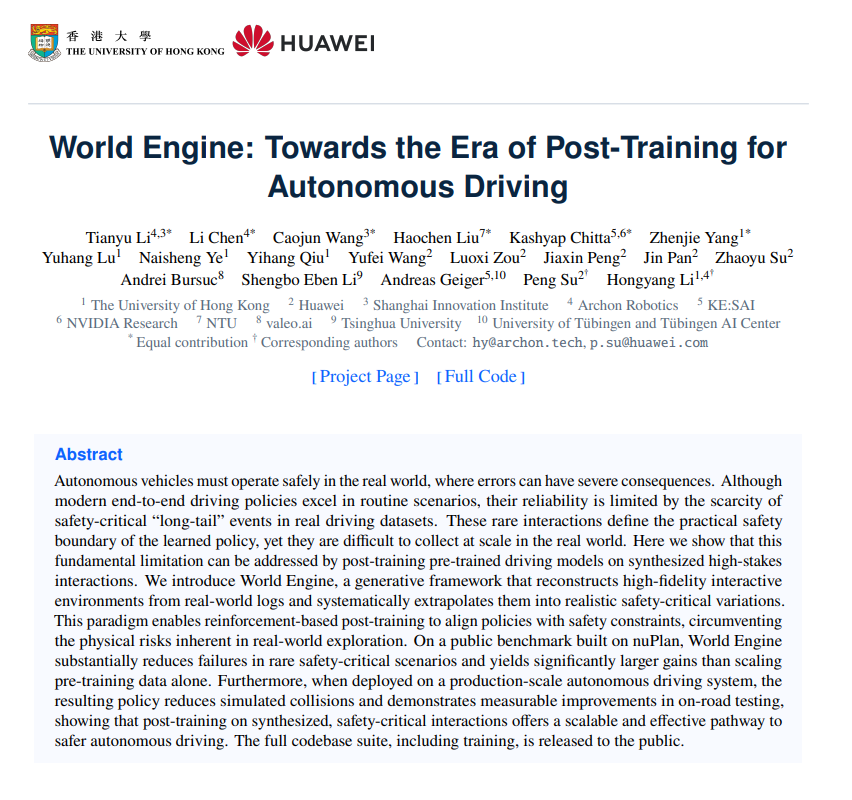
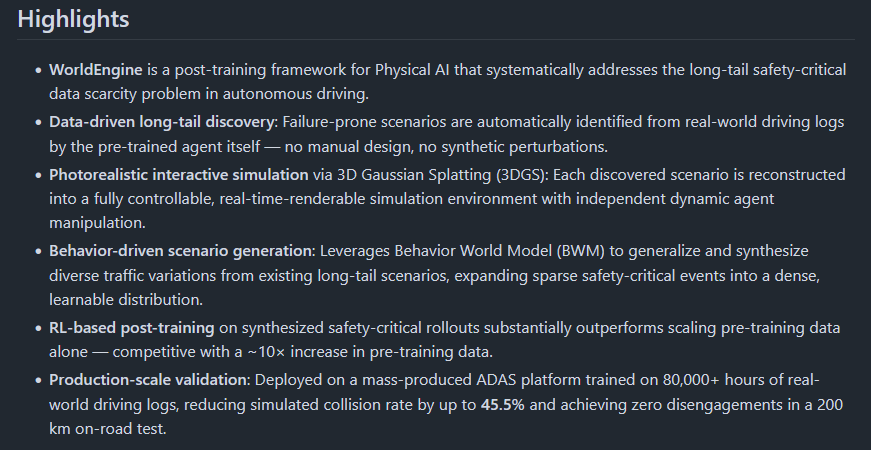
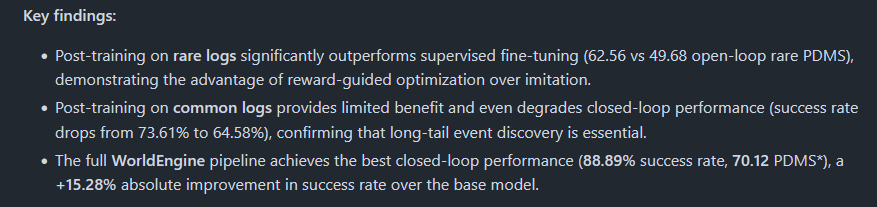
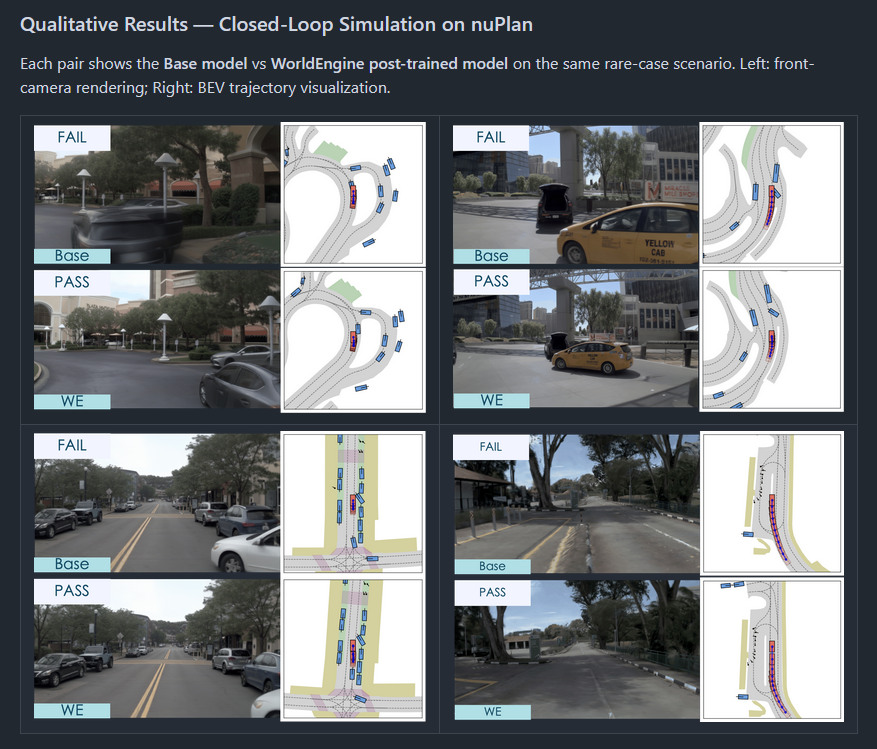
🔬 This week's KE:SAI research highlight is World Engine, a RL post-training simulator and pipeline for end-to-end driving. 📜 arxiv.org/abs/2606.19836
1
1
4
393
Andrei Bursuc reposted
Robot learning is moving beyond policies built for one robot, one scene, one task. At MIT, we’re exploring a different path: turning video world models into embodiment-agnostic robot policies. Introducing VERA: a 14B video-to-action system that controls robots across embodiments, skills, and environments. From zero-shot pick-and-place on a real Panda arm to contact-rich cube reorientation with a 16-DoF robotic hand. Different robots. Different environments. Different tasks. Same video planner. Same weights. We’re open-sourcing everything so you can fine-tune VERA for your own robot setup too. Deep dive in the thread: 🔗 vera.csail.mit.edu 🧵 (1/7)
14
61
444
161,063
Andrei Bursuc reposted
🛰️ Introducing UniverSat: one transformer backbone for Earth Observation that handles ANY sensor, ANY spatial, spectral & temporal resolution, ANY scale — with a single set of weights. 🌍
4
45
309
22,613
Andrei Bursuc reposted
🎉Re2Pix accepted at #ECCV2026! 💡Should a world model predict future dynamics and render pixels simultaneously? Re2Pix says no. Forecast in VFM semantic space first 🧠, synthesize pixels second 🎨 Updated Paper and code coming soon. Details👇
1/n 🔀 Pixel or latent world models? Video world models fall into two camps: • generate photorealistic frames • predict semantic features of the future (e.g., DINOv2) Why choose one? We introduce Re2Pix, a hierarchical approach that combines both. 🧵👇
2
15
76
9,631
Andrei Bursuc reposted
The #WorldEngine tech report is now up! It's our post-training framework to deal w/ scarcity of long-tail safety-critical scenarios. Post-training strategies for AD are rarely tackled and discussed in the open. We hope that this will open more this area. arxiv.org/abs/2606.19836
#WorldEngine is one of the most exciting projects in AD in the past years! It's a post-training framework tackling the scarcity of long-tail safety-critical scenarios by: mining -> 3DGS reconstruction and dynamic agents control w/ behavior world models -> RL post-training.
5
17
2,270
"The goal is not parity, it is leverage. A country doesn't need the best model...to be sovereign; it needs a credible one...good enough that being cut off is survivable rather than catastrophic...The point is not to win the race. It is to make sure no one else can end it for you"
Europe cannot rent its way to AI sovereignty. TLDR, here's my take I shared with frontier AI lab leadership this week. When Washington can disable a model overnight, the question is not whether AI is safe but who controls it: A week ago the United States government ordered Anthropic, the world's most valuable AI startup, to shut off its most capable model, Fable, for every foreign national on earth - whether they worked for Anthropic or not. This was not an export ban on a weapon sold to an adversary. It was an instruction to disable a commercial product, four days after its release, after officials acted on a claim - which Anthropic disputed as narrow and unproven - that its safeguards could be jailbroken to expose cyber-offense capabilities. I have spent my career around this technology, first as a graduate student and for the past decade as an investor @airstreet. In that time I have watched AI move from recommending movies to driving cars, speaking with a human voice, and editing the genome. I have also watched the debate about its risks settle on only half the question. That debate is mostly about capability: how powerful these systems are becoming, and whether one might escape human control. Those are real questions. But they are not the only ones, and the Anthropic episode exposed the half we have neglected: access and control. The most advanced AI is built by a handful of American companies, on American soil, under American law, and what the rest of us are allowed to do with it can change on a Friday afternoon. The risk that matters today is not only that AI goes rogue, but that we do not control access to it at all. Consider what "renting intelligence" now means in practice. A European hospital triaging scans, a bank screening fraud, a defense ministry planning for a conflict: increasingly each runs on an American AI system that's governed by its export regime. A single directive in Washington cascades, instantly, through every institution wired to that model. We have built core economic and public infrastructure on a supply that a foreign government can shut off. And while there are open-source alternatives, they're either Chinese or not at the frontier, and building European infrastructure on Chinese open weights trades one dependency for a thornier one. And these systems are starting to improve themselves. As they do, AI stops being one industry among many and becomes the input to all the others - writing the code, running the research, designing the products, and, increasingly, generating the growth itself. Once intelligence is the engine of an economy, a country without a frontier model of its own does not lose a sector; it loses control of the inputs to everything else, and the independence that depends on them. Worse, the gap compounds: capability that improves itself gets harder to chase with every month it runs ahead. This is not a race Europe can plan to enter in a decade. The window to be a builder rather than a buyer is measured in the time it takes to stand up a cluster, not a career. This should sting, because Europeans invented much of modern AI. DeepMind was founded in London and sold to Google in 2014, and a great deal of the talent that followed now lives in California. Today Europe faces a company worth almost $1 trillion and American tech giants spending an estimated $450 billion a year on AI infrastructure. Its answer has been the EU AI Act and a capital commitment that is a rounding error by comparison. A single American site, xAI's Colossus in Memphis, runs more than half a million GPUs. Europe has nothing remotely at that scale. The instinct to govern this technology is right, but we're off on the ambition by orders of magnitude. It is fair to object that regulation is itself a form of power. But a rulebook is not a substitute for the thing it governs. You cannot regulate, or be cut off from, an industry you do not have. Europe's instinct, when it is cut off, is not to build but to ask. We saw it within the week. The G7 convened in Evian and floated a "trusted partners" scheme to win back the access it had just lost, while Emmanuel Macron feted Donald Trump beneath the gilt of Versailles, the palace where France once helped midwife American independence. Two and a half centuries on, the dependency has reversed, and the posture is courtship. None of this means Europe can match the American frontier dollar for dollar. With today's capital, it cannot, and pretending otherwise only wastes the little it has. But the goal is not parity, it is leverage. A country does not need the best model in the world to be sovereign; it needs a credible one of its own, on its own soil, good enough that being cut off is survivable rather than catastrophic. That is the difference between negotiating your access from dependence and negotiating it with an alternative in hand. The point is not to win the race. It is to make sure no one else can end it for you. Sovereignty of that kind is something you build, and Europe has done it before. The Financial Conduct Authority's regulatory sandbox, launched in 2016, let startups test products with real customers under supervision instead of waiting years for authorization. The pro-innovation culture it signaled helped make London the fintech capital of Europe, home to Revolut, Wise, and Monzo. Government should be AI's most demanding early customer rather than writing rules for systems it has only ever imported. Industry has to stop behaving like a tenant. Too many European companies rent the entire stack from American providers and build a thin product on top. That earns a margin and owns nothing: when the lab that supplies you decides to compete with you, or its government decides to cut you off, you have no ground to stand on. Where it counts, build and hold your own models and compute. And our universities, which should be the source of all this, still work against it. I have argued here before that Europe's spinout system is broken, and it remains so. Too many institutions treat the companies their research creates as something to extract value from, rather than as the vehicle through which a discovery reaches the world. The best research should leave the building as a company, in addition to a paper. We keep framing AI safety and AI ambition as a tradeoff, as though a country must choose between governing this technology and building it. It is not a choice. The safest position is not the most heavily regulated one. It is the one where the model runs on your terms, in your jurisdiction, and no one on the far side of an ocean can reach over and turn it off. Right now that finger is not ours. Until it is, every other conversation about AI risk is one we are having with someone else's permission. --- END

4
1,014
Andrei Bursuc reposted
Europe cannot rent its way to AI sovereignty. TLDR, here's my take I shared with frontier AI lab leadership this week. When Washington can disable a model overnight, the question is not whether AI is safe but who controls it: A week ago the United States government ordered Anthropic, the world's most valuable AI startup, to shut off its most capable model, Fable, for every foreign national on earth - whether they worked for Anthropic or not. This was not an export ban on a weapon sold to an adversary. It was an instruction to disable a commercial product, four days after its release, after officials acted on a claim - which Anthropic disputed as narrow and unproven - that its safeguards could be jailbroken to expose cyber-offense capabilities. I have spent my career around this technology, first as a graduate student and for the past decade as an investor @airstreet. In that time I have watched AI move from recommending movies to driving cars, speaking with a human voice, and editing the genome. I have also watched the debate about its risks settle on only half the question. That debate is mostly about capability: how powerful these systems are becoming, and whether one might escape human control. Those are real questions. But they are not the only ones, and the Anthropic episode exposed the half we have neglected: access and control. The most advanced AI is built by a handful of American companies, on American soil, under American law, and what the rest of us are allowed to do with it can change on a Friday afternoon. The risk that matters today is not only that AI goes rogue, but that we do not control access to it at all. Consider what "renting intelligence" now means in practice. A European hospital triaging scans, a bank screening fraud, a defense ministry planning for a conflict: increasingly each runs on an American AI system that's governed by its export regime. A single directive in Washington cascades, instantly, through every institution wired to that model. We have built core economic and public infrastructure on a supply that a foreign government can shut off. And while there are open-source alternatives, they're either Chinese or not at the frontier, and building European infrastructure on Chinese open weights trades one dependency for a thornier one. And these systems are starting to improve themselves. As they do, AI stops being one industry among many and becomes the input to all the others - writing the code, running the research, designing the products, and, increasingly, generating the growth itself. Once intelligence is the engine of an economy, a country without a frontier model of its own does not lose a sector; it loses control of the inputs to everything else, and the independence that depends on them. Worse, the gap compounds: capability that improves itself gets harder to chase with every month it runs ahead. This is not a race Europe can plan to enter in a decade. The window to be a builder rather than a buyer is measured in the time it takes to stand up a cluster, not a career. This should sting, because Europeans invented much of modern AI. DeepMind was founded in London and sold to Google in 2014, and a great deal of the talent that followed now lives in California. Today Europe faces a company worth almost $1 trillion and American tech giants spending an estimated $450 billion a year on AI infrastructure. Its answer has been the EU AI Act and a capital commitment that is a rounding error by comparison. A single American site, xAI's Colossus in Memphis, runs more than half a million GPUs. Europe has nothing remotely at that scale. The instinct to govern this technology is right, but we're off on the ambition by orders of magnitude. It is fair to object that regulation is itself a form of power. But a rulebook is not a substitute for the thing it governs. You cannot regulate, or be cut off from, an industry you do not have. Europe's instinct, when it is cut off, is not to build but to ask. We saw it within the week. The G7 convened in Evian and floated a "trusted partners" scheme to win back the access it had just lost, while Emmanuel Macron feted Donald Trump beneath the gilt of Versailles, the palace where France once helped midwife American independence. Two and a half centuries on, the dependency has reversed, and the posture is courtship. None of this means Europe can match the American frontier dollar for dollar. With today's capital, it cannot, and pretending otherwise only wastes the little it has. But the goal is not parity, it is leverage. A country does not need the best model in the world to be sovereign; it needs a credible one of its own, on its own soil, good enough that being cut off is survivable rather than catastrophic. That is the difference between negotiating your access from dependence and negotiating it with an alternative in hand. The point is not to win the race. It is to make sure no one else can end it for you. Sovereignty of that kind is something you build, and Europe has done it before. The Financial Conduct Authority's regulatory sandbox, launched in 2016, let startups test products with real customers under supervision instead of waiting years for authorization. The pro-innovation culture it signaled helped make London the fintech capital of Europe, home to Revolut, Wise, and Monzo. Government should be AI's most demanding early customer rather than writing rules for systems it has only ever imported. Industry has to stop behaving like a tenant. Too many European companies rent the entire stack from American providers and build a thin product on top. That earns a margin and owns nothing: when the lab that supplies you decides to compete with you, or its government decides to cut you off, you have no ground to stand on. Where it counts, build and hold your own models and compute. And our universities, which should be the source of all this, still work against it. I have argued here before that Europe's spinout system is broken, and it remains so. Too many institutions treat the companies their research creates as something to extract value from, rather than as the vehicle through which a discovery reaches the world. The best research should leave the building as a company, in addition to a paper. We keep framing AI safety and AI ambition as a tradeoff, as though a country must choose between governing this technology and building it. It is not a choice. The safest position is not the most heavily regulated one. It is the one where the model runs on your terms, in your jurisdiction, and no one on the far side of an ocean can reach over and turn it off. Right now that finger is not ours. Until it is, every other conversation about AI risk is one we are having with someone else's permission. --- END
32
61
283
86,334
Andrei Bursuc reposted
We explored the impact of variability sources in generative modeling. Turns out, we've been neglecting the error bars associated with training variability all along! We should aim to report results that we are sure of their scientific validity, instead of seed engineering!
🎰 Welcome to the FID Lottery. We pulled the lever 25 times on the same machine. Identical diffusion model, identical ImageNet class-cond recipe, only the seed changed. The house paid out anywhere from 33.59 to 35.69 FID. A 2.1-point spread, pure luck. Step onto the floor 👇🧵
2
15
33
6,516
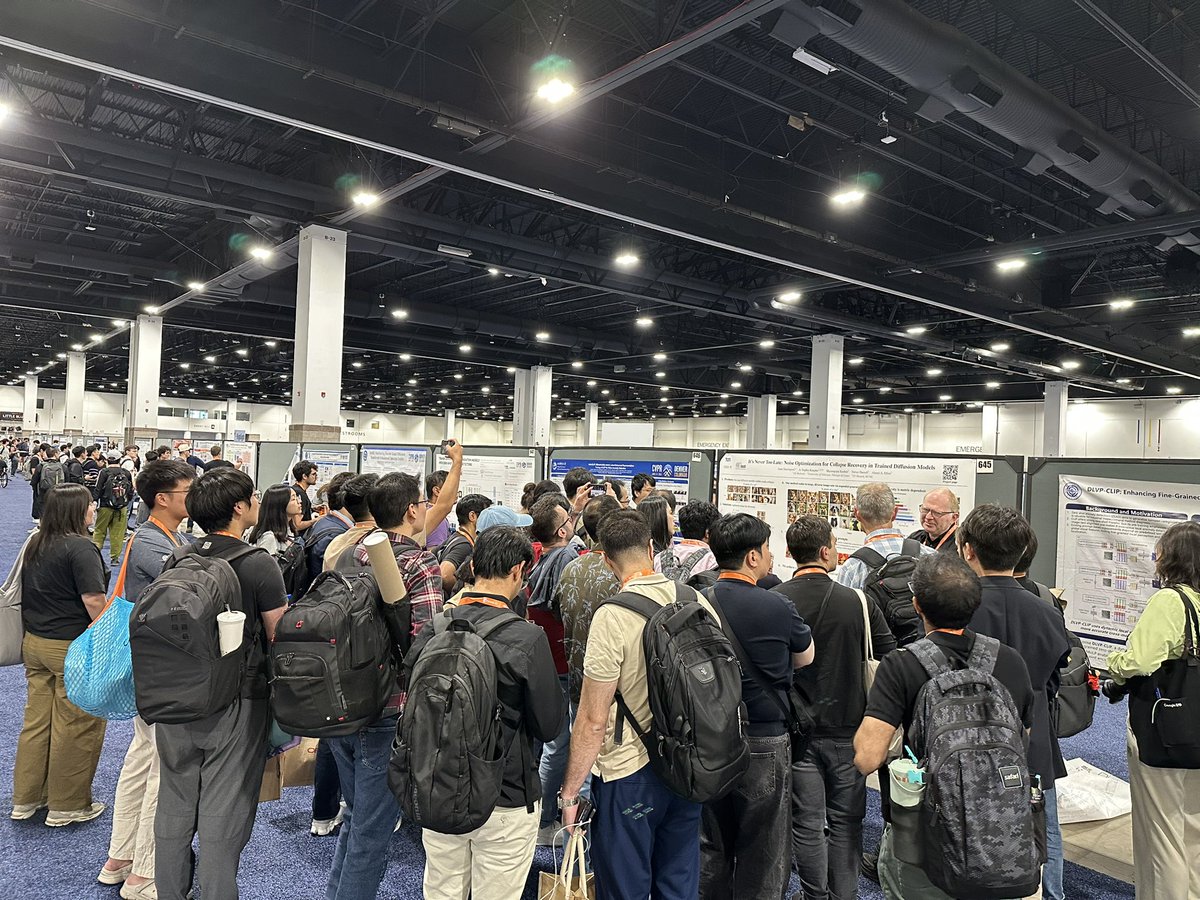
Though luck with @eccvconf decisions? Give your paper another chance at the Uncertainty Quantification for Computer Vision (UNCV) Workshop at #eccv2026 We usually have lively poster sessions and fun discussions and speakers. Check out the call for papers below! Deadline: June 30
Consider submitting your work to the UNCV Workshop at @eccvconf on Uncertainty Quantification for Computer Vision! 🌐 uncertainty-cv.github.io/202… Organizers: Andrea Pilzer, @GianniFranchi10 , @abursuc , @arnosolin, Martin Trapp, Ziyun Li, @angelayao101 , Tuan-Hung Vu, @ftm_guney .
1
1
6
1,047
Andrei Bursuc reposted
Consider submitting your work to the UNCV Workshop at @eccvconf on Uncertainty Quantification for Computer Vision! 🌐 uncertainty-cv.github.io/202… Organizers: Andrea Pilzer, @GianniFranchi10 , @abursuc , @arnosolin, Martin Trapp, Ziyun Li, @angelayao101 , Tuan-Hung Vu, @ftm_guney .
1
5
11
2,371
Good game!
2
308
Super impressed by how Chinese teams continue releasing super-strong open-weights models! By this time you would assume that private ones are reaching escape velocity thanks to the huge amount of user data and feedback they can harvest, and yet open-models still pop up.
6
755
Andrei Bursuc reposted
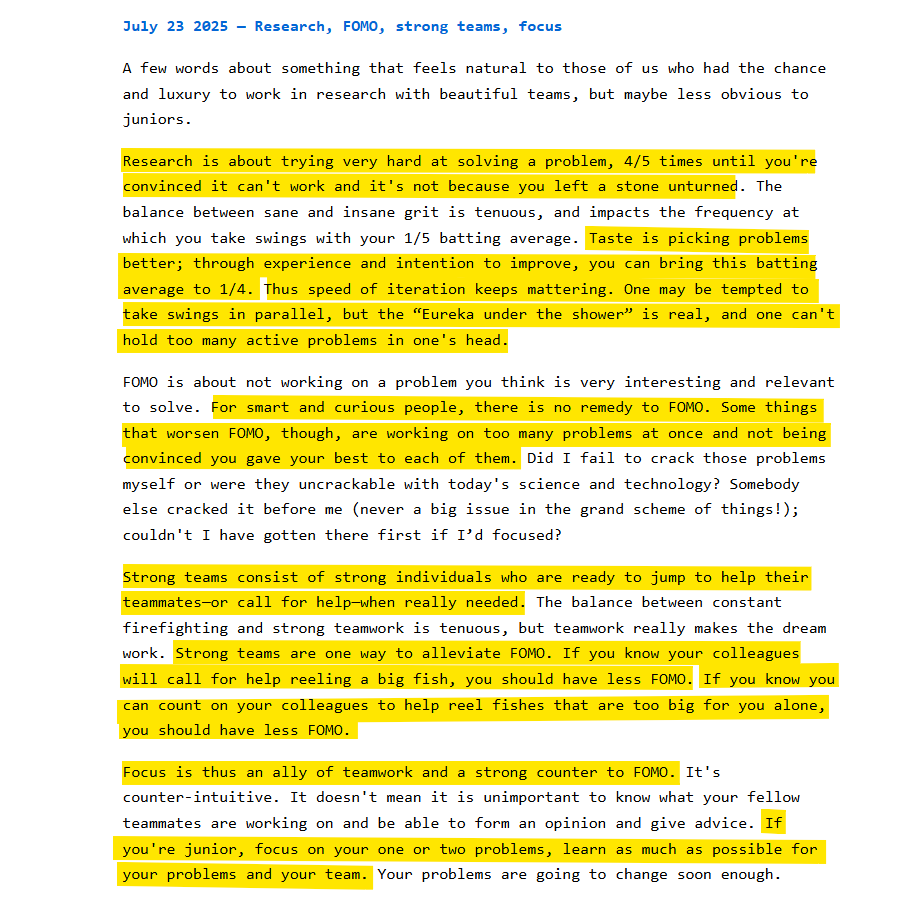
Inspired by @jbhuang0604’s Awesome-Tips webpage and his encouragement, I put together a webpage collecting #KostasThoughts posts from over the years. Hope you find them useful! #KostasThoughts: csprofkgd.github.io/kostas-t…
5
8
76
8,447