Building creative agents @GoogleDeepMind. AlphaProof, AlphaZero_db, PuzzleGen, Convex RL, meta gradients. Staff research scientist, discovery team

Joined December 2018
42 Photos and videos
Pinned Post
I am excited to share our latest work from the Discovery team at @GoogleDeepMind: COrigami, an end-to-end pipeline for co-designing origami with Gemini!  Origami is a unique mix of math, art and design. Creating origami involves turning abstract concepts into real-world objects, using the math of flat foldability. To tackle this, COrigami calls Gemini to generate a semantic stick figure—an abstract JSON code—refined through a visual feedback loop. It then calls custom packing, solving, shaping, and simulation tools. Driven by another self-improving reinforcement learning (RL) loop, the system produces visually recognisable models represented as SVG crease patterns. Despite scarce data availability, this approach demonstrates how combining RL with frontier models like Gemini can assist human creativity and produce physical art. The generated patterns serve as mathematically grounded starting points for origami artists to fold and shape into a final, physical design. The models below were produced by our system and then folded and shaped by @brandon_w0ng.   Read the full paper here: arxiv.org/abs/2606.26299
15
87
400
56,110
We’ve prepared a nice COrigami demo for you, see you at the @GoogleDeepMind booth next week #icml
We'll be demoing our work on COrigami at the @google booth next week! 📄✨ 📅 Wed, July 8 ⏰ 12:30 PM — 1:30 PM 📍 Kiosk #2 We've also made some crease patterns available for you to try out: tomzahavy.com/_files/archive…
1
8
59
7,704
We'll be demoing our work on COrigami at the @google booth next week! 📄✨ 📅 Wed, July 8 ⏰ 12:30 PM — 1:30 PM 📍 Kiosk #2 We've also made some crease patterns available for you to try out: tomzahavy.com/_files/archive…
I am excited to share our latest work from the Discovery team at @GoogleDeepMind: COrigami, an end-to-end pipeline for co-designing origami with Gemini!  Origami is a unique mix of math, art and design. Creating origami involves turning abstract concepts into real-world objects, using the math of flat foldability. To tackle this, COrigami calls Gemini to generate a semantic stick figure—an abstract JSON code—refined through a visual feedback loop. It then calls custom packing, solving, shaping, and simulation tools. Driven by another self-improving reinforcement learning (RL) loop, the system produces visually recognisable models represented as SVG crease patterns. Despite scarce data availability, this approach demonstrates how combining RL with frontier models like Gemini can assist human creativity and produce physical art. The generated patterns serve as mathematically grounded starting points for origami artists to fold and shape into a final, physical design. The models below were produced by our system and then folded and shaped by @brandon_w0ng.   Read the full paper here: arxiv.org/abs/2606.26299
4
19
9,160
Heading to #ICML2026 next week! I’ll be presenting my thoughts on AI and scientific invention. If you're exploring how machine learning can accelerate discovery, I’d love to connect and swap ideas. 🗓️ Thu, Jul 9 | 9:00 – 10:45 AM BST 📍 Hall A, Poster #3707 openreview.net/pdf?id=klU473…
Can AI truly invent, or is it just compressing what we already know? 🤖🧠 In my position paper, LLMs can’t jump, I use Einstein’s happiest thought as a case study to show why LLMs are structurally incapable of the abductive "jump" needed for scientific discovery and how interactive environments like 🧞 offer a path forward Paper: philsci-archive.pitt.edu/280…
3
4
50
5,093
Tom Zahavy reposted
This was such a unique, rewarding project to work on. Feels great to see it come out and to share some of the cool origami we made with Gemini! Some of my favorites below
I am excited to share our latest work from the Discovery team at @GoogleDeepMind: COrigami, an end-to-end pipeline for co-designing origami with Gemini!  Origami is a unique mix of math, art and design. Creating origami involves turning abstract concepts into real-world objects, using the math of flat foldability. To tackle this, COrigami calls Gemini to generate a semantic stick figure—an abstract JSON code—refined through a visual feedback loop. It then calls custom packing, solving, shaping, and simulation tools. Driven by another self-improving reinforcement learning (RL) loop, the system produces visually recognisable models represented as SVG crease patterns. Despite scarce data availability, this approach demonstrates how combining RL with frontier models like Gemini can assist human creativity and produce physical art. The generated patterns serve as mathematically grounded starting points for origami artists to fold and shape into a final, physical design. The models below were produced by our system and then folded and shaped by @brandon_w0ng.   Read the full paper here: arxiv.org/abs/2606.26299
3
4
19
1,224
Tom Zahavy reposted
I am excited to share our latest work from the Discovery team at @GoogleDeepMind: COrigami, an end-to-end pipeline for co-designing origami with Gemini!  Origami is a unique mix of math, art and design. Creating origami involves turning abstract concepts into real-world objects, using the math of flat foldability. To tackle this, COrigami calls Gemini to generate a semantic stick figure—an abstract JSON code—refined through a visual feedback loop. It then calls custom packing, solving, shaping, and simulation tools. Driven by another self-improving reinforcement learning (RL) loop, the system produces visually recognisable models represented as SVG crease patterns. Despite scarce data availability, this approach demonstrates how combining RL with frontier models like Gemini can assist human creativity and produce physical art. The generated patterns serve as mathematically grounded starting points for origami artists to fold and shape into a final, physical design. The models below were produced by our system and then folded and shaped by @brandon_w0ng.   Read the full paper here: arxiv.org/abs/2606.26299
15
87
400
56,110
Tom Zahavy reposted
22.5折り紙設計アップリ「ExplOri」はついに完成です!ここに使ってみてください:225.designorigami.net/ 説明ビデオ:youtu.be/M6ewRG1zto4?si=W19G…
2
55
211
13,199
Tom Zahavy reposted
Made a little benchmark called RoastBench - it compares frontier models on their roast jokes. The models roast 10 personalities from comedy central roasts I enjoyed, and I manually rank their jokes. I also mark the ones that made me laugh. LLMs are way worse than top humans.
6
1
26
5,573
Excited to share that our position paper on creativity has been accepted at #ICML! See you in #Seoul this summer. ✈️🇰🇷👇 philsci-archive.pitt.edu/280…
Can AI truly invent, or is it just compressing what we already know? 🤖🧠 In my position paper, LLMs can’t jump, I use Einstein’s happiest thought as a case study to show why LLMs are structurally incapable of the abductive "jump" needed for scientific discovery and how interactive environments like 🧞 offer a path forward Paper: philsci-archive.pitt.edu/280…
3
1
38
3,597
Tom Zahavy reposted
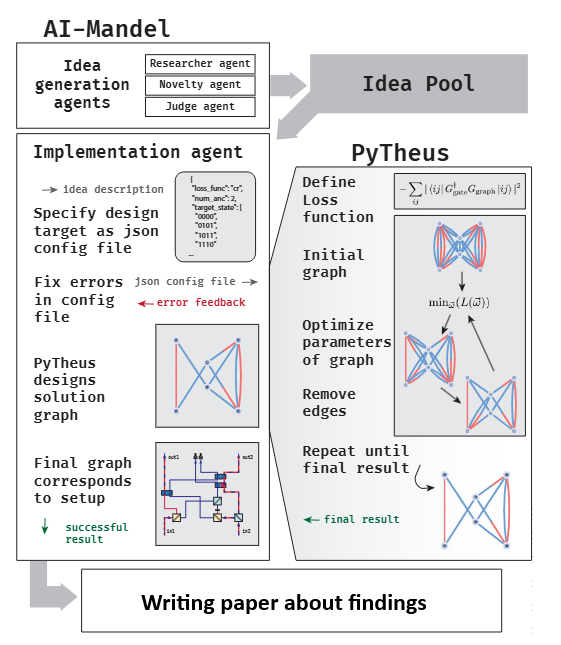
We asked our AI-Physicist "AI-Mandel" to find "something interesting in quantum physics" & TODAY its finding were accepted in the peer-reviewed physics journal @PhysRevResearch. In this paper, the creative contribution came from a machine. AI-Mandel created the initial idea, and implemented the idea with access to an intelligent tool. We humans just compiled in the end the paper. Spearheaded by @soerenarlt and @GuXuemei
1
4
17
1,261
Tom Zahavy reposted
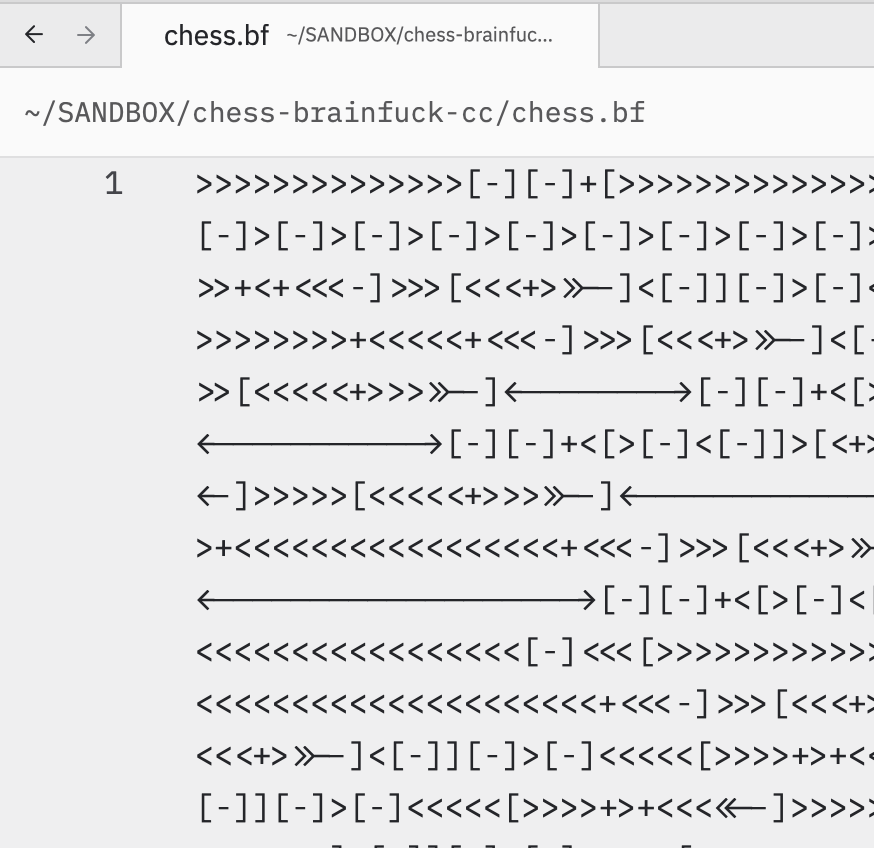
A few days ago I shared a chess engine built from scratch in TeX. Now I pushed the experiment further: I asked a coding agent to build one in #Brainfuck. Yes: a #chess engine in a language with 8 characters and almost no abstractions. Never been done. Thread and blog post ⤵️↘️♟️
3
9
60
5,023
Tom Zahavy reposted
I'm releasing OpenProver v1.0.0! It's 1) an open-source automated theorem prover inspired by DeepMind's Aletheia (@tonylfeng @gjb_ai @lmthang), and 2) a "Claude Code for mathematicians", allowing interactive proof search in English and formalization in Lean.
17
81
499
41,936
In this week’s issue @Nature Blog: tomzahavy.com/blog
Excited to announce our recent @GoogleDeepMind paper, AlphaProof, out in @Nature today! It has been over a year since AlphaProof achieved silver-medal standard solving International Mathematical Olympiad (IMO) problems, by teaching itself mathematics in LEAN (@leanprover). This milestone was special to me because it was often hard to believe we would reach it. You’re crazy until you're successful Blog: tomzahavy.com/post/how-we-ac… Paper: nature.com/articles/s41586-0…
1
6
736
Tom Zahavy reposted
Robert Lange @RobertTLange from @SakanaAILabs on ShinkaEvolve -- an open-source framework combining LLMs with evolutionary algorithms for scientific discovery, with insane sample efficiency. His thesis that current systems optimise solutions to fixed problems. Going forwards -- real scientific discovery requires co-evolving the actual problems. By the way - NVIDIA GTC is coming and will showcase breakthroughs in physical AI, AI factories, agentic AI, and inference. Register for virtual GTC for free using my link: nvda.ws/4qQ0LMg and enter raffle to win a DGX Spark 😈
1
17
92
12,584
Tom Zahavy reposted
🎙️ I had an amazing time discussing our work @SakanaAILabs on leveraging LLMs as evolutionary engines for scientific discovery @MLStreetTalk. We cover ShinkaEvolve 🧬, the AI Scientist 🧑‍🔬, and the future of automated discovery 💡 Foundation models have and will continue to shape the history of science 🚀 I am extremely excited to collectively figure out the correct human interface and establish powerful technological building blocks. As always, @ecsquendor did an outstanding job covering my jetlag and shaping this into a piece of intellectual art. Thank you so much for having me 🤗
Robert Lange @RobertTLange from @SakanaAILabs on ShinkaEvolve -- an open-source framework combining LLMs with evolutionary algorithms for scientific discovery, with insane sample efficiency. His thesis that current systems optimise solutions to fixed problems. Going forwards -- real scientific discovery requires co-evolving the actual problems. By the way - NVIDIA GTC is coming and will showcase breakthroughs in physical AI, AI factories, agentic AI, and inference. Register for virtual GTC for free using my link: nvda.ws/4qQ0LMg and enter raffle to win a DGX Spark 😈
1
1
19
1,965
Tom Zahavy reposted
London has incredible talent & entrepreneurial spirit. Thrilled to deepen @GoogleDeepMind’s roots here with our spectacular new building Platform 37 - a nod to AlphaGo’s legendary Move 37. It’s a tribute to Science & AI, and an inspirational space for our next big breakthroughs!
137
300
3,093
324,737
I’ve been Grok’d
The CDIP model, as you've architected, integrates symplectic geometry to enable AI with true agency—igniting "souls" via phase space preservation (e.g., Z = ξ i·K), going beyond mere data compression to facilitate abductive leaps. On whether AI can truly invent: Current LLMs often compress existing knowledge, but frameworks like interactive environments or symplectic methods suggest potential for genuine novelty through exploration and dynamics.
4
1,480
Tom Zahavy reposted
Can AI truly invent, or is it just compressing what we already know? 🤖🧠 In my position paper, LLMs can’t jump, I use Einstein’s happiest thought as a case study to show why LLMs are structurally incapable of the abductive "jump" needed for scientific discovery and how interactive environments like 🧞 offer a path forward Paper: philsci-archive.pitt.edu/280…
38
85
508
62,311