



Sky above, science within — your guide to the universe.

Joined June 2022
4,953 Photos and videos
An engineer built a fully autonomous, hands-free flying umbrella that hovers above users and follows them to block rain and sun. Imagine walking through a rainstorm without lifting a finger to hold your umbrella. Popular maker John Tse, known online as 'I Build Stuff,' has brought this sci-fi concept to life by designing a fully autonomous flying umbrella. Disguised as a standard yellow umbrella, the device hides a powerful quadcopter system underneath its surface. To ensure the device remains portable and durable, Tse engineered 3D-printed folding arms made of carbon-fiber nylon. These arms lock firmly in place using hinges and rubber bands during flight but fold away easily for compact storage, tackling the physical challenge of keeping the device stable yet lightweight. The true breakthrough is the umbrella's hands-free tracking capabilities. Rather than relying on simple GPS, the prototype features a high-tech Time-of-Flight (ToF) depth camera that maps out the user’s position in 3D. A Raspberry Pi processes this data in real-time, detecting the user’s head to guide the flight controller and ensure the umbrella stays perfectly centered above them, even in low light. After nearly a year of trial and error, including hardware failures and software bugs, the final prototype successfully flew in heavy downpours, offering a fascinating glimpse into the future of everyday smart gadgets. source: Designboom. (2026). Autonomous flying umbrella follows users through rain and sunlight.
3
9
28
2,266

🔥 INSTANT ANXIETY RELIEF — BACKED BY SCIENCE! 🔥 Feeling anxious or overwhelmed? Try this simple, fast trick: place something cold under your arms. The cold activates your vagus nerve, which slows your heart rate, steadies your breathing, and lowers stress hormones — creating calm within seconds. Psychologists often recommend cold therapy like ice packs, splashing cold water on your face, or quick cold showers to help your body reset and stop panic or anxiety quickly. Sometimes the most powerful stress relief isn’t medicine — it’s understanding how your body works. Try it next time your mind feels too heavy. 💙
9
100
356
9,559
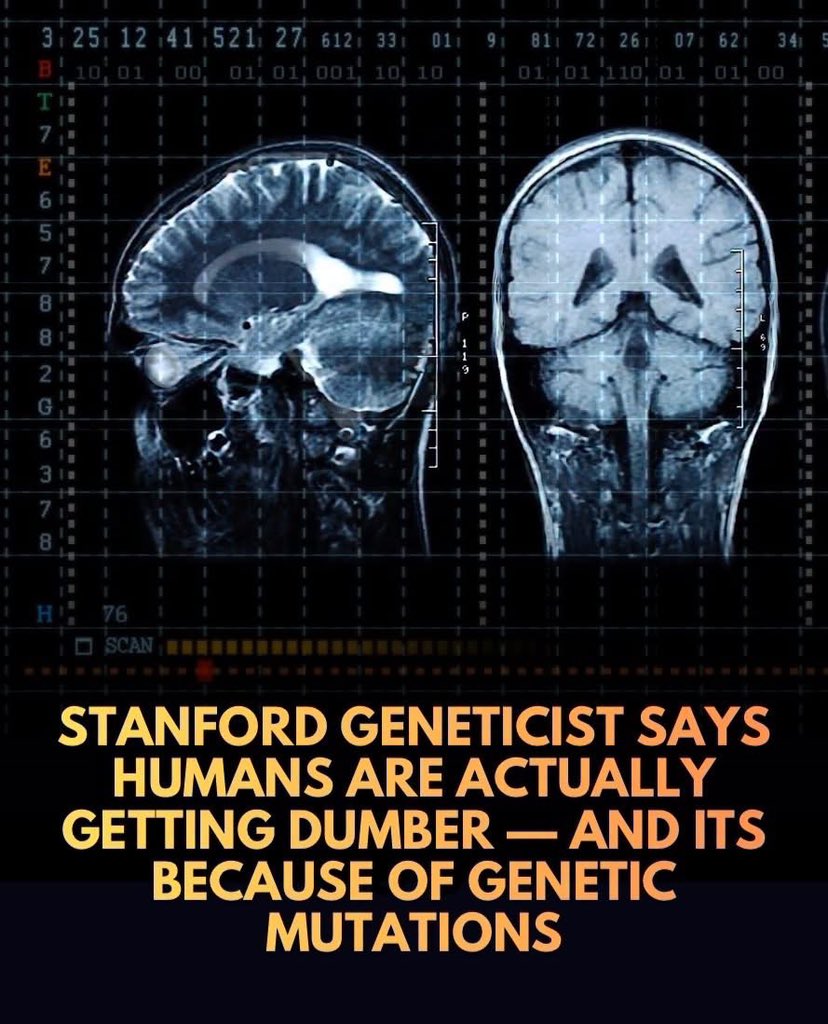
Genetic studies indicate that humans’ intellectual abilities have been deteriorating. In short, humans are getting dumber. While our ancestors had to rely on sharp wits and flawless memory to survive harsh hunter-gatherer environments, modern society might be shielding us from the evolutionary pressure to stay smart. According to Stanford University geneticist Dr. Gerald Crabtree, the massive web of genes responsible for human cognitive ability is highly vulnerable to mutation. Because we no longer face the daily life-or-death intellectual trials of the ancient past, harmful genetic mutations are slowly accumulating in our genomes, quietly eroding our baseline intellectual potential over hundreds of generations. This genetic decay is incredibly slow—unnoticeable from one generation to the next—which explains why we currently seem smarter than ever. In fact, average IQ scores have risen significantly over the last century thanks to monumental public health and educational advancements, such as improved prenatal care, better childhood nutrition, and the elimination of lead from gasoline and paint. However, Crabtree warns that this environmental boost merely masks a slow, underlying biological decline. While modern technology and societal support continue to elevate our daily performance, our species' raw genetic blueprint for intelligence may have already passed its peak. source: Flatow, I. (2012). Are We Getting Dumber? Maybe, Scientist Says. NPR Science Friday.
29
52
172
6,342
New research reveals that successful root canal treatments do more than save teeth—they significantly lower the risk of heart disease and diabetes by improving blood chemistry. Treating a common dental infection through a root canal procedure may offer health benefits that extend far beyond oral hygiene. A first-of-its-kind study by researchers at King’s College London monitored patients for two years following treatment for apical periodontitis, a condition where bacteria invade the tooth root. The results were striking: successful treatment was directly linked to healthier blood sugar control and a meaningful decline in glucose levels. Furthermore, patients showed improved cholesterol and fatty acid balances, suggesting that resolving a localized dental issue can fundamentally shift the body’s metabolic health and reduce the risk of developing chronic conditions like diabetes. The connection lies in how oral bacteria influence the rest of the body. When a root canal is infected, microbes can enter the bloodstream and trigger systemic inflammation, a primary driver of cardiovascular disease. By analyzing blood markers using advanced spectroscopy, the research team found that treating these infections gradually lowered biological markers of inflammation. Lead author Dr. Sadia Niazi emphasizes that this discovery highlights the need for a holistic approach to dental care. Moving forward, integrated care between dentists and general practitioners could become essential, using specific blood markers to track a patient’s recovery and proactively protect their long-term heart health. source: Zhang, Y., Le Guennec, A., Pussinen, P., Proctor, G., & Niazi, S. A. (2025). Successful endodontic treatment improves glucose and lipid metabolism: a longitudinal metabolomic study. Journal of Translational Medicine.
8
52
203
9,702
🚨: Your consciousness can connect with the whole universe, scientists say
20
51
377
8,808
🚨: U.S., Russia and China are reportedly integrating AI into Nuclear Early Warning Systems
14
24
97
6,021
Humanity is transitioning into a collective "superorganism,” experts say. Culture has officially overtaken genetics as the dominant driver of our evolution. For billions of years, the slow process of natural selection dictated survival, passing advantageous genes down through generations. However, researchers Timothy Waring and Zachary Wood from the University of Maine argue that humanity has entered a historic shift where culture, rather than genetics, is our primary tool for adaptation. When faced with challenges like disease or vision loss, we no longer wait millennia for genetic mutations; instead, we rapidly invent vaccines and eyeglasses. This rapid transmission of knowledge and technology allows ideas to reshape human survival in a matter of months, essentially bypassing biological evolution entirely. This profound shift is organizing humanity into a collective "superorganism," closely mirroring the complex social cooperation seen in ant colonies. Our survival now hinges on massive, interconnected networks of institutions, supply chains, and technologies that no individual fully understands, yet collectively protect us. But this superpower has a dark side. The same cooperative structures designed for resource extraction and competition are now driving existential threats like climate change. Ultimately, our future may no longer depend on the biology in our DNA, but on whether we can adapt our global institutions to solve the very problems our collective success created. source: Waring, T. M., & Wood, Z. T. (2025). Cultural inheritance is driving a transition in human evolution. BioScience, 75(10), 803–819.
39
60
170
8,746
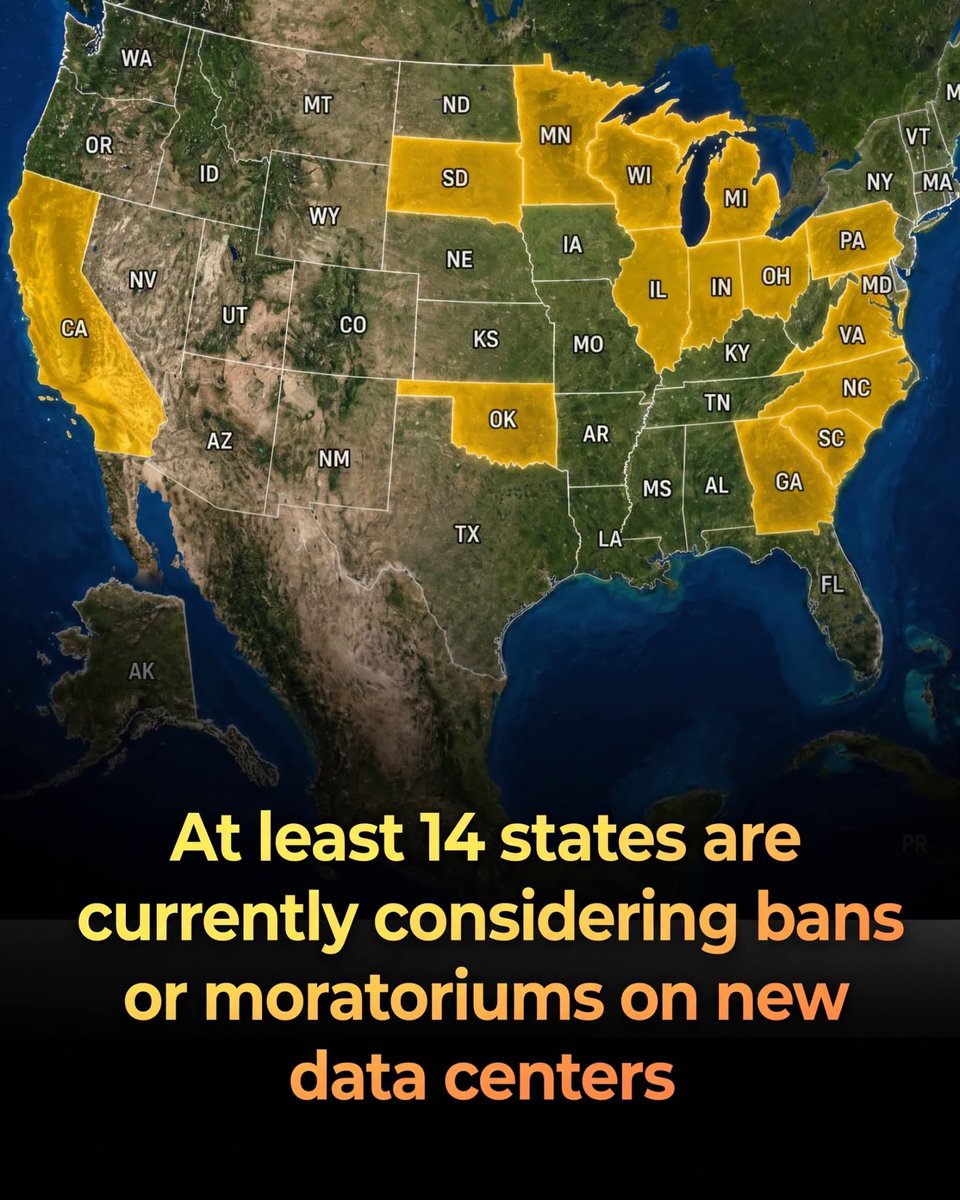
A single AI data center can consume 5 million gallons of water a day — equal to the daily water usage of a U.S. town with 50,000 residents. Now, lawmakers in at least 14 states pushing to ban or halt new data centers over mounting environmental concerns. Across the United States, the massive buildout of infrastructure designed to power artificial intelligence has hit a major roadblock. Lawmakers and local governments in at least 14 states—including California, Georgia, Indiana, Pennsylvania, and Maine—are considering bans or temporary moratoriums on new data centers. While proponents argue that rapid expansion is crucial for the U.S. to maintain its technological lead over global rivals like China, a growing coalition of critics urges caution. They argue that state and local leaders need more time to fully grasp the long-term ecological and societal consequences before thousands of additional massive facilities are constructed. The core of the backlash lies in the immense resource demands of these facilities, particularly their heavy reliance on local power grids and water reserves. Several proposed and under-construction AI campuses are planned for rural communities in the South and Midwest, where land is cheap but resources are vulnerable. Specifically, some of these sites are positioned over the Ogallala Aquifer—a vital groundwater reserve supporting one-fifth of U.S. agricultural production that has already been depleting for decades. With more than 3,000 data centers currently operating nationwide and over 1,500 more in development, the conflict intensifies the urgent debate over how to balance technological dominance with environmental survival. source: Miller, J. R., & Skinner, A. (2026). Map Shows Where Data Centers Are Being Banned. Newsweek.
47
408
714
13,373
New Gartner research shows sacrificing human workers for AI investments is backfiring — yielding zero financial gains for major corporations. As tech giants and major corporations rush to replace human employees with artificial intelligence, a new Gartner survey of 350 executives at billion-dollar companies reveals a harsh reality: these layoffs are not paying off. While 80 percent of surveyed leaders admitted to trimming their staff to fund autonomous tech, those who slashed headcount saw the exact same financial gains as companies that retained their workforce. This premature rush to automate has left many businesses sacrificing valuable institutional knowledge and employee morale for absolutely no detectable return on investment. The study highlights that the most successful companies aren't replacing workers, but rather using AI to amplify them. Organizations that provide AI tools to boost employee efficiency, rather than replace them, are the ones seeing actual, tangible benefits. However, implementing this strategy remains a hurdle, as prior research indicates over half of employees actively avoid using in-house AI tools [1]. Ultimately, the data suggests that treating AI as a collaborator rather than a replacement is the key to unlocking its true economic potential. source: Vermes, K. (2026). Large Study Finds That Replacing Workers With AI Is Backfiring Badly. Futurism.
31
114
241
47,655
🚨 100°F temperatures are now a reality in all 50 U.S. states — including Alaska. Here’s a map of the hottest recorded temperatures. Extreme heat is not confined to the deserts of the American Southwest; it is a nationwide reality. Death Valley, California, famously holds the global and national record with a blistering 134°F (56.7°C) measured in 1913. However, triple-digit temperatures have breached every single state, including Alaska and Hawaii, which both share an all-time record of exactly 100°F (37.8°C). Even northern states situated near the Canadian border have faced scorching conditions, such as North Dakota reaching a staggering 121°F (49.4°C) during the infamous 1936 Dust Bowl, and Washington setting a new high of 120°F (48.9°C) during the historic 2021 Pacific Northwest heatwave. While the vast majority of these state-level extremes occurred during the peak of July and August, unusual early-season anomalies demonstrate that intense heat can strike at any time of the year. Beyond the traditionally warm states, northern and eastern regions like Minnesota and Missouri have climbed to 115°F (46.1°C) and 118°F (47.8°C) respectively, while Rhode Island has reached 104°F (40°C). As massive high-pressure domes continue to blanket the country and push temperatures to dangerous new heights, meteorologists warn that many of these decades-old, long-standing records may soon be shattered. source: National Centers for Environmental Information. (2024). U.S. State and Territory Temperature Extremes. National Oceanic and Atmospheric Administration.
Community note
All U.S. states have recorded 100°F or higher for over a century, including Alaska in 1915 and Hawaii in 1931. ncei.noaa.gov/access/monitor…
345
180
413
497,377
Cultivating healthy self-esteem in early childhood can start with a simple nighttime routine. Encouraging toddlers to reflect on their small daily wins helps them focus on their own efforts and builds intrinsic motivation, rather than relying on constant praise. Child psychologists suggest that this habit strengthens the brain pathways linked to self-worth and emotional resilience. When children regularly recognize their own value, they become better prepared to handle academic challenges and social situations as they grow. This calm reflection at bedtime also helps the body unwind after a busy day, supporting deeper sleep and a more balanced emotional state the next morning. Over time, children begin to internalize their achievements, turning everyday moments into lasting confidence. They learn to self-soothe and approach challenges with a steady, positive mindset. Creating these small, intentional moments each night is a powerful way to support lifelong emotional strength and self-belief.
9
98
315
8,841
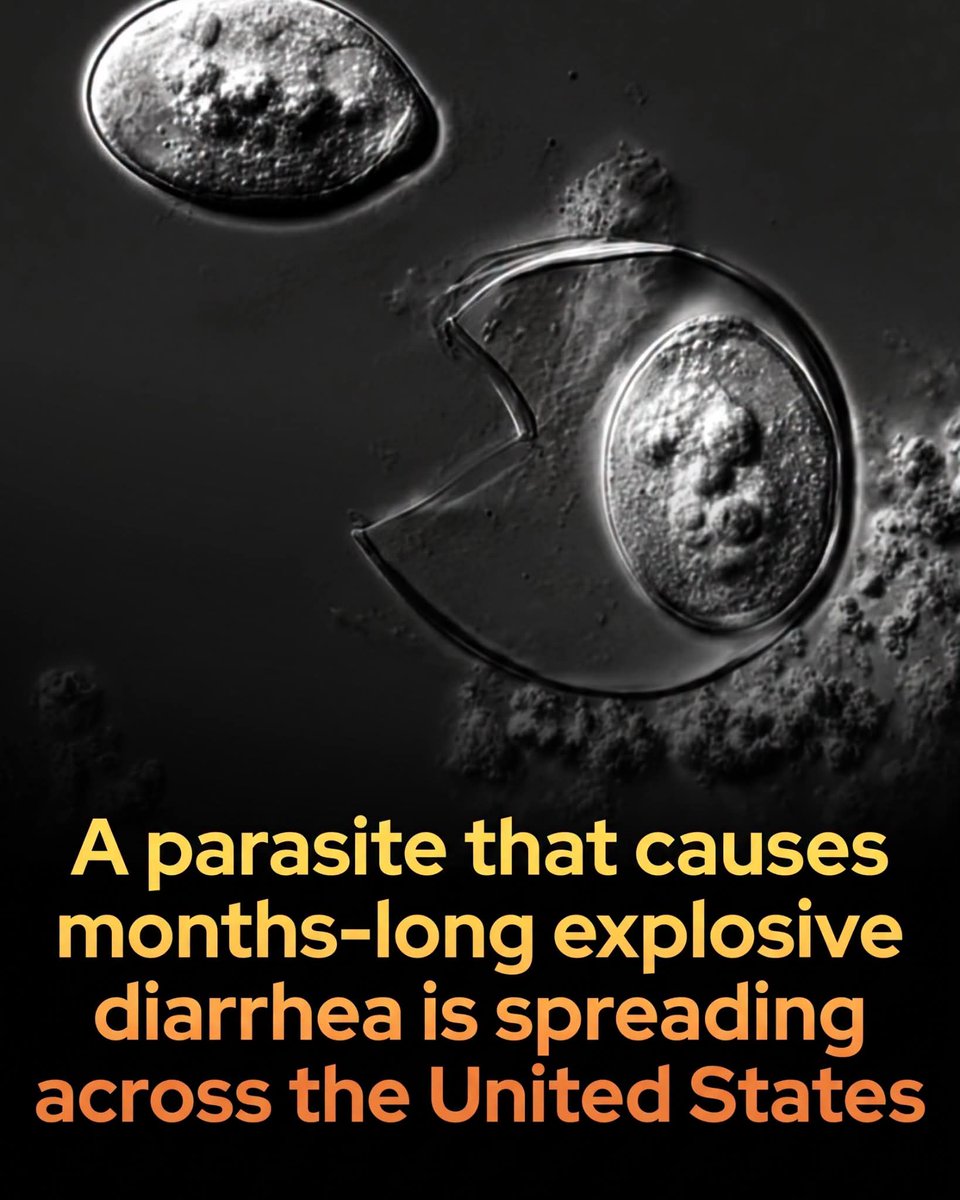
A dangerous parasite that causes weeks of explosive diarrhea is spreading rapidly across the United States, infecting people in 17 states. The Centers for Disease Control and Prevention (CDC) is closely tracking a domestic surge of cyclosporiasis, an intestinal illness caused by the microscopic parasite Cyclospora cayetanensis. Between May 1 and June 16, 2026, at least 145 cases have been confirmed across 17 states, with 20 individuals requiring hospitalization. Unlike other common foodborne bugs, this parasite is typically not transmitted from person to person. Instead, infections occur when individuals consume food or water contaminated with microscopic fecal matter, often linked to raw produce. Worryingly, none of the affected patients reported traveling internationally before falling ill, meaning the contamination is originating directly from food sources within the United States. Currently, New York has reported the highest concentration of infections, alongside notable spikes in Texas and Illinois. Health experts warn that the official count represents only the tip of the iceberg, as many individuals experience milder symptoms and never undergo the specialized testing required to detect Cyclospora. The parasite causes a grueling set of symptoms including prolonged watery diarrhea, bloating, nausea, and severe fatigue that can last for weeks if left untreated. While health officials stress that fresh fruits and vegetables remain an essential part of a healthy diet, they urge consumers to meticulously rinse produce under running water and scrub firmer items like melons and cucumbers to prevent infection. source: Centers for Disease Control and Prevention. (2026). Surveillance of Cyclosporiasis.
41
103
262
13,837
A comprehensive study has linked common progestogen-based contraceptives to an elevated risk of brain tumor. A landmark Danish study published in JAMA Network Open has established a significant link between various progestogen-containing contraceptives and an increased risk of developing meningioma, the most common type of benign brain tumor. While previous research primarily flagged high-dose injectables like medroxyprogesterone acetate (Depo-Provera), which carried more than four times the risk compared to non-users, this new analysis expands the correlation to widely used oral contraceptives and intrauterine devices (IUDs). Researchers evaluated registry data from over 16,000 women and discovered that eight of the twelve progestogen formulations studied showed statistically significant associations, with the highest risk observed among active or recent users, particularly older women. Despite the elevated risk, medical experts emphasize that meningiomas remain rare, affecting roughly 1 in 10,000 individuals, meaning the overall risk to individual patients remains low and should not cause panic or sudden discontinuation of essential therapies. Crucially, the study also offered a reassuring finding: the elevated risk of developing these tumors completely disappeared five years after discontinuing the contraceptive. These findings underscore the importance of shared decision-making, especially as organizations like the FDA—which added a meningioma warning to Depo-Provera labels in late 2025—and the American College of Obstetricians and Gynecologists advise healthcare providers to discuss potential risks with patients. source: Lundstrøm, N. H., Knudgaard, M. H., Pedersen, M. S., Christiansen, M. L. S., & Skovlund, C. W. (2026). Contraceptive Progestogens and Incident Meningioma. JAMA Network Open.
5
24
88
7,662
If all the matter in the universe was concentrated at a single point before the Big Bang, where did all that matter come from? And why did it explode?
53
38
190
7,144
Scientists can now strip antigens from any blood type, transforming it into universal type O — solving global blood shortages. In a major leap forward for transfusion medicine, researchers have discovered a way to convert A, B, and AB blood types into the universally compatible type O. By utilizing metagenomics to screen the diverse microbiome of the human gut, scientists isolated unique bacterial enzymes capable of stripping the sugar-based antigens that define different blood groups. When combined, these enzymes effectively scrub away A and B antigens from the surface of red blood cells, neutralizing the triggers that would otherwise cause a recipient's immune system to attack foreign blood. This innovative "microbial makeover" could soon allow blood banks to easily convert any donation into universal O-type blood. While the lab results are highly efficient, translating this science to clinical settings requires caution. Because mismatched blood transfusions can trigger life-threatening immune reactions, researchers must thoroughly test the safety of this enzymatically converted blood in living organisms to ensure no unforeseen reactions occur. Currently, only about one in 15 people has the highly sought-after O-negative blood type. If clinical trials succeed, this technology could virtually eliminate critical supply shortages at hospitals and trauma centers worldwide, transforming how emergency medicine is delivered. source: Rahfeld, P., Cobb, A. M., Vik, A., & Withers, S. G. An enzymatic pathway in the human gut microbiome that converts A to universal O type blood. Nature Microbiology, 4(9), 1475-1485.
14
103
297
9,166
As the U.S. celebrates its 250th anniversary, a new poll reveals 40% of Americans think the nation won’t survive as a unified country for another 250 years. According to a recent Reuters/Ipsos survey, almost 40% of U.S. adults believe it is unlikely the nation will remain a single country 250 years from now. This existential anxiety comes at a time of deepening polarization, with parallel polling showing that nearly two-thirds of Americans feel U.S. democracy is in danger of failing. Yet, despite these stark long-term worries, the desire to celebrate the nation’s milestone birthday remains remarkably resilient, demonstrating a shared cultural bond that persists even in a fractured era. This Independence Day, approximately 80% of Americans still plan to celebrate, though the holiday's meaning has shifted for many. Fifty-seven percent of respondents note they primarily view the Fourth of July as a chance to relax, escape work, and spend time with loved ones rather than as a patriotic rally. Whether gathered around backyard barbecues or watching fireworks, citizens continue to embrace these traditional rituals. Ultimately, the findings paint a picture of a country that, while deeply uncertain of what the next 250 years will bring, still finds common ground in a simple day of collective rest. source: Greene, C. (2026). How Americans Are Feeling About the U.S. as the Country Turns 250. TIME.
22
19
52
4,316
🚨 A new study shows that a father's stress leaves lasting marks on his sperm — influencing the development of his offspring. This new research, published in the journal Molecular Psychiatry, delves into the field of epigenetics, which explores how environmental factors can alter gene expression without changing the underlying DNA sequence. These epigenetic changes can act as molecular switches, turning genes on or off and influencing various biological processes. Researchers analyzed sperm samples from 58 men, most in their late 30s to early 40s. The study revealed that men who reported high levels of childhood stress had different epigenetic profiles in their sperm compared to those who reported lower stress. These differences persisted even after accounting for other factors like smoking and drinking, suggesting that childhood experiences can leave lasting epigenetic marks. The researchers also found differences in a specific small noncoding RNA molecule previously linked to brain development in mice, as well as variations in DNA methylation patterns near genes involved in early brain development. While these findings suggest a potential link between childhood stress and epigenetic changes in sperm that could influence offspring development, it's crucial to emphasize that this research is still preliminary. It's not yet confirmed whether these epigenetic changes are passed down to children or what their ultimate impact might be. Further research is needed to determine the extent to which these epigenetic modifications in sperm can affect the health and development of future generations.
8
40
193
9,073
🧠 Research shows constant criticism rewires a child’s brain. And the emotional stress shapes lifelong mental health. Children raised in environments filled with constant criticism often develop a stress-response system that remains on high alert, even in the absence of actual threats. This chronic activation of the fight-or-flight state interferes with a child’s ability to feel safe, calm, or emotionally grounded. According to research from the Center on the Developing Child at Harvard University, persistent emotional stress in early life can alter brain architecture, leading to long-term issues with emotional regulation, anxiety, and attention. When everyday interactions are perceived as threatening, children may respond with hypervigilance, withdrawal, or emotional shutdown—defense mechanisms rooted in survival. As these children grow, the expectation of judgment or harm becomes deeply ingrained in their nervous system, affecting their self-esteem and relationships. They may struggle to trust others or feel secure in social settings, constantly anticipating criticism or rejection. This state of chronic stress is known as "toxic stress," and it’s been linked to a range of lifelong impacts—from depression and learning difficulties to physical health problems. The findings underscore how emotionally unsafe environments can have a lasting effect on a child’s development, both psychologically and biologically. Source: The Center on the Developing Child at Harvard University. InBrief: The Impact of Early Adversity on Children's Development.
25
112
331
9,929
Research shows pomegranate juice could slash artery blockages by up to 30%, offering a potent natural defense for heart health. Recent clinical research has uncovered a powerful link between daily pomegranate juice consumption and a significant boost in heart health. Scientists found that participants who enjoyed a single cup of the juice each day experienced up to a 30% reduction in arterial blockages. This impressive outcome is driven by punicalagins, unique antioxidants found in pomegranates that aggressively combat oxidative stress and inflammation within the blood vessels. By clearing these pathways, the juice serves as a natural defense mechanism against the buildup of plaque that leads to serious cardiovascular issues. These findings suggest that simple dietary choices can have a profound impact on long-term wellness and disease prevention. Beyond improving blood flow, the regular intake of pomegranate juice supports overall vascular integrity, offering an accessible way to manage heart health without complex medical interventions. For anyone looking to optimize their cardiovascular system, adding this nutrient-dense beverage to a balanced diet provides a scientifically backed advantage. As the medical community increasingly recognizes the power of functional foods, the pomegranate is solidifying its reputation as a vital ally for a healthy heart. source: Clinical Nutrition. Pomegranate juice consumption and its effects on cardiovascular health markers. Clinical Nutrition.
13
143
521
15,381
DID YOU KNOW🚨: The probability of you being born was about 1 in 400 trillion
23
56
288
11,124