Cutting-edge research, news, commentary, and visuals from the Science family of journals. Follow @NewsfromScience for stories from our News team.

Joined April 2009
25,112 Photos and videos
New research on Southeast Asian dipterocarps, the tallest tropical trees, shows that they adjust their hydraulic system as they grow tall, suggesting resilience to drought. Learn more this week in Science: scim.ag/4vGMOTg
12
102
325
94,343
Science is retracting the September 2025 Research Article “Kinetic organization of the genome revealed by ultraresolution multiscale live imaging,” based on discrepancies between the study’s data and conclusions. All authors approved this Retraction. scim.ag/4fhtDtm
1
6
16
7,216
Neanderthals survived for hundreds of thousands of years in Eurasia, enduring ice ages and eking out a hardscrabble living hunting woolly mammoths and rhinoceroses and harvesting edible grasses, tubers, and legumes. Why they ultimately perished has long been a mystery. New research appears to strike out a leading hypothesis: that they succumbed to harmful mutations brought on by inbreeding within tiny, isolated populations. Analyzing 27 high-quality Neanderthal genomes from Western Europe, researchers find that at the tail end of their existence approximately 45,000 years ago, our close evolutionary cousins were genetically healthy and appear to have lived in large, well-connected groups. Learn more: scim.ag/3SJsUsb @NewsfromScience
11
21
88
17,698
The protein GDF15—already shown to be a late-life indicator of dementia risk—may also be a midlife biomarker, new research finds. Learn more in @ScienceAdvances: scim.ag/4w83jHU
5
21
85
18,624
In 1998, Georgina Ferry published what would become the definitive biography of the crystallographer and Nobel laureate Dorothy Hodgkin. 🎧 Learn more in the second episode of our six-part #SciencePodcast🎙️ series on scientific biographies: scim.ag/4y4QrUW
3
11
25
18,047
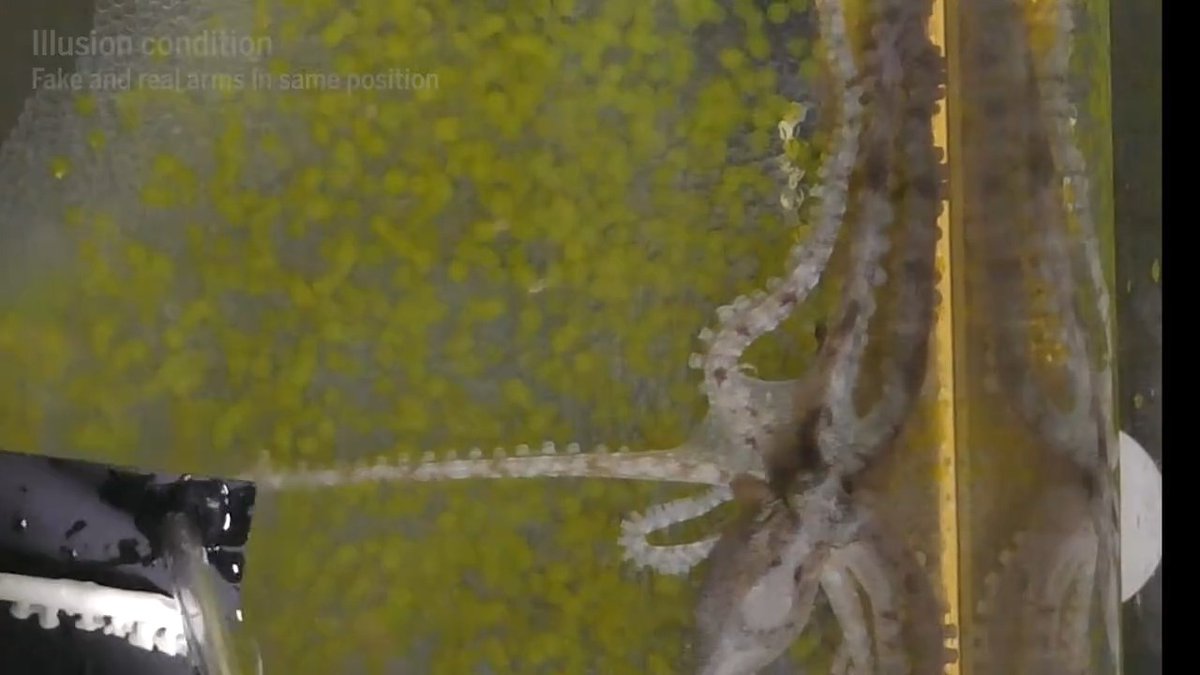
The human brain can bring rubber to life with one simple trick: Cover a person’s hand and place a rubber hand next to it, then stroke their hand and its facsimile, and suddenly the person will begin to “feel” the touch in the fake appendage. The rubber hand illusion helps demonstrate how our senses work together to create the feeling of ownership over our bodies, a fundamental part of self-awareness. A 2025 study demonstrated that octopuses also fall for the rubber arm trick—the first documentation of the phenomenon outside of mammals: scim.ag/4lFoxrF #ScienceMagArchives
8
54
370
96,071
Like a vast bowl of spaghetti, the universe may be stringier on length scales far larger than cosmologists have long assumed. In a recently published study, two researchers argue galaxies align in enormous filaments even on scales where the cosmos should appear smooth and uniform. If correct, the bold claim would upend the cosmological principle, the conceptual cornerstone of the standard cosmological model. Learn more: scim.ag/4eSdo4y @NewsfromScience
19
32
130
26,375
The history of science and invention in the U.S. is punctuated not only by fundamental discoveries and technological breakthroughs, but also by policies and institutions that helped bring such advances to life. As the U.S. marks 250 years of independence, a new #SciencePolicyForum underscores how American industry has helped build American science and innovation. scim.ag/4oWUheo
10
21
83
36,048
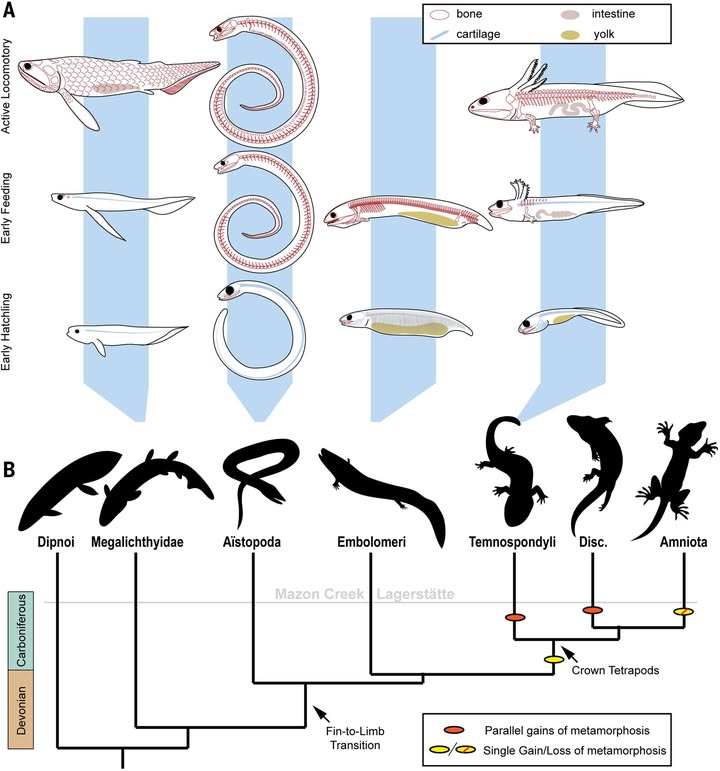
While modern amphibians start life in a larval stage, a new fossil study in Science suggests these tadpole-like stages were not present in earlier times. Learn more: scim.ag/4gQUQo1
11
50
217
44,247
Some bacteria that are harmful to humans escape elimination by antibiotics because they carry resistance genes. However, antibiotic-susceptible bacterial populations often harbor rare persister cells that survive antibiotic exposure without being resistant. Antibiotic persistence favors recurrent infections and resistance emergence and is a public health threat. Persister cells are thought to be metabolically dormant. Decreased activity of antibiotic targets would enable them to remain alive when antibiotics are present and to regrow after antibiotic removal. In a new Science study, researchers report that Escherichia coli persister cells do not simply enter a dormant state upon antibiotic treatment. Instead, genetically identical cells diverge into two physiological states. Some cells produce membrane vesicles that are loaded with specific proteins, which are taken up by other cells to enhance survival. Therefore, vesicle donors and recipients actively cooperate to benefit the entire bacterial population. Learn more in a new #SciencePerspective: scim.ag/4xYbkRs
15
105
394
38,169
Are you a recent Ph.D. graduate? Apply for the Science & @scilifelab Prize for Young Scientists. The $30,000 grand prize will be awarded for outstanding research in cell and molecular biology, genomics, ecology, or molecular medicine. Apply by 15 July: bit.ly/4sHsNdt
3
14
44
22,631
Science Magazine reposted
My latest piece for @ScienceMagazine examines the burgeoning landscape of AI diplomacy in Africa, surveying the history of science diplomacy stemming from the Cold War, and current participation by African governments within international AI cooperation.
4
12
50
16,667
Science Magazine reposted
Excited to share our new paper in @ScienceMagazine A subset of lung cancers drives cachexia, not through factors circulating in the blood, but through local lung sensory neurons. science.org/doi/10.1126/scie… big thanks to first authors Michael and @s_kotschi our collaborators
What if one of cancer’s most devastating side effects could be reversed? Cancer cachexia is a debilitating wasting syndrome that affects many people with cancer, yet treatment options remain limited. Team CANCAN has published new research in @ScienceMagazine that highlights a previously underappreciated driver of cancer cachexia: localised signals from tumours acting directly on sensory neurons. This is a big step toward reframing cancer cachexia as not only a systemic metabolic condition, but also one shaped by tumour–nerve communication. 🎥 @ThalesPapaG, Co-Investigator on team CANCAN and team InteroCANCEption, explains the discovery and what it could mean for patients. Read the full paper: science.org/doi/10.1126/scie… --- Team CANCAN is funded by @CR_UK and @theNCI through Cancer Grand Challenges.
20
35
153
41,391
Science Magazine reposted
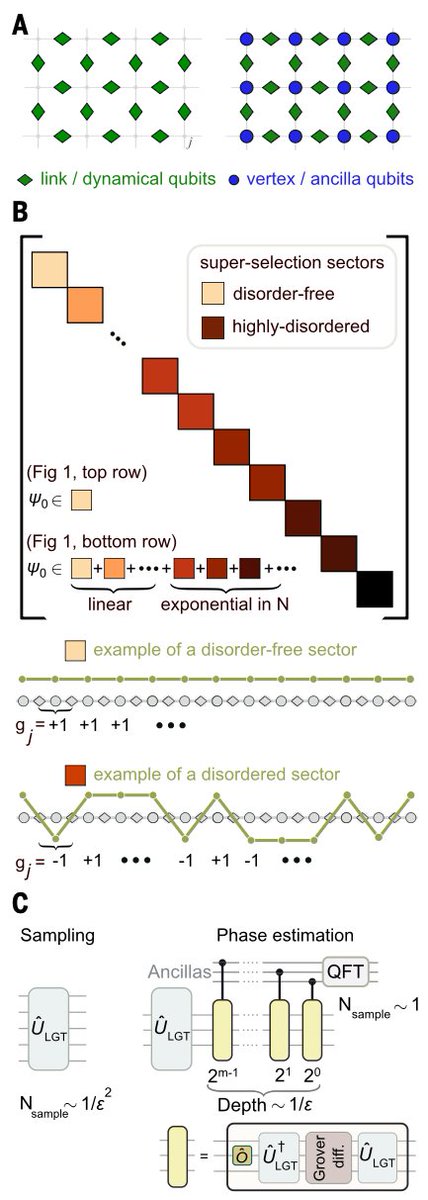
Our paper is now published in @ScienceMagazine: science.org/doi/10.1126/scie…: “Observation of disorder-free localization using a (2 1)D lattice gauge theory on a quantum processor”. In this work with Google, we experimentally observe localization without disorder in both one and two spatial dimensions using the superconducting quantum processor #Willow. The central idea is that lattice gauge theories naturally decompose into many superselection sectors, which can be interpreted as different effective disorder configurations. Instead of sampling these configurations one by one, the quantum processor can prepare a coherent superposition over them. In this sense, the experiment leverages a form of quantum parallelism: many disorder sectors are explored simultaneously within a single quantum state. This is not only conceptually beautiful, but also practically important. Disorder averaging is one of the major bottlenecks in studying many-body localization and rare-event physics. By encoding disorder configurations into quantum superposition, our work points toward a route for achieving a polynomial sampling advantage over direct classical disorder sampling. #QuantumComputing #QuantumSimulation #QuantumParallelism #LatticeGaugeTheory #DisorderFreeLocalization #ManyBodyLocalization #ManyBodyPhysics #QuantumDynamics #ScienceMagazine #GoogleQuantumAI #CondensedMatterPhysics #TheoreticalPhysics @ERC_Research @LMU_Muenchen @MCQST_cluster @kh_univ @maxplanckpress @MPI_Quantum
17
4
31
17,094
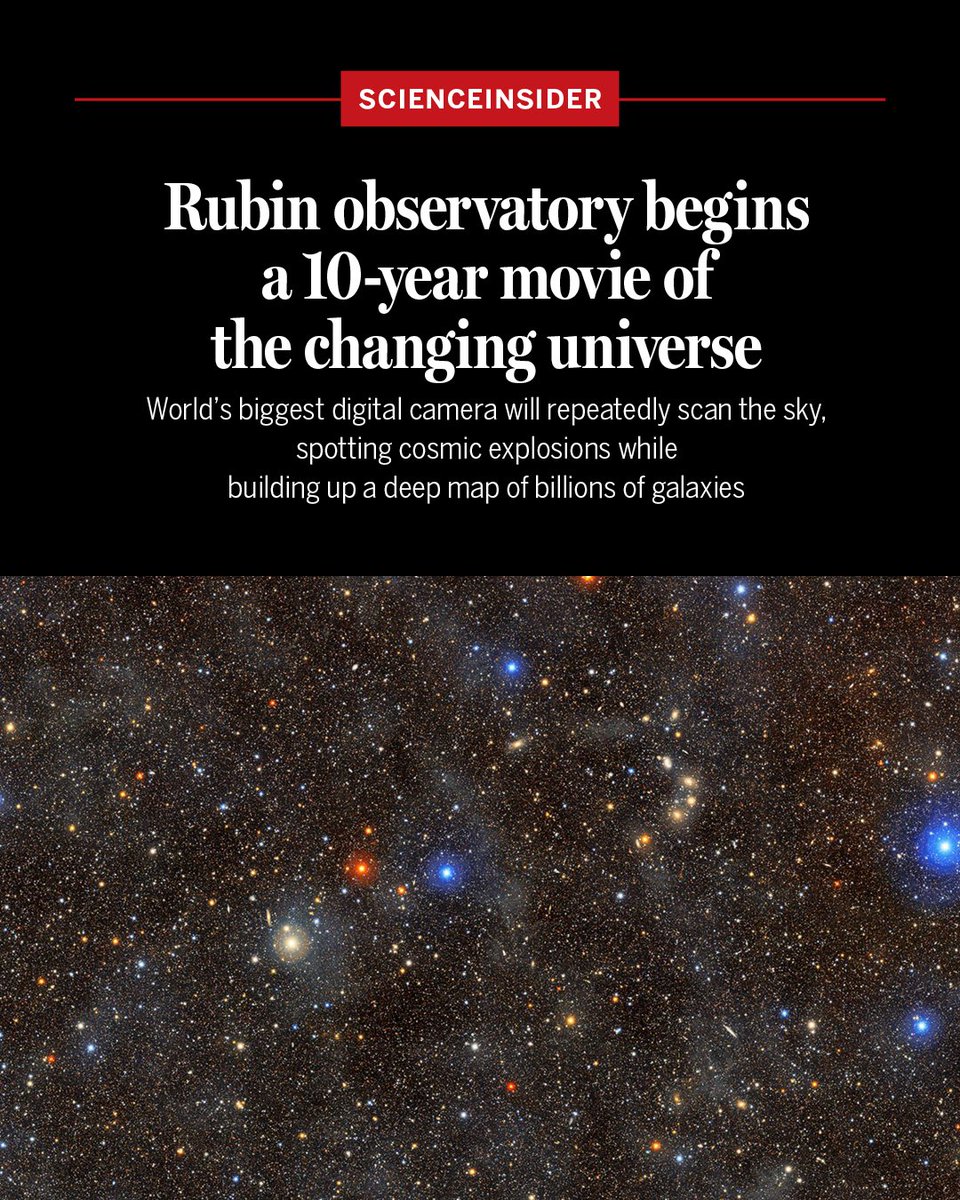
The Vera C. Rubin Observatory has begun to film the greatest time-lapse movie ever made: a 10-year record of the changing night sky. Over a few nights, the telescope will sweep the entire hemisphere of sky visible from its Chilean mountaintop with the largest digital camera ever built, then do it again and again for a decade. In its first year the survey will generate more data than all previous optical telescopes combined. It will capture everything from wandering asteroids and exploding stars to the growth of distant galaxies, and it will spew the data continuously to the world’s astronomers. Learn more: scim.ag/443Etx1 @NewsfromScience
11
40
165
28,862
An examination of a newly discovered avialan dinosaur species has revealed more about how birds got their uniquely structured tails. Learn more in @ScienceAdvances: scim.ag/4atiYJB
3
37
179
45,248
🎉 Congratulations to Yibin Zhu, winner of the 2026 Noster NOSTER & Science Microbiome Prize for his work in revealing the hidden role of the microbiota in mosquito-borne disease. Learn more: scim.ag/3TdA73U
7
10
130
32,665
Scientists have untangled the nuanced, tissue-specific effects of allosteric compounds that activate the fatty acid receptor FFAR2—findings that could inform the design of more selective therapeutics. @SciSignal scim.ag/4eYZKNm
5
16
76
30,067
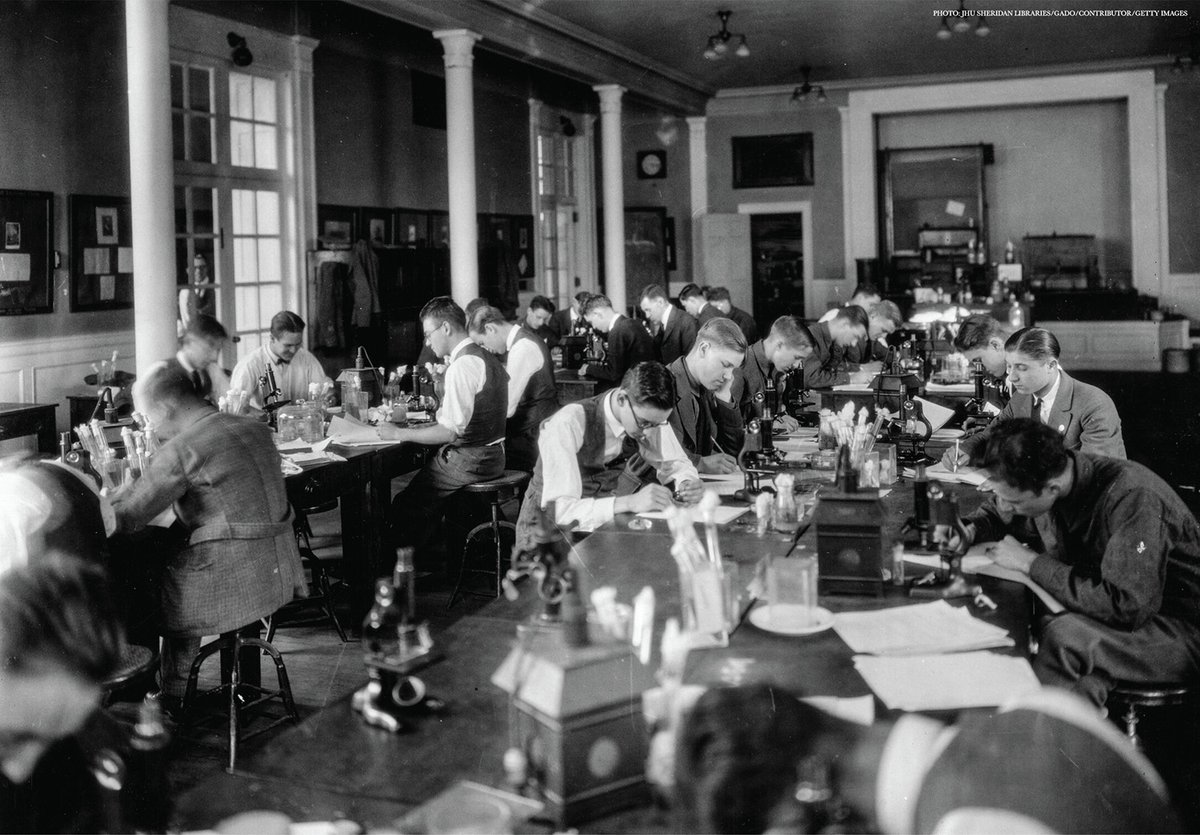
In a new #SciencePolicyForum, Johns Hopkins University President Ronald Daniels highlights the role of U.S. universities in U.S. research, arguing that much of the modern American research enterprise can trace its roots to the late 19th century transformation of these institutions. Read more: scim.ag/4vfH8i9
5
11
54
27,239
For decades, biology textbooks have enshrined a simple rule: DNA is made by copying a template. After one enzyme unzips a DNA double helix into separate strands, another called a polymerase builds a complementary sequence, base by base, for each strand. Presto: two copies of the original DNA. But recent research into how bacteria defend themselves from viruses now shows this synthesis rule isn’t absolute. The team describes a bacterial enzyme that synthesizes DNA without a nucleic acid template, using its own structure as a guide. Learn more: scim.ag/4tTc5IA @NewsfromScience
33
168
633
59,364
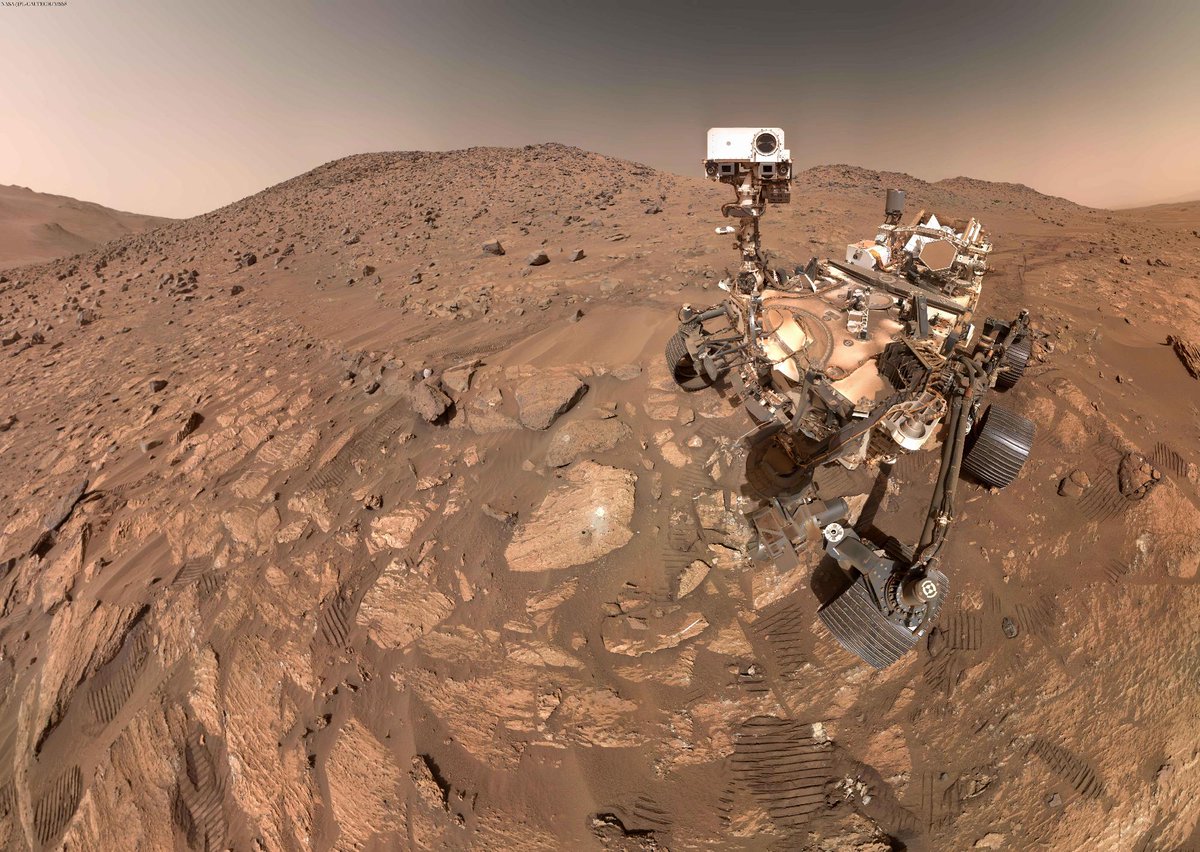
Martian mudstones contain complex carbon, new @ScienceAdvances research finds, building on last year’s discovery of potential biosignatures at the same site. scim.ag/4g2i3DA
7
20
98
25,254